#MixedModels

Fabrizio MusacchioFabMusacchio
2026-02-01

Due to a recent discussion with colleagues on whether and when to use (), I wrote a blog post comparing LMM to other approaches using simulated data. I thought, it may also be useful for others working with hierarchical data structures in and beyond.

🌍 fabriziomusacchio.com/blog/202

Line plot of simulated neural responses versus stimulus strength for three subjects, with residuals and group comparisons.Group specific slope comparison in an LMM friendly regime with many groups and few observations per group. ANCOVA interaction slope estimates scatter widely, while LMM BLUP slopes are pulled toward the population mean.
CoListycolisty
2025-01-16

Integrate R Skills into SAS for Advanced Analysis | CoListy
Extend R programming skills to SAS. Learn advanced modeling, data manipulation, and cross-platform integration for enhanced analytics. | CoListy
/iml /stat

colisty.netlify.app/courses/sa

2024-03-23

Hello Everyone! I have been experimenting with using #Quarto to call #julialang to run #multilevel models with #MixedModels. Unfortunately, my document is taking about 10-15 minutes to render with small data sets. I've found it difficult to understand the #julialang documentation on this issue, so would appreciate any "Explain to me like I'm 5" explanations of how to speed up #julialang. Code is here: agrogan1.github.io/multilevel-. I am grateful for #julialang, just wish I could figure out the speed.

Martin ModrΓ‘kmodrak_m@fediscience.org
2024-02-19

New on the blog: showcasing the immense hackability of #brms by extending a random intercept model with linear predictors on the standard deviation of the random intercept. Should you do it? Most likely not, but if you really really want, there is a way. Also the techniques shown are general and let you do a lot of other crazy stuff with brms. Happy for any feedback!
martinmodrak.cz/2024/02/17/brm

#bayesian #BayesianStatistics #BayesianInference #MixedModels

Emmanuele Tidoniletstido
2024-02-11

Exciting News! πŸ“š Our work on Reliability and Feasibility of Linear Mixed Models in Fully Crossed Experimental Designs published in AMPPS! πŸŽ‰ @Scandle & @letstido @universityofleeds

journals.sagepub.com/doi/10.11

We present and a clear for handling effects in the presence of non-convergent and singular models. No more reduced models causing first-type errors due to data pseudoreplication!

Jan R. Boehnkejrboehnke
2023-10-13
Jan R. Boehnkejrboehnke
2023-09-20

Another finished.

Paper ~ 7000 words
Review ~ 2000 words
Duration ~ 2 hours

I notice a long manuscript less, if it is well-written. Main point here once again:

are difficult to report. This paper offers a lot of detail on how to develop such a project and report it (especially Table 7): sciencedirect.com/science/arti

The chapter in Hancock & Mueller's "The reviewer's guide to quantitative methods in the social sciences" is also very helpful.

Jan R. Boehnkejrboehnke
2023-09-20

I often look at papers where authors used a lot of effort to shoehorn a into a trajectory or that do not quite the job the team wants.

Analysing longitudinal data (esp. w time-varying covariates) via G-Estimation is an alternative for consideration:
journals.sagepub.com/doi/full/

The underlying thinking is not entirely different, but often one needs only a little step / laterality to get a new view on an analysis problem.

Jan R. Boehnkejrboehnke
2023-09-18

Another finished.

Paper ~ 7000 words
Review ~ 2000 words
Duration ~ 2 hours

You notice a long manuscript less, if it is well-written.

Main point here once again: are difficult to report.

This paper offers a lot of detail on how to develop such a project and report it (especially Table 7): sciencedirect.com/science/arti

The chapter in Hancock & Mueller's "The reviewer's guide to quantitative methods in the social sciences" is also very helpful.

Jan R. Boehnkejrboehnke
2023-09-07

Another finished.

Paper ~ 4700 words
Review ~ 1500 words
Duration ~ 2 hours

The application of requires discussion of the decisions made in modeling as well as detailed reporting of a range of results.

This paper offers a lot of detail on how to develop such a project and report it (especially Table 7): sciencedirect.com/science/arti

Unfortunately it is not and no alternative version seems to be available πŸ€“

2023-02-15

New Blogpost on Type-1 error in LMM/MixedModels

What happens if one does not include random-slopes?

benediktehinger.de/blog/scienc

Including an Interactive Demo: benediktehinger.de/interactive

this is mostly restating Barr et al. 2013 and making it freshly accessible - but I hope it helps!

@cogsci @cognition @eeg #statistics #MixedModels

type-1 error rate of different LMM models. excluding the condition random slope, strongly increase type-1 errors.
2023-01-28

If you want to control for the "repeat" in a repeated measures design using LMMs - you have to model that random slope!

---

y ~ 1 + cond + (1|subject)

does *not* control for within condition effects (except if you have only 1 trial per level per subject)

---

If this sounds relevant to you, I could prepare a blog-post + interactive demo

#statistics #LMM #MixedModels #julialang

two graphs, both with type-1 errors on the y-axis and 4 different models on the x-axis. Left graph shows type-1 errors without item random slope, right with item random slope.

it is visible, that any model that does not model the relevant random slopes, has huge type-1 errors (>80% in these simulations)
Elizabeth Page-GouldLPG@mstdn.party
2022-12-05

Take a weird dive into the Intraclass Correlation Coefficient (ICC) with my newest statistics meditation! πŸ’–πŸ€“πŸŒŒ

youtu.be/PqFJ2cggFfY

How can the ICC be a correlation and a proportion of variance at the same time? Zone out to this question, the chickens, and the roosters. πŸ“πŸŽ§

This is probably most interesting to you if you are already mildly motivated to think about the #ICC. #Statistics #Meditation #IntraclassCorrelation #MixedModels #MultilevelModels #Correlation #VarianceComponents #STEAM

2022-11-30

Finally working to wrap my head around time-varying predictors. Read Wang & Maxwell 2015 today, which discusses detrending X and Y in #mixedmodels to remove the effects of time. Is this actually appropriate for the context of #aging research?

pubmed.ncbi.nlm.nih.gov/258222

2022-11-12

Time for an #introduction:

I’m Ewan πŸ‘‹ a statistician and researcher in Biostatistics & Health Informatics, King’s College London. I do things with numbers and mental health.

Right now, that includes: (1) mental-physical links in routine data; (2) wearable sensors to predict depression; (3) clinical trials of digital interventions.

I’m excited about #OpenScience, #Bayesian (#brms), #MixedModels, #rstats, #tidyverse, #Quarto, #DAGs.

Elsewhere: gravel cycling, ⚽️, β˜•οΈ, breaking things in #Linux.

Reinhold KlieglReikli
2022-11-08

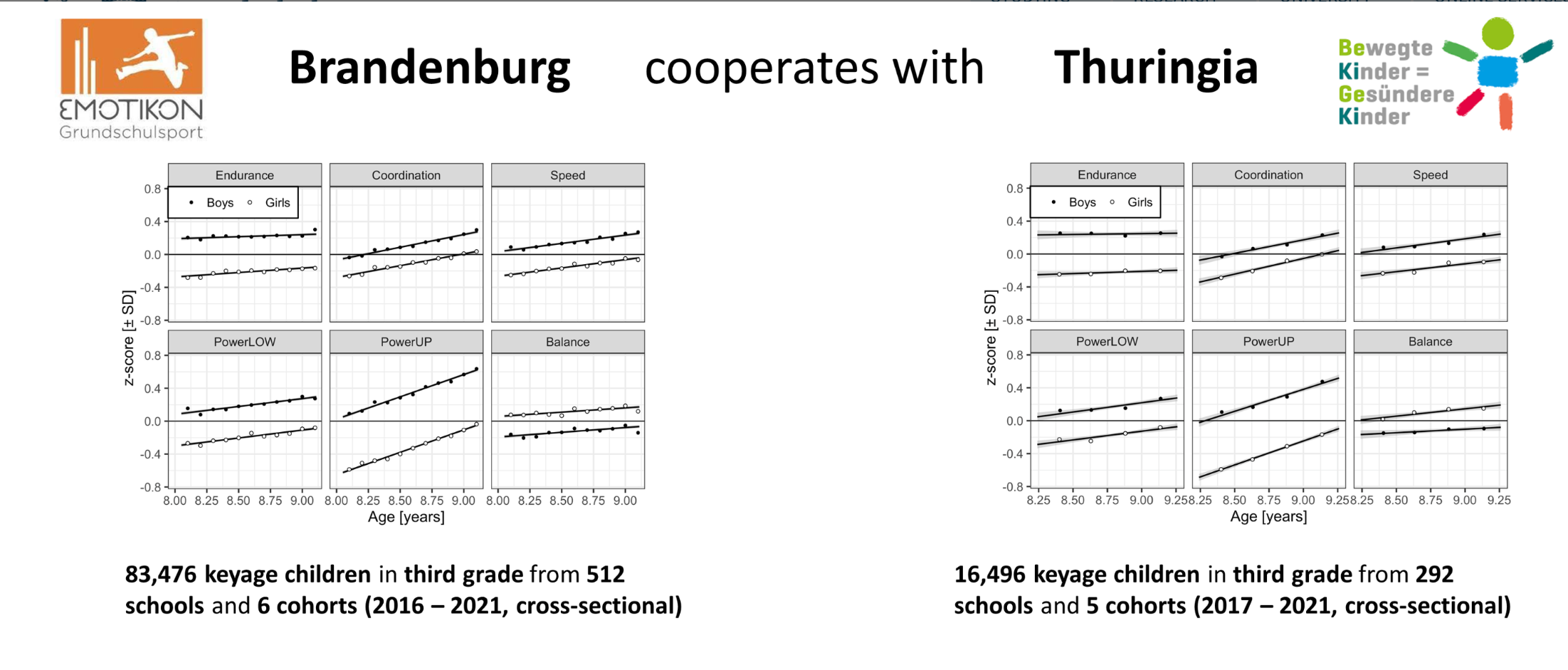
A nice example of replication in social science: Age and sex effects of third-graders' physical fitness in two German states.

uni-potsdam.de/en/emotikon/sta

Julian Quandtjulianquandt
2022-11-07

Two things that people might (hopefully) find useful are for example this blog I wrote about through julianquandt.com/#posts (covering t-test / anova / linear mixed models and more) and these standard operating procedure for ( and ) I took part in creating decision-lab.org/wp-content/up

Reinhold KlieglReikli
2022-10-29

Interested in role of social structure for children's physical fitness and mixed-model statistics

(uni-potsdam.de/de/emotikon/ind )
(bekigeki.de)

with (lme4; github.com/lme4/lme4/) and (github.com/JuliaMixedModels)

advocate since 2006 ( read.psych.uni-potsdam.de/pmr2/ ). Recent stuff on (osf.io/9ivha/)

Client Info

Server: https://mastodon.social
Version: 2025.07
Repository: https://github.com/cyevgeniy/lmst