
#TheLovingSpoonful #pastiche Do You Believe in #Madness?
#Pastiche


*Instead of protesting when people label you "slop," you should gaze in the mirror and see where the slop is dripping *I'm wondering what's "sloppy" about me personally and the answer is really kind of a LOT. #detournement #pastiche #parody #cutandpaste #hallucination #handwaving #neologisms
Bash & Pop - Friday Night is Killing Me
Chris Mars may have released the best post-Mats album, but Tommy Stinson did the second best as Bash & Pop.
Stinson (who switched to guitar) and crew are kind of doing their best 70s Stones (or maybe Faces) pastiche, and I'm here for it.
Bash & Pop looked like a 1993 one-off, but he brought them back in 2017...
#nowplaying #vinyl #BashAndPop #TommyStinson #RollingStones #pastiche #rock #blooze


L'Ombra delle Parole Rivista Letteraria Internazionalelombradelleparole.wordpress.com@lombradelleparole.wordpress.com
2025-12-29Decalogo della poesia kitchen e distopica come testo-dispositivo e non come manifesto normativo, mette in evidenza un nuovo modo di concettualizzare il discorso poetico nel momento in cui dichiara la non verità di ogni poetica nel momento stesso della sua enunciazione. Questo assunto rivoluzionario è quanto emerge nei Quaderni doppi (nn. 27-28 e 29-30) presentati alla Fiera del Libro di Roma 2025.
Abstract
Lettura del Decalogo della poesia kitchen e distopica come testo-dispositivo e non come manifesto normativo, mette in evidenza un nuovo modo di concettualizzare il discorso poetico nel momento in cui dichiara la non verità di ogni poetica nel momento stesso della sua enunciazione. Questo assunto rivoluzionario è quanto emerge nei Quaderni doppi (nn. 27-28 e 29-30) presentati alla Fiera del Libro di Roma 2025, in particolare per ciò che concerne la crisi della rappresentazione, la nozione del linguaggio come infrastruttura votata alla comunicazione e la funzione de-funzionalizzata post-post-modena del soggetto poetico nelle nuove condizioni della riproducibilità algoritmica.
—
Il Decalogo della poesia kitchen e distopica si offre innanzitutto come un testo che rifiuta il concetto di discorso poetico programmatico nel senso novecentesco del termine e assume invece quella di un’interfaccia teorico-poetica: non prescrive, ma espone; non fonda, ma diagnostica; non propone un nuovo ordine del discorso, bensì lavora sul collasso di quelli esistenti. In questo ordine di discorso, esso va letto come un dispositivo di soglia che intercetta una condizione già in atto, ciò che nei Quaderni doppi viene ripetutamente tematizzato come “post-simbolico diffuso”: una fase in cui il simbolico non è più il luogo della mediazione, ma una superficie surriscaldata ed evanescente insieme, incapace di trattenere senso e dunque costretta a lasciar trapelare il reale nella sua forma di falsa coscienza. La poesia distopica opera per via termobarica, non metabolizza senso e significati ma li derubrica a post-verità. La dichiarazione iniziale (il mondo come dispositivo impazzito e la poesia kitchen come glitch necessario) non introduce un’immagine metaforica, bensì una postura epistemologica: il reale non è più rappresentabile perché ha già inglobato in sé la logica della rappresentazione, trasformandola in rumore di fondo.
Il primo movimento del decalogo sancisce infatti la fine del simbolico come ordine regolativo e con esso la fine della rappresentazione come atto legittimato. Non si tratta di una semplice critica alla mimesi, ma di un riconoscimento più radicale: il reale “non chiede più udienza”, non attende più di essere significato. Nei Quaderni doppi questa condizione è descritta come saturazione semiotica, ovvero come una proliferazione di segni che non rinviano ad altro se non alla propria circolazione accelerata. In tale contesto, la poesia kitchen non può che rinunciare al ruolo di mediatrice simbolica e assumere quello, più rischioso, di pratica di esposizione del collasso stesso, operando direttamente sulle scorie e sui resti del linguaggio.
La definizione del linguaggio come “frigorifero vuoto” radicalizza questa posizione. Non siamo di fronte a una metafora nichilista, bensì a una descrizione infrastrutturale: il linguaggio non è più deposito di senso, ma contenitore di resti, pixel, glitch, frammenti intermittenti. Nei Quaderni doppi il linguaggio viene più volte descritto come una tecnologia obsoleta ad obsolescenza programmata, come mera grammatizzazione che continua a funzionare per inerzia, producendo scintille locali ma non più narrazioni condivise. La poesia kitchen assume consapevolmente questa obsolescenza e la traduce in metodo dialettico, rinunciando alla continuità semantica per lavorare sull’intermittenza, sulla disfunzione, sull’errore come forma primaria di significazione.
Da qui la polemica contro la lirica intesa come deodorante o dolcificante: non un rifiuto della soggettività in quanto tale, ma della sua funzione anestetica. La lirica, così come viene praticata nel regime tardo-capitalistico delle emozioni, è chiamata a coprire l’odore del cadavere, a rendere consumabile ciò che è strutturalmente irrappresentabile. Nei Quaderni doppi questa funzione viene analizzata come “estetica della compensazione”: un surplus emotivo che neutralizza e liofilizza il conflitto. La poesia kitchen-distopica, al contrario, rifiuta ogni funzione simbolica e si colloca deliberatamente nello spazio dell’indecidibile, del non-assimilabile, del non funzionale.
La sua nascita dalla combustione simultanea del sacro, del quotidiano, del digitale e della tradizione indica una poetica della contaminazione radioattiva non come scelta stilistica, ma come condizione materiale della nostra civiltà. Non esistono più campi separati: il sacro è già profanato, il quotidiano è già mediatizzato, il digitale è già mitologico, la tradizione è già database. I Quaderni doppi insistono su questo punto: la poesia contemporanea non può più “attingere” a registri distinti, perché tali registri sono già implosi l’uno nell’altro. La kitchen poetry non organizza questa combustione, la attraversa in modalità indifferente come un neutrino attraversa lo spazio vuoto del cosmo.
In questo quadro, la poesia kitchen-distopica viene sottratta alla funzione narrativa del futuro per essere ricollocata in una temporalità di dis/abitazione. Essa non prevede, ma espone; non racconta ciò che verrà, ma fa risuonare il rumore dei linguaggi che già non reggono più l’urto del Reale. Il futuro non è un orizzonte, bensì una perdita di firma, come suggerisce l’immagine del bicchiere che ha perso il proprio firmware. Nei Quaderni doppi la distopia viene definita come “presente non firmato”, una condizione in cui i protocolli continuano a operare senza più un soggetto garante.
Il principio secondo cui il kitchen non rappresenta ma presenta chiarisce ulteriormente questa posizione. Presentare non significa mostrare il reale in forma immediata, ma esporne le nervature, le linee di stress, i punti di collasso. Il reale non viene tagliato per essere reso elegante, ma deragliato per rendere visibile la sua struttura termobarica. Qui la poesia kitchen si configura come pratica di sezionamento operativo, affine a ciò che nei Quaderni doppi viene chiamato “scrittura di attrito”: una scrittura che non scorre, ma resiste.
La figura del poeta kitchen come chef del linguaggio collassato sostituisce definitivamente quella dell’interprete o del testimone. Non si tratta di comprendere, ma di mescolare, frullare, spegnere e riavviare parole già esauste. È una poetica del gesto più che del senso, una manualità linguistica che trova nei Quaderni doppi una formulazione teorica esplicita: il poeta come operatore di superficie, non come sacerdote del profondo.
L’ironia del “Signor dio che fa l’idraulico” non va letta come semplice desacralizzazione, ma come riformulazione della funzione trascendentale: non più garante del senso, bensì manutentore precario di sistemi che perdono continuamente. In questo contesto, il poeta elegiaco appare come figura residuale, incapace di agire sul piano dei guasti, mentre la poesia kitchen-distopica assume il compito di riattivare i difetti, inventare macchine per scucire, per succhiare il senso e il significato, ovvero per drenare e far arenare l’eccesso emotivo e simbolico.
Gli ultimi punti del decalogo portano a compimento questa ontologia dell’errore: ogni frase è come un glitch, ogni immagine è come corto circuito. Non è una celebrazione dell’insensatezza, ma il riconoscimento che il senso oggi si manifesta solo come incidente, inceppamento, inciampo, deragliamento. La preferenza finale per emoji e faccette colorate non è una resa al minimalismo comunicativo, bensì un atto d’accusa: il linguaggio verbale ha perso la sua ragion d’essere perché ha perso la capacità di incidere sul reale.
Nel suo insieme, il Decalogo della poesia kitchen e distopica va dunque letto, alla luce dei Quaderni doppi, come una pratica di pensiero e di esistenza situato che non ambisce a fondare una nuova scuola, ma a rendere abitabile, o almeno attraversabile, il collasso del simbolico in corso. La sua militanza non risiede nello slogan, ma nella scelta di operare dentro il guasto, senza nostalgia per un ordine simbolico ormai definitivamente compromesso.
(Marie Laure Colasson)
L’ermeneutica del “Decalogo della poesia kitchen-distopica”, mediata dalle riflessioni teoriche emerse nei Quaderni doppi del 2025, si configura come un’indagine sulla frantumazione irreversibile della forma panottica e logologica della tradizione novecentesca. In un’epoca definita dalla “paranoia” e dalla saturazione algoritmica, la proposta della Nuova Ontologia Estetica trasla il baricentro dell’atto poetico dalla celebrazione dell’io privatistico alla registrazione oggettiva e straniante di un “reale” ormai digitalizzato e seriale. Il decalogo si pone non come precettistica normativa, ma come protocollo di sopravvivenza ontologica in cui la “cucina” diviene il cronotopo privilegiato di una post-storia svuotata di teleologia; qui, la metafora gastronomica (citata espressamente nei documenti come “libro di ricette” in cui i poeti sono camerieri o ingredienti stessi del menu) svela la riduzione del manufatto artistico a merce di consumo immediato. La poesia kitchen-distopica opera dunque una “divinazione al contrario”, muovendosi dal futuro verso un presente percepito come residuo, dove il linguaggio non “rappresenta” più la realtà, ma ne mima la natura ricorsiva e artificiale attraverso l’uso del montaggio e del pastiche. Coerentemente con quanto dibattuto alla Fiera del Libro di Roma sul tema della riproducibilità digitale, il testo poetico accoglie l’irruzione dell’Intelligenza Artificiale non come minaccia esterna, ma come specchio di una scrittura che ha già perduto la sua aura di unicità. L’istanza critica, che nei Quaderni assume il ruolo ambivalente di “buttafuori”, deve qui confrontarsi con una testualità che rinuncia deliberatamente alla profondità lirica per farsi superficie superficiaria, “indice di mortalità” paradossale che si consuma nel momento stesso della sua enunciazione. In questo scenario, la parola poetica diventa la canzonatura di ogni pratica orfica che attraversa il rumore di fondo delle fake news e del narcisismo tribale, cercando una “materia” tra le macerie di una comunicazione inflazionata. Il decalogo sancisce così la fine della poesia come espressione di un’interiorità privilegiata, sostituendola con un’architettura di segni che testimoniano la condizione dell’uomo contemporaneo: un soggetto intrappolato in un’eterna “festa” gastronomica dove la distinzione tra l’ospite e la vivanda è definitivamente collassata sotto il peso dell’algoritmo globale.
L’approfondimento dell’analisi non può che partire dal concetto di «realtà algoritmica» definito da Giorgio Linguaglossa nei Quaderni doppi (2025), dove essa viene indicata come il fattore scatenante della frantumazione della «forma panottica e logologica» della tradizione. In questo contesto, il Decalogo della poesia kitchen-distopica non agisce come un manifesto di rivolta, ma come una presa d’atto fenomenologica: se la realtà è digitalizzata e governata da stringhe di calcolo, l’opera d’arte perde la sua funzione, semmai l’ha avuta, di specchio dell’anima per farsi registro di un sistema di segni collassato.
Il punto di contatto più critico tra il Decalogo e la riflessione di Linguaglossa risiede nella neutralizzazione dell’io privatistico. Nella poesia kitchen-distopica, l’autore non è più il demiurgo, ma una funzione del processo produttivo (il “cameriere”, lo “chef”). Questa de-soggettivazione risponde perfettamente alla logica dell’algoritmo, il quale non riconosce l’ispirazione, ma processa dati. Come sottolineato nel Focus della Fiera del Libro di Roma del 2024 (e ripreso nei testi del Quaderno del 2025), la scrittura che si ostina a rincorrere l’emotività individuale diventa immediatamente riproducibile e, addirittura, “migliorabile” dall’Intelligenza Artificiale Generativa. La poesia kitchen-distopica, dunque, sceglie deliberatamente il pastiche, la distopia e la simulazione come strategie di esistenza di una consapevolezza ontologica; adotta un linguaggio che mima la serialità e l’artificialità del quotidiano, essa tenta di abitare l’algoritmo dall’interno per svelarne l’intrinseca vacuità.
Inoltre, l’ermeneutica linguaglossiana applicata al decalogo evidenzia come la «paranoia» (definita l’età del similoro del nostro tempo) diventi il motore semantico di questa nuova mitologia ontologica. Se l’algoritmo prevede il futuro basandosi su schemi passati, la poesia kitchen-distopica inverte la rotta: è un «pensiero poetico che procede all’incontrario, dal futuro verso il presente». Questa pratica orfica rovesciata permette di osservare gli oggetti della “cucina” (metafora dello spazio vitale minimo e claustrofobico) non come strumenti domestici, ma come residui archeologici di una civiltà che ha sostituito l’evento con il calcolo delle probabilità.
In sintesi, la “nuova ontologia estetica” proposta nei Quaderni e riflessa nel decalogo suggerisce che, in un mondo dove “se non sei tra gli invitati è perché sei nel menu”, l’unica poesia possibile è quella che rinuncia alla pretesa di una verità (assoluta o relativa fa lo stesso) per farsi «cucina» tra le macerie delle fake news e dei cibi conservati in frigorifero andati in malora. È una scrittura che accetta la propria natura di “merce” tra le merci, ma che proprio in questa accettazione radicale ribalta la simulazione in dissimulazione, e la dissimulazione in simulazione del decesso della poesia post-elegiaca, sottraendosi all’obsolescenza programmata attraverso lo straniamento e la precisione chirurgica di un punto di vista post-umano.
(Lisa Stadt)
#collasso #Decalogo #distopia #FieraDelLibro #giorgioLinguaglossa #MarieLaureColasson #pastiche #poesiaDistopica #poesiaKitchen #QuadernoDoppio #Rappresentazione #SImbolico #simulazione



De dames Groen beleefden ijzingwekkende momenten...
TOI-TOI, zei ’t schaap Veronica
https://judyelf.edublogs.org/toi-toi-zei-t-schaap-veronica
#hetschaapveronica #kerstspel #lightverse #AnnieMGSchmidt #pastiche


“Winter Night”
On a winter night, dark and dreary.
A computer’s glow on my face, weary.
I labored words to outpour.
Said the Raven, "Nara Moore."
#SmallPoem #Pastiche #EdgarAllenPoe #Raven #Corvids #NMPoetry

Hello, this is to share with you my new piece, "Deux petits riens". A neoclassical divertissement for solo piano, presented in two versions — the second one mirroring the first.
https://eidon.bandcamp.com/track/deux-petits-riens
Just in time for #bandcampfriday 😃
Deux petits riens
https://eidon.bandcamp.com/track/deux-petits-riens
A new piece, just in time for #bandcampfriday 😃
#neobaroque #pastiche for #piano
@neoclassical @neoclassicalmusic@a.gup.pe @neoclassicalmusic@fedigroups.social

Murders in the Midtown - Iron Mangion
I remember it as plain as day
Although it happened in the dark of the night
I was cycling through the streets of New York
And it was cold, everyone kept their heads clothed
And then I heard piercing gun shots
I think I flew from the scene of a crime
What Police found was the riddled remains
Of Thompson laying at the hotel step
Murders in the Midtown
Someone call nine one one
Murders in the Midtown
Leave before the killers go free
There's people wary, whispering 'bout me
And the employee makes a call
Can’t understand why they’re pointing at me
I never done nothing at all
But do I got some blood on my hands
Because the Police is coming for me
they pulled my zines so I couldn’t explain
Like a fool, wondered why I've stopped running away
Murders in the Midtown
Someone called the Sheriff
Murders in the Midtown
Am I ever gonna be free ?
And now I cannot get away from the arms of the law
All the world is looking at me
never gotta find my way 'cross the border for sure
I'm no actor like Willie
Murders in the Midtown
escorted by FBI
Murders in the Midtown
I am never going home
…
#IronMaiden #Cover #Lyrics #parody #pastiche #LuigiMangione #Mangione #HeavyMetal #NWoBHM #MurdersInTheRueMorgue #EdgarAllanPoe
Minashi-by-the-Sea (What the Iron-Gray Catkin Saw)
Conclution
Kurotsuki Kaibyō awoke the next morning to the sounds of bamboo flutes and lime wood lyres out in the street. Inside the inn, the whining of merchants denied their morning meal could be heard, for its iron-gray owner had already taken a berth on a ship bound for fair hills #unblighted by Kurosuki’s shadow, and the new owner was nowhere to be seen.
Restlessly, the Stealer of Dreams walked the streets. The smells of roasted lamb skewers, chestnuts fresh from the coals, and overflowing drinks of rum, redolent with the scent of lime, cinnamon, and cloves held no appeal for her, for she had heard Nyarlathotep’s piping and it haunted her like nothing had before.
Still, when the people paraded out of the city to frolic in the orchards on the hills, she made her way to the High Citadel. After casting wary glances to see if anyone was watching, she climbed the walls in a spot sheltered from the Toads of Lang’s view. Then, on silent feet, she jumped to the courtyard and swiftly blended into the shadows of the citadel itself.
It took only moments to slip through the moldering gate that none had dared to maintain in centuries.
What happened then no one knows. But the obscene piping that night grew louder, drowning out the bright bells and lutes of the celebration. The iron-gray catkin whose name might mean “She Who Fled a Doom That Did Not Come” reported seeing something drifting amid the lime blossoms festooning the waters of the harbor. Something that should not have been there. What is known is that Kurotsuki Kaibyō, the Stealer of Dreams, was no longer seen walking on silent feet amid the shadows of doomed dreamers.
#MicroFiction #TootFic #Serial #NMPrompts #NMV366 #Lovecraft #LordDunsany #Pastiche #Cats #Otherkin #Catgirl #Neko
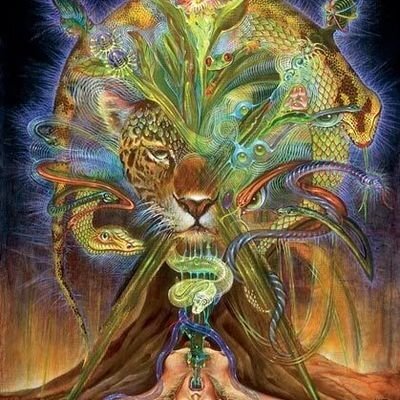
"#Fisher’s frustration with this #lackofthenew led to the development of what has become his most famous (and, arguably, most controversial) cultural critique: #hauntology. Through his work on this topic, written in blogospheric collaboration with the music critic Simon Reynolds, Fisher described how the potential futures we once looked forward to — in our fictions, our music and our politics — have repeatedly failed to materialise and, in their place, we have a culture defined by repetitive cycles of retrospection and #pastiche."

*Back when Precolumbian Incan Peru had thirst-trap Midjourney girls strolling the stone streets in bikinis. #pseudohistory #pastiche #slop #LLM #animated #weird #vaguelyfunny #YouTube #erudite #archaeologistnightmare
youtu.be/HPRpx6qJaZg?...
AI reimagines how the Incas li...

Aujourd'hui sur Blog à part –
Empowered and the Soldier of Love
Vous vous souvenez quand j’avais dit que la série Empowered était terminée? Comme dirait Feldup: j’ai menti. Comme le prouve ce Empowered and the Soldier of Love.



Aujourd'hui sur Blog à part – Empowered and the Soldier of Love
Vous vous souvenez quand j'avais dit que la série Empowered était terminée? Comme dirait Feldup: j’ai menti. Comme le prouve ce Empowered and the Soldier of Love.


Aujourd'hui sur Blog à part – Empowered and the Soldier of Love
Vous vous souvenez quand j'avais dit que la série Empowered était terminée? Comme dirait Feldup: j’ai menti. Comme le prouve ce Empowered and the Soldier of Love.
Minashi-by-the-Sea (The Piping that Spoke of Nyarlathotep)
#Wss366 #MastoPrompt #MicroPrompt 9/7 -11
As the moon touched the hazy rim of the ocean, the Cat Who Stole Dreams indulged in one last #meal of the inn’s famed curried prawns, a #mash of almonds and sweet cream, and #distilled lime blossom liqueur. It was just a sip, enough to fend off the night's chill, no more.
Then, as the full dark of night blanketed Minashi-by-the-Sea, she donned her black, dew-spangled cape and her quietest #slippers and went out into the #late night. All was still except for the laughter of the fountains. The chorus of cicadas and revelers had long fallen silent. Not even the few unfortunates stirred by dreams of dark things said to slither from Hypnos Nor Slid’s House heard the soft footsteps of Kurotsuki.
With catlike grace, she climbed the outer walls of the High Citadel of Perpetual Petals. So lithe was her ascent that not a single petal of the trees that ringed that lofty place was disturbed, and thus the #wards that are triggered by their fall remained silent. The silent monitors, without the walls, perhaps saw a shadow flicker, but nothing more.
Thus, Kurotsuki Kaibyō reached a vantage from which she could observe the Toads of Leng cavorting and hear the fateful shrilling of the piping within the tower. The #luminous toads as they danced #round the tower #instilled no fear in her heart, yet a #current of dread set her fur to bristle, hearing the piping that spoke of Nyarlathotep, for it came from far beyond the ken of man.
Woe betide the mortal who, in a dream or drugged state, passes through the portals to that eldritch creature’s dimension. Better to face the nightgaunts or to be torn asunder by the ghouls of Pickman’s ilk than to glimpse the dwellers of that realm.
Shaken but undeterred, the queen of thieves came away that night ready to plunder the heart of Minashi-by-the-Sea.
#MicroFiction #TootFic #Serial #NMPrompts #NMV366 #NMMP #Lovecraft #LordDunsany #Pastiche #Cats #Otherkin #Catgirl #Neko

Sherlock Holmes is back in the latest pastiche from author Nicholas Meyer. He really captures the tone of the original Conan Doyle stories. Review--> #Bookthreads #BookSky #BookBlogger #BookReview #ALC #SherlockHolmesandtheRealThing #HighBridgeAudio #Mystery #SherlockHolmes #NicholasMeyer #Pastiche
Minashi-by-the-Sea (The Toad-Things of Leng)
#Wss366 #MastoPrompt 9/4 #MicroPrompt 8/27-29
Kurotsuki Kaibyō #yawned over her cup of strong Celedawn tea. The rich scent of #cardamom and cloves tickled her nose. She would need its invigorating properties, for she had a long night ahead of her and an even longer day.
Soon the moon would set, and it would be time to be about her business. Tomorrow would be the Festival of Lime Blossoms on the Water, and all the people of Minashi-by-the-Sea would be celebrating.
Except for the guards of the High Citadel of Perpetual Petals. The #Toads of Leng cared not for blossoms, scents, or even festivals. Their only loves were the repellent offal they were fed and dancing to the thin, insidious piping that emerged from the lofty tower on moonless nights.
Tonight, on cat feet, she would locate where the #Toad-things of Leng performed their hideous, obscene midnight capers. She would not be one of their flayed, #skinned victims that appeared floating in the harbor as dawn broke upon its lime blossom flotilla. And then tomorrow, when the #Toads were at their sleepiest and the citizens of Minashi-by-the-Sea frolicked amid the lime blossoms, she would #zip into the tower and be gone before anyone knew of her pilfering.
#MicroFiction #TootFic #Serial #NMPrompts #NMV366 #NMMP #LordDunsany #Pastiche #Cats #Otherkin #Catgirl #Neko
Minashi-by-the-Sea (Kurotsuki Kaibyō 黒月怪猫 )
#Wss366 #MastoPrompt #MicroPrompt
It is said that cats and their kin walk in #forgotten places. One such was Kurotsuki Kaibyō, the dream-stealer. But what can we say of her: dusk gray, midnight black, amber dawn, tawny day; silent as the wind; Buddha still; a voice of mirth or stiletto-steeled death? Who can tell, for none still inhabit Far Karabash, High Mirrus, or Xanadu? They are but whispered tales and empty, dusty streets.
Some proclaim she came from Atlantis, but the fish do not tell, and others say she hails from ----, whose name is #forgotten, along with its plazas and palaces.
The #harbor #drew Kurotsuki-chan with smells of tar; fresh seabream; mussels and shrimp stewed in a thick, sweet sauce, while the singsong of the polyglot people who thronged its byways soothed her ears, and the old sailors, easy prey for such as she, willingly sold their tales and dreams for a drink."
She stopped at a #harbor inn, run by a sly, iron-gray catkin with a name all hisses and nyas. Some said it meant “She who Provides Fresh Fish and Warm Beds.” Others said it was the same as her establishment, “Cat Haven.” Those who stayed there said various things and generally muddled the answer with amusing nonsense.
As Kurotsuki-chan entered, a whisper went round, and those who were wise hastened to secure a berth in some merchantman, outward bound for lands of heather mist, or, if desperation and despair drove them, for the fjord-bound ports of the cold north.
#MicroFiction #TootFic #Serial #NMPrompts #NMV366 #NMMP #LordDunsany #Pastiche #Cats #Otherkin #Catgirl #Neko
Client Info
Server: https://mastodon.social
Version: 2025.07
Repository: https://github.com/cyevgeniy/lmst