
A recent blog post from @aidybarnett on his decision to halve his research output (for the greater good of all):
#SlowScience
📍 #Radboud University Summer School
"Critical #AI Literacies for Resisting and Reclaiming"
22 June 2026 #Nijmegen
📍Statement from the #organizers
"We are a group of #scholars committed to diversity, critical thinking, decoloniality, respect of expertise, slow science, and conceptual clarity values in academia. We strongly encourage people from underrepresented groups to apply."
#systemsmedicine #criticalAI #diversity #decoloniality #arts
A movement perfectly aligned with current times: the need for a slower science. A system that enables equal opportunity irrespective of gender, ethnicity, wealth, identity, etc. Slow science that does not burn its workers, respecting different career choices and abilities. More time for reflecting and planning, and for research at a pace that enables quality, not competitive quantity. A science requiring fewer resources, respecting the environment, and focusing on the real societal needs, not in economic gain for the few or hollow "innovation".
Est-ce qu’il y a encore du sens à organiser de grandes conférences scientifiques internationales ?
📖 Au cours d'une résidence d'écriture avec des collègues de #STS il y a deux ans, nous avons écrit un texte collectif pour imaginer d'autres formes d'échanges scientifiques, en mode #SlowScience.
Il vient de paraître dans le Journal of Environmental Media 👉 https://intellectdiscover.com/content/journals/10.1386/jem_00153_1
🧵J'en parle dans ce fil.
[1/5]


On generative AI and reproducibility
Some thoughts on generative AI, reproducibility, and why the praxis of slow and reproducible science provides a useful lesson for navigating the lures of “AI”.


In der Woche vom 21.–26.09.2025 fand ein Transformative Research Retreat für Nachwuchswissenschaftler*innen in der Nachhaltigkeits- und Friedens- und Konfliktforschung statt. Das Retreat bot den Teilnehmenden Raum für konzentriertes Denken und Arbeiten, kollegialen Austausch und Beratung sowie Regeneration und Community-Building und Regeneration. Organisiert wurde die Woche von der Initiative FORUM, zu der die ZIN-Projekte SUNRISE und LATERNE gehören.
#sustainablescience #slowscience #nachhaltigewissenschaft #forum #retreat #wissenschaft
#sustainablescience #slowscience #nachhaltigewissenschaft #forum #retreat #wissenschaft


Wie kann Wissenschaft entschleunigt werden?
Beim Early Career Scientist Treffen haben wir Slow Science weiter vermittelt 🌱
#SlowScience #Wissenschaft #sustainable #sustainableresearch #NachhaltigeForschung
Beim Early Career Scientist Treffen haben wir Slow Science weiter vermittelt 🌱
#SlowScience #Wissenschaft #sustainable #sustainableresearch #NachhaltigeForschung


In der Wissenschaft herrscht oft hoher Druck: Publikationen, Metriken, Konkurrenz. Das führt zu oberflächlicher Forschung und belastet die mentale Gesundheit der Forschenden.
Slow Science setzt dagegen auf neugiergetriebene Forschung, Verantwortung gegenüber der Gesellschaft und das Wohlbefinden der Forschenden. Wir haben uns in unserer Werkstatt mit dem Konzept auseinander gesetzt.
#slowscience #nachhaltigewissenschaft #entschleunigen #wissenschaft #sustainable #sustainablescience
Slow Science setzt dagegen auf neugiergetriebene Forschung, Verantwortung gegenüber der Gesellschaft und das Wohlbefinden der Forschenden. Wir haben uns in unserer Werkstatt mit dem Konzept auseinander gesetzt.
#slowscience #nachhaltigewissenschaft #entschleunigen #wissenschaft #sustainable #sustainablescience


The author also mentions the idea that students who are pushed out just can't "make it". I'm reminded of Isabella Stengers' "Another Science Is Possible: A Manifesto for Slow Science". (3/4)
#PhilSci #SlowScience
Another Science is Possible: A...
Colleagues in #research, who has actually been dreaming of a "massive acceleration of scientific research"?
Research and its quality highly depend on humans, their subjectivity, and the time spent on that research. Automating research (incl. the writing) goes against producing high quality, ethical & independent research.
To do research more quickly (i.e. do more research), hire more researchers.
#SlowScience
This is a truly frightening itw https://www.vub.be/en/news/flattery-and-pitfalls-ai-in-science #noAI #ResistIAgen #academia

Another paper is with #MethodsInPsychology at #Elsevier submitted in the middle for February.
6 months later and it doesn't even have a second #reviewer yet.
I am an advocate of #SlowScience but that is not what I meant by it :(
#PeerReview #frontiers #science #publishing #frustrating #AcademicJournals #academia #psychology
My paper is now with #frontiersin #psychology for 4 months since submission.
I don't even have reviewers yet :(
I am an advocate of #SlowScience but that is not what I meant by it :(
#PeerReview #frontiers #science #publishing #frustrating #AcademicJournals #academia
Read books. Read academic articles written by human beings. Read long-length blog posts written by people of flesh and blood. Ultimately. when it comes to scientific research there can be no shortcuts to the real hard work of really absorbing the meaning behind the text.
"Even if individual scientists benefit from adopting AI, it doesn’t mean science as a whole will benefit. When thinking about the macro effects, we are dealing with a complex system with emergent properties. That system behaves in surprising ways because it is not a market. It is better than markets at some things, like rewarding truth, but worse at others, such as reacting to technological shocks. So far, on balance, AI has been an unhealthy shock to science, stretching many of its processes to the breaking point.
Any serious attempt to forecast the impact of AI on science must confront the production-progress paradox. The rate of publication of scientific papers has been growing exponentially, increasing 500 fold between 1900 and 2015. But actual progress, by any available measure, has been constant or even slowing. So we must ask how AI is impacting, and will impact, the factors that have led to this disconnect.
Our analysis in this essay suggests that AI is likely to worsen the gap. This may not be true in all scientific fields, and it is certainly not a foregone conclusion. By carefully and urgently taking actions such as those we suggest below, it may be possible to reverse course. Unfortunately, AI companies, science funders, and policy makers all seem oblivious to what the actual bottlenecks to scientific progress are. They are simply trying to accelerate production, which is like adding lanes to a highway when the slowdown is actually caused by a toll booth. It’s sure to make things worse."
https://www.aisnakeoil.com/p/could-ai-slow-science
#AI #GenerativeAI #Science #AcademicPublishing #SlowScience #CriticalThinking #Productivity

Having missed yesterday's (extended) #conference #deadline I'm now all justifying my self with a #slowscience #mindset , thinking about that priest which "took up #scientific problems as they interested him, in whichever field, and he pursued them as far as he wished and no further; and he published his work if and when he wanted to, and only when he was fully satisfied with it"
- https://www.bbc.com/future/article/20240626-the-priest-who-predicted-black-holes-in-1783
... though I'm perhaps not as #multidisciplinary
🤓
https://compsci.science/slowscience
I'm just learning about #SlowScience and wondering hard why is it I just heard of it? Can't seem to contact their Academy. Does anyone know what is the status of the movement?

Rethinking Slow Science from the Perspective of Warzone Academics
https://trafo.hypotheses.org/56755
#science #research #academia #war #resilience #humanrights #SlowScience
#WarzoneAcademia #ScholarsAtRisk #ScienceInUkraine


For many in academia, the Easter holidays are a time to reflect, spend time outdoors and with loved ones, returning to their jobs rested and productive. For Ukrainian scholars it is not that simple. A collective piece by ZOiS' #UNET researchers on the concept of #SlowScience and the obstacles they navigate daily is now out on TRAFO – Blog ⤵️
https://trafo.hypotheses.org/56755
Generative AI and research integrity
GPT based text generators like ChatGPT or Microsoft Copilot have rapidly become a “cultural sensation”. Here I provide scientific background and guidance on how to think critically and mindfully about these tools in academic writing and research.
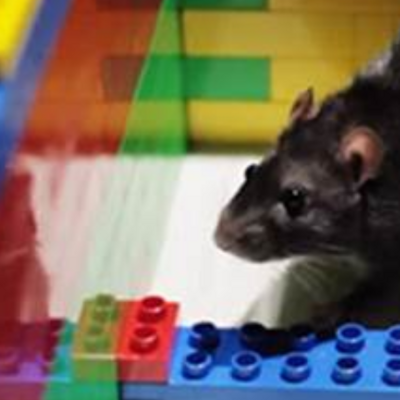
Also, by the way, this paper contains the history of #VTE that I often use in my talks. (Updated to include not just the technological breakthroughs in experimental techniques and the mathematical sciences, but also the theoretical breakthroughs that were necessary to get us to see rats "thinking about the future".)
I think this speaks to why science is slow and why we have to look at science over a long time scale

@sortee Thanks for this. I just watched the webinar by Yseult Héjja-Brichard, “In Defense of Depth: Slow Science for Sustainable Progress in Ecology and Evolution”. I found myself nodding along and taking notes and screenshots. It’s good stuff.
Client Info
Server: https://mastodon.social
Version: 2025.07
Repository: https://github.com/cyevgeniy/lmst