#Sunspots

2026-02-23

Well, that'll fix #GlobalWarming, eh? 😬

NOAA confirms a 'full-blown' #GrandSolarMinimum

"#GSM's have the potential to hold sunspots at ZERO for multiple decades. [Apparently, there are currently ZERO sunspots at the moment]. The most famous example is the #MaunderMinimum (1645-1715) which brought plummeting temperatures, crop loss, famine, and the deaths of hundreds of millions of people ACROSS the planet."

Read more (sensationalistic source):
sott.net/article/440781-NOAA-c

NOAA Solar Predictions (to 2030):
swpc.noaa.gov/products/predict

#Sunspots #SolarMinimum #WinterIsComing? #MiniIceAge

2026-02-18
The sun☀️ with it's sunspots

#astrophotography #sun #sweden #astro #sunspots
Stella-Luna Observatory ✨🌙StellaLunaObs@mastodon.online
2026-02-10

I wasn't going to do it. I was sure the sky would be cloudy and the sunspot gone. Today, however, I could see Sun (sort of) so I had to try. Seeing conditions were not poor, they were bad. The atmosphere was stirred up and clouds were present -- at times blocking the view entirely. So, with all of those qualifiers, here is our best effort recording departing sunspot AR4366 -- weakening but reportedly still issuing flares -- and a couple of its companions.

#sunspots #solarastronomy

These are two partial views of the solar disk, one in color, the other is monochrome, showing a few dark sunspots and traces of AR4366 at about the one o'clock position of the solar arc.These are two partial views of the solar disk, one in color, the other is monochrome, showing a few dark sunspots and traces of AR4366 at about the one o'clock position of the solar arc.
Stella-Luna Observatory ✨🌙StellaLunaObs@mastodon.online
2026-02-08

Farewell to Active Region 4366 -- the giant sunspot complex seen in Sun's upper right quadrant (northwest). The region continues to issue flares but is showing signs of decay, according to forecasters. Soon the sunspot will disappear over the Solar limb; today was the last day I will observe that feature. While the sky was clear, and winds were light, seeing was not good. We take what we can get! #sunspots

Stella-Luna Observatory ✨🌙StellaLunaObs@mastodon.online
2026-02-08

Though seeing was predicted to be "bad", the sky was clear and blue, and transparency was very good. So, with the temperature at 14°F, and the wind ripping around the observatory, we recorded images of the sunspot at AR4366. They turned out well. Good thing, too, since the enormous sunspot complex is moving toward Sun's western horizon and will soon disappear. We may have another opportunity tomorrow! For now, we're pretty happy. #sunspots #AR4366 #solar #astronomy

The light colored semicircle of the sun is marked by a scattered selection of dark sunspots. A very large set, AR4366, is in the upper right-hand area of the image.A closeup view of the sunspot at active region 4366 shows many fine details of the structures.
Kevin FreitasKevinFreitas
2026-02-05

Our star today as seen from West Seattle. Lots of activity but sunspot region 4366 is mighty impressive!

A close-up image of the sun, featuring a bright orange surface with several sunspots visible across its disk. The background is black, highlighting the sun's prominence.
2026-02-05

Today’s view (Feb 5, 9:34am EST) of the enormous sunspot region 4366, compared with my previous shot (2nd photo, taken Feb 2).

It’s clearly grown since rotating into view — Space.com says it’s now a staggering 15 Earths wide, big enough to see without telescopes or binoculars (though you still need eye protection). And it’s been spitting out powerful M- and X-class flares. Clear skies to all you aurora hunters out there!

#photography #astronomy #astrophotography #sun #sunspots #solarflares

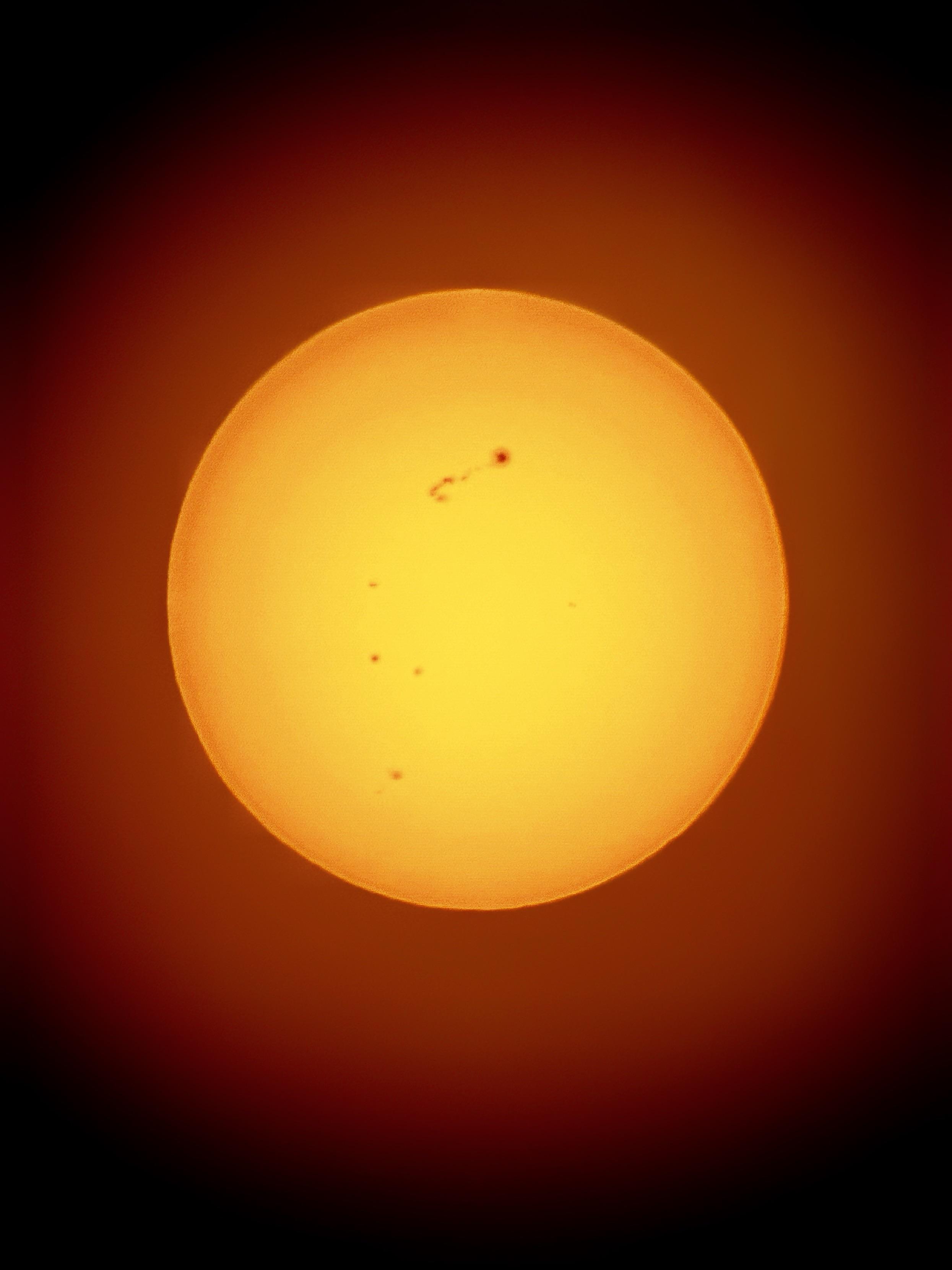
Photo of the sun as seen through a telescope with a solar filter. It appears as a bright yellow ball surrounded by a soft red-orange glow that fades to black at the edges of the image. A group of prominent sunspots can be seen at the center of the sun’s northern hemisphere, with a scattering of other sunspots below.

Both photos in this post were shot on an iPhone 15 attached to a Celestron 130mm reflector telescope with a Celestron EclipSmart orange-tint solar filter. Edited in Snapseed to bring out more contrast and structure in the sunspots.Photo of the sun taken a few days earlier with the same equipment. In this photo the sun has a more reddish hue. The sunspots are on its northwestern quadrant and appear less prominent.
2026-02-05

My phone has been buzzing about solar flares and these monster sunspots did not disappoint! This image was captured at 1pm on February 4th.

Full res + details: astrobin.com/15lhx0/

#astrophotography #sun #sunspots #solarflares #space #touptek #skywatcherUSA

2026-02-04

A big whopper. #Sun #SeestarS50 #sunspots

Sun around 14:40 Wednesday February 4
2026-02-02

Dr. Ryan French discusses the new sunspot on the Sun and explains a little about how magnetic fields can get busy releasing energy.

youtube.com/shorts/jrVdiAAD2do
Check out his recent book:
The Sun: Beginner's Guide To Our Local Star

#astronomy
#sunspots
#sun
#photography
#astrophotography
#smartphoneastronomy

2026-02-02

Thanks to a heads-up post from @appagalcrochet, I hauled out my telescope this morning to check out newly-formed sunspot region 4366 — an area ten times wider than the Earth! It’s been emitting powerful X-class solar flares, which reportedly triggered radio blackouts across the South Pacific. The fact that life is able to exist at all on our tiny orb amid such unimaginably powerful cosmic forces continues to amaze me.

#photography #astrophotography #sun #sunspots #solarflare

Photo of the sun taken on Feb 2, 2026 at 11:16am. The sun appears as a large orange ball surrounded by a reddish glow softening into black at the edges of the frame. Several sunspots pepper the sun’s western side, particularly a row of very dark spots at the upper left quadrant. Taken with an iPhone 15 attached to a 130mm reflector telescope with a solar filter.
2026-01-27

Pretty little spot.
Sun was out so a bit of a wide shoot was required to capture some of it.

📷 #FujiFilm #X-T5
🔭XF18-135mm

#Photography #Winter #Art #Ruins #Sunspots #Forest

Photo of ruined "church looking" wall standing over a sunlit pond. There is forest all around and snow on the ground.
2026-01-21

It has been a busy couple days for Earth's magnetic field as the sun has been pummeling us with material. With all this sunspot activity, it's easy to see why!

Full res + details: astrobin.com/7fhjb5/

#astrophotography #photography #sunspots #aurora #skywatcherUSA #touptek 🔭 📷

A full disk solar image showing off a combination of lines and spots covering the surface

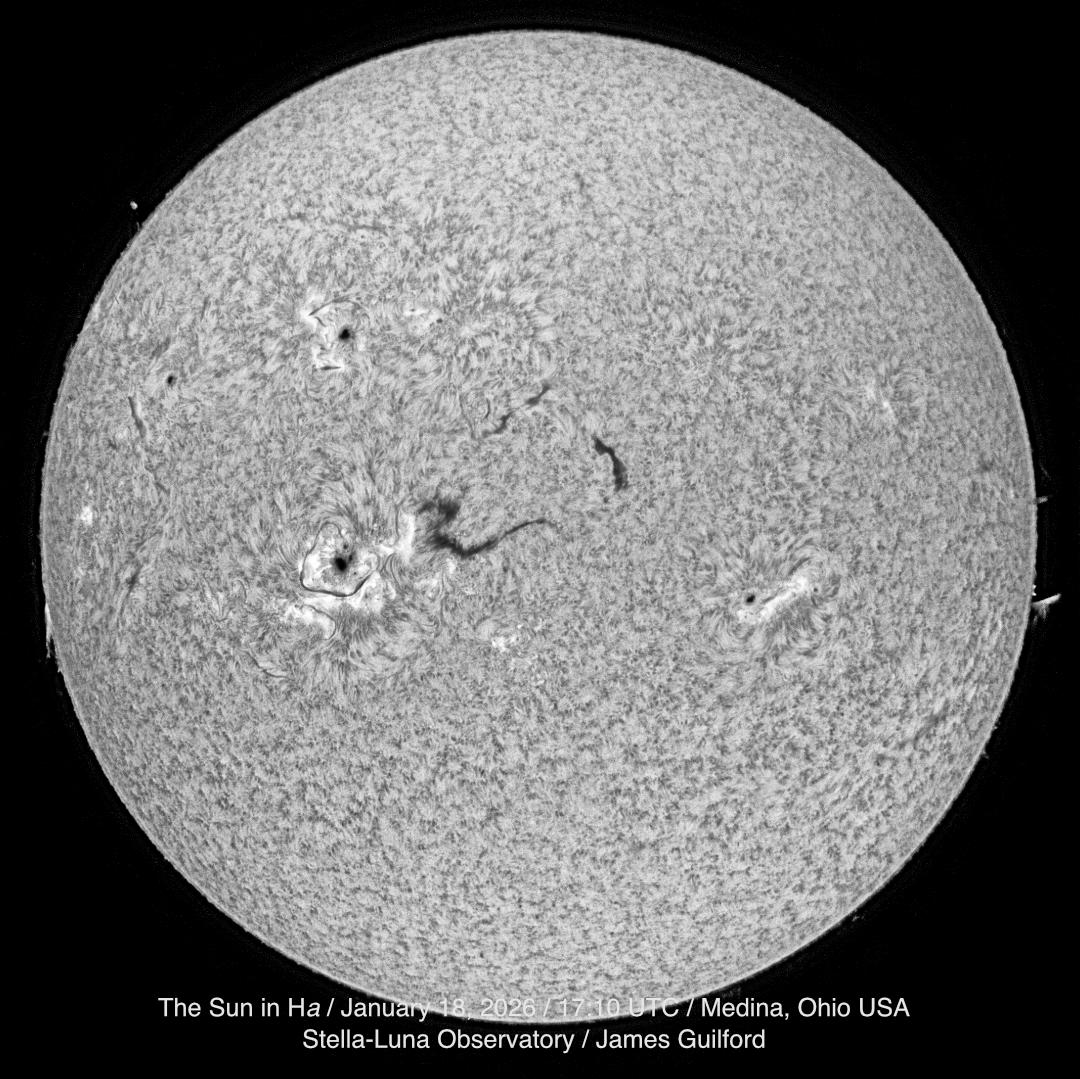
A break in the weather allows view of an active Sun

Full disk image of Sun as viewed in hydrogen-alpha light. Snake-like, dark filaments grace the center of the image. Several sunspots are also noted. Dominant in its influence on surrounding plasma features, is Active Region 4341 which exploded with a powerful flare one hour after this image was recorded.

With recent weather, we believed the observatory might be closed until spring. On January18, however, the skies were clear and blue with very little wind. We unsealed the dome, brushed off some of the accumulated snow, and aimed at Sun. The first thing we observed was the presence of large filaments at the center of the disk. One filament, Z-shaped, was in immediate proximity to a large sunspot at Active Region 4341. Also visible were multiple prominences around the disk; Sun is still active! The powerful magnetic forces surrounding AR4341 are made evident by its influence upon Solar plasma — twisting and aligning the visible features like iron filings around a science classroom magnet.

A close-up view of Solar Active Region 4341, in hydrogen-alpha light. Snake-like, dark filaments grace the center of the image. Several sunspots are also noted. Dominant in its influence on surrounding plasma features, AR4341 exploded with a powerful flare one hour after this image was recorded.

While the sky was clear and blue, the temperature was wicked cold for standing around on stone floors. Also, touching metal telescopes, properly allowed to reach the ambient temperature of 19°F, with bare hands is, painful. The laptop computer also found the temperature uncomfortable for, while its battery was charged to about 60% capacity, the system quit complaining of low battery. Attaching the computer’s charger let us finish the session.

Video from NASA’s Solar Dynamics Observatory spacecraft, showing the X1.9/3b flare at AR4341. — January 18, 2026

One hour after we recorded the images of AR4341, the sunspot exploded with a massive X1.9-class flare. Expansive auroral displays are expected early January 20 though here, in Northeast Ohio, we are expecting cloudy, winter weather.

#2025 #AR4341 #astronomy #solar #sun #sunspots #winter

Stella-Luna Observatory ✨🌙StellaLunaObs@mastodon.online
2026-01-18

With a beautiful clear, blue sky today, we recorded Sun in hydrogen-alpha light. Of particular interest was active region 4341 and, as it turns out, it was particularly active right after we imaged it. “Sunspot 4341 erupted today (Jan. 18 @ 1809 UTC),” reported Spaceweather.com, “producing an X1.9-class solar flare. The explosion lasted for hours, which makes this flare even more powerful than its ‘X1.9’ rating would suggest.” #sunspots #astronomy #sun

2026-01-04

Solar View for Jan 4th 2026!

Lovely skies right now in Cbus, let's hope I get some views tonight too!
#sun
#sunspots
#astronomy
#solar
#photography
#astrophotography
#smartphoneastronomy

2026-01-02

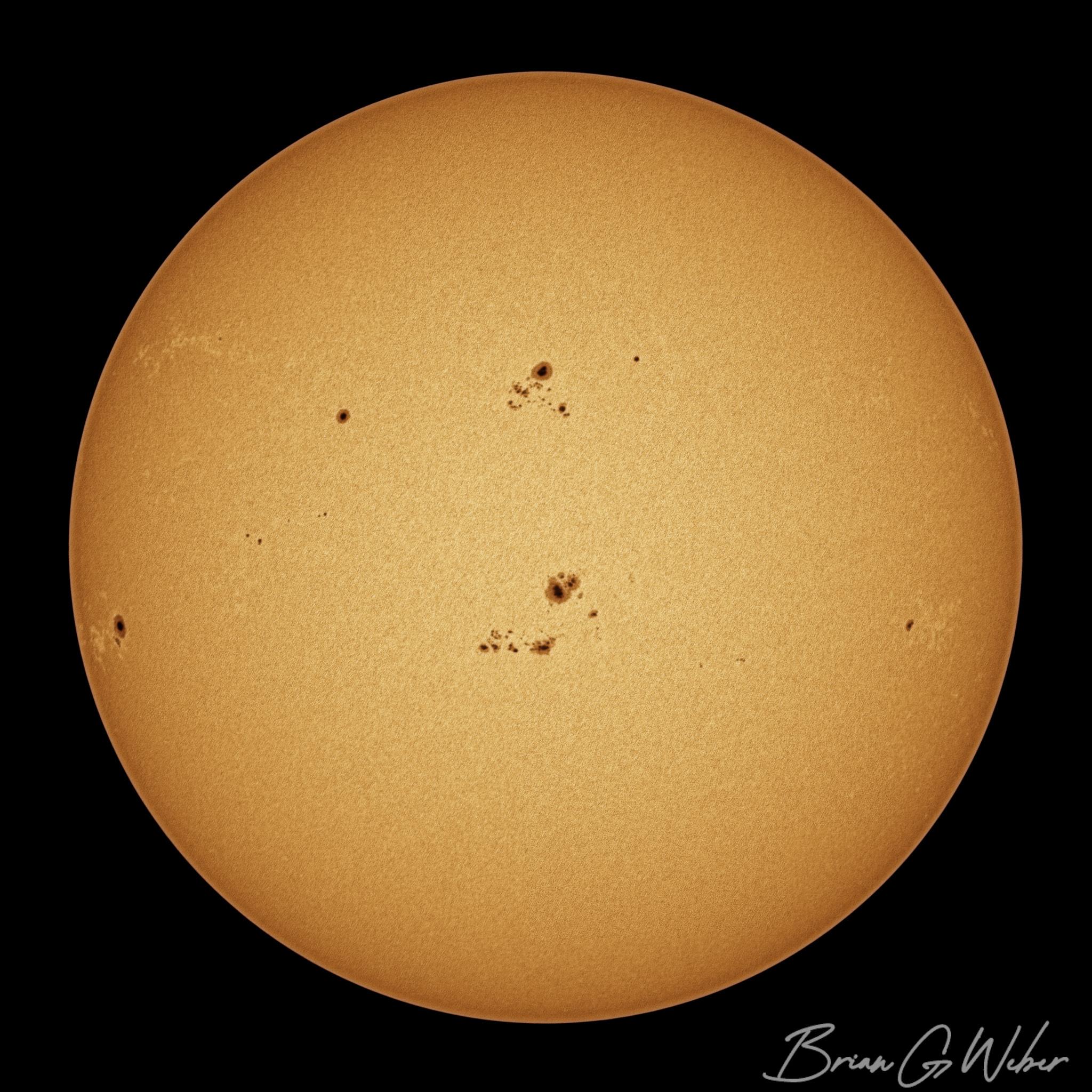
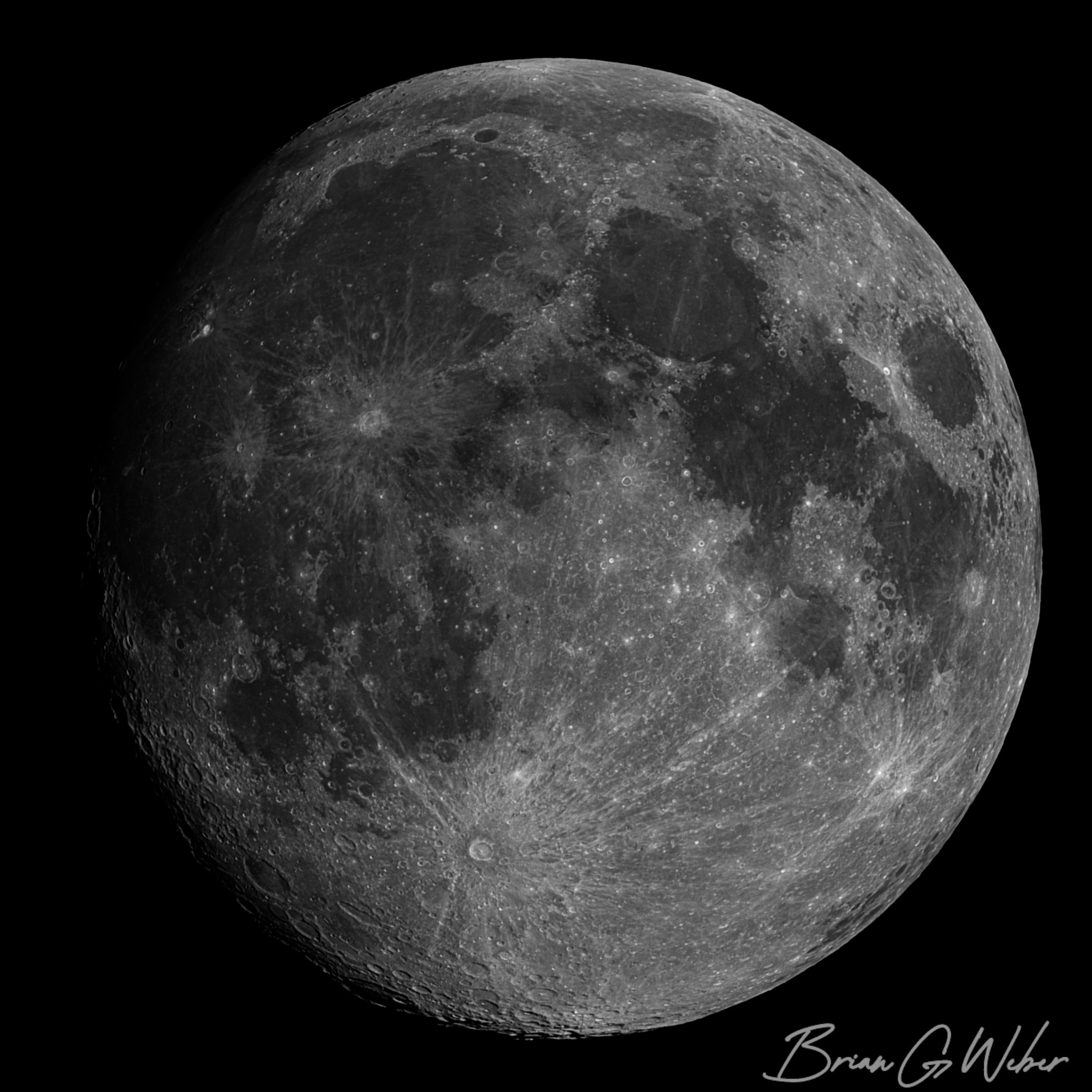
My first sun/moon pair of 2026! The moon was 97% illuminated last night and then sun was captured this morning as it peeked up over my house.

Moon: astrobin.com/kbxtga
Sun: astrobin.com/6xtltb

#astrophotography #newyear #sun #moon #sunspots #aurora #solarsystem #touptek #skywatcherUSA

A 97% illuminated waxing moon photographed on the evening of Jan 1, 2026A full disc solar image featuring a few clusters of sunspots at various latitudes in the middle of the surface

Client Info

Server: https://mastodon.social
Version: 2025.07
Repository: https://github.com/cyevgeniy/lmst