
@eff , #OpenRightsGroup , #BigBrotherWatch , and Index on #Censorship Call on #UK Government to Repeal #OnlineSafetyAct
#bigBrotherWatch


Digital ID plans TORN APART in intense Parliament committee session


📰🚪 When the Pentagon decided to play editor-in-chief, journalists collectively channeled their inner teenage rebels and said "No, thanks" to Big Brother's loyalty oath. Now, the news is as independent as a fourteen-year-old with a curfew, and the "free press" is just an ironic punchline. 😂🔒
https://archivethecontrolstack.substack.com/p/archive-003-badges-surrendered-the #PentagonPressFreedom #TeenRebellion #IndependentJournalism #FreePressIrony #BigBrotherWatch #HackerNews #ngated

2 million !
Do not introduce Digital ID cards - Petitions
https://petition.parliament.uk/petitions/730194
#no2id #digitalId #idCard #idCards #ukpol #labour #privacy #bigBrotherWatch #openRightsGroup
1.2 million and counting have said
"Do not introduce Digital ID cards"
https://petition.parliament.uk/petitions/730194
Have you ?
#uk #ukpol #labour #idCard #idCards #no2id #bigBrotherWatch #openRightsGroup

National ID cards in the UK? No. Just no. The route towards more surveillance and control by the state is a dangerous path.
If you feel the urge, please sign the petition here:
https://you.38degrees.org.uk/petitions/reject-plans-for-a-mandatory-britcard-digital-id

Rights groups urge UK PM Starmer to abandon plans for mandatory digital ID
#HackerNews #RightsGroups #DigitalID #Starmer #UKPolitics #PrivacyRights #BigBrotherWatch

Swansea city centre live facial recognition cameras return on September 26
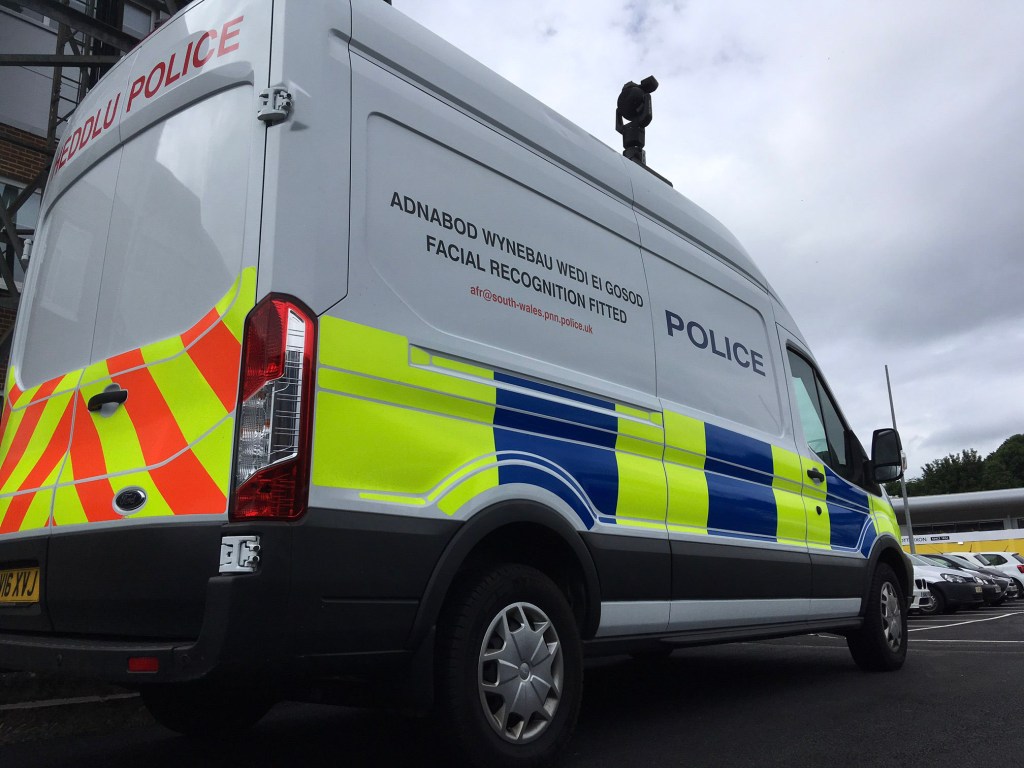
South Wales Police have confirmed that Live Facial Recognition (LFR) technology will be deployed across Swansea city centre on Friday, September 26. The force says the system will help officers identify wanted individuals and high‑risk missing people as part of ongoing public safety measures.
Marked vehicles and signage will highlight the areas where cameras are in use, and officers will be available to answer questions or provide demonstrations.
Before each deployment, police compile a watchlist of individuals who are either wanted by the courts, suspected of offences, or considered at risk of harm. Cameras then scan faces in real time and compare them against the watchlist. If a possible match is flagged, an officer makes a visual check before deciding whether to approach the person.
South Wales Police stressed that anyone not on the watchlist cannot be identified. Images of people who do not trigger an alert are deleted immediately, while alerts are wiped within 24 hours. CCTV footage used by the system is retained for 31 days.
How the technology works in Swansea
The LFR system uses cameras to scan faces in real time and compare them against a police watchlist. Officers then decide whether to engage with anyone flagged by the system.
Police say the technology is used to locate suspects, wanted people and vulnerable missing individuals. They emphasise that images of people not on the watchlist are never stored.
🖥️ What is facial recognition?
Live Facial Recognition (LFR)
Cameras scan faces in real time and check them against a watchlist of wanted or high‑risk individuals.
Retrospective Facial Recognition (RFR)
Still images from CCTV, body‑worn cameras or social media are checked against police databases after an incident.
Operator‑Initiated Facial Recognition (OIFR)
Officers can take a photo on a mobile device and check it instantly against police records.
Why police use it: To identify suspects, find missing people and protect the public.
Why campaigners are concerned: Could be used without enough legal safeguards, misidentify innocent people or expand surveillance in public spaces.
Why South Wales Police say it’s needed
South Wales Police have been one of the UK’s leading adopters of facial recognition technology, deploying it at major events and in busy town centres. Earlier this year, the force confirmed similar operations in Bridgend and during Operation Sceptre week in Swansea.
The technology is part of a wider rollout that includes a mobile facial recognition app for frontline officers in South Wales and Gwent. Known as Operator Initiated Facial Recognition (OIFR), the app has already led to arrests and the identification of missing people.
What campaigners are warning about
An audit by the Information Commissioner’s Office (ICO) earlier this year gave South Wales Police’s use of both live and retrospective facial recognition a “high” assurance rating, citing strong safeguards and oversight. The watchdog found no evidence of bias across age, gender or ethnicity.
However, campaigners remain sceptical. Groups such as Big Brother Watch argue that live facial recognition represents a “significant expansion of the surveillance state” and risks treating “every passer‑by as a walking barcode.” Critics also point out that there is still no dedicated law governing police use of the technology.
What happens next
The force has encouraged anyone with questions or concerns to speak directly to officers during Friday’s deployment. Information leaflets will also be available, and further details about how the technology works can be found on the South Wales Police website.
Related stories from Swansea Bay News
Watchdog gives high marks to South Wales Police over facial recognition use – but campaigners remain wary
Independent review praised safeguards but critics say concerns remain.
Your face, their tech: Police turn facial recognition back on in Bridgend
Deployment in town centre reignited debate over privacy and policing.
South Wales and Gwent Police roll out facial recognition app to frontline officers amid privacy concerns
New mobile app allows instant checks against police databases.
Police to use live facial recognition cameras in Swansea city centre
Previous deployment in Swansea highlighted public engagement efforts.
South Wales Police restarts facial recognition tech usage – although critics reiterate privacy concerns
Civil liberties groups continue to call for stronger legal safeguards.
#BigBrotherWatch #CCTV #FacialRecognition #ICO #InformationCommissionerSOffice #LiveFacialRecognition #PoliceWatchlist #privacy #SouthWalesPolice #Swansea #SwanseaCityCentre #Technology #watchlist

Checkpoint Britain: the dangers of digital ID and why privacy must be protected | Big Brother Watch
https://alecmuffett.com/article/114948
#BigBrotherWatch #DigitalId #IdCards #censorship #identity #immigration #surveillance #uk

Checkpoint Britain: the dangers of digital ID and why privacy must be protected | Big Brother Watch
Our groundbreaking new report, ‘Checkpoint Britain: the dangers of digital ID and why privacy must be protected’ is a timely response to the Government seeming to be on the brink of forcing every UK adult onto a giant digital ID system – all in the name of tackling illegal immigration.
https://bigbrotherwatch.org.uk/campaigns/no2digitalid/
#bigBrotherWatch #censorship #digitalId #idCards #identity #immigration #surveillance #uk

Sainsbury's, the UK's second largest supermarket chain, has begun an eight-week trial of facial recognition technology in two of its stores as part of its efforts to address the escalating problem of shoplifting and retail crime.
#sainsburys #privacy #bigbrotherwatch #bbw #facialrecognition

#NETPOL: Facial recognition at protests: a guide for protesters and legal observers
This is a guest post by #BigBrotherWatch.
If your custody image has ever been taken by the police, but your charges were dropped or you were found not guilty, you can apply to have your custody image deleted. We recommend you do so, to reduce the likelihood of your facial biometrics being retained (unlawfully) and used in facial recognition watchlists
#press #news #media #BreakingNews
https://netpol.org/2023/07/31/facial-recognition-at-protests/

#NETPOL: Facial recognition at protests: a guide for protesters and legal observers
This is a guest post by #BigBrotherWatch.
If your custody image has ever been taken by the police, but your charges were dropped or you were found not guilty, you can apply to have your custody image deleted. We highly recommend you do so, to reduce the likelihood of your facial biometrics being retained (unlawfully) and used in facial recognition watchlists.
https://netpol.org/2023/07/31/facial-recognition-at-protests/
Watchdog gives high marks to South Wales Police over facial recognition use — but campaigners remain wary
The Information Commissioner’s Office (ICO) – which enforces data protection laws – carried out an audit looking at live facial recognition (real‑time camera scans against a police watchlist), retrospective facial recognition (checking images after an incident), and a new operator‑initiated system being trialled on police mobile devices.
What the ICO found
The audit gave both live and retrospective systems a “high” assurance rating, meaning the watchdog found good safeguards in place and only limited room for improvement.
The ICO said the forces:
- Have clear rules and oversight for when and how the technology is used
- Make sure images for watchlists are lawfully obtained
- Carry out privacy impact checks before deployments
- Engage with the public during live operations
- Review every retrospective search afterwards and report the results to oversight meetings
Some recommendations were made, including tightening up how document changes are recorded and making sure data retention rules are always applied consistently.
🖥️ What is facial recognition?
Live Facial Recognition (LFR)
Cameras scan faces in real time and check them against a watchlist of wanted or high‑risk individuals.
Retrospective Facial Recognition (RFR)
Still images from CCTV, body‑worn cameras or social media are checked against police databases after an incident.
Operator‑Initiated Facial Recognition (OIFR)
A trial system allowing officers to take a photo on a mobile device and check it instantly against police records.
Why police use it: To identify suspects, find missing people and protect the public.
Why campaigners are concerned: Could be used without enough legal safeguards, misidentify innocent people or expand surveillance in public spaces.
Police response
Chief Superintendent Tim Morgan, from the joint South Wales and Gwent digital services department, said the findings show the forces are “in a stronger position than ever” to prove the technology is used fairly, legally and ethically.
He stressed there have been no wrongful arrests and no false alerts for several years, and that independent testing has shown the system does not discriminate by gender, age or race.
“Our priority is to keep the public safe and this technology continues to help us bring offenders to justice and protect the public,” he said.
Concerns from privacy campaigners
Not everyone is reassured. Civil liberties group Big Brother Watch has long argued that live facial recognition represents a “significant expansion of the surveillance state” and risks treating “every passer‑by as a walking barcode”.
Campaigners say there is still no dedicated law governing police use of the technology, and warn that even with safeguards, it can be inaccurate in real‑world conditions or misidentify people from minority backgrounds. They are calling for a pause on further roll‑outs until robust legal protections are in place.
Background
South Wales Police has been one of the UK’s early adopters of facial recognition, using it at major events and in targeted operations. The force says it only uses the technology when there is a clear policing need, and in line with national guidance brought in after a legal challenge in 2020.
The ICO’s audit is the first in a new series looking at police use of facial recognition across England and Wales. Further audits of other forces are planned.
#BigBrotherWatch #CivilLiberties #FacialRecognition #ICO #InformationCommissionerSOffice #LiveFacialRecognition #privacy #SouthWalesPolice

#UKGovernment expands #police use of #FacialRecognition vans
by Kate Whannel, August 13, 2025
"More live facial recognition (#LFR) vans will be rolled out across seven police forces in England to locate suspects for crimes including sexual offences, violent assaults and homicides, the Home Office has announced.
"The forces will get access to 10 new vans equipped with cameras, which scan the faces of people walking past and check them against a list of wanted people.
"The government says the technology has been used in London to make 580 arrests in 12 months, including 52 registered sex offenders who breached their conditions.
"However, campaign group #BigBrotherWatch said the 'significant expansion of the #SurveillanceState' was 'alarming'.
"Live facial recognition was first used in #England and #Wales in 2017 during the Uefa Champions League final football match in Cardiff.
"Since then its use has largely been confined to #SouthWales, #London and #Essex including at a Beyoncé concert to scan for paedophiles and terrorists [like elderly Palestine Action activists!]
"The government is now funding 10 vans equipped with LFR to be shared between seven forces, approximately doubling the number of vehicles.
"The seven forces are Greater #Manchester, #WestYorkshire, #Bedfordshire, #Surrey, #Sussex, #ThamesValley and #Hampshire.
"The technology identifies people by taking measurements of facial features including the distance between the eyes and the length of the jawline and then comparing the data to to an existing watchlist.
"Each van will be staffed with a trained officer who checks the matches identified by the technology.
"Simultaneously, the government is holding a consultation on what safeguards are needed to "ensure transparency and public confidence", ahead of drawing up a new legal framework.
"Big Brother Watch is bringing a legal challenge against the #MetPolice's use of the technology, alongside #ShaunThompson, who was wrongly identified by an LFR camera.
#Rebecca Vincent, interim director of Big Brother Watch, said: 'Police have interpreted the absence of any legislative basis authorising the use of this intrusive technology as carte blanche to continue to roll it out unfettered, despite the fact that a crucial judicial review on the matter is pending.
" ;The #HomeOffice must scrap its plans to roll out further live facial recognition capacity until robust legislative safeguards are established.'
"Labour peer Baroness Chakrabarti told the BBC the technology was 'incredibly intrusive' and 'some would say this is yet another move towards a total #surveillance society'."
Read more:
https://www.bbc.com/news/articles/cj4wy21dwkwo
Archived version:
https://archive.ph/I2g32
#Orwellian #UKPol #BigBrotherIsWatchingYou #ThoughtCrime #PalestineAction #Censorship #Authoritarianism
The Home Office has permitted police to run facial recognition scans against images held in the UK’s passport and immigration databases without notifying Parliament or the public, say privacy campaigners.
https://www.computing.co.uk/news/2025/uk-police-secretly-use-passport-photos-in-facial-recognition
#uk #ukpol #bigbrotherwatch #passport #technews #facialrecognition #privacy

🚨 #IcelandFoods, STOP spying on customers with live facial recognition cameras.
I will no longer shop at Iceland if you continue to use this rights-abusive surveillance tech #icelandrichard.
Client Info
Server: https://mastodon.social
Version: 2025.07
Repository: https://github.com/cyevgeniy/lmst