
#GlobularCluster #M15 #DeepField
#Astronomy #Picture of the Day
#globularcluster


The #FAST #GlobularCluster #Pulsar Survey (GC FANS): https://iopscience.iop.org/article/10.3847/1538-4365/ade4ba -> interview with the first two authors: https://www.youtube.com/watch?v=yIdIoOnMP9c

Look up to the sky...
and gaze into a cosmic snow globe filled with more than 100,000 sparkling stars — that’s M13, the Hercules Cluster. One of the brightest globular clusters in the Northern Hemisphere, M13 lies 25,000 light-years away in the constellation Hercules, shining at magnitude 5.8 and even visible through binoculars. In 1974, the Arecibo Observatory beamed a radio message its way in an experiment to contact potential extraterrestrial life.
This is a ball of ancient stars packed so tightly together that resolving each one is a true Herculean challenge! ;-)
#Astronomy #Astrophotography #NightSky #Space #Stars #DeepSky #DarkSky #Cosmos #GlobularCluster #M13 #Hercules #Seestar #Universe #Science #Arecibo #Stargazing #Alentejo #Camping #UnderTheStars #CampingLife #CampingInPortugal
and gaze into a cosmic snow globe filled with more than 100,000 sparkling stars — that’s M13, the Hercules Cluster. One of the brightest globular clusters in the Northern Hemisphere, M13 lies 25,000 light-years away in the constellation Hercules, shining at magnitude 5.8 and even visible through binoculars. In 1974, the Arecibo Observatory beamed a radio message its way in an experiment to contact potential extraterrestrial life.
This is a ball of ancient stars packed so tightly together that resolving each one is a true Herculean challenge! ;-)
#Astronomy #Astrophotography #NightSky #Space #Stars #DeepSky #DarkSky #Cosmos #GlobularCluster #M13 #Hercules #Seestar #Universe #Science #Arecibo #Stargazing #Alentejo #Camping #UnderTheStars #CampingLife #CampingInPortugal
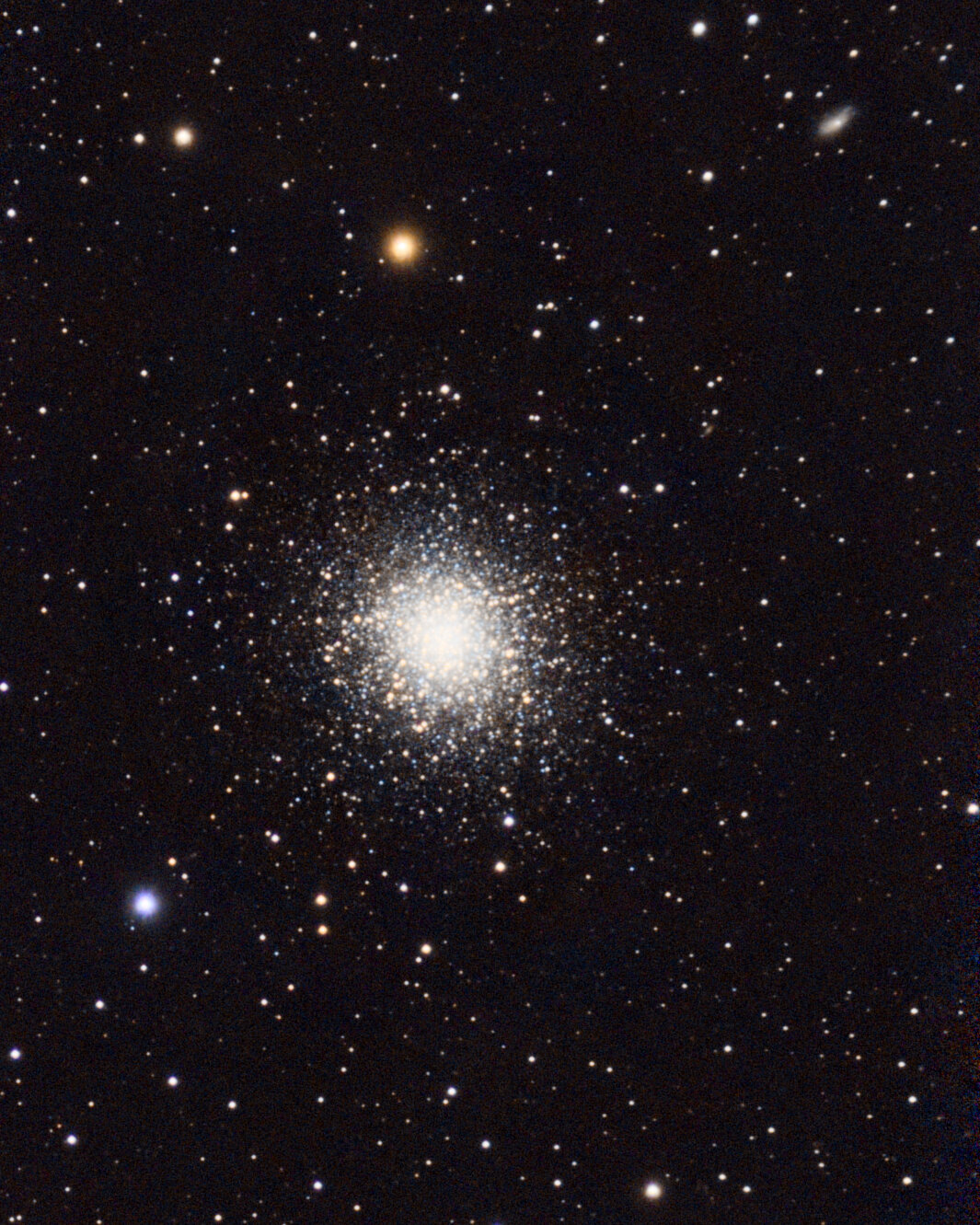
#M13: The Great #GlobularCluster in #Hercules
#Astronomy #Picture of the Day


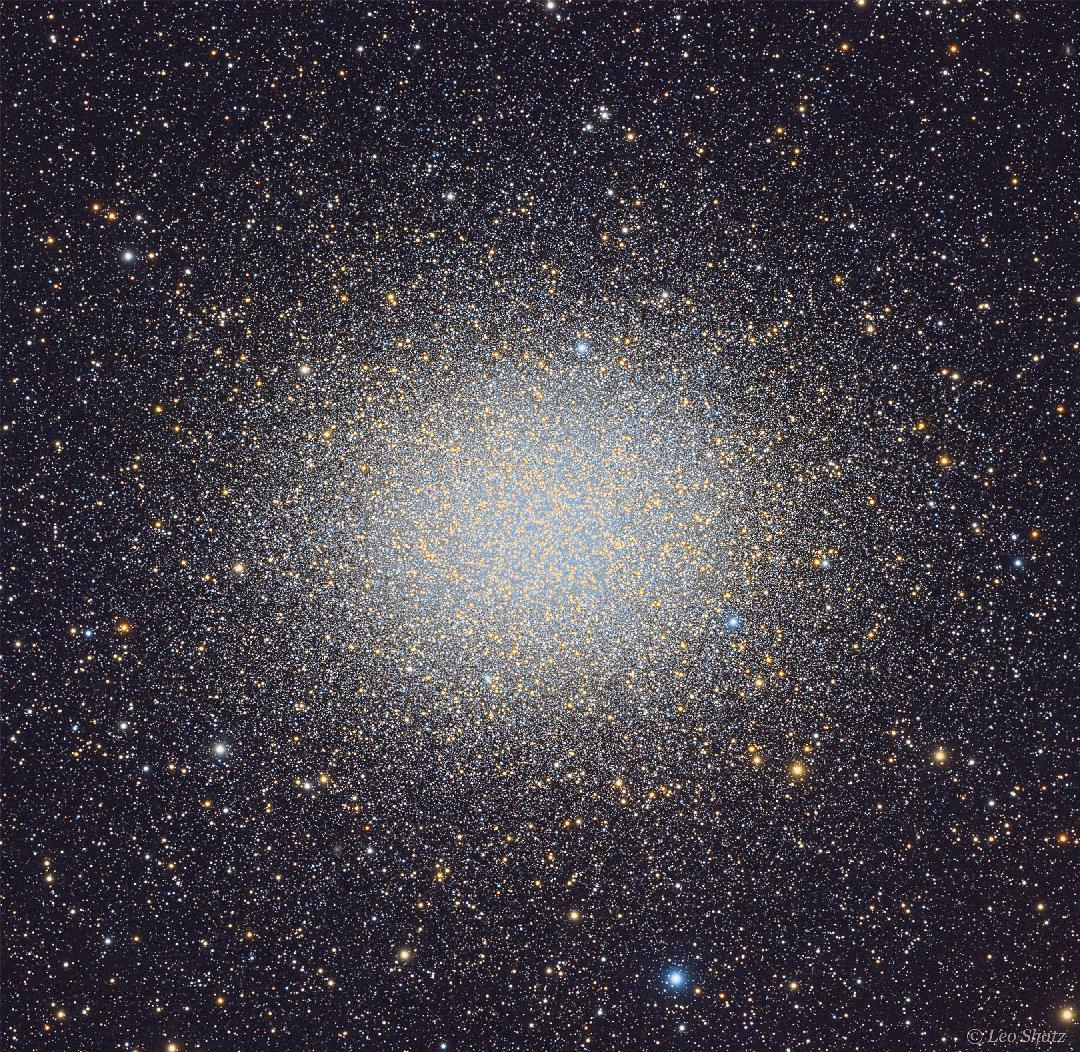
📸 Globular Cluster Omega Centauri
Omega Centauri, or NGC 5139, is the largest and brightest globular cluster in the Milky Way. Located 15,000 light-years away, it holds about 10 million stars — some older than the Sun.
Its mixed stellar ages and compositions hint that it may be the remnant core of a dwarf galaxy.
📷 Data: SkyFlux Team
🛠️ Processing: Leo Shatz
#OmegaCentauri #GlobularCluster #NGC5139 #Astronomy #Astrophotography #StellarSnap

#GlobularCluster #OmegaCentauri
#Astronomy #Picture of the Day

Globular Cluster CMQ3 Meta Quest 3 Review: Open-Face Comfort
https://fullcleared.com/reviews/globular-cluster-cmq3-quest-3-review/

Weekly Update from the Open Journal of Astrophysics – 12/07/2025
It’s Saturday morning again, so it’s time again for an update of papers published at the Open Journal of Astrophysics. Since the last update we have published seven new papers, which brings the number in Volume 8 (2025) up to 92, and the total so far published by OJAp up to 327.
This was a slightly strange week, starting with the fact that there were no new arXiv announcements on Monday 7th July because of the 4th July holiday in the USA on Friday so no papers were published that day. We were not able to publish any papers on Wednesday 9th July either because Crossref was offline for 24 hours that day while its data was migrated into the cloud. Our publishing process requires a live connection with Crossref to deposit metadata upon publication so we can’t publish while that service is down. Fortunately the update seems to have gone well and normal services resumed the following day. That partially accounts for the fact that four of this week’s papers were published on 10th July.
Anyway, The papers published this week, with their overlays, are as follows. You can click on the images of the overlays to make them larger should you wish to do so.
The first paper to report is “The Jackknife method as a new approach to validate strong lens mass models” by Shun Nishida & Masamune Oguri (Chiba University, Japan) , Yoshinobu Fudamoto (Steward Observatory, USA) and Ayari Kitamura (Tohoku University, Japan). This article, which is in the folder marked Cosmology and NonGalactic Astrophysics, describes and application of the Jackknife statistical resampling techique to gravitational lensing by removing lensed images and recalcualting the mass modelIt was published on Tuesday 8th July 2025. The overlay is here:
The officially-accepted version can be found on arXiv here.
The second paper is “Low redshift post-starburst galaxies host abundant HI reservoirs” by Sara Ellison (U. Victoria, Canada) and 10 others based in China, UK, Spain, USA and Canada. This one was also published oon Tuesday 8th July but in the folder Astrophysics of Galaxies. This paper uses 21cm observations of a sample of post-starburst galaxies, to show that they contain large reservoirs of neutral hydrogen. Here is the overlay:
You can find the final version of the manuscript on arXiv here.
Next one up, one of four published on Thursday 10th July, is “Predicting the number density of heavy seed massive black holes due to an intense Lyman-Werner field” by Hannah O’Brennan (Maynooth University, Ireland) and 7 others based in Ireland, USA and Italy. This paper presents an exploration of the scenario for black hole formation driven by Lyman-Werner photons (i.e. ultraviolet radiation in the range 11.2 to 13.6 eV). It is in the folder marked Cosmology and NonGalactic Astrophysics, and the overlay is here:
You can read the final accepted version on arXiv here.
The fourth paper this week, and the second published on 10th July, is “Chemical Abundances in the Metal-Poor Globular Cluster ESO 280-SC06: A Formerly Massive, Tidally Disrupted Globular Cluster” by Sam A. Usman (U. Chicago, USA) and 8 others based in the USA, Canada and Australia. This paper, which is in the folder Astrophysics of Galaxies, presents a detailed spectroscopic study of the chemical abundances in a Milky Way globular cluster ESO 280-SC06. The overlay is here:
The officially accepted version of the paper can be read here.
Next one up, also published on 10th July and also in the folder marked Astrophysics of Galaxies is “Predictions for the Detectability of Milky Way Satellite Galaxies and Outer-Halo Star Clusters with the Vera C. Rubin Observatory” by Kabelo Tsiane (U. Michigan) and 9 others on behalf of the LSST Dark Energy Science Collaboration.
The overlay is here:
You can find the officially-accepted version of the paper on arXiv here.
The penultimate paper for this week, and the last of the batch published on 10th July, is “Systematically Measuring Ultra-Diffuse Galaxies. VIII. Misfits, Miscasts, and Miscreants” by Dennis Zaritsky, Richard Donnerstein, and Donghyeon J. Khim (Steward Observatory, U. Arizona, USA). This paper presents a morphological study of weird and wonderful galaxies as part of an effort to Systematically Measure Ultra-Diffuse Galaxies (the SMUDGes survey). It is in the folder marked Astrophysics of Galaxies. The overlay is here:
You can find the officially-accepted version of the paper on arXiv here.
The last article published this week is “Differential virial analysis: a new technique to determine the dynamical state of molecular clouds” by Mark R. Krumholz (ANU, Australia), Charles J. Lada (Harvard, USA) & Jan Forbrich (U. Herts, UK). This paper presents simple analytic models of supported and collapsing molecular clouds, tested using full 3D simulations and applied to observed clouds in Andromeda. It is in the folder marked Astrophysics of Galaxies and was published yesterday, i.e on Friday 11th July 2025. Here is the overlay
You can find the officially-accepted version on arXiv here.
And that’s all the papers for this week. I will, however, take this opportunity to mention that a while ago I was interviewed about the Open Journal of Astrophysics by Colin Stuart on behalf of the Foundational Questions Institute; the write-up of the interview can be found here.
#arXiv250116474v2 #arXiv250200574v2 #arXiv250303066v2 #arXiv250416203v2 #arXiv250500553v2 #arXiv250524755v2 #arXiv250615664v2 #AstrophysicsOfGalaxies #blackHoles #chemicalAbundances #CosmologyAndNonGalacticAstrophysics #DiamondOpenAccess #DiamondOpenAccessPublishing #differentialVirialAnalysis #globularCluster #JackknifeResampling #LymanWernerRadiation #massiveBlackHoles #MilkyWay #OpenJournalOfAstrophysics #SMUDgesSurvey #StatelliteGalaxies #strongGravitationalLensing #TheOpenJournalOfAstrophysics #ultraDiffuseGalaxies #VeraCRubinObservatory

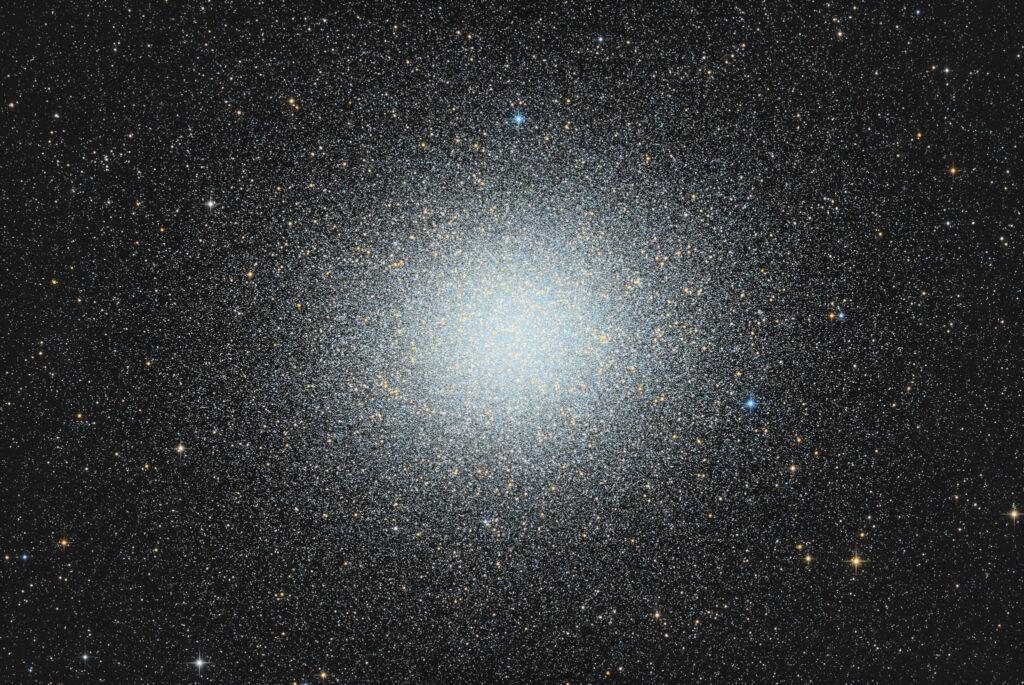
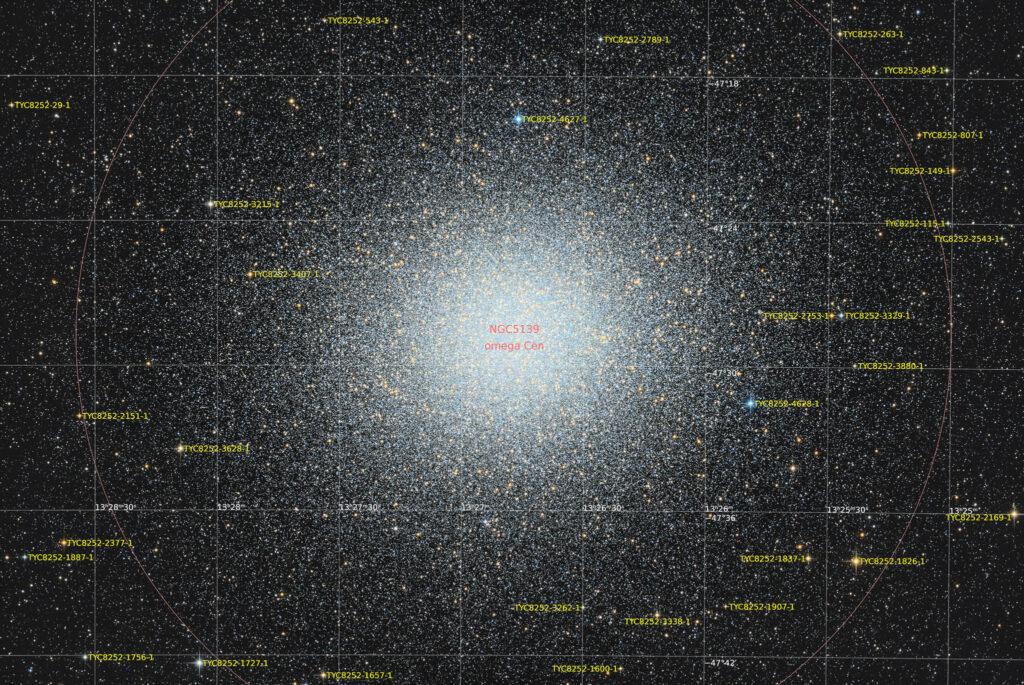
My best photo of a globular cluster!

Omega Centauri https://photo.m-j-s.net/blog/2025/06/omega-centauri/
#astrofotografie #astronomie #astronomy #astrophotography #Centaurus #EN #GlobularCluster #hakos #ias #kugelsternhaufen #namibia #NGC5139 #OmegaCentauri #photoblog #stars
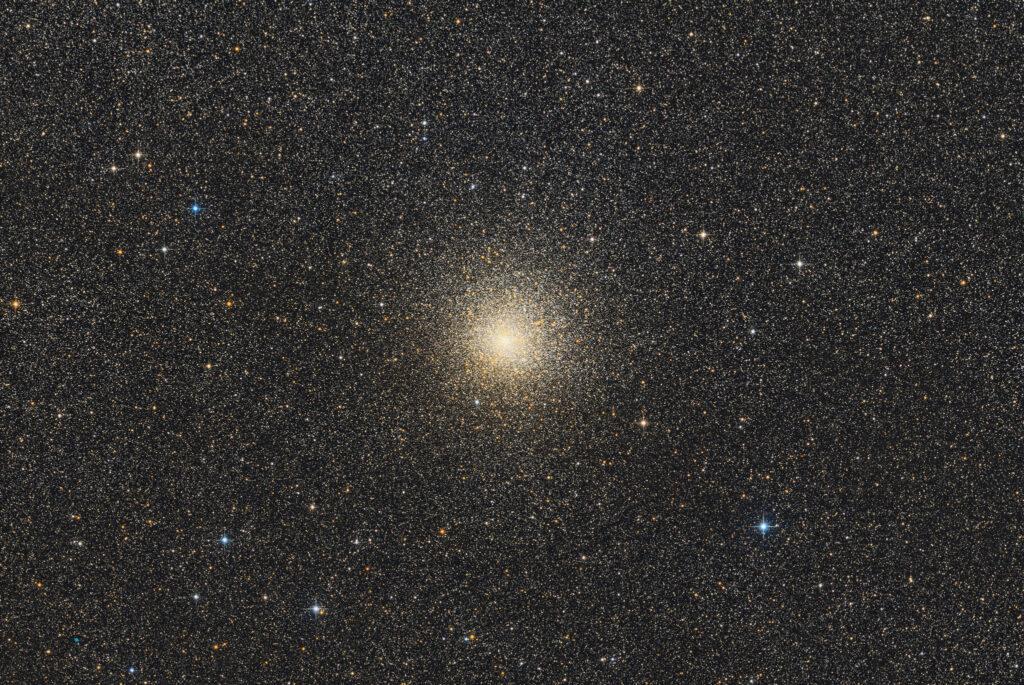
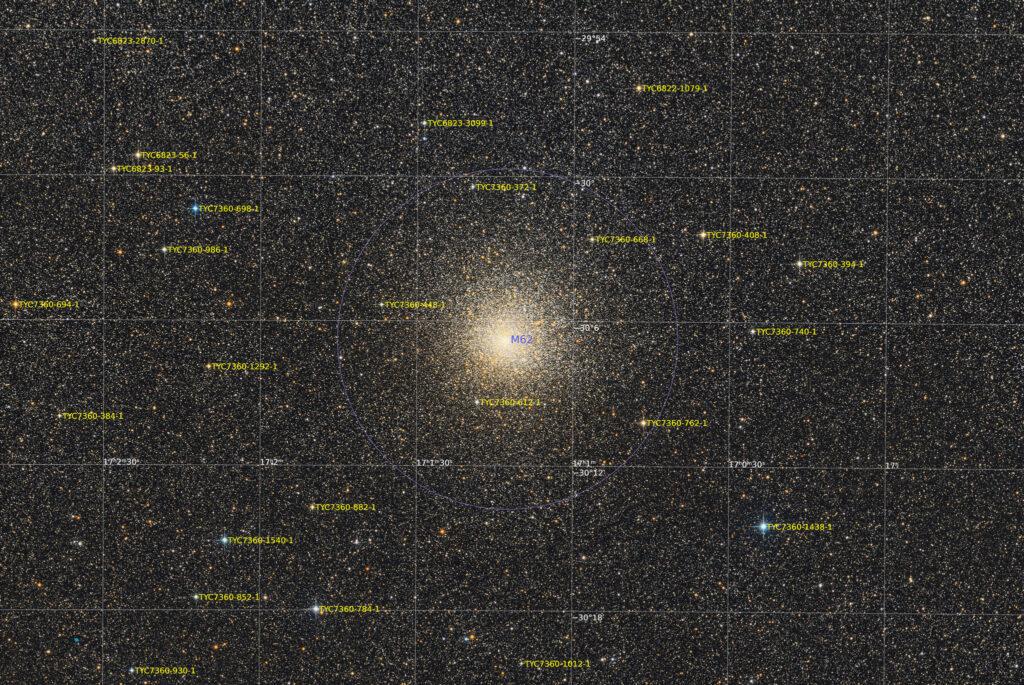
Flickering Globular Cluster https://photo.m-j-s.net/blog/2025/06/flickering-globular-cluster/
#astrofotografie #astronomie #astronomy #astrophotography #EN #GlobularCluster #hakos #ias #kugelsternhaufen #M62 #namibia #photoblog #stars
Spider Globular Cluster https://photo.m-j-s.net/blog/2025/06/spider-globular-cluster/
#astrofotografie #astronomie #astronomy #astrophotography #EN #GlobularCluster #hakos #ias #kugelsternhaufen #M4 #namibia #photoblog #Scorpius


The Cocytos Stream - A Disrupted #GlobularCluster from our Last Major Merger? https://arxiv.org/abs/2504.11687 -> Determining The Origin of The Cocytos Stream: https://astrobites.org/2025/05/02/cocytos/

✨ New selected research highlight ✨
Towards a deeper understanding of black hole origins
Research team studies the impact of remnant kicks on spin distributions of black holes from hierarchical mergers
A new study revisits modelling of the spin distributions from hierarchical binary black hole mergers in dense stellar environments, such as globular clusters. It finds clear deviations from the unique spin distribution described in previous studies, and shows a way to identify black holes from repeated mergers, which could help shed light on black hole formation through precise spin measurements in future observing runs.
Read more ➡️ https://www.aei.mpg.de/1244528/towards-a-deeper-understanding-of-black-hole-origins?c=26149
📄 https://arxiv.org/abs/2503.21278
#BlackHoles #GravitationalWaves #BlackHoleKicks #GlobularCluster #astronomy #astrodon

Messier 13, der große Kugelsternhaufen im Herkules, wurde 1714 von Edmund Halley entdeckt. Mit einer Flächenausdehnung von 20,0' (wahrer Durchmesser 145 Lichtjahre) und einer Helligkeit von 5,7 mag ist er unter einem dunklen Himmel bereits mit dem bloßen Auge zu sehen. Er umkreist unsere Heimatmilchstraße in einer Entfernung von 25 000 Lichtjahren.
Aufnahmedaten:
Kamera: ZWO ASI 1600 MMP
Optik: 102/920 mm Fluorit Apo bei f/7
Belichtung: 10x300s L, 24x240s RGB,
gesamte Belichtungszeit: 2h 26 m
Korrekturen: Bias, Dark- und Flatframes
EBV: PixInsight, Fitswork
#astronomie #astronomy #astrophotography #deepsky #deepskyphotography #globularcluster #sternfreundemünster
Aufnahmedaten:
Kamera: ZWO ASI 1600 MMP
Optik: 102/920 mm Fluorit Apo bei f/7
Belichtung: 10x300s L, 24x240s RGB,
gesamte Belichtungszeit: 2h 26 m
Korrekturen: Bias, Dark- und Flatframes
EBV: PixInsight, Fitswork
#astronomie #astronomy #astrophotography #deepsky #deepskyphotography #globularcluster #sternfreundemünster


M53 Globular Cluster.
Celestron NexStar Evolution 6 + ZWO ASI585MC Pro.
945mm, f6.3, 150 exposures of 30’’.
#telescope #telescopes #celestron #celestrontelescope #celestronnexstar #nexstarevolution #nexstarevolution6 #canon #canoneosr7 #eosr7 #astro #astrophoto #astrophotos #astrophotography #astrophotographer #spacephotography #astronomy #spaceexploration #nasa #universe #space #deepsky #deepspace #milkyway #cluster #globular #globularcluster #m53 #messier53 #messier
Celestron NexStar Evolution 6 + ZWO ASI585MC Pro.
945mm, f6.3, 150 exposures of 30’’.
#telescope #telescopes #celestron #celestrontelescope #celestronnexstar #nexstarevolution #nexstarevolution6 #canon #canoneosr7 #eosr7 #astro #astrophoto #astrophotos #astrophotography #astrophotographer #spacephotography #astronomy #spaceexploration #nasa #universe #space #deepsky #deepspace #milkyway #cluster #globular #globularcluster #m53 #messier53 #messier


M53 Globular Cluster.
Celestron NexStar Evolution 6 + ZWO ASI585MC Pro.
945mm, f6.3, 150 exposures of 30’’.
#telescope #telescopes #celestron #celestrontelescope #celestronnexstar #nexstarevolution #nexstarevolution6 #canon #canoneosr7 #eosr7 #astro #astrophoto #astrophotos #astrophotography #astrophotographer #spacephotography #astronomy #spaceexploration #nasa #universe #space #deepsky #deepspace #milkyway #cluster #globular #globularcluster #m53 #messier53 #messier

Speedy stars point to intermediate-mass black hole in globular cluster
https://physicsworld.com/a/speedy-stars-point-to-intermediate-mass-black-hole-in-globular-cluster/
Hubble observation is best evidence yet for an elusive class of black holes

#Caldwell 25 - #NGC 2419, also known as the #IntergalacticWanderer, is a #globularcluster located in the #constellation #Lynx, approximately 270,000 light-years away from Earth. The #cluster reaches its annual culmination at astronomical midnight and is best observed around mid-January.
Detailed Information: https://astrocamp.eu/c25
▼ Vixen VC200L | Canon EOS M100(a) '23
#astrophoto #astrophotography #nightsky #space #sky #astronomy #telescope #clearsky #photography #nature #astrodon

M13 Hercules Cluster on August 11, 2024.
Celestron NexStar Evolution 6 + Canon EOS R7 + Celestron .63x Reducer.
#telescope #telescopes #celestron #celestrontelescope #celestronnexstar #nexstarevolution #nexstarevolution6 #canon #canoneosr7 #eosr7 #astro #astrophoto #astrophotos #astrophotography #astrophotographer #spacephotography #astronomy #spaceexploration #nasa #universe #space #deepsky #deepspace #milkyway #cluster #globular #globularcluster #m13 #messier13 #messier

Client Info
Server: https://mastodon.social
Version: 2025.07
Repository: https://github.com/cyevgeniy/lmst