
"What Are You Looking For?"
Devotional Thoughts and Prayers for Sunday, January 18, 2026
https://youtu.be/luA2EwD_XGY
#Jesus #GoodNews #Gospel #JohnTheBaptist #Sermon
#johnTheBaptist
Spirituality & Religious Studiesspiritualityreligiousstudies.wordpress.com@spiritualityreligiousstudies.wordpress.com
2026-01-17Druze
The Druze, who call themselves al-Muwahhidun, are an Arab esoteric religious group from West Asia who adhere to the Druze faith. This is an Abrahamic, monotheistic, & syncretic religion whose main tenets assert the unity of God, reincarnation, & the eternity of the soul.
Although the Druze faith developed from Isma’ilism, the Druze don’t identify as Muslim. Isma’ilism is a sect of Shia Islam. They use the Arabic language & culture as integral parts of their identity, with Arabic being their primary language.
Most Druze religious practices are kept secret. Conversion to their religion isn’t permitted for outsiders. Interfaith marriages are rare & strongly discouraged. They make a difference between spiritual individuals, known as “uqqal,” who hold the faiths secrets, & secular ones, known as “juhhal,” who focus on worldly matters.
Druze believes that, after completing the cycle of rebirth through successive reincarnations, the soul reunites with the Cosmic Mind (al-‘aql al-kulli).
The Epistles of Wisdom is the central text of the Druze faith. The Druze faith came out of Isma’ilism & has been influenced by a diverse range of traditions (Christianity, Gnosticism, Neoplatonism, Zoroastrianism, Manichaeism, & Pythagoreanism).
Druze holds Shuaib in high regard. They believe him to be the same person as the biblical Jethro. Shuaib is an ancient Midianite prophet in Islam. Jethro is Moses’ father-in-law. Shuaib is mentioned 11x in the Quran.
They regard Adam (of Adam & Eve fame), Noah, Abraham, Moses, Jesus, Muhammad (PBUH), & the Isma’ili Imam Muhammad ibn Isma’il as prophets. Also the Druze tradition honor figures such as Salman the Persian, al-Khidr (who they identify with Elijah, John the Baptist, & St. George), Job, Luke the Evangelist, & others as mentors & prophets.
The Druze faith is 1 of the major religious groups in the Levant with between 800,000 & 1 million followers. They’re mainly located in Lebanon, Syria, & Israel. They make up 5.5% of Lebanon’s population, 3% of Syria’s, & 1.6% of Israel’s.
The oldest, & most densely populated, Druze communities exist in Mount Lebanon & in the south of Syria around Jabal al-Druze (literally the “Mountain of the Druze”). The name “Druze” is likely derived from the name of: Muhammad bin Ismail Nashtakin ad-Darazi (from the Persian darzi, “seamster”) who was an early preacher.
The Druze consider ad-Darazi a heretic, the name has been used to identify them. This is possibly because their historical opponents have a way to attack their community with ad-Darazi’s poor reputation.
Before becoming public, the movement was secretive & held closed meetings in what was known as Sessions of Wisdom. During this period, a dispute occurred between ad-Darazi & Hamza bin Ali mainly concerned ad-Darazi’s ghuluww (“exaggeration”), which refers to the belief that God was incarnated in human beings to ad-Darazi naming himself “The Sword of the Faith,” which led Hamza to write an Epistle refuting the need for the sword to spread the faith & several epistles refuting the beliefs of the ghulat.
In 1061, ad-Darazi, & his followers, openly proclaimed their beliefs & put out the call for people to join them. This caused riots in Cairo against the Unitarian movement, including Hamza bin Ali & his followers. This led to the suspension of the movement for 1 year & the expulsion of ad-Darazi & his supporters.
In 1081, ad-Darazi was assassinated for his teachings. Some claim that he was executed by Al-Hakim bi-Amr Allah.
The number of the Druze people worldwide is between 800,000 & 1 million. The vast majority reside in the Levant. The main countries with Druze communities are Syria, Lebanon, Israel, & Jordan. Outside the Middle East, significant Druze communities exist in Australia, Canada, Europe, Latin America (mainly Venezuela, Colombia, & Brazil), the US, & West Africa. They are Arabs who speak Levantine Arabic.
The story of the creation of the Druze faith between 1017 & 1018 is dominated by 3 men & their struggle for influence. Hamza ibn Ali ibn Ahmad was an Ismaili mystic & scholar from Khorasan, who arrived in Fatimid Egypt in 1014 or 1016, & began to teach a Muwahhidun (“Unitarian”) doctrine.
al-Hakim bi-Amr Allah, the 6th Fatimid caliph, became a central figure in the faith being preached by Hamza ibn Ali ibn Ahmad. Muhammad bin Ismail Nashtakin ad-Darazi arrived in Cairo in 1015 or 1017, possibly from Bukhara, joined the movement & became an important preacher.
Hama ibn Ali ibn Ahmad, an Ismaili mystic & scholar from Zozan, Khorasan, in the Samanid Empire, arrived in Fatimid Egypt in 1014 or 1016. He assembled a group of scholars that met regularly in the Raydan Mosque, near the Al-Hakim Mosque. In 1017, Hamza began to preach a Muwahhidun (Unitarian) doctrine.
Hamza got the support of the Fatimid caliph al-Hakim bi-Amr Allah, who gave a decree promoting religious freedom & eventually became a central figure in the Druze faith.
Little is known about the early life of al-Darazi. He is believed to have been of Persian origins & his title al-Darazi is Persian in origin, meaning “the tailor.” He got to Cairo in 1015 or 1017, after which he joined the newly emerged Druze movement. al-Darazi converted early to the Unitarian faith & became 1 of its early preachers.
At that time, the movement enlisted a large number of followers. As the number of his followers grew, he became obsessed with his leadership & gave himself the title “The Sword of the Faith.” al-Darazi argued that he should be the leader of the da’wah rather than Hamza ibn Ali & gave himself the title: “Lord of the Guides” because Caliph al-Hakim referred to Hamza as “Guide of the Consented.” It’s said that al-Darazi allowed wine, forbidden marriages, & taught metempsychosis. Metempsychosis is the belief that after death, a soul leaves its body & enters a new one, either human, animal, or even plant, in a continuous cycle of rebirth (reincarnation). This is also known as the transmigration of souls.
The divine call, or Unitarian call, is the Druze period of time that was opened at sunset on May 30, 1017 by ad-Darazi. The call summoned people to a true Unitarian belief that removed all attributes from God.
It promoted absolute monotheism & the concepts of supporting your fellow man, true speech & pursuit of doneness with God. These concepts superseded all ritual, law & dogma & requirements for pilgrimage, fasting, holy days, prayer, charity, devotion, Creed, & particular worship of any prophet, or person, was downplayed.
Sharia was opposed & Druze traditions started during the call continue today, such as meeting for reading, prayer, & social gathering on a Thursday instead of a Friday at Khalwats instead of mosques. Such gatherings & traditions weren’t mandatory. People were encouraged to pursue a state of compliance with the real law of nature governing the universe.
By 1018, al-Darazi had gathered around him that partisans who believed that universal reason became incarnated in Adam at the beginning of the world, were then passed to the prophets. Then into Ali, & then into his descendants, the Fatimid Caliphs. al-Darazi wrote a book laying out his doctrine. But when he read from his book in the principal mosque in Cairo. It caused riots, & protests against his claims & many of his followers were killed.
Hamza ibn Ali rejected al-Darazi’s ideology, calling him “the insolent one & Satan.” The controversy led Caliph al-Hakim to suspend the Druze da’wah in 1018.
In an attempt to gain the support of al-Hakim, al-Darazi started preaching that al-Hakim didn’t believe that he was God, & felt al-Darazi was trying to show himself as a new prophet. In 1018, al-Hakim had al-Darazi executed, leaving Hamza the sole leader of the new faith & al-Darazi considered to be a renegade.
Al-Hakim disappeared 1 night while on his evening ride. Druze believes he went into Occultation with Hamza ibn Ali & 3 other prominent preachers. He left the “Unitarian missionary movement” to a new leader, al-Muqtana Baha’uddin.
The call was suspended briefly between May 19, 1018 & May 9, 1019 during the apostasy of al-Darazi & again between 1021 & 1026 during a period of persecution by the Fatimid caliph al-Zahir li-I’zaz Din Allah for those who had sworn the oath, to accept the call.
Persecutions started 40 days after the disappearance into Occultation of al-Hakim, who was thought to have been converting people to the Unitarian faith for over 20 years prior. Al-Hakim convinced some heretical followers such as al-Darazi of his soteriological divinity & officially declared the Divine call after issuing a decree promoting religious freedom. This eventually became a central figure in the Druze faith.
Little is known about the early life of al-Darazi. According to most sources, he was born in Bukhara (located in Uzbekistan). He got to Cairo in 1015 (or 1017), after he joined the newly formed Druze movement.
Al-Darazi was an early convert to the Unitarian faith. He became 1 of its early preachers. At that time, the movement enlisted a large number of followers. As the number of his followers grew, he got obsessed with his leadership. He gave himself the title: “The Sword of the Faith.”
Al-Darazi argued that he should be the leader of the da’wah rather than Hamza ibn Ali & gave himself the title: “Lord of the Guides.” Because Caliph al-Hakim referred to Hamza as: “Guide of the Consented.” It’s said that al-Darazi allowed wine, forbidden marriages, & taught metempsychosis.
This led to conflicts between Ad-Darazi & Hamza ibn Ali, who disliked his behavior & arrogance. In the Epistles of Wisdom, Hamza ibn Ali ibn Ahmad warns al-Darazi: “Faith doesn’t need a sword to aid it.” But al-Darazi ignored Hamza’s warnings & continued to challenge the Imam.
The unitarian call, or divine call, is the Druze period of time that was opened at sunset on May 30, 1017 by Ad-Darazi. The call summoned people to a true unitarian belief that removed all attributes (wise, just, outside, inside, etc.) from God.
It promoted absolute monotheism & the concepts of supporting your fellow man, true speech & pursuit of oneness with God. These concepts superseded all ritual, law & dogma, & the requirement for pilgrimage (like the Hajj), fasting, holy days, prayer, charity, devotion, Creed & particular worship of any prophet or person was downplayed.
Sharia was opposed. Druze traditions during the call continued today, such as meeting for reading, prayer, & social gathering on a Thursday instead of Friday at Khalwats instead of mosques. Khalwats are sanctuaries & theological schools of the Druze.
Such gatherings & traditions weren’t mandatory & people were encouraged to pursue a state of compliance with the real law of nature governing the universe. Epistle 13 of the Epistles of Wisdom called it “A spiritual doctrine without any ritualistic imposition.”
The time of the call was seen as a revolution of truth, with missionaries preaching its message all around the Middle East. These messages were sent out with the believers, whose souls are thought to still exist in the Druze of today.
The souls of those who took the vows during the call are believed to be continuously reincarnating in successive generations of Druze until the return of al-Hakim to proclaim a 2nd Divine call & establish a Golden Age of justice & peace of all.
By 1018, al-Darazi had gathered around him partisans (“Darazites”) who believed that universal reason became incarnated in Adam at the beginning of the world, was then passed to the prophets, then into Ali, & then into his descendants, the Fatimid Caliphs.
In an attempt to gain the support of al-Hakim, al-Darazi started preaching that al-Hakim & his ancestors were the incarnation of God. A modest man, al-Hakim didn’t believe that he was God, & felt al-Darazi was trying to depict himself as a new prophet. In 1018, al-Hakim had al-Darazi executed, leaving Hamza the sole leader of the new faith & al-Darazi considered to be renegade.
Al-Hakim disappeared 1 night whilst on his nightly ride. He was presumed assassinated. His “assassination” was allegedly at his elder sister Sitt al-Mulk.
Druze believe he went into Occultation with Hamza ibn Ali & 3 other prominent preachers, leaving the care of the “Unitarian missionary movement” to a new leader, al-Muqtana Baha’uddin.
In 1043, Baha al-Din al-Muqtana said that the sect would no longer take new “pledges.” Since that time, proselytism has been banned awaiting al-Hakim’s return at the Last Judgment to usher in a new Golden Age.
In Lebanon, Syria, Israel, & Jordan, the Druzites have official recognition as a separate religious community with its own religious court system.
Make a one-time donation
Your contribution is appreciated.
Donate
Make a monthly donation
Your contribution is appreciated.
Donate monthly
Make a yearly donation
Your contribution is appreciated.
Donate yearly
#1014 #1015 #1016 #1017 #1018 #1021 #1026 #1061 #1081 #19May1018 #30May1017 #9May1019 #Abraham #AbrahamicFaiths #Adam #alHakimBiAmrAllah #AlHakimMosque #alKhidr #alMuqtanaBahaUddin #alMuwahhidun #alZahirLiIZazDinAllah #Ali #Arabic #Arabs #Australia #BahaAlDinAlMuqtana #Brazil #Bukhara #Cairo #CaliphAlHakim #Canada #Christianity #Colombia #CosmicMind #DaWah #Darazites #Druze #Elijah #EpistlesOfWisdom #Europe #Eve #FatimidCaliph #FatimidCaliphs #FatimidEgypt #Ghulat #Ghuluww #Gnosticism #HamzaBinAli #HamzaIbnAliIbnAhmad #ImamMuhammadIbnIsmaIl #Islam #IsmaIli #IsmaIlism #Ismaili #Israel #JabalAlDruze #Jesus #Jethro #Job #JohnTheBaptist #Jordan #Juhhal #Khalwats #Khorasan #LastJudgment #LatinAmerica #Lebanon #Levant #LevantineArabic #LukeTheEvangelist #Manichaeism #Metempsychosis #MiddleEast #Midianite #monotheistic #Moses #MountLebanon #Muhammad #MuhammadBinIsmailNashtakinAdDarazi #MuhammadBinIsmailNasshtakinAdDarazi #Muslim #Muwahhidun #Neoplatonism #Noah #Prophet #Pythagoreanism #Quran #RaydanMosque #Reincarnation #SalmanThePersian #SamanidEmpire #SessionsOfWisdom #Sharia #Shia #Shuaib #SittAlMulk #StGeorge #Syria #UnitarianMovement #UnitedStatesOfAmerica #Uqqal #Uzbekistan #Venezuela #WestAfrica #WestAsia #Zoroastrianism #Zozan
Opening Prayers for the Baptism of the Lord Year A
Part of a series of opening prayers for Sundays in the Revised Common Lectionary. They take their inspiration from the Scripture readings in the Lectionary. Worship leaders are welcome to use them for worship, but if you print or display any part of them, please credit the author. Comments welcome.
The following prayers are for based on the readings for the Baptism of the Lord, and this week is mostly based on the Gospel: Matthew 2:1-12.
Prayer of Approach, Confession and Supplication
Almighty, eternal and loving God,
this universe you have created
is wonderful proof of your concern
for we mortals.
In Jesus Christ, you have come among us,
his baptism sealing his solidarity
with the whole human race.
Yet confess we must,
that we have failed to acknowledge your love.
We have used the gifts of your creation
as though they belonged only to us,
as if we had an absolute claim to your creation.
We have been selfish,
failing to share your good gifts with others,
failing to remember that you are the source
of all our material and spiritual riches.
In our concern for the everyday,
we have failed to see your love for us in creation,
and we have obscured for others
the signs of the eternal.
But Lord, to whom shall we go?
Yours are the words of eternal life.
Silence
Your Word became flesh and lived among us.
You have taught us that it is the Spirit
which gives us life,
compared to which the mundane things
of this world which we normally worship
are as nothing.
You understand our faults, our failings,
our weaknesses,
and have made it possible to come to you
through Jesus Christ.
For your grace,
for your promise of forgiveness,
and for the power of your Spirit to renew our lives
we give you thanks, in Jesus’ name. Amen.
Featured image: “John baptizes Jesus” from JESUS MAFA (1973). JESUS MAFA is a response to the New Testament readings from the Lectionary by a Christian community in Cameroon, Africa. Each of the readings was selected and adapted to dramatic interpretation by the community members. Photographs of their interpretations were made, and these were then transcribed to paintings. From Art in the Christian Tradition, a project of the Vanderbilt Divinity Library, Nashville, TN. https://diglib.library.vanderbilt.edu/act-imagelink.pl?RC=48290 [retrieved January 2, 2023]. Original source: http://www.librairie-emmanuel.fr (contact page: https://www.librairie-emmanuel.fr/contact).
#bible #Christ #faith #god #Jesus #JohnTheBaptist #Lectionary #Prayer


😩 Waiting is HARD—especially during Advent! From rushing through songs to stressing over Christmas, Pastor Justin Wixon reminds us why God calls us to patient waiting for Jesus' return. 🌟
Watch now: 👉 https://zurl.co/F0GpV
#AdventWaiting #PatientlyWaiting #TrustInGod #JohnTheBaptist #James5 #Isaiah35 #ChristmasSermon #FaithOverAnxiety #PastorJustinWixon #AliveInChristChurch #MaranaAZ #LutheranSermon #ChristianHope #BibleTeaching #SpiritualGrowth


"Truly I tell you, among those born of women there has not risen anyone greater than John the Baptist; yet whoever is least in the kingdom of heaven is greater than he."
Matthew 11:11 #Bible #JesusChrist #JohnTheBaptist
"I baptise you with water for repentance. But after me comes one who is more powerful than I, whose sandals I am not worthy to carry. He will baptise you with the Holy Spirit and fire."
Matthew 3:11 #Bible #JohnTheBaptist #JesusChrist
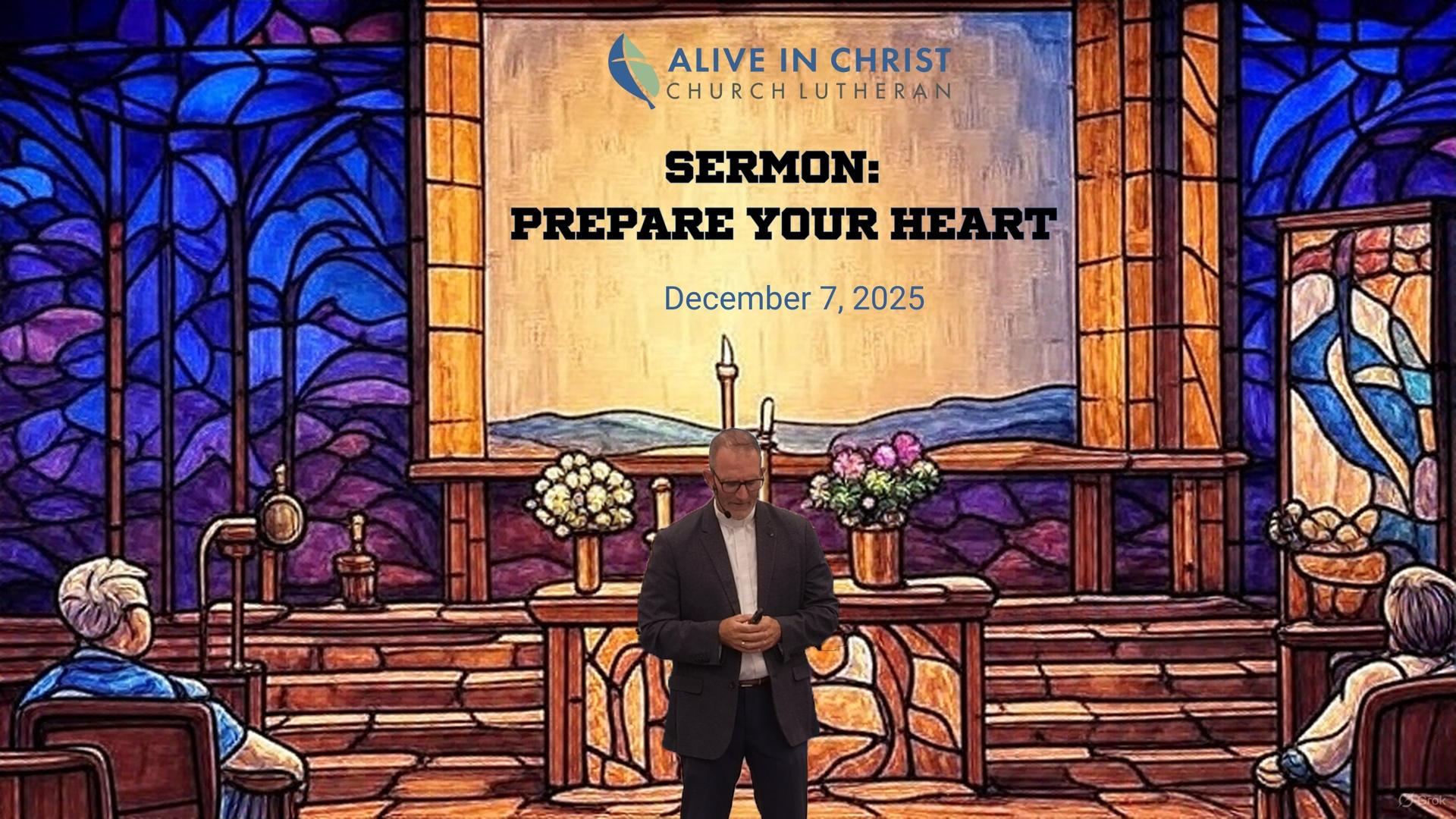
🎄 Ready to prep your heart for Jesus' return this Advent? Pastor Justin Wixon shares 3 game-changing steps: Look in the mirror (own your sins), look to God (pray & repent), & point others to the Lamb who takes away the world's sins!
#AdventPrep #PrepareYourHeart #JesusIsComing #JohnTheBaptist #RepentAndRejoice #BeholdTheLamb #ChristianHope #AliveinChristChurchLutheran #PastorJustinWixon #MaranaAZ #FaithJourney #SecondComing #MaranaChurch

Set Apart in a Noisy World
DID YOU KNOW
DID YOU KNOW that Colossians 3:2–3 teaches us that the Christian life begins with a radical shift of focus—from earth to heaven, from temporary things to eternal realities?
When Paul urges us to “think only about the things in heaven, not the things on earth,” he is not asking us to escape the world but to re-anchor ourselves in Christ. Our old sinful self has died, he writes, and our new life is now hidden with Christ in God. That means your true identity—your truest, most secure self—is not defined by culture, accomplishments, trends, or failures. It is tucked away safely in the presence of God, untouchable by the pressures or expectations of this world. When we embrace this truth, the pull of worldliness loses some of its power. We begin to see that the things competing for our attention—status, success, approval, wealth—cannot give life because they are not the source of life. Christ is.
This change of focus also frees us to live more peacefully. Much of the stress we feel comes from trying to juggle the demands of a world that constantly shifts its standards. But Paul invites us to rest in a God whose character never changes. Thinking on heavenly things means returning again and again to what God says about us and about Himself. It means letting His promises frame our decisions and His love ground our identity. When you set your mind on Christ, your heart becomes steadier, your choices clearer, and your soul quieter. Heavenly thinking becomes earthly strength.
This verse invites you to pause and ask: Where is your focus today? Are you trying to measure your worth by things that are passing away? Or are you allowing God to reshape your thoughts so you can live from a place of quiet confidence? The invitation is gentle but firm—lift your eyes so your heart can breathe again.
DID YOU KNOW that James 4:4 tells us that loving the world is the same as opposing God—not because God is harsh, but because worldliness pulls our hearts in the exact opposite direction of His?
When James writes, “Anyone who wants to be a friend of the world becomes God’s enemy,” he is using covenantal language. Friendship, in his day, implied loyalty, alignment, shared values, and shared purpose. So the problem is not that God doesn’t want us to enjoy His creation; the problem is when our deepest loyalties settle into the world’s values rather than God’s heart.
Worldliness, as James describes it, is an inward posture more than an outward activity. It’s the subtle drift of the heart toward the beliefs, priorities, and desires that crowd God out. Worldliness says success is measured by applause, possessions, beauty, or influence. It whispers that compromise is easier than faithfulness and that comfort is worth more than conviction. But James reminds us that these are not neutral temptations—they form a rival kingdom resisting the transforming work of Christ. God is not indifferent to this drift because He knows it fractures our souls and distorts our identity.
Reflecting on James’ message gives us a chance to recalibrate. Has worldliness been tugging at your heart? Have you found yourself longing for approval more than intimacy with God? The good news is that James never leaves us in condemnation—he points us back to God’s readiness to draw near when we turn toward Him. As you consider this Scripture today, let it lead you toward renewed loyalty. God longs to be the center of your affection, not because He is possessive, but because He knows that life is only whole when our hearts rest fully in Him.
DID YOU KNOW that 1 John 2:15–17 reveals the temporary nature of everything the world chases—and the permanence of everything God offers?
John’s warning, “Do not love the world or the things in the world,” is not meant to restrict us but to protect us from disappointment. He explains that the world’s system—all the desires that spring from the flesh, the eyes, and pride—will ultimately fade away. Nothing the world promises can satisfy the soul because everything the world promises eventually expires. But the one who does the will of God “lives forever.” That is not merely about eternal life after death; it is about participating in a kind of life now that cannot be shaken.
John gives three categories of worldliness that speak powerfully to our modern culture. The desire of the flesh pulls us toward self-centered gratification. The desire of the eyes pulls us into comparison, craving, and material fixation. The pride of life convinces us that achievements, titles, and possessions can secure our identity. John wants us to know that these desires never deliver what they promise. They inflate the ego but shrink the soul. They stir hunger but never satisfy it. In contrast, doing the will of God roots us in a life that expands, strengthens, and restores. God’s will does not expire.
This Scripture encourages us to take inventory of our affections. What holds your desire? What captures your attention? Are you investing energy in things that can never give you lasting peace? Today is a good day to return to the One whose love does not fade. Let Him help you loosen your grip on the temporary so you can take hold of what truly lasts.
DID YOU KNOW that John the Baptist—one of the greatest men ever born (according to Jesus Himself)—was a stunning example of living unentangled from worldliness?
Mark describes him as wearing camel hair, eating locusts and wild honey, and thundering a message of repentance with no concern for cultural approval. Most churches today, as the study humorously notes, might hesitate to hire a prophet who dressed like that and preached with such bluntness. But John’s life was powerfully centered on one purpose: to be a voice pointing people to Christ.
Everything about John—the way he dressed, the wilderness he lived in, the message he proclaimed—was shaped by his devotion to his calling. He lived simply because he wanted nothing to distract him from revealing the Messiah. He refused to bend to worldly expectations because his eyes were fixed on God’s mission rather than culture’s opinion. John understood something that our modern world often forgets: holiness isn’t about looking strange or being out of touch; holiness is about being set apart so God can speak clearly through us. We are not shaped by withdrawing from the world but by refusing to be conformed to the patterns that steal our attention from Christ.
John’s life invites us to ask a gentle but important question: are we more shaped by culture’s expectations or by Christ’s calling? You don’t have to dress like John the Baptist or live in the wilderness to resist worldliness. You simply need to be willing to say “yes” to God’s voice even when it runs against the crowd. Let his example encourage you today: faithfulness is not measured by fitting in but by standing firm.
The theme running through all these Scriptures and reflections is simple: the world will always try to shape us, but Christ invites us into a deeper, freer, richer way of living. As you reflect on these “Did You Know” insights, let them stir your heart toward holiness—not as something strange or heavy, but as something beautiful and life-giving. Holiness means belonging fully to God. It means seeing the world clearly, loving people deeply, and walking confidently with Christ. Let Him show you where worldly attachments have taken root, and let Him help you loosen their hold so you can walk more lightly and more joyfully in His presence.
FEEL FREE TO COMMENT SHARE SUBSCRIBE
#1John2 #colossians3 #holiness #james4 #johnTheBaptist #worldliness

"And you, my child, will be called a prophet of the Most High;
for you will go on before the Lord to prepare the way for him,"
Luke 1:76 #Bible #JohnTheBaptist #JesusChrist
Opening Prayers for the Second Sunday of Advent Year A (December 7 2025)
Part of a series of opening prayers for upcoming Sundays in the Revised Common Lectionary. They take their inspiration from the Scripture readings in the Lectionary. Worship leaders are welcome to use them for worship, but if you print or display any part of them, please credit the author. Comments welcome.
The following prayers are for the Second Sunday of Advent. They are based on Isaiah 11:1-10, Psalm 72:1-7, 18-19, Romans 15:4-13 and Matthew 3:1-12.
There’s a note about the texts I’m using for these prayers for Advent here.
There are Calls to Worship with Advent Candles here.
Call to Worship
Praise the Lord, the God of Israel!
He alone does wonderful things.
Praise his glorious name forever.
Psalm 72.18,19 GNB
or
Prepare in the wilderness a road for our Lord!
Clear the way in the desert for our God!
Isaiah 40.3-4
Let us worship God.
Prayers of Approach
Praise to you, steadfast God,
who dwells in glory.
All righteousness and power is yours:
blessed be your name forever.
Since you made all things,
you can create and destroy, according to your will.
You judge the wicked and powerful
and save and poor and meek;
your judgements are inscrutable
for you see what we cannot see
and understand what is beyond our comprehension.
Blessed be you, the God of Israel
judge and lover of all you have made!
Prophets of old dreamed of a time
when the wolf would live with the lamb,
and all that is evil and painful
would be gathered up into your love and grace.
And at the right moment,
you sent John, the desert-dweller
to proclaim that your reign was breaking into human history.
Today, John calls us anew,
to prepare the way of the Lord
and to get ready for what you will do in Christ.
In this time of worship
we seek, with one voice
to praise and worship
you who are the God and Father of our Lord Jesus Christ.
Prayer of Confession
Speak your eternal, living Word to us today, Lord.
Speak to us as you spoke
through John the Baptist:
speak a Word which will recall us to ourselves
which will make us want to turn our lives around
to repent of all those things
which hold us back from you.
Speak your Good News,
to let us know that our God is here-
alive, active, creating life
and destroying all that brings death.
Give us the courage to truly repent
to change our ways
and to live our lives in harmony with one another.
Baptise us anew
with fire and the Holy Spirit
that we might have joy and hope in believing Christ
who came to set us free from our sins
and take away our guilt.
silence
Supplication
O God and judge of all,
as we wait, expectantly, for the coming of Jesus,
and for you to do great things in the world,
so also you expect great things of us.
Help us to turn to you anew
so that our lives, our talents,
all that we have and all that we are
might serve the purposes
of your coming Kingdom. Amen.
Featured image: St John the Baptist in the Desert (Titian) c. 1542. Gallerie dell’Accademia, Venice (public domain: Wikipedia)
Liked this? Buy me a coffee!
© Peter W Nimmo 2025


A striking portrayal of Saint John the Baptist's head, this piece evokes a powerful tension between beauty and brutality. The meticulous details and somber tones challenge viewers to reflect on the nature of sacrifice and sanctity. What emotions does it stir in you?
#Art #ClevelandArt #JohnTheBaptist #Chiaroscuro
https://clevelandart.org/art/1953.424

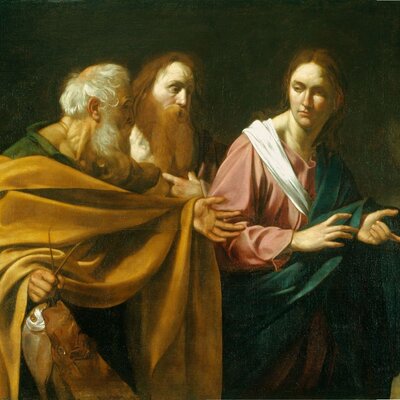
Today's pick: The Appearance of Christ before the People (1837-1857) - Alexander Ivanov. #art #Ivanov #JohnTheBaptist #Jesus

Today's pick: John the Baptist (ca. 1513/16) - Leonardo da Vinci. #art #LeonardoDaVinci #JohnTheBaptist
Today's pick: John the Baptist in the Wilderness (c. 1490) - Geertgen tot Sint Jans. #art #GeertgenTotSintJans #JohnTheBaptist

Salome got a special treat for her birthday this morning.
Today's pick: St John in the Wilderness (1510-1515) - Leonardo da Vinci. #art #LeonardoDaVinci #JohnTheBaptist

The Veg Passages from Early Christianity, the Jesus Movement, John the Baptist Sect (Nasoraeans), Mandaeans and Other Gnostics
My Veg Passages blog is intended to serve as a major resource on the web for many seeking greater access to these rare, difficult-to-find veg and vegan passages from early Christianity and related spiritual movements of antiquity (Essenes, John the Baptist Nasoraeans, Mandaeans, Ebionites, Gospel of the Hebrews, Gnostics, Apocryphal texts, church fathers, etc.., along with references from various scholars exploring the evidence for a vegetarian Jesus at the beginning of Christianity! My veg article was recently updated and greatly expanded. Pack a lunch as you'll be there awhile. Lots of plant-based passages from the early years of the Jesus movement await you! There are also a lot of references to John the Baptist.
To access it, GO TO:
https://medium.com/sant-mat-meditation-and-spirituality/evidence-that-jesus-and-the-original-aramaic-christians-were-vegetarians-b8784ac42506
or @:
https://SantMatRadhasoami.blogspot.com/2019/04/evidence-that-jesus-and-original.html
https://tinyurl.com/VegPassagesBlog
“All living creatures seek a life of peace,
So pass your days on this Earth humanely.
Even the heart that beats in an animal’s breast
Knows sympathy, brims with love.
So look on all living creatures with loving compassion —
bring to humanity’s night the light of dawn.”
(Sant Darshan Singh poem)
#vegan #veganism #veg #vegetarian #vegetarianism #plantbased #plantbaseddiet #christianity #jesusmovement #earlychristianity #ebionites #nazoraeans #nasoraeans #mandaeans #johnthebaptist #govegan #GospelOftheHebrews #GospeloftheNasoraeans #GospelOfTheEbionites #Essenes


My Veg Passages blog is intended to serve as a major resource on the web for many seeking greater access to these rare, difficult-to-find veg and vegan passages from early Christianity and related spiritual movements of antiquity.
To access it, GO TO:
https://medium.com/sant-mat-meditation-and-spirituality/evidence-that-jesus-and-the-original-aramaic-christians-were-vegetarians-b8784ac42506
or @:
https://SantMatRadhasoami.blogspot.com/2019/04/evidence-that-jesus-and-original.html
#vegan #veganism #veg #vegetarian #vegetarianism #plantbased #plantbaseddiet #christianity #jesusmovement #earlychristianity #mandaeans #johnthebaptist #govegan
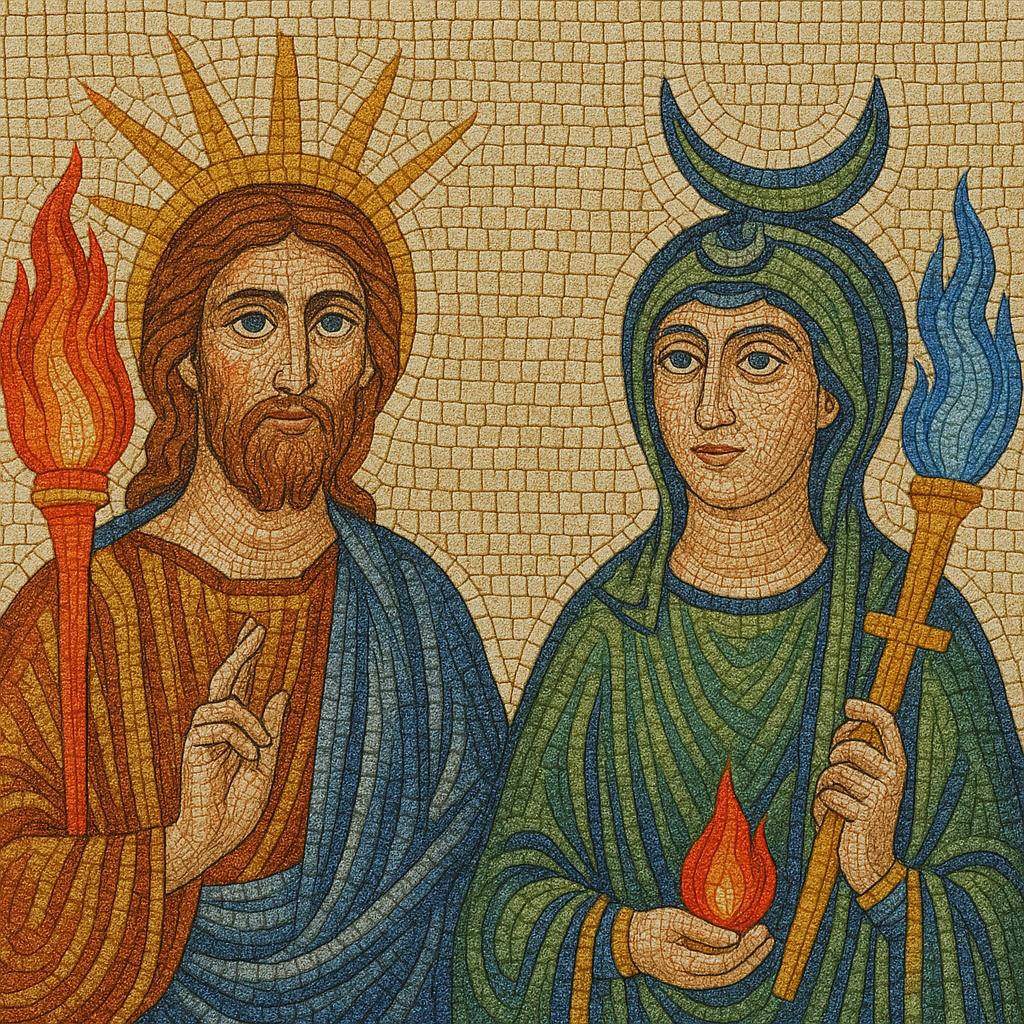
Discover the profound message Jesus shared with the Pharisees and His disciples. Embrace true repentance and learn how turning towards Christ brings joy in heaven. Join us in exploring this transformative journey. #Repentance #KingdomOfHeaven #JesusTeaching #FaithTransformation #SpiritualJourney #TrueMessage #ChristianityExplained #HeavenlyJoy #Discipleship #JohnTheBaptist
Client Info
Server: https://mastodon.social
Version: 2025.07
Repository: https://github.com/cyevgeniy/lmst