
Kofi reward for @pheagleadler.bsky.social
Testing potions with Lucky have Pro and Cons, like having to bought a lot of new clothes due outgrowing them after becoming a massive hefty feral Rhino~
But having the Power of a Massive Hefty Rhino! #Wolfaroart #TFEveryday #Transformation #Transfur #Pachyderm #Rhino #Feral #Rambi #DonkeyKong #Videogame
#pachyderm

African Forest Elephant Loxodonta cyclotis
African Forest Elephant Loxodonta cyclotis
Location: Central and West Africa – Guineo-Congolian tropical forests, including Cameroon, Gabon, Republic of Congo, Democratic Republic of Congo, and surrounding regions.
IUCN Status: Critically Endangered
The African Forest #Elephant is a Critically Endangered species found in the dense #rainforests of Central and #WestAfrica. They are smaller than their savanna relatives, with straighter tusks and rounder ears, uniquely adapted to their forested habitat. As ecosystem engineers, these elephants play a crucial role in maintaining Afrotropical forests by dispersing seeds and mitigating against climate change by shaping forest composition. However, relentless #poaching for ivory, habitat destruction due to #palmoil, #cocoa and #tobacco agriculture, and human-elephant conflict have decimated their population. Recent studies have shown that African Forest Elephants’ movement patterns vary significantly between individuals, with some elephants exploring vast distances while others remain in small home ranges. This variation poses unique challenges for conservation efforts. Resist and fight for their survival each time you shop, be #vegan and #BoycottPalmOil #Boycott4Wildlife.
African Forest #Elephants are ecosystem engineers fighting #ClimateChange in #WestAfrica. Yet #poaching and #palmoil #deforestation have rendered them critically endangered 😿🐘 Help them and be #vegan #BoycottPalmOil 🌴⛔️ #Boycott4Wildlife @palmoildetect https://palmoildetectives.com/2021/09/11/african-forest-elephant-loxodonta-cyclotis/
Share to BlueSky Share to TwitterSupremely intelligent and sensitive African Forest #Elephants 🐘🩶 face several grave threats, incl. #PalmOil #Deforestation and #poaching in #Gabon 🇬🇦 #Congo 🇨🇩 #WestAfrica. Fight for them when you #BoycottPalmOil 🌴🔥🧐⛔️ #Boycott4Wildlife @palmoildetect https://palmoildetectives.com/2021/09/11/african-forest-elephant-loxodonta-cyclotis/
Share to BlueSky Share to TwitterRapid land use change, including palm oil plantations across their range is driving the direct loss and fragmentation of habitat, is an increasing threat to African elephants across their range.
IUCN red list
Appearance and Behaviour
African Forest Elephants are smaller than their savanna counterparts, with a shoulder height of 2 to 3 metres. They have a more compact build, rounded ears, and long, narrow tusks that point downward, (Gobush et al., 2021). Their grey skin is often darker due to the humid rainforest environment. They live in small, matriarchal family groups and display remarkable individual variation in movement behaviours. Some elephants, known as “explorers,” travel vast distances, while others, the “idlers,” remain within confined home ranges. These behavioural differences complicate conservation efforts, as strategies must account for their diverse space-use needs.
These elephants are highly intelligent and social, living in small, matriarchal family groups that navigate the rainforest together. Their deep infrasonic rumbles travel through the ground, allowing communication over vast distances, even in the thickest jungle. Recent research has revealed that their vocalisations have a structure akin to human syntax—complex combinations of calls used to convey intricate meanings (Hedwig & Kohlberg, 2024).
Other research has found that the foraging, seed dispersal and exploration of African Forest Elephants helps to mitigate African forests against climate change. A 2019 study from the Ndoki Forest in the Republic of Congo (ROC) and LuiKotale in the Democratic Republic of Congo (DRC) estimated that if elephants were removed from these sites, the loss of their forest-shaping food preferences would reduce the forest’s carbon capture by 7%.
Diet
Forest Elephants are frugivorous and play an irreplaceable role as seed dispersers, particularly for large fruiting trees. They are responsible for spreading the seeds of over 41 timber species, including Bobgunnia fistuloides (pao rosa), a tree prized for its high-value wood (Blake et al., 2009; Campos-Arceiz & Blake, 2011). Without these elephants, the rainforest’s ability to regenerate and store carbon would be drastically diminished.
Reproduction and Mating
With a gestation period of 22 months—the longest of any land mammal—female African Forest elephants give birth only once every four to six years (Gobush et al., 2021). Due to their slow reproductive rate, population recovery is incredibly difficult, making conservation efforts even more urgent. Calves remain under their mother’s care for over a decade, learning crucial survival skills in the rainforest.
Geographic Range
African Forest Elephants roam vast home ranges, some spanning over 2,000 km² (Beirne et al., 2021). Their movements are largely dictated by fruiting cycles, water availability, and human encroachment. A recent study found that they exhibit remarkable individual variation in movement patterns—some acting as ‘explorers,’ roaming far and wide, while others remain within familiar territories (Beirne et al., 2021). Roads and logging concessions disrupt these traditional routes, forcing elephants into human settlements and escalating conflict.
Threats
- Illegal Wildlife Trade and Poaching: The illegal and criminal trade in elephant ivory continues to drive rampant poaching. Despite international bans, demand remains high in black markets (Wittemyer et al., 2014; Maisels et al., 2013).
- Palm Oil Agriculture Expansion: Forests are being obliterated for palm oil, cocoa, tobacco and rubber plantations, erasing habitat at an alarming rate (Scalbert et al., 2022).
- Logging, Mining, and Infrastructure Expansion: The development of roads and infrastructure for timber and mining grants poachers greater access to once-inaccessible forest areas (Beirne et al., 2021).
- Human-Elephant Conflict: Shrinking forests push elephants into farmland, leading to fatal clashes with farmers trying to protect their crops (Ngama et al., 2016).
- Climate Change: Disruptions in rainfall patterns and fruiting cycles impact the food supply of African Forest Elephants, forcing them into riskier migration routes where they can come into contact with poachers or conflict with farmers.
- Slow Reproduction Rate: African Forest Elephants have a long gestation periods and high calf mortality, their populations cannot recover quickly from losses.
Elephants and Language: Call Combinations and Syntax
Groundbreaking research has revealed that African Forest Elephants use complex call combinations, akin to human syntax, to communicate in high-stakes situations (Hedwig & Kohlberg, 2024). Their vocal repertoire includes:
- Low-frequency rumbles: Used to coordinate movements and social interactions. These deep sounds can travel several kilometres through dense rainforest.
- Broadband roars: Express distress, urgency, or aggression, particularly in response to predators or conflict.
- Combined calls: When rumbles and roars are merged, they create new meanings. These combinations are more frequently used in competitive situations, suggesting that elephants alter their vocal signals to convey specific messages in dangerous or high-emotion contexts.
The ability to combine calls strategically may help elephants navigate social disputes, secure access to resources, or reunite with separated family members. This discovery sheds light on the cognitive abilities of these animals and their sophisticated social lives.
Large herbivores such as elephants contribute to tree diversity
A recent study using satellite data has highlighted the critical role that large herbivores play in promoting tree diversity in forest ecosystems. The…
Echoes of the Ancients: The Wisdom and Power of Elephants
World Elephant Day, celebrated on August 12th, honours the gentle and nurturing giants of Asia and Africa, who are revered for their deep…
African Forest Elephants Help Fight Climate Change
Discover the awe-inspiring role of African forest elephants in the Congo Basin—nature’s master gardeners who literally shape the world around them! These gentle…
African Forest Elephants and Timber Concessions
Timber and palm oil concessions now cover vast portions of forest elephant habitat, with little understanding of how these logging operations impact elephant populations (Scalbert et al., 2022). While elephants can persist in selectively logged forests, they require large, undisturbed areas to sustain viable populations. Key findings include:
- African Forest Elephants regenerate forests: By dispersing seeds of high-carbon tree species, they facilitate the regrowth of timber species, making their role essential for maintaining the economic value of these forests.
- Logging alters movement patterns: While some elephants adapt to fragmented landscapes, others are displaced, forced into human-dominated areas where they are at greater risk of poaching and conflict.
- Forest loss drives ecological collapse: Without elephants maintaining seed dispersal, many commercially valuable trees may struggle to regenerate, ultimately degrading the timber industry’s long-term viability.
You can support this beautiful animal
Africa Conservation Foundation
Further Information
Beirne, C., Houslay, T. M., Morkel, P., Clark, C. J., Fay, M., Okouyi, J., White, L. J. T., & Poulsen, J. R. (2021). African forest elephant movements depend on time scale and individual behavior. Scientific Reports, 11, 12634. https://www.nature.com/articles/s41598-021-91627-z
Gobush, K.S., Edwards, C.T.T, Maisels, F., Wittemyer, G., Balfour, D. & Taylor, R.D. 2021. Loxodonta cyclotis. The IUCN Red List of Threatened Species 2021: e.T181007989A181019888. https://dx.doi.org/10.2305/IUCN.UK.2021-1.RLTS.T181007989A181019888.en. Downloaded on 08 June 2021.
Hedwig, D., & Kohlberg, A. (2024). Call combination in African forest elephants Loxodonta cyclotis. PLOS ONE. https://doi.org/10.1371/journal.pone.0299656
Scalbert, M., Vermeulen, C., Breuer, T., & Doucet, J. L. (2022). The challenging coexistence of forest elephants Loxodonta cyclotis and timber concessions in central Africa. Mammal Review, 52(3), 501–518. https://doi.org/10.1111/mam.12305
African Forest Elephant Loxodonta cyclotis
How can I help the #Boycott4Wildlife?
Take Action in Five Ways
1. Join the #Boycott4Wildlife on social media and subscribe to stay in the loop: Share posts from this website to your own network on Twitter, Mastadon, Instagram, Facebook and Youtube using the hashtags #Boycottpalmoil #Boycott4Wildlife.
2. Contribute stories: Academics, conservationists, scientists, indigenous rights advocates and animal rights advocates working to expose the corruption of the palm oil industry or to save animals can contribute stories to the website.
Mel Lumby: Dedicated Devotee to Borneo’s Living Beings
Anthropologist and Author Dr Sophie Chao
Health Physician Dr Evan Allen
The World’s Most Loved Cup: A Social, Ethical & Environmental History of Coffee by Aviary Doert
How do we stop the world’s ecosystems from going into a death spiral? A #SteadyState Economy
3. Supermarket sleuthing: Next time you’re in the supermarket, take photos of products containing palm oil. Share these to social media along with the hashtags to call out the greenwashing and ecocide of the brands who use palm oil. You can also take photos of palm oil free products and congratulate brands when they go palm oil free.
https://twitter.com/CuriousApe4/status/1526136783557529600?s=20
https://twitter.com/PhillDixon1/status/1749010345555788144?s=20
https://twitter.com/mugabe139/status/1678027567977078784?s=20
4. Take to the streets: Get in touch with Palm Oil Detectives to find out more.
5. Donate: Make a one-off or monthly donation to Palm Oil Detectives as a way of saying thank you and to help pay for ongoing running costs of the website and social media campaigns. Donate here
Pledge your support#Africa #African #AfricanForestElephantLoxodontaCyclotis #Angola #Bantrophyhunting #Benin #Boycott4wildlife #BoycottPalmOil #BurkinaFaso #Cameroon #CentralAfricanRepublic #climatechange #cocoa #Congo #CriticallyEndangeredSpecies #deforestation #DemocracticRepublicOfCongo #elephant #elephants #Forest #Gabon #Guinea #ivory #Mammal #Nigeria #Pachyderm #pachyderms #palmoil #poaching #pollination #pollinator #rainforests #SeedDispersers #SierraLeone #timber #tobacco #vegan #WestAfrica


Sumatran Elephant Elephas maximus sumatranus
Sumatran Elephant Elephas maximus sumatranus
Critically Endangered
Population: 2,400 – 2,800
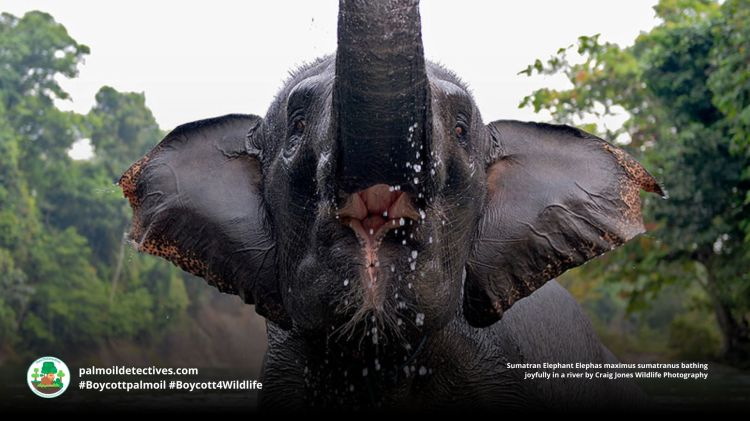
The Sumatran elephant is a critically endangered subspecies of the Asian elephant (Elephas maximus), confined to the island of Sumatra in Indonesia. As one of the world’s largest land mammals, they play a vital role in their ecosystem as keystone species, facilitating seed dispersal and maintaining forest biodiversity. Tragically, their population has been reduced by more than 80% in the last 75 years due to palm oil deforestation and poaching.
With fewer than 2,400 individuals estimated to remain in the wild, the Sumatran elephant is at immediate risk of extinction. Protect their future by boycotting palm oil products and advocating for stronger conservation efforts. Use your voice and wallet as weapons. #BoycottPalmOil #Boycott4Wildlife
https://www.youtube.com/watch?v=l-BdEF0EBng
https://www.youtube.com/watch?v=S5olrnYKT4Q
Sumatran #Elephants are rapidly disappearing 🐘🐘💀 critically endangered in #Sumatra #Indonesia due to #palmoil #deforestation and #poaching. Help them to survive when you #BoycottPalmOil 🌴🪔🤮☠️⛔️ #Boycott4Wildlife @palmoildetect https://palmoildetectives.com/2021/01/19/sumatran-elephant-elephas-maximus-sumatranus/
Share to BlueSky Share to TwitterLighter coloured than other #pachyderms, Sumatran #Elephants deserve to live in freedom. They’re 🐘💀 critically endangered in #Indonesia 🇮🇩 due to #palmoil #deforestation and #poaching. #BoycottPalmOil 🌴🪔🤮☠️⛔️ #Boycott4Wildlife @palmoildetect https://palmoildetectives.com/2021/01/19/sumatran-elephant-elephas-maximus-sumatranus/
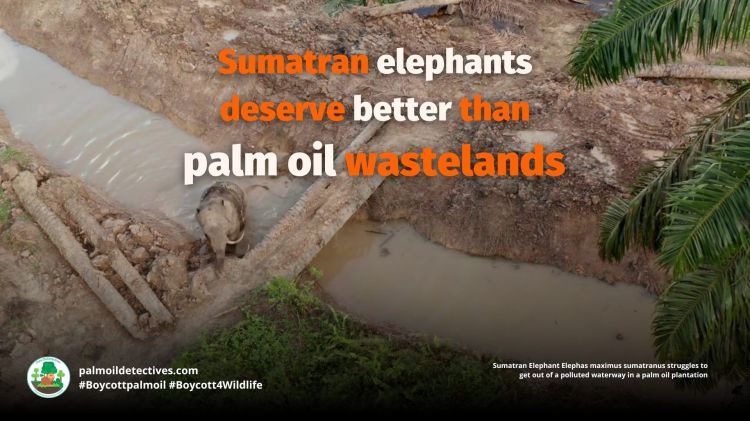
Share to BlueSky Share to TwitterWhile Sumatra is home to several of the country’s largest national parks, many areas in these parks are destroyed—illegally—to produce palm oil. The elephant population across the island is crashing, with far fewer than 3,000 surviving, as herds are left homeless, harassed and killed due to intense conflict with people over shrinking habitat. Their decline is closely linked to the rapid expansion of palm oil plantations, illegal logging, and human-wildlife conflicts.
The Asian Elephant is one of the last few mega-herbivores (i.e. plant-eating mammals that reach an adult body weight in excess of 1,000 kg) still extant on earth (Owen-Smith, 1988). Being hindgut fermenters with relatively poor digestive efficiency (Dumonceaux 2006), elephants must consume large quantities of food per day to meet energy requirements. The lack of reliable population estimates across most of the Asian elephant range presents a considerable challenge to detecting such declines.
Nevertheless, from what is known about trends in habitat loss and other threats including poaching, an overall population decline of at least 50% since 1945 over the last three generations (estimated to be 75 years, based on a generation time estimated to be 25 years) seems realistic. The Sumatran subspecies is listed as Critically Endangered
Appearance and Behaviour
Sumatran elephants are smaller than their mainland Asian relatives, with males standing between 2 and 3.2 metres tall and weighing up to 5,000 kilograms. Their lighter grey skin often features depigmented patches on the ears and trunk, which are particularly prominent in this subspecies. These elephants have larger ears relative to other Asian elephants, an adaptation that helps them regulate body temperature in Sumatra’s tropical climate (Nurcahyo et al., 2023).
An anatomical distinction of Sumatran elephants is their 20 pairs of ribs—one more than other Asian elephant subspecies. Male elephants typically develop long tusks, while females either lack visible tusks or have small, rudimentary ones. Their physical adaptations and behaviours are crucial for surviving in dense, tropical forests and swamps, where they navigate their environment with remarkable dexterity.
Geographical Range
Historically, Sumatran elephants roamed throughout the island’s lowland rainforests, peat swamps, and grasslands. Today, their habitat has been reduced to just a fraction of its original range, with an estimated 69% of suitable habitat lost between 1985 and 2009 (Hedges et al., 2020). Their remaining populations are concentrated in fragmented forest patches in the provinces of Aceh, Riau, Lampung, and North Sumatra.
The expansion of palm oil plantations is a primary driver of habitat destruction, with millions of hectares of forest cleared to meet global demand. Fragmented habitats force elephants into smaller areas, increasing the risk of inbreeding, resource competition, and conflict with humans (Setiawan et al., 2019).
Population Status
The Sumatran elephant population is estimated to be between 2,400 and 2,800 individuals, down from tens of thousands just decades ago. This decline represents the loss of hundreds of elephants annually due to habitat destruction, poaching, and conflict (Hedges et al., 2020). If current trends continue, the species could face extinction within 30 years.
Diet
Sumatran elephants are herbivorous and consume over 200 plant species, including grasses, fruits, leaves, bark, and roots. They consume up to 150 kilograms of vegetation daily, playing a critical role in seed dispersal and forest regeneration. Elephants forage over large areas, often moving between different forest types to meet their dietary needs (Nurcahyo et al., 2023).
Reproduction and Mating
Female Sumatran elephants have a gestation period of approximately 22 months, the longest of any land mammal. They typically give birth to a single calf every four to five years. Calves weigh 80–120 kilograms at birth and are highly dependent on their mothers for the first two years of life. These slow reproductive rates make population recovery challenging, particularly in the face of ongoing threats (Setiawan et al., 2019).
Threats
Sumatran elephants are protected under Indonesian law, but enforcement is often weak. Conservation efforts focus on habitat restoration, anti-poaching patrols, and mitigating human-elephant conflicts. Protected areas, such as Gunung Leuser and Way Kambas National Parks, are crucial for the survival of remaining populations. However, deforestation within these protected areas remains a significant challenge (Hedges et al., 2020).
IUCN Status: Critically Endangered
- Palm oil deforestation: The rapid conversion of forests into palm oil plantations has destroyed large portions of the elephants’ habitat. Between 1985 and 2009, Sumatra lost nearly half its forest cover (Hedges et al., 2020).
- Human-Elephant Conflict: As elephants venture into agricultural areas, they are often perceived as pests. This results in retaliatory killings, which account for significant population losses each year (Nurcahyo et al., 2023).
- Poaching: Male elephants are heavily targeted for their ivory, which is illegally traded. Despite national protections, poaching continues to drive population declines (Setiawan et al., 2019).
- Climate Change: Rising temperatures, altered rainfall patterns and extreme weather events threaten the availability of food and water resources, further stressing elephant populations (Nurcahyo et al., 2023).
Take Action!
Protect the Sumatran elephant by boycotting palm oil products, supporting reforestation initiatives, and advocating for stricter wildlife protection laws. Every purchase matters. Fight for their survival with #BoycottPalmOil and #Boycott4Wildlife.
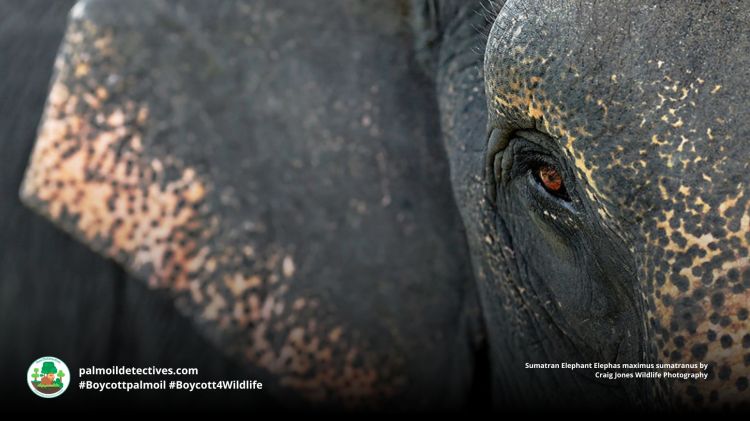
Spotlight on Sumatran Elephants – Craig Jones Wildlife Photography
Without direct intervention in the national parks the Orangutans along with other forest-dependant wildlife- like the Sumatran Tigers and Elephants will become progressively scarcer until their populations are no longer viable. Spotlight Sumatra – The Final Chapter by Craig Jones
Help the organisations helping these beautiful animals
Sumatran Elephant Conservation Initiative e.V.
Way Kambas National Park Sumatra
Further Information
Gopala, A., Hadian, O., Sunarto, ., Sitompul, A., Williams, A., Leimgruber, P., Chambliss, S.E. & Gunaryadi, D. 2011. Elephas maximus ssp. sumatranus. The IUCN Red List of Threatened Species 2011: e.T199856A9129626. https://dx.doi.org/10.2305/IUCN.UK.2011-2.RLTS.T199856A9129626.en. Downloaded on 19 January 2021
Nurcahyo, A., et al. (2023). The movement pattern and home range of Sumatran elephants in the Mila-Tangse landscape. ResearchGate. Retrieved from https://www.researchgate.net/publication/369190606
Setiawan, I., et al. (2019). Recent observations of Sumatran elephants in Sembilang National Park, South Sumatra. Journal of Tropical Forest Science, 31(2), 299–308. Retrieved from https://www.researchgate.net/publication/334776259
BBC Earth. (2020). Sumatran Elephant: Project Hope. Retrieved from https://www.bbc.co.uk/programmes/profiles/28hWyXFGHPhm20nTVG4pT0n/sumatran-elephant
Wikipedia contributors. (2023). Sumatran elephant. In Wikipedia. Retrieved from https://en.wikipedia.org/wiki/Sumatran_elephant
Sumatran Elephant Elephas maximus sumatranus
How can I help the #Boycott4Wildlife?
Take Action in Five Ways
1. Join the #Boycott4Wildlife on social media and subscribe to stay in the loop: Share posts from this website to your own network on Twitter, Mastadon, Instagram, Facebook and Youtube using the hashtags #Boycottpalmoil #Boycott4Wildlife.
2. Contribute stories: Academics, conservationists, scientists, indigenous rights advocates and animal rights advocates working to expose the corruption of the palm oil industry or to save animals can contribute stories to the website.
Mel Lumby: Dedicated Devotee to Borneo’s Living Beings
Anthropologist and Author Dr Sophie Chao
Health Physician Dr Evan Allen
The World’s Most Loved Cup: A Social, Ethical & Environmental History of Coffee by Aviary Doert
How do we stop the world’s ecosystems from going into a death spiral? A #SteadyState Economy
3. Supermarket sleuthing: Next time you’re in the supermarket, take photos of products containing palm oil. Share these to social media along with the hashtags to call out the greenwashing and ecocide of the brands who use palm oil. You can also take photos of palm oil free products and congratulate brands when they go palm oil free.
https://twitter.com/CuriousApe4/status/1526136783557529600?s=20
https://twitter.com/PhillDixon1/status/1749010345555788144?s=20
https://twitter.com/mugabe139/status/1678027567977078784?s=20
4. Take to the streets: Get in touch with Palm Oil Detectives to find out more.
5. Donate: Make a one-off or monthly donation to Palm Oil Detectives as a way of saying thank you and to help pay for ongoing running costs of the website and social media campaigns. Donate here
Pledge your support#Bantrophyhunting #Borneo #Boycott4wildlife #BoycottPalmOil #CriticallyEndangeredSpecies #deforestation #elephants #Indonesia #Malaysia #Pachyderm #pachyderms #palmoil #poaching #pollination #pollinator #SeedDispersers #SouthEastAsia #Sumatra #SumatranElephantElephasMaximusSumatranus

Here’s a rooted elephant for your Friday.
#elephant #art #drawing #sketch #sketchbook #penandink #paper #illustration #creative #pen #penandinkartist #artwork #ink #illustration #inkwork #copic #pointillism #penandinkillustration #dotworknow #blackink #penandinkart #pointillism #drawingwithdots #pachyderm #olddeadtree
#elephant #art #drawing #sketch #sketchbook #penandink #paper #illustration #creative #pen #penandinkartist #artwork #ink #illustration #inkwork #copic #pointillism #penandinkillustration #dotworknow #blackink #penandinkart #pointillism #drawingwithdots #pachyderm #olddeadtree


A Special Birthday gift for @tfsneps.bsky.social
Sadly, we have almost over 5 hours of difference and i wasn't aware he was in the middle of a flight when i did my enchanting call. Thanksfully, he had the whole room for his elephant butt to himself! #TFeveryday #Wolfaroart #Transformation #Transfur #Pachyderm #Elephant #Anthro #Surprise #Unconvenient
That day everything was working as he expected; he was almost ready to aboard his airplane and was imagining all the things he will do to celebrate his birthday, all was ready to depart, he even got lucky enough that the three seats over where gonna be only for him, nothing could go wrong or that is what he thought before the Phone started to ring... -"Lucky, my man!"- he replied, his ears started to tingling. -"Bro! Happy birthday! I hope you are doing well and enjoy my gift!"- Lucky replied to his friend, causing his friend stomach to gurgle loudly. He could feel how his belly started to bloated and in the same way his butt started to grown and swell. His body started to get more squezzed against the chairs, his massive buttocks squeazed his behind while his girth pressed on his front one. -"no, no, no... Lucky! I... I love elephants but... YOU ARE MAKING ME HUGE ON MY FLIGHT! GASP!"- The new elephant thunderous voice ended wreaking havoc in the middle of the flight, there was nowhere to run anymore and he wasn't able to go anywhere neither. -"UUUUGH, GREAT. I'LL CALL MY FRIEND AND TELL THEM I'M GOING TO BE LATE-" he complained, ending with a massive Trumpet.
Commission for Sleepless Sheep (Blueskye)
In those holidays, enjoy yourself with a Pachyderm Drink and became a rotund big fellow~ Left your shame aside, stops the floor and leave any depression behind, when you are huge, problem got small! #Wolfaroart #TFEveryday #Weightgain #Transformation #Transfur #Pachyderm #Anthros #Hippopotamus #Rhinoceros
Becoming larger than life is an excelent way to pass the christmass, there it is nothing more special that taking a time to relax, take your shoes off and drink this special brew that would push that Pachyderm out of you! Feel your body growing, feel that belly swelling and hanging outside your clothes while they stretch against your new rotund frame, a frame so big that the most weaken clothes start to tear and shred with their growing. The Elixir help you to deal with any seasonal depression you might have as it would make you feel big, powerful and capable of anything, there it is nothing that would oppose to a powerful Pachyderm, enjoy yourself, discover new fellings and have a blast!


Large herbivores such as elephants contribute to tree diversity
A recent study using satellite data has highlighted the critical role that large herbivores play in promoting tree diversity in forest ecosystems. The research showed that areas with abundant large herbivores like elephants had more varied tree cover and more tree diversity. This finding underscores the importance of large herbivores in many ecosystems and that they should have primary importance in conservation strategies, particularly in the context of global efforts to combat climate change and extinction. Help big herbivores every time you shop and #Boycottpalmoil and #Boycott4Wildlife in the supermarket!
Recent #research finds that lots of large #herbivores like #elephants 🦏🐘help plant #biodiversity in rainforests! Help big plant eaters and #plants to survive! 🐘🩶#Boycottpalmoil #Boycott4Wildlife 🧐🪔⛔️ @palmoildetect.bsky.social https://wp.me/pcFhgU-7dB
Share to BlueSky Share to TwitterSoulful #elephants 🐘💗 are not only intelligent, they add more tree cover and #tree diversity, finds this landmark #study. All #elephant species are threatened by #palmoil #deforestation and #poaching for ivory. #BoycottPalmOil #Boycott4Wildlife 🌴🔥⛔ @palmoildetect.bsky.social https://wp.me/pcFhgU-7dB
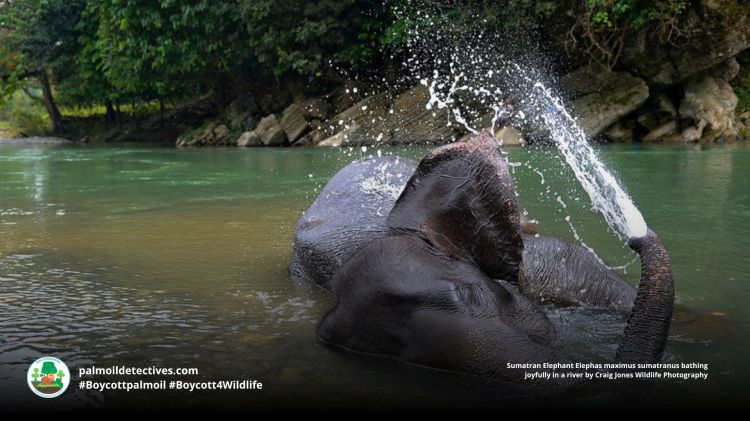
Share to BlueSky Share to TwitterCover image credit: A Sumatran elephant enjoys a playful river dip, by Craig Jones Wildlife Photography
Lanhui Wang, Joris P.G.M. Cromsigt, Robert Buitenwerf, Erick J. Lundgren, Wang Li, Elisabeth S. Bakker, Jens-Christian Svenning. Tree cover and its heterogeneity in natural ecosystems is linked to large herbivore biomass globally. One Earth, 2023; DOI: 10.1016/j.oneear.2023.10.007 Media release from Lund University. “Large herbivores such as elephants, bison and moose contribute to tree diversity.” ScienceDaily, 3 November 2023.
Maintaining species-rich and resilient ecosystems is key to preserving biodiversity and mitigating climate change. Here, megafauna — the part of the animal population in an area that is made up of the largest animals — plays an important role. In a new study published in the scientific journal One Earth, an international research team, of which Lund University is a part, has investigated the intricate interplay between the number of voracious herbivores like elephants and the diversity of trees in the world’s protected areas.
“Our findings reveal a fascinating and complex story of how large herbivorous animals shape the world’s natural landscapes. The tree cover in these areas is sparser, but the diversity of the tree cover is much higher than in areas without large herbivores,” says Lanhui Wang, a researcher in physical geography and ecosystem science at Lund University.
“In our global analysis, we find a substantial association between the biomass of large herbivores and varied tree cover in protected areas, notably for browsers and mixed-feeders such as elephants, bison and moose and in non-extreme climates,” explains the study’s senior author, Jens-Christian Svenning, professor at Aarhus University.
Hereby, the study supports that large wild herbivores promote a diverse vegetation structure, creating a rich habitat for many other species. This is due to the animals’ consumption of vegetation as well as physical disturbances.
According to Lanhui Wang, these new research findings highlight the need to integrate large herbivores into restoration and conservation strategies. Not only for the sake of the animals themselves but also for the vital role they play in shaping landscapes and influencing biodiversity. The researchers argue that this aspect is not sufficiently considered within the framework of sustainable land management and ecosystem restoration.
“At a time when global initiatives are intensely focused on combating climate change and biodiversity loss, our findings highlight the need for a broader and more nuanced discussion about ecosystem management and conservation measures. It is of utmost importance to integrate understanding of the ecological impact of megafauna into this,” says Lanhui Wang.
The UN has declared the 2020s as the decade of ecosystem restoration. In total, 115 countries have agreed to restore up to 100,000 square kilometres of nature in total. To achieve this, more wild-living large herbivores are needed worldwide, says Lanhui Wang.
“I believe that we will need to protect and conserve large herbivores to achieve the UN goals. Megafauna are crucial for tree cover, which in turn promotes carbon sequestration and a diversity of habitats,” says Lanhui Wang.
Lanhui Wang, Joris P.G.M. Cromsigt, Robert Buitenwerf, Erick J. Lundgren, Wang Li, Elisabeth S. Bakker, Jens-Christian Svenning. Tree cover and its heterogeneity in natural ecosystems is linked to large herbivore biomass globally. One Earth, 2023; DOI: 10.1016/j.oneear.2023.10.007 Media release from Lund University. “Large herbivores such as elephants, bison and moose contribute to tree diversity.” ScienceDaily, 3 November 2023.
ENDS
Learn about other animals endangered by palm oil and other agriculture
Global South America S.E. Asia India Africa West Papua & PNGLearn about “sustainable” palm oil greenwashing
Read more about RSPO greenwashing
Lying Fake labels Indigenous Land-grabbing Human rights abuses Deforestation Human health hazardsA 2019 World Health Organisation (WHO) report into the palm oil industry and RSPO finds extensive greenwashing of palm oil deforestation and the murder of endangered animals (i.e. biodiversity loss)
Read moreTake Action in Five Ways
1. Join the #Boycott4Wildlife on social media and subscribe to stay in the loop: Share posts from this website to your own network on Twitter, Mastadon, Instagram, Facebook and Youtube using the hashtags #Boycottpalmoil #Boycott4Wildlife.
2. Contribute stories: Academics, conservationists, scientists, indigenous rights advocates and animal rights advocates working to expose the corruption of the palm oil industry or to save animals can contribute stories to the website.
3. Supermarket sleuthing: Next time you’re in the supermarket, take photos of products containing palm oil. Share these to social media along with the hashtags to call out the greenwashing and ecocide of the brands who use palm oil. You can also take photos of palm oil free products and congratulate brands when they go palm oil free.
https://twitter.com/CuriousApe4/status/1526136783557529600?s=20
https://twitter.com/PhillDixon1/status/1749010345555788144?s=20
https://twitter.com/mugabe139/status/1678027567977078784?s=20
4. Take to the streets: Get in touch with Palm Oil Detectives to find out more.
5. Donate: Make a one-off or monthly donation to Palm Oil Detectives as a way of saying thank you and to help pay for ongoing running costs of the website and social media campaigns. Donate here
Pledge your supportShare this:
#AfricanElephant #Bantrophyhunting #biodiversity #BorneanPygmyElephantElephasMaximusBorneensis #Boycott4wildlife #BoycottPalmOil #deforestation #ecology #elephant #elephants #EndangeredSpecies #herbivores #Pachyderm #pachyderms #palmOilDeforestation #palmoil #plants #poaching #research #study #SumatranElephantElephasMaximusSumatranus #tree #WorldElephantDay
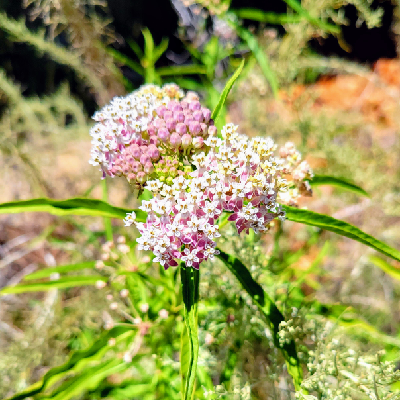
If this Colombian #Mammoth #fossil is in the part of the time range they suggest, then it was in North America at the same time as human beings.
https://amp.cnn.com/cnn/2024/08/17/science/mammoth-tusk-mississippi
Commission for Raharu95 (FA)
After visiting Eldraine, Cookie Lucky mention to his fellow alchemist about the ingredients from there. Working together, they replicate the Cookie potion so they could go to explore Eldraine without troubles! #Wolfaroart #TFEveryday #Transfur #Transformation #Weightgain #Pachyderm #Elephant #Hippo #Anthro #Innanimate #Cookie #Food
African Forest Elephants Help Fight Climate Change
Discover the awe-inspiring role of African forest #elephants in the Congo Basin—nature’s master gardeners who literally shape the world around them! These gentle giants roam through muddy, mineral-rich paradises called baïs, fostering the growth of carbon-absorbing trees that make our planet healthier. By tending to these unique landscapes, they are the unsung heroes in the fight against climate change. Want to ensure these ecological architects keep doing their vital work? Join the movement to protect their habitat—say no to palm oil and adopt a vegan lifestyle! 🐘🌳#BoycottPalmOil #BeVegan #Boycott4Wildlife
https://youtu.be/s584AP-BYm0?si=Zrwc5CFFjAxAqmas
Take action by sharing this!
African forest #elephants 🐘 in #Congo 🇨🇩 are essential to fighting #climatechange 🌳💚 by capturing #carbon and dispersing seeds in the rainforest. Help them every time you shop, be #vegan #Boycottpalmoil #Boycott4Wildlife @palmoildetect https://palmoildetectives.com/2024/04/28/african-forest-elephants-unsung-heroes-helping-congo-fight-climate-change/
Share to BlueSky Share to TwitterGentle giant pachyderms #African forest #elephants 🐘🐘 are the unsung heroes helping #climatechange. They capture #carbon in the #DRC’s 🇨🇩🌳rainforest! Help them survive with your supermarket choices #Boycottpalmoil #Boycott4Wildlife @palmoildetect https://palmoildetectives.com/2024/04/28/african-forest-elephants-unsung-heroes-helping-congo-fight-climate-change/
Share to BlueSky Share to TwitterThis story was written by Leonie Joubert and originally published by Mongabay on August 15, 2023 and was republished under a Creative Commons licence.
The approach to the “village of elephants” in the Sangha Rainforest in the Central African Republic must be made in complete silence. Not even the faintest rustle of backpack on rain jacket should break the soundscape as visitors wade through the sometimes waist-deep swamp at the forest’s edge. The Indigenous Ba’aka guides must be able to listen for any signs of nearby elephants, so they can steer the visitors clear and avoid a close encounter with these giants. When a few pachyderms saunter out of the dense greenery, the Ba’aka shoo them away calmly.
The thick vegetation gives way suddenly to a baï. This is no mere watering hole. The sandy clearing stretches for half a kilometer, more than a quarter of a mile, in the otherwise unbroken canopy of the world’s second-largest tropical forest.
A handful of researchers camp out on a timber observation platform, overlooking a place that has drawn generations of elephants to its mineral- and salt-laden sand and muddy water. They document how the animals use their trunks or tusks to dig into the sand, eavesdrop on the animals’ conversations, and count the many other species that congregate here.
This is Dzanga baï, a meeting place for critically endangered African forest elephants (Loxodonta cyclotis) in the Dzanga-Sangha Complex of Protected Areas where these animals come together in huge numbers to dig for nutrients they can’t get from the otherwise abundant forests.
Baïs are unique to the Congo Basin’s forests, and new research is underway to understand the role these mineral-rich pockets play as a supplement to the elephants’ diet, how this sustains the animals’ population, and how they therefore contribute to the carbon-capture function of the forest.
Unlike the Amazon, the Congo Basin’s forests still have their original megafauna, elephants in particular. And they have these salt-rich clearings. Conservationists are beginning to understand the importance of elephants as forest gardeners here, and how their taste for certain trees and fruits has sculpted a forest that absorbs more carbon per hectare than the Amazon.
The Global Carbon Budget project estimated Africa’s total greenhouse gas emissions for 2021 at 1.45 billion metric tons. Every year, the Congo Basin’s forests soak up 1.1 billion metric tons of atmospheric carbon, storing it in trees and soil; in 2020 carbon credit prices, this service would be worth $55 billion.
Forest elephants, smaller than their better-known savanna cousins or even Asian elephants, prefer certain lower-growing, tasty trees. This picky browsing pressure creates gaps in the canopy that allow other, less palatable but carbon-dense species to reach tremendous heights. Elephants’ appetite for the fruit of these bigger trees then means they spread their seeds far and wide.
A 2019 study from the Ndoki Forest in the Republic of Congo (ROC) and LuiKotale in the Democratic Republic of Congo (DRC) estimated that if elephants were removed from these sites, the loss of their forest-shaping food preferences would reduce the forest’s carbon capture by 7%.
This finding makes a case not only to stop deforestation in the Congo Basin, but to protect the elephants too, as a way to slow climate breakdown, the study authors wrote.
Mouangi baï, a vast watering hole in the Republic of Congo’s Odzala-Kokoua National Park, is nicknamed Capitale because of the vast number of elephants drawn to its mineral-laden water, mud, and sand. Image courtesy Gwilli Gibbon/African Parks.Salt licks for elephants, gardeners of the forest
Mouangi baï is only about 250 km (155 mi) from Dzanga baï as the crow flies, but it takes a day or two to travel by road and river to get from one to the other.
Researchers with the conservation organization African Parks and Harvard University’s Department of Organismic and Evolutionary Biology are zeroing in on Mouangi and other baïs in Odzala-Kokoua National Park in the ROC, to clarify the link between baïs, elephants and the forest’s tree species composition.
Nicknamed Capitale by the locals, Mouangi baï in Odzala draws hundreds, maybe even thousands, of elephants, according to Gwili Gibbon, research and monitoring head at African Parks, which manages the park along with the ROC government.
“Mouangi is one of our largest and most renowned baïs,” Gibbon says.
At the intersection of two rivers, Mouangi is more than 1 km (0.6 mi) across and spans 91 hectares (225 acres). It’s the largest of a dozen of Odzala’s baïs that the African Parks and Harvard research collaboration is focusing on.
Odzala-Kokoua National Park extends across 1.35 million hectares (3.34 million acres), and while it has a few thousand baïs, often occurring in clusters within the forest, this ecosystem makes up only about 0.2% of the park’s footprint. Nevertheless, these clearings may be integral to the shape of the forest itself, which is why Harvard assistant professor Andrew Davies and doctoral researcher Evan Hockridge are teaming up with African Parks to understand the importance of the salty watering holes in supporting elephant populations, which then shape the forest mosaic.
The baïs are clearly a hotspot that elephants seek out for their rare minerals in an ecosystem rooted in the nutrient-poor soils typical of the region.
“The elephants use their tusks to scrape topsoil off in specific areas, and eat the finer dust on the surface,” says Hockridge, a landscape ecologist. “They also dig large mining sites or wells, as much as a meter [3 feet] deep.”
The animals’ excavations go even deeper at times, down to where water carries the salt in a more accessible form. The need to ingest the mineral-rich dust, mud and water keeps the animals returning to these sites.
An elephant digging for salt-rich mud in the Dzanga baï in the Sangha Rainforest in the Central African Republic. Image courtesy Jan Teede.But how the baïs formed in the first place — they’re present in the Congo Basin, but not in the Amazon — and why they remain clear of forest encroachment are still a mystery.
Hockridge says no one has tried to establish if the now-extinct megafauna of the Amazon once made similar clearings there, or if baï size correlates to the size of the animals visiting them.
“One hypothesis is that megafauna effectively create large, nutrient-rich, lick-like clearings. But it hasn’t been quantified that baïs are manufactured or maintained by megafauna,” he says.
The researchers say they hope to answer this puzzle: Do large mammals like elephants maintain and stabilize the baïs?
Anecdotes from the DRC might give the first glimpse of an answer, according to Harvard’s Davies.
“Baïs may be closing in the DRC, and it could be because the elephants are in a war zone, so they don’t have the big bulldozer effect,” he says.
The hypothesis is that if fewer elephants visit and maintain these clearings, the baïs will be swallowed up by the forest.
Gibbon’s African Parks team has set up experimental plots in the Odzala, where they’ve buried salt in the sand at a similar depth to which elephants excavate. Researchers are monitoring these sites to see if more animals will congregate around the plots, whether this impacts the vegetation cover in and around the baïs, and whether there’s a shift in the carbon-capture potential of the surrounding forests.
This study is centered in Odzala, although the researchers say they hope to expand the work into the Ndoki region of the Dzanga-Sangha Complex of Protected Areas.
Indigenous Ba’aka trackers work with researchers and tourist operators in various parks in Odzala-Kokoua National Park and the Dzanga-Sangha Complex of Protected Areas. Their knowledge of animal behaviour and forest life is essential to accessing these wildernesses. Image courtesy Jan Teede.Baïs have a busy social scene
It isn’t just elephants that congregate at the baïs. These watering holes have a bustling social scene.
Gibbon describes the flocks of African green pigeons (Treron calvus) that gather at Capitale at dawn and dusk; buffalo and several bird species that visit during daylight hours; and the hyenas that can be heard calling after dark as the elephants mine for salt.
Wildlife refuges like these in the Congo Basin are also home to the critically endangered western lowland gorilla (Gorilla gorilla gorilla), two unusual forest and swamp-dwelling antelope — the bongo (Tragelaphus eurycerus) and sitatunga (Tragelaphus spekii) — as well as central chimpanzees (Pan troglodytes troglodytes), bonobos (Pan pansicus), and the endangered gray parrot (Psittacus erithacus).
The forests of Gabon, southern Cameroon and southern Central African Republic also have a high number of baïs, and the findings from these studies could eventually be extrapolated to give an idea of the implications for the Congo Basin more widely.
“The area that baïs’ cover is tiny, but they sustain the elephant population,” Davies says. “If our hypothesis is correct, without the baïs you’d have no elephants; without elephants there’s be no big trees with high carbon density, so carbon storage would go down.”
If the forest loses the baïs, it could lose more than just the elephants or see a change in its carbon-capturing treescape. The baïs would no longer draw the many other animals that thrive in these mineral-dense watering holes, and the tourists and environmental researchers drawn to them too.
Citation:
Berzaghi, F., Longo, M., Ciais, P., Blake, S., Bretagnolle, F., Vieira, S., … Doughty, C. E. (2019). Carbon stocks in central African forests enhanced by elephant disturbance. Nature Geoscience, 12(9), 725-729. doi:10.1038/s41561-019-0395-6
Banner image: Elephants dig for salt-rich mud in the Dzanga baï in the Sangha Rainforest in the Central African Republic. Image courtesy Jan Teede.
This story was written by Leonie Joubert and originally published by Mongabay on August 15, 2023 and was republished under a Creative Commons licence.
ENDS
Learn about other animals endangered by palm oil and other agriculture
Global South America S.E. Asia India Africa West Papua & PNGFrill-Necked Lizard Chlamydosaurus kingii
Grey Crowned Crane Balearica regulorum
Ecuadorean Viscacha Lagidium ahuacaense
Blue-streaked Lory Eos reticulata
Learn about “sustainable” palm oil greenwashing
Read more about RSPO greenwashing
Lying Fake labels Indigenous Land-grabbing Human rights abuses Deforestation Human health hazardsA 2019 World Health Organisation (WHO) report into the palm oil industry and RSPO finds extensive greenwashing of palm oil deforestation and the murder of endangered animals (i.e. biodiversity loss)
Read moreTake Action in Five Ways
1. Join the #Boycott4Wildlife on social media and subscribe to stay in the loop: Share posts from this website to your own network on Twitter, Mastadon, Instagram, Facebook and Youtube using the hashtags #Boycottpalmoil #Boycott4Wildlife.
Enter your email address
Sign Up
Join 3,171 other subscribers2. Contribute stories: Academics, conservationists, scientists, indigenous rights advocates and animal rights advocates working to expose the corruption of the palm oil industry or to save animals can contribute stories to the website.
Mel Lumby: Dedicated Devotee to Borneo’s Living Beings
Anthropologist and Author Dr Sophie Chao
Health Physician Dr Evan Allen
The World’s Most Loved Cup: A Social, Ethical & Environmental History of Coffee by Aviary Doert
How do we stop the world’s ecosystems from going into a death spiral? A #SteadyState Economy
3. Supermarket sleuthing: Next time you’re in the supermarket, take photos of products containing palm oil. Share these to social media along with the hashtags to call out the greenwashing and ecocide of the brands who use palm oil. You can also take photos of palm oil free products and congratulate brands when they go palm oil free.
https://twitter.com/CuriousApe4/status/1526136783557529600?s=20
https://twitter.com/PhillDixon1/status/1749010345555788144?s=20
https://twitter.com/mugabe139/status/1678027567977078784?s=20
4. Take to the streets: Get in touch with Palm Oil Detectives to find out more.
5. Donate: Make a one-off or monthly donation to Palm Oil Detectives as a way of saying thank you and to help pay for ongoing running costs of the website and social media campaigns. Donate here
Pledge your support#african #africanForestElephantLoxodontaCyclotis #amazingAnimals #animalBehaviour #animalCommunication #animalIntelligence #bantrophyhunting #bevegan #biodiversity #boycottPalmOil #boycott4wildlife #boycottpalmoil #carbon #climatechange #congo #deforestation #democracticRepublicOfCongo #drc #elephant #elephants #forgottenAnimals #mammal #pachyderm #pachyderms #palmOil #palmOilDeforestation #theDemocraticRepublicOfCongo #vegan


I've came up with a whole bunch of ideas for OCs and this is one of em! Meet Quey, the old street dance teacher from around the block.



#Fediverse-Client/App #Pachli
Die App Pachli für #Android entstand 2023 auf Basis von #Tusky in Version 23 und nutzt die #Mastodon-#Client-#API, um sich mit Konten auf kompatiblen Instanzen zu verbinden.
Das Projekt wurde von Nik Clayton gestartet, einem Entwickler, der zuvor zu Tusky 22.0 und 23.0 beigetragen hatte.
Pachli ist ein Kofferwort abgeleitet aus "Pach" (von "#Pachyderm", vgl. Dickhäuter bzw. #Pachydermata) und der schweizerdeutschen Verkleinerungsform bzw. Endung "li" (weil Nik Clayton dort lebt).
Da Pachlis Entwicklung auf Tusky basiert, weist Pachli viele Funktionen auf, unterstützt etwa auch vorgeplante Beiträge und bietet die Unterstützung für mehrere Konten. Auch die Pflege des eigenen Profils ist direkt über Pachli möglich.
Naturgemäß ähnelt Pachli dem Klassiker Tusky, weicht aber bereits in einigen Punkten ab, etwa bei der Funktion zum permanenten Nachladen der Zeitleisten im Hintergrund.
Website des Projekts:
https://pachli.app/
Pachli im Fediverse:
@pachli@mastodon.social

After a brief stay at Bismarck Antique Mall, the Tripodes Elephanti came home with me on Saturday. Now he just needs a name.
#pachyderm #elephant #toy #vintage #antique #toys #windup #winduptoys
Tripodes Elephanti

A friendly Loxodon priest! My latest gym sketch
#loxodon #elephant #dnd #roleplay #roleplaying #traditionalart #art #artwork #pen #sketch #furry #anthro #sfw #sfwart #sfwartwork #pachyderm #solo #design #oc #characterdesign #tusk #ornate #cleric #priest #fantasy


Happy World Rhino Day 2023! #rhino #rhinoceros #pachyderm #megaherbivores #whiterhino #blackrhino #indianrhino #javanrhino #sumatranrhino

Client Info
Server: https://mastodon.social
Version: 2025.07
Repository: https://github.com/cyevgeniy/lmst