
I love GitHub shortcuts, and no, I never used punch cards.
#syntax

Công cụ miễn phí hỗ trợ so sánh cú pháp (syntax) của hơn 20 ngôn ngữ lập trình phổ biến hiện nay như Go, Java, Python, Rust, TypeScript, Dart, và nhiều ngôn ngữ khác.
Tiện ích này cực kỳ hữu dụng cho các nhóm đang có kế hoạch chuyển đổi công nghệ (migration) hoặc những bạn mới học muốn so sánh sự khác biệt giữa các ngôn ngữ một cách trực quan.
#Programming #Coding #Developer #Syntax #SoSanhLapTrinh #LapTrinh #CongNghe #DevTool
https://www.reddit.com/r/programming/comments/1qp4ghq/free_tool_to

inspiration: @aartaka
here: https://aartaka.me/lisp-lines.html
with brilliant idea for a #/ macro
my small contribution here:
#lisp #scheme #functional #programming #software #syntax #ai #llm #tool #vibecoded #vibecoding #introduction


In the #Python programming language, the new #REPL from Python 3.13 (2024) has added colorization in the #interpreter in #interactive Python, similar to the interface seen in later versions of #PyPy. Python 3.14 (2025) and Python 3.15 (2026) continue along with the improved REPL with the colorization of the Python #syntax itself.



Org Mode Syntax Is One of the Most Reasonable Markup Languages to Use for Text
https://karl-voit.at/2017/09/23/orgmode-as-markup-only/
#HackerNews #OrgMode #Syntax #TextMarkup #ReasonableLanguages #ProductivityTools
I program without syntax highlighting
https://hakon.gylterud.net/opinion/syntax-highlighting.html
#HackerNews #I #program #without #syntax #highlighting #programming #syntaxhighlighting #coding #opinion #developer

#Development #Launches
Diffs · An open source diff and code rendering library https://ilo.im/169kjy
_____
#Programming #Coding #Syntax #Shiki #JavaScript #React #OpenSource #WebDev #Frontend #Backend
A font with built-in TeX syntax highlighting
https://rajeeshknambiar.wordpress.com/2025/12/27/a-font-with-built-in-tex-syntax-highlighting/
#HackerNews #font #TeX #syntax #highlighting #coding #design #tools


does this distinction match the distinction in AAVE between “the man be laughing” and “the man is laughing”? Why does so-called standard English have no such strong syntactical distinction between habitual and present action? (Sparked by a dinner table argument over Laughing Cow brand cheese, served in individual wrapped triangles without text in this officially bilingual country. I guessed the French name would be “La vache qui rit”; my daughter guessed “La vache riante.” I won.) #syntax



https://technologiesinternetz.blogspot.com/2025/12/the-essential-c-cheat-sheet-core-syntax.html
The Essential C# Cheat Sheet: Core Syntax and Constructs for Rapid Development

T-Ruby is Ruby with syntax for types
#HackerNews #T-Ruby #Ruby #Types #Syntax #Programming #Language
Font with Built-In Syntax Highlighting (2024)
https://blog.glyphdrawing.club/font-with-built-in-syntax-highlighting/
#HackerNews #Font #Syntax #Highlighting #2024 #Typography #Design #Coding #Tools
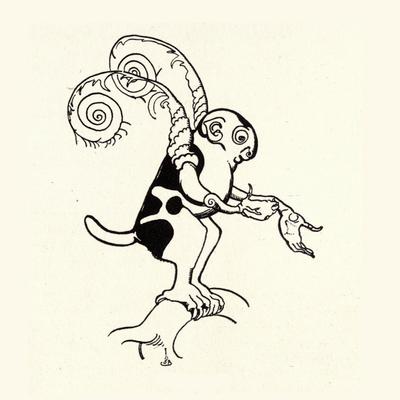
Diagram from Solomon Barrett, *The Principles of Grammar* (1857). (1857), from The Principles of Grammar.
Source: Library of Congress
Available to buy as a print.
https://pdimagearchive.org/images/8056dab3-2194-4808-ac8c-6f75cbb06bac
#diagrams #schematics #education #language #pedagogy #words #linguistics #trees #grammar #syntax #writing #art #publicdomain


Ah, the thrilling world of #parentheses 🤔! Because clearly, the burning issue on everyone's mind is how to "ungroup" expressions in #programming languages. Let's all pretend this is groundbreaking stuff and not just #overthinking #syntax until our brains implode 🧠💥.
https://kellett.im/a/inverse-parentheses #ungrouping #tech #humor #HackerNews #ngated
It's important to understand what 𝘈 𝘓𝘢𝘯𝘨𝘶𝘢𝘨𝘦 𝘐𝘯𝘴𝘶𝘧𝘧𝘪𝘤𝘪𝘦𝘯𝘤𝘺 𝘏𝘺𝘱𝘰𝘵𝘩𝘦𝘴𝘪𝘴 is 𝙣𝙤𝙩 talking about.
https://philosophics.blog/2025/12/19/what-the-lih-is-not-about-and-why-this-still-needs-saying/?utm_source=masto&utm_medium=social&utm_campaign=lih
#philosophy #language #linguistics #meaning #hypothesis #book #blog #podcast #banks #pyjamas #baskets #basketball #communication #semantics #understanding #syntax #epistemology #ambiguity #elephants #humour

You might could dig these multiple modals
A passage from Walter Mosley’s Devil in a Blue Dress:
Joppy stopped wiping [the bar] for a moment and looked me in the eye.
“Don’t get me wrong, Ease. DeWitt is a tough man, and he runs in bad company. But you still might could get that mortgage payment an’ you might even learn sumpin’ from’im.”
That ‘might could get’ was a serendipitous phrase to encounter. Over the preceding days I’d come across several treatments of what are known as double modals or multiple modals, and had been considering a blog post about them. Hint taken.
Brad Dourif in ‘Deadwood’
First, a technical note on modals. These are a small and grammatically unusual family of verbs. They’re a subset of the auxiliary (helper) verbs and so are sometimes called modal auxiliaries. They qualify other verbs in a verb phrase, influencing the overall meaning: I can go, you may be, she must try. Geoffrey Pullum says there are 8–12 of them in English:
can, may, shall, will, dare, must, need, ought
He and Rodney Huddleston mention could, might, should and would as the preterite forms (past tense marked by inflection) of the first four. Grammarians differ slightly in naming the family members; this depends on the category boundaries, and needn’t concern us here.
Modals are used to indicate modality, or ‘mood’ – not in the sense of atmosphere, but to express possibility, permission, obligation, necessity, deduction, prediction and such things. Heather Marie Kosur writes that modality ‘allows language users to express what is, what would be, what may be, and what should be’.
Modern grammar generally divides modality into two or three branches: epistemic (probability, deduction, necessity) and deontic (duty, obligation, permission), and sometimes also dynamic (factual). See this glossary, or Kosur’s essay for a more detailed treatment.
Unlike lexical verbs, modals have no to-infinitives, no –s forms for subject agreement, and no tenses formed with be or have. So you don’t see oughting, mights or musted, etc. At least, not normally (James Joyce, Finnegans Wake: ‘when cherries next come back to Ealing as come they must, as they musted in their past’).
…
*
And so to double or multiple modals: might could, may would and the like.
Megan Risdal, in a recent post at For the Love of Linguistics, used a map of ‘might could’ usage to gauge its geographic distribution in the U.S. She also studied the reactions double modals inspire, and shared her thoughtful observations.
As I wrote in a comment there, double modals are not in my idiolect, but I find them charming. They’re also interesting grammatically, semantically, and sociolinguistically. They may be used with subtlety by those to whom they come naturally: to modify the degree of likelihood or speculation expressed, for example.
Multiple modals also popped up in an article on the influence of Scotch-Irish [PDF] on East Tennessee grammar, which John Cowan shared in a comment to my recent post on Hiberno-English till. The article’s author, Michael Montgomery, is one of the people behind MultiMo: The Database of Multiple Modals, which launched last week.
MultiMo offers, among other things, a multi-page table of reported examples, including some rare and delightful triple modals:
I might could should write home.
It’s a long way and he might will can’t come, but I’m gonna ask.
Aren’t they amazing? What is grammatical in standard English is often erroneously equated with what is grammatical, period. But grammaticality differs with dialect, and standard English is just one dialect (or a set of them) — privileged socially but not linguistically.
If you’re still with me, and you might would be hungry for more, Language Log has analysed double modals on several occasions; for starters see this post by Ben Zimmer and the pages it links to.
I’ll conclude as I began, with Devil in a Blue Dress:
I always tried to speak proper English in my life, the kind of English they taught in school, but I found over the years that I could only truly express myself in the natural, “uneducated” dialect of my upbringing.
Update: More discussion of double modals at Language Hat, who says:
They are a peripheral part of my dialect thanks to my Ozark ancestors, and while I don’t use them on a daily basis, I delight in tossing them into the mix once in a while; they give me that warm down-home feeling.
#crimeFiction #dialects #grammar #language #linguistics #modalVerbs #modality #modals #multipleModals #semantics #syntax #usage #verbs #WalterMosley #words

TIL Rust has the `let-else` construct! I used to get annoyed at how verbose it was to unpack an Option/Result just to log an error and leave early if it was None/Err. Turns out there's a neat syntax for that now.


I just posted a draft of a new paper.
#linguistics #syntax #academicmastodon
https://ling.auf.net/lingbuzz/009566
Client Info
Server: https://mastodon.social
Version: 2025.07
Repository: https://github.com/cyevgeniy/lmst