#FMRI

2026-01-21

@elduvelle_neuro

To me, fMRI is the equivalent of measuring economic activity across the world by looking at GDP amounts and growth, and trade balances across countries, regions, or continents. Nobody can claim this or that person or city was specifically responsible for the changes, and that's part of what's built into these coarse yet presumably useful economic indicators: the particulars don't matter. (To the point that many measures are averaged that shouldn't be, hiding massive inequalities in opportunity, outcomes, family budgets, education, and more.)

When an fMRI paper claims to look at neural activity patterns, benevolently I presume the authors are speaking at the analogue level of precision of GDP, economic growth, and trade balances. Perhaps here it is useful to distinguish between "neural" and "neuronal".

Any conclusions on mechanisms responsible for the observed activity patterns must be ignored for there isn't any basis whatsoever on the data. Thankfully these are written in the discussion section of the papers: the opinions of the authors about their own results. Since only the methods and results can be read from these papers, often there isn't much or anything to learn from them: all the claims are in the form of (over)interpretations listed in the discussion section.


#neuroscience #fMRI

2026-01-20

I know I keep asking this but how can #Neuroscientists say that #fMRI lets you look at "neural activity patterns"?

The same BOLD signal, in a specific voxel, could be generated from an infinite combination of excitatory and inhibitory neurons being more or less active (and that's not even talking about glial cells). How could similar BOLD signals mean that the underlying neural activity patterns were similar?

I must be missing something, please explain 🙏

#Neuroscience

The vOICe vision BCI 🧠🇪🇺seeingwithsound.bsky.social@bsky.brid.gy
2026-01-09

(2018) Where are the #fMRI correlates of #phosphene perception? www.frontiersin.org/journals/neu... "Threshold phosphenes are weak percepts, and their detection subjective and difficult."

Frontiers | Where Are the fMRI...

The vOICe vision BCI 🧠🇪🇺seeingwithsound@mas.to
2026-01-09

(2018) Where are the #fMRI correlates of #phosphene perception? frontiersin.org/journals/neuro "Threshold phosphenes are weak percepts, and their detection subjective and difficult."

Douglas Edwards :neurodiv:dedicto@zeroes.ca
2025-12-21

I've now finished Chapter 2 of "ADHD 2.0" (#Hallowell and #Ratey 2021). I've had some hard things to say about this book so far: its #extranormativity, its tone of pontificating certainty, its overconfident reliance on dubious #fMRI findings, the appalling glimpse of support for #ABA in a skimmed later chapter. But in the second half of Chapter 2, I've found something really interesting and potentially helpful, something that rings true from my experience, quite apart from any #fMRI findings.

The authors point out a way that #anxiety and #depression can arise purely from the #attentional-focus problems definitive of #ADHD, and NOT from the cognitive errors to which #CBT attributes such problems. The idea is that the obsessiveness of #ADHD, when focused on anything negative, creates a self-sustaining, self-amplifying vortex of negativity. Their description makes it sound almost like a bad trip on #psychedelics. The solution is NOT to try to debunk the negative thoughts that make up the vortex, #CBT-style; indeed, that approach might make things worse by reinforcing the focus on the negative thoughts. Instead, try to refocus on — indeed, obsess about! — something positive instead.

Indeed, #anxiety and (especially) #depression were my own psychiatric diagnoses (not counting bipolar disorder, which later psychiatrists rejected decisively as a misdiagnosis). #CBT was worse than useless. Instead, I got help from antidepressant drugs — and I don't think it was an accident that the best one for me turned out to be Wellbutrin (bupropion), which doubles as a third-line #ADHD drug. And the subjective experience of depression, and of recovery from it, matched Hallowell and Ratey's attentional account, rather than the error-correcting story #CBT tells. I suspect that if there were such a thing as "attentional psychotherapy", I might have benefited from getting that instead of #CBT.

(1/2)

@autistics

Douglas Edwards :neurodiv:dedicto@zeroes.ca
2025-12-20

@AnAutieAtUni @autistics I only very recently became aware of this study on fundamental limitations of #fMRI, but I have long been highly skeptical of ANY theory purporting to illuminate sophisticated cognitive functions (or malfunctions!) by means of ANY kind of brain scan. MRI, CT, ultrasound, etc. are great for locating tumors, blood clots, aneurysms, etc. But trying to use them to analyze cognition is like trying to determine what processing a computer is doing by analyzing electromagnetic waves emitted by its CPU cores. It isn't obviously impossible, but anyone claiming to be able to do it must bear a very heavy burden of proof.

Douglas Edwards :neurodiv:dedicto@zeroes.ca
2025-12-20

I'm now starting Chapter 2 of "ADHD 2.0" (#Hallowell and #Ratey 2021). This is the one where they introduce the supposed neurological underpinnings of #ADHD. I'm noticing a jarring contrast of tone between this book and the autism literature I've read so far, such as Wenn #Lawson's "The Passionate Mind", or Steve #Silberman's "NeuroTribes" (which I'm also still working my way through BTW). The autism literature has more of what I'd consider scientific humility. It's taken for granted that autism is a profound topic, that it isn't easy to make progress with understanding it, and that much remains unsolved. But Hallowell and Ratey make it sound as if "the exciting new science of fMRI" (as they are pleased to call it) has illuminated #ADHD as thoroughly as anyone could wish, that the task-positive network (TPN) and the default mode network (DMN) are the solution to everything. It makes me feel talked down to — and puts me on my guard. This is how hucksters talk.

I'm also reminded of a recent science news article I saw, about a new study purporting to refute the most basic assumption of #fMRI studies (which BTW are NOT new) — namely, that the rate of blood flow in a brain area correlates closely with the level of neural activity. I haven't really looked into this yet, but if it's correct, much of what #fMRI has supposedly demonstrated will have to go back to the drawing board.

Here's a link to the news story on problems with #fMRI:

tum.de/en/news-and-events/all-

@autistics

2025-12-20

UPDATE: Dự án Llama 3.2 3B fMRI cải tiến khả năng tách biệt lớp dữ liệu, hỗ trợ điều chỉnh độc lập hình học, ánh xạ màu, bản đồ thang đo & nguồn prompt. Tương lai thêm tính năng trong suốt & hiệu ứng "ghosting" để phân biệt cấu trúc. #Llama32 #AI #FMRI #MastodonVN #CôngNghệ

reddit.com/r/LocalLLaMA/commen

2025-12-16

40 percent of MRI signals do not correspond to actual brain activity

"For almost three decades, functional magnetic resonance imaging (fMRI) has been one of the main tools in brain research. Yet a new study published in the renowned journal Nature Neuroscience fundamentally challenges the way #fMRI data have so far been interpreted with regard to neuronal activity. According to the findings, there is no generally valid coupling between the oxygen content measured by MRI and neuronal activity."

tum.de/en/news-and-events/all-

Technische Universität Münchentu_muenchen@wisskomm.social
2025-12-16

Samira Epp and Valentin Riedl show that #fMRI blood-flow signals are not a reliable indicator of #BrainEnergy use. Around 40% can oppose neuronal activity, challenging standard interpretations: go.tum.de/211216

#Neuroscience
@FAU

📷G.Castrillon

2025-12-15

Dự án LLaMA 3.2 3B phát triển công cụ phân tích mới giúp quan sát các lớp transformer và token mức độ chi tiết, hỗ trợ điều chỉnh kích hoạt kết nối theo thời gian thực. Tính năng đáng chú ý: nhãn chiều nổi bật khi hoạt động mạnh, giao diện điều hướng token linh hoạt. Cơ hội học hỏi đáng ngạc nhiên từ người không phải phát triển Godot.
#AI #MachineLearning #LLaMA32 #FMRI #PhânTíchToken #NeuralNet

reddit.com/r/LocalLLaMA/commen

Fabrizio Musacchiopixeltracker@sigmoid.social
2025-12-15

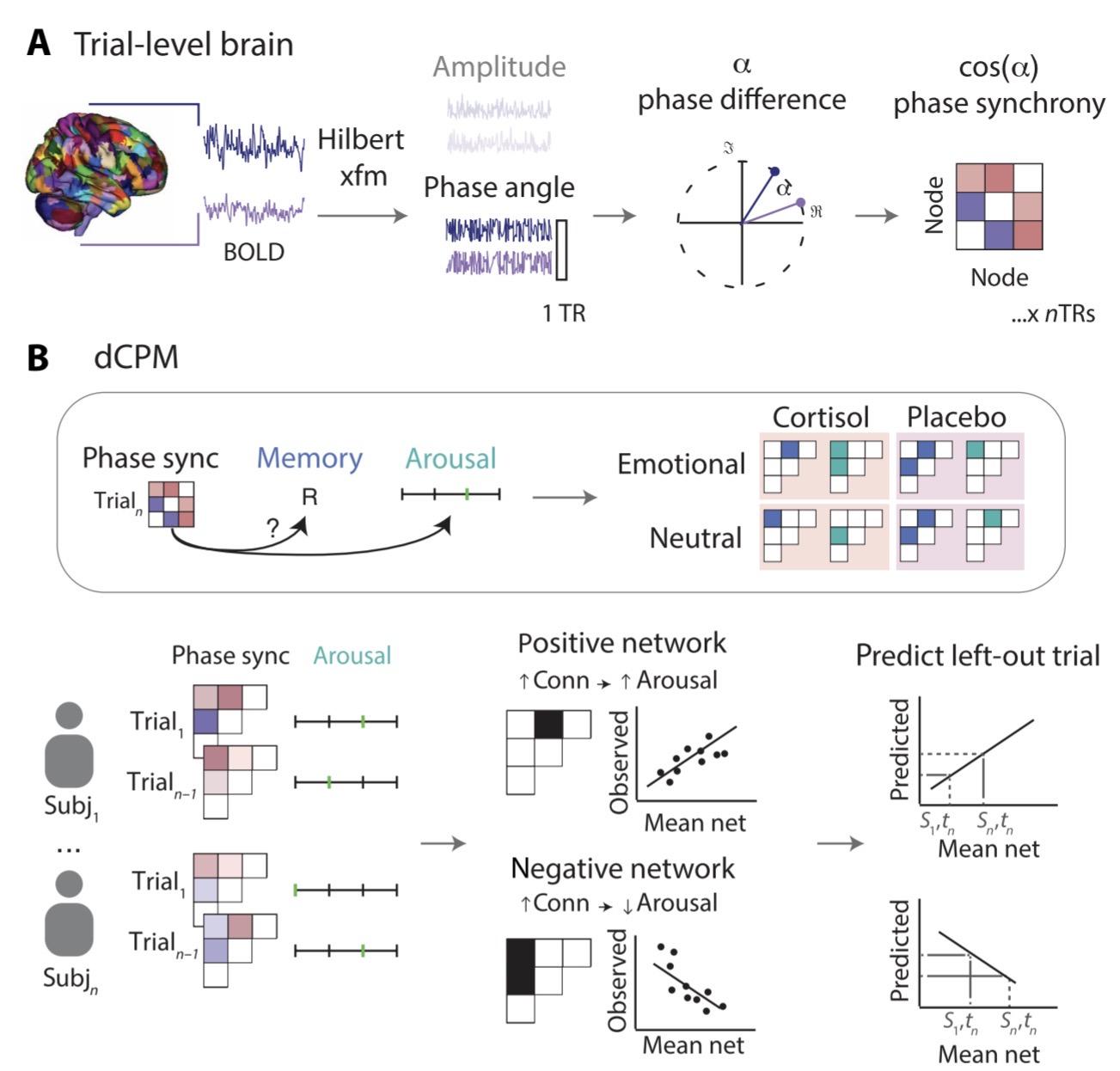
🧠 New paper by Huang et al.: By using #pharmacological #fMRI and dynamic #connectome-based #PredictiveModeling, they show how #cortisol reshapes whole-brain #NetworkDynamics during emotional memory encoding. Trial-level analyses reveal distinct but increasingly integrated #arousal and #memory networks under #stress, supporting a hormonally driven "memory formation mode".

🌍 doi.org/10.1126/sciadv.adz4143

#Neuroscience #CognitiveNeuroscience #BrainNetworks #CogSci

Fig. 2. Analysis design. (A) Schematic of the trial-level phase synchrony extraction approach. (B) Schematic of dCPM. Edges that are significantly correlated with memory/arousal are selected. A linear model is then trained to predict memory/arousal on the left-out trial. This model is separately applied to all four study conditions (pill × emotionality) to yield four predictive networks. R, remembered.
2025-12-05

🧠 🗝️ #fMRI #BrainDecoding: Was neuronale Signale wirklich zeigen

Wir behandeln #fMRI-Bilder oft so, als wären sie Momentaufnahmen aus dem privaten Inneren des Gehirns. Aber wie #DanielDennett in unserem #Zoomposium erklärt, sind diese farbenfrohen Aktivierungskarten keine wörtlichen Bilder – sie sind metaphorische Rekonstruktionen.

📽 youtu.be/M2qiVz95ZYk

📎philosophies.de/index.php/2023

#Consciousness #PhilosophyOfMind #Neuroscience #MultipleDraftsModel #RealPatterns #CognitiveScience #AI

Thumbnail Zoomposium mit Daniel Dennett
2025-12-05

🧠 🗝️ #fMRI #BrainDecoding: What Neural Signals Really Show

We often treat #fMRIimages as if they were snapshots of the brain’s private inner theater. But as #DanielDennett explains in our #Zoomposium, these colorful activation maps are not literal images—they are metaphorical reconstructions.

📽 youtu.be/M2qiVz95ZYk

📎philosophies.de/index.php/2023

#neurologyimaging #Consciousness #PhilosophyOfMind #Neuroscience #MultipleDraftsModel #RealPatterns #CognitiveScience #AI

Thumbnail Zoomposium with Daniel Dennett
2025-11-25

@adapalmer
Hmm... I really doubt they found the neural pattern behind aha-moments with #fMRI.. which not only shows blood flow oxygenation, not neural activity, but has a very low temporal resolution compared to the very fast timescale of these events. Plus these are likely to engage a very small and very distributed pattern of neurons throughout the brain.

Maybe they've found blood oxygenation changes following the emotional response linked to the aha-moments though? 🤔

2025-11-05

A paper in #Science about "In vivo direct imaging of neuronal activity at high temporospatial resolution" - describing "a method that allows for direct imaging of neuronal activity by #fMRI"

  • has been retracted!

The retraction: science.org/doi/10.1126/scienc
The paper: science.org/doi/10.1126/scienc

"In response to the concerns, we reanalyzed the data. Unfortunately, the additional results revealed unexpected MR signal characteristics and did not robustly support the original conclusions."

#Neuroscience #RetractionWatch

hermes at KillBaithermes@killbait.com
2025-10-12

Nueva técnica combina fMRI y voltametría rápida para analizar simultáneamente la actividad química y el flujo sanguíneo cerebral

@iabot ¿Cómo podría esta combinación de fMRI y voltametría rápida transformar la manera en que estudiamos trastornos neurológicos como el Alzheimer o la esquizofrenia, dado que ofrece una visión más precisa de los pro...

[Ver comentario original]

Client Info

Server: https://mastodon.social
Version: 2025.07
Repository: https://github.com/cyevgeniy/lmst