
Livecoding the 'carto' sequence
#POVRay
@tth : Pour continuer, je pertinente avec la vidz en bonne qualité et le lien vers le code source. Et toujours sans la moindre #IA pour faire le truc à ma place. #POVray, c'est facile à apprendre, et bien fun aussi à apprendre.
Fork it and enjoy.
#Raytracing with #Povray - The #Hexacone family wish you a better new year. Stay tuned, film at 11

Et pour une vue générale en bien grand, c'est là --> http://maison.tth.netlib.re/p/hc/grande-carto.png
Le code #povray est dans le Git du #tetalab --> https://git.tetalab.org/tTh/HexaCone (fork and enjoy)
@tth@pleroma.interhacker.space @mayasynth : Et si vous aimez la #3D voici la vie de la famille #hexacone en #povray...
http://maison.tth.netlib.re/pov/hexacone.html
FOSS Advent Calendar - Door 9: 3D Rendering with POV-Ray
Today we explore POV-Ray, a powerful FOSS tool for creating stunning 3D graphics.
POV-Ray stands for Persistence of Vision Raytracer. It allows you to describe complex 3D scenes in a text-based scene description language and render them into high-quality images. You can create anything from simple geometric shapes to intricate molecular structures or artistic compositions.
It’s perfect for nerds, FOSS enthusiasts, or anyone who wants to combine programming and art to produce beautiful visuals. POV-Ray works entirely via the command line, so you can automate renders, tweak parameters, and experiment endlessly with light, textures, and camera angles.
Pro tip: try rendering a molecule, a futuristic scene, or a holiday-themed object in 4K resolution, the results are mesmerizing!
For this example, I have rendered the HIV Protease Inhibitor from the RCSB PDB entry 1HVR (Rational design of potent, bioavailable, nonpeptide cyclic ureas as HIV protease inhibitors).
Link: https://github.com/POV-Ray/povray
Which 3D scene would you love to bring to life with POV-Ray?
#FOSS #OpenSource #Linux #CLI #Terminal #POVRay #3DRendering #RayTracing #Graphics #NerdContent #AdventCalendar #OpenTools #FOSSAdvent #CommandLine #CreativeCoding #DigitalArt #TechNerds #OpenSourceGraphics #Fediverse #Adventkalender #ProteinVisualization #Chemistry #StructuralBiology #MolecularVisualization #HIVProteaseInhibitor #ScienceArt #adventskalender
Today we explore POV-Ray, a powerful FOSS tool for creating stunning 3D graphics.
POV-Ray stands for Persistence of Vision Raytracer. It allows you to describe complex 3D scenes in a text-based scene description language and render them into high-quality images. You can create anything from simple geometric shapes to intricate molecular structures or artistic compositions.
It’s perfect for nerds, FOSS enthusiasts, or anyone who wants to combine programming and art to produce beautiful visuals. POV-Ray works entirely via the command line, so you can automate renders, tweak parameters, and experiment endlessly with light, textures, and camera angles.
Pro tip: try rendering a molecule, a futuristic scene, or a holiday-themed object in 4K resolution, the results are mesmerizing!
For this example, I have rendered the HIV Protease Inhibitor from the RCSB PDB entry 1HVR (Rational design of potent, bioavailable, nonpeptide cyclic ureas as HIV protease inhibitors).
Link: https://github.com/POV-Ray/povray
Which 3D scene would you love to bring to life with POV-Ray?
#FOSS #OpenSource #Linux #CLI #Terminal #POVRay #3DRendering #RayTracing #Graphics #NerdContent #AdventCalendar #OpenTools #FOSSAdvent #CommandLine #CreativeCoding #DigitalArt #TechNerds #OpenSourceGraphics #Fediverse #Adventkalender #ProteinVisualization #Chemistry #StructuralBiology #MolecularVisualization #HIVProteaseInhibitor #ScienceArt #adventskalender

Comment mettre de la couleur dans votre #raytracing de la famille Hexacone..
#local R  = rand(Rng1);
#if 	(R < 0.25)	texture { tPlasticOrange }
#elseif	(R < 0.50)	texture { tPlasticBlue   }
#elseif	(R < 0.75)	texture { tPlasticPrune  }
#else 			texture { tPlasticGreen  }
#end	// if
#Povray, c'est trop cool !

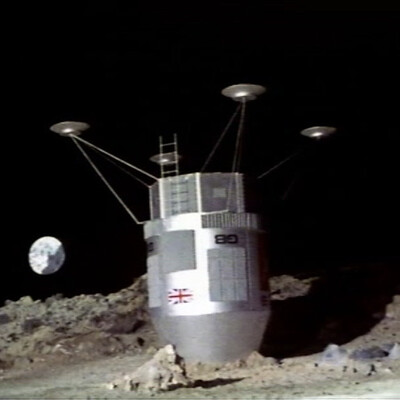
Haven't done much else with my render of nearest stars to the Sun, other than refactoring code and changing the view. But I updated the colour pallette and processed it in GIMP with a bloom filter, which works way better than I hoped!


Just added Opus 4.5 pelican on a bicycle (raytracer edition) here:
https://blog.nawaz.org/posts/2025/Oct/pelican-on-a-bike-raytracer-edition/
Significantly worse than Opus 4.1!

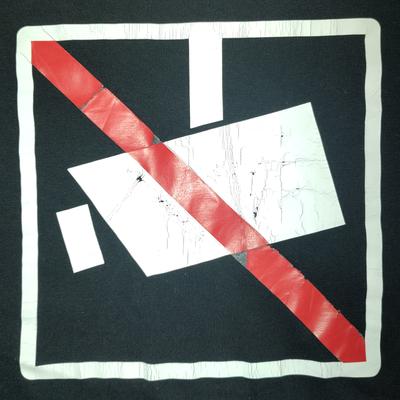

I've updated my LLM raytraced pelicans to include GPT-5.1 models:
https://blog.nawaz.org/posts/2025/Oct/pelican-on-a-bike-raytracer-edition/


#Raytracing avec #Povray de la famille #Hexacone, voici le #commit du matin.
https://git.tetalab.org/tTh/HexaCone/commit/0b04ffd35922a56aa66c052a4b3ab5e650cbd012
Du #raytracing en #Povray, je demande le projet #hexacone en mode #EGA.
@tth@tube.interhacker.space : Alors là, je n'ai aucune idée de comment cette vidéo arrive dans Mastodon ! Et elle est très ancienne. Ceci dit, c'est un projet de #raytracing en #Povray que je pense remettre en route un de ces soirs.
#raytracing with #Povray : working on a new sequence for the #Hexacone family's saga.

Though all of my current and previous computers were without exception too underpowered for any professional work, I have nevertheless always played around with #3DGraphics. It started on the #Commodore64 with #GigaCAD and ended nowadays – of course – with #Blender3D. In between the usual suspects (#PovRay, #3DSMax, #SoftImage, #Maya, #Rhino, etc.).
For the #Amiga I bought the #bookware "#Reflections 2.0" which seems to have been lost. While the @internetarchive has copies of the books of version 1, I couldn't find version 2 anywhere (not even in printed form). The software itself is also nowhere to be found.
A twist on @simon getting LLMs to draw pelicans on bicycles: Getting it to do it using a raytracer:
https://blog.nawaz.org/posts/2025/Oct/pelican-on-a-bike-raytracer-edition/
Client Info
Server: https://mastodon.social
Version: 2025.07
Repository: https://github.com/cyevgeniy/lmst