
El lado del mal - Cómo asegurar con WARP & One Agent tu conexión a Internet usando Post Quantum Cryptography para evitar ataques o bloqueos de webs https://www.elladodelmal.com/2026/02/como-asegurar-con-warp-one-agent-tu.html #Cloudflare #PostQuantumCryptography #PQC #Conectividad #BloqueosIP #OneAgent
#PostQuantumCryptography

Google is sounding the alarm on quantum computers
https://fed.brid.gy/r/https://nerds.xyz/2026/02/quantum-computers-google/


It is a matter of time before Quantum Computing gains the ability to crack today’s core public key encryption methods.
Our latest post on TechAptitude outlines the efforts by NIST to generate new cryptography standards to help withstand future quantum powered cyber attacks. Check it out!
https://techaptitude.substack.com/p/quantum-technologies-nist-drives #Cryptography #Quantum #QuantumTechnology #QuantumComputing #NIST #FIPS #CodeBreaker #Encryption #QDay #PQC #PostQuantumCryptography #Passwords #Ciphers #Algorithm #TechAptitude

El lado del mal - Cloudflare Radar 2025: ¿Qué país tiene el Internet más rápido? ¿Cuál es el tamaño de los ataques DDoS en Internet? ¿Cuando de Internet va con IPv6? ¿Y con Cifrado Post Cuántico? https://elladodelmal.com/2026/01/cloudflare-radar-2025-que-pais-tiene-el.html #PostQuantumCryptography #IPv6 #DDoS #AI #Cloudflare #Internet #Conectividad

How Quantum Computing Could Change Cybersecurity
1,043 words, 6 minutes read time.
Quantum computing is no longer a distant dream scribbled on whiteboards at research labs; it is a looming reality that promises to disrupt every corner of the digital landscape. For cybersecurity professionals, from the analysts sifting through logs at 2 a.m. to CISOs defending multimillion-dollar digital fortresses, the quantum revolution is both a threat and an opportunity. The very encryption schemes that secure our communications, financial transactions, and sensitive corporate data could be rendered obsolete by the computational power of qubits. This isn’t science fiction—it’s an urgent wake-up call. In this article, I’ll explore how quantum computing could break traditional cryptography, force the adoption of post-quantum defenses, and transform the way we model and respond to cyber threats. Understanding these shifts isn’t optional for security professionals anymore; it’s survival.
Breaking Encryption: The Quantum Threat to Current Security
The first and most immediate concern for anyone in cybersecurity is that quantum computers can render our existing cryptographic systems ineffective. Traditional encryption methods, such as RSA and ECC, rely on mathematical problems that classical computers cannot solve efficiently. RSA, for example, depends on the difficulty of factoring large prime numbers, while ECC leverages complex elliptic curve relationships. These are the foundations of secure communications, e-commerce, and cloud storage, and for decades, they have kept adversaries at bay. Enter quantum computing, armed with Shor’s algorithm—a method capable of factoring these massive numbers exponentially faster than any classical machine. In practical terms, a sufficiently powerful quantum computer could crack RSA-2048 in a matter of hours or even minutes, exposing sensitive data once thought safe. Grover’s algorithm further threatens symmetric encryption by effectively halving key lengths, making AES-128 more vulnerable than security architects might realize. In my years monitoring security incidents, I’ve seen teams underestimate risk, assuming that encryption is invulnerable as long as key lengths are long enough. Quantum computing demolishes that assumption, creating a paradigm where legacy systems and outdated protocols are no longer just inconvenient—they are liabilities waiting to be exploited.
Post-Quantum Cryptography: Building the Defenses of Tomorrow
As frightening as the threat is, the cybersecurity industry isn’t standing still. Post-quantum cryptography (PQC) is already taking shape, spearheaded by NIST’s multi-year standardization process. This isn’t just theoretical work; these cryptosystems are designed to withstand attacks from both classical and quantum computers. Lattice-based cryptography, for example, leverages complex mathematical structures that quantum algorithms struggle to break, while hash-based and code-based schemes offer alternative layers of protection for digital signatures and authentication. Transitioning to post-quantum algorithms is far from trivial, especially for large enterprises with sprawling IT infrastructures, legacy systems, and regulatory compliance requirements. Yet the work begins today, not tomorrow. From a practical standpoint, I’ve advised organizations to start by mapping cryptographic inventories, identifying where RSA or ECC keys are in use, and simulating migrations to PQC algorithms in controlled environments. The key takeaway is that the shift to quantum-resistant cryptography isn’t an optional upgrade—it’s a strategic imperative. Companies that delay this transition risk catastrophic exposure, particularly as nation-state actors and well-funded cybercriminal groups begin experimenting with quantum technologies in secret labs.
Quantum Computing and Threat Modeling: A Strategic Shift
Beyond encryption, quantum computing will fundamentally alter threat modeling and incident response. Current cybersecurity frameworks and MITRE ATT&CK mappings are built around adversaries constrained by classical computing limits. Quantum technology changes the playing field, allowing attackers to solve previously intractable problems, reverse-engineer cryptographic keys, and potentially breach systems thought secure for decades. From a SOC analyst’s perspective, this requires a mindset shift: monitoring, detection, and response strategies must anticipate capabilities that don’t yet exist outside of labs. For CISOs, the challenge is even greater—aligning board-level risk discussions with the abstract, probabilistic threats posed by quantum computing. I’ve observed that many security leaders struggle to communicate emerging threats without causing panic, but quantum computing isn’t hypothetical anymore. It demands proactive investment in R&D, participation in standardization efforts, and real-world testing of quantum-safe protocols. In the trenches, threat hunters will need to refine anomaly detection models, factoring in the possibility of attackers leveraging quantum-powered cryptanalysis or accelerating attacks that once required months of computation. The long-term winners in cybersecurity will be those who can integrate quantum risk into their operational and strategic planning today.
Conclusion: Preparing for the Quantum Era
Quantum computing promises to be the most disruptive force in cybersecurity since the advent of the internet itself. The risks are tangible: encryption once considered unbreakable may crumble, exposing sensitive data; organizations that ignore post-quantum cryptography will face immense vulnerabilities; and threat modeling will require a fundamental reevaluation of attacker capabilities. But this is not a reason for despair—it is a call to action. Security professionals who begin preparing now, by inventorying cryptographic assets, adopting post-quantum strategies, and updating threat models, will turn the quantum challenge into a competitive advantage. In my years in the field, I’ve learned that the edge in cybersecurity always belongs to those who anticipate the next wave rather than react to it. Quantum computing is that next wave, and the time to surf it—or be crushed—is now. For analysts, architects, and CISOs alike, embracing this reality is the only way to ensure our digital fortresses remain unbreachable in a world that quantum computing is poised to redefine.
Call to Action
If this breakdown helped you think a little clearer about the threats out there, don’t just click away. Subscribe for more no-nonsense security insights, drop a comment with your thoughts or questions, or reach out if there’s a topic you want me to tackle next. Stay sharp out there.
D. Bryan King
Sources
NIST: Post-Quantum Cryptography Standardization
NISTIR 8105: Report on Post-Quantum Cryptography
CISA Cybersecurity Advisories
Mandiant Annual Threat Report
MITRE ATT&CK Framework
Schneier on Security Blog
KrebsOnSecurity
Verizon Data Breach Investigations Report
Shor, Peter W. (1994) Algorithms for Quantum Computation: Discrete Logarithms and Factoring
Grover, Lov K. (1996) A Fast Quantum Mechanical Algorithm for Database Search
Black Hat Conference Materials
DEF CON Conference Archives
Disclaimer:
The views and opinions expressed in this post are solely those of the author. The information provided is based on personal research, experience, and understanding of the subject matter at the time of writing. Readers should consult relevant experts or authorities for specific guidance related to their unique situations.
#advancedPersistentThreat #AES #boardLevelCybersecurity #CISO #cloudSecurity #codeBasedCryptography #cryptanalysis #cryptographyMigration #cyberAwareness #cyberDefense #cyberDefenseStrategy #cyberInnovation #cyberPreparedness #cyberResilience #cyberRisk #cyberStrategy #cyberattack #cybersecurity #cybersecurityChallenges #cybersecurityFrameworks #cybersecurityTrends #dataProtection #digitalFortresses #digitalSecurity #ECC #emergingThreats #encryption #encryptionKeys #futureProofSecurity #GroverSAlgorithm #hashingAlgorithms #incidentResponse #ITSecurityLeadership #latticeBasedCryptography #legacySystems #MITREATTCK #nationStateThreat #networkSecurity #NISTPQC #postQuantumCryptography #quantumComputing #quantumComputingImpact #quantumEraSecurity #quantumReadiness #quantumRevolution #quantumThreat #quantumResistantCryptography #quantumSafeAlgorithms #quantumSafeProtocols #RSA #secureCommunications #securityBestPractices #securityPlanning #ShorSAlgorithm #SOCAnalyst #threatHunting #threatIntelligence #ThreatModeling #zeroTrust


The Quantum Dragon isn't the newsletter you need right now, but it's the newsletter you deserve.
https://bsiegelwax.substack.com/p/the-least-qualified-dragon-in-quantum
#QuantumComputing #PostQuantumCryptography #QuantumHardware #NISQDevices #QuantumSoftware


We're on our way to Germany for the AMD Security Working Group.
We'll be showcasing a demo of a side channel attack targeting ML-KEM on an STM32, and how we approach hardware investigations.



Post Quantum Cryptography | c’t uplink | c't Magazin https://www.heise.de/news/Post-Quantum-Cryptography-c-t-uplink-11076058.html #ctuplink #Verschlüsselung #encryption #PostQuantumCryptography
How long until Q-day :blobcat0_0: ?
The @nluug #conference started with a great talk on #postquantumcryptography by @okoeroo.
#NLUUG #securityconference #opensourceconference #Linuxconference #najaarsconferentie #conferentie #crypto #cryptography #quantum #postquantum #cybersecurity #datasecurity #security #nluug25nj


via @dotnet : Post-Quantum Cryptography in .NET
https://ift.tt/osS9nPf
#PostQuantumCryptography #DotNet10 #Cryptography #PQC #MLDSA #MLKEM #SLHDSA #CompositeMLDSA #AsymmetricAlgorithms #Cybersecurity #DataProtection #Encryption #SecureCoding #TechInnovation #Ope…

In Zukunft wird OpenPGP – und damit auch mein PGP-Keygen – die folgenden Post-Quantum-Cryptography (PQC)-Algorithmen unterstützen, sobald der aktuelle IETF-Draft (draft-ietf-openpgp-pqc-14) als RFC veröffentlicht wird.
Diese Algorithmen wurden vom NIST standardisiert und sind für die Integration in OpenPGP vorgesehen:
➡️ ML-KEM (ehemals CRYSTALS-Kyber)
➡️ ML-DSA (ehemals CRYSTALS-Dilithium)
➡️ SLH-DSA (ehemals SPHINCS+)
Die Bilder, die ich erstellt habe, geben einen Überblick über die Verwendung und Sicherheitsniveaus der Algorithmen.
:boost_ok:
#OpenPGP #PQC #PostQuantumCryptography #Cybersecurity #Privacy #PGP #NIST #Cryptography #Datenschutz #Privatsphäre
We’ve updated our Post-Quantum Cryptography catalog of knowledge and attacks.
✅ Updated SCA and FI research on Kyber
✅ Improved CPA on Kyber
🆕 SASCA on Kyber targeting NTT
🆕 Chosen ciphertext attack on Keccak in Kyber
🆕 CPA on Dilithium
Request the full list of notebooks: http://www.eshard.com/contact
#pqc #postquantumcryptography #hardware #hardwarehacking #cybersecurity

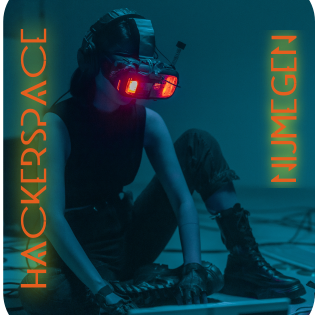
How secure are our communications and secrets? Is our privacy at risk once quantum computers become commonplace?
If you want to learn about data‑encryption in the post‑quantum era, explore the basics of quantum computing, and hear about today’s progress in mitigating these challenges, join us for a talk by Prof. Dr. Peter Schwabe at Hackerspace Nijmegen this Friday, 14 Nov, at 20:00.
Free admission
Language: English
More info: https://hackerspacenijmegen.nl/The_Migration_to_Post-Quantum_Cryptography
#PQC #postquantumcryptography #postquantum #Cryptography #hacking #science #Crypto #Privacy #Hackerspace #Nijmegen


🚨 The Day Encryption Dies
https://youtu.be/gSXXJ7gThXk be quantum-safe before it does.
#QuantumSafe #PostQuantumCryptography #Cybersecurity #Encryption #ZeroTrust #FutureProof #DataProtection #QuantumComputing #QDay


Check out our post on implementations of #PostQuantumCryptography #algorithms via #NISTstandards & #IETFdrafts #RFC @NIST @IETF https://www.compnetsecu.com/articles/nist-pqc-implementations


I think the best summary until now about Post-quantum cryptography is from Peter Gutmann in the cryptography mailing-list.
Given that after 20 years and hundreds of millions of dollars spent researchers have yet to demonstrate a single legitimate cryptanalysis result using a quantum physics experiment, it's a bit like arguing over which brand of unicorn repellent is the most cromulent.

The current state of things in terms of pure vs. hybrid systems seems to be:

- Governments = Pure: “We’re putting all our eggs in one basket and hoping that the dial stops spinning at ‘not broken’”

- Everyone else = Hybrid: “We trust this new stuff so little that we’re requiring you use the crypto that we claim is broken alongside it”

Peter.
#cryptography #pq #postquantum #postquantumcryptography
https://www.metzdowd.com/pipermail/cryptography/2025-October/039129.html


There's a free talk on one of the new post-quantum algorithms in Seattle next week. If this is your thing, check it out.
https://www.meetup.com/seattle-pqc-sessions/events/311578549/

Continued development, content creation, and testing are still needed to complete and refine the upcoming features. We expect to release them incrementally before the end of this year.
Is your website, email, and internet connection compliant with modern, reliable internet standards? Now is a good time to test your compliance on Internet.nl.
#InternetStandards #CyberSecurity #TLS #CAA #PostQuantumCryptography
3/3

DeepSec 2025 Talk: Quantum Safe Cryptography: The Future of Cyber(un)security – Lukas Mairhofer
There is a cybersecurity threat looming that will change everything. Conveniently enough, it can be ignored until it is way too lat
#Conference #CryptographicallyRelevantQuantumComputers #DeepSec2025 #PostquantumCryptography #QuantumComputers #QuantumKeyDistribution #Talk

Did I just spend almost 3 hours watching a video on post-quantum cryptography? This video is so well made and unfortunately the algorithm won't push it to people because of its length.
https://youtu.be/aw6J1JV_5Ec
Client Info
Server: https://mastodon.social
Version: 2025.07
Repository: https://github.com/cyevgeniy/lmst