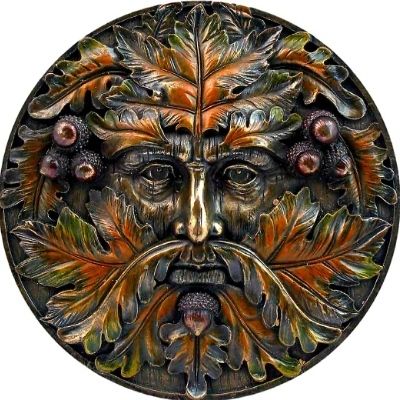
Hecate: Mistress of Magic
- Ronald Hutton
#RonaldHutton


Con calma: pánico, terror y cintas magnetofónicas
https://www.youtube.com/watch?v=CxwYUCO-VRg
«una de las canciones más extrañas, psicodélicas y oscuramente sexuales jamás escritas: ambiciosa, hermosa e inolvidable».
« En ese tema, Hazlewood y Sinatra suenan como si no habitaran el mismo universo, y mucho menos la misma canción. Sobre una guitarra de estilo spaghetti western, Hazlewood canta sobre la mitología griega y sobre ‘Some Velvet Morning When I’m Straight’, mientras Sinatra arrulla sobre flores y narcisos en una neblina de euforia con un fondo de psicodelia chicle. ‘Some Velvet Morning’ suena como dos canciones fusionadas por un loco, o como un cortometraje vanguardista en formato canción».
Some Velvet Morning · Wikipedia
Suena como un fauno acechando a una ninfa, como una canción de acoso. Eso me lleva a dos conferencias del profesor Ronald Hutton del Gresham College:
En la primera vemos como un dios de los palurdos pastores cobra prestigio en la Atenas del siglo V a. de C. y pasa a ser patrón de otras tantas profesiones marginalizadas y dependientes de los caprichos de la naturaleza (pescadores, cazadores…) hasta su muerte comunicada a los tripulantes y pasajeros de un barco que fue investigada por Tiberio. Hay más chicha en la historia pero descúbranla, o no.
En la segunda conferencia habla de la Segunda Venida del dios Pan en la Inglaterra del s. XIX. Su aparición como el Jesús Verde y como su popularidad dotó de nuevos atributos al diablo. De igual mérito e interés que la conferencia son los textos que la acompañan especialmente la poesía de Aleister Crowley a Pan. No me imagino a ninguno de los profesores/as universitarios que conocí y conozco metiéndose en estos berenjenales.
No se queden sólo en estas conferencias de Ronald Hutton, tiene muchas más.
La Arcadia griega debió de ser un lugar estupendo para vivir.Tremendo hilo de recomendaciones de libros de escritoras de terror [Mastodon] se marca Jónatan Sark. A mi me resulta más cómodo de leer en Mastodón pero también lo publicó en bluesky.
Haunted House by Leila TaylorMe ha resultado muy interesante este artículo: La ‘carrera contra el tiempo’ para salvar las cintas de leyendas de la música sobre sobre los esfuerzos tecnológicos por salvar grabaciones musicales dañadas almacenadas en cintas magnéticas en uso desde 1940 hasta la era digital. El proceso es caro por lo que no parece asequible salvarlas todas y curiosamente son las grabaciones realizadas en los años 1970 y 80 las que más peligro corren porque «introdujeron problemas que solo fueron evidentes con el tiempo.»
El artículo se centra en la esperiencia de Kelly Pribble, de la empresa de almacenamiento Iron Mountain, y los aparatos construídos por él para solucionar algunos de los problemas de las cintas:
- Síndrome de adherencia: «algunas partes de la cinta estaban pegadas entre sí.»
- Moho: «afecta a las cintas que no se conservan en un entorno de clima controlado.»
- Síndrome de desprendimiento pegajoso: «Otro problema frecuente entre las cintas de las décadas de 1970 y 1980 es el “síndrome de desprendimiento pegajoso”. También conocido como hidrólisis, se trata del deterioro del material que mantiene unido el óxido de la cinta —el compuesto magnético que contiene la información de audio—, lo que genera un residuo que puede destruir la cinta si se reproduce. La solución, establecida desde hace tiempo, consiste en “hornear” las cintas en un horno para liberar la humedad atrapada.»
- Síndrome de pérdida de lubricante: «Un par de años antes del proyecto de Dylan, Pribble recibió alrededor de 350 cintas de grabaciones en directo del archivo de Springsteen. Más de 100 presentaban lo que Pribble denomina “síndrome de pérdida de lubricante”, en el que un material pegajoso color beige se acumula en el cabezal de la cinta cuando se reproduce, distorsionando el audio y posiblemente dañando el equipo.»
Personalmente la cinta, el casete, es el soporte musical que más importancia emocional tiene para mi pero es que además es fundamental en uno de mis intereses: el registro de tradición oral, canciones y folclore. No es un apartado cultural donde le lluevan las ayudas estatales y casi al mismo tiempo que leía el artículo me encontré con esta cita en el libro de Baldomero Iglesias Catálogo do cantar de cego galego:
«Noto, ao mirar entre as secuencias, que faltan moitas cintas e que se perderon moitos arquivos importantes, nalgunha ocasión causados polo deterioro dos soportes en que se fixeron, noutros casos por extravío e noutros, quizais, porque alguén se ocupou para que non aparezan aquí.»
Ilustración portada: ‘Herne the Hunter’ by Barnaby Edwards.
#baldomeroIglesias #catalogoDoCantarDeCegoGalego #cintasMagnetofonicas #kellyPribble #leeHazlewood #literatura #nancySinatra #pan #religion #ronaldHutton #someVelvetMorning #terror #youtube



Top ten (new) posts in April 2025
https://library.hrmtc.com/2025/05/01/top-ten-new-posts-in-april-2025/
#abracadabra #aleisterCrowley #April2025 #bestPosts #bestTen #beyond #beyondLove #blackArt #blackMagic #book #book111 #Book156 #bread #chaos #chaosMagic #death #electromagneticAge #ÉliphazLévi #forgottenHistory #francisBarrett #future #HagenVonTulien #hermeneuticon #holyMen #iconomancy #knowNot #liberAleph #LiberCheth #LiberCLVI #liberCxi #life #love #magic #magick #mind #modernPractitioners #occult #omniumGatherum #pastries #path #PeterJCarroll #psychology #quote #RaphaelCormack #richardKaczynski #ritual #ritualBread #ritualMagick #ronaldHutton #sanctumRegnum #schoolOfMagic #tarot #tarotTrumps #TheBookOfWisdomOrFolly #thelema #topPosts #topTen #traditional #Ukraine #VallumAbiegni #WWynnWestcott #Witchcraft


Classics of Pagan Cinema: “Pagan nonsense, celebrating the feast of Lughnasadh. This is the month of August. The feast of our lady’s assumption into heaven.” Meg Elison returns with a review of the 1998 Irish-American film “Dancing at Lughnasa,” which juxtaposes Catholic misery and Pagan joy.
https://wildhunt.org/2024/08/classics-of-pagan-cinema-dancing-at-lughnasa.html
#moviereview #irishcinema #merylstreep #ronaldhutton #pagancinema #pagan

Zoological melodrama – Hutton on dragons
Everything by Ronald Hutton is a treat. His talk on dragons, held on 14 Feb 2024, is so much of a treat that I wanted to share this video lecture courtesy of Gresham College.
I am moderately interested in dragons, much less so than now than my younger self who read the DragonRiders of Pern, made ceramic depictions, and collected pewter statuettes. The topic does cross over into cryptozoology, as some claim dragons are real creatures similar to that described in fantasy fiction and legend. But, I do not subscribe to that idea – see below for more on that concept. I do enjoy the various aspects of dragon discussions, particularly at the high level afforded by Professor Hutton.
Dr. Hutton describes his ideas about how dragons came to be ubiquitous across cultures, and why nasty European dragons rose to prominence when East Asian dragons were considered benevolent (an unusual characteristic).
Specifically, Hutton asserts that humans have an innate need to fear the lone, large, alpha predator that wants to eat us. The idea of a monstrous being with teeth, difficult to kill, and may breathe fire, originated with our ancient tales, including Leviathan in the Bible. While other continents had alpha-predators, Europe did not have bears, lions, tigers, or giant snakes to contend with, so the dragon became that symbolic and popular depiction.
Dr. Hutton exhibits multiple times in this entertaining lecture how one fortuitous story can gain serious mileage for centuries and influence societies to modern times.
The topic also crossed over into my other specialty area of “spooky geology” by connecting to leys, earth energies, and interpretation of fossils by imaginative pre-scientific discoverers. I loved all of this so much. Have a watch – it’s well worth the full hour.
https://www.youtube.com/watch?v=CU-SZo2dMHk
Here are a few of my loose ends to “tidy up”.
Hutton notes the idea of the griffin was influenced by dinosaur fossils. This has been challenged by Witton, et al. who published a paper just a few days ago called “Did the horned dinosaur Protoceratops inspire the Griffin?” The answer appears to be no, “there is little evidence for the popular idea that the creature was inspired by dinosaur fossils in central Asia” and “the whole idea is conjecture and speculation”. I haven’t read the paper yet but will be sure to do so. I often get queasy when authors propose direct lines to an explanation. Culture is so incredibly messy. From my geomythology research, I’m inclined to allow for more capricious (and unaccountable) contributions to the formation of complex legends. And so it is with dragons. However, it is obvious, (also considering the examples that Hutton alludes to and the work of Mayor he references) that fossils and animal remains provide inspiration for monsters. We know this happened in the past and still does today.
I’ve read several books attempting to explain the origin of dragons and have been disappointed in every one. Unfortunately, Hutton has not published a book on dragons. I do not accept that it’s a simple answer, particularly one that any self-styled cryptozoologist is going to contribute to. Hutton illustrates that things are complicated and people use imagination to build cultural content. An overly simplistic view of dragons (as deliberate amalgamations of all our most feared animals or, worse, as a real cryptid that people still see) doesn’t make sense. Thanks to social media and tech, multiple hoaxed “real” dragons have circulated, and I would dare to say that there is a not zero percent of people who do believe dragons exist today (or in the recent past).
Finally, the widespread idea of a dragon that exists across cultures as an apex, magical beast, reminds me of the “hairy wild man” theme as well. Some other real creatures, often greatly exaggerated, inspired these legends, but the being in its fantastical form does not zoologically exist today, even though people say they see it. Of course, it’s not as far a stretch to believe in Bigfoot than in a dragon.
More:
Blowholes and a dragon’s nose – My take on a modern TikTok promoting a “real” dragon
Is This a Real Dragon Shot Dead in Malaysia? – A hoax from 2015 – Snopes
Author’s dragon hoax pays off with book deal – Dragon in a jar news story from 2004
Professor Ronald E Hutton – list of publications
#Cryptozoology #dragon #earthMysteries #fossils #geomythology #griffin #history #historyOfDragons #legends #myths #realDragons #RonaldHutton


This is *HILARIOUS*! #cunk #RonaldHutton #humor #pagan

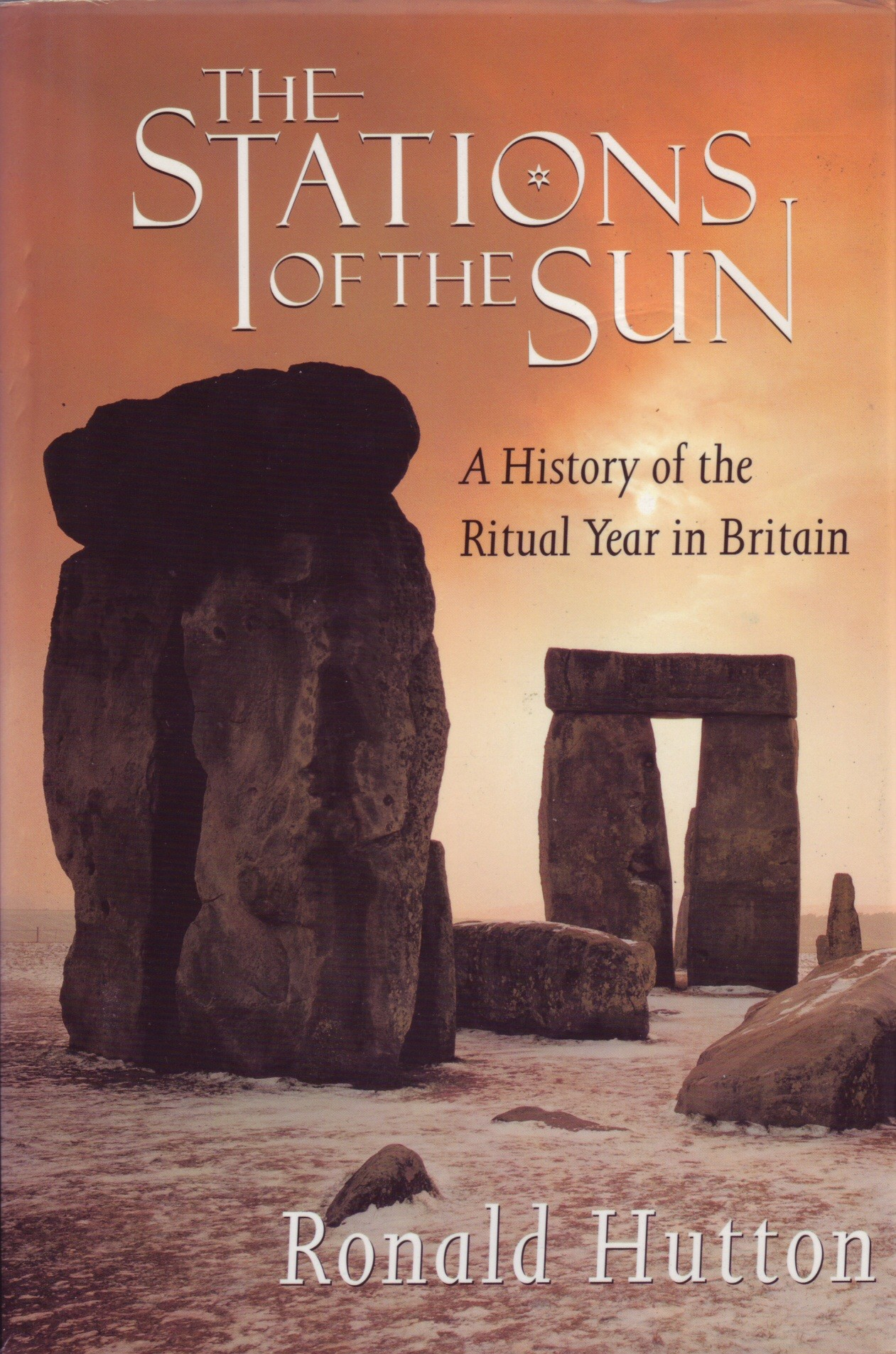
#519 Ronald Hutton - The Stations of the Sun: A History of the Ritual Year in Britain. Oxford University Press, Oxford, 1996, 1st edition. #RonaldHutton #OxfordUniversityPress #Folklore #Prehistory #Archaeology #StandingStoneSunday #BookOfTheDay

Professor Ronald Hutton's favourite witch is Willow. This makes me absurdly happy!

misteraitch has posted "Finding Britain’s Lost Gods," the first four of an on-going series of hour-long lectures at Gresham College by cravat-wearing historian Ronald Hutton"
https://www.metafilter.com/198696/Finding-Britains-Lost-Gods
#gods #Britain #prehistory #history #pagan #paganism #PaganGods #Gresham #RonaldHutton

Ronald Hutton’s short talk on Stonehenge at St Anne’s House, Bristol 16/12/2022
#stonehenge #ronaldhutton #rudestonemonument #stonecircle #prehistory #historylecture
Just listened to #RonaldHutton on #FairyTales and now off on a hunt for #JohnRuskin fairy stories. It was great, fairy stories and folklore and styles of traditional tales. Thanks to #TheLastTuesdaySociety a great night as usual @floklore

I should try and read some more #RonaldHutton, I like #StationsOfTheSun and #TriumphOfTheMoon. I need to read more of his works. For an academic, he is really readable. Maybe that is my #Halloween🎃 resolution. #Samhain
Client Info
Server: https://mastodon.social
Version: 2025.07
Repository: https://github.com/cyevgeniy/lmst