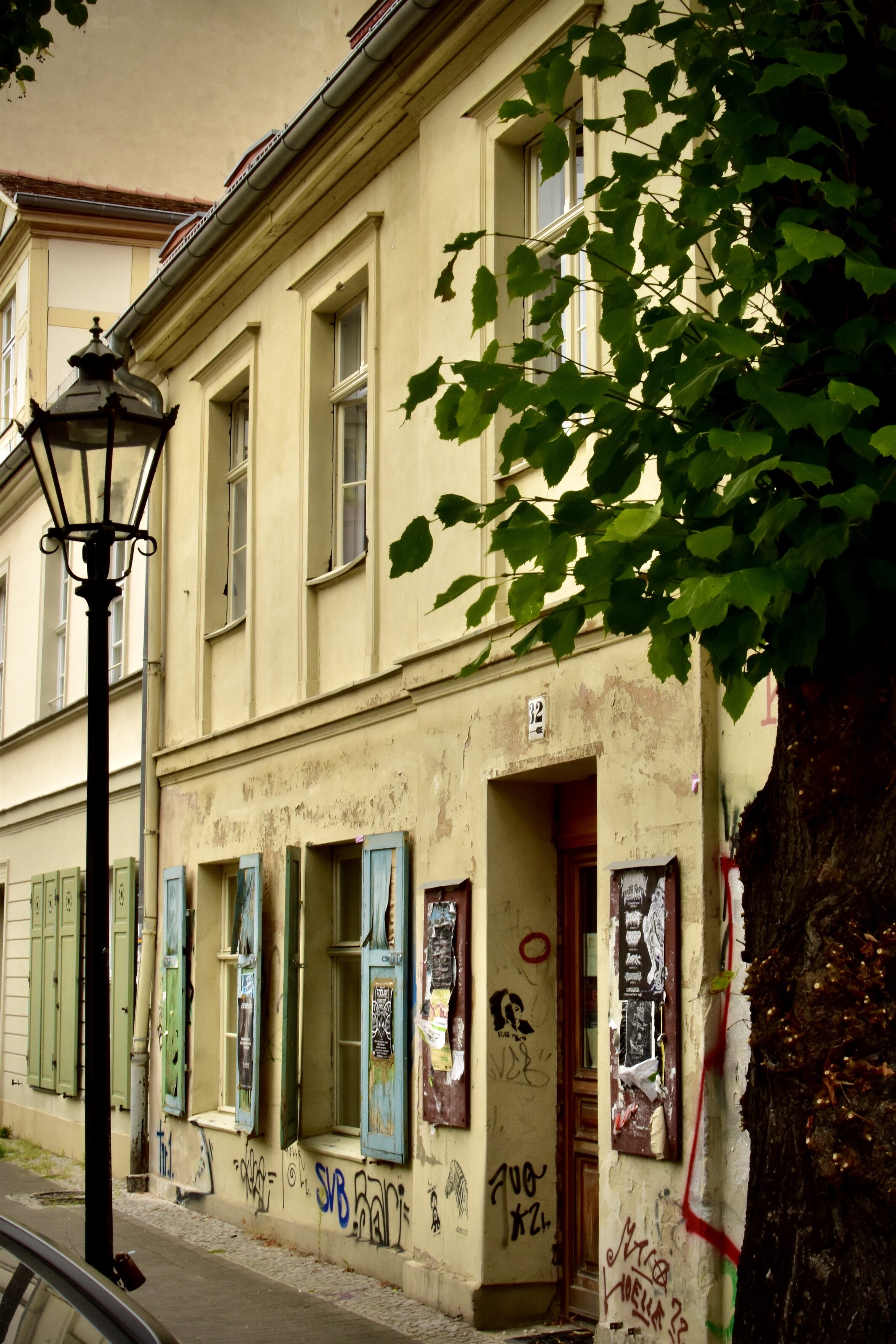
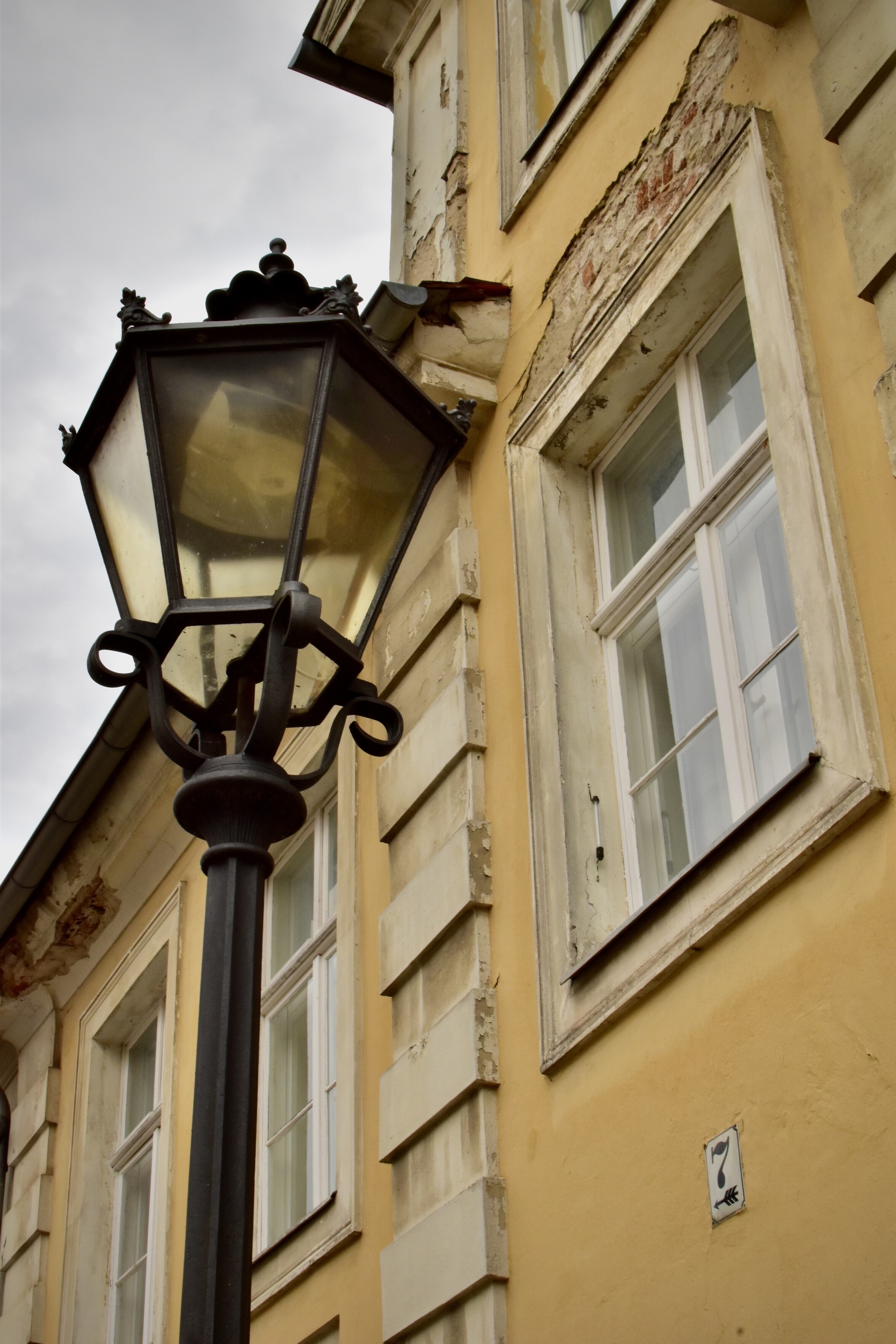
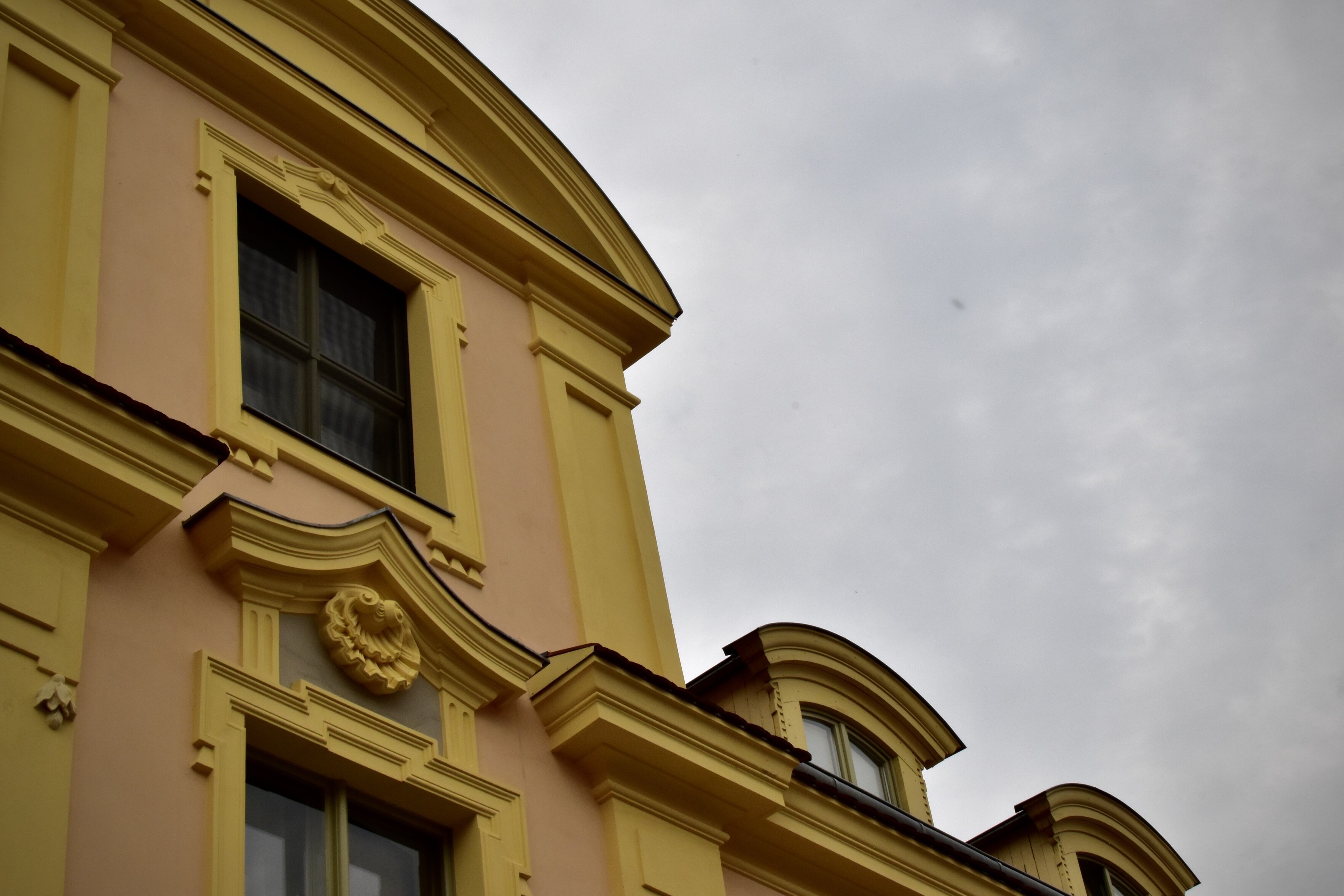
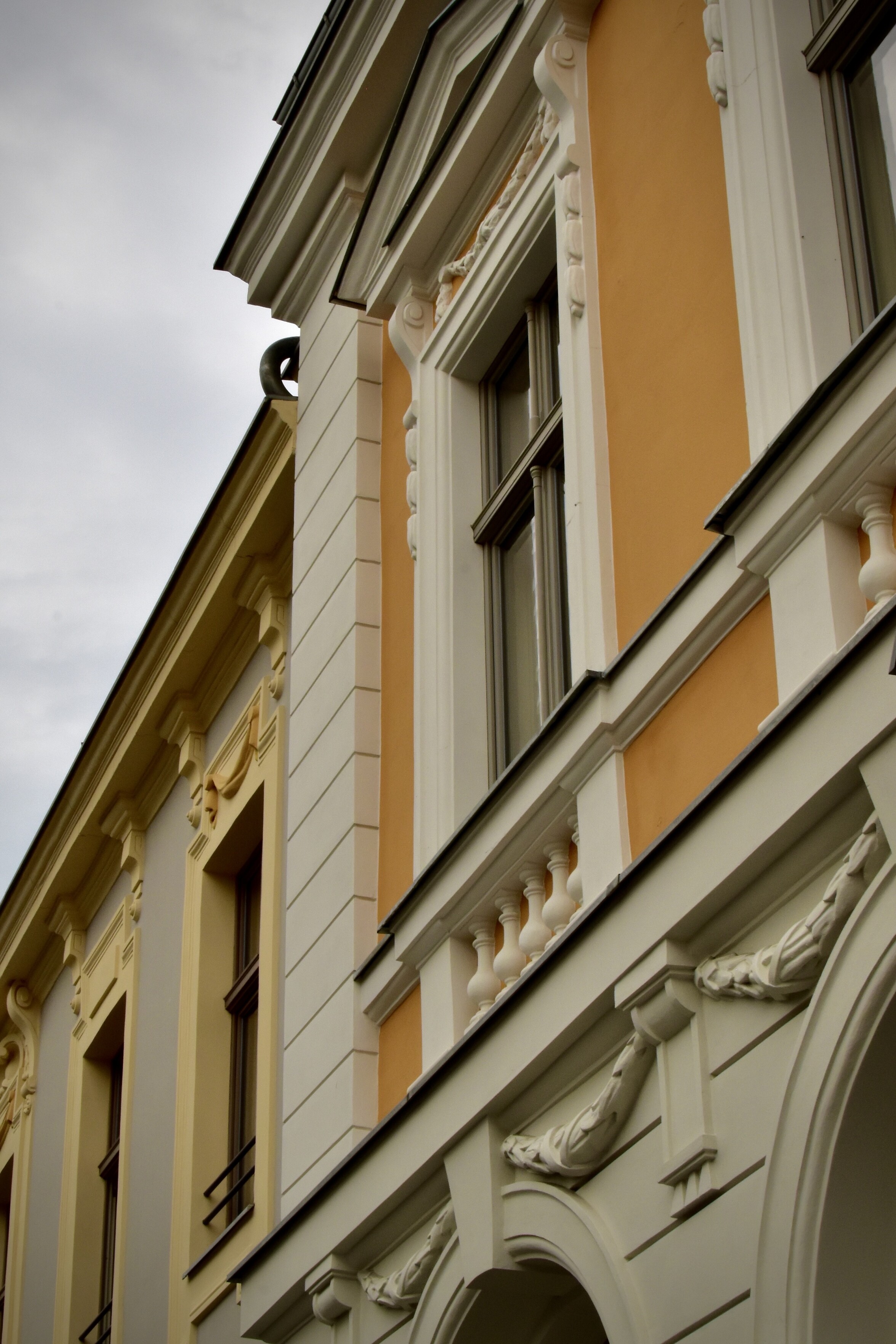
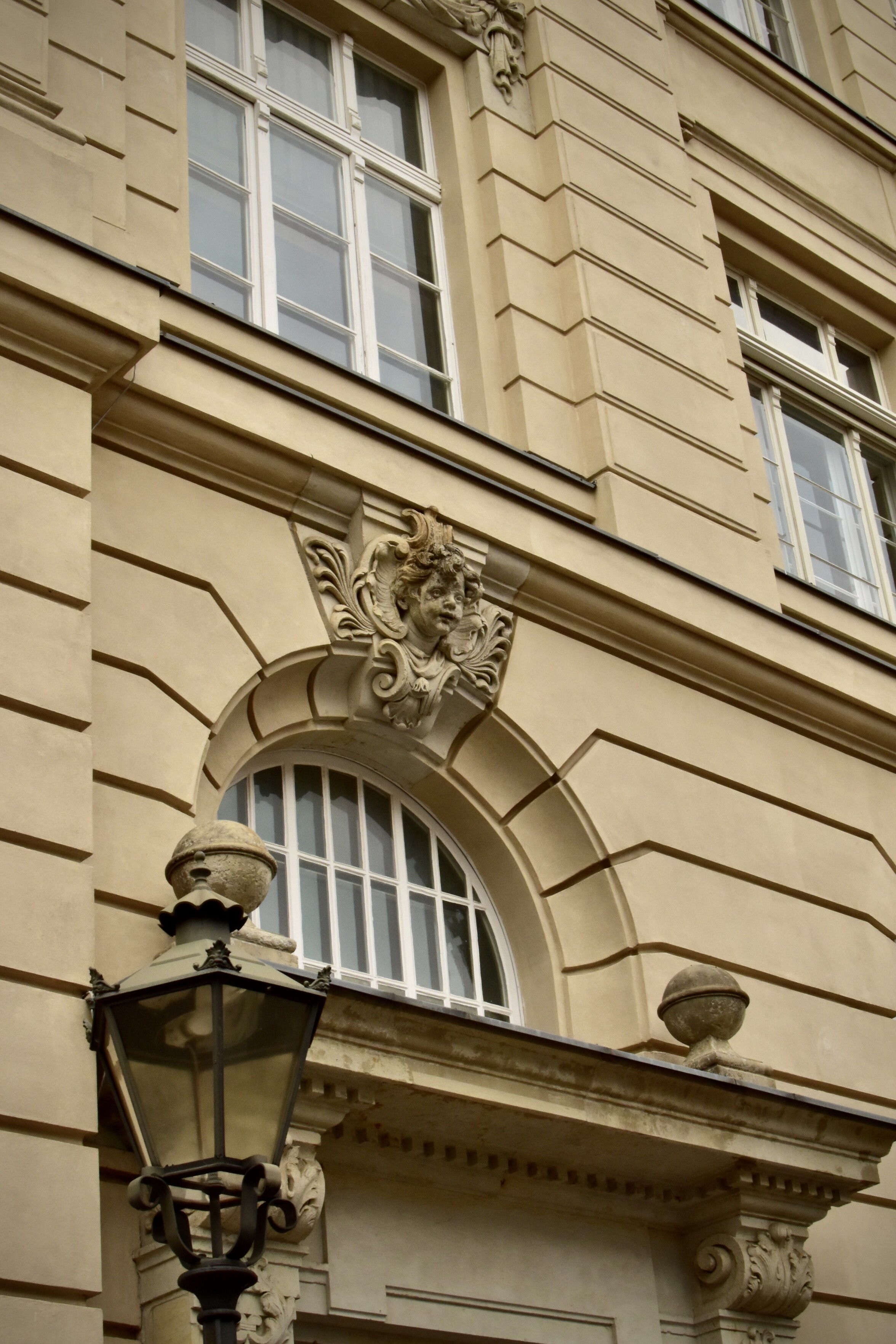
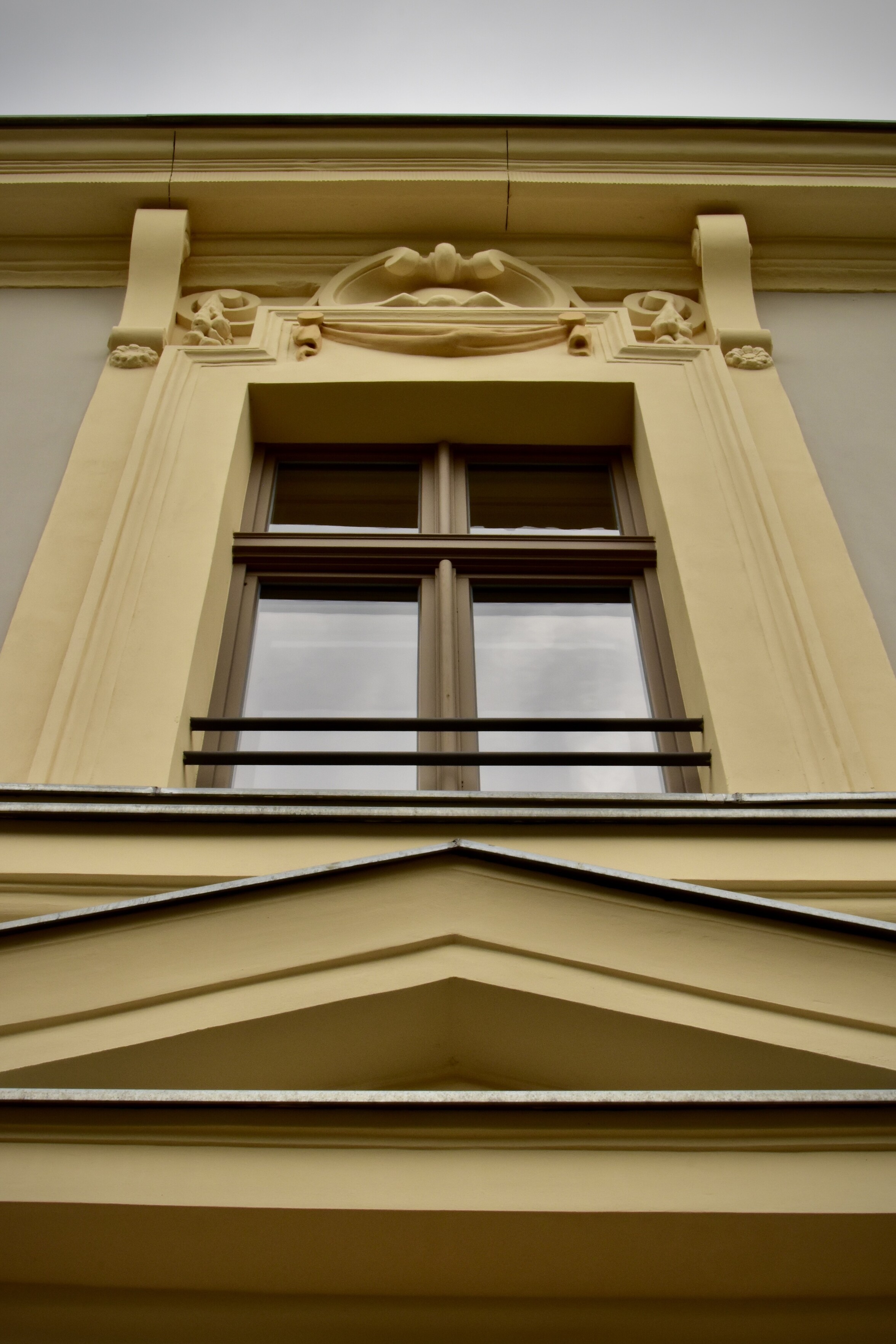
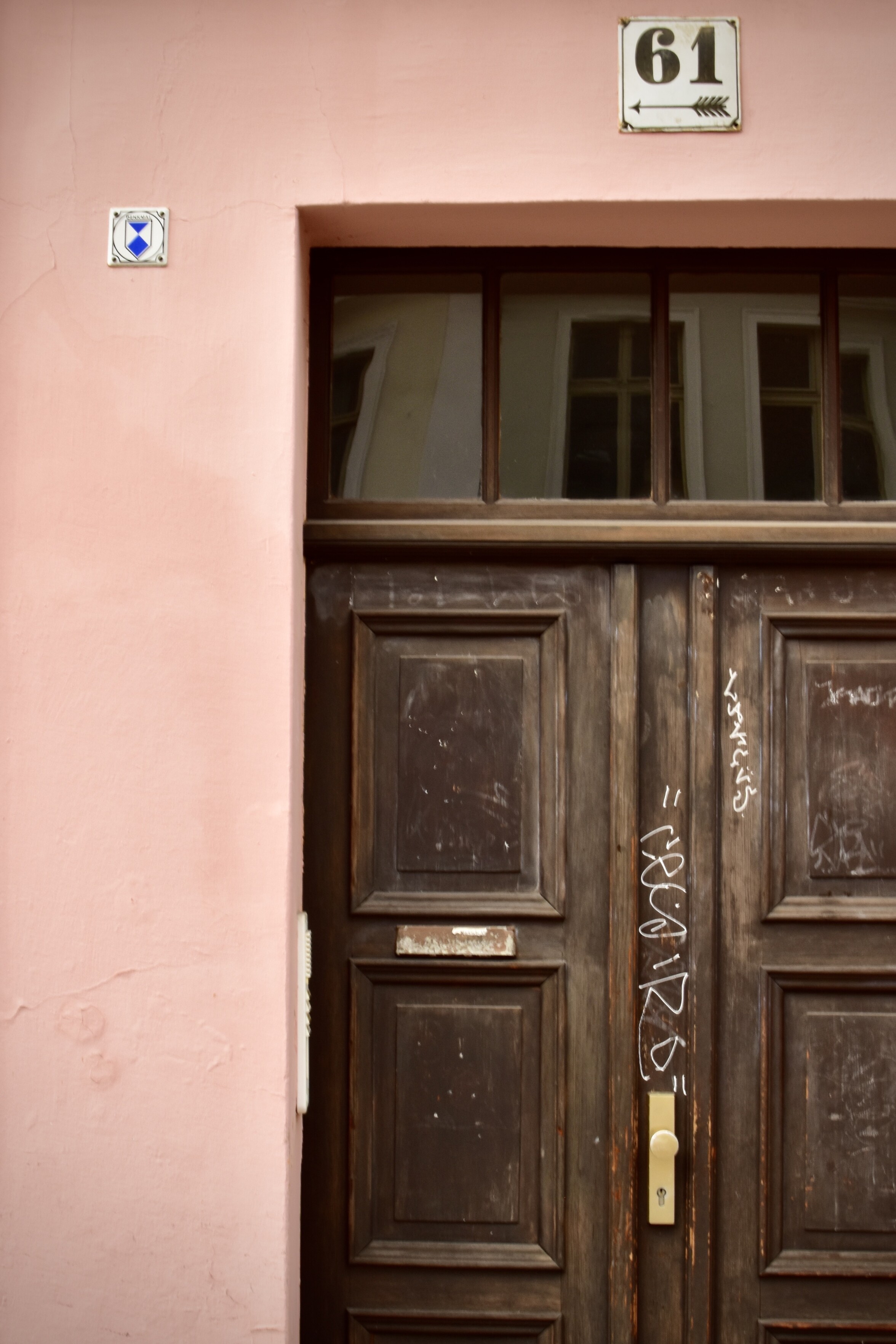
#gables

...cast iron radiators and #livingroom #windows looking out on #MainStreet. When I lived there, the unfinished #attic was filled with boxes of children's books, and I would sit in the dusty #gables leafing through them in the afternoon sun. (2/?) #turnofthecentury #heritage #renovation #redbrick

Wild Sownwildsown
2025-12-05

One big surprise was learning my has gone again.

The Kendall House in (1895) is one of those grand with trim, cast iron radiators & looking out on .

When I lived there, the unfinished was filled with boxes of children's books & I would sit in the dusty leafing through them in the afternoon sun.

The image displays the old Kendall House in Kenora, Ontario with its roof line covered in snow on a January morning. The old brick building on a stone foundation has carefully painted trim and a closed-in porch at the top of a wide painted wood staircase.
2025-08-09

Tenement chimneys and gables on Gardner Street in the Partick area of Glasgow, one of the city's steepest streets.

#glasgow #chimneys #architecture #gables #architecturephotography #tenenent #glasgowtenements #gardnerstreet #partick

The chimneys and gables of Victorian tenements that line a steep hill in Glasgow.
Jack Groundhog 📷📸🪶jlgrantham
2023-08-22
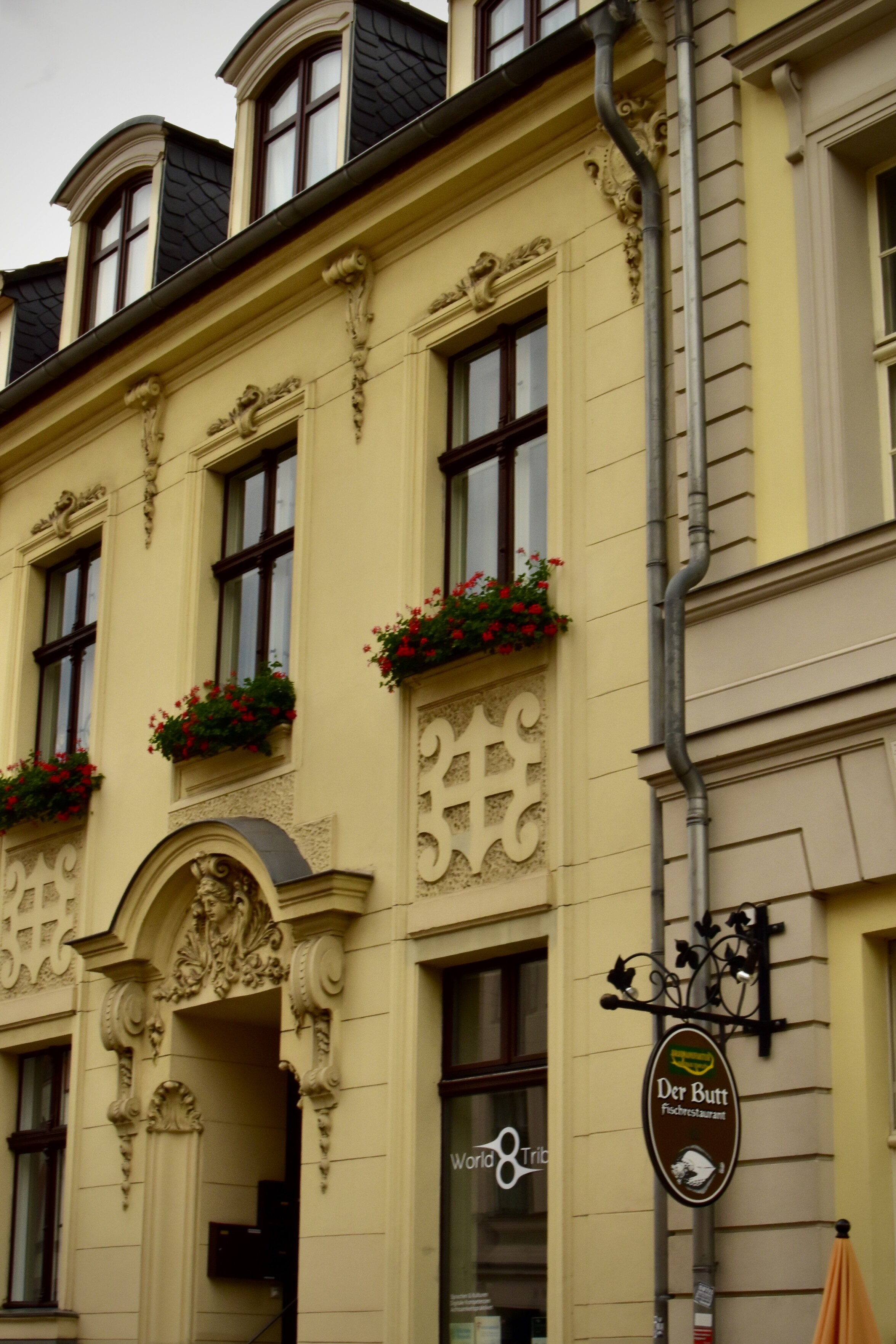
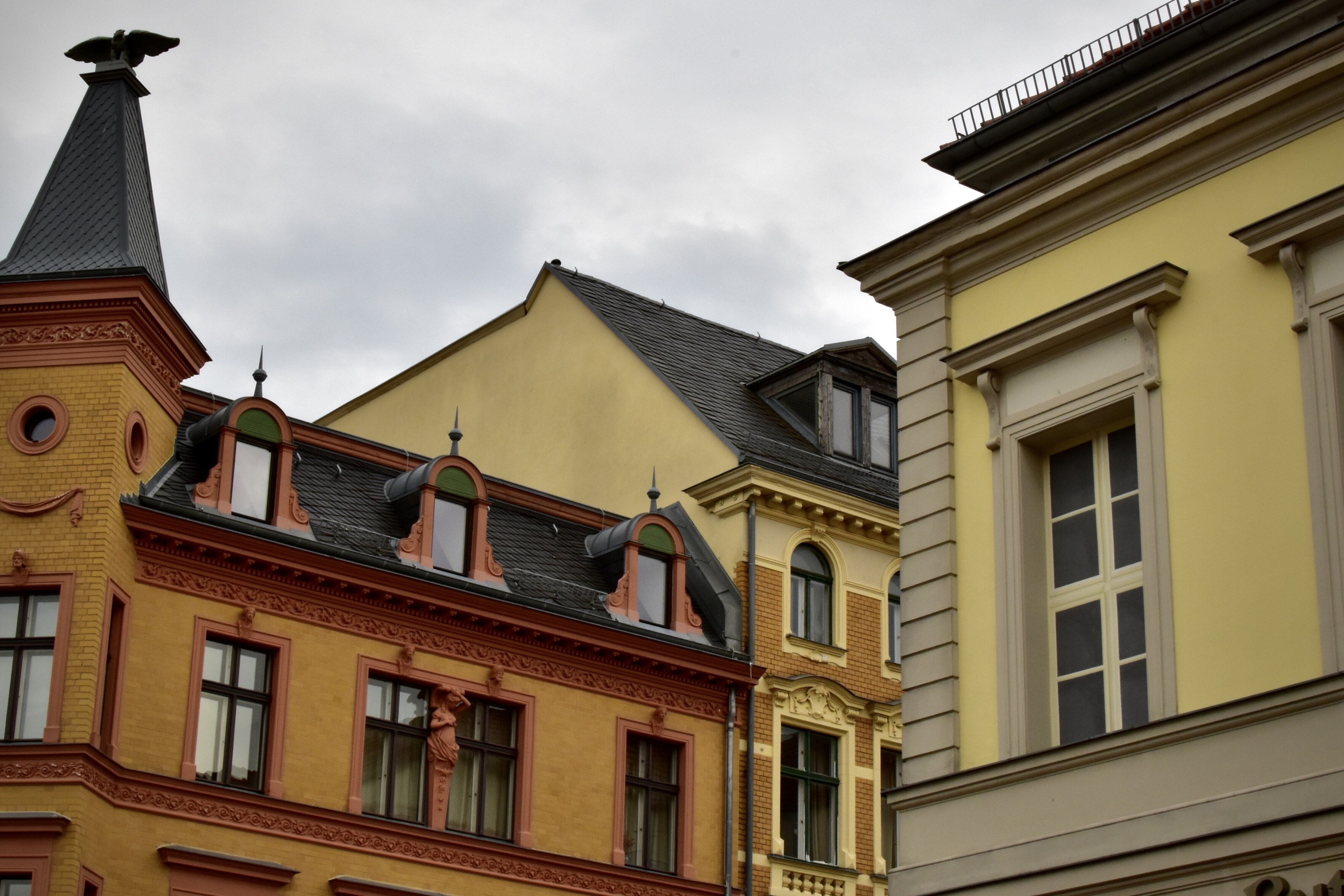
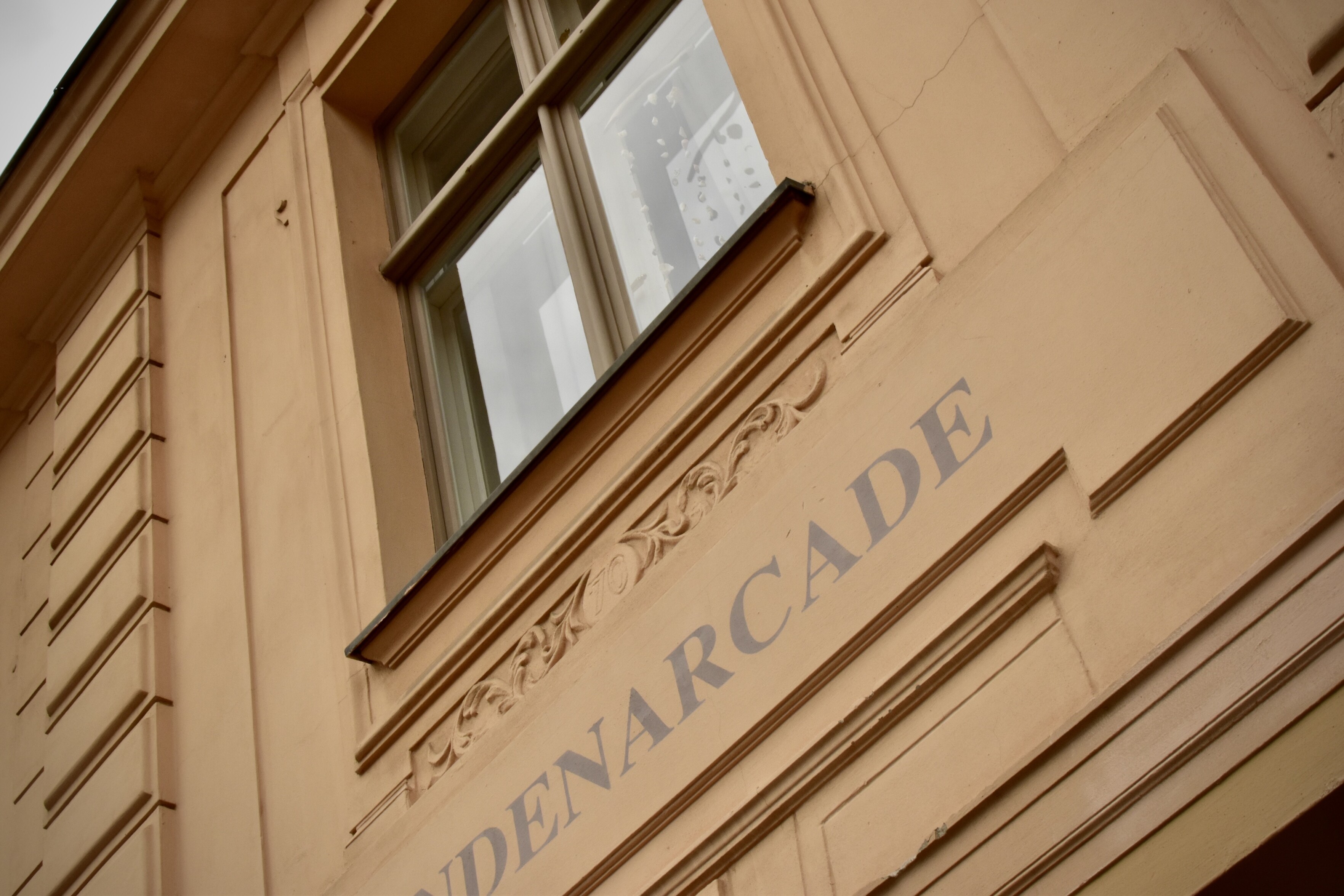
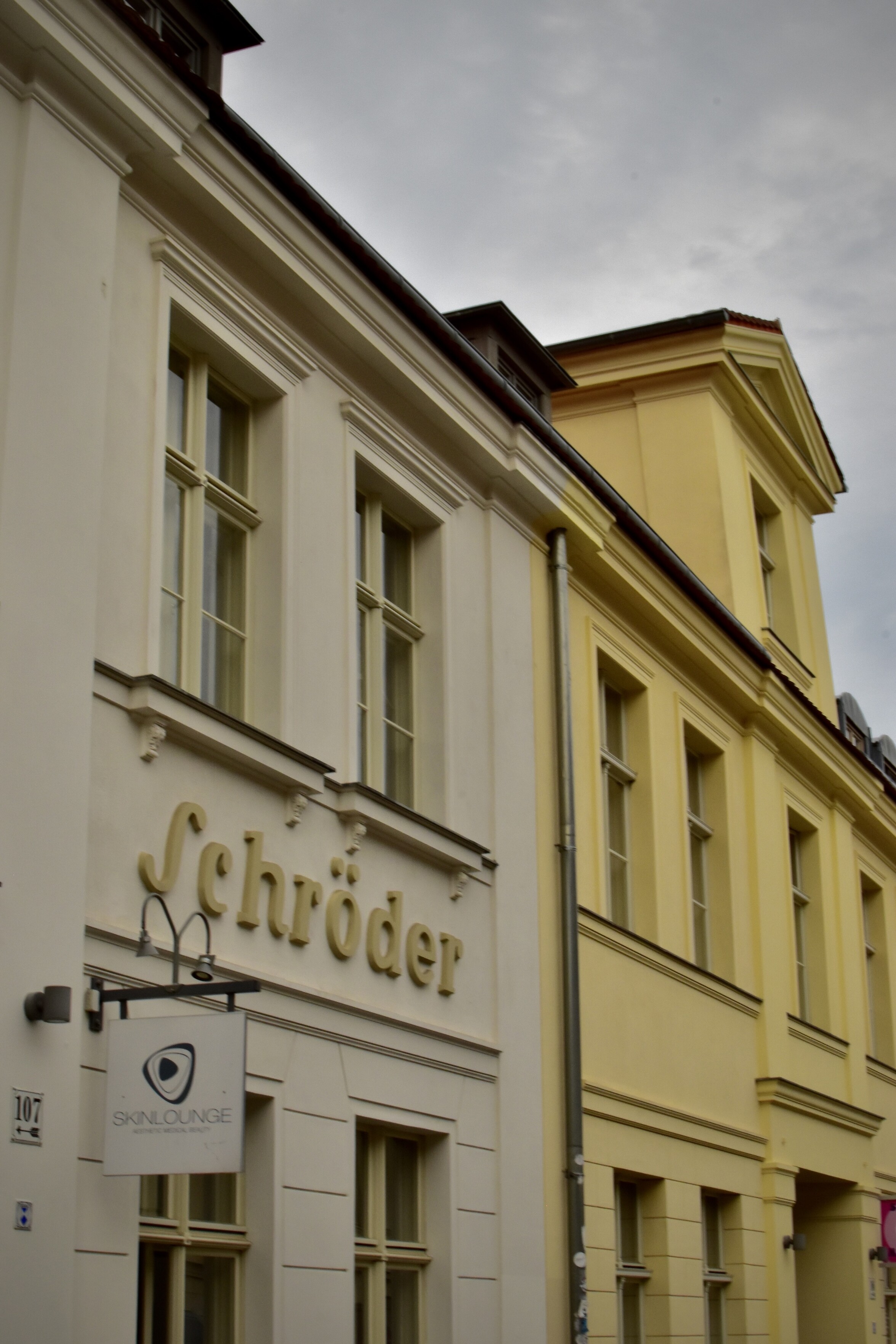
Beige plaster and stone house front with flower boxes in windows Rooftops, gables, cloudy skyFaux stone facing made of beige-painted plaster Windowframe in faux stone of beige plaster with name “Lindenarcade”
Jack Groundhog 📷📸🪶jlgrantham
2023-08-22
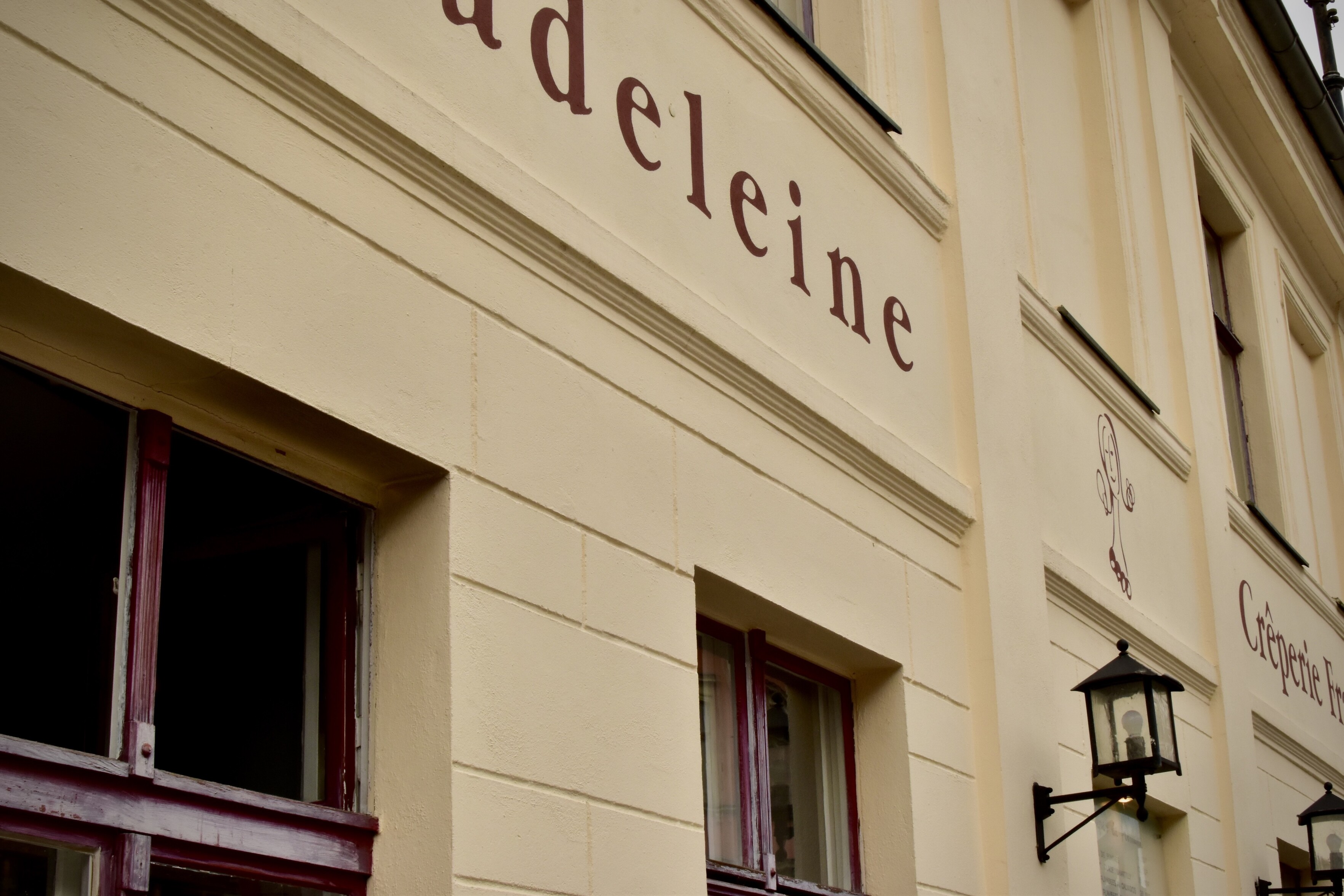
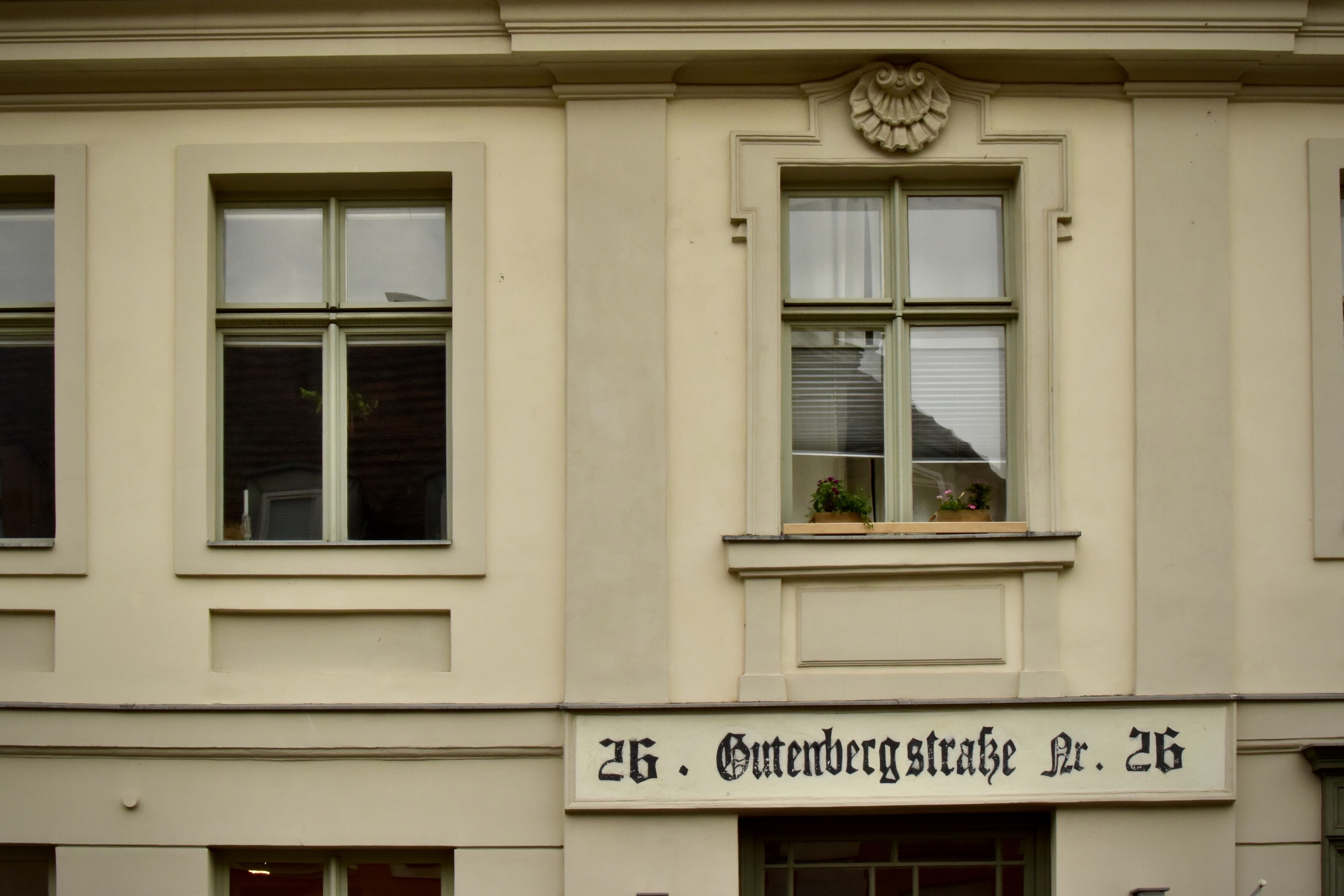
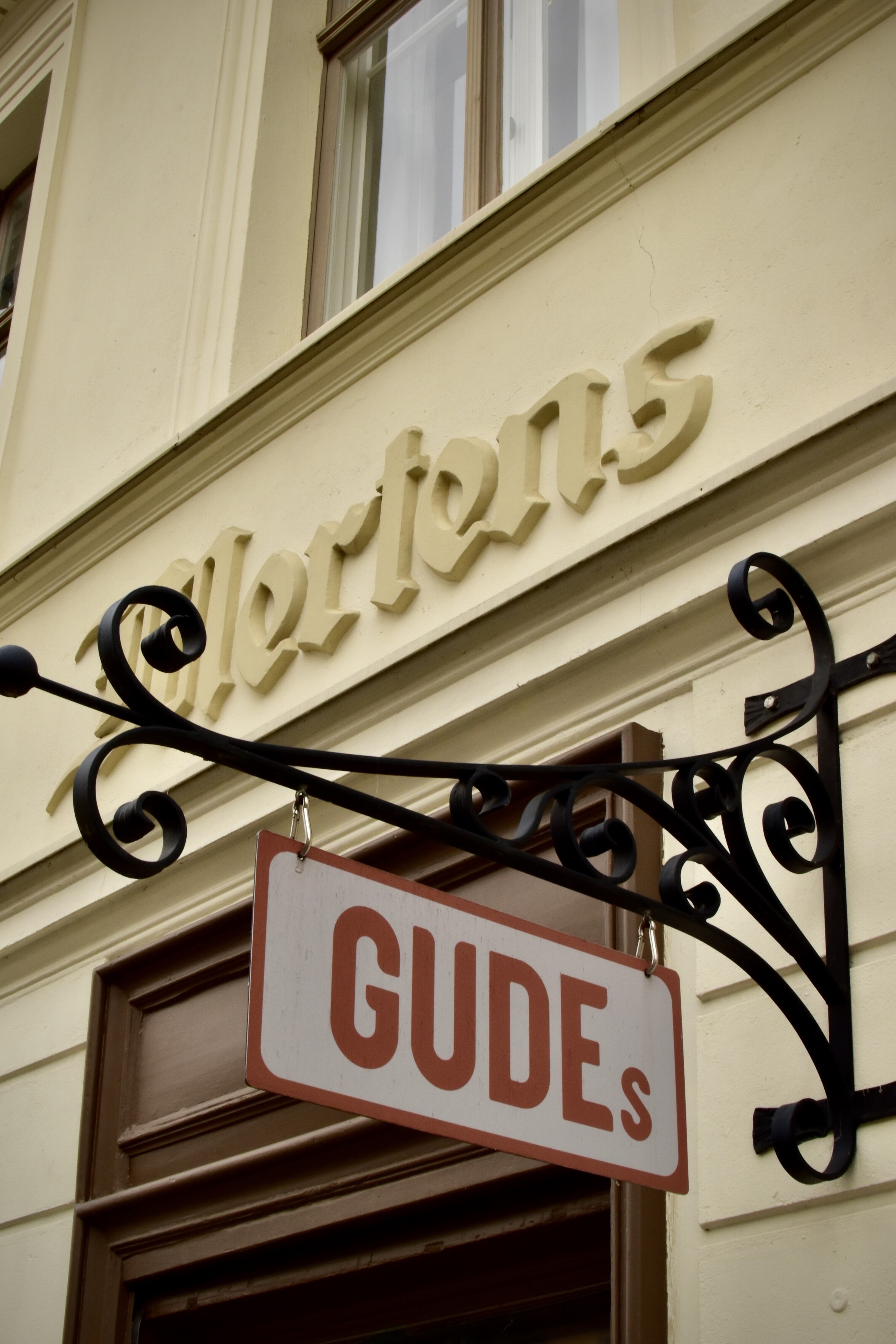
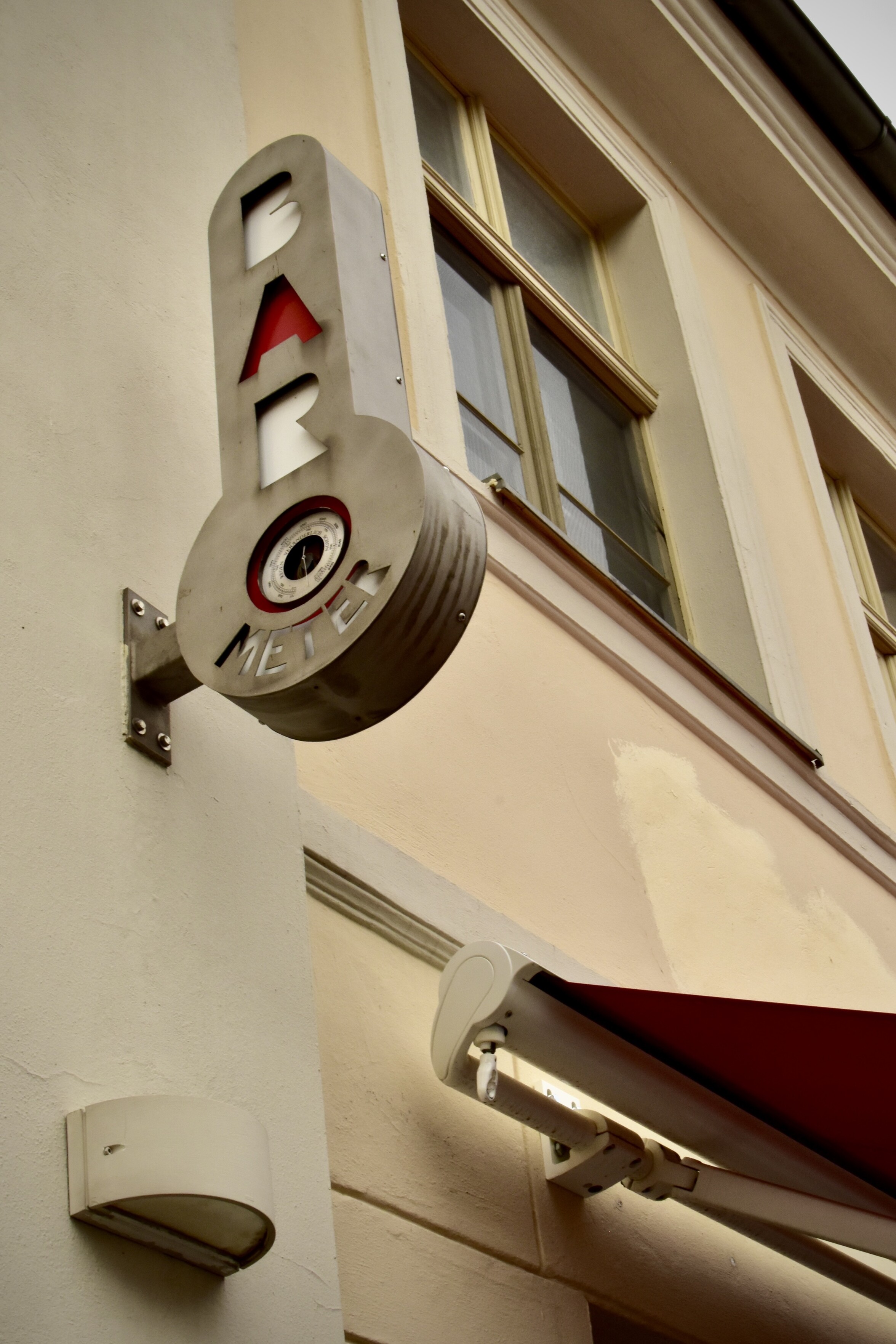
Storefront of plaster faux stone with molded nameplate “Schröder”Windows in storefront of faux stone of plaster, sign in Fraktur lettering with street address Molded plaster lettering “Mertens” with hanging sign “GUDEs”Art Deco-style sign on storefront
Jack Groundhog 📷📸🪶jlgrantham
2023-08-22
Jack Groundhog 📷📸🪶jlgrantham
2023-08-22
Jack Groundhog 📷📸🪶jlgrantham
2023-08-22
Jack Groundhog 📷📸🪶jlgrantham
2023-08-22
dezeen (unofficial)dezeen@ծմակուտ.հայ
2022-05-16

Estúdio Penha use salvaged brick for rustic CS House in Brazil

Salvaged brick, an expansive skylight and exposed interior utilitarian elements feature in a country house designed by Brazilian firm Estúdio Penha.

Located in a gated community in Porto Feliz, Brazil, CS House was designed for a family with two kids and many friends. Primary goals for the project included a strong indoor-outdoor connection and opportunities to enjoy the rising and setting of the sun.

CS House was informed by the architecture of farmhouses

In response, Estúdio Penha, based in São Paulo, created an 820-square-metre compound that takes cues from Brazilian farmhouses.

On the north, facing the street, the team placed structures for a housekeeper's cottage, a laundry room and a garage.

Estúdio Penha used salvaged brick and stone for the house's facade

Behind it is the main house, which consists of a central block flanked by two long bars. The central volume contains the social spaces, while the wings hold six bedrooms.

Patios are found at the front and back of the house. A wood-and-metal pergola helps link all of the elements.

The central volume has walls made of salvaged brick

The various structures have slightly different looks. The central volume has walls made of salvaged brick – meant to lend a rustic touch – and is topped with an asymmetrical, pitched roof.

The bedroom wings are clad in rough-hewn, yellowish stone and have gabled roofs lined with clay tiles. The other buildings are concrete and have flat roofs.

The team added tints of green to metal components

To help unify the different volumes, the team added tints of green to metal components, such as the roof edges, window and door frames, and brace beams in brick walls.

"These choices help emphasize the architectural concept of uniting blocks of different programs," the team said.

[

Read:

ARQBR weaves open space into Couri House in Brasília

](https://www.dezeen.com/2022/03/02/arqbr-open-space-couri-house-brasilia/)

The heart of the compound is the open-plan communal area, which provides space for eating, lounging and playing. Adjoining this area is an enclosed kitchen.

In the main living space, the ceiling rises seven metres at its highest point, creating a lofty feel. A large portion of the ceiling is glass panes set within a metal grid.

Wiring and pipes were left visible

"Facing south, coated with anti-reflective film and protected from direct sunlight by the second roof, it works as a skylight that reveals the daylight transforming into the night sky," the team said.

Throughout, there is a mix of finishes, including exposed brick and stone, cumaru flooring and rose-hued tiles. Wiring and pipes were left visible and arranged in a way that "confers beauty" to these utilitarian elements, the team said.

The architects used a range of windows

The architects also used a mix of windows. Some are fixed, others have folding sashes, and some are doors that pivot open and closed. The type is "always in accordance with the spaces under their influence".

"They are strategically positioned both to accommodate the flow of people, as well as to frame the landscape," the team said.

Other Brazilian houses include a Curitiba home by Marcos Bertoldi Arquitetos that is wrapped in a wooden curtain and a seaside villa by Studio MK27 that has wide openings and a giant roof.

The photography is byFran Parente.

The post Estúdio Penha use salvaged brick for rustic CS House in Brazil appeared first on Dezeen.

#all #residential #architecture #stone #brazil #houses #holidayhomes #gables #brazilianhouses #brick

imageCS HouseCS HouseBrick and stone house by Estúdio Penha
dezeen (unofficial)dezeen@ծմակուտ.հայ
2022-04-04

Naturehumaine splits Quebec ski cottage La Brèche in two

A narrow passageway divides this cottage with a metal roof by Naturehumaine, marking the entrance to the home and providing privacy to a detached guest suite and atelier.

The opening lends the cottage its name, La Brèche, which roughly translates to The Fault. This was the driving concept for the second home near Quebec's Orford ski resort.

Naturehumaine constructed a two-part cottage in Quebec

"The client's functional needs are strategically distributed inside two independent volumes connected by a walkway forming a breach through the house," said the Montreal-based architects.

"The main volume hosts the living and sleeping spaces, while the second volume contains functional areas such as a workshop and a guest bedroom loft with its own bathroom," Naturehumaine explained.

A modern window is cut into the rustic facade

The building's exterior was inspired by the vernacular constructions of the area, a region of Quebec known as the Eastern Townships.

"Combining the desire for both a contemporary expression and inspiration from traditional architecture, the volume of the house adopts a gabled roof combined with sleek details such as the absence of roof projections, a mullion-less glazed corner with silicone joints and frameless window openings," said Naturehumaine.

The corner window of the main living space looks out into the foilage

The smaller, secondary volume contains the garage and a workshop, which has a lofted bedroom above and its own bathroom. Its size and shape match the main part of the primary volume, as if the two had been continuous but then cut in half.

"The overall impression gives the illusion that a natural phenomenon has split an initial entity into two distinct parts," said Naturehumaine.

The entryway into the primary envelope also appears as a fault line

"Mostly, this passage offers a dramatic perspective framing the landscape behind the house," the team added

The larger portion contains two bedrooms near the entrance.

[

Read:

Cedar cottage outside Montreal by Ravi Handa maximises its compact footprint

](https://www.dezeen.com/2021/10/01/chalet-pic-bois-cedar-cottage-quebec-ravi-handa/)

A hallway leads past them to an open-concept kitchen, living and dining space with tall windows that look out onto the site's dense wooded surroundings.

At the back of the property, a compact terrace is adjacent to the living room, offering a place to sit in the warmer months.

The interiors are minimal, in contrast to the exterior

Contrasting the exterior, the interiors have a monochrome palette. Subtle details including a polished concrete floor running throughout, white walls with no baseboard or molding, and vaulted ceilings that follow the roof's outline all contribute to the contemporary feel.

Naturehumaine was founded in 2004, and has completed a variety of residential commissions within and around Montreal. Other residences by the studio include a compact cabin with a pointed titanium roof, and an extension to a Montreal townhouse with a plywood staircase that conceals a children's play space.

The photography is byRonan Mézière.

Project credits:

General contractor: Constructions Boivin
Structural engineer: Geniex

The post Naturehumaine splits Quebec ski cottage La Brèche in two appeared first on Dezeen.

#all #residential #architecture #houses #canada #québec #holidayhomes #gables #canadianhouses #woodenarchitecture #naturehumaine #cottages

imageLa Breche ski cottage by Naturehumaine in QuebecLa Breche Quebec ExteriorLa Breche Quebec Cottage with modern window
dezeen (unofficial)dezeen@ծմակուտ.հայ
2022-03-18

Lopez Gonzalez hides roof terrace atop black House in Xalapa

Mexico City-based Lopez Gonzalez Studio has carved a terrace into a gabled rooftop on a black house in Xalapa, Veracruz.

Designed for a growing family, the House in Xalapa is a three-storey structure set against a backdrop of lush vegetation.

The House in Xalapa was designed as an abstracted version of a typical gabled home

The 528-square-metre residence sits on a slight slope that is mirrored in the angles of its roof.

To make the home stand out in the suburban neighbourhood, the simple geometric form of a traditional gabled house has been modified and abstracted into a more minimal and contemporary design.

The building is covered in a cement render that was painted black

Studio Lopez Gonzalez chose the black colour and angular shape to mimic geologic forms, especially homes "carved in the interior of a rock formation".

"In this case, the shape is the result of our site analysis and the idea of proposing a house that felt strongly connected to the place," studio principal Pedro López González told Dezeen. "In a very abstract way, the house is a typical gabled house."

A roof terrace is hidden from view among the gable shapes

The exterior surfaces are covered in a cement render and painted black to further emphasise the simple architectural forms.

"The exterior cladding is a very simple flattening done by local masons with a sponge," said González. "The intention was to obtain a natural and irregular texture that would absorb the climatic conditions of the region and show them over time."

Windows and doors have maroon frames to contrast the black walls

The facades are dotted with asymmetrical windows, which are "organised around a continuous dialogue with the landscape" according to the studio.

Maroon-coloured frames were chosen for the windows and door to stand out against the black walls.

Interior spaces open onto patio spaces with lush planting

A large "crack" at the apex of the roof continues down through the envelope, revealing a crenel for the recessed rooftop terraces that are undetectable from the outside.

The tiled terraces have planters with tropical plants and geometric sculptures. Their floors are made of recinto, a type of volcanic stone, which, in the walled patio at the rear of the home leads to a swimming pool.

Black marble floors match the dark exterior

Large glass doors connect the outdoor spaces with inside, where the dark colour of the exterior is continued with rich, veined marble used for the flooring.

This visual link is intended to give the impression of a "monolithic" effect, according to González.

Three large concrete slabs lead to the entrance of the home, which is recessed and framed by two walls that continue around the whole of the property.

Inside the house is divided into social spaces on the ground floor with "transitional spaces" like an entertainment room and study on the first floor.

Closely spaced pine beams form ceilings inside

The top floor houses the main bedroom suite, which leads out to one of the private terraces — separated from the bath tub by a glass wall. This terrace steps up to the primary rooftop area.

In contrast to the dark stone floors and exterior, the interior ceilings have closely spaced rafters of pine.

Pine is also used for built-in cabinetry

The light wood also forms additional millwork elements like built-in cabinetry and floorboards.

House in Xalapa is one of Studio Lopez Gonzalez's first ground-up residential designs.

The asymmetric windows are placed to frame specific views of the landscape

Other architectural projects in the Mexican state of Veracruz include a pitched-roof structure built to revitalise public space at a port on the gulf coast.

The photography is byCésar Béjar.

The post Lopez Gonzalez hides roof terrace atop black House in Xalapa appeared first on Dezeen.

#all #architecture #residential #instagram #houses #mexico #gables #mexicanhouses #blackhouses

image
dezeen (unofficial)dezeen@ծմակուտ.հայ
2022-03-12

Wanda Ely completes Scandinavian-inspired retreat outside of Toronto

Toronto-based architect Wanda Ely has completed a country home for a Danish family, combining the Scandinavian principles of "simplicity, functionality, and restraint" with the local design style.

The Sommerhus project (Summer House) is located in Mulmur, Ontario, roughly 100 kilometres outside of Toronto. It sits in rolling wheat fields, on land that belongs to a tight-knit, extended family that gathers there for vacations and celebrations.

Wanda Ely designed a rural vacation home outside of Toronto called Summerhus

"By blending the core Danish design principles of simplicity, functionality, and restraint, with touches of Ontario rural vernacular, this project is a contemporary interpretation of the traditional Danish Sommerhus that is rooted in both its local context and the clients' family history," said Wanda Ely, who has run her eponymous studio since 2011.

The property has two volumes oriented perpendicularly towards each other. The two-storey structures are topped with gabled roofs that resemble buildings found in this rural setting.

Summerhus comprises two volumes connected by a glass walkway

Both are clad in black wooden siding, lending them a starkness that contrasts with the surrounding woodlands.

"As you approach the home, the two barn-like volumes reveal themselves," said Ely. "The public and private uses are split between the two volumes – the kitchen, living, and dining area are housed in one building, and the bedrooms and bathrooms are located in the other."

Outdoor terraces create extra room for family in summer

Connecting the two volumes is a short corridor lined with floor-to-ceiling glass walls. According to the architect, this gives the impression of exiting one building before the entering the other, while remaining protected from the elements.

The public areas have a double-height ceiling that takes advantage of the full building envelope and creates wide-open interiors.

The public volume has double-height ceilings in the living spaces

"The roofline of the building is expressed in the form of lofty, vaulted ceilings," said Ely. "Anchored by an extruded volume for the fireplace and a large corner window in the living room, the gracious open-concept room offers multiple distinct living areas within it."

Within the private volume, the architect included the larger, primary suite on the ground floor, and three bedrooms upstairs for children.

Light colours and upholstery contrast with the black exterior

A generously sized terrace connects both wings of the L-shaped plan, and extends the living spaces in the summer months. "It is an entertaining space large enough for the entire extended clan to gather together, and large enough for multiple dining and seating areas," the architect said.

"Planting is thoughtfully integrated into the deck, and overtime will help it blend into the site," she added.

Three childrens' bedrooms are located upstairs in the private volume

The home's interiors are restrained, with a palette of pale woods and white walls, and openings that are intended to frame the site's seasonal landscape.

"The stark palette of black and white is a hallmark of Scandinavian design and keeps the focus on the spatial qualities of the rooms, and the views out to the surrounding landscape," Ely concluded.

Other recently completed Canadian projects include a "beach house" located near Toronto's downtown area, and an expansive property on the shores of Lake Ontario designed by Omar Gandhi Architects.

The photography is byScott Norsworthy.

Project credits:

Architecture and interiors: Wanda Ely Architect
Builder: Raised Up Building

The post Wanda Ely completes Scandinavian-inspired retreat outside of Toronto appeared first on Dezeen.

#all #architecture #residential #instagram #blackenedwood #houses #canada #holidayhomes #toronto #gables #ontario #blackhouses #canadianhouses

imageWanda Ely Toronto SummerhusWanda Ely Summerhus OntarioWanda Ely Summerhus Ontario
dezeen (unofficial)dezeen@ծմակուտ.հայ
2022-02-17

Alexander Martin Architects designs Arts and Crafts-influenced home in Surrey

Two gabled brick volumes informed by the architecture of the 19th-century Arts and Crafts movement define this home in Claygate, Surrey, designed by Alexander Martin Architects.

Claygate House sits on a triangular plot that was formerly the site of a 1920s home, which the clients wanted to replace with something unique but sensitive to its suburban site.

Two gabled brick volumes define Claygate House

London-based Alexander Martin Architects' response was to base the home's design on a modern, stripped-back interpretation of the area's traditional Arts and Crafts style, "redefining the aspirations for suburban architecture".

"Our client was clear from the outset that they didn't want a run-of-the-mill house and that they were prepared to do something bold in the suburbs," said director Alexander Martin.

Strips of full-height glazing provide views into the house

"However, the design and materials have all been carefully orchestrated to create a series of spaces that best serve the needs of the family while still maintaining an elegant appearance," he continued.

Taking advantage of the triangular site, the home is organised as two individual gabled forms that sit at a slight angle to one another. They are sized to not exceed the height of the neighbouring building.

An exposed metal staircase sits in the centre of the house

Connecting these two main forms is a double-height volume that contains an exposed metal staircase, with strips of full-height glazing providing views in and flooding this connecting space with light.

The programme is split across the two halves, with a large dining and kitchen area to the east and a living room to the west. Bedroom spaces above are connected by a short bridge.

[

Read:

Delve Architects strips back and extends 19th-century stone barn in Surrey

](https://www.dezeen.com/2021/12/14/delve-architects-woodthorpe-stables-residential-architecture-surrey-uk/)

Large glass sliding doors open both of the ground floor spaces onto a stepped terrace, which leads down to a large garden at the rear of the home.

Claygate House was built using a Structural Insulated Panels system (SIPS), which allowed the core structural frame to be completed within four months.

In the east portion is a large dining and kitchen area

The gabled forms are clad in pale buff brick, with simple facades defined by vertical banding and contrasted by black metal window frames.

The Arts and Crafts references of the exterior are contrasted by sleek contemporary finishes and a monochrome palette in the interiors, including white walls, stone floors and black veneered joinery.

The exterior references the Arts and Crafts movement

Marble details in the bathrooms and countertops bring a "timeless" quality to the spaces.

Previous projects by Alexander Martin Architects include a three-storey extension to a Victorian house in London, with an area of double-height glazing overlooking a garden.

The post Alexander Martin Architects designs Arts and Crafts-influenced home in Surrey appeared first on Dezeen.

#all #architecture #residential #uk #england #bricks #houses #gables #britishhouses #surrey #alexandermartinarchitects

imageClaygate HouseAlexander Martin Architects staircaseExterior view of the extension at Woodthorpe Stables
dezeen (unofficial)dezeen@ծմակուտ.հայ
2022-01-26

CF Møller uses matching bricks and tiles for exterior of Villa E in Aarhus

Scandinavian firm CF Møller Architects has completed a house where all the exterior surfaces match, thanks to a combination of dark red bricks and tiles.

Located in Risskov, in the north of Danish city Aarhus, Villa E is a home for a couple with four children and a dog.

Villa E consists of four gabled blocks

The 261-square-metre building takes its cues from the nearby Aarhus University, designed by CF Møller back in 1931, with its gabled roof profiles and rustic materials palette.

The aim was replicate the university's "simplicity and straightforward use of local materials", according to architect and CF Møller partner Klaus Toustrup.

The exterior combines matching tiles and bricks

"The clients used Aarhus University as an example of a building which had achieved the timelessness they wanted from their new home," he told Dezeen.

"They were very fond of classic brick buildings and were looking for a design that would blend in nicely into the surroundings."

A glazed gable connects the lounge with the garden

Villa E consists of four overlapping gabled volumes, with two oriented north-south and the other two running east-west.

Hand-painted tiles clad both the facade and roof of all four blocks. With varying shades of red, they match up with two brick entrance staircases and a series of exterior terraces.

[

Read:

CF Møller Architects hides "invisible villa" in Norway under green roof

](https://www.dezeen.com/2021/12/26/cf-moller-invisible-villa-aa-norway/)

Brick surfaces continue inside the building, providing select walls and floor surfaces. The more dominant interior material is oak, which also lines the window and door recesses.

The house has a split-level floor plan

By dividing the building into four blocks, CF Møller was able to more easily negotiate the sloping levels of the site.

Some blocks are set at different levels, creating a split-level floor plan inside the building and making it possible for the basement to incorporate a sunken garage.

A curved lightwell brings daylight down into the kitchen

"The biggest challenge was to create a design that could naturally handle the hilly terrain," said Toustrup.

"The concept of dividing the building into 'four small houses' that could be moved between each other offered the solution and at the same time divided the villa into different family and living zones."

Bedrooms are organised around the living spaces

Most of the living spaces are located on the upper ground floor. A south-facing kitchen and dining room is the heart of the floor plan, with five bedrooms and a lounge organised around it.

The lower level includes utility areas and a hobby room, along with the garage.

Brick surfaces continue inside the house, including the main bedroom

Various features have been added in order to bring daylight through the home. These include a glazed gable wall fronting the lounge, a curving lightwell above the kitchen and a narrow skylight above the main stairwell.

This staircase also has open risers, to help light reach the lower level.

Oak flooring features throughout the home, laid in a herringbone pattern. The bathroom introduces another material: a natural grey stone that offers a contrast to the warmth of the clay and wood surfaces.

Bathrooms are lined with natural grey stone

While CF Møller is best known for large-scale projects like Maersk Tower at the University of Copenhagen or the recently completed Carlsberg HQ, the studio often takes on private residential projects.

It recently also unveiled an "invisible villa" set into a hillside, with a green roof on top.

With Villa E, Toustrup hopes to have created a building that is "simple, elegant and timeless".

A garage is located on a basement floor

"The big room with the curved ceiling has a beautiful natural light, while the materials create a calm and cozy atmosphere," he said.

"It has become a great place for both partying and everyday family life."

Photography is by Julian Weyer.

Project credits

Architect: CF Møller Architects
Contractor: Jakob Tømrerfirma
Engineer: Tri-Consult
Suppliers: Petersen Tegl, Krone Vinduer

The post CF Møller uses matching bricks and tiles for exterior of Villa E in Aarhus appeared first on Dezeen.

#residential #all #architecture #aarhus #bricks #houses #cfmøller #tiles #gables #danishhouses

imageSide entrance to Villa E by CF Møller ArchitectsExterior of Villa E by CF Møller ArchitectsSide entrance to Villa E by CF Møller Architects
dezeen (unofficial)dezeen@ծմակուտ.հայ
2022-01-19

Tres Birds uses timber and metal to create ADU alongside Boulder home

Smart systems and salvaged materials feature in an accessory dwelling unit by architecture firm Tres Birds that city officials have designated as low-cost housing.

The project is located in Boulder, which sits in the foothills of the Rocky Mountains and is home to a major university and growing tech industry.

The ADU is in the foothills of the Rocky Mountains

Built on a 2,100-square-foot (195-square-metre) property with a single-family home, the detached accessory dwelling unit (ADU) is meant to serve as a guest house or an in-law suite. Currently, it is occupied by a family member of the owner.

Designed by Tres Birds, a studio based in the nearby city of Denver, the ADU totals 800 square feet (74 square metres) and has two levels.

A spiral staircase leads to a loft space above

The ground level contains a kitchen and living room, along with a bedroom and bathroom.

A spiral staircase leads to a loft space above, which can be used as a second bedroom, an office or a den. Lined with a metal railing, the loft is open to below.

Tres Birds fitted the home with a gabled roof

The wood-framed, rectangular home is topped with a gabled roof designed to quickly shed snow. Windows and roof overhangs were strategically positioned to maximise natural light while also providing adequate shade in the summer.

Facades are clad in bonderised steel – a durable material that helps the home be low-maintenance. Inside the dwelling, walls were made of exposed plywood.

Plywood sheathing is also exposed on the home's interior

"We insulated from the outside so that the plywood sheathing structure of the building could be exposed to the inside," the team said.

Tres Birds used salvaged materials for several parts of the building. For instance, wood from bowling alley lanes was used for flooring and framing.

Wood from bowling alley lanes was used for flooring and framing

"The warm-toned, 50-year-old bowling alley wood is used as a structurally independent, mezzanine floor system and laminated together to create the east-side, timber-frame window system," the team said.

Other salvaged elements include "reject tile" from a local artisan, which was used in the bathroom and kitchen.

"Reject tile" clads the bathroom

For the home's operable skylight, the team used dichroic glass – multi-coloured glass with reflective properties – that was left over from a past Tres Bird project.

"As the angle of the sun changes throughout the day and season, so do the visual effects within the living space, creating a vibrant show of coloured light throughout," the team said of the skylight.

A dichroic glass skylight reflects multi-coloured light into the home

The building has a number of features that promote energy efficiency, including an air-tight envelope and a radiant floor system for heating and cooling.

Several elements can be controlled by smartphone, including lighting, security, heating and cooling, and the operable skylight.

The home has scored high on the Home Energy Rating System (HERS) Index, which is one of the leading energy-efficiency assessment tools in the US.

[

Read:

Bunch Design adds colourful granny flat to a home in Los Angeles

](https://www.dezeen.com/2021/11/19/bunch-design-colourful-granny-flat-adu-los-angeles/)

A score of 100 represent the energy use of a standard building in America. The lower the score, the higher the energy efficiency.

"The home received a HERS score of 33, not far off from Europe's stringent Passive House requirement of HERS 20," said the studio.

Wood also lines ceilings in the bedroom

The small building has been designated an "Affordable Accessory Unit" rental property by the city of Boulder as part of its affordable housing programme. The Colorado city is facing a housing shortage, particularly in regards to middle- and low-cost housing.

A maximum rental price was not disclosed, but the architect's publicist said if the ADU were listed, the cost would be limited to about 75 per cent of the area's median price for a comparable unit.

The ADU is meant to serve as a guest house

Founded in 2000, Tres Birds has placed a focus on economical and sustainable design.

Other projects by the studio include S*PARK, a mixed-use project in Denver with facades made of reclaimed brick, and a Wisconsin art museum that has concrete exterior with screens made of angled, timber slats.

The photography is byJames Florio.

Project credits:

Architecture, interior design, landscape: Tres Birds
Facade cladding and roofing: Signature Services Roofing
Doors: Tres Birds
Windows: Anderson
Stairs: Paragon Stairs
Base cabinets: IKEA
Countertops: Porcelanosa
Appliances: KitchenAid
Plumbing fixtures: Kohler
Furniture: Isamu Noguchi, Sori Yanagi, Charles and Ray Eames, Tres Birds
Artwork: Berger&Fohr, Gregg Deal, Michael M Moore

The post Tres Birds uses timber and metal to create ADU alongside Boulder home appeared first on Dezeen.

#residential #all #architecture #usa #skylights #gables #lowcosthousing #reclaimedmaterials #accessorydwellingunits #colorado

imageBoulder ADU by Tres BirdsBoulder ADUSpiral staircase
dezeen (unofficial)dezeen@ծմակուտ.հայ
2021-11-28

Nate Dalesio clads his Upstate New York family house in corkboard panels

Architect Nate Dalesio has completed a cork-covered home for himself and his young family in Upstate New York, reusing the existing foundations but replacing almost the entire building.

Dalesio, who also runs the architectural firm Multitude Studio from his home, overhauled the house originally built in 1937 in South Salem, New York. The abandoned property needed to be almost entirely razed in order to make it habitable.

The Cork Haven house replaces an earlier building that had fallen into disrepair

"The framing at the roof and floors, and the CMU at the exterior walls was consumed by rot and mold, and the entire house had to be leveled down to the top of foundation and built anew," said Dalesio.

"The existing footprint was entirely retained while targeted expansions have been used to enlarge the living spaces and bedrooms."

Nate Dalesio's chose to clad the replacement house in cork

The single-storey residence is laid out in a T-shaped plan, with one arm containing the public areas and kitchen, while the other accommodates three bedrooms and two bathrooms.

The completed house encompasses 2,500 square feet (232 square metres).

Vaulted ceilings create extra space inside. Photo by Meg Matyia

Because of the site's slope, the home's entry porch is reached via a flight of stairs. Inside, a small vestibule with large, built-in storage cabinets and a powder room is separated from the kitchen by a countertop – creating sightlines between the two areas.

The interiors features wide-plank white oak floorboards and white-painted walls. Pitched ceilings that follow the roof profiles give the rooms a spacious feeling, and plenty of skylights help brighten the living spaces.

Skylights bring additional light into the living areas. Photo by Meg Matyia

"Vaulted ceilings throughout the home create surprisingly spacious volumes that belie the modest footprint, and white oak panelling and floors bring warmth to contrast the crisp and sculptural white walls," said the architect.

At the back of the home, sliding glass doors open out onto a patio.

[

Read:

Contaminar Arquitetos designs concrete and cork school in Portugal

](https://www.dezeen.com/2021/10/20/contaminar-arquitetos-casa-da-arvore-school-leiria-portgual-cork-architecture/)

Dalesio designed the building's exterior to relate to the area's agricultural structures and barns, but using a more contemporary and minimal aesthetic.

The previous house on the site had a tin roof and wooden plank siding, which were swapped for black corrugated metal and corkboard.

White oak flooring and panelling create a light, minimal interior

The cork offers an additional layer of insulation, according to the architect, helping to lower the home's heating energy consumption.

"A modest budget of $150 per square foot was stretched to invest in highly insulated walls, roofs, floors, and windows to minimize utility bills, and the exterior cladding doubles as a continuous layer of corkboard insulation," Dalesio said.

The building's exterior is intended to echo the area's agricultural structures and barns, but with a more contemporary aesthetic

Cork is a useful building material, as it naturally resists humidity and mildew. It's also light and offers the potential to be recycled after use.

Other projects that incorporcate the material include a home in the Italian countryside by LCA Architetti, and an English countryside residence that Matthew Barnett Howland built using of monolithic cork blocks and was shortlisted for the 2021 Stirling Prize.

The photography is by Nate Dalesio, unless indicated otherwise.

The post Nate Dalesio clads his Upstate New York family house in corkboard panels appeared first on Dezeen.

#residential #all #architecture #instagram #usa #cork #houses #gables #americanhouses #newyorkhouses #corkcladding #newyork

imageCork Haven by Nate DalesioCork Haven by Nate DalesioCork Haven by Nate Dalesio
dezeen (unofficial)dezeen@ծմակուտ.հայ
2021-10-12

CLB Architects completes rural Wyoming compound influenced by agricultural buildings

CLB Architects has completed a holiday home in Wyoming's Teton mountain range, drawing references from settler communities that were built as the United States expanded further West.

The property is named Five Shadows after the five distinct volumes that make up the 12,800 square-foot (1,100 square metres) estate. "The house, reminiscent of a homesteader's settlement, is composed of five connected, symmetrical, agrarian-inspired forms," said CLB Architects.

Five Shadows was built by CLB Architects and is comprised of multiple volumes

The term refers to the Homestead Acts, a set of laws in the United States enacted after the civil war that allowed any adult male to claim up to 160 acres (65 hectares) of government land as private farmland.

This spurred the development of the country's Western frontier, including what's known today as Wyoming. These settlements were often built with modest means, and were characterised by simple gabled roofs.

The different volumes of the home were organised around a large terraced area

CLB Architect's project is a single-family home, which lays out the owner's program into several similar volumes laid out around a series of exterior terraces and a pool.

"Slightly elevated above neighbors, the compound imparts a feeling of privacy, screens nearby buildings through structural orientation and strategic window placement, and takes in broad views across the valley to the Gros Ventre Range," said the studio, which is based in Jackson Hole, Wyoming, and Bozeman, Montana.

Rooms are connected by wood-clad and glazed corridors

"The largest form hosts the public spaces, while the peripheral volumes capitalize on privacy for bedrooms and a den," the architects explained.

Three of these buildings, which are connected by glazed walkways, contain four of the home's bedrooms. The last structure is off to the side, and contains a pool house.

"The layout of the multiple buildings lends an elegance to the flow, while the relationship between spaces fosters a sense of intimacy," according to the architects. In the clearings between the buildings, the architects included a range of different spaces, such as an outdoor dining area and lounge.

Guests enter the home via a double-height glass lobby, where a monolithic black door on an offset pivot is framed by two large cabinets for storing coats. A gallery then leads to the main part of the home, for entertaining guests.

An open-tread staircase leads upstairs, where there are two additional bedrooms that bring the total to six.

The interiors have a neutral palette and use woods and stone

Here, two separate living rooms at either end of the main gabled structure frame a large dining area, allowing for several groups to gather at once. To delineate the space, the architects include two fireplaces that help separate these areas from one another.

The interiors, which were designed by Philip Nimmo, feature a bright palette of rift-sawn white oak boards on the walls, floors, and ceilings, with black steel detailing and a stone that matches the exterior cladding. The restrained choice of materials emphasises the home's "deep connection to the outdoors".

Each volume has a gabled roof

CLB Architects has completed several homes in Wyoming, including a property with a black steel exterior that is intended to weather and rust over time, and a home belonging to studio co-founder Eric Logan, which he renovated with a pitched steel roof.

The photography is by Matthew Millman.

Project credits:

Architecture: CLB Architects (Eric Logan, AIA, Principal; Andy Ankeny, AIA, Principal; Sam Ankenny, AIA, Associate)
Interior design: Philip Nimmo
Contractor: KWC
Landscape: Hershberger Design
Civil Engineer: Nelson Engineering
Structural Engineer: KL&A.
Mechanical Engineer: JM Engineering
Electrical Engineer: Helius Lighting Group

The post CLB Architects completes rural Wyoming compound influenced by agricultural buildings appeared first on Dezeen.

#residential #all #architecture #usa #houses #gables #americanhouses #wyoming #clbarchitects

imageThe home is located on a hillsideFive Shadows has a symmetrical designGabled roof structures are organised around a pool
dezeen (unofficial)dezeen@ծմակուտ.հայ
2021-09-07

18th-century sawmill transformed into contemporary gabled house

Architects André Caetano and Ana Fiúza have converted a former sawmill in the Portuguese town of Oeiras into a house that stands behind a freestanding gabled wall.

Caetano and Fiúza, who are partners in work and in life, worked together to transform the 18th-century building in the heart of the town into a residence for a young couple who wanted an architecturally interesting home.

House in the Sawmill incorporates the 18th-century walls of its predecessor into its architecture

"The volume of the old sawmill was the starting point for the entire project," explained the architects.

"We intended to preserve its volume and its gable roof, [which were] perfectly integrated into the urban imaginary of this town."

A series of patios divide the property

In order to make House in the Sawmill more attractive and functional, Caetano and Fiúza introduced three patios that create a strong connection between the interior and exterior spaces.

The compact outdoor areas help to make the rooms feel larger and brighter while providing different experiences throughout the building as a consequence of the varying views.

The kitchen features limestone counters

The property's entrance is positioned at the base of a freestanding gabled wall that faces the adjacent street and completely conceals the private areas from view.

The doorway leads to a sheltered space containing a raised garden that is lined on one side by a remnant of the original 18th-century stone wall.

"The new facades replicate the geometry of the original construction, respecting its industrial creation," said the architects.

"However, the use of slats and generous windows allow new visual relations with the exterior, creating unexpected frameworks with the limits of the original construction."

The gabled roof is expressed on the interior

Internally, the house features a double-height living space that extends all the way up to the exposed pitched ceiling.

A large opening containing sliding doors looks onto another outdoor space at the far end of the room. A roof light and windows incorporated into one wall contribute to the brightness of the whitewashed space.

Microcement floors add to the minimal aesthetic

A mezzanine study slotted in beneath the sloping ceiling is flanked by an angular window containing a door that leads onto a roof terrace.

The interior features a minimal material palette, with surfaces including the microcement floors, limestone countertops and wooden joinery adding textural details throughout.

Sliding glass doors open the rooms to the patios

Another Portuguese project that integrates old stone walls into a new residential project is located in Romarigães, where a new brick volume was inserted into the remains of a traditional house.

The post 18th-century sawmill transformed into contemporary gabled house appeared first on Dezeen.

#residential #all #architecture #portugal #houses #gables #portuguesehouses #adaptivereuse

image

Client Info

Server: https://mastodon.social
Version: 2025.07
Repository: https://github.com/cyevgeniy/lmst