#phc

A Prairie Home Companion: Status and Archives – A 2025 Update

A Prairie Home Companion: Status and Archives

A user today on Facebook asked about A Prairie Home Companion. It ended its original run on July 2, 2016, when Garrison Keillor hosted his final episode at the Hollywood Bowl after 42 years as host. The show continued under Chris Thile from October 2016 until 2020, when it was renamed “Live from Here” in December 2017 following allegations against Keillor.

However, Keillor continues to perform live stage shows under the Prairie Home Companion name, as he retained the trademark rights.

Current Status and Archives

Multiple comprehensive archives exist for accessing Prairie Home Companion episodes, though availability varies by time period:

Official Archives:

Comprehensive Third-Party Archive: Good for Finding Episodes!

  • A PHC Archive (https://aphcarchive.com) – A free, comprehensive archive specifically designed to fill gaps in the official sites, with detailed search capabilities and information covering the first 20+ years of the show that other sites lack

Additional Sources:

The official Prairie Home site notes that their archive “only goes back to 1996ish” with “a few 1985 episodes on YouTube,” making the third-party PHC Archive particularly valuable for accessing the show’s complete history from its 1974 debut.

So yes, while there are no new shows in the traditional sense, there’s a wealth of archived content available online for fans who want to revisit the magic of Lake Wobegon and Garrison Keillor’s storytelling.

#2025 #America #Archives #Education #GarrisonKeillor #History #LakeWobegon #Libraries #Library #LibraryOfCongress #NationalPublicRadio #NPR #PHC #PrairieHomeCompanion #Technology #UnitedStates #Writing #YouTube

Lo Sherlock del Fediversofrancal@mastodon.uno
2025-09-26

ll pianeta non sta niente bene, parola di PHC

Il rapporto Planetary Health Check (#PHC) fornisce una valutazione dello stato del nostro pianeta basandosi su nove processi noti per regolare stabilità, resilienza e funzioni di supporto vitale
del pianeta.
Il rapporto 2025 conclude che sette processi sono stati violati, e mostrano tendenze di crescente pressione, suggerendo ulteriore deterioramento e destabilizzazione della salute planetaria nel prossimo futuro

gat.to/ti62x

@scienze

2025-09-19
It’s another give away time! I have 30 free tickets for my #Phc people. I am glad to give you one more opportunity to see the movie and join the conversation. The first 30 persons at the #cinema will get free #ticket to see #AmayanaboatheEagleKing.❤️ #bahdlex #HildaDokubo
BahdlexBahdlex
2025-09-19

It’s another give away time! I have 30 free tickets for my people. I am glad to give you one more opportunity to see the movie and join the conversation. The first 30 persons at the will get free to see .❤️

2025-04-19

NEW PINKSHIFT! And they're channeling some angrier punkier stuff than their last album. If this sound is indicative of an upcoming album's tone than they're aiming for my AOTY list. youtube.com/watch?v=ME-FbKASXlE

I Voted for McGoverngoatrodeo@mstdn.social
2024-12-25

Watching Prairie Home Companion anthology of Christmas videos from past shows, with captions! Where have these captions been for all those #phc shows of old?
#old #GarrisonKeillor

Giuseppe Zollijoe8Zeta7
2024-12-17

giant formerly , violently silences environmental defenders in the . Protesters arrested, journalist kidnapped, workers left without justice. Take action for 🌴🚫 @palmoildetectives wp.me/pcFhgU-8xX

2024-12-17

Palm Oil Protesters Silenced and Arrested in Congo

On April 30, 2024, a shocking and disgraceful incident occurred in Kinshasa, the capital of the Democratic Republic of Congo (DRC). During a meeting of shareholders from Plantations et Huileries du Congo (PHC), (formerly known as Feronia) environmental rights defenders were arrested, and a journalist was kidnapped after displaying banners denouncing PHC’s mistreatment of local communities. PHC, formerly known as Feronia, is a multinational company that operates large palm oil plantations in the DRC. Take action in solidarity of these people and #BoycottPalmOil when you shop!

In April, environmental defenders in the #DRC were arrested and kidnapped at a shareholder meeting for highlighting #PalmOil #HumanRights abuses 🔥🌴⛔️ Since then no action has been taken! Stand with them 💪 #WorkersRights #BoycottPalmOil https://wp.me/pcFhgU-8xX @palmoildetect

Share to BlueSky Share to Twitter

#PalmOil giant #PHC formerly #Feronia, violently silences environmental defenders in the #DRC #Congo. Protesters arrested, journalist kidnapped, workers left without justice. Take action for #HumanRights #BoycottPalmOil 🌴🚫 @palmoildetect https://wp.me/pcFhgU-8xX

Share to BlueSky Share to Twitter

https://youtu.be/Vp03S3v4r5Y

Zongwe Lukama, F. (2023, May 2). DRC: Mystery and collusion in the disappearance of environmental defenders fighting palm oil multinationals. Kilalo Press. Business and Human Rights Resource Centre has since asked for a company response, but to date none has been forthcoming from the palm oil company.

Arrests and Abduction at PHC Shareholders Meeting

On Tuesday, April 30, 2024, a shocking and disgraceful incident occurred in Kinshasa, the capital of the Democratic Republic of Congo (DRC). During a meeting of shareholders from Plantations et Huileries du Congo (PHC), environmental rights defenders were arrested, and an environmental journalist was kidnapped after displaying banners denouncing PHC’s mistreatment of local communities. PHC, formerly known as Feronia, is a multinational company that operates large palm oil plantations in the DRC.

Who are Plantations et Huileries du Congo (PHC)?

Plantations et Huileries du Congo (PHC) are a palm oil company that operate extensive palm oil plantations in the Democratic Republic of Congo. The company produces palm oil used in many products like food, cosmetics, and biofuels. PHC has faced numerous protests and criticism for its detrimental impact on the environment and local communities.

The people versus Feronia: Fighting palm oil agrocolonialism in the Congo

This powerful #comic is by Didier Kassai and Dieudonne Botoko Kendewa is about a community in the #Congo 🇨🇩 living next to the #Feronia #palmoil plantation. They faced #violence…

Keep reading

by Palm Oil Detectives

The Protesters’ Demands

The protest was sparked by a letter from the Réseau d’Information et d’Appui aux ONG (RIAO – DRC), a network supporting non-governmental organisations (NGOs) in the DRC. This letter led PHC to hold an urgent meeting in Kinshasa.

Protesters had several demands:

  • Release people who were unjustly imprisoned.
  • Compensate workers for accidents and retirees.
  • Reopen the Lokutu and Boteka ports, which they argue are public roads, not PHC property.

Call to Action and Strong Suppression

The protesters wanted to push state authorities to act on an open letter from RIAO – DRC and its partners. This letter discussed mediation claims funded by the German Bank (DEG) and the Dutch Development Bank (FMO) to help communities affected by PHC. Unfortunately, security forces were called to stop the protesters, damage their equipment, and kidnap the journalist and environmental defender.

An Urgent Appeal for Support

RIAO-RDC, a national support network for NGOs, made an urgent call to security authorities and stakeholders to find their members, Dieumerci Mpay Ngomba, and a cameraman journalist from Numerica TV in Kinshasa. They called these actions “kidnapping” and stressed that defenders of forest community rights should not face political or rights abuses.

An Alarming and Unjust Situation for Environmental Defenders

The situation for environmental defenders in the DRC is worrying. RIAO-RDC said Dieumerci was arrested because of a complaint by PHC. At the General Prosecutor’s Office near the Court of Appeal of Kinshasa Gombe, protesters were charged with inciting breaches against public authority under article 135 of the Congolese penal code.

Targeting Environmental Advocates

RIAO-RDC believes that PHC is mainly targeting Jean François Mombia Atukua, who previously led a disguised march against RIAO and its director at the Lokutu base. The organisation urges the judiciary to ensure the safety of those arrested and uphold press freedom and human rights.

Company Response

Following publication PHC did not respond to the Business and Human Rights Resource Centre’s request for comment regarding these allegations.

References

Zongwe Lukama, F. (2023, May 2). DRC: Mystery and collusion in the disappearance of environmental defenders fighting palm oil multinationals. Kilalo Press. Business and Human Rights Resource Centre has since asked for a company response, but to date none has been forthcoming from the palm oil company.

ENDS

Read more about human rights abuses and child slavery in the palm oil industry

Palm Oil Threatens Ancient Noken Weaving in West Papua

Colonial palm oil and sugarcane causing the loss of West Papuans’ cultural identity. Land grabs force communities from forests, threatening Noken weaving

Read more

Family Ties Expose Deforestation and Rights Violations in Indonesian Palm Oil

An explosive report by the Environment Investigation Agency (EIA) details how Indonesia’s Fangiono family, through a wide corporate web, is linked to ongoing #deforestation, #corruption, and #indigenousrights abuses for #palmoil. Calls mount for…

Read more

West Papuan Indigenous Women Fight Land Seizures

Indigenous Melanesian women in West Papua fight land seizures for palm oil and sugar plantations, protecting their ancestral rights. Join #BoycottPalmOil

Read more

Greasing the Wheels of Colonialism: Palm Oil Industry in West Papua 

A landmark study published in Global Studies Quarterly in April 2025 has revealed that the rapid expansion of the #palmoil industry in #WestPapua is not only fuelling #deforestation, #ecocide and environmental destruction but…

Read more

Palm Oil Practices Resemble Colonial Exploitation

Indonesian palm oil workers expose industry practices that mirror colonial exploitation: land grabbing, bad conditions, ecocide. Systemic change is needed!

Read more

Load more posts

Something went wrong. Please refresh the page and/or try again.

Take Action in Five Ways

1. Join the #Boycott4Wildlife on social media and subscribe to stay in the loop: Share posts from this website to your own network on Twitter, Mastadon, Instagram, Facebook and Youtube using the hashtags #Boycottpalmoil #Boycott4Wildlife.

✓ Subscribed

2. Contribute stories: Academics, conservationists, scientists, indigenous rights advocates and animal rights advocates working to expose the corruption of the palm oil industry or to save animals can contribute stories to the website.

Wildlife Artist Juanchi Pérez

Read more

Mel Lumby: Dedicated Devotee to Borneo’s Living Beings

Read more

Anthropologist and Author Dr Sophie Chao

Read more

Health Physician Dr Evan Allen

Read more

The World’s Most Loved Cup: A Social, Ethical & Environmental History of Coffee by Aviary Doert

Read more

How do we stop the world’s ecosystems from going into a death spiral? A #SteadyState Economy

Read more

3. Supermarket sleuthing: Next time you’re in the supermarket, take photos of products containing palm oil. Share these to social media along with the hashtags to call out the greenwashing and ecocide of the brands who use palm oil. You can also take photos of palm oil free products and congratulate brands when they go palm oil free.

https://twitter.com/CuriousApe4/status/1526136783557529600?s=20

https://twitter.com/PhillDixon1/status/1749010345555788144?s=20

https://twitter.com/mugabe139/status/1678027567977078784?s=20

4. Take to the streets: Get in touch with Palm Oil Detectives to find out more.

5. Donate: Make a one-off or monthly donation to Palm Oil Detectives as a way of saying thank you and to help pay for ongoing running costs of the website and social media campaigns. Donate here

Pledge your support

#BoycottPalmOil #BoycottPalmOil #childLabour #childSlavery #Congo #corruption #DemocracticRepublicOfCongo #DRC #Feronia #humanRights #HumanRights #indigenousRights #landRights #landgrabbing #PalmOil #palmoil #PHC #slavery #workersRights #WorkersRights

Palm oil protesters silenced CongoThe people versus feroniavPalm Oil Protest Turns Violent: Human Rights Defenders Arrested in Congo
2024-11-11

Strengthening primary health care in a changing climate

A new article by Andy Haines, Elizabeth Wambui Kimani-Murage, and Anya Gopfert, “Strengthening primary health care in a changing climate,” outlines how climate change is already impacting health systems worldwide, with primary health care (PHC) workers bearing the immediate burden of response.

Haines and colleagues make a compelling case for strengthening primary health care (PHC) as a cornerstone of climate-resilient health systems.

First, they note that approximately 90% of essential universal health coverage interventions are delivered through PHC settings, making these facilities and workers the backbone of healthcare delivery.

This is particularly significant because PHC systems address many of the health outcomes most affected by climate change, including non-communicable diseases, childhood undernutrition, and common infectious diseases like malaria, diarrheal diseases, and respiratory infections.

Furthermore, PHC workers are often the first responders to extreme weather events such as floods, droughts, and heatwaves.

They must manage both the immediate health impacts and the longer-term consequences of these events.

This comprehensive view of PHC’s role in climate resilience represents a significant shift from viewing primary care merely as a service delivery mechanism to recognizing it as a crucial component of climate adaptation and health system strengthening.

The authors argue that investing in PHC is not only essential for addressing immediate health needs but also for building long-term resilience to climate-related health threats.

In examining workforce issues, Haines et al. specifically emphasize that “building the capacity of the PHC and public health workforce in emergency preparedness and response to climate-induced risks is crucial for enhancing the resilience of health systems.”

They argue that “the health-care workforce, including multidisciplinary PHC teams, should be provided with training and education on the impacts of climate change on health and the implications for health-care delivery.”

The article specifies that this training should focus on three key areas: “strengthening integrated disease surveillance and response systems,” “diagnosis and management of changing disease patterns (eg, outbreaks of vector-borne diseases in new locations),” and “interpretation and use of available climate, weather, and health data to support planning and management of adaptation and mitigation interventions.”

They mention resources like those proposed by the “WONCA Global Family Doctor Planetary Health Working Party” as instructive for such training.

Although the article emphasizes the role of PHC workers as being “often on the front line of responses to extreme events such as floods, droughts, and heatwaves,” it does not discuss mechanisms for capturing or leveraging their experiential knowledge.

This is what they know because they are there every day.

Recommendations follow a traditional institutional approach: strengthen health information systems, build workforce capacity, develop integrated service delivery models, increase funding, and enhance governance.

While these recommendations are well-founded, they primarily envision a top-down flow of knowledge and resources, with health workers positioned as recipients of training and implementers of policies.

The epistemological framework underlying their recommendations reflects what educational theorists would recognize as a transmission model of learning, where knowledge is conceived as flowing primarily from experts to practitioners in a hierarchical manner.

This approach, while valuable for disseminating standardized protocols and evidence-based practices, implicitly positions health workers as passive recipients rather than active knowledge creators and agents of climate-health resilience.

Such a framework potentially undervalues the situated knowledge and practical wisdom (what Aristotle called phronesis) that practitioners develop through direct experience with climate-health challenges in their communities.

It also overlooks the potential for what complexity theorists describe as emergent learning – where new knowledge and practices arise from the dynamic interactions between practitioners facing similar challenges in different contexts.

Our research has documented how health workers are already responding to climate-related health challenges.

For example, observations from more than 1,200 health workers in 68 countries reveal a rich tapestry of local knowledge and insights that often go unrecognized in formal academic and policy discussions

Health workers are already intimate witnesses to the impacts of climate change on the health of the communities they serve, possessing valuable knowledge that should inform both science and policy.

Where Haines sees health workers primarily as implementers of climate-resilient healthcare strategies, we view them as leaders and innovators in climate adaptation.

However, these perspectives need not be mutually exclusive.

TGLF’s model offers a bridge between formal institutional approaches and ground-level experiential knowledge.

New peer learning platforms like Teach to Reach enable rapid sharing of solutions across geographical and institutional boundaries.

This platform enables health workers to be both learners and teachers, sharing successful adaptations while learning from colleagues facing similar challenges in different contexts.

Such participatory approaches also help local knowledge inform global understanding – if global research institutions and funders are willing to listen and learn.

When TGLF gathered observations about climate change impacts on health, we received detailed accounts of everything from disease transmission to healthcare access.

A health worker from Cameroon described how flooding from Mount Cameroon led to deaths in their community.

Another from Kenya shared how changing agricultural patterns forced them to develop new strategies for ensuring safe food access.

Jones, I., Mbuh, C., Sadki, R., Eller, K., Rhoda, D., 2023. On the frontline of climate change and health: A health worker eyewitness report. The Geneva Learning Foundation. https://doi.org/10.5281/zenodo.10204660

These granular insights complement the broader statistical evidence presented in academic literature, providing crucial context for how climate changes manifest in specific communities.

TGLF’s model demonstrates how digital technologies can democratize knowledge sharing to strengthen scientific evidence and drive locally-led action.

This creates a dynamic knowledge ecosystem that can respond more quickly to emerging challenges than traditional top-down approaches.

Importantly, this model addresses a key gap in Haines’ recommendations: the need for rapid, scalable knowledge sharing among frontline workers.

While formal research and policy development necessarily take time, climate impacts are already affecting communities.

TGLF’s approach enables immediate peer learning while building an evidence base for longer-term policy development.

The model also addresses the issue of trust.

Health workers, as trusted community members, play a crucial role in helping communities make sense of and navigate the changes they are facing.

Their understanding of local contexts and constraints are critical to develop strategies that can actually be implemented.

By combining institutional support with health worker-led local action, we can strengthen health systems to be both technically robust and locally responsive.

Our experience at the Geneva Learning Foundation suggests that new learning and leadership are needed to bridge these approaches, enabling the rapid sharing of both formal and experiential knowledge while building the collective capacity needed to survive the impacts of climate change on our health.

References

Haines, A., Kimani-Murage, E.W., Gopfert, A., 2024. Strengthening primary health care in a changing climate. The Lancet 404, 1620–1622. https://doi.org/10.1016/S0140-6736(24)02193-7

Image: The Geneva Learning Foundation Collection © 2024

Share this:

#AndyHaines #AnyaGopfert #climateAndHealth #ElizabethWambuiKimaniMurage #epistemology #globalHealth #healthWorkforce #HumanResourcesForHealth #PHC #phronesis #primaryHealthCare #situatedKnowledge

Strengthening primary health care in a changing climate
O=C=Otuxom
2024-09-25

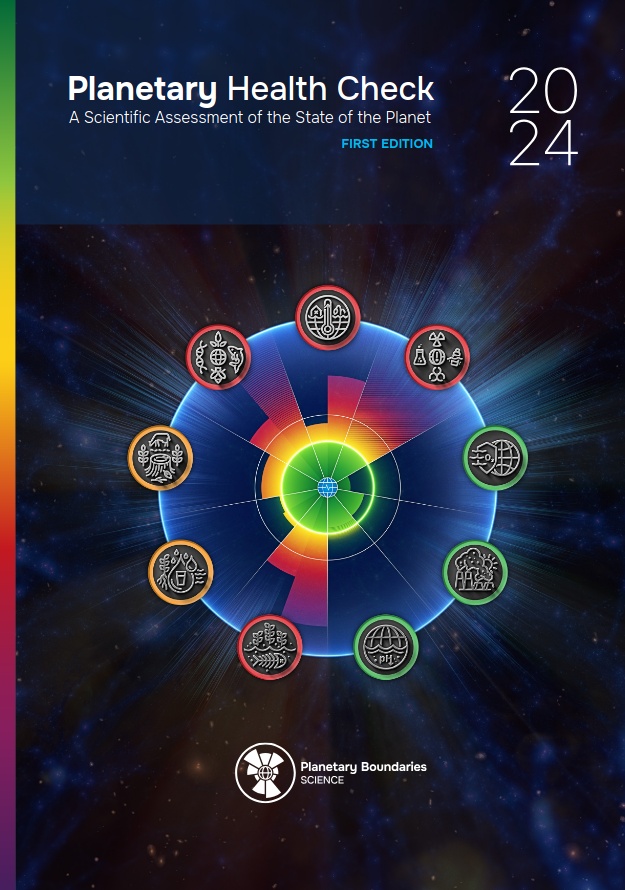
Planetary Health Check 2024

Earth exceeds safe limits: First Planetary Health Check issues red alert

The Planetary Boundaries Science supported by the Planetary Guardians and other partners, has launched the Planetary Health Check (), a first-of-its-kind scientific report and tool for the health of the Earth’s vital organs that serve as humanity’s life support system.

(PDF):
planetaryhealthcheck.org/story


Cover
Planetary Health Check 2024
TopClapsTopClaps
2024-09-07
Matteo Cesari :stethoscope:macesari@med-mastodon.com
2024-06-25

Great to be in Doha (#Qatar) to support capacity building of #health and #care workers on how to deliver person-centred integrated care for older persons (#ICOPE)

#WHO #Ageing #Geriatrics #Training #Medicine #PHC

Agenda of the 1st day of the ICOPE Training ProgrammeEntrance of the Qatar Rehabilitation Center (Doha), venue of the ICOPE Training Programme
Malaysia Public Transportmsiapublictransport
2023-12-12

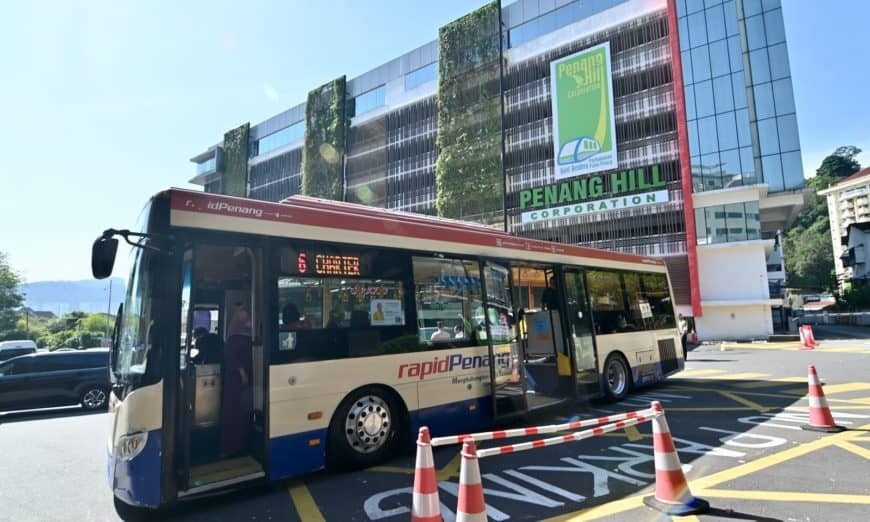
Penang Hill Corporation () and are again bringing back the service from to this month.

The complimentary service will be operational from 23 Dec this year to 1 Jan 2024, spanning 10 days.

It will run from 9am to 9pm, with eight daily in both directions, at intervals of 1 hour and 30 minutes.

Read more: buletinmutiara.com/penang-hill

rapidPenang bus in front of Penang Hill Corporation building. / Photo from linked article.
2023-12-12

RT @DigitalScholarX: #IA2030 #PHC framework provides practical actions for immunization

Matteo Cesari :stethoscope:macesari@med-mastodon.com
2023-09-05

Offline: Primary healthcare is not enough.

"...The “fundamental role” of primary healthcare is, once again, central to the 2023 vision for #UHC—90% of essential interventions for UHC can be delivered using a primary healthcare approach...”

#PrimaryHealth #PHC #Care #aging

thelancet.com/journals/lancet/

Jan :rust: :ferris:janriemer@floss.social
2023-05-23

PSA: Use PHC string format when storing people's passwords. ✅

github.com/P-H-C/phc-string-fo

#PHC #Password #Security #ITSec #PSA

2023-05-02

We will have plenty more to report on #HealthReform developments in coming days, but meantime here is an overview of the news out of recent #NationalCabinet meeting re #NDIS, #PHC, housing & planning policy croakey.org/where-is-the-natio
#AusPol
(includes links to relevant documents)

Ben Harris-Roxasben_hr@eigenmagic.net
2023-04-23
Ben Harris-Roxasben_hr@eigenmagic.net
2023-04-20

Client Info

Server: https://mastodon.social
Version: 2025.07
Repository: https://github.com/cyevgeniy/lmst