
#TEK #STEM #OregonStateUniversity #ExploreAndMore
https://www.klcc.org/human-interest/2026-03-10/whales-hydroponics-and-perfumes-a-siletz-student-showcase-of-math-science-and-more?fbclid=IwY2xjawQd2xVleHRuA2FlbQIxMQBzcnRjBmFwcF9pZBAyMjIwMzkxNzg4MjAwODkyAAEeVQKKSGHmALx8-W0B4cxJq7c3cwq8hjYou1Zvquuu9n7riqeeWvRPZ2QAgdw_aem_Ia2N-QPexN75zjJb5g1HRg
#tek


Olen asettunut ehdolle Tekniikan Akateemisten (TEK) vaaleihin.
Vaalipiiri: Tekniikan Akateemiset
Vaalialue: Eteläinen vaalialue
Vaalirengas: Osaaminen, kasvu ja reilu työelämä
Vaaliliitto: Kokoomus
Etunimi ja sukunimi: Mikko Luomala
Kotipaikka: ESPOO
Ehdokasnumero: 226
Minun ajatuksia vaaleihin ja vaalikonevastauksiani voi lukea sivustolta: https://www.suomenvaalikone.fi/


Only solution
Revolution
#tek power
https://youtu.be/4HeIOlhNWhM?si=VmHWnq-YKoKpRy-B
Catastrophy


How many runways can you see for Tatitlek airport (USA) ? : The answer is on https://www.bigorre.org/aero/meteo/paka/en #tatitlekairport #airport #tatitlek #usa #paka #tek #aviation #avgeek vl

🔥 Nouvelle vidéo tendance au Sénégal !
🎬 Le regard 👀 de Tek envers Ter Stegen #fyp #tek #barcelona #goalkeeper
👇 Regardez la vidéo complète :
https://diodioglow.com/video/le-regard-de-tek-envers-ter-stegen-fyp-tek-barcelona-goalkeeper
#Senegal #BuzzSN #TikTokSN #DiodioGlow #Can2025 #Marcom #Maroc

Uncovering #decolonial pedagogies for learning #agroecological transitions: comparative analysis of #SouthAmerica cases
Michelle Bonatti, et al, October 2025, published in Global Environmental Change.
Highlights:
• Decolonial pedagogies can facilitate agroecological transition processes.
• Pedagogical models facilitate agroecological transitions by integrating diverse epistemologies in agriculture practices.
• This study identifies three contextual learning narratives: Living, Resistance, and Hybrid Pedagogies.
• A main archetype has been discovered, known as the 'South pedagogies archetype'.
• The operational decolonial pedagogies framework shows how agroecological knowledge is created in the territory.
Conclusion:
"This study reflects on the strengths, nuances, and contextual factors shaping three distinct learning processes, offering insights into the effectiveness of diverse pedagogical approaches for agroecology that value the epistemologies of the South. The research recognizes that potential agroecological transitions face challenges from entrenched power structures and the historical #erasure of knowledge systems, calling for more than technical adjustments—rather a fundamental revaluing of diverse ways of knowing and being is essential. In this context, this research responds to the pressing need for a deeper understanding of pluriversal knowledge systems, epistemologies of the South, and learning approaches that have emerged organically within the Latin American context, where agroecological movements have deep and strong roots.
The growth of agroecology, also as an academic discipline, presents both opportunities and challenges. While it validates traditional agricultural practices within Western scientific frameworks, it risks perpetuating colonial knowledge hierarchies if not grounded in decolonial perspectives. Decolonial pedagogies are fundamental for accelerating agroecological transitions. As shown in this study, traditional communities in #Colombia and #Peru have preserved and evolved their #agroecology knowledge systems through generations of #CollectiveLearning, offering profound insights into #Sustainable #FoodProduction that transcend the limitations of Western scientific methodologies. In parallel, decolonial pedagogies in the Brazilian case were essential to promote agroecological transition that started recently in the last decades.
"The three contextual narratives that emerged from the South pedagogy archetype are intricate and interconnected, defying simplistic categorization. This study shows how the South pedagogy archetype serves as a model of resistance to poverty and social exclusion through agroecology. As research understanding deepens, there is a pressing need to explore Indigenous pedagogies to unveil additional valuable approaches to learning that lead to more inclusive educational models that resonate with diverse learners and address complex global challenges.
"By showcasing the rich knowledge systems and alternative learning structures present in these three cases, this research provides valuable insights for policymakers, educators, and practitioners. These findings can inform the co-creation of strategies that nurture agroecological systems and transitions, embrace the growing diversity of agroecology approaches, and navigate the complexities inherent in designing learning processes that value multiple ways of being."
Read more:
https://www.sciencedirect.com/science/article/pii/S0959378025000792#ab005
#SolarPunkSunday #Decolonize #Agroecology #Brasil #SouthAmerica #SustainableFoodProduction #SustainableAgriculture #TraditionalEcologicalKnowledge #TEK
"Scientists have looked to Australian natives for other insights into the natural world. A team of researchers collaborated with natives based on their observations of kites and falcons that fly with flaming branches from a forest fire to start other fires. It’s well known that birds will hunt mice and lizards as they flee the flames of a wildfire. But stories among indigenous people in northern #Australia held that some birds actually started fires by dropping a burning branch in unburned places. Based on this #TEK, researchers watched and documented this behavior."
Native Knowledge: What Ecologists Are Learning from Indigenous People
From Alaska to Australia, scientists are turning to the knowledge of traditional people for a deeper understanding of the natural world. What they are learning is helping them discover more about everything from melting Arctic ice, to protecting fish stocks, to controlling wildfires.
By Jim Robbins • April 26, 2018
Excerpt: "The #Skolt #Sami people of #Finland, for example, participated in a study that was published in the journal Science last year, which adopted indicators of #EnvironmentalChanges based on #TEK. The Sami have seen and documented a decline in salmon in the #NäätämöRiver, for instance. Now, based on their knowledge, they are adapting – reducing the number of seine nets they use to catch fish, restoring spawning sites, and also taking more pike, which prey on young salmon, as part of their catch. The project is part of a co-management process between the Sami and the government of Finland.
"The project has also gathered information from the Sami about insects, which are temperature dependent and provide an important indicator of a changing Arctic. The Sami have witnessed dramatic changes in the range of insects that are making their way north. The scarbaeid beetle, for example, was documented by Sami people as the invader arrived in the forests of Finland and Norway, far north of its customary range. It has also become part of the Sami oral history.
"It’s not only in the Arctic. Around the world there are efforts to make use of traditional wisdom to gain a better and deeper understanding of the planet – and there is sometimes a lot at stake."
Read more:
https://e360.yale.edu/features/native-knowledge-what-ecologists-are-learning-from-indigenous-people
#SolarPunkSunday #Science #TraditionalKnowledge #Biodiversity #ForestGardeners #Australia #IndigenousPeoples #IndigenousKnowledge #TraditionalEcologicalKnowledge #TEK
The Case for Returning U.S. #PublicLands to #IndigenousPeople
by Joe Whittle, Mar 6, 2025
"Since the start of Trump’s second term, his administration has fired thousands of federal workers across multiple public lands agencies, including the National Park Service, the Forest Service, the Bureau of Land Management, and the U.S. Fish and Wildlife Service. The effects of this are vast: It’s going to have a profoundly negative impact on the environment and the way millions of Americans enjoy public lands, cause immeasurable harm to America’s wildest places, and devastate the economies built around them.
"After serving 12 years as a backcountry wilderness ranger for the U.S. Forest Service, I'm convinced there is an alternative: the U.S. needs to return its public lands to Native Americans. In fact, I believe that might be the only way to save our parks and forests from corporate privatization and destruction, as well as preserve public access to them. If the U.S. won’t properly care for its public lands, why not return them to their original caretakers?
"This isn’t a new idea. #NativeAmericans argued that treaty law required
'abandoned' federal land to be returned to tribes during the occupation of #Alcatraz Island by the #AmericanIndianMovement in the 1960s. In more recent years, the #LandbackMovement has given rise to increased calls for the return of territorial land to #IndigenousNations, and the return of land management based in #TraditionalEcologicalKnowledge—expertise gathered from thousands of years of having deep relationships with specific environments. There’s a strong legal argument that land return is constitutionally required as damages due for hundreds of treaty violations. However, there’s also a lot of data showing Indigenous land management is more ecologically sound than government or industrially managed land. For instance, #ProjectDrawdown, a global leader in science-based #ClimateChange solutions, estimates that returning 1,000 million hectares of land to Indigenous tenureship by 2050 would sequester over 12 gigatons of carbon dioxide."
Read more:
https://time.com/7262838/us-public-lands-return-indigenous-people/
Archived version:
https://archive.ph/QnF32
#LandBack #AIM #StolenLand #StolenLands #NationalParks #TEK #ClimateCrisis #ClimateSolutions #IndigenousPeoples #IndigenousPeoplesMonth #GiveItBack #Stewardship #LandIsLife #WaterIsLife #AlcatrazIsland #Resistance #USPol #TrumpSucks #RespectTheTreaties
The Enduring Harvest: Reshaping Food Systems on Turtle Island
Posted on November 13, 2025
"On Turtle Island, the land now largely known as North America, traditional food harvesting is far more than a means of sustenance; it is the very bedrock of cultural identity, spiritual connection, and sovereign resilience for Indigenous peoples. For millennia, before the arrival of European colonizers, communities across this vast continent thrived on intricate systems of hunting, fishing, gathering, and agriculture, guided by a profound understanding of the land and its cycles. This #TraditionalEcologicalKnowledge (#TEK), passed down through countless generations, represents a sophisticated science of sustainability, reciprocity, and interconnectedness that continues to shape modern efforts to reclaim and revitalize Indigenous foodways.
"The concept of Turtle Island itself is rooted in creation stories shared by many Indigenous nations, where a giant turtle forms the foundation of the world. This narrative underscores an inherent and sacred relationship between people and the land—a relationship that mandates stewardship rather than domination. Traditional harvesting practices are not merely about taking from the land, but about participating in a continuous cycle of giving and receiving, ensuring the health of both the ecosystem and the community.
A Tapestry of Traditional Foods
"Across Turtle Island, the diversity of traditional food systems reflects the continent’s varied ecosystems. In the Pacific Northwest, the #salmon run is not just a seasonal event but the pulse of life itself. Nations like the #NezPerce, #Kwakwakawakw, and #Haida have relied on salmon for thousands of years, developing complex fishing techniques, preservation methods, and ceremonies that honor the fish as a sacred relative.
" 'Salmon is our first food, our medicine, our economy, and our culture,' states a representative from the Columbia River Inter-Tribal Fish Commission. However, the construction of #dams, #logging, and #IndustrialPollution have severely impacted salmon populations, disrupting a lifeline for these communities. Despite these challenges, nations are actively working on habitat restoration, dam removal advocacy, and culturally informed fisheries management to bring the salmon home.
"On the vast plains, the #bison (or buffalo) was once the lifeblood of nations such as the #Lakota, #Cheyenne, and #Blackfeet. Millions roamed freely, providing not only food but also shelter, tools, and spiritual guidance. Every part of the animal was utilized, embodying a profound respect for its sacrifice.
"European #colonization, driven by a deliberate policy to destroy Indigenous economies and cultures, led to the near extinction of the bison, reducing their numbers from an estimated 30-60 million to a mere few hundred by the late 19th century. Today, through initiatives like the InterTribal Buffalo Council, Indigenous nations are reintroducing bison to tribal lands, a powerful act of cultural and ecological restoration. 'Bringing the buffalo back is bringing our people back,' remarks Ervin Carlson, former president of the InterTribal Buffalo Council. "It’s healing, it’s hope, it’s sovereignty."
Read more (archived version):
https://archive.ph/BLZiA
#SolarPunkSunday #TraditionalFoods #TribalFoodSovereignty #NativeAmericanMonth
#NativeAmericanHeritageMonth
#NativeAmericanFoodSovereignty #DecolonizeYourDiet #AnimalProducts #BuffaloHarvest
#NativeAmerican Tribal #ClimateAdaptation: #Indigenous Solutions to Environmental Change
Posted on September 24, 2025
#IndigenousResilience: Native American Tribes Pioneer Climate Adaptation with Ancestral Wisdom
"In the global discourse on climate change, the voices and experiences of Indigenous peoples often remain on the periphery, despite their disproportionate vulnerability and their profound, millennia-old understanding of environmental stewardship. Native American tribes across the United States are not merely passive victims of a warming planet; they are at the forefront of climate adaptation, leveraging #TraditionalEcologicalKnowledge (#TEK) to devise innovative and culturally resonant solutions to environmental change. Their strategies offer a compelling blueprint for resilience, emphasizing holistic relationships with the land, water, and all living beings.
Indigenous communities, though comprising less than 5% of the world’s population, protect an estimated 80% of global #biodiversity. This staggering statistic underscores their intimate connection to and unparalleled knowledge of the #NaturalWorld.
"However, this deep reliance on specific ecosystems also makes them acutely susceptible to climate impacts. Rising sea levels threaten coastal tribes, increased wildfires devastate forest-dwelling nations, prolonged droughts imperil agricultural practices in the Southwest, and melting permafrost destabilizes infrastructure in Alaska. For these communities, #ClimateChange is not a distant threat but an immediate, existential crisis eroding their lands, cultures, and ways of life.
"The historical context of colonization, forced displacement, and resource exploitation has exacerbated these vulnerabilities. Stripped of ancestral lands, denied self-governance, and subjected to policies that disrupted traditional land management practices, many tribes now face climate challenges with limited resources and fractured ecosystems. Yet, it is within this crucible of adversity that their resilience shines brightest."
Archived version:
https://archive.ph/0rByG
#SolarPunkSunday #FoodSovereignty #LandManagement #Landback #Droughts #SeaLevelRise #ClimateChallenges #Adaptation #WaterScarcity #IndigenousKnowledge #AncientPractices #ModernTechnology #IndigenousPeoplesMonth


idk this is a little or a lot but this is how the view and input definitions for #tek v0.3.0 are starting to look, yeah that's right the #tui #daw in #rust i've been cracking at for over a #year now lol


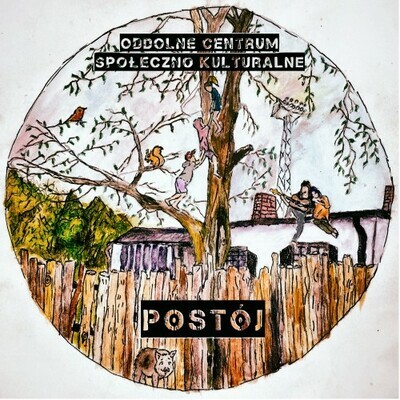
SoberTEK v2 już w tą sobotę! 09.08.2025
Ostatnim razem udało się tak świetnie, że ciężko było się nie zakochać, a że o miłość trzeba dbać, to odwiedzamy znowu!
Katowice, dziki teren po kopalniany, 10 artystów, świetny soundsystem, roślinne żarełko, domowa Yerba.
Jednym słowem - marzenie!
Do zobaczenia!
Profile SoberTek są do znalezienia na facebooku i instagramie.
I've done this. And yeah, it's not for the faint of heart!
via @thenarwhal
Finding myself in blood, flesh, veins and bug bites — life at a hide camp for #TwoSpirit #IndigenousYouth
By Kierstin Williams
Kierstin reported and photographed this story at Niizh Manidook Hide Camp over six days in May 2024
June 27, 2025
"It’s my first time tanning my own deer hide. At #NiizhManidook Hide Camp, I’ve learned to slow down, listen and be in relation while immersed in brains and skin..."
https://thenarwhal.ca/two-spirit-indigenous-hide-camp/
#TwoSpirits #BrainTanning #IndigenousTraditions #TEK #BeingInNature #NatureImmersion #Nature #GBLTQ #IndigenousPeoplesDay #AnimalProducts

Niesenberger pres. Raveyard
Postgarage 2nd Floor, Freitag, 11. Juli um 23:00 MESZ
Niesenberger pres. Raveyard
Techno, Acid, Tek
23:00
tba.
Line up:
PHAT OTIZ
OPTIX TRIBE DJ SQUAD
DJ BANANNA
HAZE
Info
tba.

Client Info
Server: https://mastodon.social
Version: 2025.07
Repository: https://github.com/cyevgeniy/lmst