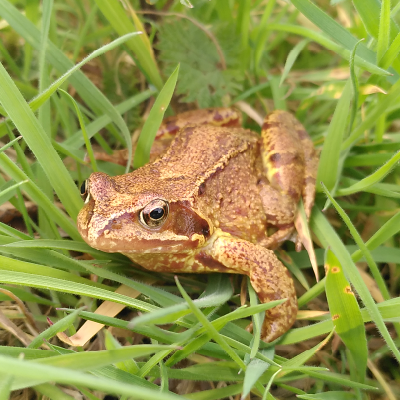
Dipped into the bird site for work for 5 mins and wow boiling frogs

Ellinor Alseth
#Evolution, #ecology and #microbiology. I happen to like fjords, I think they give a lovely baroque feel to a continent. CMDI Research Fellow. She/her
Position
CMDI Early Career Award Fellow
Location
Georgia Tech, Atlanta, USA
Ellinor Alseth boosted:

I *should* be writing my dissertation...
Instead I just released gcplyr v1.3.0 on github
gcplyr is an #RStats package that makes it easy to wrangle and do model-free analyses of #microbial growth curve data
v1.3.0 includes:
- new methods to calculate lag time and doubling time
- improved warnings for common situations
- improved documentation
https://mikeblazanin.github.io/gcplyr/
#microbiology #MicrobialEcology #MicrobialEvolution #ggplot2 #tidyverse #dplyr #data

Ellinor Alseth boosted:

#Bacteriophages playing nice: Lysogenic bacteriophage replication stable in the human gut #microbiota: iScience
Ellinor Alseth boosted:
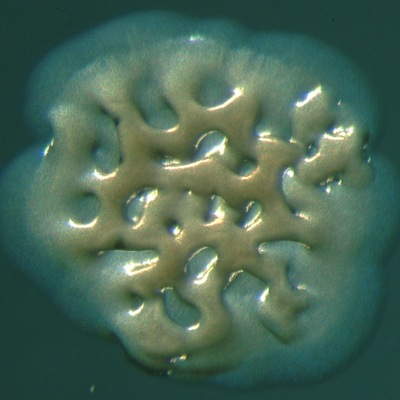
Exciting new paper in @PLOSBiology — we show that plasmids use translational global regulators to rewire host cells including expression of key ecological traits, like metabolism and motility, whilst also boosting horizontal transmission of the plasmid
This was a big collaborative effort with colleagues at John Innes Centre, Birmingham, Sheffield & Liverpool
#plasmid #HGT #MobileGeneticElements
https://journals.plos.org/plosbiology/article?id=10.1371/journal.pbio.3001988
Happy to say I'll be at the Weizmann Institute symposium on the Immune System of Bacteria, with a poster on some of my very first bits of data from my current fellowship! "Exploring the evolution of phage resistance in A. baumannii" in all it's shiny and confusing wonder ✨
Ellinor Alseth boosted:
The coordination of #anti-phage #immunity mechanisms in #bacterial cells |
#phage
Ellinor Alseth boosted:

🎬 🧫🦠 This amazing time-lapse video shows bacteria-phage coevolution occurring on agar plates over ~6d. Mesmerising visuals, enhanced even more when you read the paper for a glimpse at the underlying evolutionary genetics 😍 #microbiology #journalclub #microbialevolution #phage https://www.nature.com/articles/s41467-022-35351-w
Ellinor Alseth boosted:
Super interesting paper that analayzes one of the #LTEE populations that evolved stably coexisting #ecotypes from Joao Ascensao, Kelly Wetmore, Ben Good, Adam Arkin & Oskar Hallatschek. https://www.nature.com/articles/s41467-022-35677-5
#Microbiology #Evolution #ExperimentalEvolution #EcoEvo #popgen #PopulationDynamics #Genomics
Ellinor Alseth boosted:
What Lies Beneath? Taking the Plunge into the Murky Waters of Phage Biology
@mSystemsJ MiniReview by @MirjamZuend et al from @KatrineWhiteson
What the world of molecular biology feels like to an ecology and evolution person 🦠
Ellinor Alseth boosted:

Happy to see this collaborative work with Jenny Wachter, Margie Kinnersley, Patti Rosa, & team in print @NatureComms!
Coupled induction of prophage and virulence factors during tick transmission of the Lyme disease spirochete
Borrelia phages are so cool!
Ellinor Alseth boosted:
Adaptive laboratory evolution of #antimicrobial resistance in bacteria for #genetic and #phenotypic analyses - #amr
https://www.sciencedirect.com/science/article/pii/S2666166722008851
Ellinor Alseth boosted:

I love microbial ecology its so cool yall
Ellinor Alseth boosted:
Response to reviewer:
Didn't I do it for you?
Ellinor Alseth boosted:
#Microbial population dynamics decouple growth response from environmental nutrient concentration | PNAS
#microbiology
Ellinor Alseth boosted:

Couple of Microbial Genomics editors picks this week
A fascinating study showing no genomic differences between an obligate endosymbiont and its cultivable twin. Shows that small non-genomic factors determine endosymbiosis initiation
https://microbiologyresearch.org/content/journal/mgen/10.1099/mgen.0.000909?emailalert=true
Ellinor Alseth boosted:

A few years ago we showed that restriction-modification systems shape gene flow within species. Now we show how plasmids cope with these systems to spread across bacterial populations. Small plasmids avoid restriction sites, large plasmids recruit counter-defenses (methylases). And the plasmids most avoiding restriction sites have the broadest host ranges. Great collaboration in a project led by Liam Shaw and Craig MacLean. https://www.biorxiv.org/content/10.1101/2022.12.15.520556v1
Ellinor Alseth boosted:

In a new #preprint we report that recently discovered anti-phages systems (Mokosh, Eleos, Lamassu…) have eukaryotic homologs.
We harnessed this conservation to discover novel defense mechanisms in humans.
Client Info
Server: https://mastodon.social
Version: 2025.07
Repository: https://github.com/cyevgeniy/lmst