Edward Smith Deevey Jr. (3 December 1914 – 29 November 1988), born in #AlbanyNewYork, was a prominent American #ecologist and #paleolimnologist, and an early protégé of #GEvelynHutchinson at #YaleUniversity. He was a creative pioneer in several areas, including quantitative #palynology, cycling of natural #isotopes, #biogeochemistry, #populationDynamics, #systematics and #ecology of freshwater #zooplankton, and he promoted the use of life tables in ecology. In 1938.
#PopulationDynamics


🧠 New paper by Ishida et al who show how #neurons in the #Drosophila central complex implement vector inversion via #calcium spikes.
A single #NeuronalPopulation can flip the sign of its encoded vector by switching biophysical #spiking modes, enabling coordinate transformations through #PopulationDynamics rather than circuit switching.
Cool as it shows that computation is not imposed by the circuit, but emerges from the neuron’s own dynamics.


RE: https://mastodon.social/@sflorg/115729303412817454
This is an interesting article (linked below) about #biodiversity and #populationdynamics of #microscopic #seafloorfauna elements, and their presumed modes of #dispersal and ability to adapt to far away #ecologically different conditions. It focuses on the nematode genus #Halalaimus.
I want to point out that even terrestrial nematodes are masters of interesting #dispersalstrategies, evolved based on their small sizes and limited distance #mobility.
This text by #StefanFWirth, Berlin, 2025

I wrote a blog post about a lecture introducing stability in ODE models and their numerical solution. The lecture transcript and code for figures are included.
https://nadiah.org/2025/12/04/mxb261
#mathematicalEcology #ODEs #stability #mathematics #lectureNotes #populationDynamics

There's a great talk by Juan Gallego on how low-dimensional #NeuralManifolds arise from biological constraints, remain invariant across states and inputs, and support cross-animal alignment. Examples span #HeadDirection rings, #gridcell tori, #MotorCortex prep vs movement, striatal timing dynamics, and C. elegans #behavior loops. Cool talk as it shows how #manifold-level structure can generalize across tasks and organisms.


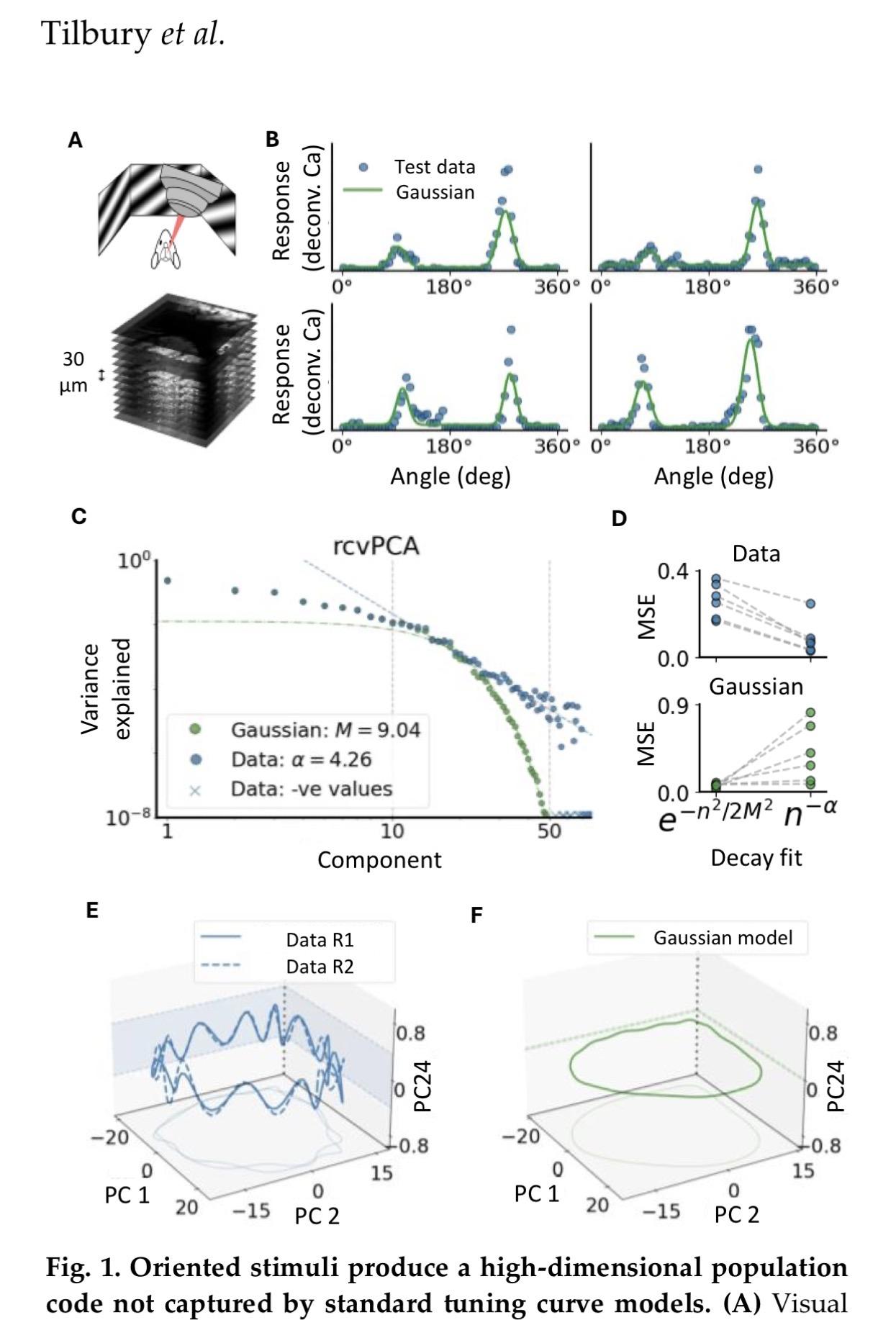
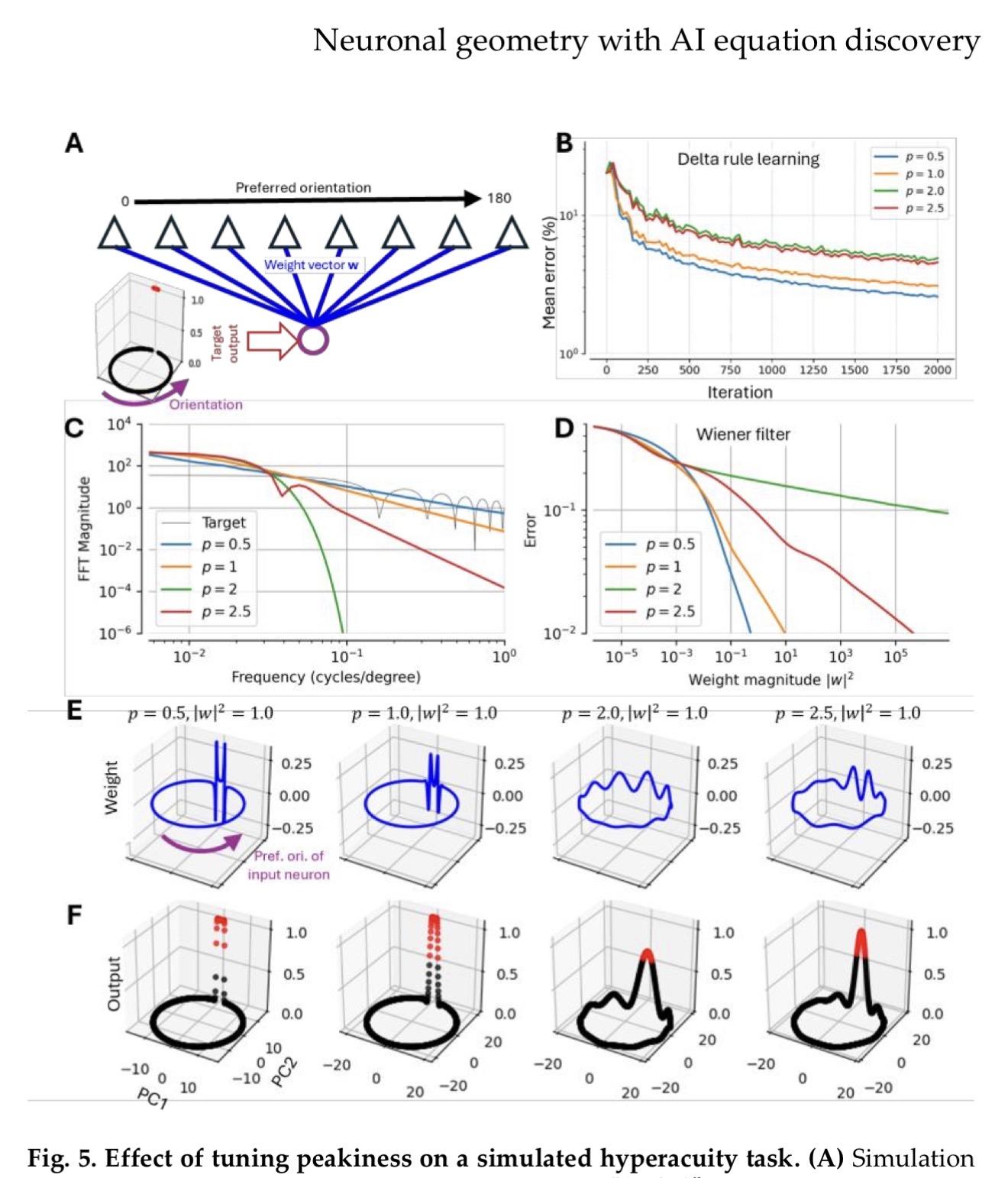
🧠 New preprint by Tilbury et al: Characterizing #NeuronalPopulation geometry with #AI equation discovery
The approach generates & evaluates 100s of candidate equations, finding "peaky" non-Gaussian tuning functions whose Fourier structure matches power-law dimensionality observed in real #V1 pops. Links shape of single-#neuron tuning to #PopulationLevel geometry using both data fits & analytical derivations.
🧠 New paper by Safaai et al. (2025): parietal #cortex output populations show highly structured, task-dependent population geometry. Using multi-area recordings and circuit modeling, they show that #parietal populations display organized task-related patterns rather than uniform mixed coding, and that distinct output groups shape how decisions are routed to downstream targets:
🌍 https://doi.org/10.1038/s41593-025-02095-x
#Neuroscience #NeuralCoding #ParietalCortex #PopulationDynamics #DecisionMaking

🧠 New paper by Wimalasena, Pandarinath, AuYong et al: #spinal #interneuron populations form a low-dimensional #manifold that robustly organizes step cycles.
Distinct regions of the manifold mark flexion–extension transitions, and a specific “hold region” tightly controls cycle duration. Deletions emerge as failures to enter the flexor region, giving a dynamical signature of disrupted CPG function.
🌍 https://doi.org/10.1038/s41467-025-64629-y
#Neuroscience #Locomotion #SpinalCord #PopulationDynamics #CompNeuro

🧠 New #preprint by Komi et al. (2025): Neural #manifolds that orchestrate walking and stopping. Using #Neuropixels recordings from the lumbar spinal cord of freely walking rats, they show that #locomotion arises from rotational #PopulationDynamics within a low-dimensional limit-cycle #manifold. When walking stops, the dynamics collapse into a postural manifold of stable fixed points, each encoding a distinct pose.

🧠 New preprint by Kim et al. (2025) from David Anderson’s lab: A line #attractor maintains aggressiveness during feeding in “hangry” mice 🍔🐁. Using in vivo #CalciumImaging and #rSLDS modeling, they show how moderate fasting stabilizes an aggression-related attractor in #VMHvl, while prolonged fasting collapses it, linking hunger, motivation, and aggression through #PopulationDynamics:
🌍 https://doi.org/10.1101/2025.10.16.682711
#Neuroscience #CompNeuro #Behavior #AttractorDynamics #Hypothalamus #2p #imaging


Today, we had a great #iBehave lecture by Yaniv Ziv at the #DZNE. He presented his work on #RepresentationalDrift in the #hippocampus and entorhinal #cortex, studying #PopulationDynamics of freely moving mice 💪 Great insights into how neuronal codes evolve across time!


Competition & #bacterial #PopulationDynamics. @krishnaaswin77 &co show that within-host competition in #Streptococcus increases clearance & reduces establishment; #AntibioticResistance increases susceptibility to competition @PLOSBiology https://plos.io/4lqcZba

@juangallego just published a review on how #NeuralManifolds go beyond being a convenient data representation – they reflect fundamental constraints on #NeuralPopulation activity. Originating in mammalian BCI work (2014), these low-dimensional trajectories shape what neural patterns are learnable and expressible.
🌍 https://www.nature.com/articles/s41583-025-00919-0.epdf
#CompNeuro #SystemsNeuroscience #PopulationDynamics #Neuroscience


Why Is Fertility So Low in High Income Countries? (NBER)
https://www.nber.org/papers/w33989
#HackerNews #FertilityTrends #LowFertility #HighIncomeCountries #NBER #ResearchInsights #PopulationDynamics

New publication: Continent-Wide Drivers of Spatial Synchrony in Breeding Demographic Structure Across Wild Great Tit Populations. #parusmajor #demography #mastseeding #agestructure #populationdynamics
https://doi.org/10.1111/ele.70079


The second paper of January 2025 in Computo, by Daphné Giorgi, Sarah Kaakai and Vincent Lemaire, introduces the R package IBMPopSim, which facilitates the simulation of the random evolution of heterogeneous populations using stochastic Individual-Based Models (IBMs).
The package relies on a unified mathematical framework, based on thinning of Poisson measures, for the simulation of IBMs where individuals are represented by their birth date, death date (+∞ if none), and a collection of features. It uses Rcpp for efficiency.
The paper introduces this mathematical framework, gives a detailed overview of the IBMPopSim package, and illustrates it on two use cases, one from actuarial sciences and the other from population genetics.
On this last example, the authors show that their randomized algorithm is one or two orders of magnitudes faster than the full algorithm.
The paper is available with (of course) R code at: https://doi.org/10.57750/sfxn-1t05
#populationDynamics #openScience #openAccess #openSource #Rstats

Now available ahead of print! "Shifting Precipitation Regimes Influence Optimal Germination Strategies and Population Dynamics in Bet-Hedging Desert Annuals" by Cuello et al. https://www.journals.uchicago.edu/doi/10.1086/733105
#precipitation #germination #population #desert #populationDynamics

Today's @mathonco seminar by Simon Syga who described two different #MathOnco projects in collaboration with Andreas Deutsch. #ABM to study #populationdynamics in #cancer and the role of motility


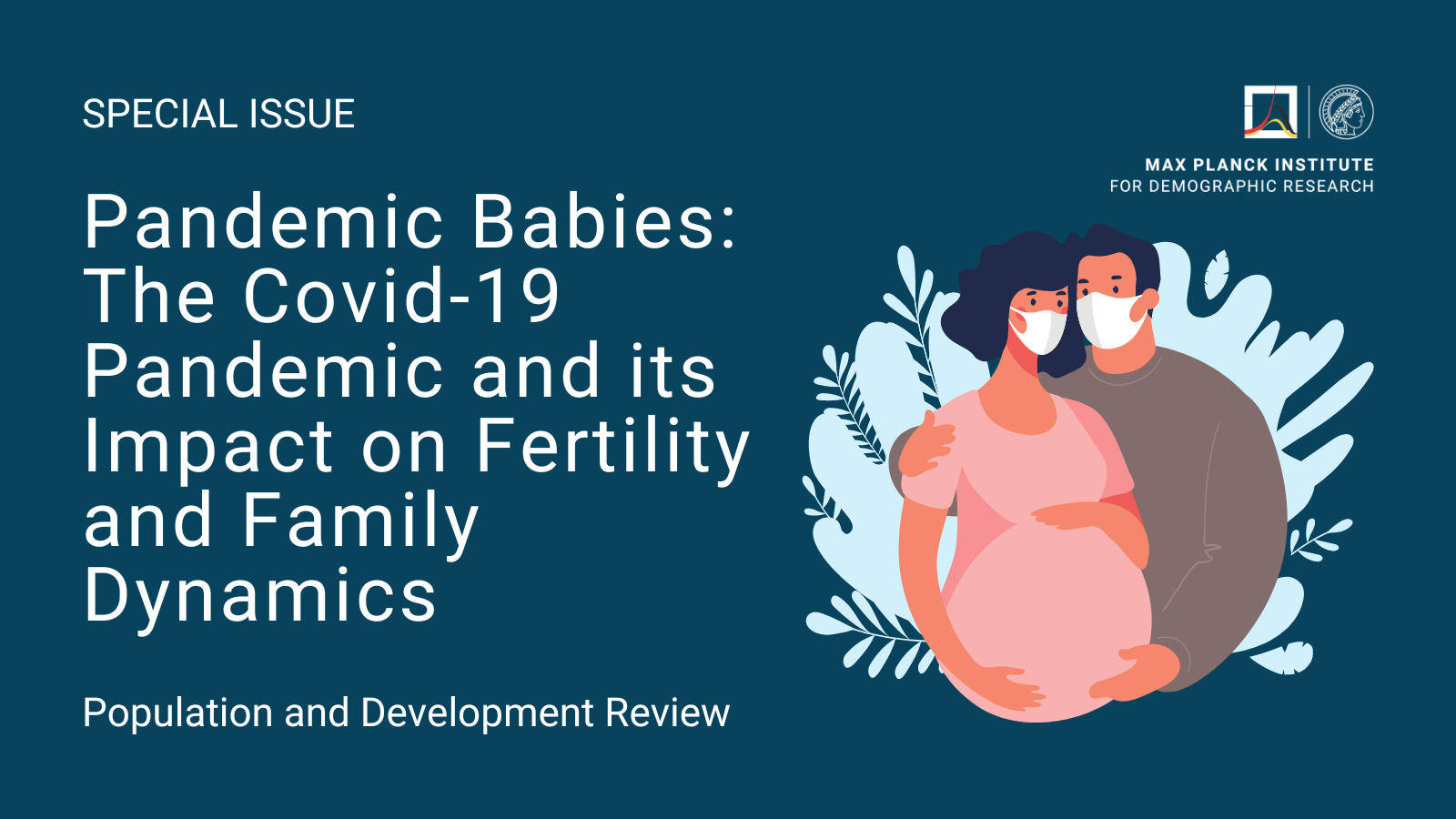
📢In 2021, @MPIDR hosted a global conference on "Pandemic Babies? The Covid-19 pandemic and its impact on fertility and family dynamics." Recently, the special issue of Population and Development Review, based on this conference, has been published!
Explore the open-access papers on how the pandemic shaped fertility, partnerships, and family dynamics, co-funded by MPIDR and the Population Council.
#PopulationDynamics #OpenAccess #Fertility #Covid19 #Demography #Family
This #tutorial explores the oscillatory #PopulationDynamics of generalized #IntegrateAndFire (GIF) neurons simulated with #NESTSimulator. The GIF #NeuronModel is a biophysically detailed model that captures the essential features of spiking neurons, including #SpikeFrequencyAdaptation and #DynamicThreshold behavior:
🌍 https://www.fabriziomusacchio.com/blog/2024-07-14-oscillating_gif_neuron_population/

Client Info
Server: https://mastodon.social
Version: 2025.07
Repository: https://github.com/cyevgeniy/lmst