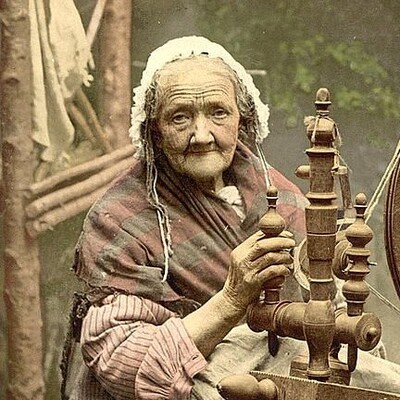
Newquay, Towan Head, Cornwall, England between ca. 1890 and ca. 1900. Views of the British Isles England Cornwall (County)
#Newquay #TowanHead #Cornwall #England #Newquay-TowanHead #TowanBeach #Cornish #photography #historicalPhotos #photochrom
Newquay, Towan Head, Cornwall, England between ca. 1890 and ca. 1900. Views of the British Isles England Cornwall (County)
#Newquay #TowanHead #Cornwall #England #Newquay-TowanHead #TowanBeach #Cornish #photography #historicalPhotos #photochrom

St. Ives, Porthminster Bay, Cornwall, England between ca. 1890 and ca. 1900. Views of the British Isles England Cornwall (County)
#StIves #PorthminsterBay #Cornwall #England #StIves #Cornish #photography #historicalPhotos #photochrom
![The image displays a scenic view overlooking St Ives, Porthminster Bay in Cornwall. The viewpoint is elevated from above the village and includes prominent features such as buildings with steeply pitched roofs typical of Cornish architecture, visible through lush greenery on the hillside leading down to the coast.
In the foreground, there's an assortment of structures including what appears to be a brewery or industrial building with distinct red brick chimney stacks. Beyond this area lies Porthminster Bay itself, showing golden sands and calm waters where sailboats dot the horizon. The bay is backed by rolling dunes which fade into misty outlines on either side.
The middle ground features railway tracks curving along the coast line, indicative of a historical method for transporting goods or passengers to coastal areas before modern roads were established.
In the background are more residential buildings and an expansive view across St Ives town towards the coastline where a headland juts out into the sea with what might be remnants of old fortifications.
The overall palette is dominated by earthy tones, greens from vegetation, blues in the sky and water, contrasting against the earthen reds of brickwork. This image captures an idyllic yet historic moment likely around late 19th or early 20th century judging by its style which aligns with period postcards known for [...]](https://files.mastodon.social/cache/media_attachments/files/115/728/532/433/794/323/original/8b6a8f01253a95f5.jpeg)
Penzance, Logan Rock, Cornwall, England between ca. 1890 and ca. 1900. Views of the British Isles England Cornwall (County)
#Penzance,LoganRock #Cornwall #England #PenzanceLoganRock #British #Loener #PhotochromPrints #Cornish #photography #historicalPhotos #photochrom

Falmouth, Cornwall, England between ca. 1890 and ca. 1900. Views of the British Isles England Cornwall (County)
#Falmouth #Cornwall #England #Falmouth-Cornwall #Cornish #photography #historicalPhotos #photochrom
![The image depicts a panoramic view over Falmouth, located in Cornwall, England. The vantage point is elevated, providing an expansive look down upon the town and its surrounding landscape. Below, there's a large green field with what appears to be grazing livestock or horses. Urban structures are clustered along both sides of a river that meanders through the scene. On one side, we see rows of buildings indicative of residential areas, while on the other, industrial establishments stand out due to their size and architectural style.
In the waterway below, numerous boats dot its expanse—sailboats with white sails predominating—and ships moored at various docks along both sides indicate a bustling harbor. The sky is clear but tinged slightly yellowish-green, suggesting either early morning or late afternoon light conditions. In the distance beyond the town's immediate skyline, rolling hills create a picturesque backdrop to this coastal scene.
The image has an aged quality, with sepia tones and wear indicative of its historical nature, likely dating back around 1890-1900 based on the style and condition visible in Falmouth. This particular photo was identified as 'Falmouth - Cornwall' by a code at the bottom left corner (10759), which aids with cataloging or research purposes.
The overall atmosphere conveyed is one of tranquility, capturing a moment frozen in time where h [...]](https://files.mastodon.social/cache/media_attachments/files/115/713/397/681/764/728/original/f2101bcd7336a9e5.jpeg)
Bude, the coast looking N.E., Cornwall, England between ca. 1890 and ca. 1900. Views of the British Isles England Cornwall (County)
#Cornwall #England #Cornish #photography #historicalPhotos #photochrom

Folklore read live!
What is snow if not the pluckings of a giant goose?
Find out LIVE right NOW: https://youtube.com/live/8MLzKmUleXI
#FairyTaleTuesday #WritingCommunity #storyteller #FairyTale #AmReading #reading #indieWriter #fairy #folklore #folk #tales #stories #GrimmBrothers #dnd #dnd5e #pathfinder #pf2e #ttrpg #fantasy #lotr #cornish #cornwall #celtic #folklore #legend #christmas #xmas #holidays #pixies #cake

#1123 P. Berresford Ellis - The Story of the Cornish Language. Tor Mark Press, Truro, c.1970, 1st Tor Mark Press edition.
#PeterBerresfordEllis #TorMarkPress #Kernewek #Cornish #Cornwall #Language #BookOfTheDay

Look at what just arrived in the post: The latest issue of the North American Journal of Celtic Studies, with important articles on Cornish phonology, early Breton recordings, and a lost version of the 'Acallam'.
For more information about the journal, visit https://ohiostatepress.org/NAJCS.html
#CelticStudies #cornish #kernewek #breton #brezhoneg #Acallam #FinnCycle

#languages #cornish #politics #uk #news
Cornish language to get same protected status as Welsh, Irish and Scottish Gaelic
Kernewek submitted by government for part III status under European charter for regional or minority languages
The final part of our interview series in which Sordya sat down with academic and Cornish activist Bernard Deacon to talk about his involvement in Kernow's organising, this time about intersectionality and the #Cornish language. #Cornwall

A Conversation with Bernard Deacon: Intersectionality and Cornish – Keskows gans Bernard Deacon: Kestreghelder ha Kernewek
Several months ago, two folk from Sordya sat down with academic and Cornish activist Bernard Deacon. If you’re not familiar with the series so far, check out our chat on the Cornish leftist magazine An Weryn, our discussion on housing and on direct action.
Our next and final part of the interview is on intersectionality, strategy and the Cornish language.
Nans yw misyow, dew dhen a Sordya a gewsis gans akademek ha gweythreser a Gernow Bernard Deacon. Mar nyns aswonydh an kevres bys y’n eur ma, mir orth agan keskows a lyver termyn a Gernow An Weryn, agan dadhel annedhyans ha war gwrians didro.
Agan rann nessa ha finek a’n keswel yw a-dro dhe gestreghelder, strateji ha Kernewek.
Several months ago, two folk from Sordya sat down with academic and Cornish activist Bernard Deacon. If you’re not familiar with the series so far, check out our chat on the Cornish leftist magazine An Weryn, our discussion on housing and on direct action.
Our next and final part of the interview is on intersectionality, strategy and the Cornish language. We thank Bernard for his time and his help with this series.
A transcription of the audio follows below.
Nans yw misyow, dew dhen a Sordya a gewsis gans akademek ha gweythreser a Gernow Bernard Deacon. Mar nyns aswonydh an kevres bys y’n eur ma, mir orth agan keskows a lyver termyn a Gernow An Weryn, agan dadhel annedhyans ha war gwrians didro.
Agan rann nessa ha finek a’n keswel yw a-dro dhe gestreghelder, strateji ha Kernewek. Ni a wor gras dhe Bernard a’y dermyn ha gweres gans an kevres ma.
Yma treylyans a’n son kevys war-woles.
Sordya Dew: Something the newer parts of the movement really pride themselves on now is their intersectionality. So, as well as being Cornish autonomists and nationalists, that people are also active with environmentalism, anti-racism, anti-fascism, international solidarity with anti-colonialist projects. You know, has that always been the case? Has there always been this sort of emphasis on intersectionality or was it more focused primarily on Cornwall and Celtic solidarity? And were people part of other spheres as well politically or was it insular back in the day?
Bernard: I don’t think it was insular. I mean, we had those same views. We didn’t even know the term intersectionality in those days. But we were aware of other struggles. And, you know, I mean, I remember talking to… Actually, it was a long time after that was when I was working for the university. I got visited by a Maori activist, you know, but he was involved, he was over here and obviously his information was a bit out of date by then, but he contacted me and we had an interesting chat. So we were doing what you’d now call the same thing, basically. And we were involved, certainly in Cornwall, we were involved in other stuff, you know, environmental campaigns. Well, like the one against the power station. So it wasn’t just what you might call nationalist, devolutionist or anti-housing stuff. It was wider than that. But I think there was less internationalism, if you like, then than now, generally.
Sordya Onan: I feel like where we are at now is there’s a lot of intersectionality. And there’s a lot of us showing up to different movements. And we actually perhaps need a stronger articulation of the Cornish movement. Like we’re doing Palestine stuff and trans rights stuff and anti-fascism and environmentalism, but we’re doing it here. So what does all of that mean here?
Sordya Dew: I’d agree with that.We’ve got to the point where people in Cornwall who are part of other activist scenes will know that the Cornish nationalists will turn up and support them, but maybe don’t have such a good understanding of what it is that we’re actually about. I mean, there’s a lot of overlap, a lot of us who are Cornish nationalists are also doing other things as well.
Bernard: The danger is, in a sense, of going along to every and all activism is you might just become, or just become seen, as flying the flag, which has happened for years. Look at pictures of demonstrations in the ‘70s and someone is flying a Cornish flag, but in a sense it doesn’t mean very much because it’s not going to help people understand the particular Cornish struggle. I mean, what you said is exactly right. You do need to keep what you’re about to the forefront so that they understand.
That’s a hell of a job, though, especially when people have come from outside Cornwall who’ve got no knowledge or interest in Cornish history, heritage, or the very fact that there is and was a Cornish people. And that’s a fundamental fact that they’ve got to understand.
Now, they’ll see that as being reactionary and right-wing, probably. In their worldview, that is. You know, they’re as bad as the 19th century left imperialists were and they share those views.
I remember a meeting that I organised in Redruth with people who I regarded from the English left, as we called them in those days: SWP and the various others, you know. I brought them together with the leftists within MK, and outside MK by that time. We had this meeting and it ended up, I walked out at the end because of their complete reluctance to understand or admit there was a Cornish struggle. They would not admit it. It’s all part of a bigger struggle. That’s their argument, you know, ad infinitum. “Yes, no, no, no, it’s the working class. There is no Cornish dimension to it.”
So, what’s the answer to that? You know, you’ve got a housing problem in Cornwall, you wait until someone in London solves it for you. And you’d probably still get that now.
We didn’t make it very well, that’s the problem. We couldn’t get through to those kind of people. Now, maybe it’s impossible to get through to those kind of people, but there must be others out there that you could get through to.
Sordya Onan: I think that’s why I’m interested in why the language appeals in places we’ve been part of with people that I wouldn’t expect. Like, people want to play with the Cornish language and put it on things and stickers and it’s like, “OK, there’s something here they’re interested in” and whether that feeds into…
Bernard: Well, maybe. I mean, that seems to me to have come full circle. Back in the ‘70s, we all—not all of us, but a lot of us—were very involved in Cornish language. I was saying earlier, we used to have immersion sessions and I learnt it that way. That was a central part.
If you ask me why, I’d be a bit pushed to explain why then I was doing it. It was more I was doing it because I wanted a symbolic… But it was more than that. It wasn’t just symbols in those days.
We had at one stage a plan to buy up some old cottages out on Lord Falmouth’s land, I think it was, going really cheap to set up a Cornish speaking community. We were that involved with it, you know, and there was a couple of families and other individuals and we almost did it. Then at another time, we had a plan to buy a couple of cottages that needed doing up down in Pendeen. We were going to do it down there.
But both of those didn’t come to anything and they were a bit kind of hippie-ish, you know, get away from everything, and probably would have failed dismally. But we were at that time fluent enough. We used to talk in Cornish all the time. We didn’t talk in English and the language then we regarded as something you learned to speak. So we were speaking it at every opportunity and we would deliberately speak it.
For example, I really annoyed people at the 1978 Gorsedh by refusing to speak English at the Gorsedh. I wasn’t a bard or anything. The woman I was living with at the time, she acted as an interpreter. And I did the same actually quite recently, well, not recently, ten years ago with my daughter and went to St Austell where the Gorsedh was and I refused to speak English there still. So my daughter acted as an interpreter because I brought her up in Cornish anyway, so she’s bilingual.
So Cornish then was something that really meant something. It was also symbolic, but now it seems to me… I’ve kind of got questions now about Cornish. Cornish now seems to be entirely symbolic to a certain degree.
I know some people can speak it and it does get spoken, but the main thrust of it now seems to be a symbolism rather than as communicative in any way. And sometimes I think, OK, that’s fine, but what’s the point? It could be Esperanto. Anything that’s different could be a symbol.
Sordya Onan: I feel it’s like there isn’t a Cornish language movement. It’s just a linguistic movement.
Bernard: In the ‘70s, it was political. Well, all those of us involved in MK radical politics were also the people involved in the language movement. The language movement was very political in the ‘70s.
I mean, there’s downsides to that, obviously, because if it’s linked entirely to politics, then that itself puts people off. And what’s happened since then is the language has become mainstream, but it’s lost exactly as you’re saying, it’s lost the political edge. It’s not got that edge anymore.
Now is this good or is this bad? I don’t know. I mean, there’s arguments on both sides, obviously, but it’s not political in the sense that it was political in the ‘70s. In the ‘70s, it was political to speak Cornish. We actually used it in political ways.
Like in those days, we had things called cheques. Remember cheques? We had a big campaign in the ‘70s about writing our cheques in Cornish because Lloyds Bank in Redruth refused to accept my cheque, which I wrote entirely in Cornish, didn’t put any English on it. We used this to make publicity in The Packet, in the newspaper. And eventually they changed their mind, so we got them to agree they would accept cheques in Cornish.
So we used the language to make a political point. But, you know, we argued that the manager had no autonomy in Redruth and couldn’t accept cheques in Cornish, so the English corporation Lloyds were ignoring the Cornish. So you could make political points out of it.
The people most active in speaking Cornish were probably also the most left wing within the movement as well.
One advantage you’ve got now, which we didn’t have, you’ve got a plethora of different media to do it with, you know? I mean, it was very limited in our time. Well, you can see from the magazine, I mean, it was literally done on a Roneo and stapled together paper.
In the later days of that, we only produced about 400 copies, right? But each one was… We knew this guy in Liskeard who had a duplicator, which we didn’t have in Redruth. I had an old Morris 1000, which was constantly breaking down, and had to drive up to Liskeard— which wasn’t a problem because I came from Liskeard, so my parents were living there at the time— print this thing out on his Roneo gestalt thing, and then literally put them all together, about six of us on an assembly line, and staple them up, which took like an afternoon and an evening to do. And then drive around various places in Cornwall dumping them off, which was fun.
Sordya Dew: As someone who doesn’t speak Cornish, you do see it, but a lot of the time it’s the slogan of a company or it’s stuck on a street name, as a little token appeasement, while it’s used for advertising, it’s used for promoting tourism, things like that.
And yes, people do speak it, and people do still speak it to each other. But it’s to some extent almost been commodified and treated as of a bit of a curiosity for a lot of people. And I wonder if the depoliticisation of the Cornish language has actually led to it becoming almost like a commodity and an advertisement for the tourism industry in Cornwall.
Bernard: That’s exactly the downside. I mean, once it was depoliticised, then it can be used, exactly. And capitalism will commodify anything. It’s no surprise they’ve commodified the Cornish language as well.
Sorry, I’m going off the point. But there’s two things. One’s commodification, but the commodification is linked to the institutionalisation of Cornish. That’s the other thing, which, to my great shame… It’s one of those things in your life that I really did wish I didn’t do, was be involved in the Standard Written Form of Cornish. And if I could change anything, that’s what I’d change, that one thing, being involved in those bloody meetings, because I think that’s been a disaster, actually, because it’s institutionalised Cornish. And that in itself leads to the commodification, the banal use by institutions, the developers. And you almost get this view now that “Oh, you can build as many speculative houses as you like, but as long as you call them by a Cornish name, that’s fine.” And you think, “Come on.”
I mean, in a sense, we’d learned Cornish through books, obviously, to some extent. But like I was explaining earlier, then I learned it orally. But it was still Unified Cornish and it still felt a bit odd because we’re speaking this… I went away and found examples of late Cornish, the writings of Wella Rowe in 17th century writings, and I suddenly realised I couldn’t read them, didn’t make any sense. I couldn’t understand them.
And I thought, hang on, here’s this Cornish, which is the most recent historical Cornish. And I can’t read that because the Cornish that we’re learning is actually based on the plays. It’s actually based on the 14th and 15th century Cornish. So some of us got together and got Dick Gendall back into the movement, because he’d given up for about 50 years as well. Got Dick back, who was always interested in late Cornish. And we kind of said, look, we want to speak late Cornish, it’s more fluent, which it is.
I mean, I don’t know what you’re taught to say for “I am going”. How would you say that?
Sordya Onan: Yth esov vy ow mos.
Bernard: That’s it. Yeah, that is exactly what I learned in the ‘70s, “Yth esov vy ow mos.” But in the 17th century, they were writing “Therama moaz”. It’s much more fluent. They weren’t saying “Yth esov vy ow mos.”, that’s a written orthography from the plays. It’s make believe. But the whole of, I would regard, revived mediaeval Cornish, I just lost interest in it as a movement.
But also I used to go along to these meetings at County Hall. But it was with a load of bureaucrats about how they push it into schools and the rest of it. And just like you’re saying about the capitalist context of it, you kind of start thinking, “Why? Why are we pushing this into schools?”
What you said in your email, though, you said a wider point than that. You said “the historical case is not good” or something. Well, I think I said it in my reply. “If the historical case isn’t strong, what are we left with?”
Sordya Onan: I think this is where we draw upon other inspiration from other places. In a way, I know we’ve got some great stuff here, but I feel like, the way the historical case has been articulated, you’d think Cornwall was more independent in the past than it was, or Cornwall in the past is something we should have. When I just think, whether it’s the tithe system or mining capitalism, anything, there’s not a lot in the Cornish past that I would want.
Bernard: No, no, I see what you mean. So there’s that kind of wishful thinking and romanticism about the past. But on the other hand, if you’re demanding Cornish autonomy, then you need some basis for that. And surely that is, well, it could be the language, I suppose. Like we said, the language is a brittle thing to base it on. Or it’s its history. What else could it be?
Sordya Dew: Something we’ve been big on is trying to find reasons for devolution and independence for Cornwall that aren’t necessarily wholly rooted in the past. So, from a practical point of view, it makes sense for Cornwall to control its own resources so that with mining and things, money from that, if it starts again, doesn’t get syphoned off to London or to companies in Germany, things like that.
Bernard: Well, maybe there’s two aspects. Maybe the past gives you the pride and the policies give you the practical remedies.
I mean, things like the housing crisis, if you go back to that, then that’s never going to be solved until we’ve got planning control in Cornwall, until we’ve got the power to deal with second homes and holiday lets, until we’ve got the power to regulate the tourist industry. So it’s easy to make policy prescriptions.
But obviously, it’s not just conversational. I mean, I don’t want to give that impression.
But yeah, there is the symbolism, but you have to use the symbolism against second homes, “Chiow kynsa rag keniver onan”, something like that. And then when people say, “What the hell is that?” And you say “First homes for everyone”, you get them into it via Cornish, perhaps. And maybe coming up with slogans like that, which you don’t translate into English and they’re not obvious is one way of getting people in. But the slogans can be radical slogans.
Sordya Dew: The first words of Cornish that I ever really spoke was at a demonstration when someone next to me started chanting something in Cornish. I go, “What does that mean?” And he tells me, he goes, “Oh, Cornwall is anti-fascist.” and we start chanting it together. Those are the first words of Cornish I ever spoke. And I think that’s very… what you’re saying about if you almost use a sort of symbolic slogan in Cornish, that does get people interested in using it.
Bernard: Do you know what anarchism is in Cornish?
Sordya Onan: Direwl?
Bernard: Well, I’d say anvelioreth. It’s one of Tim’s words, as is “faskor”. He came up with a whole set of political terminology in the 1970s. Tim, he’s not really libertarian. He was a member of the Communist Party for years and lived in Cardiff, but spoke Cornish very fluently, even though he lived in Cardiff. His daughter is the singer, Gwenno. And he came up with loads of those words.
I mean, you’ve stuck ‘gorth’ in front of it, which, if it was fluent, would be ‘gor’ rather than ‘gorth’, and easier to say, ‘gorfaskor’. We’re not using all those complicated… I mean, I have got a copy of the SWF dictionary, and I noticed they’ve still got ridiculous paradigms of verbs, you know, to use. Why the hell are people bothering with the subjunctive form of something or other? You don’t need it. You can get past it.
I mean, those verbal forms remind me of Morton Nance in the 1920s and ‘30s, and Caradar, they brought out their books of “this is how you say the third person plural subjunctive of whatever”. I did a Cornish class back in the ‘80s, where I did it entirely orally, because there was a problem with orthography, and I didn’t want to confuse people. So, I tried to teach them late Cornish, basically, entirely through speech. I can’t remember what happened, whether it actually worked or not.
There were two networks we used. One was the language network, where you met other people, obviously, and had things like language weekends and stuff. And the other was through MK, the political network. So, it was those two networks that introduced you to other people, and then it snowballed from that.
What we did at one stage, I had a mate from my school days who ended up at teaching at Coventry Polytechnic in those days who could get access to the student union machine that produced stickers, which in those days was fairly unusual, probably very easy now. But me and two other people, there was only three of us, got him to produce these stickers, which said “Kernow Rydh 1979”. I think we had it in English as well, but I’m not absolutely sure about that. And we decided to distribute those in every town in Cornwall, and stick them on lampposts and stuff around.
We spent two weeks physically going to every town in Cornwall in the evenings and bunging these things on the lampposts. So, they all turned up within about, maybe it was less, maybe it was a week, organising which was an interesting thing to do, because it got people talking. Because at the next MK meeting, which was like a week or two after that, we just went along to the MK meeting and people said, “Did you see those stickers that appeared in Bude?” And someone said, “Oh, I saw them in Penzance as well.”
So, things like that were good, because they didn’t know who did them, and people realised they were popping up all over. So, useful sort of publicity, basically, to give people confidence as well, “Oh, there’s other people out there, mysterious people, who we don’t know.” In fact, they did know them, but we just kept quiet about it.
Whether or not it’s happening, if people can believe your… I mean, you’ve convinced me now, I’m thinking, “Hell, there’s a second wave of cultural, political…”
Sordya Onan: People are jumping in between…
Bernard: Yeah, okay. And they’re not permanent, people come and go between them.
Sordya Onan: Yeah, and so it’s kind of the Cornish movement, but it’s mostly focused on other struggles, and it needs… But it’s picking up on things like the Cornish language.
Bernard: Yeah, and they’re doing that a lot.
Sordya Onan: And we live here. So, we just need slightly more long-term vision.
Bernard: Is this happening outside Falmouth area?
Sordya Dew: I would say to some extent.
Sordya Onan: Not as much.
Sordya Dew: A lot of it’s centralised around Falmouth.
Sordya Onan: A bit in Truro.
Sordya Dew: And things go where they need to. Like, with the thing in Penzance a few weeks back, or there was the big thing at Newquay.
Bernard: Was that about the migrants?
Sordya Dew: The hotel that was housing migrants, yeah. That was for a lot of people, a huge public opinion turning point, because you had the English nationalists standing next to the people there because they didn’t want refugees in the town, waving English flags. And then you had the Cornish nationalists on our side waving the Cornish flags.
Yes, people were there because you had to be to defend the hotel, but it was… There was this huge sort of symbolic moment of all the Cornish flags on one side. I remember, specifically, they had one Cornish flag brought by a person who had come down by train from Exeter, and you could still see the creases from where it had been folded up. He’d literally just bought it and got it out.
And I think that was the start of where people started to feel as though, rather than being almost like “Oh, Cornish nationalists can be left-wing, they can be right-wing, they can be centrist”, it’s felt like since then, it has pushed further to the left.
Bernard: But what you’re saying, I mean, you’re in a much better position than we were in the ‘70s, because I’d say we never had—even sympathising with the An Weryn group, as we called it—never more than a dozen, probably more like half a dozen most of the time.
Sordya Onan: What would you like to see happen in Cornwall’s future, if we can put it as vaguely as that?
Bernard: I’d say “don’t accept advice from someone like me.” No, seriously, I’ve got no magic answer for you.
Sordya Onan: I’m not looking for magic answers.
Bernard: We’ve talked about the kind of strategies you… Try and think long-term is the main thing. I don’t think we did that. That was where we went wrong. We kind of jumped into various things as they went. You do need to have a long-term vision.
You do need to say what you’re for and sort that out and why being Cornish is important and why it’s important politically. And until you do that, you know… You need that long-term vision and that’s very, very vague. But the danger is, especially with intersectionality, you leap from one campaign to… We did that. One minute, it was fighting against maternity closure of a hospital, which failed. Next minute, it’s nuclear power stations, which succeeded. The next minute, it’s something more traditionally devolutionist.
But, you know, to jump from one thing to the other, looking back on it, it wasn’t really… I mean, it was fine. But we didn’t spend enough time thinking about what the end product was, if there was an end product, and how we get there.
Keep open the vision. I mean, you pinned it down yourself. You said, “tell the story and keep it simple.” Tell it as often as possible in as many ways as possible.
Sordya Dew: Neppyth may kemmer an rannow nowyttha a’n movyans gooth ynno lemmyn yw aga hestreghelder. Ytho, keffrys ha bos omrewlysi ha kenedhlogoryon Kernow, bew yw pobel gans kerghynedhoreth, gorth-hilgasieth, gorth-faskorieth, unveredh keswlasek gas ragdresow gorth-trevesigel. A wodhes, a veu henna an kas pupprys? A veu pupprys an eghen ma a boslev war gestreghelder po a veu moy fogellys y’n kynsa le war Gernow hag unveredh Keltek? Hag o tus rann a gylghow politek erel maga ta po a veu enesek y’n dedhyow na?
Bernard: Na rama perdery dr’o cloaz. En weer, tho an keth gwelow’na gena nye. Ken na vee guthvez an geer intersectionality genan e’n dethiow’na. Saw prederack o nye a’n omdowlow erol. Ha, heb wow, ma co them clappia gen… En weer, tho termen heer ouge hedna, termen thera ve lavurria ort an universita. Gweithresor Maori theath tha’m gwellaz, whye ore, saw tho va bewack, thera va obma ha por thiblans gen e avisment nebbaz coth, saw tochia gennam reega va ha thera clapp tha leaz. Etho, thera nye keel an peth der venga whye gelwel an keth tra. Ha tho nye radn, en tiogel tha Gernow, tacklow erol, whye ore, caskerghow kerhenethack. Wel, pocarra an eil bedn an stacion nerth. Della nag o bez an peth der relha whye creia nacyonalist, digresednans po stoff bedn annethians. Tho moy ledan. Saw therama perdery tho le a’n ternacioneth mar medna whye, thanna vel lebmen, en jeneral.
Sordya Onan: My a breder y’n le mayth eson ni lemmyn yma dhyn meur a gestreghelder. Hag yma meur ahanan owth omdhiskwedhes orth movyansow dyffrans. Ha martesen res yw dhyn kavos gorrans gwell yn geryow a vovyans Kernow. Ni a wra stoff Palestin ha gwiryow treus ha gorth-faskorieth ha kerghynedhorieth, mes omma. Ytho pyth a styr oll a henna omma?
Sordya Dew: Akordys ov gans henna. Ni yw orth an poynt le may hworr tus yn Kernow neb yw rann kylghyow gweythresek erel y hwra kenedhlogoryon Kernow apperya ha’ga skoodhya, mes martesen nag eus dhedha konvedhes da a-dro dhyn dhe wir. Jevodi, yma meur a worhudh, yma meur ahanan neb yw kenedhlogoryon Kernow ow kul taklow erel ynwedh.
Bernard: Thew an antel, warler sens, a voaz aheaz tha pub gweithres oll tha voaz, po boaz gwellez, bez nebonen igge whethy an baner, der reeg skidnia rag blethadniow. Meero ort fotos a’n demonstracions e’n 70ow, hag ott nebonen whethy an baner Kernoack, saw nag ez mear a steer thotha rag nag igge va gwerraz tha’n deez convethes omdowl enwedgack an Gernowion. Anna, an peth a reega whye laul ew poran gweer. Ma oathom tha whye sengy goz porpos ort an blein dr’ell angye onderstondia.
Keth ew hedna hager calish tha weel, en enwedgack pe ra teez doaz athor an tu aveaz a Gernow ha nag ez skeeans po leaz veth a’n story po ertach Kernoack, po an very fact der ez pobel Gernoack. Ha thew hedna fact sempel dr’ew raze thonge convethes.
Drez licklaud, angye vedn gwellaz hedna vel dasweithus po a’n tu dehow. Et ago gwel an beaz. Thenz mar throag dr’o empirialorion a’n cleath an 19ves cansvlethan ha radn an gwelow’na.
Ma co them cuntellians der reegave orna tha Redruth gen teez a toaz athor an cleath Sowznack, ha nye go creia e’n dethiow’na: SWP ha’n rerol, whye ore. Me throaz angye warbar gen re a’n cleath agy tha MK ha aveaz tha MK, kenz an termen’na. Tho an cuntellians’na genan hag ev dewetha, me gerraz meaz wortewa drefen an anvoth dien thongye tha gonvethes po amittia der o omdowl Kernoack. Na venga angye e vowa. Thew oll radn omdowl brossa. Thew hedna go henkians, ad infinitum. “Ea, na, na, na, thew class lavirria. Nag ez semblans Kernoack thotha”.
Della, pandra ew an gorrep? Ma problems annethians en Kernow, thera whye gortos tereba den en Loundres e owna ragowhye. Whye venga clowaz an keth lebmen, drez licklaud.
Na reega nye argia an dathel por tha, thew hedna an problem. Na olga nye dry an deez’na tha gregy. Lebmen, metessen nag ew possibel perswadia an re’na, saw raze boaz keen re erol ena der olga whye perswadia.
Sordya Onan: My a dyb henn yw prag yma bern dhymm yn prag y hwra Kernewek plesya yn leow mayth en ni rann anedha gans tus ny wrussen vy gwaytya. Tus a vynn kwari gans Kernewek ha’y worra war lenysennow ‘vel, “Da lowr, yma meppyth omma a vern dhedha” ha mar kwra henna bosa…
Bernard: Metessen. Car drevol themma hedna gellez adro ganz ev. Et an 70ow, thera nye oll—nag o oll, bez mear ahanan—por dubm dro tha Gernoack. Ha ve a laul, nye longiaz tha e thesky dreath omdrockians ha tho deskez gennam an vor’na. Tho hedna radn an brossa.
Lebmen, mar krello whye goven ortam an fraga, calish e veea stirria rag fra era ve e weel thenna. Tho moy rag thera whanz them token … Saw tho moy vel hedna. Nag o bez toknes idnack e’n dethiow’na.
Thera genan an eil torn towl tha berna nebbaz treven coth war deer arleth Falmeth, me dib, ort priz izal tha fondia kescowthians clappia Kernoack. Tho nye mar melliez orto, whye ore, ha thera copel a deylu ha nebbaz teez erol, ha namna reega nye e weel. Ha thenna ort keen termen, tho towl tha nye perna idn po deaw chy en Pendeen hag oathom go nowethhea aweth. Thera nye moaz th’e weel enna.
Saw na reeg angye doaz tha skidnia ha tho angye zort a hippiack, whye ore, diank a genefer tra, ha heb dowt angye ressa fellel en truethack. Saw tho nye helavar lower, cowzel heb hockia ort an point’na. Nye vetha clappia Kernoack oll an termen terwethiow. Na reega nye clappia en Sowznack ha nye sengaz an tavas vel neppeth deskez tha glappia. So thera nye e ewzia pub ahozon ha nye venga e gowzel ort both gon brez.
Rag sampel, en weer me reeviaz teez ort an Orseth 1978 dre sconia cowzel Sowznack. Nag o ve barth po neppeth. Thera benen, ha nye trigas warbar a’n termen’na, stirria ragoma. Ha me reeg an keth moy athewethas, wel, nag o mar thewethas, nanz ew deg blethan pereeg ve moaz gen a merth’ve tha S.Austell lebma era Gorseth hag sconia cowzel Sowznack ena. Etho, a merth’ve stirriaz rag vee hye megez dreath Kernoack penag vo, hye oya an theaw davas.
Antye, en dethiow’na thera Kernoack a signifia neppeth gweer. Tho token aweth, hab mar, buz lebmen them del hevel … ma zort qwestions gennam dro tha Gernoack. Lebmen, thew Kernoack token aheaz dell hevel tha neb degre.
Me ore tel ell nebbaz e glappia en ta ha thew clappiez, saw thew ewziez vel arwethelieth a-der kestalkians en neb vor dell hevel. Ha terwethiow therama perdery, da lower, thew hedna brav, saw pandra ew an point? E olga boaz Esperantack … Neppeth dr’ew diffrans olga boaz arwoth.
Sordya Onan: My a omglew kepar dell nag eus movyans Kernewek. Nyns yw marnas movyans yeth.
Bernard: Tho politack et an 70ow. Wel, tho oll ahanan dr’era mellia gen politack radical MK an kethsam teez tel o melliez gen gwayans an tavas Kernoack. Tho an gwayans tavas politack en weer et an 70ow.
Heb mar, ma lett tha hedna, dr’ell boaz gwellez, rag moth ew kelmez oll tha bolitack, hedna e hunnen ell diglonhea teez. Ha pandra reeg skidnia ouge nenna – gallaz gen an tavas fros mear, saw ma kellez ganz ev an peth poran ha whye laul. Ma kellez ganz ev an nerder politack. Nag ez an nerder thotha namoy.
Ew hebma da po droag? Na orama. Heb wow, ma dathlow war’n theaw du, thew gweer, saw nag ew politack e’n sens tel o politack et an 70ow. Nenna, tho politack tha glappia Kernoack. En greeanath, nye a’n ewziaz ev en vorthow politack.
E’n dethiow’na, thera tacklow creiez checkes. Remembra checkes? Tho caskergh broaz et an 70ow dro tha screffa checkes en Kernoack rag thera Lloyds en Redruth sconia degemeras a check’ve, a reegave screffa en Kernoack, geer veth Sowznack. Nye ewziaz hebma tha weel ev kebmen en The Packet, e’n paper newothow. Ha wortewa, angye drailiaz go brez, hag agreea degemeras checkes en Kernoack.
Nye ewziaz an tavas tha weel point politack. Saw nye sengaz nag era omrowl gen rowler an bank Redruth ha na olga hye degemerez checkes Kernoack, della thera Lloyds, an corporacion Sowznack, a tisconta an Gernowion.Etho, whye olga geel pointes politack thorta.
Tho an deez a glappiaz Kernoack an moyha an tu cleath an moyha aweth agy an gwayans.
An idn gwain ez gena whye lebmen, nag era gena nye, ma gena whye mear a vaines diffrans tha e weel. Tho por strothez e’gon termen’nye. Wel,whye ell gwellaz et an lever-termen, tho gwrez gen jin dewblegia Roneo ha nenna foladnow kelmez gen stapels.
E’n dethiow moy holerh, na reega nye bez dyllo dro tha 400 dasscref, ea? Saw tho kenefer wonen … Nye reeg adgan an gwaz’ma en Liskerres ha thera jin dewblegia thotha, nag era gena nye en Redruth. Tho Morris 1000 coth them, hag ev nevera fellel, ho tho raze drivia aman tha Liskerres – ha nag o hedna problem rag me tha devy en Liskerres, della thera a damah ha zeera’ve trigas ena ort an termen’na – argraffa an dra gen e Roneo, ha thanna gorra an gye oll warbar, dro tha whe ahanan war lin assembla, ha fastia hedna gen staplow, a dremenaz dro tha thohageth ha gothuher tha weel. Ha nenna drivia adro divers telleriow en Kernow gara angye tha gotha, ha tho hedna sport broaz.
Sordya Dew: Avel nebonan na gews Kernewek, y’n gwelir a-dro, mes rann vras a’n termyn yth yw slogan kompani po neppyth, po usys yw war hanow stret, avel hebaskheans arwodhek, hag usys yw rag argemynna, usys yw rag avonsya tornyaseth, taklow a’n par na.
Ha, ea, tus a’n kews, ha tus a’n kews hwath an eyl orth y gila. Mes, ea, yn rannel re beu kommodifiys ha dyghtys avel koyntys, tamm, rag meur a dus. Ha my a omwovyn mar kwrug an dibolitegyans a Gernewek ledya orth ev dhe dhos ha bos kepar ha kommodita hag argemynnans rag tornyaseth yn Kernow.
Bernard: Thew hedna an coll poran. Me lavar, termen nag ew politackez namoy thenna ev ell boaz ewziez, tha weer. Ha capitalieth vedn geel warow a neptra. Nag ew marth dr’ez gwrez warow anetha an tavas Kernoack aweth.
Edrack, therama kwandra thort an point. Saw, ma deaw dra. Thew an kenza a keel warow a dacklow, bez thew hedna kelmez tha’n institutionalieth a Gernoack. Thew hedna an peth arol, leb ew, tha’m meth’ve visqwethack … thew wonen an tacklow’na et a bownans ve ez both tha ve na reegave geel, mellia gen an Form Standard Screffez a Gernoack. Ha mar calgama trailia neppeth, thew hedna an peth a vengama trailia, an idn tra, melliez e’n bleddy cuntelliow’na, drefen ne tha berdery hagar towl vee, heb wow, rag ma Kernoack institutionalez ganz ev. Ha ma hedna e hunnen ledia tha weel warow a Gernoack, an uzians kebmen gen institutions, an thisplegiorion. “Ah, whye ell derevol maga leeas treven aventurus dr’ez fowt thew, ha marz ez henwen Kernoack thongye, thew hedna brav”. Ha thera whye perdery, “na veth gucky”.
En sens, tho deskez gena nye Kernoack gen levrow, heb mar, tha neb prick. Bez, ha ve stirria, nenna me’n deskez ev dre gowz. Saw, tho whath Kernoack Uniez ha aweth thera omglowans nebbaz coint rag theren nye clappia hebma … me geath carr ha trouvia samplow Kernoack dewethes, screffow Wella Rowe en textes an 17ves cansvlethan, ha thesempias me wellaz na olgama go redia, nag era sens ettans. Na olgama go honvethes en ta.
Ha me berderaz, gort, otobma Kernoack, dr’ew Kernoack storiack an moyha dewethes. Ha na ellama redia hedna rag thew an Kernoack dr’era nye tesky seliez war’n gwariow merkel. En weer, thewa seliez war Gernoack an 14ves ha 15ves cansvlethan. Etho, nebbaz ahanan theath warbar ha tedna Dick Gendall trea abera an gwayans, rag tho ryez aman an tavas ganz ev der 50 blethan aweth. Tednez Dick, hag ev pupprez gen leaz a Gernoack dewethes. Ha nye lavarraz, meer, ma whanz than clappia Kernoack dewethes, thew moy helavar, leb ew.
Meer, na oroma an vor ew deskez ortowhye tha laul “I am going”. Fatell venga whye laul hedna?
Sordya Onan: Yth esov vy ow mos.
Bernard: Gweer. Ea, thew an peth poran ha ve a tesky et an 70ow. “Eth ezov ve a moaz”. Saw, et an 17ves cansvlethan thera angye screffa “therama moaz”. Thew berra. Nag era angye laul “yth esof vy ow mos”, thew hedna screffa-compoister comerez a’n gwariow. Thew pocarra hendres. Saw oll anotha, Kernoack an ooz creaz dasvewez, me gollaz leas dro thotha vel gwayans.
Saw thera ve moaz tha’n cuntellianzow’ma ort Lez Kernow. Saw thera gen bagas a vurocration dro tha’n maner e boza agy tha’n scoliow ha tacklow erol. Ha pocarra chee tha laul dro tha’n kerhen capitaliack anotha, th’esta dalla tha berdery, ‘rag fra? Praga era nye poza hebma agy tha’n scoliow?’
An peth a resta laul en tha ebost, chee wraze point moy ledan. Chee a lavarraz “nag ew an cas storiack da” po neppeth. Wel, me berdar tel reeg ve laul et a gorrep’ve, ‘mar nag ew an cas storiack creav, pandr’ew gerrez tha nye?
Sordya Onan: My a dyb bos hemma le may hwren tenna awen a leow erel. Yn neb fordh, my a wor bos dhyn taklow marthys omma, mes my a breder, an fordh may feu an kas istorek gorrys yn geryow, y fia es tybi bos Kernow moy anserghek y’n passys ages dell o, po bos Kernow y’n passys neppyth a dal dhyn kavos. Ha my a breder, mar pe an system degedhow po kevalav balweyth, pypynag, nyns eus meur y’n Kernow usi passyes a vynnav kavos.
Bernard: Na, na, me wel an peth era whye menia. Della ma’n zort a berdery whangack’na ha romantageth dro tha’n passiez. Saw war e gila, moth era whye demondia omrowl Kernoack, thanna ma oathom tha nye neb sel ragtha, ha seer thew hedna, wel, e olga boaz an tavas, me suppog. Pocarra nye tha laul, thew an tavas neppeth brettel vel fondians. Po e story ew’a. Pandra whath olga’va boaz?
Sordya Dew: Neppyth a geryn ni yw assaya trovya achesonys a-barth digresennans hag anserghogeth Kernow heb aga gwreydh y’n passys yn tien. Ytho, a welva hewul, fur yw rag Kernow dhe rewlya hy asnodhow hy honan may hyllyn goheles bos an arghans a valweyth hag erel, mar talleth arta, sugnys dhe-ves dhe Loundres po kompanis yn Almayn, taklow a’n par na.
Bernard: Wel, metessen, ma deaw drebmen. Metessen, ma’n termen ez passiez ry tha nye an goth ha ma’n policys ry tha nye an remedes vaz.
Meer, tacklow pocarra an gorotham annethians. Moth era whye moaz trea tha hedna na veth hedna besca assoiliez erna vo menistracion a’n teer en Kernow, ne vo gallos attendia tha second treven ha treven degol gobernez, ne vo gallos rowlia an diwizians viagorieth. Etho thew eisy tha weel goremednow policy.
Saw, heb mar, nag ew rag kescows en idnack. Nag ez whans them a keel thew an perdery’na.
Saw ea, ot an arwothelieth, saw thew raze ewzia an arwothelieth bedn second treven. “Chyow kensa rag kenefer wonen”, neppeth pocarra hedna. Ha nenna pe ra laul teez, “Pandra en effarn ew hedna?” Ha thera whye laul kensa chyow ra kenefer wonen, whye ell go dinia der Gernoack, metessen. Ha metessen thew idn vor dinia teez gen slogans carra hedna, ha nag era whye go thrailia tha Sowznack ha nag enz efan. Saw an slogans ell boaz slogans radical.
Sordya Dew: An kynsa geryow a Gernewek a gewsis a veu yn diskwedhyans pan dhallathas den rybov keurgana neppyth yn Kernewek. Yn-medhav, “Pandr’yw styr a henna?” Ev a leveris, “Ogh, Kernow yw gorthfaskor.” Ha ni a dhallathas y geurgana warbarth. Henn o an kynsa geryow a Kernewek a gewsis nevra. Ha my a dyb bos… an pyth a leverydh, mar kwre’ta usya slogan arwodhek yn Kernewek, y hwra dhe dus kavos bern yn y usya.
Bernard: Rew whye giffaz panr’ew anarkieth en Kernoack?
Sordya Onan: Direwl?
Bernard: Wel, me re laul anvelorieth en termen ez passiez. Tho wonen an gerriow Tim, carra faskor. E theviziaz sett dien a erriow politack et an 70ow. Tim, nag ew frankethor. Tho va esel an Party Kemenegorack leeaz blethan ha trigas en Cardith, bez clappia Kernoack por, por tha, ken vee va en Cardith. Thew e verth an ganores, Gwenno. Hag e theviziaz showr a erriow’na.
Me wel, ma tackiez gena whye ‘gorth’ dheracta, ha moy sempel, hen olga boaz ‘gor’ en lea ‘gorth’ ha moy eisy tha laul – ‘gorfaskor’. Nag era nye ewzia oll an re complack’ma … ma dassscreff them an gerlever SWF ha merkia reega ve tel ez whath gungans paradigms wharthus a verbow, whye ore, tha ewzia. Perag en effarn igge teez greeviez gen an form subjunctiv a neptra po neppeth. Nag ez oathom, whye ell moaz adro thotha.
Ma’n formow verb ry co them a Morton Nance et an 1920ow ha 1930ow, ha Caradar, angye thillaz go levrow a “thew hebma fatel es’ta laul an tregia person subjunctiv leeasplack a neppeth!” Me ornaz descans Kernoack wortheler et an 80ow, hag e weel dre gowz en tien, rag thera problem gen an screffa composter ha nag era whans them muskegy teez. Etho, me dreeaz tha’go desky an Kernoack dewethes, dre gowz. Na ellama perthy co pandra reeg skidnia, lebba reeg e soweny po na reeg.
Thera deaw wias a reega nye ewzia. Tho’n eil gwias an tavas, lebma era whye metia gen teez erol, por thiblans, ha thera tacklow carra penseithednow an tavas, hag erol. Ha tho e gila der MK, der an gwias politack. Etho, an theaw wias’na tha gommendiaz ort teez erol, ha nenna e lezaz thort hedda.
An peth a reega nye geel, tho coweth athor a dethiow scol’ve dr’era desky ort Politeknack Coventry e’n dethiow’na, hag ev olga geel devnith a jin an union stuthorion der reeg dry glenesednow, ha tho hedna nebbaz treweithus e’n dethiow’na, der hevel aisy lebmen. Wel, ve ha deaw voy, nag era saw trei ahanan, vednaz orta dry an glenesednow’ma, d’reeg laul “Kernow Ryth 1979”. Me bredar tho’va en Sowznack aweth, saw nag oma seer warbar dro tha hedna. Ha nye thetermiaz tha’go scattra adro en kenefer trea en Kernow, ago glena war wolowbrednier hag erol.
Nye dremenaz dew zeithan moaz gon hunnen tha genefer trea en Kernow termen gothuar ha glena an re’ma war’n golowbrednier. Etho, oll angye apperiaz agy tha, dro tha, metessen lea, metessen seithan o. Tho peth a leaz tha owna, rag e reeg teez tha gowzel. Rag sampel, ort an nessa cuntellian MK, leb o seithan po dew ouge, nye geath aheaz tha’n cuntellian ha thera teez a laul “reega whye gwellaz an glenesednow der reeg apperia en Bud?” Ha keen venga laul “Ah, me’go gwellaz angye en Pensanz aweth.”
Etho, tho tacklow carra hedna da, rag na oya angye neb ago geel, ha thesempias teez wellaz tel era angye lebmel aman en pub telhar. Nowothow a’n par’ma vaz, tha ry fethians aweth ort teez, tha thisqwethes ort angye, “Ah, ma teez erol aveaz, teez guthes na ren nye adgan.” En gweer etta, angye reeg go adgan, bez nye savaz en cosel dro thotha.
Menga skidnia po na venga, mars ell teez cragy goz … therema menia, ma tednez tha gregy gennam gena whye lebmen, “Effarn, ma second todn wonesegethack, politack …”
Sordya Onan: Yma tus ow lamma yntra…
Bernard: Ea, da lower. Ha nag igge angye gortos, ma teez moaz ha doaz trethans.
Sordya Onan: Ea, hag ytho yth yw neb par a vovyans Kernewek, mes yn brassa rann fogellys war strifow erel, ha res yw… Mes y toch taklow kepar hag an yeth.
Bernard: Ea, ha mownz keel hedna mear.
Sordya Onan: Trigys on ni omma. Nyns yw res marnas golok moy hirdermyn.
Bernard: Igge hebma a skidnia meaz a’n bar Falmeth?
Sordya Dew: Yn rannel, my a wrussa leverel.
Sordya Onan: Na kemmys.
Sordya Dew: Meur anodho yw kreshes a-dro dhe Aberfala.
Sordya Onan: Tamm yn Truru.
Sordya Dew: Hag yth a taklow le may ma res anedha. Kepar hag an dra yn Pennsans nans yw seythennyow, po an dra vras yn Tewynblustri.
Bernard: Adro tha’n dremenegy?
Sordya Dew: An ostel esa skovva dhe dhivroegyon, ea. My a dyb bos henna, rag meur a dus, neb treylva hujes yn breus an poblek, drefen bos an genedhlogoryon sowsnek orth aga sav ryb tus ny vynnas kavos foesigyon ena, ow kwevya baneryow Pow Sows. Hag ena yth esa kenedhlogoryon Kernow orth agan tu ow kwevya baneryow Peran.
Yn sur, yth esa tus ena drefen bos res dhe dhifres an ostel, mes yth o… Yth esa neb eghen a bols arwodhek meur a oll an baneryow Peran orth un tu. Ha my a borth kov, yn komparek, yth esa gansa unn baner Peran a veu dres gans person a dheuth y’n tren a Garesk, ha hwath possybyl o gweles an plegow a le may feu plegys kyns. A-nowydh ev re’n prenas ha’y dhri yn-mes.
Ha my a dyb yth o henna an derow le may tallathas pobel omglewes, a-der bos kepar ha “Ogh, kenedhlogoryon Kernow a yll bos a-gledh, y hyll bos a-dhyghow, y hyll bos kresek,” a-dhia henna, yth omglew y hwrug henna movya moy dhe’n kledh.
Bernard: Saw an peth era whye laul, me lavar, thera whye en le polta gwell vel o nye et an 70ow, rag me venga ry brez, nag o besca tha nye – ken vee gen scothorion an bagas An Weryn ha nye e greia, namoy vel dowthack, brossa radn an termen namoy vel whe, car drevol.
Sordya Onan: Pyth a wrussydh gweles ow hwarvos yn devedhek Kernow, mar kyllyn ni bos mar niwlek?
Bernard: Me venga laul “na rew degemeres cusul thort nebonan carra ve.” Na, nag ez gorrep hudel gennam.
Sordya Onan: Ny hwilav gorthebow hudel.
Bernard: Ma talkiez gena nye dro tha’n kinda strategys… Thew an kenza tra tha dreea ha perdery a’n termen heer. Na rama perdery der reega nye hedna. Thera va lebma reega nye fellel,. Nye lebmaz berra pub sort a dra era toaz aman. Ma raze sengy golok a’n vor heer.
Whye raze laul an peth era whye scothia ha sortia hedna ha’n praga thew boaz Kernoack a leaz ha’n praga e voaz a leaz en politack. Hag erna rew whye hedna, whye ore … ma oathom an golok a’n vor heer’na ha thew hedna por, por dewal. Saw thew an peril, en enwedgack gen ‘intersectionality’, tha lebmel athor idn caskergh tha’n nessa … nye reeg hedna. Idn vinizen, thera nye omlath bedn degeans clodgy glevethes, der reeg fellel. Nessa minizen, tho stacions nerth nuckleeck, der reeg soweny. An nessa minizen, tho neppeth tha weel gen digresednans moy teithiack.
Saw tha lebmel athor idn tra tha geen, meeraz trea orto, nag o en weer … wel, tho brav. Saw, na reega nye tremena termen lower perdery dro tha’n towl dewetha, moth o towl dewetha, ha fatell o an gwella vor tha threhethes enna.
Grew sengy egor an hendrez. Whye a’n deserniaz, “lavar an talla he’e weetha sempel”. Grew e therivas mar menowgh ha maga leeaz vor ter ellowhye.
Moy Ahanan – More From Us
#70ow #70s #BernardDeacon #commodification #Cornish #Cornwall #history #intersectionality #interview #istori #Kernewek #Kernow #Kernowek #kestreghelder #Keswel #kommodifians #language #Sordya #strategy #strateji #yeth
I love people watching -- and when I'm in a pub, that's almost inevitable.
I recently watched a table opposite me of US Americans, who were clearly here in the UK for the first time, as they seemed rather bewildered. I can completely understand why -- if you're in a foreign country -- even one which speaks native English -- it doesn't make it any easier.
I suppose British pub culture is unique unto itself -- and if you're not used to it, it's going to be weird. A pub isn't a restaurant and therefore some of the expected "rules" don't apply -- at least not consistently.
Take, for example, whether there was table-service or not. In this pub, there isn't -- it's expected you take your order to the bar, and pay for it at the same time. This seemed confusing to the Americans -- and I can understand why if you're always used to being waited on.
Of course -- most of them ordered Fish And Chips, a rite of passage for anyone who's never tried them. I can think of many other places besides this one which do them far better. They neglected to try them with malt vinegar, a missed opportunity!
It was interesting to watch -- I wanted to go up and "help" them, but did not, obviously. I just feel for their situation -- I just hope they weren't under the illusion they were getting the "British" experience, they definitely were not.
I suppose this is the "danger" of travelling -- without the knowledge necessary to work out what the locals do -- you'll fall into these "traps".
I daresay I did exactly the same with with my recent trip to #paris -- c'est la vie, and all that.
I understood the Americans were travelling down to Cornwall, so I hope they enjoy that, and at least eat a #cornish #pasty!
The Future of Folklore is Feminist – Devedhek Lien an Werin yw Benelek
Historically, the domain of recording folklore has been dominated by men of varying degrees of emic and etic. The vast majority of the ‘sacred texts’ of folklore as an academic field are written by men, and the collections edited and published by women are frequently more and more niche as they are ignored. In some cases, those collections are stripped of gender so their author is an initial and surname.
The trend continues with folklore spilling onto the digital scene during the 2020s, with the most rapidly-growing accounts on sites like Instagram being run by men or run anonymously.
So why must the future of folklore be feminist?
Yn istorek, kovadha lien gwerin re beu gwarthevys gans gwer a radhow dyffrans a emyk hag etyk. Skrifys gans gwer yw rann vrassa a’n ‘tekstow sans’ a lien gwerin avel testen akademek yw skrifys gans gwer, hag yn fenowgh yth yw an kuntellow golegys ha dyllys gans benenes moy kudhys ha ni ow skonya aga aswon. Yn nebes kasys, genedh yw pilyes a’n kuntellow ma mayth yw aga awtour lytheren ha hanow teylu.
An tuedh a bes gans devera lien gwerin war an bys bysyel y’n 2020ow, gans an akontys hag usi ow tevi uskissa war leow kepar hag Instagram restrys gans gwer po restrys dihanow.
Ytho prag yma edhom bos devedhek lien an werin benelek?
I would like to say, before the body of this wild work, a massive thank you to Lucy J Wright, who wrote the incredible “Folk is a Feminist Issue” manifesta, which you can (and should) read. This is an essential in the growing body of folk feminism/feminist folk work and writing.
Historically, the domain of recording folklore has been dominated by men of varying degrees of emic and etic. The vast majority of the ‘sacred texts’ of folklore as an academic field are written by men, and the collections edited and published by women are frequently more and more niche as they are ignored. In some cases, those collections are stripped of gender so their author is an initial and surname.
The trend continues with folklore spilling onto the digital scene during the 2020s, with the most rapidly-growing accounts on sites like Instagram being run by men or run anonymously. This isn’t even touching on the added dimension of folklore of a county or country being relayed through the lens of an outsider—an etic perspective that lacks the nuance and local knowledge held by the population from where it came. I’ve not enough fingers to count how many times I’ve come across a piece of folklore that seems bizarre, contextless, happening in an unpeopled land (except for its principle characters), only to find it’s a story from down the road or over the hill: places richly populated with people who have a myriad of oral retellings of said folklore, each with a distinct flavour and set of additions that can only come when a story has been told and retold over generations. The drolls are alive and well for those with ears to hear, to steal a phrase often used by the new digital wave of internet presences.
On top of the distinct gendered divide in who is popular and who is not in digital folklore spaces, there is the sexism of folklore itself. While there is a strong and wide current of women reclaiming folklore for themselves and recontextualising the scorned, crazy, and wayward women as people operating under a hostile patriarchal system while encountering the delicious and promising Other, the core of the most popular titbits have an unerring thread of misogyny. Folkloric women are set up for consumption: the fighting fairy woman of Bodmin is presented as an un/real figure to gawk at through time, Tammy Blee’s very real life and exploits has become a fun story from which profit streams.
This is just Cornish folklore; the story repeats and repeats across the Atlantic archipelago: women turned to stone for dancing on the wrong day only to have tourists rubbing their hands all over them, witches hung on the hilltop and their deaths feeding a tourist industry, mad old women wandering the streets like ghosts through time to codify the elderly feminine body as unruly and abhorrent, women at large presented as lazy and irrational and temptable.
And who profits? Who gets the most likes? The most followers? The most digital influence? It won’t be the women reclaiming the stories, who get branded as woo, or even worse as ‘new age’ and lumped in with a litany of conspiracy theories and bigoted ideas of how the world works. It’ll be the nice and respectable menfolk, who’ve always been nice and respectable, and whose distance lends them an air of logic and reason that keeps folklore from biting too hard, or revealing too much. The kind of menfolk that systemically benefit from the marginalisation and misogynistic othering of folkloric women’s bodies. Of course, sexist and sanitised algorithms are also to blame, amplifying what is already amplified, taking the steam out of ‘dangerous’ or ‘risky’ folklore snippets. (It makes you wonder how you can share all the dark and gross and gritty bits of folklore on platforms like that. That wonder is solved with the realisation that people simply don’t, the threat of a shadow ban too scary.)
It is just a deep and true shame that the potential of the folklore revival—to make what was once denigrated as primitive or superstitious or country ways for everyone, to reclaim oral histories as a powerful voice for the marginalised and minoritised, to make the green lands of the Celtic nations and their Albion neighbour welcoming for all, to create cultural identity free from ethnonationalism—was quickly forgotten when followings could be built off it and sponsorships gained and personal wealth enriched, all while the people that live folklore are forgotten. But none of that turns a profit.
It turns even more of a profit when you cut out the middleman (ahem) and turn to AI to generate your art and captions, sod those reading and sod the great wealth of folklore artists eking a living on the unpopular fringes of real folklore. It’s much more fun to present folklore as a dangerous weapon that tells tales of lands that are hostile, dangerous, hungry, and cruel. To present as such is profoundly out of touch with what the folklore that talks about dark tales and cruel spirits is there for: a warning against debasing the land; a warning against forgetting humans are one part of a vast world; an oral legacy of the impact and ramifications of enclosed lands, of capitalism’s destructive tendencies, of the privatisation and division of domestic and farm labour into women’s work. Folklore are stories to make sense of the weird, wonderful Other, an imaginal world of vast possibility which all kinds of Other People inhabit, and in which all kinds of other ways of being are open to us. They are also lessons and a look into the misogynistic world we are striving to leave behind.
And so the future of folklore must be feminist. It must adopt the tenets of feminism.
We do not live in a time where women are hung as witches, although the tactics of the witch hunts continue as a well-used machine to divide working classes along sexist lines, the latest iteration of which in digital folklore spaces is the harassment of women that do the great sin of simply not agreeing with the commodification and shallow representation of folklore propagated across the digital landscape. Wielding social capital gained from folklore commodification as a tool to batter dissent, especially dissenting women, is why folklore must be feminist.
We also do not live in a time where we fear the elderly feminine body as abject, the home of evil and a reminder we all too will die. We should work towards a world where we don’t view the youthful woman’s body as an endless natural resource-like magical reservoir of healing (something that continues through the modern folktale of ‘I can fix him’ narratives).
We do not live in a time or world that should be allowed to cut women out of the modern folklore tapestry either, and should never let folklore or people in the folklore space (on or offline) be exempt from feminist critique. Open feminist dialogue and discourse is a curative to the closed and silencing patriarchal system. Refusal to engage in physical or diverse folklore spaces, except those that provide a profit incentive or can be monetised, is to wilfully engage in isolationism/ independency borne from patriarchal and capitalist-motivated fragmentation and enclosure of communities. Folklore is communal storytelling; indeed, it is community itself. It is the last of the commons.
In a time where femininity and womanhood is being increasingly driven back to a sexist idea of women as inherently more prone to emotional flights of fancy and to the mystical, as barefoot pregnant trad-wives—all of which seeks to frame women akin to natural resources to be plundered (in the same way folklore has been framed as something to be sold)—we particularly must be active in our commitment to feminism as liberation. We must either actively resist Othering women as mystical, and fall into the trap of reason and logic as supreme, or drag everyone into the Other and recognise it as nothing so mild-mannered as the portrait that has been given to us, to instead recognise it as something vivid and rich and wild-willed and, I reckon, something that will save us all.
The patriarchal systems of logic and reason are not a lens through which folklore can be lived and experienced, they function as a gaze that objectifies folklore and endeavours to make it into neatly-portioned and cohesive narratives to sell on to tourists. Folklore is pluriform and numinous. Each retelling shifts the narrative in a way so deeply unique to the teller that it’s impossible to consider any one version the Ultimate Truth or Singular Narrative. The teller’s language and emphasis changes to reflect the audience. Duffy might be a selfish lazy woman if the audience is predisposed to misogyny, as one would be with the systemic patriarchy we live under, but she can just as easily become a woman who doesn’t fancy wasting her life in the shackles of domestic labour to an audience engaged with feminist struggle. She shifts from lazy, slacking, and childish to a woman deeply disinterested in the chores of the household and far more interested in social affairs—a veritable icon, to borrow slang.
A feminist folklore means that to rekindle living with folklore as part of life is essential to stop it becoming a commodity to be sold. It means fighting the capitalist effects of alienation with a wild and joyful embrace of, frankly, weird and unpleasant and strange and delightful and tantalising and inviting folklore; embodying the lackadaisical playful folkloric woman who fobs off work to mess about, barter devilish deals, slip into other worlds, but most importantly always find her way home to her community; embracing and uplifting the vast community of women offline, online, past, and present that have put massive amounts of labour into recording folklore, into finding folklore, into making folklore, into being folklore.
It means to put the common folk back into folklore and recognise that folk is feminist, to reclaim folklore as a path to collective liberation—a feminist path to liberation.
Let me have the delight of harping on that a bit more: there’s no folklore without liberation, without remembering folklore comes from the common folk, the working class, without recognising the role women and FLINTA* people play in the heart of folklore—as the witch, the trickster, the piskey, the fairy in the woods, the queer body at the heart of the tales of Other places and Other worlds.
The body of folklore is the same as the body of women: the last things that remain unenclosed, a last boundary that defies the taming and mollifying attempts of the Church of Reason and Logic. Unlike the body of women, the ground and monuments in the body of folklore have fallen victim to the restriction and removal of access that accompanied the original enclosures (funded by colonialism and the transatlantic slave-trade as they were). They have been cut off and covered up and rendered unreal, unpeopled. The same fate is looming over folklore itself.
When folklore becomes unpeopled and detached from its communal roots, it ceases to be FOLKlore. Folklore cannot be owned by any man because it is the last of the commons: unenclosable as long as someone can remember a story or spin a whole new one.
My a vynsa leverel, kyns korf an ober gwyls ma, meur ras bras dhe Lucy J Wright, neb a skrifas an derivadow marthys “Folk is a Feminist Issue”,a yllir (ha talvos) redya. Res porres yw hemma y’n korf ow moghhe a skrifa hag ober yn benelegorieth werin/gwerin benelek.
Yn istorek, kovadha lien gwerin re beu gwarthevys gans gwer a radhow dyffrans a emyk hag etyk. Skrifys gans gwer yw rann vrassa a’n ‘tekstow sans’ a lien gwerin avel testen akademek yw skrifys gans gwer, hag yn fenowgh yth yw an kuntellow golegys ha dyllys gans benenes moy kudhys ha ni ow skonya aga aswon. Yn nebes kasys, genedh yw pilyes a’n kuntellow ma mayth yw aga awtour lytheren ha hanow teylu.
An tuedh a bes gans devera lien gwerin war an bys bysyel y’n 2020ow, gans an akontys hag usi ow tevi uskissa war leow kepar hag Instagram restrys gans gwer po restrys dihanow. Ny wra hemma hogen tochya war an tu keworrys a dherivas lien gwerin neb pow po bro dres gwedrik estren—gologva etyk gans fowt a’n skeusliw ha godhvos leel synsys gans an poblans le may teuth anodho. Nyns eus genen besies lowr dhe nivera an myns a brysyow may teuth vy erbynn rann lien gwerin a hevel koynt, digettesten, ow hwarvos yn tir heb tus (marnas y fugdus chyf), ha trovya y vos hwedhel an fordh war-nans po dres an vre: leow poblys yn rych gans gwerin ha dhedha dashwedhlansow diniver der anow an lien gwerin na, kettep gans blas diblans ha set a geworransow na yll dos marnas pan veu drolla hwedhlys ha dashwedhlys dres henedhow. Bew ha yagh yw an drollys rag an re gans diwskovarn dh’aga klewes, rag ladra lavar usys yn fenowgh gans an donn nowydh bysyel a dus kesrosweyth.
Pella es an ranna diblans der enedh hag yw byw ha nag yw a vri yn spasow lien gwerin bysyel, yma reydhgas lien an werin y honan. Kynth eus fros krev ha ledan a venenes ow tasperghenegi lien gwerin rag aga honan ha daskettestenegi an benenes skornys, muskok ha gorth avel tus owth oberi yn-dann gevreyth tasrewlek eskarek hag i ow metya an Aral dentethyel ha leun a bromys, yma neusen gompes a vengas dhe golonnen an temmyn denti. Settys yw benenes yn lien gwerin rag konsumyans: diskwedhys yw an venyn fay omladhel a Vosvena avel figur an/wir rag lagatta orti dres termyn, bewnans ha gwriansow gwir Tammy Blee re dheuth ha bos drolla delitus may fros budh anodho.
Hemm yw lien gwerin Kernow hepken; an hwedhel a dhasson ha dres enesek Atlantek: benenes chanjys yn men rag donsya war an jydh kamm saw dhe berthi tornysi orth aga falva, gwraghes kregys war benn an vre ha’ga mernansow ow maga diwysyans an dornysi, muskogesow koth ow kwandra an stretys kepar ha spyrysyon dres termyn dhe godifia an korf benow koth avel direwl hag ahas, benenes dre vras avel diek, direson ha dynyadow.
Ha dhe biw yw an budh? An moyha layks? An moyha holyoryon? An moyha delanwes bysyel? Ny vydh an benenes ow tasperghenegi an hwedhlow, merkys avel woo, po gwettha avel ‘oos nowydh’ ha fardellys gans letani a dybiethow kesplottyans ha tybyansow ragvreusek a fatel ober an bys. Y fydh an wer wordhi, re bons pupprys wordhi, gans pellder a re dhedha ayr lojyk ha reson hag a lett lien gwerin rag bratha re gales, po diskudha re. Gwer a’n par a gemmer prow yn systemek a’n amalekheans ha’n aralheans bengasek a gorfow benenes yn lien gwerin. Heb mar, dhe vlamya ynwedh yw awgrymow reydhgasek ha purhes, ow moghhe an pyth hag yw moghhes seulabrys, ow tenna dhe-ves oll an ethen a-dhyworth temmyn lien gwerin ‘peryllus’ po ‘argollus’. (Y hwra dhis omwovyn fatel yllir kevrenna oll an temmyn tewl ha divlas ha growynek a lien gwerin war leurennow a’n par na. Assoylys yw an omwovyn gans an aswonvos na wra tus, yn sempel, godros an difen skeus yw re skruthus.)
Meth dhown ha gwir yw y feu possybylta dasserghyans lien gwerin—gul rag pubonan pyth o unweyth dispresys avel prymytyv po hegol po fordhow powdir, dasperghenegi istoris der anow avel lev nerthek a-barth an re amalekhes ha lyharivhes, gul dhe diryow glas an kenedhlow keltek ha’ga hentrevek Albion bos wolkommus rag peub, gwruthyl honanieth gonisogethel heb ethnogenedhlogieth—ankevys yn uskis pan allsa bos sewyansow drehevys warnodho ha meughyansow gwaynys ha rychys personek moghhes, hag an dus a vew lien gwerin ankevys. Mes ny wayn tra vyth a henna budh.
Y hwayn kemmys moy a vudh pan dreghir an maynor (ahem) ha movya dhe SK rag dinythi art ha geryans, dhe’n jowl gans redyoryon ha gans an bush bras a artydhyon lien gwerin ow kravas bewnans war oryon a lien gwerin gwir. Lieskweyth moy didhanus yw presentya lien gwerin avel arv peryllus a hwedhel drollys a diryow yw eskarek, peryllus, nownek, ha fell. Presentya yndelma yw estrenhes yn town gans porpos lien an werin a gows a hwedhlow tewl ha spyrysyon fell: gwarnyans erbynn iselhe an tir; gwarnyans erbynn ankevi bos tus unn rann a vys hujes; kemmyn der anow a’n strokas hag omskorrenansow a diryow argeys, a duedhow kisus chatelydhieth, a’n privethheans ha rannas a lavur an bargen tir ha’n chi yn ober benenes. Lien gwerin yw hwedhlow dhe ri styr a’n Aral koynt ha barthusek, bys dysmygel a bossybylta kowrek mayth yw anedhys gans pub egen a Dus Erel, mayth yw ygor dhyn lies eghen aral a vos ynno. Dyskansow yns i ynwedh ha golok a-ji dhe’n bys bengasek mayth eson ni owth assaya gasa war agan lergh.
Hag ytho y kodh bos devedhek lien an werin benelek. Y kodh dhodho degemeres brysyow benelogorieth.
Ny wren ni bewa yn oos mayth yw benenes kregys avel gwraghes, kyn pes taktegow helghow an gwraghes avel jynn usys yn ta dhe ranna renkasow-oberi a-hys linennow reydhgasek, gans an daswrians diwettha a hemma yn spasow lien gwerin bysyel avel an arvedh a venenes a wra an pegh meur a dhisakordya gans an gwaregyans ha kanasedh vas a lien gwerin lesys dres an tirwedh vysyel. Handla chatel gwaynys a gommoditegyans lien gwerin avel toul dhe fetha dissent, dres oll benenes ow tissentya, yw prag yth yw res dhe lien gwerin bos benelek.
Ynwedh ny wren ni bewa yn oos le may perthyn own a’n korf benel henavek avel fiadow, tre an drog ha kovadh y hwren ni oll merwel. Y tal dhyn ni oll oberi war-tu ha bys le ma na wren ni gweles korf an venyn yowynk avel kreunva hudel didhiwedh a sawyans kepar hag asnodh naturek (neppyth a bes der an hwedhlow a lien gwerin arnowydh ‘my a yll y ewnhe’).
Ny wren ni bewa yn oos po bys le mayth yw amyttys treghi benenes a dapestri lien an werin arnowydh naneyl, ha ny dal dhyn nevra gasa dhe lien gwerin po tus yn spas lien an werin (po warlinen po meslinen) dos askusys a varn benelek. Keskows ha dadhel venelek ygor yw yaghus orth an system tasrewlek degeys hag a wra tawhe. Nagh kemeres rann yn spasow lien gwerin fysygel po divers, marnas an re a re kentryn budh po hag a yll bos arghansegys, yw kemeres rann a-borpos yn enysegans/distakter dinythys a omvrewyans hag argeans kemenethow movys gans chatelydhieth ha tasrewl. Lien gwerin yw hwedhla kemenethel; yn hwir, kemeneth yw y honan. An diwettha rann a’n kemynyow yw.
Yn prys mayth yw beneleth ha benynses herdhys war-dhelergh moy ha moy orth tybyans reydhgasek a venenes avel moy gostyth yn genesik orth sians amovyansek hag orth an rinek, avel tradwragedh torrek treys noth—hag oll a hemma a vynn framya benenes avel asnodhow naturek dhe vos pyllys (yn keth fordh may feu lien gwerin neppyth dhe vos gwerthys)—yn arbennik yth yw res bos bew y’gan omrians orth benelogorieth avel livrans. Res yw dhyn po sevel orth Aralhe benenes avel rinek, ha kodha y’n vaglen a reson ha lojyk avel ollgallosek, po draylya peub y’n Aral hag y aswon avel tra vyth mar glor y vaner dell yw an portrayans res dhyn, hag yn le y aswon avel neppyth glew ha rych ha gwyls y volonjedh ha, dell brederav, neppyth a wra agan sawya oll.
Nyns yw an systemow tasrewlek a lojyk ha reson neb gwedrik may hyll lien gwerin bos bewys ha klewys dresta, i a ober avel golok hag a wra taklenegi lien gwerin hag assaya y wul yn hwedhlow kesklenus ha kompes aga darnasow rag bos gwerthys war yew orth tornysi. Lien gwerin yw liesfurv ha riniethek. Pub dashwedhlans a janj an hwedhel yn fordh mar dhown hy unikter dhe’n hwedhler dell yw anpossybyl gweles unn gwersyon avel An Gwir Diwettha po An Hwedhel Unnplek. Yeth ha poos an hwedhler a janj dhe dhastewynnya an woslowysi. Y hyll bos Duffy benyn dhiek honanus mars yw an woslowysi ragstummys orth bengas, dell via gans an tasrewl systemek mayth on trigys yn-danno, mes mar es y hyll hi dos ha bos benyn na vynn skollya hy bewnans y’n kargharow a lavur chi rag goslowysi a aswon an omladh benelek. Hi a janj a dhiek, syger, ha floghel dhe venyn fest heb bern y’n gweyth anhweg a’n mayni ha gans lieskweyth moy bern yn taklow socyal—ikon gwir, rag chevisya nebes yeth isel.
Lien gwerin benelek a styr bos res porres dasenowi bewa gans lien gwerin avel rann bewnans rag y lettya rag dos ha bos kommodita dhe vos gwerthys. Y styr batalyas gans effeythyow kevalav a estrenegyans gans byrlans gwyls ha lowenek a, heb wow, lien gwerin koynt ha divlas hag estren ha hwegoll ha tantalus ha meur y dennvos; omgorfa benyn lien gwerin mygyl jolyf neb a vynch a ober rag gwibessa, ferya bargenys dyowlek, slynkya yn bysow erel, mes yn posek trovya an fordh tre dh’y hemeneth pub tro; byrla ha drehevel an gemeneth efan a venenes meslinen, warlinen, y’n passys ha lemmyn neb re worras myns kowrek a ober yn kovadha lien gwerin, hwilas lien gwerin, gwruthyl lien gwerin, bos lien gwerin.
Y styr gorra an werin arta yn lien gwerin hag aswon bos lien gwerin benelek, dasperghenegi lien gwerin avel hyns dhe livreson kuntellek—hyns benelek dhe livreson.
Gas vy an delit a gana an hen gan rond yn kever henna tamm moy: nyns eus lien gwerin heb livreson, heb perthi kov y teu lien gwerin a dhyworth an werin, an renkas-oberi, heb aswon an rann wariys gans benenes ha tus FLINTA* yn kolon lien gwerin—avel an wragh, an tollor, an bocka, an fay y’n kosow, an korf kwir orth kolon an hwedhlow a tylleryow Aral ha bysow Aral.
Korf lien an werin yw an kethsam tra ha korf an benenes: an diwettha taklow hwath heb bos argeys, neb or diwettha hag a dhefi an assays dofhe ha medhelhe a’n Eglos a Reson ha Lojyk. Dihaval orth korf an benenes, an meyn kov ha’n dor yn korf lien an werin re dheuth ha bos fethesik orth strothans ha dileans hedhas hag eth gans an an argeansow derowel (arghesys gans trevesigeth hag an chyffar kethyon treusatlantek dell ens). I re beu treghys dhe-ves ha kudhys ha rendrys anwir, heb pobel. Yma an keth tenkys ow kodros lien gwerin y honan.
Pan dheu lien gwerin heb pobel ha digelmys gans y wreydh kemmyn, y hedh bos lien GWERIN. Ny yll bos lien gwerin perghennys gans den vyth drefen bos an diwettha a’n kemynyow: anargeadow hedre vo nebonan neb a yll perthi kov a hwedhel po nedha onan nowydh yn tien.
Moy Ahanan – More From Us
#anWerin #benelogorieth #Breus #Cornish #Cornwall #feminism #folklore #Kernewek #Kernow #Kernowek #lienGwerin #opinion #reydhgas #sexism #Sordya #thePeople
New video: Fiona Robertson and Matthew Shaw discuss the mysterious fogous of Cornwall, filmed at Stone Club last Monday. Fiona also talks about her new book Stone Lands. Full video: https://youtu.be/lUeg6zSjBJ4 #cornwall #cornish #fogou #archaeology #folklore #talk #book
Kernow Agan Bro: Join our Demonstration for Devolution – Omjunyewgh gans agan Diskwedhyans a-barth Digresennans
Wosson, comrades! We are Kernow Rydh, the new youth wing for Mebyon Kernow. On the 13th September from 2–4pm we are holding a demonstration on Lemon Quay, Truro. As the English Devolution Bill moves through Westminster, we will be rallying to demand Cornwall has greater self-determination through a devolved parliament – Senedh Kernow.
Wosson, kothmans! Kernow Rydh on ni, an askel yonkers nowydh rag Mebyon Kernow. An 13ves a vis Gwynngala 2-4wh y fedhyn ow synsi diskwedhyans yn Kay Lemon, Truru. Ha Laghen Digresennans Pow Sows ow kwaya dre Sen Stefan, ni a vydh ow kuntelles dhe worholeth ri dhe Gernow moy a omdhetermyans dre senedh digresennys – Senedh Kernow.
Wosson, comrades! We are Kernow Rydh, the new youth wing for Mebyon Kernow. On the 13th September from 2–4pm we are holding a demonstration on Lemon Quay, Truro. As the English Devolution Bill moves through Westminster, we will be rallying to demand Cornwall has greater self-determination through a devolved parliament – Senedh Kernow.
Cornwall needs democratic justice, not mere ‘recognition’. In 2014, Westminster granted the Cornish “the same status as the UK’s other Celtic peoples”. But what has come of it? Just another ineffective recognition put onto the pile. As long as we’re administered like a county, the draconian and fascist parties in Westminster will fail us. The only way forward is to abandon ship on Westminster and the English state. We’ll survive the coming storm if we take power back and self-organise a devolved, democratic Cornish nation.
Every social issue we face stems from the failures of centralised power, be it in London or Exeter. Every young person stuck in a tourist job, who can’t get a bus home, or is living in their car feels the blunt end of this injustice. It is time to build a political force that threatens this status quo. A movement for dignity and justice for everyone who calls Cornwall their home.
For the past month we have been assembling a coalition. We are joining forces alongside Cornwall Resists, Palestine Solidarity Cornwall, AUOB Kernow, the Bakers Union and more. Done are the days of insular nationalism. We are mobilising for an inclusive, progressive Cornish movement. We will use the streets as our stage to share ideas, practice solidarity and bring to fruition a new, revolutionary chapter to the struggle we have inherited.
So, bring your message, your flags and your vision for Kernow. We do not have to be England’s holiday park or romantic escape. A different Cornwall is possible. We need only ignite a movement for united liberation.
See you on Lemon Quay, kothmans.
Kernow Bys Vykken
Wosson, kothmans! Kernow Rydh on ni, an askel yonkers nowydh rag Mebyon Kernow. An 13ves a vis Gwynngala 2-4wh y fedhyn ow synsi diskwedhyans yn Kay Lemon, Truru. Ha Laghen Digresennans Pow Sows ow kwaya dre Sen Stefan, ni a vydh ow kuntelles dhe worholeth ri dhe Gernow moy a omdhetermyans dre senedh digresennys – Senedh Kernow.
Yma edhom dhe Gernow a ewnder demokratek, a-der marnas ‘aswonvos’. Yn 2014, Sen Stefan a ros dhe’n Gernowyon “an keth studh ha poblow keltek erel an RU”. Mes pyth a hwyris? Hepken aswonvos euver aral gorrys war’n bern. Hedre vons menystrys avel konteth, an partiow drakonek ha faskor yn Sen Stefan a wra agan fyllel. An unsel fordh yn-rag yw forsakya gorhel Sen Stefan ha stat Pow Sows. Ni a wra treusvewa an tewedh ow tos mar dhaskemeryn nerth hag omrestra kenedhel digresennys, demokratek.
Pub mater socyal hag yw enebys genen a dheu a fallow an nerth kresennys, po yn Loundres po yn Karesk. Pub yonker yw stegys yn ober tornyaseth, na yll kachya kyttrin tre, po yw trigys y’ga harr a glew an penn sogh a’n anjustis ma. Prys yw drehevel fors politek a wodros an status quo ma. Movyans a-barth dynita ha justis rag peub a henow Kernow aga thre.
Dres an diwettha mis ni re beu ow keskorra kesunyans. Yth eson ni ow junya gans Kernow a Worthsev, Unveredh Palestin Kernow, AUOB Kernow, Unyans an Beboryon ha moy. Gorfennys yw an dedhyow a genedhlegieth enesek. Yth eson ni ow sordya rag movyans Kernewek dalghus, avonsus. Ni a wra usya an stretys avel agan gwariva dhe gevrenna tybyansow, praktisya unveredh ha frutya chaptra nowydh domhwelus dh’agan strif eritys.
Ytho, dewgh gans agas messach, baneryow ha gwel rag Kernow. Nyns yw res dhyn bos park-havi po diank romansek Pow Sows. Kernow dyffrans yw possybyl. Nyns yw res dhyn marnas dewi movyans rag livreson unys.
Agas gweles yn Kay Lemon, kothmans.
Kernow Bys Vykken
Moy Ahanan – More From Us
#autonomy #Cornish #Cornwall #devolution #digresennans #kenedhlogeth #Kernewek #Kernow #KernowRydh #Kernowek #MebyonKernow #nationhood #news #Nowodhow #omrewl #ralli #rally #senedh #Sordya

Discovering a skincare brand that is local to me, 🐚 🌊 💚 https://www.letstalkbeauty.co.uk/the-cornish-seaweed-bath-co/ #skincare #vegan #veganbeauty #bblogger #veganskincare #seaweedskincare #cornish #cornwall #cornishseaweedbathco #cornishseaweed


Omsav an Lyver Pysadow/The Prayer Book Rebellion, 1549.
10% a'gan poblans a veu ledhys gans an governans, skatt mernans rag Kernewek, kevrennow gans agan hworvro Breizh o treghys ha Sowsnek herdhys war genedhel vyghan ma na wrug moyha rann an werin y gewsel.
10% of the population of our country was put to death by the government of the day, a deathblow given to Kernewek, links with our sister country, Breizh severed and the English language forced on small country whose majority did not speak it.
A Conversation with Bernard Deacon: Direct Action- Keskows gans Bernard Deacon: Gwrians Didro
Several months ago, two folk from Sordya sat down with academic and Cornish activist Bernard Deacon. If you’re not familiar with the series so far, check out our chat on the Cornish leftist magazine An Weryn (The People) and our discussion on housing.
Our next section is about Cornish direct action in the 1970s.
Nans yw misyow, dew dhen a Sordya a gewsis gans akademek ha gweythreser a Gernow Bernard Deacon. Mar nyns aswonydh an kevres bys y’n eur ma, mir orth agan keskows a lyver termyn a Gernow An Weryn (An Werin) hag agan dadhel annedhyans.
Agan tregh nessa a doch gwrians didro yn Kernow y’n 1970ow.
Several months ago, two folk from Sordya sat down with academic and Cornish activist Bernard Deacon. If you’re not familiar with the series so far, check it out our chat on the Cornish leftist magazine An Weryn (The People) and our discussion on housing.
Our next section is about Cornish direct action in the 1970s, and in our final part, still to come, we discuss our strategies within the Cornish liberation and language movements.
A transcription of the audio follows below.
Nans yw misyow, dew dhen a Sordya a gewsis gans akademek ha gweythreser a Gernow Bernard Deacon. Mar nyns aswonydh an kevres bys y’n eur ma, mir orth agan keskows a lyver termyn a Gernow An Weryn (An Werin) hag agan dadhel annedhyans.
Agan tregh nessa a doch gwrians didro yn Kernow y’n 1970ow hag y’n diwedh, hwath a dheu, ni a glapp yn kever agan stratejiow y’n movyansow yeth ha rydhheans a Gernow.
Yma treylyans a’n son kevys war-woles.
Part three of our conversation with Bernard.Sordya Onan: And I want to just return to the 1970s, so we can move on to the contemporary stuff without missing that, Lee wanted to ask about the nuclear reactor that was going to be built at Nancekuke?
Bernard: Yeah, there’s Nancekuke. That was one of three.
Sordya Onan: And also the Holman strike of 1979, neither of these things we’d heard of before.
Bernard: I hadn’t heard of the Holman strike of 1979. The Holman strike of 1979, I know nothing about that. You’re sure that’s not a myth? There were various strikes at Holman’s before 1980-81, when it began to get shut down. Because the engineering union was quite strong then, so the skilled workers at Holman’s went on strike. But that didn’t stop them downsizing it. So it really suffered in the early ‘80s from Thatcherite policies. It destroyed the manufacturing industry basically in Cornwall.
There was other strikes. We’ve mentioned some with people who were involved in An Weryn. One of the team was a shop steward down at Falmouth, so he was quite involved in those kind of things. But the Holman strike of 1979 doesn’t ring any particular bell or something. I can remember other stuff.
The anti-CEGB thing, on the other hand, that was quite a movement. And we were fairly heavily involved in that, yeah. There were three sites actually. There was Nancekuke, the one at Luxulyan, where the action happened, and I think Hayle. They were looking at Hayle as a possibility as well.
Sordya Onan: We’d love to know about the organising and what the action was.
Bernard: Well, the action was to basically block the CEGB getting in to do their preparatory drilling at Luxulyan, because fortunately the farmer there that owned the fields, was against them doing it. So he was quite happy with a bunch of activists who were already demonstrating against the CEGB.
I wasn’t there then. But they kind of… just ad hoc. It just happened out of the blue. They just set up a barricade across the field so the CEGB couldn’t bring in their drilling rigs. And then eventually they did get them in and we occupied the drilling rigs—I’ve got a picture of me sitting on the drilling rig with other people—to stop them drilling. But you had to be there 24 hours a day. I wasn’t there 24 hours a day, but we took turns going up to Luxulyan.
Sordya Onan: Did you deal with the police at all?
Bernard: The police were there, but they didn’t get involved because the farmer who owned the land didn’t give the police permission to get in. We weren’t damaging anything. The CEGB eventually backed off, but the whole thing fell through anyway.
So that involved a lot of people: environmentalists, MK were involved. And the inspiration from the MK point of view, or from our point of view, came from Brittany, where there’d been a similar sort of occupation of a site that was meant for a nuclear power station. And that was being built there, this was just planning for it. And in the end, I’m not sure what the reason they gave for pulling out was.
Nancekuke had an attack by the Cornish Republican Socialist Army on it. The CEGB had a drilling rig right on the cliffs of Nancekuke. And we had this idea, we’d go out, we’d throw the drilling rig over the cliffs—because it was right on the edge—into the sea. That was basically the plan.
This was completely… I mean, it’s more of a funny story than a serious political story. So we planned it. The idea was to go out at dusk. I forget what time of the year it was actually now. It must have been summer because dusk was late. And we would get into Nancekuke from the northern side. That’s right. We’d go along the cliff path. And we knew that the CEGB men went away at normal working hours. So this drilling rig was there because we’d kind of sussed it out.
We didn’t really have any good plans apart from “we’ll push it over the cliff”. This was the plan. But we had got… We had plastic bags that we wore to, I don’t know, make us inconspicuous, because obviously the RAF station was still open at the time. So we were kind of concerned there’d be the security police. So we were creeping along in the half dark—couldn’t use torches because obviously those would be seen—along the cliff edge, heading towards this thing. A couple of false alarms where we thought we’d heard people, but they were false alarms. We got there all quiet.
And then we realised that even with four of us, we couldn’t push this damn rig over. It’s too heavy. We couldn’t move the bloody thing. And we hadn’t thought of that. So we were there, determined to do some damage, but not knowing what to do. So in the end, what we did was anything movable we took off and threw over the sea, filler caps on the oil stuff, and smashed up a couple of things, fairly minor.
What else did we do? We didn’t even take any aerosols or anything with us. We couldn’t spray anything on it, which looking back was pretty stupid. And we did this and then sort of ran away, basically, got in the car we had out there and headed back to Redruth. And one of us, not me, rang some newspaper and claimed it and said the Cornish Republican Socialist Army has attacked the drilling rig, the CEGB.
This did get headlines and it’s still talked about now. And I’ve had someone tell me and say, “Oh, the Cornish Republican Socialist Army threw it over the sea.” Well, we didn’t. It’s become a kind of interesting myth that sometimes comes right around back at you. And it got mixed up with this story about people putting glass in the sand on Portreath Beach as well, which never happened. That was a complete myth, it all got combined with that and people mentioned that. But that was it. It was a spoof. There was never any Cornish Republican Socialist Army. That was just a name we kind of used at the time.
After the CEGB gave up, we claimed victory. But it was a student prank more than anything else. Great days.
Sordya Onan: Yeah, that’s amazing.
Sordya Dew: That’s an incredible story.
Bernard: Well, that’s the truth of it now. So anything you hear now is totally exaggerated.
Sordya Dew: I’m still going to use the exaggerated version.
Bernard: Oh, yeah. The exaggerated version is better. Yeah, carry on using that.
Sordya Onan: Hag y fynnav dehweles dhe’n 1970ow may hyllyn ni gwaya yn-rag heb fyllel henna. Lee a vynnas govyn a-dro dhe’n dasoberor nuklerek mayth esa ogas dhe vos drehevys yn Nanskoog?
Bernard: Ea, Ma Nancekuke. Tho va idn meaza trei.
Sordya Onan: Hag ynwedh astel ober Holman yn 1979, naneyl anedha aswonys dhyn kyns.
Bernard: Nag o an feth wheal Holman a 1979 clowez gennam. Wheal Holman en 1979, na worama. O whye seer nag ew hedna myth? Thera deffrans fethow wheal ort Holman kenz 1980-81, termen ev tha thalla tha geas. Rag tho an kezunians lavur creav lower e’n termen’na, della an weithorion skentol Holman eath tha feth wheal. Saw na reeg hedna go gwitha thort e thigressia. Della en weer, e soffraz en 80ow avar athor policys Thatcherack. E thistreeaz diwisians an whelober framia en Kernow.
Thera keen fethow wheal. Ma complez gennam gen teez melliez gen An Weryn. Tho wonen an bagas gwithiaz-shoppa tha Falmeth [sic: Penzans], etho tho’va por conserniez gen tacklow an zort’na. Saw nag igge neb feth wheal Holman 1979 seny clogh po neppeth. Me ell remembra tacklow erol.
An peth bedn an CEGB, e’n contrary part, tho hedna gwayans broaz. Ha thera nye mellia en town gen hedna, tha weer. Thera trei thelhar, en greeanath. Thera Nancekuke, an eil ort Luxulyan, lebma reeg an gweithres skidnia, ha Hayle, therama perdery. Thera angye meeraz ort Hayle aweth vel possibilita.
Sordya Onan: Ni a garsa godhvos a-dro dhe’n restra ha pyth o an gwrians.
Bernard: Wel, tho an gweithres tha weetha an CEGB thort moaz agy tha weel go thardra parra ort Luxulyan, rag en gwelha prez, an teeack ena, hag ev pewa an gweal, nag o da ganz ev angye tha’e weel. Etho, tho’va looan lower gen bagas a weithresorion nang era protestia warbedn an CEGB.
Nag era ve enna. Saw angye… tho ad hoc. Car drevol e skidniaz heb porpos kenz. Thera noweth drevelez barricad gungans et an gweal na olga an CEGB drye agy go thackel tartha. Ha wortewa angye go droaz angy abera saw nye gomeraz an tackel tartha—ma foto them ha ve setha war’n tackel gen teez erol—tha’go gweetha thort tartha. Saw tho raze boaz enna 24 owr pub deth. Nag era’ve enna oll an journa, saw gweel troyow reeganye moaz aman tha Luxulyan.
Sordya Onan: A wruss’ta delya gans an kreslu vytholl?
Bernard: Thera an polis enna, saw na reeg angye mellia rag nag o cubmiaz entra reiez ort an polis gen an teeack gen an bargen tir. Ha nag era nye shindia terveth. Wortewa an CEGB omdednaz, bez an peth oll vee worrez a drenuan, bettegens.
Della, thera meer a deez ganz ev melliez: kerhinethorion, thera MK melliaz et en dra. An awen warler gwelva MK, po warler gon gwelva, theath athor Breten Vean, lebma vee sezians haval a splatt towlez rag stacion tredan atomack. Ha hedna boaz drevelez enna, ubma tho towl ragtho en idnack. Ha wortewa, nag oma seer pandr’o an praga reiez rag omdedna gungans.
Nancekuke vee assawltiez gen an Army Poblegethack Socyaleth Kernow. Thera tackel tartha CEGB war’n alziow en Nancekuke. Ha thera tibians tha nebonan, nye venga moaz carr, towlel an tackel a’n alziow—rag thera an dra seeth war an amal—berra an mor. Po tho hedna an towl.
Tho hebma … thew moy pocarra whethal dithan vel whethal pooz politack. Etho, nye a’n towlaz. Tho’n tibians moaz ter an thow wolow. Nag ez co them panna terman o an vlethan lebmen. E raze boaz hav rag tho an thow wolow en thewethes. Ha nye venga doaz tha Nancekuke athor an barh gleth. Thew hedna gweer. Nye venga kerras aheaz bounder an aulz. Ha nye oya der reeg an deez CEGB moaz carr ouge owrow lavuria kebmen. Della nye oya dr’era an tackel tartha enna.
Nag o towlow da genan a der “nye vedn e bokkia derez an aulz”. Tho hebma an towl. Bez tho gennan… Tho saghow plastik der reeganye don, na orama an praga, tha weel tha nye an peth nag o gwellez, rag por thiblans, tho an stacion RAF gerez whath. Della tho nye troublez e veea polis sekerder. Etho otanye cramia aheaz hag ev ogas tha dewlder—na olga nye ewzia lugern rag en thiblans, an re venga boaz gwellez—aheaz meen an aulz, moaz tua’n peth’ma, Copol a warnians faulz pereeganye perdery nye tha glowaz teez, saw tho’ngye faulz. Ottanye devethez hag oll cosel.
Ha nenna nye oya na olga nye herthia rag an malbew dabm jin ken vee pager ahanan. Thew re booz. Na olga nye gwaya an dra idn mezva. Ha nag o hedna perderez gena nye kenz. Della otanye, towlez tha weel neppeth droag, saw heb tibians dro tha’n peth tha weel. Wortewa, nye gomeraz neptra tel olga nye gwaya ha tewlel angye berra’n mor, cappa lenol oil rag sampel, ha destreea idn po deaw dra, nebbaz bian.
Peth aral? Na reeganye comeraz airosoles po neppeth gena nye, ken vee. Na olga nye skeetia terveth warnotha, ha meeraz wartheler tho hedna por thiskeeans. Ha hebma gwrez, nye boniaz carr, moaz en car-tan era gena nye enna ha moaz trea tha Redruth. Ha wonen ahanan, nag o ve, fonia ort neb paper newothow ha gweel clem, a laul thera tackel tartha an CEGB assawtiez gen an Army Poblegethack Socyaleth Kernow.
Hebma reeg cavos pedn linednow ha whath thew complez terwethiow lebmen. Ha thera nebonen a laul tha ve, ‘Ah, an APSK a’n towlaz ev berra an mor’. Wel, na reega nye. Ma treiliez ganz ev tha whethal tha leaz der igge terwethiow toaz trea orto whye. Ha tho oll kemeskez gen an whethal dro tha deez gorra gweder et an dreath tha Bortreath aweth, na reeg beska skidnia. Tho hedna myth en tien, tho oll junniez warbar ha’n deez compla an theaw. Saw, tho’va hedna. Nag o gweer. Na vee besca neb Army Poblegethack Socyaleth Kernow. Nag o bez hanow der reega nye ewzia e’n dethiow’na.
Ha nenna ouge an CEGB ry aman, nye glemiaz an victory. Saw tho prank stuthorion drez pub tra. Dethiow spladn.
Sordya Onan: Ea, henn yw bryntin.
Sordya Dew: Henn yw hwedhel marthys.
Bernard: Wel, thew hedna an greeanath lebmen. Della neppeth tel ero whye clowaz lebmen igge moaz re bell.
Sordya Dew: My a wra pesya usya an gwersyon gorliwys hwath.
Bernard: Ah, wel. Thew gwell an form gellez re bell. Ea, grew pedgia ha ewzia hedda.
Moy Ahanan – More From Us
#70ow #70s #BernardDeacon #CEGB #Cornish #CornishRepublicanSocialistArmy #Cornwall #directAction #gwriansDidro #history #interview #istori #Kernewek #Kernow #Kernowek #Keswel #Nancekuke #Nanskoog #Sordya
Folklore read live!
Are Pixies a Force for Good?
I mean, generally, no.
Hear the Tales & Decide for Yourself LIVE right NOW: https://youtube.com/live/GS3O8_U1Imw
#FairyTaleTuesday #WritingCommunity #storyteller #FairyTale #AmReading #reading #indieWriter #fairy #folklore #folk #tales #stories #GrimmBrothers #dnd #dnd5e #pathfinder #pf2e #ttrpg #fantasy #lotr #folklore #legend #Pixies #Piskies #Cornwall #Cornish #fey