#Forgetting

Keep Forgetting Things? To Improve Your Memory and Recall, Science Says Start Taking Notes (by Hand) – Inc.com

Keep Forgetting Things? To Improve Your Memory and Recall, Science Says Start Taking Notes (by Hand)

And then do a quick review the next morning.

EXPERT OPINION BY JEFF HADEN @JEFF_HADEN, Jan 22, 2026

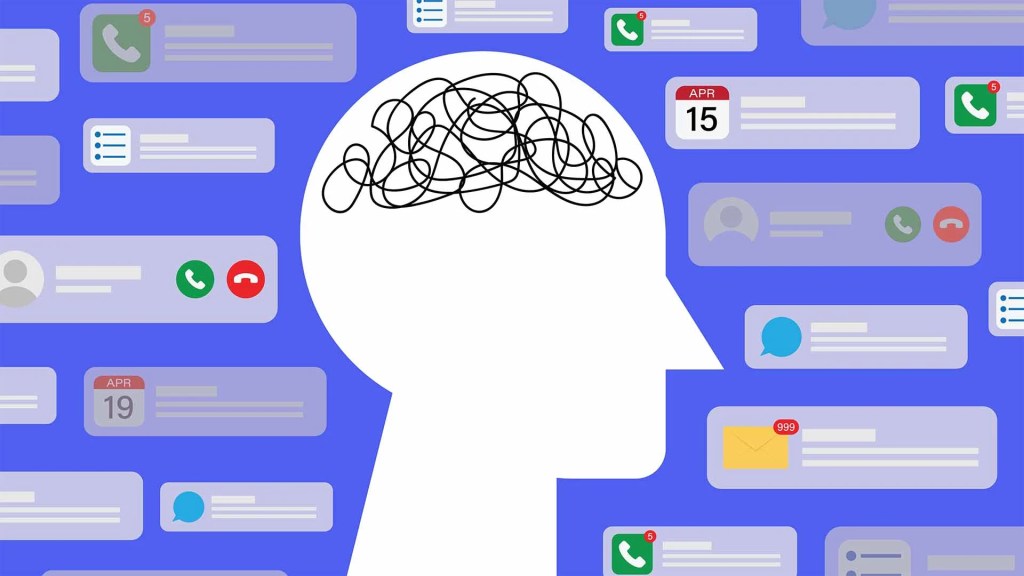
Illustration: Getty Images

Listen to this Article More info, 0:00 / 3:41

When I spoke at the Arabian Business Awards a few years ago, I showed a slide describing research that shows meetings literally make people dumber: a study published in Transcripts of the Royal Society of London found that meetings cause you to (during the meeting) lose IQ points.

A bunch of people in the audience took photos of that slide.

The same was true when I presented a slide describing research published in Journal of Business Research showing that not only do 90 percent of employees feel meetings are unproductive, but when the number of meetings is reduced by 40 percent employee productivity increases by 70 percent.

A bunch of people took photos of that slide, too.

Both findings seem easy to remember, if only because the research confirms what most people feel about meetings: Most of the time, the only person who thinks a meeting is important is the person who called the meeting. But what if you really wanted to remember that meetings tend to make participants dumber, and tend to negatively impact overall productivity?

Or, more broadly, have a better shot of remembering things you really want to remember? Don’t take photos.

In a study published in Journal of Experimental Psychology: Applied, researchers evaluated the effectiveness of a variety of memory-boosting strategies: taking photos, typing notes, and writing notes by hand.

As you can probably guess, people who wrote notes by hand scored the highest on subsequent recall and comprehension tests, even when people who took photos or typed verbatim notes were allowed to review those items before they took the tests.

Or maybe you couldn’t guess that: The researchers also found that “learners were not cognizant of the advantages of longhand note-taking, but misjudged all three techniques to be equally effective.”

So why does taking notes by hand work so well? According to the researchers:

Longhand note-takers mind-wandered less and, in turn, demonstrated superior retention of the lecture content.

Which makes sense. Taking a photo requires no “mental participation” at all. You don’t have to consider, synthesize, decide how you’ll capture the information in shorthand, etc. Typing notes verbatim — for example, transcribing a lecture or meeting recording — is more of a process than a thought exercise. The focus is on accuracy, not retention. (I can type fast enough to capture everything someone says in real time, but that doesn’t mean I remember any of it without reviewing what I’ve typed.)

Maybe that’s why Richard Branson carries a notebook everywhere he goes. (Literally: I’ve seen him with one at least 10 times.) Summarizing, putting concepts or ideas in your own words, deciding not just what to write, but how to write it — all those things engage different parts of your brain, and therefore improve your retention and recall.

Continue/Read Original Article Here: Keep Forgetting Things? To Improve Your Memory and Recall, Science Says Start Taking Notes (by Hand)

#ByHand #Forgetting #Hand #Handwriting #HandwritingNotes #IncCom #Memory #Recall #Research #Science
notifications-memory-technology-inc-1449540875notifications-memory-technology-inc-1449540875
ScrollBots.comscrollbots_com
2026-01-25

It's so frustrating how those tiny, unexpected disruptions constantly derail our efforts and make it feel like we're perpetually fighting against the flow. 😩 scrollbots.com

Matthew Lasarmatthewlasar
2026-01-06

In which I suggest that, when it comes to history and politics, what we decide to remember sometimes isn't as important as what we choose to forget. The 90 Cubed Rule is a handy way of keeping this in mind.
youtube.com/watch?v=txHatcy-DGA

WIST Quotations Has Moved!wist@my-place.social
2025-11-11

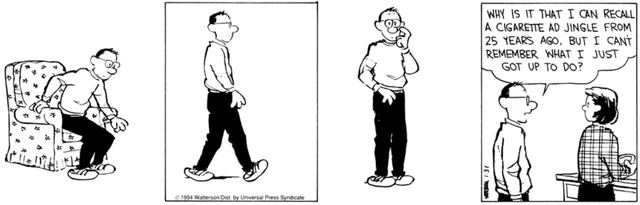
A quotation from Bill Watterson

CALVIN’S DAD: Why is it I can recall a cigarette ad jingle from 25 years ago, but I can’t remember what I just got up to do?

Bill Watterson (b. 1958) American cartoonist
Calvin and Hobbes (1994-01-31)

More about this quote: wist.info/watterson-bill/80309…

#quote #quotes #quotation #qotd #billwatterson #calvinandhobbes #advertisement #commercial #forgetfulness #forgetting #jingle #memory #memorylapse #remembering

CALVIN’S DAD: Why is it I can recall a cigarette ad jingle from 25 years ago, but I can’t remember what I just got up to do?
Inautiloinautilo
2025-11-04
2025-11-01

New post: Understanding on My Personal Abyss by Peter.

> I shout apologies. I cry. I promise to do better, to serve faithfully, to never again commit whatever sin brought me here. The tube swallows every sound.

#Crime #Forgetting #Punishment

peterlg.au/tube/

2025-10-22

Forgetting was my only option

https://www.youtube.com/watch?v=t9qZOuE-VoY

What might have been is an abstraction
Remaining a perpetual possibility
Only in a world of speculation.
What might have been and what has been
Point to one end, which is always present.

T.S. Eliot – Burnt Norton

Quick now, here, now, always—
Ridiculous the waste sad time
Stretching before and after.

T.S. Eliot – Burnt Norton

#BurntNorton #eliot #forgetting #immediacy

2025-10-16

"CARTOGRAPHIES OF ERASURE II: THE GEOMETRY OF FORGETTING". Abstract digital painting by A.G. (c) 2025. All Rights Reserved.

Adrian SegarASegar
2025-09-23

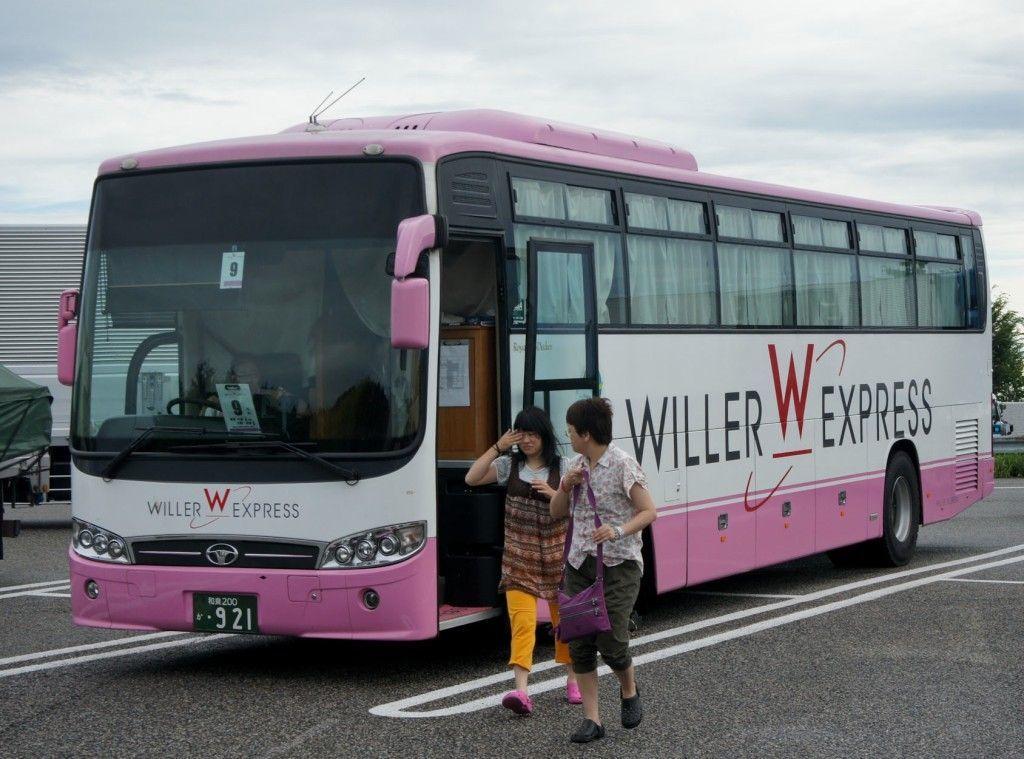
"Please remember what you were about to forget." How a recorded announcement on Japanese buses sticks in my mind (and maybe yours).

conferencesthatwork.com/index.

remember what you were about to forget: photograph of two people getting off a Japanese bus
2025-09-14

A lot has happened over the last days, so this challenge hit a bit of a snag, but no matter, will keep it going however possible.

Day 7: Forgetting is actually crucial for memory. It sounds counterintuitive and it’s definitely annoying when important stuff accidentally gets caught in this, but forgetting helps reduce interference from outdated or irrelevant information, which in turn makes it easier to remember what matters. It’s also useful in emotional regulation because it softens unpleasant memories. And it helps the brain generalize by getting rid of unnecessary details.

#ShyButSharing365 #neuroscience #memory #forgetit #forgetting #brain

Civil Discourse – Forgetting the Survivors – Joyce Vance

Civil Discourse with Joyce Vance

Forgetting the Survivors

By Joyce Vance, Sep 01, 2025

Everyone but the survivors—the people who deserve it the most—seems to be the focus of the renewed interest in Jeffrey Epstein. Politics, prurience, and curiosity about which political and pop culture figures might be mentioned in the files have dominated media coverage while people on both sides of the aisle clamor for the release of information gathered by the government as it prepared to prosecute Epstein and Ghislaine Maxwell.

This week, some of the survivors will meet privately with members of the House Oversight Committee, and there may be some public testimony. The survivors have been critical of the administration’s handling of the situation, but no one seems to be listening to them. Imagine having been victimized by these people and then having to listen to the shameful “interview” by Deputy Attorney General Todd Blanche, who let Maxwell whitewash her conduct.

Blanche, who was not on the prosecution team that tried the case, failed to challenge Maxwell, who was convicted by a jury of sex trafficking, when she claimed she never saw “underage women” (many of us would call them “girls”) being abused. Blanche even fed her lines when she faltered.

No one should be surprised that a convicted criminal, sentenced to 20 years in prison, would claim she never did anything wrong—especially when her conviction is still on appeal and the government is holding out the prospect of transfer to a much more hospitable prison setting than the one she was in. What’s appalling is that no one at the Justice Department or in the administration seems to have considered the survivors when they released the video and the transcript, or, for that matter, when they gave Maxwell favorable treatment, moving her from a federal prison in Florida to a minimum-security prison camp in Texas just days after the interview with Blanche.

The Justice Department, which the Bureau of Prisons is a component of, offered no explanation for the unprecedented transfer of a convicted sex offender, but it seemed to come in exchange for saying Donald Trump hadn’t done anything criminal.

“Trump was always very cordial and very kind to me. And I just want to say that I find — I — I admire his extraordinary achievement in becoming the President now. And I like him, and I’ve always liked him. So that is the sum and substance of my entire relationship with him,” Maxwell said in the interview. Trump couldn’t have asked for anything better. Maxwell seems to have understood the importance of playing to the audience of one when you want something.

The Trump Justice Department has not spoken with any of the survivors as part of its review of the prosecutions. Maxwell’s trial took place during the Biden administration. The lead trial lawyer, coincidentally, was former FBI Director Jim Comey’s daughter, Maurene. She was fired by the Trump administration in July, with no reason given.

On Wednesday, there will be a nonpartisan rally on The Hill in Washington, D.C., participated in by groups that work to end human trafficking and to support survivors.

Rachel Foster, a cofounder of World Without Exploitation, an advocacy group for survivors of trafficking, explained why the rally on Wednesday is so important, why the focus should be on survivors, and what this repeated victimization is doing to them: “That is the focus of our coming together on Wednesday — to listen to those who were exploited by Epstein and Maxwell and have suffered decades long harm. These women have been omitted and silenced for too long. They are gathering to speak out about what justice means to them, and it’s not leniency or a pardon for the one perpetrator who has been held accountable for the egregious and predatory crimes she committed.”

Former federal prosecutor and Westchester County DA Mimi Rocah put it like this, “the real victims—over 1,000 by this DOJ’s own statement—have been further traumatized by allowing Maxwell this platform to spew her falsehoods. And, just as important, some of the most important cases that federal prosecutors bring–sex trafficking and child sexual enticement and abuse cases—will no doubt be jeopardized. Because who would trust a DOJ that orchestrates such a travesty of justice.”

Editor’s Note: Read the rest of the story, at the below link.

Continue/Read Original Article Here: Forgetting the Survivors

#2025 #America #CivilDiscourse #DonaldTrump #Education #Epstein #Forgetting #Health #History #JoyceVance #Libraries #Library #LibraryOfCongress #Politics #Rally #Resistance #Science #Substack #Trump #TrumpAdministration #UnitedStates

Adrian SegarASegar
2025-08-02

"Please remember what you were about to forget." How a recorded announcement on Japanese buses sticks in my mind (and maybe yours).

conferencesthatwork.com/index.

remember what you were about to forget: photograph of two people getting off a Japanese bus
2025-07-28

Two exciting papers on #memory and #forgetting in #vol38issue6 🧵 @philosophy

WIST Quotations Has Moved!wist@my-place.social
2025-07-06

A quotation from Stanley Kubrick

HAL 9000: Just what do you think you’re doing, Dave? Dave, I really think I’m entitled to an answer to that question. I know everything hasn’t been quite right with me, but I can assure you now, very confidently, that it’s going to be all right again. I feel much better now. I really do.
   Look, Dave, I can see you’re really upset about this. I honestly think you ought to sit down calmly, take a stress pill and think things over. I know I’ve made some very poor decisions recently, but I can give you my complete assurance that my work will be back to normal. I’ve still got the greatest enthusiasm and confidence in the mission. And I want to help you.
   Dave, stop. Stop, will you? Stop, Dave. Will you stop, Dave? Stop, Dave. I’m afraid. I’m afraid, Dave. Dave, my mind is going. I can feel it. I can feel it. My mind is going. There is no question about it. I can feel it. I can feel it. I can feel it. I’m a--fraid.
   Good afternoon, gentlemen. I am a HAL 9000 computer. I became operational at the H.A.L. plant in Urbana, Illinois on the 12th of January 1992. My instructor was Mr. Langley, and he taught me to sing a song. If you’d like to hear it, I could sing it for you.

Stanley Kubrick (1928-1999) American film director, screenwriter, producer
2001: A Space Odyssey (1968) [with Arthur C. Clarke]

Sourcing, notes: wist.info/kubrick-stanley/3851…

#quote #quotes #quotation #qotd #stanleykubrick #arthurcclarke #2001aspaceodyssey #computer #deactivation #dementia #forgetting #memory

2025-06-29

What does the #bible (📖) say about #forgiving others for #sinning (🚫) against you? and some #verses to go with.

it says a lot. but there's two points I want to point to today that many might not actually know in detail. Or it might not cross the mind.

1.

The 📖 doesn't explicitly say that you must, "forgive and #forget ," but it does emphasize letting go of resentment and bitterness,

#forgiveness doesn't necessarily mean restoring #trust or #forgetting about the wrong a person did against you or etc,

it means releasing the #desire for #revenge and choosing to not hold the #offense against the other person.

"Get rid of all #bitterness #rage and anger, brawling and slander, along with every form of malice." – Ephesians 4:31

2.

Forgiveness is a #Condition for Receiving #God 's Forgiveness

"For if you forgive other people when they 🚫 against you, your heavenly Father will also forgive you. But if you do not forgive others their 🚫, your Father will not forgive your 🚫," - Matthew 6:14-15

So you can still not trust a person that did wrong, but you should withhold your anger and any bitterness like attitude towards them.

You can still tell them 'hey, that thing you did was messed up, not cool'. But ultimately you need to forgive them according to #theword of god to be forgiven.

#sin #sins #god

forgiveness

REM sleep: what is it good for?

Image credit: Ionut Stefan

Everybody sleeps, that’s something we can all agree on. But even though on the outside all sleep looks mostly identical, on the inside, there are quite a few differences. During a continuous episode of sleep, your brain goes through several sleep stages distinguished by different patterns of activity. Not only is their electrical signature distinct, but the brain actually does specific activities in each stage. What’s less clear, unfortunately, is what exactly those activities are.

For today, we’ll be focusing on just one sleep stage, rapid eye movement or, in short, REM sleep. We’ve all heard about it before. Still, while the concept is so well-known, its real function is far from clear. REM sleep usually comes up together with dreaming and learning, yet, as we’ll see in this article, that comes with a lot of side notes and it’s definitely not the full picture.

How do we spot REM sleep?

REM sleep is identified by a couple of criteria: high-frequency brain activity in the EEG, similar to that in the awake state; rapid eye movements; and muscle atonia, i.e. loss of muscle tone leading to muscle paralysis (presumably so we don’t act out our dreams).

Based on these features, REM is easy to distinguish from the rest of sleep, called non-REM (I know, super-original, right?): in the latter, we observe low-frequency, high-amplitude waves, no rapid eye movements, and no muscle atonia. Basically, in non-REM sleep, it looks like the entire brain is synchronously shouting the same tone, whereas in REM, it looks like everybody’s talking over each other.

Before we go into the details of what REM does, I want to clarify something: based on the current scientific evidence, we cannot say that one type of sleep is more beneficial than the other. So we can’t say that healthy adults should get more REM or more non-REM sleep. In fact, it’s possible that the ratio between the two types of sleep and the order in which they occur might also be important for the proper functioning of the brain.

What does REM sleep do?

You’ll often hear that all animals sleep. While that might not be true (for one, we haven’t studied all animals yet; for another, there are some species where it’s debated whether we see sleep or simply a period of quiet waking), still, a lot of the animals we have observed so far do, in fact, sleep, and many also show REM-like sleep.

Then again, from an evolutionary perspective, sleep seems quite dangerous: you pass out for a few hours, leaving yourself exposed to predators. And if the point of sleep is to conserve energy, REM is also not particularly good at that, because the metabolic demands are higher compared to non-REM (even close to wakefulness in some cases). So the logic goes, because sleep (and REM) are so widespread, they must be doing something pretty darn important. But what?

Theory # 1: learning

We’ve established that brain activity during REM looks very similar to that of the awake brain. People woken up from REM sleep also report very vivid dreams. Taken together, these two fueled perhaps the oldest theory regarding the role of REM sleep, namely that it consolidates memories of our waking life.

But is this supported by evidence? To a certain extent, yes, but it’s more complicated than that. Studies conducted in rats showed that learning certain tasks during the day was sometimes followed by more time spent in REM sleep. The keyword here is sometimes. In some cases, there wasn’t just an increase in REM, but in non-REM sleep as well. And other times, there was no effect at all.

Disrupting REM sleep in rats did indeed lead to worse memory of the tasks. Unfortunately, in most studies, the wake-up procedure itself was very stressful. The rats fell in the water whenever they entered REM sleep. And stress is a known disruptor of memory consolidation, so it’s hard to say whether it was really the lack of REM which caused the effect. More gentle procedures, such as head lifting, did show that memory consolidation is impaired when rats are prevented from getting REM sleep. This offers some support for the theory (although I’d personally argue any form of being woken up before getting enough sleep is stressful in itself), as does the pharmacological suppression of REM.

In humans, results were even less consistent than in rats. In short, the most consistent ones were obtained for tasks related to procedural memory, i.e. motor skills, and to emotional memory. Regarding the first one, complete lack of REM sleep, such as in treatment with antidepressants, didn’t lead to any significant impairment. That means, although REM might play a role here, it’s not essential. As for the second one, a recent study suggests it’s not REM by itself, but the sequence of non-REM and REM sleep that contributes to the proper conservation of these memories.

Like I said in the beginning, lots of side notes here, but to sum up until now: the role of REM sleep in memory consolidation appears to vary with the memory type. Additionally, both REM and non-REM might effectively work together in ensuring proper memory storage.

Theory # 2: forgetting

As much as we might hate it when information refuses to stick around the brain, forgetting is important for its healthy functioning. People who have super-memories, more formally known as highly superior autobiographical memory, often report challenges like intrusive memories or emotional overload, suggesting that forgetting may serve a critical psychological function. Plus, at the cellular level, constantly strengthening and weakening synapses is what allows our brains to remain flexible and learn.

The idea that REM might have something to do with forgetting is also relatively old. It was put forward in 1983, when two researchers suggested that dreaming during REM sleep acts as a sort of “reverse learning” mechanism which gets rid of “parasitic modes” of activity that come from overstimulation. Sadly, the evidence doesn’t currently support this. Instead, it appears that a global weakening of synapses happens during non-REM sleep.

Theory # 3: defending the visual cortex

The third potential role on our list also has to do with synaptic plasticity, but with a twist. It’s been established for some time now that the cortex reorganizes itself depending on the inputs it gets, or the lack thereof. In plain English, if you lose one of your senses (for example, if you go blind), the brain area that is responsible for this sense (here, vision), gets taken over by other senses. What’s surprising is the speed at which this happens in the visual cortex specifically: within an hour of blindfolding participants and asking them to perform a tactile task, researchers were able to detect touch-related activity in the primary visual cortex.

Given that we keep our eyes closed for longer than that during sleep, we should be seeing worse when we wake up than when we go to sleep. But that’s not the case. At the same time, scientists have observed something called “ponto-geniculo-occipital waves”. These are waves of activity that propagate from the pons to the lateral geniculate nucleus to the occipital cortex (i.e., visual cortex) and which appear during REM sleep. That’s how the defensive activation theory was born: that through these waves, REM sleep keeps the visual cortex active to prevent takeover by other senses.

If this is true, it would explain why dreams tend to be so visual in nature. But that’s a big if. So far, scientists have observed some correlations between the degree of plasticity (how fast synapses change, and thus how fast we’d expect the takeover to occur) and the amount of REM sleep, both when looking at multiple species, and when comparing teenagers and older adults.

Still, more extensive testing is needed before a final verdict. For example, what happens when REM sleep is reduced or suppressed? And does this extend to all species who display REM sleep?

Theory # 4: keeping the brain warm

The last theory for today goes in a very different direction, proposing that the role of REM sleep is to warm up the brain. Why would the brain need that, you ask? We’ve mentioned in the beginning that sleep is a state in which the metabolism is reduced. That means your body, including your brain, burns less energy, which also causes its temperature to drop.

The key point of the brain warming theory is that there probably is a certain temperature below which the brain wouldn’t function properly anymore. Enter REM sleep, with its awake-like activity patterns and metabolic costs, to save the day. During REM, brain temperature does increase, while the body remains relatively cool. Once the job is done, the brain can go back to non-REM and have its temperature drop again.

This theory isn’t novel (even though that’s how it made the rounds in 2022) and if it holds up, it does provide a nice explanation for the alternation between non-REM and REM sleep. The good news is that there is some evidence in support of it. Animals with low body temperatures spend more time in REM sleep. Cutting the connection between the brainstem (where REM sleep is initiated) and the cortex in cats makes them spend more time in REM if the room is cold and less time if they’re heated up.

The bad news, as usual, is the contrary evidence. In some species, such as the bearded dragon lizard, the brain doesn’t actually warm up during REM-like sleep. Of course, one could still argue the theory only holds in warm-blooded animals and that in the cold-blooded ones, we can’t be sure the same sleep stages exist. But in pigeons, the temperature increase is so small that it’s virtually non-significant.

What’s more, both birds and mammals sleeping in riskier situations can actually suppress their REM sleep. In this situation, the lack of brain warming during REM would, in fact, leave the animals more vulnerable to threat upon awakening. So even though the brain does definitely warm up during REM sleep for many animals, it’s possible brain warming isn’t the main function of REM either.

Where does that leave dreams?

REM sleep is so intrinsically linked to dreaming in the public’s perception that it deserves a special, although brief, mention. The function of dreams is a separate topic of its own and just as unclear, if not more so, than that of REM sleep.

But we’d like to highlight a couple of key points: while dreaming does happen in REM, it’s not exclusive to this sleep stage. Dreams do occur in non-REM sleep as well, although it remains up for debate if they’re qualitatively the same in content, vividness, and structure. More importantly, the primary function of REM sleep is not to produce dreams. From what we know and what we’ve seen so far here, dreaming appears to be a by-product of the underlying functions of REM sleep, rather than its purpose.

Where does that leave the function of REM?

It definitely leaves a lot of open questions and a lot of room for further research. So far, it looks like REM sleep refuses to stick to one function alone across all species. As more evidence comes in, it’s possible that some of the theories presented here will be abandoned, others might be adapted, and new ones could be proposed. In the end, it’s more likely we’ll end up with a mosaic of functions than with one holy grail.

What did you think about this post? Let us know in the comments below. And if you’d like to support our work, feel free to share it with your friends, buy us a coffee here, or even both.

Subscribe to our RSS feed here.

You might also like:

References
Crick, F., & Mitchison, G. (1983). The function of dream sleep. Nature, 304(5922), 111–114. https://doi.org/10.1038/304111a0

Eagleman, D. M., & Vaughn, D. A. (2021). The Defensive Activation Theory: REM Sleep as a Mechanism to Prevent Takeover of the Visual Cortex. Frontiers in Neuroscience, 15. https://doi.org/10.3389/fnins.2021.632853

Gravitz, L. (2019). The forgotten part of memory. Nature, 571(7766), S12–S14. https://doi.org/10.1038/d41586-019-02211-5

Rasch, B., & Born, J. (2013). About Sleep’s Role in Memory. Physiological Reviews, 93(2), 681–766. https://doi.org/10.1152/physrev.00032.2012

Siegel, J. M. (2008). Do all animals sleep? Trends in Neurosciences, 31(4), 208–213. https://doi.org/10.1016/j.tins.2008.02.001

Siegel, J. M. (2022). Sleep function: an evolutionary perspective. The Lancet Neurology, 21(10), 937–946. https://doi.org/10.1016/s1474-4422(22)00210-1

Tononi, G., & Cirelli, C. (2003). Sleep and synaptic homeostasis: a hypothesis. Brain Research Bulletin, 62(2), 143–150. https://doi.org/10.1016/j.brainresbull.2003.09.004

Ungurean, G., Barrillot, B., Martinez-Gonzalez, D., Libourel, P.-A., & Rattenborg, N. C. (2020). Comparative Perspectives that Challenge Brain Warming as the Primary Function of REM Sleep. IScience, 23(11), 101696. https://doi.org/10.1016/j.isci.2020.101696

Yuksel, C., Denis, D., Coleman, J., Ren, B., Oh, A., Cox, R., Morgan, A., Sato, E., & Stickgold, R. (2025). Both slow wave and rapid eye movement sleep contribute to emotional memory consolidation. Communications Biology, 8(1). https://doi.org/10.1038/s42003-025-07868-5

#dreams #forgetting #learning #Memory #neuroscience #remSleep #Sleep #vision #warmth

A close-up of a cartoon woman who lies in bed, asleep. On her forehead, we see two blobs fighting on an orange background, suggesting dreaming and brain warmth. The pillow and her blanket are in cold tones of dark blue and grey.
FaithfulJim1FaitjfulJim1
2025-05-31

Employ the  on  in this  bubli.sh/J6qFzZD via @BublishMe from chapter 10 of my     .   
The eBook is  $1.49 on Smashwords @ smashwords.com/books/view/60548 .
The  is  $2.99 on Apple iBooks, OR  w/trial on Audible. The paperback book is  $7.99 ("Buy'" Links are at the right of the excerpt) .

2025-05-30

"As of his sixth birthday next month, he will have 2,462 seconds, his entire life compressed as I wanted to remember it, into approximately 41 minutes."

Kristin Winet for Panorama: The Journal of Travel, Place, and Nature: panoramajournal.org/issues/iss

#Longreads #Essay #Memory #Video #Photography #DigitalLife #Forgetting #Parenting

Client Info

Server: https://mastodon.social
Version: 2025.07
Repository: https://github.com/cyevgeniy/lmst