#PopularScience

Christopher MillerC_Miller@mastodon.world
2026-01-10

Carl Sagan has one again been prophetically correct - I place ourselves well down the road of destruction.

Any ideas how we kick-start the empirical knowledge revolution?

#CarlSagan #Science #PopularScience #Wisdom #Quote #EmpiricalKnowledgeRevolution

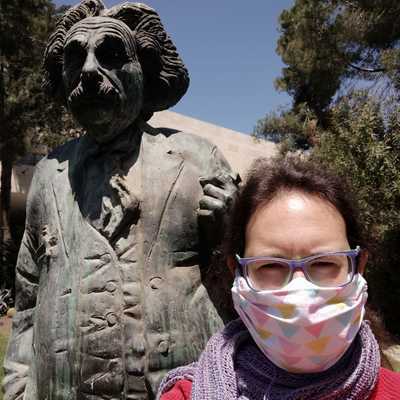
Picture of Carl Sagan in front of him is the quote from him:
"If we continue to accumulate only power and not wisdom, we will surely destroy ourselves".
LB Thomas 💎🏳️‍🌈lb_thomas@tech.lgbt
2025-12-18

"Brie, cheddar, and other high-fat cheeses linked to lower dementia risk"

popsci.com/health/cheese-lower

#Health #Food #Nutrition #Dementia #PopularScience

2011-11-28

Science for Everyone – Physics and Geometry of Disorder – Percolation Theory

We now come to another gem in the Science For Everyone series, Physics and Geometry of Disorder – Percolation Theory by A. L. Efros.

From the back cover:

This book is  about percolation theory and its various applications, which occur mostly in physics and chemistry. The book is self-sufficient in that it contains chapters on elementary probability theory and Monte Carlo simulation. Most attention is paid to the relationship between the geometrical and physical properties of systems in the vicinity of their percolation thresholds. The theory is applied to examples of impurity semiconductors and doped ferromagnetics, which demonstrate its universality. Although written for students at high schools, the book is very good reading for college students and will satisfy the curiosity of a physicist for whom this will be a first encounter with percolation theory.

The book was translated from the Russian by V. I. Kisin and was first published by Mir in 1986.

The Internet Archive Link and here

Follow us on The Internet Archive: archive.org/details/@mirtitles

Write to us: mirtitles@gmail.com

Updated: 15 January 2019

Contents

Part  I. Site Percolation Problem 14

Chapter 1. Percolation Threshold 14
Two Pundits Shred a Wire Mesh (14).
What Is a Random Variable? (17).
Mean Value and Variance (18).
Why a Large Wire Mesh? (23).
Exercises (27).

Chapter 2. Basic Rules for Calculating Probabilities Continuous Random Variables 28
Events and Their probabilities (28).
Addition of Probabilities (30).
Multiplication of Probabilities (33).
Exercises (37).
Percolation Threshold in a 2 x 2 Network (37).
Exercise (40).
Continuous Random Variables (40).
Exercises (44).
Percolation Threshold as a Continuous Random Variable (44).
Exercise (48).

Chapter 3. Infinite Cluster 48
Permanent Magnet (48).
Doped Ferromagnetics (53).
Formation of an Infinite Cluster (56).
Exercise (59).
Site Percolation Problem Revisited (59).
Clusters at a Low Concentration of Magnetic Atoms(63).
Exercises (67).

Chapter 4 Solution of the Site Percolation Problem by Monte Carlo Computer Techniques 68
Why Monte Carlo? (68).
What Is the Monte Carlo Method? (70).
How to Think Up a Random Number (74).
The Mid—Square Method (76).
Exercises (78).
Linear Congruent Method (78).
Exercises (79).
Determination of Percolation Threshold. by Monte Carlo Simulation on a Computer. Distribution of Blocked and Non-blocked Sites (81).
Exercise (84).
Search for Percolation Path (85).
Determination of the Threshold (86).
Exercise (89).

Part II. Various Problems of Percolation Theory and Their Applications

Chapter 5. Problems on Two-Dimensional Lattices 90
We Are Planting an Orchard (the Bond Problem) (90).
Exercise (95).
Inequality relating x_b to x_s (95).
Exercise (98).
Covering and Containing; Lattices (98).
“White” Percolation and “Black” Percolation (105).
Dual Lattices (110).
Exercise (115).
Results for Plane Lattices (116).
Exercise (117).
Directed Percolation (117).

Chapter 6. Three—Dimensional Lattices and Approximate Evaluation of Percolation Thresholds 120
Three-Dimensional Lattices (121).
Percolation Thresholds for 3D Lattices (126).
Factors Determining Percolation Threshold in the Bond Problem (127).
How to Evaluate Percolation Threshold in the Site Problem (129).
Exercise (134).

Chapter 7. Ferromagnetics with Long-Range Interaction. The Sphere Problem 135
Ferromagnetics with Long-Range Interaction (136).
Exercise (140).
The Sphere (Circle) Problem (140).
The Circle (Sphere) Problem Is the Limiting Case Of the Site Problem (144).

Chapter 8. Electric Conduction of Impurity Semiconductors. The Sphere Problem 147
Intrinsic Semiconductors (147).
Impurity Semiconductors (150).
Transition to Metallic Electric Conduction at Increased Impurity Concentrations (158).
The Mott Transition and Sphere Problem (161).
Exercise (166).

Chapter 9. Various Generalizations of the Sphere Problem 166
Inclusive Figures of Arbitrary Shape (166).
The Ellipsoid Problem (169).
Other Surfaces (173).
Another Experiment at the House Kitchen. The Hard-Sphere Problem (174).

Chapter 10. Percolation Level 179
“The Flood” (179).
How to Construct a Random Function (182).
Analogy to the Site Problem (185).
Percolation Levels in Plane and Three Dimensional Problems (186).
Impurity Compensation in Semiconductors (189).
Motion of a Particle with Nonzero Potential Energy (190).
Motion of an Electron in the Field of Impurities (192).

Part III. Critical Behavior of Various Quantities Near Percolation Threshold. Infinite Cluster Geometry 195

Chapter 11 The Bethe Lattice
Rumors (196).
Solution of the Site Problem on the Bethe Lattice (200).
Discussion (204).
Exercise (206).

Chapter 12. Structure of Infinite Clusters 206
The Shklovskii—de Gennes Model (206).
Role of the System’s Size (210).
Electric Conduction Near Percolation Threshold (215).
Exercise. (219).
Function P (X) Near Percolation Threshold. Role Played by Dead—Ends (219).
Universality of Critical Exponents (222).

Chapter 13. Hopping Electric Conduction 226
Mechanism of Hopping Conduction (227).
Resistor Network (229).
Properties of Resistor NetworK (231).
The Sphere` Problem Revisited (232).
Calculation of Resistivity (233). Discussion of the Result (235).

Chapter 14. Final Remarks 237
Some Applications (237).
What Is Percolation Theory, After All? (240)

Answers and Solutions 242
Chapter 1 (242). Chapter 2 (244). Chapter 3 (246).
Chapter 4 (249). Chapter 5 (250). Chapter 6 (256).
Chapter 7 (257). Chapter 8 (257). Chapter 11 (257).
Chapter 12 (258).

#chemistry #disorder #efros #mathematics #mirPublishers #monteCarloMethod #percolationTheory #physics #popularScience #probability #scienceForEveryone
A cool book from Lindsay Nikole has just arrived!
For those unfamiliar: she is a zoologist and a science popularist (is this English?) on YouTube.
The book has pictures.
I repeat. The book. HAS. PICTURES.
.
.
.
#popularscience

2025-11-07

चार उस्ताद – ज्ञान-विज्ञान (Four Masters In Hindi)

A little book describing four insects and how they destroy other harmful insects.

चार कीड़ों का वर्णन करने वाली एक छोटी सी किताब और वे अन्य हानिकारक कीड़ों को कैसे नष्ट करते हैं ।

शब्दांकन : लिन सुङइङ

चित्रांकन : छो रुइछङ च्वाङलिङ

You can get the book here and here.

Twitter: @MirTitles
Mastodon: @mirtitles@mastodon.world
Mastodon: @mirtitles@mastodon.social
Bluesky: mirtitles.bsky.social

#1988 #कड_ #चनसहतय #जववजञन #बचचककतब_ #बचचकवजञन #लकपरयवजञन #biology #childrenSBooks #childrenSScience #chineseLiterature #insects #popularScience

2025-10-24

And here's a "general audience" (or "popular math") description of the general theme in this paper, and much of my work in general. Don't hesitate to ask for more details!

In this paper I explore the boundaries of what is mathematically possible when constructing universes of set theory. A "universe of set theory" can be thought of as a model for all of mathematics, and what we, set theorists, like to do, is build different kinds of such universes.
We have two main tools:
1. Take a universe, and add stuff, to create a larger one;
2. Take a universe, and define inside of it a smaller one.
In my paper I use both methods: I extend a given universe and build a larger one, in which I use a specific definition to construct a smaller universe.
The cool thing is, that I can use that definition again - to get an even smaller universe. And again, and again - infinitely many times!

#math #SetTheory #multiverse #PopularMath #PopularScience

2025-10-17

Vera Chernogorova – Conversations About The Atomic Nucleus (Eureka Series)

The book discusses issues related to the study of the atomic nucleus and its structure, nuclear forces, and the components of the nucleus. It also describes the achievements of Soviet scientists in the field of nuclear energy.

About the Author

After graduating from the Faculty of Physics and Mathematics at university, Vera Aleksandrovna entered postgraduate studies and later became a research fellow at the Joint Institute for Nuclear Research in the town of Dubna. For nearly twelve years, she participated in experiments conducted on a particle accelerator — the synchrocyclotron. Vera Aleksandrovna is a co-author of many scientifi c papers on the study of the properties of mu-mesons.

In recent years, she has published over ten articles in journals such as Znanie — Sila (Knowledge Is Power), Science and Life, Technology for the Youth, and others.

The topics of these articles include problems in nuclear physics, high-energy physics, astrophysics, controlled thermonuclear fusion, the application of scientific achievements in The human practice, and the future of science. Many of these articles have been reprinted in foreign journals.

In 1973, our publishing house released her book Mysteries of the Microworld, which discussed some current problems in the physics of elementary particles. Conversations About the Atomic Nucleus is the author’s second book to appear in the Eureka series.

Illustrations: K. Moshkin
Translated from the Russian & typeset in LaTeX by Damitr Mazanav

You can get the book here and here

This book is an Open Educational Resource (OER).

Released under Creative Commons by ShareAlike 4.0


Twitter: @MirTitles
Mastodon: @mirtitles@mastodon.world
Mastodon: @mirtitles@mastodon.social
Bluesky: mirtitles.bsky.social

#Ccbysa #Oer #elementaryParticles #eurekaSeries #nuclearPhysics #physics #plasmaPhysics #popsci #popularScience #scipop #structureOfMatter

2025-10-11

I’ve been reading a popular science monthly magazine DELTA. It has been run since 1974 by University of Warsaw. Delta traditionally covers maths, physics and astronomy. Bits of biology and chemistry also sneak in. It is in Polish (although guest writers from universities abroad also publish there), but also open access (nice pdfs) & getting a properly written strict science text translated into English shouldn’t be a problem these days ;-)
deltami.edu.pl
#physics #maths #popularscience

2025-10-07

Amusing Experiments (after Martin Gardner) by Martin Gardner; M. Stoliar ; L. Fomin


SCIENCE READER FOR THE EIGHTH FORM OF SECONDARY SCHOOL

In this book you will find descriptions of amusing experiments which are based upon well-known scientific facts. You can easily carry out these experiments yourselves, and you will not need any special equipment. But if you wish to show the experiments to your friends, we advise you to practise them a few times before you demonstrate.
The experiments are not only amusing: after you have carried out each experiment and read the explanation, you will learn something interesting and important in such fields of science as mathematics, physics, chemistry, biology, astronomy and psychology.

The book will help you to learn a number of new English words which are connected with science. When you have learned them, it will be much easier for you to read scientific literature in English in the senior forms. At the end of the book you will find the vocabulary of the words which you may not know. Some of the terms are given in the footnotes. We hope that you will find the book interesting and easy to read, and that it will help you to become science-minded people.

You can get the book here and here.

Twitter: @MirTitles
Mastodon: @mirtitles@mastodon.world
Mastodon: @mirtitles@mastodon.social
Bluesky: mirtitles.bsky.social

CONTENTS

ASTRONOMY

Prove That the Sum of All the Angles of a Triangle Is 180°
You Can Push a Coin Through a Smaller Hole
How Long Is the Diagonal of a Square?
Short Bridges
The Pythagorean Theorem
How Many Matches Are There in Your Hand?
A Trick with Dice
The Wonderful Window
Quick Addition
An Interesting Way to Multiply Numbers
Strange Mathematics
Magic in Mathematics
PSYCHOLOGY

Hot or Cold?
“Moscow in the Spring”
It Is Easy to Remember Some Facts
PHYSICS

Watermarks
Spectrum on the Ceiling
A Device to Copy Pictures
An Experiment with a Box of Matches
The Forks Will Not Fall Down
How to Break a Strong Rope
A Lemonade-straw Can Go Through a Potato
Egg in the Bottle
A Three-kopek Coin Can Dance
The Magdeburg Glasses
Bernoulli’s Principle
Two Interesting Ways to Blow Out a Candle
An Experiment with a Table-tennis Ball
Cold Water Can Boil
The Button Which Does What You Tell It
An Automatic Siphon
You Can Get the Water out of the Glass
The Water Is in the Lower Glass
Pascal’s Law
Put the Cork in the Centre
An Experiment with a Cardboard Arrow
How You Can Demonstrate Inertia
The Egg and Friction
There Is No Magic
OPTICAL ILLUSIONS

A Funny Finger
Circles on the Card
A Missing Piece of Cake
An Optical Illusion with a Match
Moon Illusion
An Illusion with a Three-kopek Coin
You Can See Through Your Hand
The Third Coin
A Strange Spiral
Paper Films
A Turning Device
An Illusion with a Pencil
A Pendulum Which Moves in a Circle
The Stamp Which Disappears
The Two Sides of Your Face Are Different
You Haven’t Seen the Real Image of Your Face in the Mirror
Colour That Isn’t There
You Can Read a Secret Letter from Your Friend
You Can Make a Stroboscope
EXPERIMENTS WITH SOUND

A Musical Fork
Music from a Coat-hanger
A Musical Glass of Water
VOCABULARY

#childrenSScience #handsOnScience #popularScience #scienceExperiments #sovietLiterature

2025-10-01

I set out to write the book that I would want to read. The result is Een Wereld vol Denkers (A World of Thinkers) Here’s how and why the book came to be! 🤩✍️ cogsci.nl/blog/my-experiences- #books #popularscience #psychology #ai #biology

2025-09-26

अनूठे जहाज़ – ख्यातोस्लाव साखर्नीव ( Wondorous Ships In Hindi by Svyatoslav Sakharnov)

सागरों में जहाज चलते हैं। भाप छोड़ते हैं, नुकीले सिरों से पानी को चीरते हैं और अपने काम-काज पूरे करने की उतावली में रहते हैं।

किसी जहाज की धुआं-चिमनी ऊंची होती है और किसी की नीची। कोई तो तीन बजरे आसानी से खींच ले जाता है और कोई खुद भी बड़ी मुश्किल से रेंगता है। कुछ जहाज सुन्दर होते हैं और कुष्टछ भद्दे। प्रत्येक भिन्न-भिन्न होता है।

इन जहाजों के भाग्य भी अलग-अलग होते हैं- कोई खुशकिस्मत, तो कोई बदकिस्मत, किसी को बड़ा आदर-सत्कार मिलता है, तो किसी को भुला दिया जाता है।

लोगों की तरह जहाज भी अलग-अलग और अनूठे होते हैं।
अनुवादक : मदनलाल ‘मधु’ चित्रकार : व्लादीमिर सूरिकोव


You can get the book here and here

Twitter: @MirTitles
Mastodon: @mirtitles@mastodon.world
Mastodon: @mirtitles@mastodon.social
Bluesky: mirtitles.bsky.social

#खज #गल_ #जहज #जहजनरमण #जहजकइतहस #जहजपरजवन #बचचककतब_ #यदधपत #लकपरयवजञन #सचतरकतब_ #सवयतसहतय #childrenSBooks #discoveries #galleys #historyOfShips #illustratedBooks #lifeOnShips #popularScience #shipConstruction #ships #sovietLiterature #warships

2025-09-25

यह सभी कुत्तें है – ईगर अकीमुश्किन(The Dog Family Stories In Hindi by Igor Akimushkin)

A little book describing various members of the dog family
कुत्ते के परिवार के विभिन्न सदस्यों का वर्णन करने वाली एक छोटी सी किताब

चित्रकारः अ० केलेइनिकोव
अनुवादकः संगमलाल मालवीय


You can get the book here and here

Twitter: @MirTitles
Mastodon: @mirtitles@mastodon.world
Mastodon: @mirtitles@mastodon.social
Bluesky: mirtitles.bsky.social

#कततपरवर #जगलजनवर #जलज_ #भडय_ #लकडबगघ_ #ललतवजञन #लकपरयवजञन #लमड_ #सवयतसहतय #dogFamily #foxes #hyenas #popularScience #sovietLiterature #wildAnimals #wolves #zoology

2025-09-22

🔬 How does the subject influence observation 👀?

The very act of recognizing changes what we see—not through force, but through #information.

The #Zoomposium with #GerdGanteför is about observers, #quantumphysics, and the limits of our #reality.

youtu.be/V4pUEEtFCUo

👉 philosophies.de/index.php/2023

#LimitsOfPhysics #Science #Philosophy #NaturalSciences #Metaphysics #Reality #PopularScience #AntonZeilinger #JohnWheeler #Observers #ParticlePhysics

2025-09-22

दादा का चश्मा – जॉर्जी युरमिन ( Grandpa’s Glasses In Hindi by Georgi Yurmin)

A little book describing various optical instruments, their history, working, construction and uses.
विभिन्न ऑप्टिकल उपकरणों, उनके इतिहास, कार्य, निर्माण और उपयोग का वर्णन करने वाली एक छोटी सी पुस्तक ।

अनुवादक योगेंद्र नागपाल
चित्रकार इरीना किसेलेव्स्काया

You can get the book here and here

Twitter: @MirTitles
Mastodon: @mirtitles@mastodon.world
Mastodon: @mirtitles@mastodon.social
Bluesky: mirtitles.bsky.social

#आख_ #चशम_ #दरबन #परकशक_ #मइकरसकप #लस #लकपरयवजञन #सवयतसहतय #eyes #glasses #lenses #microscope #optics #popularScience #sovietLiterature #telescope

Denis Gilbertdgscientifik
2025-09-20

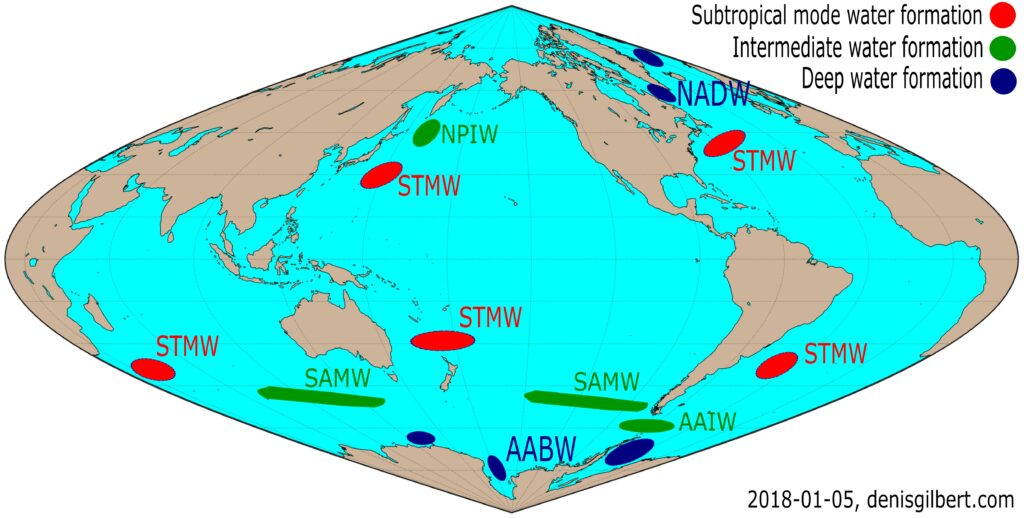
How does oxygen get from the ocean surface layer to the ocean's intermediate depth and bottom waters?

I wrote a brief overview of the processes involved and the key regions of ocean ventilation:

denis-gilbert.ca/en/2025/04/15

Map showing the main regions of mode waters, intermediate waters and bottom waters ventilation in the ocean.

Client Info

Server: https://mastodon.social
Version: 2025.07
Repository: https://github.com/cyevgeniy/lmst