
Another #TrainTrackTuesday in #Conwy 🏴
#railway #trainTracks #railways #railwayTrack #railwayTracks #railroad #Schienen #Gleise #Bahnhof #railwayStation #trainStation #Brücke #bridge #bridgeObsession #NorthWales #Wales #Cymru
#Railways


UK's most beautiful train journey where waves crash into the tracks costs £8
https://fed.brid.gy/r/https://www.mirror.co.uk/travel/uks-most-beautiful-train-journey-36772034


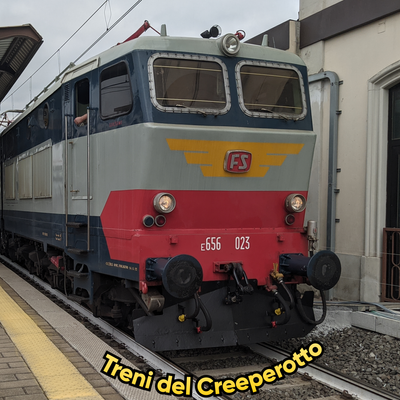
Treno Regionale con doppia di Pop ETR104.182 + ETR104.152 in arrivo a Pisa Centrale – 06/10/2025
👍 Se il video ti è piaciuto lascia un bel mi piace!➕ Iscriviti per seguirmi e ricevere notizie sugli ultimi video!Grazie mille! 😄✅ Unisciti al canale telegram, in cui si potranno trovare foto e piccoli extra che non sono sul canale youtube! ➡️ https://treni.creeperiano99.it/u/telegram----------------------------------------------------------------------------👥 Il gruppo telegram discussione del canale telegram con possibilità di parlare di ferrovia in generale, nel rispetto […]

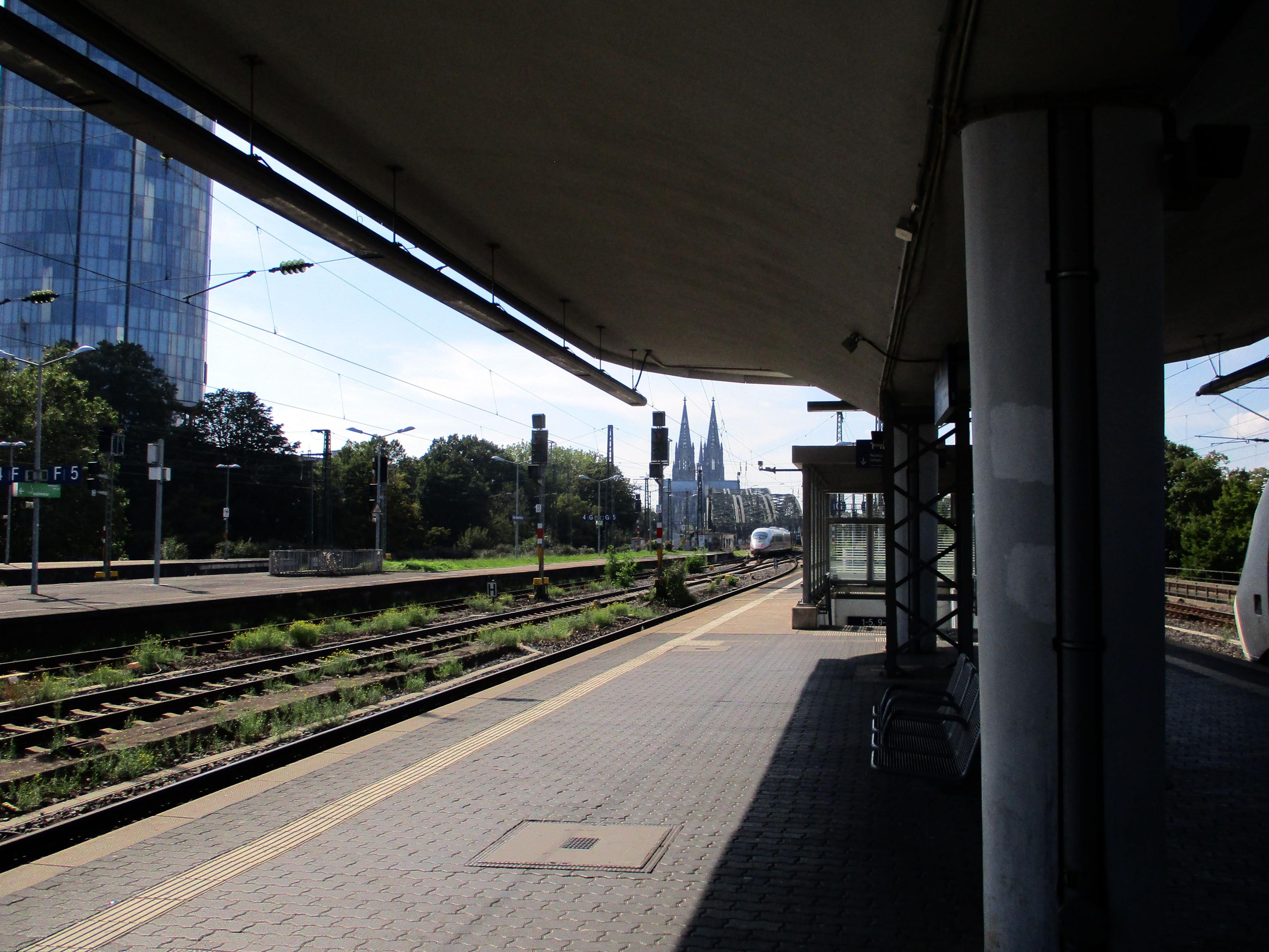
🇫🇷 Köln-Messe-Deutz par une chaude après-midi...
🇬🇧 Köln-Messe-Deutz on a hot afternoon...
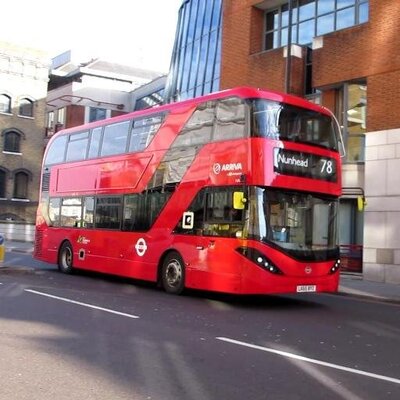
A farewell rail tour celebrating 50-year-old Mark III trains has raised £20,000 for charity. #Chiltern #Railways and the Branch Line Society organised the sold-out journey on 22 February between #London Marylebone and the West Midlands, marking the impending withdrawal of the operator’s Mark III fleet at the end of March.
Around 250 enthusiasts travelled on the special service, with many more gathering at stations along the route. Some visitors were invited into the driver’s cab at Banbury before departure.
Proceeds from the tour were donated to #Railway Children, which supports vulnerable young people in the #UK, Tanzania and India. The Mark III coaches, in service with Chiltern since 2010, are being replaced by the operator’s new Mark 5A ‘Chiltern Explorer’ #trains.
https://press.chilternrailways.co.uk/news/farewell-tour-for-50-year-old-trains-raises-gbp-20-000-for-charity
The Edinburgh & Leith Atmospheric War: the thread about the fight to build an improbable and impossible railway
An initial version of this thread was written in December 2020.
In 1844, Britain was in the grip of a stock market bubble called the “railway mania”. Rival companies vied to build lines here, there and everywhere, and attracted ever increasing financial speculation. In Edinburgh, three principal schemes were converging at a central locus that would later become known as Waverley Station; the Edinburgh & Glasgow – running between those two cities – the Edinburgh, Leith & Granton – running north to a ferry terminal at Granton through the Scotland Street tunnel, with a branch to Leith – and the North British Railway – entering the city from the east and Berwick-upon-Tweed.
Railway mania reaches Edinburgh; the E&G in green, the EL&G in Yellow and the NBR in brown. Overlaid on an OS 6-inch map of the period.These railways favoured orthodox steam locomotives to provide their motive power, with occasional assistance by rope haulage for steep gradients,e.g. the Scotland Street Tunnel. However there was an exciting new technology which promised cleaner, faster and more economical railways that would be cheaper to build; the “Atmospheric Railway”.
This name does not come from them having a particularly romantic ambience, it is because they are propelled – in theory – by atmospheric pressure. In principal the scheme was simple; a slotted tube was laid between the railway tracks and every few miles there was a pumping house which exhausted the air from the pipe, creating a vacuum. A piston in the pipe was pushed along by the atmospheric pressure behind it; if you attached a train to that then you could propel it too. The trick to get it working was how to connect the train and the piston without breaking the vacuum. This required a longitudinal valve (in practice, long leather flaps) to seal the tube; a trick that nobody ever managed to pull off reliably.
The atmospheric railway system was patented in 1839 by Samuel Clegg and the Samuda brothers. They set up a demonstration of the system at Wormwood Scrubs in West London. This impressed the directors of the Dublin & Kingstown Railway in Ireland who felt it would be suitable for an extension of their line from Kingstown to Dalkey. This was a 1 3/4 mile branch and began operation on 19th August 1843. It persisted for a full 9 years until a small locomotive was brought in to do the same work. The Dalkey scheme attracted the attention of the London & Croydon Railway, who in 1844 built a short 1 1/4 mile atmospheric expansion of their mainline from London Bridge station to Bricklayers Arms. This was to try and reduce congestion on a steep section of the line with a number of stops and starts. The whole thing though was a “sad fiasco” which consumed a huge amount of capital and was terminated in 1847.
Contemporary illustration of the Saint-Germain atmospheric railway in France. Note the vacuum tube between the rails and the slot in its top, sealed (in theory) by the leather flap valves“Croydon Atmospheric Road”, from the Illustrated London News, October 11th 1845These were small schemes and most sensible railway engineers steered well clear of the obvious complexities of the system for larger scale application, but the great Isambard Kingdom Brunel was an exception. He was captivated by the promise of this modern and unconventional technology and proposed it for the 51 mile South Devon Railway, to help overcome the steep curves and gradients. The father of modern British railways, George Stephenson, denounced the idea as “a great humbug” before it even got going. Brunel’s own locomotive engineer, the eminently sensible Daniel Gooch, said he “could not understand how Mr. Brunel could be so misled. He had so much faith in his being able to improve it that he shut his eyes to the consequences of failure.” Brunel however remained convinced and the force of his reputation carried the scheme through; the South Devon opened its first atmospheric section in September 1847, at least a year later than planned. By September 1848 it was abandoned, having “rapidly disintegrated throughout its entire length“.
A surviving section of track and 15 inch vacuum tube of the South Devon atmospheric railway. CC-BY-SA 2.5 ChowellsDespite these hiccups, for a brief period from 1845-1846, the “railway mania” investment bubble was briefly joined by “atmospheric fever.” And once again, Edinburgh and Leith were in on it, with not just one but two atmospheric schemes were proposed. And not just two schemes; two in direct competition, running from the same start and end points, less than 100m apart, each backed by a considerable array of the councillors, merchants and notable figures of both the City and its port. And so commenced the brief but petulant Edinburgh and Leith Atmospheric Railway War of 1845.
The rival Edinburgh & Leith atmospheric schemes were both formed at some point in June 1845; each claimed to be the original and genuine scheme and that the other was a pretender. In one corner was the Edinburgh & Leith Atmospheric Railway (which we shall call the Atmospheric Route) and in the other was the Edinburgh & Leith Atmospheric Direct Railway (which we shall call the Direct Route.) The engineer to the former was John Miller, who designed the Almond Valley Viaduct for the Edinburgh & Glasgow Railway and also Granton Harbour. The latter had George Gunn, also a railway engineer, but one who had hitherto acted in support of another, including Miller himself.
The Atmospheric Route proposed to run a railway from a terminus in the Low Calton – with a connection to the “Waverley” stations – through the Greenside Valley, under London Road and then through the market gardens parallel to Leith Walk. It then continued around the west of Leith Links to a principal terminus near the Assembly Rooms at Constitution Street. From here, branches ran to the docks, with one possibly a small passenger terminus for the Forth ferries and the other going over (or under) the river to the wet docks. A service every ten minutes was promised.
The Direct Route originated at a station near West Register Street, with an onward connection to one or more of the “Waverley” stations. It ran underground down Leith Street, possibly with an intermediate station in the vicinity of York Place, and continued underground in a “cut and cover” tunnel a few feet below the surface to Elm Row. Here it re-surfaced to run in a semi-recessed trench down the entirety of Leith Walk, the proposal being to provide regular bridges across this road.
A drawing in the “Lighthouse” Stevenson collection showing the “Direct route” at Union Place. CC-BY NLSA drawing in the “Lighthouse” Stevenson collection showing the “Direct route” at Antigua Place. The tunnel roof was to be just 2.5 feet below the surface. CC-BY NLSWhile this proposal might seem absurd today – Leith Walk is almost end-to-end 4 storey tenements and is Scotland’s most densely populated neighbourhood by quite some margin – bear in mind that the street is all “made up ground”; it’s a former defensive feature, so easy to dig out, and that in the 1850s it was nothing like as built up as it is today. It was very lightly developed with few large or important buildings, and almost pastoral in character. It was intended to use an “inclined plane” (i.e. gravity) to provide downhill locomotion to Leith and the atmospheric principle to get back up the hill to Edinburgh. There would be two tracks but only the uphill would be powered, this would cut costs but greatly reduce operational flexibility; they did however hedge their bets and publicly did not preclude themselves from using normal steam locomotives “should they prove expedient.”
What the Leith Walk atmospheric railway of the “Direct route” might have looked like. London Illustrated News illustration of the Dalkey atmospheric railway in January 1844There two atmospheric schemes not only had each other to contend with, additional pressure placed on both by the conventional railway of the Edinburgh, Leith & Granton, – already building a line from Scotland Street to North Leith via Bonnington (yellow line on the route map below) – but were now also lodging a bill with Parliament to build an extension from Bonnington across the Water of Leith to South Leith (the pale yellow line). In November the North British Railway joined in and announced their intention to tunnel through the eastern end of the Calton Hill to get from their existing mainline at Croft-an-Righ to the top of Easter Road, down which they would run a horse-drawn tramway to a terminus in the vicinity of Queen Street (pale brown line).
Atmospheric Fever in Edinburgh; the “Atmospheric Route” in red and the “Direct Route” in cyan. The pale lines are the proposals to reach Leith by the EL&G and the NBR. Note the darker blue line of the Edinburgh & Dalkeith railway approaching Leith via Niddrie from the east. Overlaid on an OS 6-inch map of the period.The Atmospheric route got their preliminary announcement published first on October 7th 1845, a day before the Direct route. They were seeking a capitalisation of £100,000. The following day the Direct route announced they were seeking £200,000 and accused the Atmospheric route of financial impropriety by issuing considerably more shares to the public than they were actually available. The Direct route stated that they were proposing their scheme lest “the independence, usefulness and commerce of [Edinburgh & Leith] are gone forever”.
Initial invitations to purchase shares were made by both schemes in the Caledonian Mercury and Evening Courant in June 1845, but there was almost instantly a problem arose. One of the merchants listed as backing the Atmospheric Route denied any connection with it and that his name had been put against it without his knowledge. As did the stock exchange said to be dealing in the sale. As was the stock broker claimed to be acting for the railway! All three immediately took out their own personal adverts in the next days Scotsman to this effect. This pattern of disinformation and using the columns of the newspapers to fight a proxy war was one that was to continue.
Scotsman, 18th June 1845By October, both schemes were ready to issue their shares. Adverts to this effect were placed in the Edinburgh papers and also in Glasgow too (each city having its own stock exchange at this time). The Direct route was careful to point out in their advert that all other railway schemes proposed to Leith were “inutile and insufficient“. Despite the improbability of two such rival schemes, with the railway investment boom being what it was the shares of both concerns were oversubscribed. Adverts were placed in newspapers seeking to buy and surplus share and each company seemed to spread gossip that their opponent had not allocated their shares in an equitable manner. As a result, the companies had to place further adverts in the newspapers to reassure investors of the fair nature of their allocation.
A blank share certificate of the Edinburgh & Leith Atmospheric Direct RailwayAnd then the “phoney war”, hitherto conducted through the newspaper columns alone, suddenly got a lot more real. In the early hours of October 19th 1845, Sunday, a representative of the Atmospheric route pinned copies of its parliamentary notices in public on the church doors of Edinburgh & Leith (this was actually a legal requirement as a way to circulate official notices around the public – it was not until the 20th century that churches would have dedicated public notice boards for this purpose). However, when the faithful came to worship on the Sabbath later that morning, it was found that the Direct route had also been out and had replaced all the notices with their own.
Martin Luther also fixed his controversial notice to a church doorThe Atmospheric route was outraged, offering a reward of £50 if the perpetrator could be apprehended. The Direct route denied all complicity and reiterated that they were the original scheme and the opposition were “plagiarists”, out to serve not the public but only their own interests.
Reward notice offered by the Atmospheric routeThe next task for both schemes was to collect the deposit money for their shares, complete their surveys, plans and engineering proposals and prepare their bills to go before parliament for approval. While this took place, after the outrage on the Sabbath, the skirmishing returned to tit-for-tat adverts placed in the newspapers by the solicitors of each scheme. The details of this are tiresome and childish, each consistently blamed the other for forcing its hand and making it respond. On October 29th, both companies took out extensive, self-important adverts in the Scotsman in side-by-side columns in which they each reiterated the authenticity of their own schemes and attacked that of their opponent. Both besmirched each other as not acting in the interests of the travelling public and merely being moneymaking schemes for their backers. Each also claimed to be the original railway proposal and that the other was a mere copycat.
The Direct route consistently positioned itself as the “bona fide” and original scheme, thereby having the right of putting forward their bill to Parliament. It said that its rival “thereby created in the public mind a just and general dissatisfaction” and that that the criticism of their scheme had been “inveterate and persevering“. However, they were repeatedly vague about the specific details of their proposed route – beyond it just being more “direct” than the competition. The reality differed; their route was less than 50m to the west and the distance saving marginal. By choosing the route down the middle of Leith Walk – rather than the sensible parallel one of its rival through undeveloped ground – they gave themselves a far more expensive and complex construction proposition.
Neither company was prepared to back down, and both published notices proclaiming their intent to lodge a bill with Parliament. When the notices of intent were made to Parliament, the Treasurer’s Committee of the Edinburgh Town Council made it known that they would act in dissent, “inasmuch as it was proposed by these companies to take possession of the whole of the public markets beneath the North Bridge.” On November 20th, the Direct route “[had] the pleasure to inform the Shareholders” that their engineer had assured them their plans and surveys were nearing completion in order that they could be lodged with Parliament.
The sparring continued over the festive season as both companies tried to get the other to withdraw their bills. And then on January 29th 1846, in a surprise notice in the Caledonian Mercury, the Direct route threw in the towel and indicated that they agreed to give the Atmospheric route their “cordial cooperation and support”. After seven months, the war was over. Two days later it was announced that the Atmospheric route had lodged their bill with Parliament.
The surrender notice, in the Caledonian MercuryBut when the bill came to be read, the railway took the unusual action of immediately asking for more time. This was reluctantly given despite their opponents trying to use this as an excuse to have it thrown out; the Trustees of Heriot Hospital, who owned much of the land over which the railway was to run, and the competing Edinburgh, Leith & Granton having objected. The road ahead for the Atmospheric route was now clear, and with their focus back on the project and not fighting the competition, they evidently finessed their route, as the plans prepared for the bill are different from those described initially. A station has been inserted at Blenheim Place and at Duke Street, and the terminus is now at the harbour. The freight branches to the wet docks were still there, with an awkward approach over (or under) the lower drawbridge
The final route of the Edinburgh & leith Atmospheric, from Scotland’s Railway Atlas by David Spaven, from a map in the collection of the NLS.The company pressed on, but despite its triumph in the “Atmospheric war”, all was not well. Over Christmas, the Bank of England had increased interest rates. It was becoming obvious to many that the railway bubble was exeactly that, and that the investments might not be a sure fire winner, and began to get cold feet. Indeed this may have been what caused the Direct route to withdraw; was it a strategic withdrawal rather than a tactical surrender? The Atmospheric route‘s investors were evidently getting unsettled, and on April 6th, at a Meeting in the Waterloo Hotel in Edinburgh, a general meeting was called at the demand of key backers.
An 1845 newspaper cartoon warning over the dangers of “Railway Mania” financial speculationAsked to account for its progress, the committee stated that they had spent £670 in Edinburgh and £2,000 in Leith on ground for the termini, and a further £250 towards the Town Council for rights to run through the ground in their ownership. Construction costs were estimated at £160,000 and £1,000 had been set aside to cover the costs to date of the Direct route in a conciliatory gesture for their co-operation. It was noted that a deputation from the committee had been on a fact-finding visit to the Croydon Railway’s atmospheric operation and found its principal to be “most admirably adapted for the projected line.” This is interesting considering the persistent difficulties of that undertaking. The committee estimated that running costs would be 4d per mile, which was challenged by a key shareholder who countered that in Parliament the respected railway engineer Joseph Locke had stated that ordinary locomotives were costing 10d per mile and that the Croydon atmospheric was running up the incredible amount of 2/10d per mile.
The shareholders went on the record to say they were unhappy that the recent changes in the financial markets had made the scheme far less attractive and that huge additional costs (these were not specified, but one assumes they were for engineering) had made themselves known. The complainants made a motion to circulate the full details of the undertaking’s most recent reports amongst the shareholders and return at a further General Meeting on April 16th once there had been a chance to read these. The shareholders were clearly having second thoughts, time was pressing as they were due in Parliament to have their bill read as soon as May 4th, and one wonders if they were just looking for an excuse to call the whole thing off.
The General Meeting meeting was duly held, with the engineer Mr Miller and the patentee of the atmospheric principal, Mr Samuda, in attendance. on the 16th. By a majority of 462 votes to 309, it was decided to proceed with the bill – but to have one more vote to confirm this before going in front of Parliament. The naysayers, led by a Mr Berry – probably George Berry esq., chairman of the Leith Chamber of Commerce – retired to the Cafe Royal to plot their next move, and took out an advert in the Caledonian Mercury asking their sympathisers to join them. Two days later they published a letter in the Scotsman challenging the vote, on the grounds that shareholders accounting for 2/3 of the stock had not been present at the General Meeting and it was not therefore quorate. The solicitor acting for this group invited those seeking to wind the company up to sign a petition to parliament, copies of which were held in various locations around Edinburgh, Leith and Glasgow. Within 24 hours, the holders of 2,000 shares, or 40% of all the stock, had signed. The race was on to end the Atmospheric route.
A final General Meeting was due for the 18th May, just 2 weeks before they were due in Parliament, for the shareholders to finally decide the fate of the scheme.
By order of the Committee of Management. Edinburgh, April 27, 1846The meeting would never take place. On Saturday the 16th May, the “Committee of Management regre to announce to the Shareholders that the Select Committee of the House of Commons to whom the Bill for this Company referred, has found the preamble not proven“. Parliament would not read the bill. The Edinburgh & Leith Atmospheric Railway was dead. The shareholders now set about attempting to recover their investments, the management gave them 8 days to lodge their requests and set about winding up the company and liquidating their assets – the land at the Low Calton and behind the Leith Assembly Rooms that had been purchased for stations. The ground purchased for stations was quickly sold by public roup (the Scottish version of an auction).
On September 1st 1846, at a General Meeting held at the Waterloo Hotel, the company formally voted itself out of existence and agreed to return its remaining balances to the shareholders. Of the £20,000 raised by the Atmospheric route, £11,000 had been spent and little had been achieved apart from the acquisition of a few parcels of land and the creation of much bad blood amongst the merchant and political classes of Edinburgh and Leith. The subscribers at least got back 18s in the pound, or 90% of their investment. For all too many in the railway speculation boom, a failed scheme meant financial ruin. The engineer, John Miller, attempted to take legal action against the company in December 1846 for loss of dividends. I am unclear if he succeeded.
Although they promised so much, atmospheric railways were riddled with insurmountable technical and operational challenges. The problems included, but were not limited to:
- The leather flaps that were required to seal the vacuum wore out and froze as hard as wood in the winter
- The vacuum tube was constantly fouled by dirt and water, needing constant cleaning
- The pumping engines frequently failed; they were just not reliable enough to keep up the constant work required to provide the vacuum. If a steam locomotive failed, it could be uncoupled and replaced, if a large pumping engine suffered the same fate, every train on that section of line would fail
- Construction costs were far higher than promised
- Operating costs were far higher than promised, as a result of the fuel consumption of the stationary engines and the constant maintenance and replacement needs of the vacuum tube
Footnote. Little more was heard of either scheme ever again, although in 1868 when the engineer to the Atmospheric route – John Miller – was standing for parliament, he was charged in a letter to the Edinburgh Evening Courant by one James Aytoun of having acted with impropriety with regards the scheme and fundamentally having lined his own pockets at the expense of the investors. James Aytoun, esq. was an advocate who had at one time been a prominent supporter of the scheme, but who had become a dissenting voice within it and ended up losing money by his account. It was Aytoun who had seconded the formal motion winding up the company in September 1846.
If you have found this useful, informative or amusing, perhaps you would like to help contribute towards the running costs of this site – including keeping it ad-free and my book-buying budget to find further stories to bring you – by supporting me on ko-fi. Or please do just share this post on social media or amongst friends.
Explore Threadinburgh by map:
Travelers' Map is loading...If you see this after your page is loaded completely, leafletJS files are missing.
These threads © 2017-2026, Andy Arthur.
NO AI TRAINING: Any use of the contents of this website to “train” generative artificial intelligence (AI) technologies to generate text is expressly prohibited. The author reserves all rights to license uses of this work for generative AI training and development of machine learning language models.
#Lochend #Logan #Restalrig #StMargaret


Illicit goings-on beneath the New Town sett: the thread about the life and crimes of the Scotland Street Tunnel
This thread was originally written and published in November 2023.
Looking south up Scotland Street. CC-by-SA 2.0 Jim Barton via GeographScotland Street, on the northern firnge of Edinburgh’s Second or Northern New Town; not the grandest or longest such street, but certainly one of the more interesting. But what draws me to it is what you cannot see – the 1,052 yard long tunnel running a few tens of feet beneath its granite setts. Previous threads have looked in detail at the construction, engineering and operation of the tunnel, its terminus at Canal Street Station or tragic accidents during its service life. No, as the title suggests this story is about the various criminal goings-on that it attracted in its short service life from 1847-1868.
“The Habitual Criminal Cure”. Sikes: “Lor, Bless Yer, I ain’t up to Nothin! Why I was jest a-goin’ ‘ome to my tea!!!”Punch Magazine, March 1869.
Things start getting going in our story in February 1858 when an urgent telegram arrived at the Leith Police station with a description of a man wanted in Aberdeen for thefts and who had fled that city on the steamer Sovereign, bound for Granton.
Advert for the Aberdeen, Leith & Clyde Shipping Co. steamer “Sovereign” in the Edinburgh Evening Courant, 26th June 1858Two detectives were despatched from Leith to Granton station which was adjacent to the steamer quay. Here they managed to identify their mark but instead of clapping him in irons then and there, they boarded the same compartment on the Edinburgh train as him, and only announced themselves to him once they started heading south towards Scotland Street.
Granton Harbour and Pier, c. 1880, from Grant’s Old & New Edinburgh. The trains in the foreground are running on the railway embankment, Granton Middle Pier, where the station buildings are, lies beyond, with the steamers tied up alongsideThey made the suspect “aware of his predicament” but did not handcuff him. At Scotland Street Station their train was detached from the locomotive and attached to the haulage rope which would pull it up the tunnel incline to its destination at Canal Street. With a jerk, the train moved off into the darkness – there was no carriage lighting.
So you can imagine the look of surprise on the detectives’ faces when they emerged into the light at Canal Street Station only to find they were now alone in the compartment! Their man had somehow managed to slip silently out of the carriage in the pitch darkness of the tunnel! After alerting the railway authorities, the detectives trudged off back down the tunnel to search Scotland Street Station. On arriving there and interrogating the staff, it was found that a porter had seen a man emerging from the tunnel who had climbed over a fence, never to be seen again. The police had to be consoled in retrieving their suspect’s luggage, in which the items he had been accused of stealing in Aberdeen were found.
You would think that police accompanying prisoners through the tunnel would have been more careful in future. You’d think, but they weren’t, and in January 1864 a prisoner by the name of Peter Brown managed to pull off the same trick. Brown, (aka John Graham, aka John Farrel, aka Robert Young) had been detained in Larbert a few days previously by Superintendent Gray for the crime of stealing a silver watch, a pair of trousers, a vest and a shirt from the house of Widow McKay in the High Street of Falkirk. He had been cooling his heels in Perth Prison ever since, but was now to be brought to Edinburgh for the purposes of identifying him for other offences. A single officer was to accompany him, who at least took the precaution of handcuffing him. They took the 145PM from Perth, which had to cross the Forth by steamer from Burntisland to Granton, before picking up the train again for the short ride into the city centre via the tunnel. Once again, an unlucky officer emerged at the Canal Street terminus without his charge.
“A watercolour showing an east view of Edinburgh taken from the Scott Monument”, with a train emerging from the Scotland Street Tunnel to the terminus of the railway at Canal Street Station. Beyond lies the station that would grow into Waverley. Princes Street is on the left, Waverley Bridge in the foreground. Joseph Ebsworth, 1847, © Edinburgh Museums & GalleriesHe had actually noticed his prisoner missing while in the tunnel but groping around in the dark for him, all he had managed to do was to upset his understandably surprised fellow passengers. Telegraphs were sent off and the policeman ran off down the tunnel in pursuit. Half way back down, the prisoner’s cap was retrieved. Back at Scotland Street Station, a porter once again described seeing a man emerge from the tunnel before existing the station, never to never be seen again. Once again, the Police were left empty handed and with egg on their faces. The Stirling Observer expressed surprise that a felon who was so “peculiarly dull-looking” could have managed to outwit the authorities with such “a daring piece of cleverness.”
Looking up to Scotland Street – marked by the street lamp – from the tunnel portal. A staircase was once fixed to the iron supports on the right. Photo © SelfThefts were common on the railway. That very same day that the fugitive from Aberdeen had given the Leith Police the slip in the tunnel – Friday 12th February 1858 – James Ross, “a perfect adept in the light-fingered art” plead guilty at the Edinburgh Police Court to pickpocketing eight half-crowns from a lady at the station the previous day; for his efforts he received 60 days hard labour. In July 1859, a woman travelling from Leith to Edinburgh was relieved of £6, 17s 3d from her purse by three “Cockney gentlemen” who joined her in a first class compartment at Bonnington Station and left again in peculiar circumstances at Scotland Street, loudly claiming to all in the carriage that they had bought the wrong tickets and wanted instead to go to Granton. The victim arrived at Canal Street to find her purse empty, and immediately gave a description to the Police. There was a problem with a “Swell Mob” of Cockney pickpockets in Edinburgh that summer and the Police knew where they liked to hang out in the howffs of the West Port. Detectives Youdall and Leadbetter were efficient in their duties, picking up Richard Myars in a “thieves den” before finding John Tonner and James Clark hiding under a bed in their lodging house in the nearby Grassmarket. They had £7 between them, despite previously pleading to the Police that they had insufficient funds to leave the city. For their troubles their £7 was given to the victim in compensation and each got 60 days in the Calton Gaol, before being run out of town.
“The Thieves Den”, an engraving of an 18th century William Hogarth illustration.In October of that year, a most unusual “crime” took place in the tunnel – the transport of illicit cookies! A Mr Nottman had bought six cookies from Mr Robert Young, the licensee of the refreshment rooms at Canal Street Station and was observed to do this by PC Donald Bain. Nottman and his cookies boarded the train for Scotland Street Station and was followed by PC Bain, followed in fact all the way to his house in Bonnington where he intended to eat said cookies. The consumption of the cookies “off premises” was a clear violation of the Forbes Mackenzie Act under which premises were licensed.
Canal Street Station, with the refreshment rooms on the left and the ticket office on the right. In the background is the North Bridge and in the foreground is the Waverley Bridge. CC-by-NC National Galleries ScotlandThe Procurator Fiscal (in Scottish law, the Public Prosecutor), Mr Linton, was keen to enforce this particular act to the full extent of his powers and had Robert Young and Nottman sent before Sheriff Hallard to explain themselves. Despite a good defence by the solicitor Mr Rollo, WS, and good character references, the Sheriff said he had no alternative but to fine Young £1 5s for his crime of selling off-sales cookies (the alternative was 10 days imprisonment!); Nottman escaped with a ticking off. This was the third such conviction within a week in Edinburgh, on Friday October 7th, Bailie Cassels at the Police Court applied the same fine to David Doull of Princes Street for selling “a few penny tarts” and Mr Ridpath of the North British Railway refreshment room for selling “a number of muffins” for consumption off premises.
The northern portal of the tunnel at Scotland Street Station, with a recently-affixed plaque by the National Transport Trust. Photo © SelfThis was not the only time the railway found themselves on the receiving end of the Edinburgh Sheriff Court. On this day, November 29th, in 1861 the Edinburgh Evening Courant reported that Sheriff Jameson awarded 5 guineas damages to Mr Robert Riddel, a merchant of Blairpark, Ferry Road. The defendant in the case was the Edinburgh, Perth & Dundee Railway company which ran the Scotland Street tunnel. Riddel sued the Railway for their treatment of him on the 6th November when, after buying a 1st Class ticket from Bonnington to Edinburgh with friends, they found the carriages full so they sat instead in 2nd class. Riddel was annoyed that this sort of thing happened too often, and so at Scotland Street station he asked the ticket collector to refund him the difference. When the collector declined, Riddel kept hold of his ticket (he was meant to hand it in) and said he’d take the matter up instead at the Canal Street terminus with a higher authority. The ticket collector was having none of it, fetched the station master and the pair physically ejected Riddel from the train. He was “severely sprained in one of his hands” and detained against his will at Scotland Street before being refused a refund or onward transport. In finding for Riddel, the Sheriff set a precedent that passengers were entitled to a refund if they could not travel in the means which they had paid a ticket for due to a fault of the railway. Riddel let it be known that he was contributing his damages to the relief fund for the victims of the recent “Heave Awa Land” disaster.
Our last “crime” goes back to the previous year, a “laughable incident” that was widely reported in July 1858 under the tongue in cheek heading of “A Merchant’s Last ‘Stroke of Business’“. It involved an unfortunate but persistent woman of “prepossessing appearance“, one who ultimately had the last laugh. Our heroine arrived in Edinburgh from London in early July by steamer. Her purpose was marriage to “a commercial gentlemen belonging to this city“, their courtship having taken place by correspondence. She had with her all her possessions and with these boarded the train for Scotland Street where she was met by her lover.
Celia Johnson and Trevor Howard have a Brief Encounter out of a railway carriage window. Still from the 1945 film. Carlton-ITC/LFI CFD0079-Brief-S001“After many tender words were said” her fiancée went to retrieve her luggage from the van only to find it was empty. Both were astonished and after an hour of enquiries the man began to start having doubts about his bride and came to believe she was not whom she claimed to be. He imagined he was to marry a comfortably off woman, but now feared she had nothing to her name besides the clothes she stood up in. They had planned to be married then and there but he managed to put her off and “excuse himself” on account of his business arrangements. His jilted bride-to-be retreated back up the tunnel to the City to make more enquiries at Canal Street and find herself a hotel. From here, she sent word to her lover to please come and join her when he was done with work. But he never did. Distressed by her lack of spouse and lack of luggage, she returned to the station and was advised to take the train back down the tunnel to the steamer quay at Granton in case it was there. Imagine her surprise when at Scotland Street she saw all her belongings on the platform!
Disembarking from the carriage, she hurried up the stairs and down again to the other platform. To her horror she found not only her luggage but also her late fiancée, “waiting evidently to proceed on a long journey” and directing a porter to load her things onto a train for Leith! “He could make no answer when interrogated by the lady“, being “completely dumbfounded” at seeing her. In the most persuasive terms, she made him agree to “put off his journey” and marched him and her luggage back up the hill to Edinburgh and married him on the spot! His “business speculation over”, he instead was obliged to “retire to spend the honeymoon in the quiet seclusion of the country“.
A Victorian Couple on the Street, Girl’s Own Paper, 1883.The Scotland Street Tunnel soldiered on for a few years more but its new owners, the North British Railway, couldn’t wait to get rid of it when the acquired the Edinburgh, Perth & Dundee Railway. They built and opened a diversionary line and closed the tunnel on May 22nd 1868 with all traffic through it ceasing immediately. The tunnel spent the next 20 years doing nothing and was largely forgotten about, but popped up in the newspapers every now and again. Commander J. C. R. Johnston wrote to the Scotsman in April 1870 suggesting that it be used for horse carriages and carts, to bypass the gradients of the New Town, an idea still suggested for cycling and walking.
Letter to the Scotsman, 20th April 1870Ten years after closure Robert Kerr & Co., a whisky broker and blender in Leith, announced in the Scotsman that they intended to use the tunnel as a bonded warehouse for Wine and Spirits. Nothing came of this idea either. It would be almost another decade before a permanent use was found for the tunnel – from 1887 to 1902 the Scottish Mushroom Co. used it as an industrial-scale mushroom farm! Two tons of mushrooms a week could be harvested (when mould wasn’t killing them off).
“A Tunnel of Mushroom”, the only photo I have seen showing the old platform buildings at Scotland Street Station or an engine entering it. Photo courtesy Old Weird Scotland.The mushrooms grew on immense quantities of manure which was hauled straight into the tunnel by a steam engine on the old rails. Workers deep inside and working in the darkness with only the flicker of candles banked it up in huge piles as mushroom beds. The railway yard at Scotland Street was used as a manure transfer, storage and mixing depot. Horse manure was the main source – it came straight from Piershill Cavalry Barracks and also from the council’s manure depots where the “scaffies” deposited their collections.
“Removing Street Refuse”, London street sweepers at work in c. 1900 cleaning up horse manure. From Living London, vol. 2, 1902The manure was mixed when it was at the peak of fermentation, resulting in “a strong effluvia aris[ing]“. As you can imagine this did not go down too well with the residents of Scotland Street and their neighbours. The city’s energetic Public Health officer, Dr Henry Littlejohn, was also alert to the danger it posed and had the midden relocated to Warriston, 500 yards from human habitation. After these initial teething troubles, the Scottish Mushroom Co settled down to business and once again the tunnel faded from popular consciousness. And that might have been that for our story had it not been for a rather amusing and farcical occurrence in 1889.
In November of that year it was announced that Arthur James Balfour, the Irish Secretary, was due to attend a banquet dinner of Unionists and Tories in the Waverley Market on December 5th.
Arthur Balfour in 1890. Glasgow University collection, PD.Balfour was from the Maitland Balfour family of Whittingehame, East Lothian, and a distant relation of the Balfours of Pilrig and enjoyed significant local interest and popularity. The organisers could not find an establishment large enough to host the event and so had turned to the city’s covered fruit and vegetable market, with fully three quarters taken over for the banquet. The same could not be said of Balfour’s popularity back in Ireland where his ruthless actions against Irish Nationalists earned him the moniker “Bloody Balfour“. The authorities therefore feared the dinner at Waverley would be targeted by Nationalist reprisals and become “a modern Guy Fawkes“. They feared a bomb would be smuggled into the undercroft of the Waverley Market, or even worse, into the Scotland Street Tunnel itself. Such a device it was said “would extinguish Unionism and Toryism in Scotland perpetually” given “every member of any note” was to be present.
Waverley Market, 1885, by George Morham. The man in white trousers is a “scaffie” or street sweeper, the word comes from “scavenger”, which is the caption written above the title of the photo. © Edinburgh City LibrariesA significant police detail was therefore imported to provide protection for Balfour and the dinner, and set about combing the venue for signs of anything untoward. It is important to note that these were not local officers and so were naive about local matters. The police were able to obtain duplicate keys to the gates of the tunnel at its southern end, and entered to search. They neglected to tell the North British Railway what they were up to and set off down the dark tunnel with only a few lamps to guide them. The police didn’t understand what the funky piles along the tunnel were. They boldly pressed on down but their courage failed them when some of the men working the mushroom beds suddenly popped their heads up from behind the manure banks and enquired “Wha’s there?” The officers fled back up the tunnel and could not be convinced to return until it was explained to them what went on down there those days. A thorough search was made of the operation, but all that could be found was manure, mushrooms and the “spawn” used to sew the beds
The only illustration I know of that shows the Scotland Street Tunnel “in operation” dates from about 20 years after its closure, when it was being used as a mushroom farm. The proprietors laid a track some way into the tunnel to bring in the manure on which the mushrooms were grown. The scale is definitely subject to artistic licence. From “Mushrooms for the Million, 1884The Evening News reported that “the mushroom men were left laughing both at the timidity of their visitors and the fruitlessness of their visit”. Balfour’s dinner passed off uneventful with a banquet for 3,000, “1,000 ladies in the galleries” and seats for 8-10,000 public spectators.
“Graphic” newspaper, December 14th 1889You may wonder why I’m writing about the Scotland Street Tunnel yet again. Well I do have an ulterior motive, as my learned friend Leslie Hills just so happens to have a new book out now about two centuries of life above ground in Scotland Street. Most conveniently, it’s out in all good bookshops and is launched on Friday 1st December! “10 Scotland Street – the story of an Edinburgh home and its cast of booksellers, silk merchants, sailors, preachers, politicians, cholera and coincidence“. If you are reading this and you like my threads about Edinburgh and Leith history, then you probably like going down the sort of historical rabbit holes and off on tangents, so you’re sure to like Leslie’s book too as it will take you from a door on Scotland Street and around the world! I find a pleasing symmetry that Leslie’s book details what was going on just a few tens of feet above the tunnel at the same time as the shennanigans I have just been relating to you were going on tens of feet below the people in her book. Be there! I was very honoured to be able to contribute in a small way to this book and am only too pleased to commend it to you too.
If you have found this useful, informative or amusing, perhaps you would like to help contribute towards the running costs of this site – including keeping it ad-free and my book-buying budget to find further stories to bring you – by supporting me on ko-fi. Or please do just share this post on social media or amongst friends.
Explore Threadinburgh by map:
Travelers' Map is loading...If you see this after your page is loaded completely, leafletJS files are missing.
These threads © 2017-2026, Andy Arthur.
NO AI TRAINING: Any use of the contents of this website to “train” generative artificial intelligence (AI) technologies to generate text is expressly prohibited. The author reserves all rights to license uses of this work for generative AI training and development of machine learning language models.
#Lochend #Logan #Restalrig #StMargaret



I have just been scoping out a train trip in June to the Northern French coast at Dunkirk.
(TL:DR I can't afford it!)
But SNCF have thrown me a new train type requiring an #interrail supplement - TGVGV which are
TGV sets running as TER services out of Lille Europe.
I knew SNCF hates train travellers - but this is madness!



Want to find out more about the #Russian attacks on Ukrainian #railways and how Oleh deals with them? Check out the link! https://www.counteroffensive.news/p/theyre-attacking-the-railways
GWR Electric Delivery Van in 1909 at Paddington, 1985 - British Rail Postcard

Eerie green attraction hidden in woodlands is huge underground labyrinth


Milano centrale hall #railway #milanocentralestation #railways #railwaystation

Treno Intercity 501 con E401.025 in transito a Castagneto Carducci – 25/04/2024
👍 Se il video ti è piaciuto lascia un bel mi piace!➕ Iscriviti per seguirmi e ricevere notizie sugli ultimi video!Grazie mille! 😄✅ Unisciti al canale telegram, in cui si potranno trovare foto e piccoli extra che non sono sul canale youtube! ➡️ https://treni.creeperiano99.it/u/telegram----------------------------------------------------------------------------✅ Facebook ➡️ https://treni.creeperiano99.it/u/facebook✅ Twitter ➡️ […]
Treno Intercity 501 con E401.025 in transito a Castagneto Carducci - 25/04/2024
🔗 https://treni.creeperiano99.it/2026/02/treno-intercity-501-con-e401025-in.html
#E401 #Intercity #castagnetocarducci #trains #treni #treno #ferrovia #ferrovie #italy #italia #railway #railways

Bom dia pessoal! 🙂 Good morning
#vellobike #foldingbike #bicicleta #lisboa #portugal #lisbon #train #railways #comboio

"China’s railways have in recent days been ferrying about 20mn passengers a day, with half a billion train trips expected over the 40-day lunar new year period.
It is part of what demographers refer to as the world’s largest annual human migration, when workers in China’s coastal cities return to their families to celebrate the most important holiday of the year.
Increasingly, this migration is happening faster than ever.
Nearly three-quarters of passengers will travel at speeds of greater than 200kph, streaking across the country in the white and silver high-speed trains that have become a defining symbol of China’s industrial might.
In December, China reached 50,000km of high-speed rail, enough track to circle the globe, compared with 8,500km in the whole of the EU as of 2023. Just over two decades after it was launched, the network now links 97 per cent of cities with populations of more than half a million."
https://www.ft.com/content/3c15be3c-bb91-49e9-8fb4-6388b948ad2d
Client Info
Server: https://mastodon.social
Version: 2025.07
Repository: https://github.com/cyevgeniy/lmst