#SaveTheTrees

2026-01-25

[Virtual event] #EmeraldAshBorer and Other #TreeHealth Concerns

#DACF Update for #Maine Cities and Towns 

Monday, February 9, 2026, 10:30 AM-Noon 

"The Maine Department of Agriculture, Conservation and Forestry will provide updates for city and town tree and forest managers and public works staff on the known status of several invasive insect species in Maine. Our speakers will cover topics such as monitoring, life cycles, extent of known locations, and management through #biocontrol. Join us and brush up on your invasive species knowledge in time for #InvasiveSpecies Awareness week- we hope to see you there!"

FMI:
content.govdelivery.com/accoun

To register:
events.gcc.teams.microsoft.com

#SolarPunkSunday #SaveTheTrees #Forestry #Trees #AshTrees #BrowntailMoth #WinterMoth #RedPineScale #HemlockWoolyAdelgid #InvasiveSpeciesAwarenessWeek #MaineDACF #MaineForests

2026-01-11

[Thread] So, here's a problem that may already have a solution...! Apparently, #ElmZigZagSawfly, an invasive species, is spreading in the #Northeastern US and can defoliate #ElmTrees (which have been making a comeback from #DutchElmDisease), and has adapted to switch tree species. However, #AsianLadyBeetles, another invasive species and the natural predator of Lantern Flies (and aphids and other pests), is also spreading! I know we always have some Lady Beetles inside our house, and instead of killing them, my plan is to catch and release them outside... So they can hopefully do their thing! (And yes, we have quite a few Elm trees, descendant of a survivor tree that fell down recently, in our tree stand).

Elm Zig Zag Sawfly

"The first confirmed detection of the elm zigzag sawfly in North America occurred in August 2020 in Québec, Canada (Martel et al. 2021; invasivespeciescentre.ca/first). Canadian authorities were unable to determine the introductory pathway or amount of time the insect had been present [Invasive Species Centre].

The Canadian population was not the only outbreak on the continent, however. Earlier the same year, the tell-tale feeding pattern – zigzags on the tree’s leaves — was observed in Frederick County, Virginia (northwestern corner of the state). Since no specimens were recovered, identification was not confirmed. A year later, specimens collected from the same confirmed the presence of EZS [David Gianino, State Plant Regulatory Official (SPRO) of Virginia, pers. comm.]. Additional surveys that summer led to detections in eight additional Virginia counties [K. Oten blog].

Also in the summer of 2021, symptoms were observed in Lehigh County, Pennsylvania. Again, however, the absence of a specimen prevented formal identification [K. Oten blog]. In 2022, official detections were made in Pennsylvania, North Carolina, Maryland, and New York [NCSU extension]. The New York infestation might have spread naturally across the St. Lawrence River from the Canadian population [wwnytv.com/2022/10/03/new-pest].

In 2023, outbreaks were detected in Ohio, Vermont, and Massachusetts [NCSU extension map]. In 2024, Wisconsin found EZS in several counties [University of Wisconsin extension]. Neither the Canadian Food Inspection Agency nor the [Canadian] Invasive Species Centre reports on EZS’ more recent status in Canada."

[...]

"Since most trees can recover from sporadic or minor defoliation events, the state extension programs say control efforts are often not warranted. Furthermore, since EZS is a new pest species, little is known about effective management. Results of experimental treatments using various pesticides or biopesticides are reported from Hungary (Blank et al. 2010), Romania (Fătu et al. 2020), and Virginia [NCSU extension]. The University of Wisconsin and University of Massachusetts extension service mention several predators present in Europe. The University of Massachusetts extension service notes that the multicolored Asian lady beetle, Harmonia axyridis, which preys on EZS in Serbia, is also present in Massachusetts (actually, it is widespread in the United States); its impact on elm zigzag sawfly in Massachusetts is uncertain."

Learn more:
dontmovefirewood.org/pest_path

#SolarPunkSunday #InvasiveSpecies #NaturalSolutions #Trees #NoPesticides #DontTransportFirewood #CheckYourVehicles #SaveTheTrees

2025-12-28

#CentralAsia’s #fruit and #nut #forests: the real Garden of Eden?

Birthplaces of some of the world’s most beloved snacks

by Monica Evans
17 December 2020

"Millions of years ago, in the temperate montane forests of a little-known region in Central Asia, some of the world’s best-loved fruit and nut trees began to grow. #Apples, #apricots, #cherries, #plums, #grapes, #figs, #peaches, #pomegranates, #pears, #almonds, #pistachios and #walnuts all originated in the hills and valleys of the #TianShan mountain range, which stretches from #Uzbekistan in the west to #China and #Mongolia in the east.

"The area is volcanic and geologically tumultuous, but fertile – scientists have hypothesized that in a place prone to frequent eruptions, earthquakes and landslides, shorter-lived tree species that could disperse their seeds widely by making themselves palatable to large mammals had a better shot at survival than long-lived, slow-maturing trees.

"And that tasty survival strategy has served these species well. For residents of the region, the foods represent both security and social currency. 'From the taxi drivers to the ministers to the local people, almost everyone carries some #DriedFruit or #Nuts with them,' says Paola Agostini, a lead natural resources specialist for Europe and Central Asia at the World Bank. 'It’s like this safety net, and it’s also a lovely gift: something to share with others that is always appreciated.'

"Central Asian marketplaces offer a cornucopia of colors, flavors, textures and varieties – many more than those most of us are accustomed to finding in our local supermarket’s produce aisle. 'I was always astonished that people in the region could so easily tell which country a particular dried apricot came from,' says Agostini. 'Their knowledge of these products is just so deep.'

"Procuring and sharing these energy-dense treats is an ancient practice in the area. Fruit and nuts were major commodities on the Silk Road, an ancient network of trade routes that tracked through the heart of Central Asia, linking Europe, the Middle East and Asia, from the first century BC through to the mid-1400s. Over centuries of trade and travel – and lots of munching by humans, camels and horses along the way – prized fruit and nut species spread their seeds wider and wider, and new hybrid varieties were created, many of which are now supermarket and home-orchard staples, cultivated enthusiastically in temperate regions across the globe.

"Narratives of plant domestication often tend to overstate the role of humans, but newer science suggests that 'evolution in parallel' with the plants we love is often a more accurate way of framing this process. 'It’s very unlikely that when somebody took an apple from #Kazakhstan and carried it across an entire continent, they were thinking that they could cross it with another variety and end up with something better,' says #RobertSpengler, a paleo-ethnobotanist at the Max Planck Institute in Jena, Germany. 'They were more likely just carrying the seeds to plant somewhere else. And in doing so, they inadvertently set off a chain reaction of hybridization events.'

"According to Spengler’s research into the origins of apples, humans were not the first mammals to participate in that process of dispersal and co-evolution, either. In the late #Miocene, which spanned the period from 11.63 to 5.33 million years ago, large mammals such as #mammoths and #horses played critical roles in dispersing apple seeds and facilitating their evolutionary process into the large, sweet, flavor-rich fruits we enjoy today."

Learn more:
thinklandscape.globallandscape

#SolarPunkSunday #Ethnobotany #PlantHistory #SaveTheForests #SaveTheTrees #FruitTrees #NutTrees

2025-12-28

#Australia - NATIVE NUTS FOR FOLIAGE AND FOOD

"The so called 'Hawaiian Nut', more accurately, the Queensland or macadamia nut, - is one of the most popular culinary nuts of the world. It is also the only native Australian food with widespread popularity, even though many people are still unaware that it is a native.

"Macadamia nuts are not, however, the only edible nut native to Australia. The nuts discussed below are all native and well worthwhile cultivating for their foliage and food. While #AustralianAborigines made extensive use of native produce, the white settlers and subsequent migrants have been reluctant to do so.

"The importation of exotic species in many instances has been at the expense of native species. Bunya-bunya pines, for example, have suffered enormous damage at the hands of loggers, because of their fine timber. Nuts from this pine, however, are among the best of the native nuts and deserve to be cultivated as much as macadamias.

"The use of native nuts, as with other native foods, need not be a replacement for exotic imported species, but an addition. We can still enjoy roasted almonds, as well as roasted bunya bunya nuts. Cultivating and growing native species ensures their survival and expansion. The macadamia nut, for example, is assured survival because it has become popular. Unfortunately, humans seem to respond when they exploit a species, rather than letting that species exist for its own sake. The great hope of conservation is not the preservation of species for human consumption and use, but the conservation of species per se.

"Native species are suited to native conditions, and it makes more sense to grow native species in their own habitat than to clear that habitat and try to adjust an imported species on that terrain. This, however, does not mean that any native species can be grown anywhere throughout Australia. Species that grow well in #TropicalRainforests, may do poorly (if at all) in cold temperate regions.

"Cultivating native species fits in well with #permaculture and any system of #SustainableAgriculture. Indeed, it should become an indispensable part of #sustainable agricultural practices.

"The fragile state of Australian forests cannot be overemphasised. Never pick fruit or seeds from national parks or any protected area. Native forests present us the opportunity to study the plants in their natural habitat, and as the cliche runs, 'Take only photographs and leave only footprints'."

Web page includes:
- Caring For Trees
- People And Places
- Fruits And Nuts
- Recipes
- Helpful Hints

Learn more:
rfcarchives.org.au/Next/Fruits

#SolarPunkSunday #NutTrees #MacadamiaNuts #EbonyHeart #BushPeanut #BunyaNuts #BushTucker #NativeAustralianPlants #NativeAustralianFoods #SaveTheForests #SaveTheTrees `

2025-12-28

From 2014: Passionate Couple, USDA, Team up for 'Miracle:' Bringing Back the American Chestnut

February 14, 2014 at 3:30 PM

"It was on a hilltop in eastern Kentucky where I first met James and Gail Cope, looking at the 27 newly planted American chestnut seedlings on their land. It was our common love for this rare tree that brought us together.

"American chestnut trees once dominated the Appalachian landscape, but during the early 1900s a fungus struck the trees causing them nearly to vanish. The American Chestnut Blight, an Asian fungus, first struck in 1904 in New York City and quickly spread, leaving in its wake a trail of dead and dying stems. By the 1950s, the keystone species of some nine million acres of forests had disappeared.

"The tree is important because it produces bushels of nuts for wildlife, and animals like squirrels, wild turkey, white-tailed deer, black bear, and grouse depend on the nuts for a major food source.

"The tree also has a history tied intimately with an earlier America. Commonly referred to as the 'redwood of the East,' the American chestnut tree was used to build cabins and fences and feed hogs.

"Through a Conservation Innovation Grant from USDA’s Natural Resources Conservation Service, the Cope family is working with the American Chestnut Foundation to plant the trees and study how to reforest them successfully.

"This month, USDA is highlighting innovative agricultural and conservation efforts, and NRCS is currently accepting grant proposals.

"The grant of $500,000 from NRCS has enabled the foundation to create research orchards, like the one on the Copes’ land. The forests consist of chestnuts, northern red oaks and white pines, and the goal is to find ways to out compete the white pines.

The American Chestnut Foundation was founded in 1983 by a group of plant scientists who recognized the severe impact the demise of the American chestnut tree had on communities, forests and wildlife.

"The foundation started #crossbreeding American chestnut trees with #ChineseChestnutTrees, which are naturally resistant to the blight. Once a half American-half Chinese tree was created, it was then crossbred with an American, resulting in a 75 percent American chestnut tree. These trees don’t have any Chinese characteristics, except for a resistance to the blight.

"As a part of this grant program, the group or individual awarded the grant must work with farmers, ranchers and forest landowners. In this case, they worked with the Cope family to study and monitor chestnut growth.

"The Copes’ enthusiasm made them a great candidate. Actually, James Cope still has the froe, a cutting tool, his grandparents used to split chestnut shake shingles and rails for split rail fences.

"We’re excited and hopeful about the work underway at the Copes’ land. One of the things I most love about my country is that even in the bleakest of circumstances, there is always room for a miracle. For me, one of those miracles is the 27 tiny American chestnuts struggling on a hillside in eastern #Kentucky."

usda.gov/about-usda/news/blog/

#SolarPunkSunday #Trees #SaveTheForests #SaveTheTrees #CastaneaDentata #AmericanChestnuts #AmericanChestnutTree #ChestnutTrees #ChestnutBlight


2025-12-28

Holiday revelation: Wild #AmericanChestnuts thriving on biologist’s land in #Maine

21 December 2025

"A documentary-style environmental investigation reveals a remarkable and little-known success story: thousands of wild, healthy American chestnut trees flourishing on the Maine forest land of renowned biologist and author Dr #BerndHeinrich. Their vigorous natural growth—and possible blight resistance—directly counters long-held beliefs that the iconic species survives today only as scattered, doomed sprouts.

"Dr Heinrich, professor emeritus of the Biology Department at the #UniversityOfVermont and author of more than 20 books on biology, including the celebrated memoir A Year in the Maine Woods, has spent more than four decades observing the chestnuts on his hundreds of acres. Dr Heinrich has also authored over 100 scientific papers.

"In 1982 Heinrich planted wild American chestnut seedlings on his land. Since then, blue jays and squirrels have spread the trees widely across the forest. Working with University of Vermont students, he has documented well over a thousand thriving chestnut trees—some now representing three generations of natural regeneration. Each has been GPS-mapped through long-term field study.

"The Wild American Chestnut, a new film, produced by Global Justice Ecology Project (GJEP), captures Heinrich guiding viewers through this extraordinary landscape. The film discusses projections that the American chestnut is shifting its range northward due to climate change, opening new opportunities for survival beyond its historical geographic limits.

" 'This film presents some good news about the wild American chestnut and is a stark contrast to claims by some researchers that genetically engineered trees are the only path to restoration,' said Anne Petermann, Executive Director of GJEP. 'It was stunning to see so many robust trees—three full generations growing naturally—when the efforts to engineer blight-resistant chestnuts have produced nothing but failures.'

"This discovery unfolds against the backdrop of major setbacks for biotech-based restoration strategies. In December 2023, The American Chestnut Foundation withdrew its support for a genetically engineered chestnut that was decades in development, after multiple documented research errors revealed the tree to be genetically defective.

"The investigation filmed on Heinrich’s land provides a powerful counter-narrative: wild American chestnuts may already be mounting an unexpected comeback—quietly, naturally, and without genetic engineering."

Source:
gmwatch.org/en/106-news/latest

To learn more about the film: TheWildAmericanChestnut.org

Or view the film on YouTube.
youtube.com/watch?v=ebywGe-J73

#SolarPunkSunday #Trees #SaveTheForests #SaveTheTrees #AmericanChestnutTree #ChestnutTrees #CastaneaDentata

2025-12-28

So, attempts to create a blight-resistant #AmericanChestnutTree using wheat genes failed (gee, I wonder why)... However, cross-pollination (by hand) between American and Chinese #ChestnutTrees (the Chinese ones are resistant to blight) worked!!! Sometimes tried-and-true "old fashioned" tech is the best tech!

The fight for a fallen giant: Bringing back the American #chestnut

by N.C. Forest Service | May 3, 2024

"More than a century ago, the American chestnut (#CastaneaDentata) was a common overstory tree across portions of eastern North American forests. These giants thrived on moist, well drained slopes and ridges across the Appalachians, towering more than 100 feet tall with an average diameter at breast height (DBH) of five to eight feet. Their historical range extended into the southeastern deciduous forests of Canada and as far south as Florida.

"According to legend, American chestnut trees were once so abundant in eastern North America that a squirrel could travel the chestnut canopy from Georgia to Maine without ever touching the ground. However, fossil pollen records and early forest inventory records suggest the American chestnut may not have been as dominant a tree species across its entire range as depicted. Early forest inventories conducted by Emma Lucy Braun, a prominent forest ecologist and botanist, suggest the species was of surprisingly limited dominance in many parts across the Appalachians, except for the central and southern ranges.

"With their ability to rapidly sprout from stumps and reach maturity in as little as eight years, the American chestnut likely benefited from intensive logging of the past. This rapid regeneration, coupled with possible allelopathic properties that suppress competing trees, would have allowed them to quickly reclaim their place in the forest canopy following disturbance. This advantage may have been particularly significant in the northern part of their range, likely contributing to the historical accounts describing the American chestnut’s remarkable abundance across the landscape. Nonetheless, American chestnut reigned as a keystone species with immense ecological value. With its strong, rot resistant wood and abundant annual crop of nutrient dense chestnuts, the American chestnut was once an invaluable hardwood for humans and wildlife before the #ChestnutBlight decimated its populations in the early 1900s, leaving a lasting scar on eastern North American forests."

Learn more:
blog.ncagr.gov/2024/05/03/the-

#SolarPunkSunday #Trees #ChestnutTrees #SaveTheForests #SaveTheTrees

Lee for #The25th NOW! 🤬griega17
2025-12-18

🚨🌳Vast areas of our most vital habitat are at risk of being lost forever!🤬🌳🥰

Will you join Dame Judi Dench & @wildcardrewild in calling for @DefraGovUK to fund the restoration of our publicly owned ancient woodlands?👇😉 😤 🌍🥰
you.38degrees.org.uk/petitions via @38degrees

Lee for #The25th NOW! 🤬griega17
2025-11-29

🚨🌳Vast areas of our most vital habitat are at risk of being lost forever.😤
Will you join Dame Judi Dench & @wildcardrewild in calling for @DefraGovUK to fund the restoration of our publicly owned ancient woodlands? Do the right thing! 👇 🌴🌍

you.38degrees.org.uk/petitions via @38degrees

2025-11-10

Not just the East Wing of the White House: “The satellite images also show the clearing of at least six trees from the South Lawn, including two massive magnolia trees dedicated to former presidents Warren G. Harding and Franklin D. Roosevelt. These trees have been a part of the White House landscape as early as 1922, when Harding's wife, former First Lady Florence Harding, planted a magnolia in honor of her husband. Another tree noticeably missing from the satellite images was the Yoshino cherry tree that former First Lady Jill Biden and the former First Lady of Japan, Kishida Yuko, planted in 2023, which symbolized decades of friendship between the United States and Japan.“
#FuckTrump #Fascist #UrbanForest #SaveTheTrees

yahoo.com/news/articles/satell

Lee for #The25th NOW! 🤬griega17
2025-10-19

🚨 @Google plans to bulldoze a haven in – home to rare species – for a data centre! 😤
Sign the now to help save it before it’s gone forever! 😭🐝🦋🥰you.38degrees.org.uk/petitions via @38degrees

Mojo ♻️mojo@aus.social
2025-10-08

@VWDasher
Absolutely spot on. The sheer entitlement of people who destroy public trees for their own private view is staggering. Every lost tree is a wound in the community, not just the landscape.

#savethetrees #UrbanGreed #EnvironmentalVandalism

Lee for #The25th NOW! 🤬griega17
2025-09-19

RE: mastodon.social/@greenpeace/11

🌍 🌲🌳🌴 we need them to breathe FFS! 😤👇

@greenpeace 👏🥰

Gahmuretgahmuret
2025-09-02

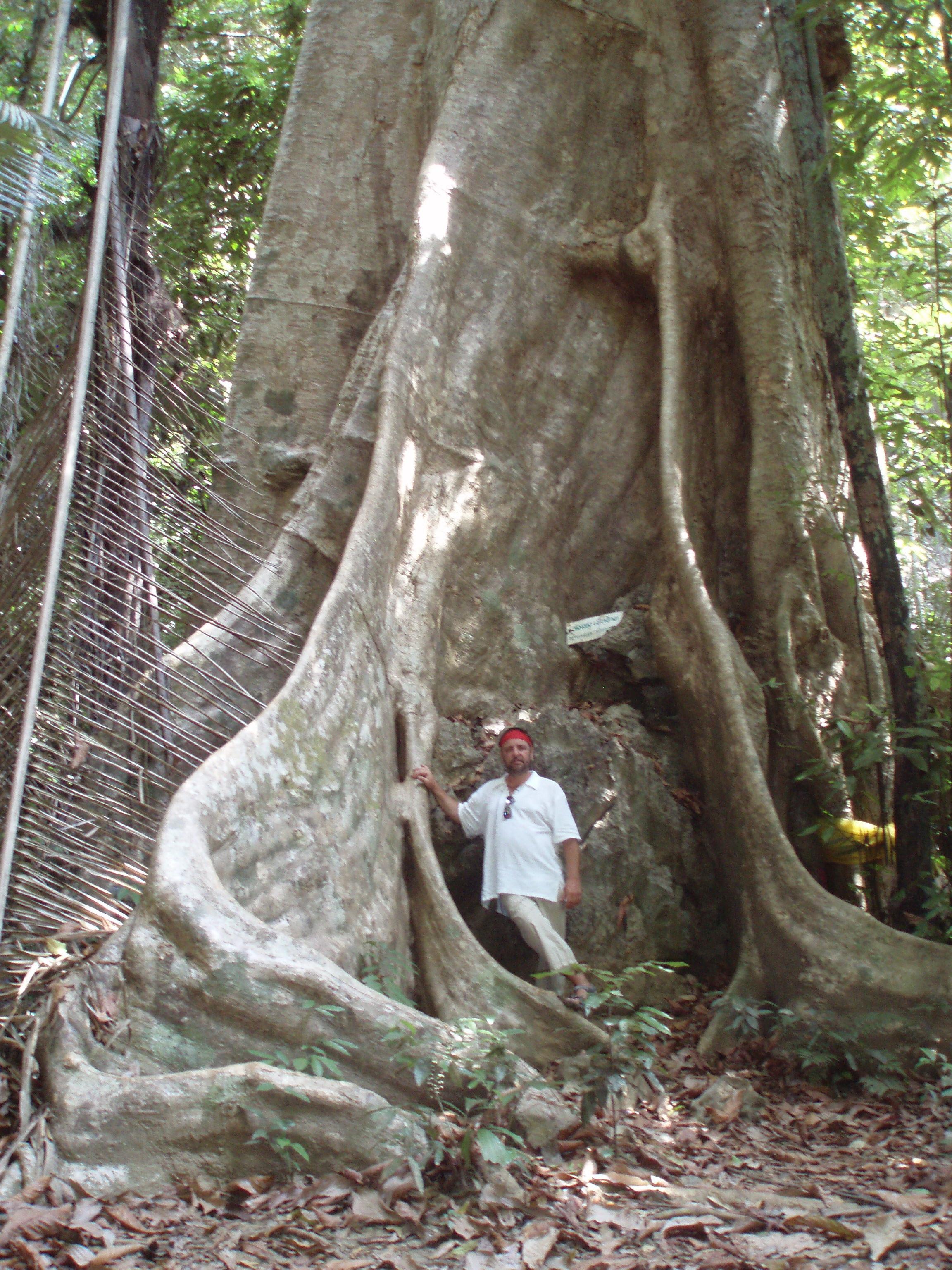
Ein wirklich gigantischer Baum im Urwald im Süden Thailands.

Ein grosser Baumstamm mit weit ausholenden Wurzeln und dazu im Vergleich ein kleiner Mensch in weißer Kleidung.
Kudra :maybe_verified:kudra@aus.social
2025-08-20
w my local #greenpeace fam💚 (and our little signs from the last meeting)

#greenpeace #timetoresist #volunteering #wearenature #freepalestine #savethetrees #taxtherich
2025-06-26

So, I heard back from #MDIFW about #EAB in our area. Apparently, my town is one that was recently identified to have Emerald Ash Borer outbreaks. They gave me information about treating the #GreenAsh trees (or taking them down), and an arborist friend of mine down the road was recommended to deal with infested trees. #MDOT may be responsible for taking down the ones by the road that are too far gone, but I'll let them know that there's someone nearby who they could hire to do that. I'll be talking to the neighbors who have the tree that might be saved about pesticide application. The #WhiteAsh tree by the #SacoRiver (which I don't think is infected), would be tricky to deal with, since pesticides could get into the river (though it's not like the Saco is potable water anyways -- but still. And it flows into the ocean). Anyhow, I have a plan of action. I'll provide updates on the trees as needed.

#MaineTrees #CitizenScience
#EmeraldAshBorer #SaveTheTrees #InvasiveSpecies #ProtectTheTrees #Stewardship #YorkCountyMaine

2025-06-25

#AshTree update. I went down to the Saco River and positively identified a White Ash tree that might *not* have #EAB (Emerald Ash Borer). It did have a lot of invasive vines choking it out (Oriental Bittersweet being one), so I did my best to cut and remove the vines. The tree also had some sprouty bits emerging. Not sure what that means. I'm wondering if I could safely remove those and get them to root, but I'll leave them alone until I find out. I still have to report the infected Green Ash trees down the street to #MDIFW, and find out what should be done with them (not on our property, but a parcel that's about to be developed). I want to make sure the owners know to how to dispose of them safely without spreading more EAB.

#MaineTrees #CitizenScience #EmeraldAshBorer #SaveTheTrees #InvasiveSpecies #ProtectTheTrees #Stewardship

2025-06-08

Some highlights from the #APCAW conference on #AshTrees and #EmeraldAshBorer

#JohnDaigle mentioned chemical treatment on selected trees combined with biological control releases. May not need to keep using chemical treatments if the bio-control takes hold.

EricTopper: "Pheromones could draw EAB away from places which would fall under the bio-control umbrella."
John replied that it has not been tested, as far as he knows.

John Daigle: "The goal ultimately is to co-exist. Get brown ash to evolve to be more resistant, possibly by cross-breeding with other ash trees. That is being done with Manchurian ash and is having success."

Ella MacDonald: "Brown ash used for Wabanaki basket making. Green ash not as suitable for basket making.
We might breed brown with green ash - green ash might be more resistant to EAB. Possibly white ash with brown? However, there us no federal store of black or brown ash seeds. Seed collecting of those two are important. Folks can collect it themselves, after positively identifying the species."

FMI about #SeedCollecting from #APCAW / #UMaine

#Ash Protection Collaboration Across #Waponahkik

Seed Collection and Ash Regeneration

Includes:
- Collecting Ash Seed
- Seed Collection Map and Reporting Tool
- Processing and Storing Ash Seed
- Growing Ash From Seed

umaine.edu/apcaw/seed-collecti

#SolarPunkSunday #Biodiversity #Rewilding #PreserveTheSacred #Maine
#EAB #EmeraldAshBorer
#AshTrees #InvasiveSpecies #Wabanaki
#ProtectTheForests
#MaineNews #SaveTheTrees #WabanakiCulture #WabanakiBasketry #WabanakiTradition #Forestry #ProtectTheSacred #TraditionalEcologicalKnowledge #NativeAmericanBasketry #Sustainability #IndigenousStewardship #CulturalPreservation #InvasiveSpecies #EAB #PreservingNature #TEK #TIK #TraditionalIndigenousKnowledge #Basketry #PreservingTheSacred #PreservingTheForest #WabanakiConfederacy
#WabanakiAlliance

Client Info

Server: https://mastodon.social
Version: 2025.07
Repository: https://github.com/cyevgeniy/lmst