These things do seem to fall out of trees around here. Probably 20+ year old panels, and I suspect the batteries only good for turning in for "core", but you'll get $10 gift cards for each of those at auto stores, and you might find one or two good enough for a small system. Panels look pretty clean to me, definitely a cool deal there for whoever snags or snagged them. #solar #scavenging
#Scavenging


Scavenging, Freeganism, and Veganism
One area that I think there can be quite a bit of contention on is whether scavenging and freeganism are vegan. My answer to this is: it depends. I think the context in which the question is being asked is important.
My personal approach is to avoid scavenging and freeganism, and I feel this approach is optimal to the group of people in my particular situation as the optimal way to practice and model veganism. But I don't think it applies to people who live in extreme poverty or live a subsistence lifestyle where choices are greatly restricted because veganism is about doing everything practicable to avoid animal exploitation, and what is practicable to someone like me is not necessarily practicable to someone with greatly restricted resources.
Furthermore, I also think that in a context in which avoiding it is not practicable and the option is available, scavenging and freeganism is not only reasonable because it is practicable, but it literally is the vegan option. I think that practiced correctly, scavenging and freeganism do not exploit animals. I don't think all use of something that came from an animal is inherently exploitation.
Allow me to illustrate with a couple examples. If someone wanted to collect the hairs I naturally shed as I was walking around outside, I would not consider this exploitation. What would be exploitation would be forcibly cutting my hair, especially if I were treated in a similar manner as the vast majority of commercial sheep are (hyperexploitation).
A big problem with commercial sheep is they are bred to not shed their hair naturally, causing them to require shearing which their natural counterparts do not. This breeding is exploitation in itself, as it produces traits harmful to the sheep that exist only to benefit humans. Commercial sheep are then further exploitated in the most deplorable ways imaginable. Shearers are typically paid by the amount of wool they shear, not by how long they work, which incentivizes fast shearing that inevitably leads to frequent shearing injuries. Suffering is the price of profit to the capitalist class, for both the shearers and the sheep.
Consider another example. I die of natural causes or of an accident. If a human stumbles onto my rotting corpse, as long as they didn't cause my death, I don't think they're exploiting me if they decide to...eat that. Not going to spend a lot of time thinking about it since I'm not personally into vore, but I wouldn't consider it exploitation. Now, other people may feel differently, and I think that should be respected, but I don't think human conceptions of the treatment of their corpses apply generally to nonhuman animals (though this is potentially a more complicated question for animals like elephants that also seem to practice their own death rituals).
So I think scavenging can not only fit the definition of veganism for qualifying as the best practicable option, I think that in some cases it fits the definition in the sense that it doesn't cause the exploitation of any animal.
Nevertheless, I don't think scavenging and freeganism is vegan for everyone. And one big reason for this is that capitalism exists. Capitalism makes exploitation inevitable in a search for greater and greater profits. And regardless of capitalism, people can lie to both themselves and others about whether something was truly scavenged or acquired in a freegan way. They can also simply be mistaken.
For example, eating the free non-vegan pizza served at the university event isn't practicing freeganism, though it may seem to be. This is because while that pizza may be free for the person eating it, it was bought by someone who is thus producing a demand for it. On the other hand, eating a non-vegan pizza that was obtained by dumpster diving is freeganism because no additional demand is being created by that act.
I also think that if an item is being sold under capitalism, that even if people start purchasing only scavenged items, a strong incentive exists to label items as scavenged that definitively are not, in the same way that greenwashing occurs and in the same way that corporations lie or exaggerate about how well they treat their workers. Additionally, this incentive is increased given that scavenging is not nearly as scalable as more exploitive methods of production, and so practical veganism needs non-exploitive solutions that can be deployed at scale in order to effectively counter animal exploitation.
Quite simply, there is no way out of exploitation of any kind without being able to deploy solutions that can scale to fill the necessary demand, which scavenging and freeganism cannot do. And this is why, even though these can be vegan, even optimally vegan, in certain situations,they are not vegan in a general sense. Additionally, in the current environment, for some people, they are vegan only in the sense that better options are not practicable for the people in question. This is because I think it's important to show that one isn't 'too good for' ethical solutions that can be deployed at scale. Otherwise the position becomes that avoiding exploitation is somehow only for the well off, which is not itself a vegan position since that would necessarily only reduce exploitation for a small fraction of the animals currently being exploitated. There is therefore also a larger obligation, when possible, to push society to deploy the solutions that veganism needs to end exploitation at scale, and not just on an individual level.
And this also just so happens to help end the exploitation of the most oppressed and hyperexploited of humanity as well, because the hyperexploitation of animals of today is fueled by the hyperexploitation of human workers in a way that simply cannot be resolved at scale for the human workers involved without abolishing the exploitation of the animals involved.

#Seeds from An #Interstellar “#Dandelion” : Medium
How #Scavenging Made Us #Human : Misc
#AI Isn’t #Inherently Good or Bad. #Leaders Must Decide to Use It #Responsibly : Misc
Latest #KnowledgeLinks


Aha, curb furniture upgrade! Unusually, one of the kids told me about this (he tends to be horrified by dumpster diving). One for one swap, the old one is nearly completely rusted out, lol. The other one on the curb and part in a bin. Now, to make cushions for the chairs. #scavenging #furniture



The importance of #scavenging in our #evolution.
I like the image which highlights factors like moonlight on hominin behaviour. #Pleistocene #lunar #ecology is the way to think!
https://phys.org/news/2025-10-carrion-human-importance-scavenging-evolution.html
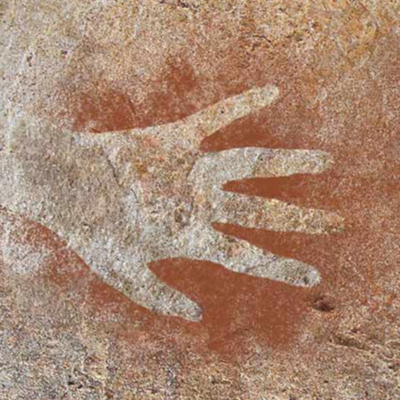
New research reframes scavenging as a vital evolutionary strategy, arguing that early humans thrived as opportunistic foragers—masters of meat, microbes, and cooperation. #HumanEvolution #Anthropology #Scavenging #Archaeology https://www.anthropology.net/p/the-scavengers-edge-how-eating-the
Hmm, I could use one of those wheels (for the axle), but violates the 5 mile one hour rules for curb pickup salvaging. Never drive a long distance for a "it's on the curb" pickup, because odds are it won't be there. #scavenging .


Sunday, August 3, 2025
Russian troops resort to ‘total infiltration’ tactics in front-line Pokrovsk — Inside the Battle of Kostiantynivka, as Ukrainian forces brace for three-sided Russian assault — Ukrainian drones target Shahed storage site, industrial facilities in Russia — Ukraine’s drone strike reportedly sparks fire at oil depot in Russia’s Sochi … and more
https://activitypub.writeworks.uk/2025/08/sunday-august-3-2025/
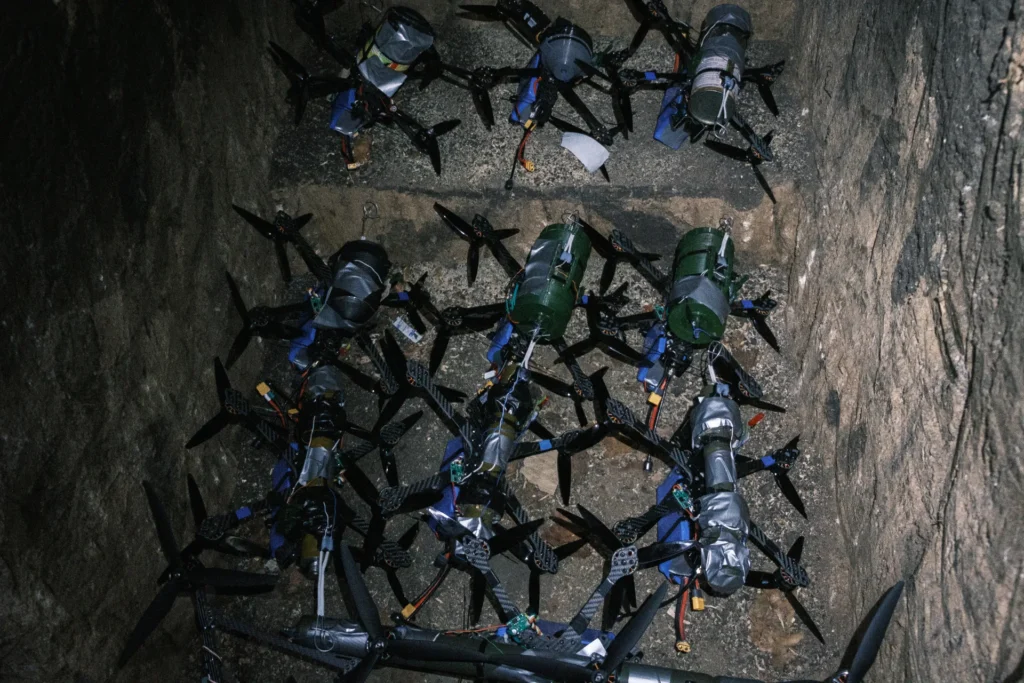

YEVGRAF: I told myself it was beneath my dignity to arrest a man for pilfering firewood. But nothing ordered by the Party is beneath the dignity of any man. And the Party was right: one man desperate for a bit of fuel is pathetic; five million people desperate for fuel will destroy a city.
Robert Bolt (1924-1995) English dramatist
Doctor Zhivago, film (1965)
Sourcing, notes: wist.info/bolt-robert/77711/
#quote #quotes #quotation #qotd #dignity #necessity #pilfering #poverty #scavenging #want
Traeger smoker on the curb the other day. People do not know how to fix things. (Bypassed this, don't need a smoker... already have a charcoal one). #ReduceRepairReuseRecycle #scavenging

LOL always interesting to see what people are posting on Craigslist. Not driving back that direction anytime soon but these are popular for people with retro campers.
Remove rust, lightly sand if necessary, repaint. Or just replace the drain plug (replacement available from outdoors retailers online/etc.)
(As coolers, they suck, not enough insulation and very thin walls, my parents had this exact model and the time to melt all the ice in there in summer fishing/camping was 12 hours).

Free stainless steel garbage cans around here. I am so tempted to make this into a dipole antenna, so I can call it a "trash can antenna".
(If you have a couple of spare Cybertrucks, we could do the same thing, but on lower bands).

Aha, someone left these (future) beehive lids out for free. (Aka free plywood). May need to double up or reinforce these though, thin plywood... #scavenging

Cheap/free lumber season. Check your local Christmas tree lot, esp. at major retailers. Three years ago, I bought the lumber -- the remains of a Christmas Tree display made out of 4x6's and 2x4's -- for $100, and built an entire shed from scratch and had so much wood left over I gave the rest to a friend for free. It required 4 hours with a power drill to remove all the screws in the wood in parking lot (and multiple trips), but it was well worth the effort. You may just find they are going to throw the whole thing in the waste bin out back, talk to the manager. #bargain #tips #scavenging #lumber #diy
Yay! Soon to be BMW Motorcycle Beehive Lids! (Thanks to the free pile of pallets at our local BMW motorcycle dealer... which have very sturdy plywood on some of them) #random #scavenging

This would be a great deal for someone with need to build a garden bed, but the timeframes this person have in their post ("must be gone tomorrow", ie today) are RIDICULOUS (unless you live next door). Have you ever moved that much weight before? #random #scavenging

Objective achieved! Walked the compost bin home with the dog. #dog #scavenging


𝗝𝗼𝘂𝗿𝗻𝗮𝗹 𝗼𝗳 𝗔𝘁𝗺𝗼𝘀𝗽𝗵𝗲𝗿𝗶𝗰 𝗦𝗰𝗶𝗲𝗻𝗰𝗲 𝗥𝗲𝘀𝗲𝗮𝗿𝗰𝗵 | 𝗩𝗼𝗹𝘂𝗺𝗲 𝟬𝟳 | 𝗜𝘀𝘀𝘂𝗲 𝟬𝟭 | 𝗝𝗮𝗻𝘂𝗮𝗿𝘆 𝟮𝟬𝟮𝟰
💠 Control of the Dust Vertical Distribution over Western Africa by Convection and Scavenging 👉 The authors investigate here the role of deep convective transport and scavenging on the vertical distribution of mineral dust over Western Africa. #Dust #Vertical_distribution #Sahara #Sahel #West_Africa #Climate_model #Convection #Scavenging #ITCZ 🔗 DOI: ✉ Email: jasr@bilpublishing.com 👩💼…
Aha! Scored a free set of asphalt roof tiles for the Little Free Library project. Someone is getting their house re-roofed, and scavenged the scrap in the rubbish bin as I was driving by. Don't need much. #scavenging #LittleFreeLibrary #diy #project

Client Info
Server: https://mastodon.social
Version: 2025.07
Repository: https://github.com/cyevgeniy/lmst