[May be behind a paywall] The Strongest #SolarStorm in 20 Years Did Little Damage, but Worse #SpaceWeather Is Coming
Years of careful planning helped safeguard against last weekend’s severe space weather, but we still don’t know how we’d cope with a monster event
By Jonathan O'Callaghan & Lee Billings
May 16, 2024
"For years, we have been warned about impending doom from the sun. If pointed in our direction, powerful eruptions of radiation and plasma from our star can strike our planet to supercharge Earth’s atmosphere and magnetic field, effectively hitting a global 'reset' button on much of our #ModernTechnology. A sufficiently intense bombardment could raise a #Geomagneticstorm that would push satellites out of orbit, short out submarine cables that suture together the #Internet and plunge the world into darkness with massive #blackouts from collapsed #PowerGrids. Yet this past weekend, when one of the strongest solar outbursts in 20 years blasted our planet, we managed to emerge unscathed thanks to years of careful public and private planning.
"The storm has ebbed, although the solar region that sparked it has since spat out additional monstrous flares—fortunately no longer targeted at Earth because of the sun’s spin [which will change in a short time, as that spot will once again be Earth-facing]. But while we’ve passed our biggest test yet, experts say now is not the time to let down our guard: the question of more cataclysmic solar activity isn’t a matter of 'if' but 'when.'
"'This is a success story,' says Shawn Dahl, a space weather forecaster at the National Oceanic and Atmospheric Administration’s [#NOAA] Space Weather Prediction Center (#SWPC) in Boulder, Colo., but the weekend’s storm was 'nowhere close' to the strength of more powerful known historical events. Is it time to put our feet up? 'Heck no,' he says.
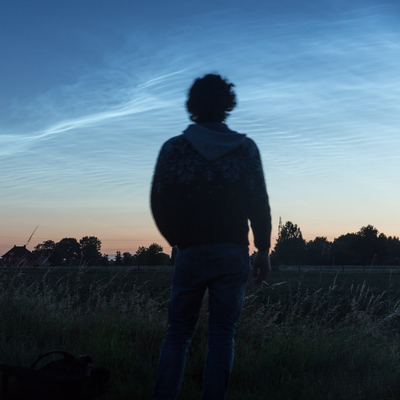
"On May 8, after ground- and space-based telescopes detected multiple explosive outbursts from the sun headed for Earth, the SWPC issued a warning of an imminent severe space weather event. At least seven of these outbursts, known as coronal mass ejections, or #CMEs, walloped our planet with billions of tons of solar plasma—an interplanetary punch that left Earth’s magnetic field ringing and made the upper atmosphere swell, almost as if bruised. The resulting geomagnetic storm was the most severe since 2003. It posed potentially grave dangers to global infrastructure while also bathing much of the world in achingly beautiful #auroral displays.
"At present, it’s difficult to say just how close we came to catastrophe because many companies— from grid controllers to satellite operators—do not like to reveal information on how a geomagnetic storm affected them, says Daniel Welling, a climate and space scientist at the University of Michigan. "'They don’t want to look like they’re vulnerable,' he says. 'Satellite operators have to insure their spacecraft, and that can be very expensive.' Yet various scattered reports are already offering some insight into the storm’s disruptive effects. Flight trackers showed airlines rerouting planes to avoid Earth’s poles, where crews and passengers would have been exposed to worrisome spikes in #CosmicRadiation from the storm. Transpower, New Zealand’s state-owned enterprise running that nation’s electric power, said in a statement that it had preemptively 'switched off some circuits across the country on Saturday [May 11],' and as a result, there was 'no impact on New Zealand’s electricity supply.' In Minnesota, the firm Minnesota Power opened capacitor banks to deal with possible effects from the storm. Similar precautions were likely taken at other power grids around the world, too, although the lack of information makes it 'tremendously' difficult to know how effective those measures were, Welling says.
"Geomagnetic storms can also play havoc with signals from #GPS satellites, and multiple farmers reported issues with GPS-guided farming equipment over the weekend. In South Dakota, one farmer’s tractor started #DrivingInCircles during the storm, and multiple farmers reported outages on social media. 'Our GPS on both the planter and the strip tiller were absolutely bonkers today,' one commenter wrote on Reddit. 'I saw this post and looked ... no GPS,' said another. LandMark Implement, a John Deere dealership based in Nebraska and Kansas, texted its customers an advisory to 'turn off' GPS devices on their farming equipment. 'The base stations were sending out corrections that have been affected by the geomagnetic storm and were causing drastic shifts in the field,' the company noted in an online post. LandMark declined to comment further when contacted.
"The storm posed hazards in space as well. Seven astronauts on the International Space Station were mostly safe from the storm’s effects, #NASA said, but did have to take some precautions. 'The crew was told to avoid lower-shielded areas of the space station out of an abundance of caution,' says Sandra Jones, a spokesperson for NASA’s Johnson Space Center. 'Certain areas provide less protection from radiation, such as the air lock, while other areas, such as crew quarters, provide enhanced protection. The crew was never in any danger, and the energy levels have since decreased.' Other satellite operators experienced greater difficulties. One company in the U.K., Sen, which streams 4K video from a satellite in low-Earth orbit, chose to power down its spacecraft for four days to prevent any damage from the storm, such as fried circuit boards or electronic failures. 'It was in an idle mode,' says Marcin Bujar, spacecraft operations lead at Sen. 'We just kept the bare minimum on—the flight computer and radio receiver.' This prevented the satellite from carrying out some tasks, including planned observations of flooding in South America and wildfires in Canada. 'It definitely had an impact,' Bujar says."
Read more:
https://www.scientificamerican.com/article/the-strongest-solar-storm-in-20-years-did-little-damage-but-worse-space/?utm_source=pocket-newtab-en-us
#SolarCycle25 #CarringtonEvent #SolarFlares #Auroras