They never stopped by. Second time in so many months there was such an announcement made with no follow-through whatsoever. I think it's just to frighten residents who've removed or deactivated their smoke-detectors so as to facilitate smoking meth or crack; which whatever—just don't steal my shit. 🤷/😶
#detachment
Wenn eine Situation eskaliert #Detachment ist der Schlüssel zur souveränen Führung. Hier mal was nicht-technisches zu #Leadership

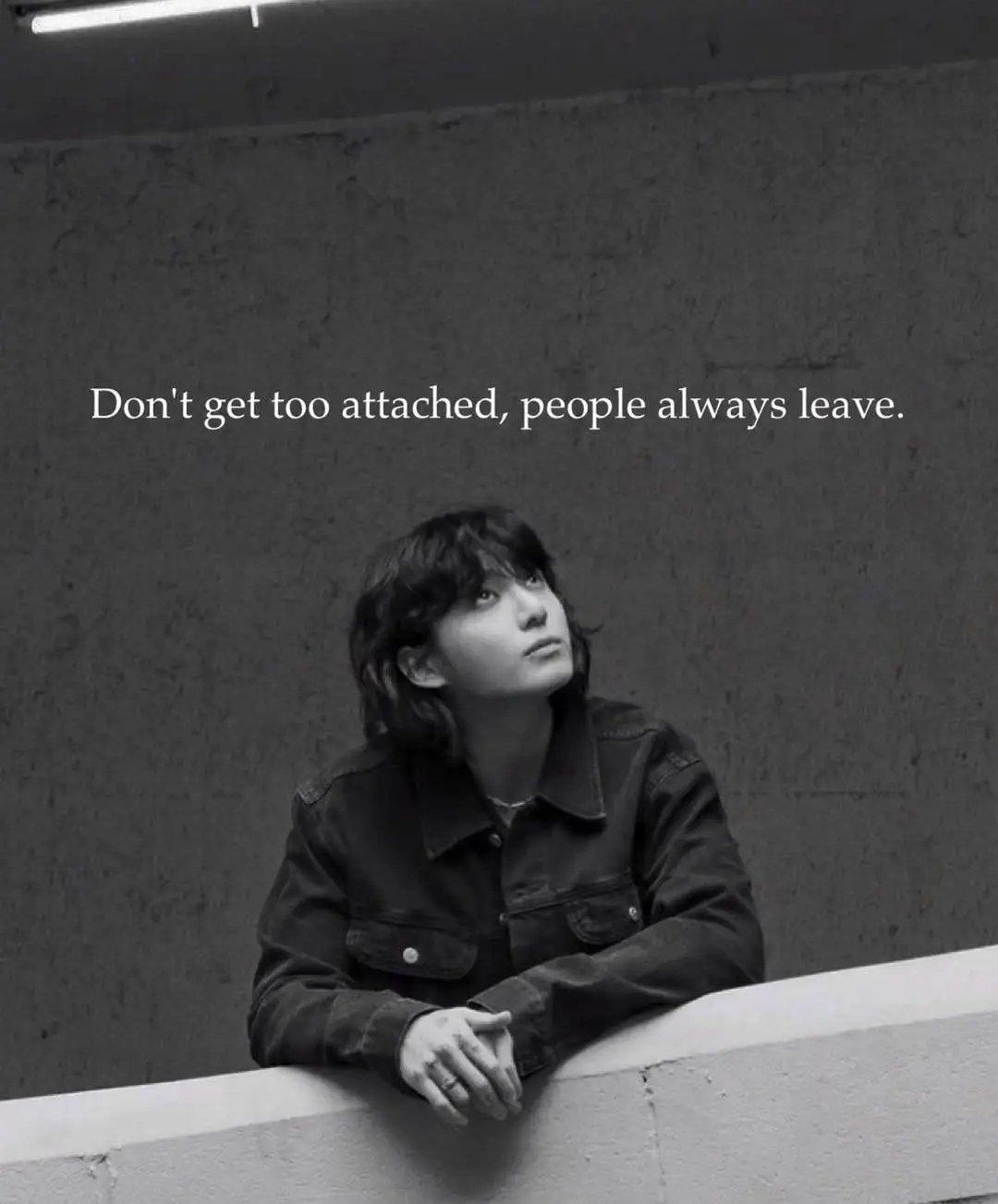
Don't get too attached; people always leave.
#LettingGo #EmotionalWisdom #LifeLessons #Relationships #SelfPreservation #GrowthMindset #Detachment #Quotes #ShareInspireQuotes

It's kinda funny to me how I can put a lot of time and energy into making YouTube videos for months, and only get 5 subs. But then I make a Mastodon acct to shit out dumb posts, and I get 20 followers in my first 5 days lol

Quote of the day, 13 August: St. Thérèse
[Did she seek out the company of her blood sisters?]:
On the contrary—during recreation and at other times, she deliberately avoided our company and sought out instead the sisters who were least sympathetic toward her.
Mother Agnès of Jesus, OCD (Pauline Martin)
Testimony given 13 August 1910, Ordinary Process
If you only knew how much I LOVE you. When I meet you, it seems to me you are an angel. . . .
Pardon me for all the sorrows that I have caused you; if you only knew how sorry I am for having told you that you were calling me too often. . . .
Oh! after your Profession never will I cause you any pain. . . . A dieu!. . . Pardon me. . . .
Saint Thérèse of Lisieux
Letter 49 to her sister, Marie of the Sacred Heart, OCD
Note: This remarkable testimony reveals the emotional discipline of fifteen-year-old Thérèse upon entering Carmel. For six weeks after her 9 April 1888 entry, she refrained from interacting with her blood sisters Pauline (Mother Agnès) and Marie, who were already in the community. When Marie emerged from retreat before her solemn profession in May, Thérèse finally sent an emotionally charged letter confessing her love and asking forgiveness for having rebuffed Marie’s attempts to help Thérèse adjust to monastic life.
The “calling too often” refers to Marie’s role as Thérèse’s “angel”—the sister assigned to teach her Carmelite customs. Marie later testified:
It was hardly three weeks that she was in Carmel, and, thinking that she did not know how to find the Office alone, I wanted to keep her with me to teach her how to find the commemorations. But instead of taking advantage of this opportunity, she answered sweetly: ‘I thank you, I found them today. I would be happy to stay with you, but it is better that I deprive myself, for we are not at home!’
As Bishop Guy Gaucher notes, Thérèse faced a complex challenge: the community was watching for any sign of favoritism toward “the third Martin sister,” while she herself felt “in danger of being suffocated” by two attentive older sisters and “wanted to find her own freedom.”
Her solution—publicly avoiding her sisters while maintaining intimate correspondence during permitted times—demonstrates remarkable maturity. She understood that visible family gatherings in the monastery would undermine her witness and create resentment, yet she still needed these precious family bonds. Marie’s testimony revealed the pain of this necessary distance.
Meanwhile, Thérèse wouldn’t write to Pauline, her beloved “little mother,” until July—four months after entering—and then only in coded, mystical terms. The young postulant was navigating the delicate balance between authentic religious detachment and the preservation of family bonds.
Thérèse of Lisieux, S & Clarke, J 1982, General Correspondence: Letters of Saint Therese of Lisieux: Volume 1 1877-1890, Centenary ed., Institute of Carmelite Studies, Washington DC.
Gaucher, G 1993, The story of a life: St. Thérèse of Lisieux, HarperSanFrancisco, San Francisco, CA.
Archives du Carmel de Lisieux 2025, Témoin 1: Agnès de Jésus, Les témoignages du Procès Ordinaire, Archives du Carmel de Lisieux, Lisieux, viewed 11 August 2025, https://archives.carmeldelisieux.fr/naissance-dune-sainte/les-proces-la-sainte-de-therese/le-proces-ordinaire/les-temoignages-du-proces-ordinaire/#temoin-1-agnes-de-jesus.
Translation from the French text is the blogger’s own work product and may not be reproduced without permission.
Featured image: Detail of the folded hands of St. Thérèse. Image credit: Discalced Carmelites (By permission)
#detachment #familyLife #MarieOfTheSacredHeart #MotherAgnèsOfJesus #StThérèseOfLisieux

اِنْـفِـصـالٌ عـاطِفِـيٌّ (emotional detachment);
There are times when you stare at your reflection and just wonder: Who is that on the other end? Or how about that time when you remember when you were 10, and now suddenly you're just… 45, as if there was nothing in between? Or how about looking around you, and just can't make a connection or feel any to anything that "used" to have a meaning for you at some point in life? Not the most pleasant experience, surely.
Many say that one becomes "foggy" after 40 and will typically lose focus. However, there is definitely something exceptional in this process when it comes to living a war around the age of 10, and growing up with its consequences; which would last decades. A war that still pushes buttons inside and gives a mental strain after all these years.
Meanwhile, the retirement (at 41) has this "strange" transformation; Things don't feel as they were, as in my 30s and 20s, when I had some bits of social life. My life was closing down slowly, but with retirement, the circle tightened to the limit that meeting people, new or old, sounds… just weird.
Those lost memories, good and bad, that occurred some time between 10 and 30: Where did it all go? Those friends that I passed by and had fun with, where are they now? Suddenly, everything disappeared and changed, in such a quick pace that my mental capacity can't find the proper algorithm to cope with.
Things that I used to love (or miss) sound and feel detached from my mental process, like a new born baby trying to learn the world from scratch and make sense of it all from the very beginning. A process that probably a 45-year-old mind is not yet capable of bearing with. It's the feeling of being born in the wrong place, at the wrong time, with the wrong people, while all there is left is a murky pond to stare at, not knowing what to do…
#detachment #emotional #emotions #reflect #reflection #stilllife #still_life #project #match #matchsticks #goodmorning
There are times when you stare at your reflection and just wonder: Who is that on the other end? Or how about that time when you remember when you were 10, and now suddenly you're just… 45, as if there was nothing in between? Or how about looking around you, and just can't make a connection or feel any to anything that "used" to have a meaning for you at some point in life? Not the most pleasant experience, surely.
Many say that one becomes "foggy" after 40 and will typically lose focus. However, there is definitely something exceptional in this process when it comes to living a war around the age of 10, and growing up with its consequences; which would last decades. A war that still pushes buttons inside and gives a mental strain after all these years.
Meanwhile, the retirement (at 41) has this "strange" transformation; Things don't feel as they were, as in my 30s and 20s, when I had some bits of social life. My life was closing down slowly, but with retirement, the circle tightened to the limit that meeting people, new or old, sounds… just weird.
Those lost memories, good and bad, that occurred some time between 10 and 30: Where did it all go? Those friends that I passed by and had fun with, where are they now? Suddenly, everything disappeared and changed, in such a quick pace that my mental capacity can't find the proper algorithm to cope with.
Things that I used to love (or miss) sound and feel detached from my mental process, like a new born baby trying to learn the world from scratch and make sense of it all from the very beginning. A process that probably a 45-year-old mind is not yet capable of bearing with. It's the feeling of being born in the wrong place, at the wrong time, with the wrong people, while all there is left is a murky pond to stare at, not knowing what to do…
#detachment #emotional #emotions #reflect #reflection #stilllife #still_life #project #match #matchsticks #goodmorning

Top ten posts in July 2025
https://library.hrmtc.com/2025/08/01/top-ten-posts-in-july-2025/
#aMatterOfConvenience #aleisterCrowley #angelMagicJohnDee #ArthurMoros #awakening #baby #bes #bestPosts #bestTen #Bible #blackCube #book #casual #christians #ChristopherSHyatt #cippus #ClavisSaturni #conqueror #countess #court #crocodiles #darcyKuntz #DavidBeth #DavidRakine #detachment #elAquelarre #Enochian #externalHierarchy #FraterYechidah #Goya #grimoire #hadit #heretic #hermeticOrderOfTheGoldenDawn #hierarchy #higherSelf #horus #husk #idea #independent #inherentStrangeness #initiation #initiationRituals #israelRegardie #JMarvinSpiegelman #JeanLéonGerome #JohnColleton #journey #July2025 #KristinSwenson #kundaliniOldComment #LaVéritéSortantDuPuits #liberLegis #Liechtenstein #lightBringers #love #loveUnderFear #loveUnderWill #lucifer #magicallyDirected #meme #mostPeculiar #naked #normie #ofCourse #onePointedness #OttoRahn #paganLove #peace #practical #propaganda #quote #sabbaticGoat #saturn #Saturnian #seach #serpentLove #spiritualFormula #Star #stephenSkinner #sublime #summary #summaryOfTheMonth #TPolyphilus #TheBookOfTheLaw #TomasVincente #TonyFuller #topPosts #topTen #trueSelf #truth #Unicursal #unique #virtue


Unicursal ONE-POINTEDNESS DETACHMENT PEACE Propaganda from Hermetic Library Office of the Ministry of Information https://hermetic.com/information/one-pointedness-detachment-peace/index
#propaganda #thelema #AleisterCrowley #FindOut #will #DoThat #OnePointedness #detachment #peace
#propaganda #thelema #AleisterCrowley #FindOut #will #DoThat #OnePointedness #detachment #peace

Unicursal ONE-POINTEDNESS DETACHMENT PEACE Propaganda from Hermetic Library Office of the Ministry of Information https://hermetic.com/information/one-pointedness-detachment-peace/index
#propaganda #thelema #AleisterCrowley #FindOut #will #DoThat #OnePointedness #detachment #peace


Stop waiting. Start living.
True detachment isn't about giving up—it's about flowing with life instead of forcing it.
https://www.youtube.com/@DevFoundationOfficial
#Detachment #Mindfulness #PersonalGrowth #LifeWisdom #InnerPeace #SelfDevelopment #Motivation #Philosophy #PresentMoment #LetGo #FlowState #Spirituality #MindsetShift #WisdomQuotes #LifeLessons #Consciousness #InnerJourney #Peace #Acceptance #LiveInTheNow
#thedevfoundation #Acharyavasudev #vasudevacharya

Not everything broken must be fixed.
Some things must be left.
#healing #clarity #detachment #truth #growth
→ https://bereznev.gumroad.com/l/insider
P.S. Made by a madman — Kirill Bereznev
https://bereznev.gumroad.com/l/insider
DETACHMENT IN ATTACHMENT IN MONKHOOD
#detachment #attachment #monkhood #spiritualawakening #spiritualknowledge #monks #sanyasi
CLICK TO READ . . . .
https://qr.ae/pAm2yB

Mastering Manifestation: Align Your Mind and Intentions
The art of manifestation is fascinating because it combines several interconnected principles that bridge mindset and action.
Resonance
First, there’s the principle of vibration and resonance—essentially, you attract what you embody. When you genuinely align your thoughts, feelings, and actions with your desire, you naturally start noticing and creating opportunities matching that frequency. It’s less about magical thinking and more about tuning your awareness to possibilities that were always there.
Intention
The second principle is clarity of intention. Vague wishes tend to create vague results. When you can visualize your desire with crystal clarity—down to how it feels, looks, and impacts your life—you’re essentially creating a detailed blueprint for your subconscious mind to work with.
Inspired Action
Then there’s the principle of inspired action. Manifestation isn’t passive; it’s an active partnership with the universe. While you hold your vision, you need to remain alert and responsive to opportunities that arise, even if they come in unexpected packages. Think of it as co-creating rather than just wishing.
Detachment
The principle of detachment is equally crucial. While this might sound contradictory, being too desperately attached to specific outcomes can actually block their arrival. It’s about holding your vision with passionate intention while remaining flexible about the how and when.
Gratitude & Presence
Perhaps most importantly, there’s the principle of gratitude and presence. When you cultivate genuine appreciation for what you already have, you create an abundance mindset that naturally attracts more to be grateful for. Living in constant scarcity consciousness sends a very different message to both your subconscious and the universe.
Alignment
Remember, manifestation isn’t about forcing outcomes—it’s about aligning yourself with what you seek while remaining open to how it unfolds. Sometimes what manifests is even better than what you initially imagined, because your higher self knows what truly serves your growth.
Insightful Living
The beauty of these principles is that they work whether you view them through a spiritual lens or see them as sophisticated psychological tools for programming your reticular activating system—the part of your brain that filters reality and determines what you notice and act upon. This duality allows for a rich exploration of human potential, offering insights that resonate with both the seeker of inner peace and the analytical mind. By understanding how these principles can influence your perceptions and reactions, you can harness their power to create a more intentional and fulfilling life. As you engage with these concepts, consider how they manifest in your daily experiences, guiding you toward opportunities and insights that align with your goals and desires. Embracing this holistic approach can lead to transformative changes, enhancing your ability to manifest the reality you wish to create.
https://open.spotify.com/episode/7vxXHVxIkbAF9I5d2Z19ah?si=yeC8fPX7R4mg1ADDm7KB2w
Welcome to a meditation that balances mindful presence with intentional manifestation, guiding you to cultivate a deep awareness of your thoughts and feelings while aligning your aspirations with the universe. This practice invites you to focus on the present moment, allowing you to fully experience the world around you, as you set clear intentions for what you desire to bring into your life. By harmonizing these two powerful aspects, you create a space where mindfulness and manifestation work hand in hand, empowering you to transform your reality and enhance your overall well-being.
#alignment #awareness #balance #detachment #experience #flow #goals #guidedMeditation #healing #howToManifest #howToManifet #insightfulLiving #inspiredAction #intention #intentionalLiving #lawOfAttraction #manifestYourDreams #manifestYourReality #manifestation #manifesting #meditation #mindful #mindfulness #moments #practice #presentMoment #raiseyourvibration #resonance #universeHasYourBack
Quote of the day, 22 May: St. Joachina de Vedruna
Vich, 19 December 1825
Your Excellency,
Joachina de Mas y de Vedruna, desiring to work for the glory of God and the good of others, wishes to embrace a few poor souls who are burning with love for God and long to become religious. But because they are poor and have neither resources nor a place in convents that live in poverty, they are unable to pour out their love to good Jesus.
Therefore, I beg you to grant me permission to receive into my home a few such souls who, through their labor and some alms, may sustain themselves and embrace poverty, following our Master Jesus Christ. In this way, they will also be able to live as religious women.
I make this request with the permission of my confessor and other spiritual advisors.
May God keep me.
At your feet, this sinner,
Joachina de Mas y de Vedruna
In the margin: 19 December 1825, submitted. Jesus Christ.
Saint Joachina de Vedruna
Letter 81 to Bishop Pablo de Jesús Corcuera, Bishop of Vich
Note: This letter, dated 19 December 1825 and addressed to Bishop Pablo de Jesús Corcuera of Vich, marks the official beginning of the Carmelite Sisters of Charity of Vedruna. Written just weeks before the congregation’s foundation on 26 February 1826, it expresses Joachina’s longing to serve Christ through a new religious community: one that was poor, apostolic, and dedicated to the good of others. As the Vedruna sisters approach their bicentenary in 2026, we honor Saint Joachina’s vision, which continues to flourish through her daughters around the world.
Vedruna, J. de 1825, Carta 81 to Bishop Pablo de Jesús Corcuera, in Epistolario J. de Vedruna, scanned edn by Marta Sarti, Carmelite Sisters of Charity of Vedruna, Barcelona. Available at: https://vedruna.eu/wp-content/uploads/2020/06/5-Epistolario-J.-de-Vedruna.pdf
Translation from the Spanish text is the blogger’s own work product and may not be reproduced without permission.
Featured image: This 1903 oil portrait of Saint Joachina de Vedruna was painted by Francesc Morell i Cornet (1845–1916), based on a retouched original photograph. Image credit: Wikimedia Commons (Public domain).
⬦ Reflection Question ⬦
What is one heroic thing that I can do to help the poor or educate needy children?
⬦ Join the conversation in the comments.
#Centenary #children #desires #detachment #hearts #Jesus #love #openness #StJoachinaDeVedruna

Marie du jour, 15 May: St. Teresa of Avila
The queen is the piece that can carry on the best battle in this game, and all the other pieces help. There’s no queen like humility for making the King surrender. Humility drew the King from heaven to the womb of the Virgin, and with it, by one hair, (Sg 4:9) we will draw Him to our souls.
And realize that the one who has more humility will be the one who possesses Him more; and the one who has less will possess Him less. For I cannot understand how there could be humility without love or love without humility; nor are these two virtues possible without detachment from all creatures.
Saint Teresa of Avila
The Way of Perfection, chap. 16, no. 2
Teresa of Avila, St. 1985, The Collected Works of St. Teresa of Avila, translated from the Spanish by Kavanaugh, K; Rodriguez, O, ICS Publications, Washington DC.
Featured image: King (H.NS 19) and Queen (H.NS 23) from the Lewis chessmen, carved of walrus ivory. Scandinavian, late 12th century. Discovered in 1831 in an underground chamber in the parish of Uig, Isle of Lewis. Image credit: National Museum of Scotland / Wikimedia Commons (Some rights reserved).
⬦ Reflection Question ⬦
How can I imitate Mary’s humility, the virtue that draws Christ into the heart?
⬦ Join the conversation in the comments.
#chess #creatures #detachment #humility #KingOfHeaven #love #StTeresaOfAvila #surrender #VirginMary #womb

How do I not become attached to the world?
Attachment to the world is perilous. Remind yourself of death and the Day of Judgment, and prioritize spiritual values.
#detachment #Quranic_insights #worship_and_remembrance_of_death
https://mytodayquestion.com/en/question/how-do-i-not-become-attached-to-the-world
Quote of the day, 4 May: St. Raphael Kalinowski
‘Do you love me? Do you love me?’ [Cf. Jn 21:15-17]. Love gives strength to do the will of God in every situation, to avoid everything that might displease Him, to work and to suffer for His glory.
St. Teresa wanted to suffer or to die; St. Magdalen de Pazzi did not want to die, but to suffer.
Love is strong as death [Sg 8:6]. And just as nothing can resist death, love gives strength to triumph over every challenge. Then you don’t feel pain, and if you do you welcome it. From this fire of God’s love the flame of love of neighbor arises.
Anyone who loves God with all his heart desires that God be loved by all and this desire pervades his whole life….
But who is able to achieve such a degree of perfect love, which will free our soul from attachment to any earthly goods and completely unite our will with God’s will?
When the Divine Savior again asks us for our hearts, let us ask Him to take them to Himself; only He can purify them and light the fire of holy love and an ardent desire to be detached from everything and to want only His holy will.
Saint Raphael Kalinowski
Tierney, chap. 8: Vicar Provincial for the Carmelite nuns (1901)
Tierney, T 2016, Saint Raphael Kalinowski: Apprenticed to Sainthood in Siberia, Balboa Press, Bloomington, IN
Featured image: This detailed view of The Denial of St. Peter by an anonymous follower of Gerard (Gerrit) van Honthorst (Dutch, 1592–1656) was painted in the 17th century and is now in the Prado Museum in Madrid. The canvas, cut on all four sides, is believed to be based on an engraving after van Honthorst’s original, dated around 1620–25 and held in the Minneapolis Institute of Art. Christian tradition has long seen Jesus’ threefold question to Peter in John 21 as a loving invitation to reaffirm his devotion, undoing his triple denial on the night of Christ’s Passion. Image credit: Copyright ©Museo Nacional del Prado (Public domain)
⬦ Reflection Question ⬦
How is Jesus inviting me to respond more fully to His love, even in the face of weakness or failure?
⬦ Join the conversation in the comments.
#detachment #GodSLove #hearts #inspiration #love #perfection #StRaphaelKalinowski #strength #suffering #willOfGod


At a certain level of wretchedness a kind of spectral indifference takes over, and you see human beings as ghostly presences. Those closest to you are often no more than vague shadowy forms, barely distinct from life’s nebulous background and easily reabsorbed by the invisible.
[À un certain degré de misère, on est gagné par une sorte d’indifférence spectrale, et l’on voit les êtres comme des larves. Vos plus proches ne sont souvent pour vous que de vagues formes de l’ombre, à peine distinctes du fond nébuleux de la vie et facilement remêlées à l’invisible.]
Victor Hugo (1802-1885) French writer
Les Misérables, Part 4 “St. Denis,” Book 6 “Little Gavroche,” ch. 1 (4.6.1) (1862) [tr. Donougher (2013)]
Sourcing, notes, alternate translations: wist.info/hugo-victor/76374/
#quote #quotes #quotation #qotd #depression #detachment #ghosts #isolation #misery #poverty #shadows #unreality #withdrawal #wretchedness

Detachment or disconnection ruminations-
#disconnection says: “This pain is not mine. I don’t have to feel it.”
#detachment says: “This pain is not only mine. I can feel it with care, not be consumed by it.”
Disconnection numbs us from the field.
Detachment frees us to stay in the field without drowning.
Disconnection can be a trauma reflex.
Detachment can be a trauma integration.
Client Info
Server: https://mastodon.social
Version: 2025.07
Repository: https://github.com/cyevgeniy/lmst