
CAS Future Leaders Program | Ph.D. & Postdoc Leadership
#scientificknowledge

"#Safeguarding Research & Culture (#SRC) is creating an alternative infrastructure for #archiving and disseminating of #culturalheritage and #scientificknowledge. We seek to preserve cultural memory in a way that traditional archives cannot. Together, we can ensure that our cultural, intellectual and scientific heritage exists in multiple copies, in multiple places, and that no single entity or group of entities can make it all disappear."
V. @lavaeolus
https://program.why2025.org/why2025/talk/B8DANE/
#TechnologyNetworks
#AcademicResearch
As the fields of #lifescience and #healthcareresearch progress, they are producing increasingly large amounts of #complexdata that must be carefully analyzed to produce reliable results.
#Datasets too large and varied to analyze with conventional methods are known as #bigdata and can often hold the key to leaps forward in #scientificknowledge and understanding.

11/
Cromer continued [4]:
"Cults and prophets arise spontaneously from the depths of the egocentric mind, whereas #ScientificKnowledge must be passed from generation to generation by a complex educational process that spans twenty years or more. [...] just as Europe once abandoned Greek #education in a wave of pious fundamentalism, America may someday turn out the light"
Today, preserving #science may need "to stop relying on scientific infrastructure provided by one nation or organization" [5]

GPT-fabricated scientific papers on Google Scholar: Key features, spread, and implications for preempting evidence manipulation https://misinforeview.hks.harvard.edu/article/gpt-fabricated-scientific-papers-on-google-scholar-key-features-spread-and-implications-for-preempting-evidence-manipulation/
"Roughly two-thirds of the retrieved papers were found to have been produced, at least in part, through undisclosed, potentially deceptive use of GPT. The majority (57%) of these questionable papers dealt with policy-relevant subjects (i.e., environment, health, computing), susceptible to influence operations. Most were available in several copies on different domains (e.g., social media, archives, and repositories).
Two main risks arise from the increasingly common use of #GPT to (mass-)produce #fake, scientific #publications. First, the abundance of fabricated “studies” seeping into all areas of the #research infrastructure threatens to overwhelm the scholarly communication system and jeopardize the integrity of the scientific record. A second risk lies in the increased possibility that convincingly scientific-looking content was in fact deceitfully created with #AI tools and is also optimized to be retrieved by publicly available academic search engines, particularly #GoogleScholar. However small, this possibility and awareness of it risks undermining the basis for #trust in #scientificKnowledge and poses serious societal risks."
#science #AIEthics
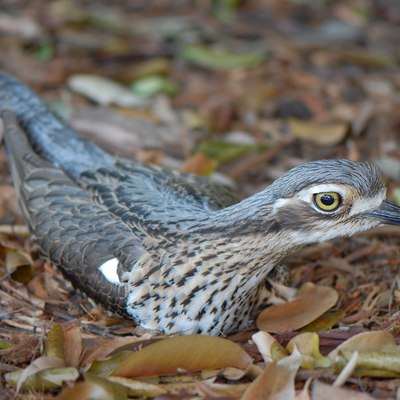
Just met a person who thinks that Covid was probably a nasty flu.
Which is not utterly distant to respiratory disease scientists insisting for +80 years that "It's not airborne" and even this year, "Surgical masks are good enough."
Arguing from "#ScientificKnowledge is the product of inter-related communities all trying to disprove their hypotheses" now looks pretty hollow.
The harm these jokes have done to the credibility of our best source of knowledge about the physical world is immense.

Effects of transdisciplinary research on scientific knowledge and reflexivity
#LenaTheiler #OskarMarg #ScientificKnowledge #transdisciplinarity

2/3 Our take is first to get the lay of the epistemic land, so to speak, and derive the principles of #ScientificKnowledge #classification from the information we have about the "disciplinary matrix" of topics. The resulting interpretable geometric space provides a map of inhabitable knowledge space. Only then we take a look at where the academic tribes live and project the topic portfolios of individual researchers onto the space of the epistemic possibilities.


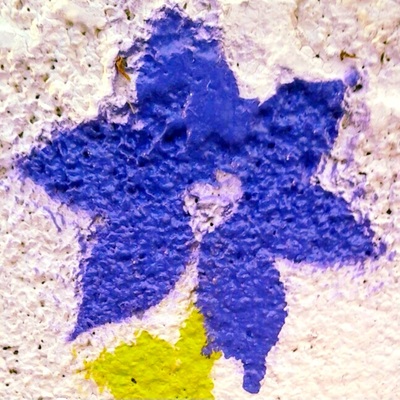
Another gem! Braiding Sweetgrass - Robin Wall Kimmerer - this time on #Libby https://share.libbyapp.com/title/2854558
#IndigenousWisdom #ScientificKnowledge #Regenerative #TeachingOfPlants #Water #Birds #Plants #Medicine #Biophilia #Wilderness #Environment #EnvironmentalJustice
#Ancestors
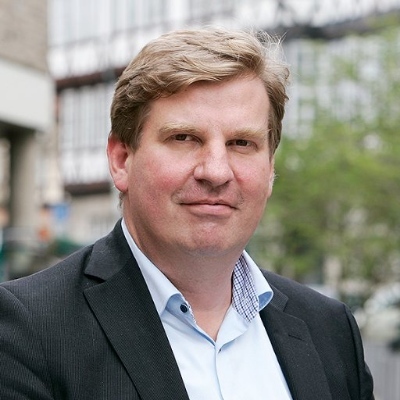
@NFDI Please join this #NFDI Infratalk if you are interested to find out how we can organize #ScientificKnowledge better, than just as papers. @orkg

#epistemicjustice #ScientificKnowledge #ScienceMagazine
Epistemic justice hits the mainstream. Thanks @hholdenthorp for this great editorial in @ScienceMagazine https://www.science.org/doi/epdf/10.1126/science.adi9021

THE NATURE OF SCIENCE IN MANUSCRIPT AND PRINT
instructor: Lilia Vekerdy & Leslie Overstreet
#libraries #archives #museums #historyofscience #printhistory #manuscripts #manuscriptstudies #paleography #typography #illustrationstudy #scienceillustration #bookbinding #digitization #imagetext #scientificknowledge
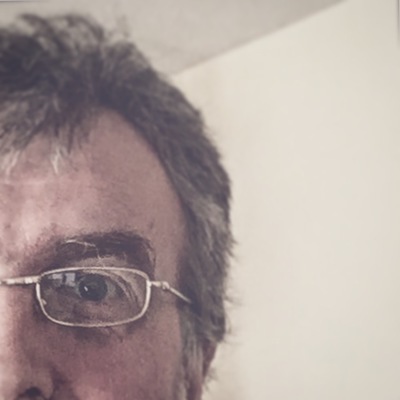
#JohnHeilbron - #Epistemology - How Do We #Know What We Know?
There isn't a whole lot of '#traditional' epistemology done in the course of this #conversation but it's interesting nonetheless.
https://www.youtube.com/watch?v=8jSeQhqPc4g&ab_channel=CloserToTruth
#Philosophy #PhilosophyOfScience #Knowledge #Science #ScientificKnowledge #ScientificProgress #Measurement #Calculation #Math #Maths #Mathematics #Accuracy #Models #Theories #CloserToTruth #RobertKuhn
#DISK #DataInformationScientificKnowledge A process of #Data (numbers, e.g. 98.6), #Information (labels of the numbers, e.g., temperature 98.6), and #ScientificKnowledge (meaning, models and mechanisms that generate numbers, e.g., physiology) #SharedFacts
Client Info
Server: https://mastodon.social
Version: 2025.07
Repository: https://github.com/cyevgeniy/lmst