
Back in Part 1, Mersenne provided the 1st #measurement of absolute frequency of a tone. It goes w/o saying that musicians had been working w/these tones for 1000s of yrs, developing an arbitrary set of descriptions for ever-changing rules that nonetheless worked. That includes some uncanny guesses.
#Measurement

Head of the #European Center for #Aerosol #Calibration and Characterization ( #CAIS-ECAC ) and #Researcher in #Atmospheric #Microphysics. We are looking for an #outstanding personality in the field of aerosol research with in-depth experience in #measurement #technology and #quality #assurance ... https://www.tropos.de/en/institute/career/details/head-of-the-european-center-for-aerosol-calibration-and-characterization-cais-ecac-and-researcher-in-atmospheric-microphysics
#ACTRIS #ACTRISD @bmftr_bund @Umweltbundesamt @awi @uni_wuppertal @DeutscherWetterdienst @fzj @goetheuni @KIT_Karlsruhe @LMU @unibremen @UniKoeln @umweltministerium @wmo #GAeF


Measurement tools in Mergin Maps


“You get what you measure”*…
Matt Stoller takes the occasion of Trump’s selection of Kevin Warsh to head the Fed (“an orthodox Wall Street GOP pick, though he is married to the billionaire heiress of the Estee Lauder fortune and was named in the Epstein files. He’s perceived not as a Trump loyalist but as an avatar of capital”) to ponder why public satisfaction with the economy is so low (“if you judge solely by consumer sentiment, Trump’s first term was the third best economy Americans experienced since 1960. Trump’s second term is not only worse than his first, it is the worst economic management ever recorded by this indicator”).
Stoller argues that we’re mesuring the wrong things (or, in some cases, the right things in the wrong ways)…
… the models underpinning how policymakers think about the economy just don’t reflect the realities of modern commerce. The fundamental dynamic is that those models were constructed in an era where America was one discrete economy, with Wall Street and the public tied together by the housing finance system. But today, Americans increasingly live in tiered bubbles that have less and less to do with one another. Warsh will essentially be looking at the wrong indicators, pushing buttons that are mislabeled.
While corporate America is experiencing good times, much of the country is experiencing recessionary conditions. Let’s contrast consumer sentiment indicators with statistics showing an economic boom. Last week, the government came out with stats on real gross domestic product increasing at a scorching 4.4% in the third quarter of last year. There’s higher consumer spending, corporate investment, government spending, and a better trade balance. Inflation, according to the Consumer Price Index, is low at 2.6.% over the past year. And while official numbers aren’t out for the final three months of the year, the Atlanta Fed’s GDPNow forecast shows that it estimates growth at 4.2%. And there are other indicators showing prosperity, from low unemployment to high business formation, which was up about 8% last year, as well as record corporate profits…
… Behavioral economists and psychologists have all sorts of reasons to explain that people don’t really understand the economy particularly well. But in general, when the stats and the public mood conflict, I believe the public is usually correct. Often, there are some weird anomalies with the data used by policymakers. In 2023, I noticed that the consumer price index, the typical measure of inflation, didn’t account for borrowing costs, so the Fed hike cycle, which caused increases in credit card, mortgage, auto loan, payday loans, et al, just wasn’t incorporated. The public wasn’t mad at phantom inflation, they were mad at real inflation that the “experts” didn’t see.
I don’t think that’s the only miscalculation…
[Stoller goes on to explain the ways in which “consumer spending” doesn’t tell us much about consumers anymore, about the painful reality of “spending inequality,” and about the obscure(d) problem of monopoly-driven inflation. He concludes…]
… Finally, there’s a more philosophical point, which I don’t think explains the short-term frustrations people feel, but is directionally correct. Do people actually want what the economy is producing? For most of the 20th century, the answer was yes. When Simon Kuznets invented these measurement statistics in 1934, financial value and the value that Americans placed on products and services were similar. A bigger economy meant things like toilets and electricity spreading across rural America, and cars and food and washing machines.
Today? Well, that’s less clear. According to the Bureau of Labor Statistics, the second fastest growing sector of the economy in terms of GDP growth from 2019-2024 was gambling. Philip Pilkington wrote a good essay last summer on the moral assumptions behind our growth statistics. There is no agreed upon notion of what makes up an economically valuable object or activity, so our stats are inherently subtle moral judgments. Classic moral philosophers like Adam Smith believed in the “use value” of an item, meaning how it could be used, whereas neoclassical economists believed in the “exchange value” of an item, making no judgments about use and are just counting up its market price.
Normal people subscribe on a moral level to use value. Most of us see someone spending money on a gambling addiction as doing something worse than providing Christmas presents for kids, but not because of price. However, our GDP models use the market value basis. Kuznets, presumably, was not amoral, he just thought that our laws would ban immoral activities like gambling, and so use value and market value wouldn’t diverge. But they have.
It’s not just things like gambling or pornography or speculation. A lot of previously unmeasured activity has been turned into data and monetized, which isn’t actually increasing real growth but measuring what already existed. Take the change from meeting someone at a party to using a dating app. One is part of GDP, the other isn’t. Both are real, but only one would show a bigger economy.
Beyond that much of our economy is now based on intangibles – the fastest growing sector was software publishing. Is Microsoft moving to a subscription fee model for Office truly some sort of groundbreaking new product? It’s hard to say, while corporate assets used to be hard things like factories, today much of it is intangibles like intellectual property.
A boomcession, where the rich and corporate America experience a boom while working people feel a recession, is a very unhealthy dynamic. It’s certainly possible to create metrics to measure it, and to help policymakers understand real income growth among different subgroups. You could start looking at real income after non-discretionary consumer spending, or find ways of adjusting for price discrimination.
But I think a better approach is to try to knit us into one society again. The kinds of policymakers who could try to create metrics to understand the different experiences of classes, and ameliorate them, don’t have power. Instead, the people in charge still use models which presume one economy and one relatively uniform set of prices, where “consumer spending” means stuff consumers want.
I once noted a speech in 2016 by then-Fed Chair Janet Yellen in which she expressed surprise that powerful rich firms and small weak ones had different borrowing rates, which affected the “monetary transmission channel” the Fed relied on. Sure it was obvious in the real world, but she preferred theory.
Or they don’t use models at all; Kevin Warsh is not an economist, he’s a lawyer and political operative, and is uninterested in academic theory. He cares about corporate profits and capital formation. That probably won’t work out well either.
At any rate, we have to start measuring what matters again. If we don’t, then we’ll continue to be baffled that normal people hate the economy that looks fine on our charts…
The models used by policymakers to understand wages, economic growth, and consumer spending are misleading. That’s why corporate America is having a party, and everyone else is mad. Eminently worth reading in full: “The Boomcession: Why Americans Hate What Looks Like an Economic Boom,” from @matthewstoller.bsky.social (or @mattstoller.skystack.xyz).
* Richard Hamming (and also to the article above, see “Goodhart’s law“)
###
As we ponder the pecuniary, we might recall that it was on this date in 1958 that Benelux Economic Union was founded, creating the seed from the European Economic Community, then the European Union grew.
On that same day, Philadelphia doo wop group The Silhouettes started five weeks at the top of the Billboard R&B chart with their first single, “Get A Job.”
https://youtu.be/ysKhbaLyIFw?si=obKAiTS4gb6n4cQB
#Benelux #BeneluxEconomicUnion #business #consumerConfidence #consumerPriceIndex #culture #economicPolicy #economics #EuropeanEconomicCommunity #EuropeanUnion #FederalReserve #GetAJob #history #inflation #measurement #monetaryPolicy #music #politics #RAndB #silhouettes #statistics #TheSilhouettes



Yahoo DSP executive reveals how measurement and UI will reshape advertising competition: CES 2025 exposed the forces closing the gap between attribution and incrementality while agentic systems threaten DSP differentiation. https://ppc.land/yahoo-dsp-executive-reveals-how-measurement-and-ui-will-reshape-advertising-competition/ #DigitalMarketing #Advertising #Measurement #Attribution #Incrementality




Which mathematical concept is more beautiful?
#Polls #Mathematics #Formula #Measurement #Nature #Survey #GoldenRatio #Poll #Indian #Math

🤖 Ah, the Anthropic Economic Index—a riveting tale of #AI measuring #AI measuring AI, because what better way to advance civilization? 🧠📉 Just when you thought economic reports couldn't get any drier, they've introduced "primitives" to remind us that even Claude needs a back-to-basics approach to understand its own navel-gazing egonomics. 😂🔍
https://www.anthropic.com/research/anthropic-economic-index-january-2026-report #Economics #Measurement #Innovation #Humor #HackerNews #ngated

Detecting Drought Stress In Trees From The Air [Switzerland]
--
https://www.linkedin.com/pulse/detecting-drought-stress-trees-from-air-eidg-forschungsanstalt-wsl-mrjue <-- shared technical article
--
https://doi.org/10.1016/j.agrformet.2025.110856 <-- shared paper
--
https://www.inverse.com/science/trees-dying-shocking-rates-understanding-save-them <-- shared technical article
--
#Umweltbeobachtung #Wald #Trockenheit #Drohnen #Forschung #EnvironmentalMonitoring #Forest #Trees #Drought #Drones #Research #UAV #GIS #spatial #mapping #remotesensing #tree #vegetation #climatechange #heatstress #hot #summer #sunlight #discolouration #leaf #leaves #defoliation #impacts #crowns #canopy #water #hydrology #drought #risk #hazard #drone #imagery #survey #nativetree #monitoring #spatialanalysis #spatiotemporal #measurement #methodology #drought #coping #Droughtstress #Forest #NDVI #PRI #Xanthophyll #Turgorlosspoint #waterstress #dehydration #mortality #death #dying #loss #hydraulicfailure #biology #botany #canopy



TIL, I need an irradiance meter.
If I know the irradiance, the voltage and the current, I then can calculate the average temperature of a solar panel.
Kochava fixes the MMM data problem marketers didn't know they had: Measurement company releases data validation tool addressing broken spend tracking, naming inconsistencies, and revenue gaps that derail marketing mix modeling. https://ppc.land/kochava-fixes-the-mmm-data-problem-marketers-didnt-know-they-had/ #Marketing #DataAnalytics #MarketingMixModeling #DataValidation #Measurement

@h4ckernews
It's Mars Climate Orbiter all over again.
#metrology #units #measurement

https://www.rnz.co.nz/news/world/583992/victoria-s-bushfires-more-than-five-times-the-size-of-singapore An addition to the growing list of measurements I find hard to imagine. What does 5 Singapores look like? #measurement

“ We just gave the Lego Smart Brick our Best In Show award at CES 2026, and I wanted to stop by The Lego Group’s suite to get a last glimpse before I left Las Vegas.
To my surprise, the company showed off one more feature I didn’t see during my first demo, perhaps the most impressive one should these bricks make their way to adult builders: precise distance #measurement.
#LEGO Group design manager Maarten Simons whipped out a “Lego ruler” made of standard Lego bricks divided into segments that were each 10 Lego studs, or roughly 8cm (3.15 inches) long. He attached a Smart Brick to one end of the ruler, and dragged a second Smart Brick along its length. The Smart Bricks changed color every time another 10 ten studs was passed, exactly at the dividing lines of each segment.”
<https://www.theverge.com/tech/859740/this-semi-secret-lego-smart-brick-feature-gives-it-even-more-potential> (paywall) / <https://archive.md/5Xto7>

(This post is being modified)

RECORDING – Pulse Internet Measurement Forum – Spain
VIDEO | AUDIO | RECAP | ARCHIVE | PERMALINK
On 8-9 December, 2025, the Internet Society hosted a Pulse Internet Measurement Forum (PIMF) at The Social Hub in Barcelona, Spain. The PIMF offers an opportunity to learn about the various projects that measure the development and resilience of the Internet, as well as how to utilize the openly provided data for resea

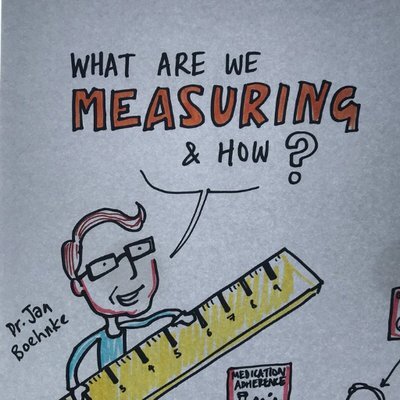
RE: https://functional.cafe/@joomy/115749500002317829
"So the unit of software became the meter."
#Measurement
...and #Psychometrics folks might be interested as well ☺️
@philosophy
Client Info
Server: https://mastodon.social
Version: 2025.07
Repository: https://github.com/cyevgeniy/lmst