#BMP280

Doc CoolDocCool
2025-10-03
MakerSpacemakerspace
2025-05-23

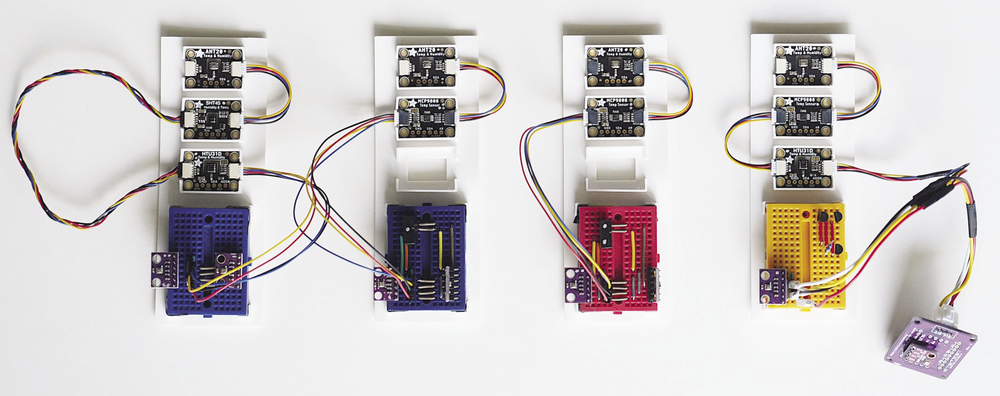
Are you looking to build your own temperature and humidity sensor? Bernhard Bablok compares eight sensors to determine which is the most accurate
makerspace-online.com/temperat

Picture of some of the test candidates used for accuracy testing
2025-05-23

E-paper Arduino термометр на ESP-IDF

Наверное каждый любитель электроники имеет в запасе модули приобретенные на всякий случай. Так несколько лет назад я не смог пройти мимо 1.5 дюймового E-Ink дисплея, лежащего на витрине радиомагазина. Через некоторое время нашлось для него применение. В статье ESP32 E-Paper Thermometer описывается, как отображать окружающую температуру, измеренную с помощью датчика DS18B20. Проект выполнен в Arduino IDE. Но я решил пройти "Путь самурая" и портировать код на ESP-IDF. Пришлось немного повозится с библиотеками для работы с дисплеем. На этом мой путь не окончился, как говорят: "У самурая нет цели, есть только путь". И я решил, что было бы неплохо добавить еще несколько сенсоров, измеряющих влажность, давление, CO2, а потом отправлять эти данные по MQTT. В том же радиомагазине был приобретен фанерный домик-конструктор со светодиодным ночником. А в другом магазине - модуль с датчиками. Таким образом родилась идея сконструировать Micro-smart-home. На передней части домика расположен дисплей на пластиковых стойках. А с другой стороны расположен модуль с сенсорами.

habr.com/ru/articles/912324/

#esp32 #espidf #Arduino #adafruit #ds18b20 #CCS811 #BMP280 #Si7021 #eink

2025-03-07

Da wir unterschiedliche Spielarten der BMx280-Sensoren im Labor haben, ist die Verwirrung bei Anschluss, Treiberwahl und Adressierung groß - daher hier ein kleines Tutorial, was die unterschiedlichen Varianten und Anschlussweisen beleuchtet. #BME280 #BMP280 #Arduino #ESP32 #ESP8266 #NodeMCU #informatikEdu oer-informatik.de/esp_bme280

2025-01-22

Soldering Pin Headers on an ESP32-C3 and a BMP280 sensor

makertube.net/w/sQRm4V9HzRJ9Xc

2024-09-18

Разработка больших цифровых часов на светодиодной ленте

Когда-то давно в детстве, когда я ещё только начинал заниматься электроникой, у меня была мечта изготовить огромные часы на семисегментных индикаторах. Для их изготовления я рассматривал люминесцентные лампы дневного света. По прошествии многих лет в обиход вошли светодиодные ленты. Именно они и послужили стимулом воплотить свою старую задумку в реальность. Имея возможность и опыт программирования микроконтроллеров, я решил, конечно же, самостоятельно изготовить электронную плату для часов со своими функциональными возможностями. В данной статье я не буду подробно описывать принципиальную схему и прошивку МК. Напишу лишь краткий обзор и историю разработки своей конструкции.

habr.com/ru/articles/844440/

#atmega8 #atmega32 #часы #светодиодная_лента #pwm #шим #tcp/ip #rs232 #ds3231 #bmp280

2024-05-17

Interested in temperature, humidity, pressure, and gas Bosch sensor measurements with Pi4J? Read this blog post with some interesting insights...

pi4j.com/blog/2024/20240517_bo

#JavaOnRasberryPi #BME280 #BMP280 #BME680 #BME688

2023-02-01

Seems the #BMP280 is useless as a temperature sensor. #raspberrypi

Brian Wiggintonbwiggs@hachyderm.io
2022-11-24

I spent the afternoon building a little temp sensor for my #homelab using a #ESP8266 #Wemos D1 mini and #BMP280 temp sensor. #ESPHome made it a breeze to get the board configured and pushing data to #Influxdb so I could chart it in #grafana.

Eventually I'd like to get this running off a #LiFePO4 battery, and maybe onto a PCB. Would love to have these all over the house.

How hot does your homelab run?

Writeup: bwiggs.com/posts/2022-11-23-ho

Screenshot of a Grafana dashboard showing a temperature guage and line graph. The temperature is rising into the yellow warning zone on the line graph since temperatures are greater than 89 deg F. Overlaid on top of the screenshot is a photo of a breadboard circuit with the D1 Mini and BMP280 sensor wired together.
Dantali0n :arch: :i3:dantalion@fosstodon.org
2022-11-19

So I bought a bunc of #bme280 chips but they are actually #bmp280 chips so no hygrometer, ffing China shenaningans

2021-05-07

A Trip Down the Vacuum Clamping Rabbit Hole

We all know how easy it is to fall down the rabbit hole, something that turns a seemingly simple job into an accidental journey of experimentation and discovery. And perhaps nobody is more prone to rabbit-holing than [Matthias Wandel], at least judging by his recent foray into quantitating different techniques for vacuum clamping in the woodshop. (Video, embedded below.)

To understand where this all came from, you'll have to dial back to [Matthias]'s first video, where he was just trying to make a simple corkboard. In an effort to get even pressure over the whole surface of the board, he came up with a shop-expedient vacuum clamp, made from a sheet of thick plastic, some scraps of wood and clamps, and a couple of vacuums. With the workpiece sandwiched between a smooth, flat table and the plastic sheet, he was able to suck the air out and apply a tremendous amount of force to the corkboard.

The comments to the first video led to the one linked below, wherein [Matthias] aimed to explore some of the criticisms of his approach. Using a quartet of BMP280 pressure sensor breakout boards and a Raspberry Pi, he was able to nicely chart the pressure inside his clamping jig. He found that not only did the sensors make it easy to find and fix leaks, they also proved that adding a porous layer between the workpiece and the vacuum bag wouldn't likely improve clamping. He was also able to show which of his collection of vacuums worked best -- unsurprisingly, the Miele sucked the hardest, although he found that it wasn't suitable for continuous clamping duty.

We can see a lot of uses for a jig like this, and we really like it when trips down the rabbit hole yield such interesting results. Especially quantitative results; remember [Matthias]'s exploration of basement humidity?

#toolhacks #bmp280 #clamping #pressure #vacuum #wood

lopeztel :nixos: :arch:lopeztel@fosstodon.org
2020-03-03

I managed to do a quick experiment with #mbed and created a #bluetoothlowenergy thermometer with ##nrf52 and #bmp280

Now that the first node is running with a basic web interface where the sensor readings are shown it‘s hard to decide what to do on the central side. FHEM? OpenHab? Sth self-knitted?
#esp8266 #nodemcu #bmp280 #smashnetdoesiot

Client Info

Server: https://mastodon.social
Version: 2025.07
Repository: https://github.com/cyevgeniy/lmst