#Predestination

Fatalism

Fatalism is the philosophical belief that all events are predetermined & inevitable, making human “free will” basically irrelevant to the ultimate outcome.

Determinism, predestination, & fatalism are often used interchangeably. But there are nuances:

  • Determinism: The belief that every event is caused by preceding events & the laws of nature. If you knew the position of every atom in the universe, you could predict the future. It’s about cause & effect.
  • Predestination: A theological concept (like we saw with the Calvinists) where a sovereign God has decreed the end from the beginning. It’s about divine will.
  • Fatalism: The belief that “whatever will be, will be” (Amor Fati), regardless of the causes or divine decrees. It suggests that even if you try to change the path, you’ll still arrive at the pre-set destination.

In the Greco-Roman world, Fatalism wasn’t a theory. It was a cosmic reality. The Greeks envisioned fate as 3 sisters: Clotho (the spinner), Lachesis (the allotter), & Atropos (the unturnable, who cut the thread). Even the gods were subject to the Fates.

This created where heroism wasn’t defined by changing one’s fate. But by facing it with dignity. For example, Oedipus tries everything to avoid the prophecy that he’ll kill his dad & marry his mom. His very attempt to flee is what ultimately fulfills it.

The Stoics (like Seneca & Marcus Aurelius) practiced a form of “rational fatalism.” They compared humans to a dog tied to a moving cart. The dog can either trot happily with the cart (accepting fate) or be dragged kicking & screaming. The destination is the same. The only thing you control is your internal attitude.

The most famous challenge to fatalism is the Lazy Argument: If it’s fated that you’ll recover from an illness, you’ll recover whether you call a doctor or not. Philosophers like Chrysippus countered this by arguing that certain outcomes are “co-fated.”

It may be fated that you recover. But it’s also fated that you recover because you called a doctor. Your action is a link in the chain of fate, not an alternative to it.

In Islam, the concept of Qadar emphasizes a balance between divine sovereignty & human responsibility, folk traditions across the Middle East & South Asia have historically leaned toward a “written” destiny (Maktub – “it is written”). This perspective often provided a psychological cushion against the frequent tragedies of the medieval world, like a plagues or invasions.

American culture is infamously anti-fatalistic. The famous “American Dream” is built on the idea that you can pull yourself up by your own bootstraps & be the architect of your own destiny/fortune. However, fatalism does exist in American conscienceness in 2 specific ways:

  • Literary Naturalism
    • In the late 19th & early 20th centuries, American writers like Stephen Crane & Jack London moved away from Romanticism toward Naturalism. They portrayed humans as “small, soft things” at the mercy of indifferent forces (biology, heredity, & environment). In Crane’s The Open Boat, the universe is depicted as a giant machine that doesn’t care if you live or die. This is “Modern Fatalism.”
  • “Appalachian Fatalism
    • Often misunderstood as laziness, this fatalism was a cultural adaptation of the Appalachian region, dominated by dangerous coal mines & unpredictable poverty. If your life depends on a mine roof that could at any moment regardless of your skill, or a boom-or-bust economy you can’t control, a fatalistic worldview (“It’s in God’s hands”) becomes a survival mechanism to manage chronic stress.

In modern physics, the Block Universe theory (based on Einstein’s General Relativity) suggests that time is a dimension just like space. If the past, present, & future all exist simultaneously in a “block,” then the future is technically as fixed & unchangeable as the past. If using this view, our perception of “choosing” is just an illusion created by our movement through the time dimension. Essentially this is Scientific Fatalism.

The philosopher Karl Popper once joked that the fatalist is the person who looks both ways before crossing a 1-way street. Deep down, even those who claim the future is a fixed act, though their choices matter.

Make a one-time donation

Your contribution is appreciated.

Donate

Make a monthly donation

Your contribution is appreciated.

Donate monthly

Make a yearly donation

Your contribution is appreciated.

Donate yearly

#AmorFati #AppalachianFatalism #Atropos #BlockUniverse #BlockUniverseTheory #Calvinists #Chrysippus #Clotho #Determinism #Early20thCentury #Fatalism #Fates #FreeWill #Greeks #Islam #JackLondon #KarlPopper #Kismet #Lachesis #Late19thCentury #LazyArgument #LiteraryNaturalism #Maktub #MarcusAurelius #MiddleEast #ModernFatalism #Moirai #Naturalism #Oedipus #Predestination #Qadar #RationalFatalism #Romanticism #ScientificFatalism #Seneca #SouthAsia #StephenCrane #Stoics #TheOpenBoat
Arminianism

This is 1 of the most significant theological traditions in Protestantism. This represents a major shift in how Christians understand the relationship between God’s sovereignty & human free will.

It began as a technical debate within the Dutch Reformed Church in the 17th century, it eventually became the dominant “theological engine” for American revivalism & much of modern evangelicalism.

Arminianism is named for Jacobus Arminius (1590-1609), a Dutch pastor & professor at the University of Leiden. Arminius was trained in the strict Calvinism of Geneva, he was actually assigned to defend the Calvinist view of predestination against critics.

As he began researching on his own, he became increasingly unsettled by the idea that God might choose to save some (the “elect”) & condemn others (the “reprobate”) before they were ever born.

He argued that if God’s decree of salvation was “unconditional,” then God would ultimately be the author of sin. Arminius sought to preserve both God’s justice & human responsibility, leading to a system where God’s grace is primary but requires a human response.

After Arminius died, his followers (known as Remonstrants) formulated their beliefs into 5 articles. These points were a direct challenge to the “High Calvinism” of the time. These 5 articles are known as the Five Articles of Remonstrance, 1610:

  • Conditional Election: God chooses people for salvation based on His foreknowledge of those who will believe, not an arbitrary decree.
  • Unlimited Atonement: Jesus died for everyone, not just a select few/elect. However, only those who believe receive the benefit.
  • Total Depravity (with a twist): Like Calvinists, Arminians believe humans are too sinful to save themselves. They need help to even take the 1st step toward God.
  • Resistable Grace: God offers “prevenient grace” (grace that goes before) to everyone. But humans have the free will to reject it.
  • Conditional Preservation: While God empowers believers to stay faithful, Arminians initially left it an open question whether a believer could “fall from grace.” Later Arminians generally argued that they could.

The Dutch authorities called a national council, the Synod of Dort (1618-1619), to settle the dispute. The Remonstrants were condemned as heretics. The council produced the Canons of Dort.

Interestingly enough, the famous “Five Points of Calvinism” (using the acrostic TULIP) didn’t exist before this. They were created specifically as a point-by-point rebuttal to the 5 Arminian articles. Essentially, Arminianism made Calvinism to define itself in the rigid terms we see today.

In American history, Arminianism underwent a HUGE transformation. It made its way across the Atlantic mainly through John Wesley & the Methodist movement. But it truly exploded during the Second Great Awakening (circa 1790-1840).

Preachers like Charles Grandison Finney took to its extreme. Finney argued that a revival wasn’t a miracle from God. But a “result of the right use of means.” By using emotional music, “altar calls,” & “protracted meetings.” He believed he could persuade the human will to choose Christ. This “practical Arminianism” redefined the American religious landscape.

Make a one-time donation

Your contribution is appreciated.

Donate

Make a monthly donation

Your contribution is appreciated.

Donate monthly

Make a yearly donation

Your contribution is appreciated.

Donate yearly

#1590 #1609 #1610 #1618 #1619 #1790 #17thCentury #1840 #AltarCalls #AmericanRevivalism #Arminianism #Calvinism #CanonsOfDort #CharlesGrandisonFinney #Christians #Dutch #DutchReformedChurch #Elect #Evangelicalism #FiveArticlesOfRemonstrance #FivePointsOfCalvinism #Foreknowledge #FreeWill #Geneva #HighCalvinism #JacobusArminius #JohnWesley #MethodistMovement #Predestination #Protestantism #Remonstrants #Reprobate #SecondGreatAwakening #SynodOfDort #TULIP #UniversityOfLeiden

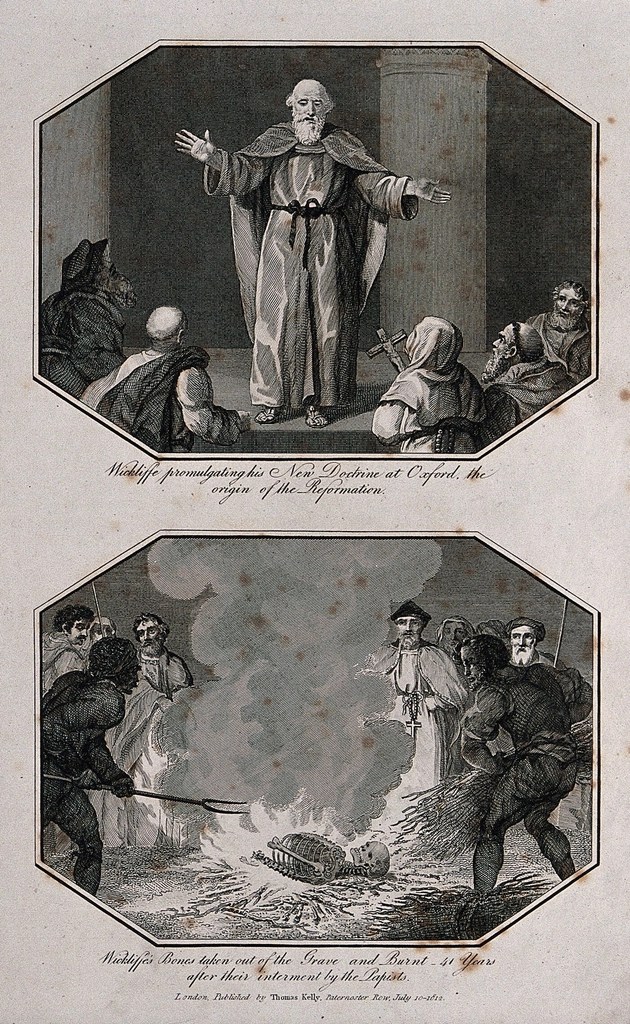
John Wycliffe

His last name is also spelled: Wyclif, Wickliffe, & Wicklyf.

He’s an English scholastic philosopher, Christian reformer, Catholic priest, & a theology professor at the University of Oxford. He’s often called the “Morning Star of the Reformation.”

He made radical challenges to the Roman Catholic Church like advocating for or made a vernacular translation of the Vulgate Bible into Middle English. He paved the way for the Protestant Reformation nearly 200 years before Martin Luther.

Before he was a reformer, Wycliffe was a titan of Scholasticism at Oxford. At the time, the intellectual world was divided between Realist & Norminalists. The Norminalists, like William of Ockham, argued that “universals” (like the concept of “justice” or “humanity”) were just names (nomina) we give to groups of individual things.

John was a fierce Realist. He believed that universals were real entities that existed in the mind of God. For Wycliffe, everything in the physical world was a direct reflection of a divine archetype.

Wycliffe’s most radical political theory was the Dominion of Grace. He argued that all authority (dominium) is a gift from God. Which meant that the church wasn’t allowed to own property or have ecclesiastic courts, & men in mortal sin weren’t entitled to exercise authority in the church or state, nor to own property. He added a dangerous caveat: only those in a state of grace have a right to exercise authority.

Wycliffe’s later followers (derogatorily called Lollards by their orthodox contemporaries in the 15th & 16th centuries. Lollards meaning “mumblers” or “idlers.”) adopted a number of the beliefs attributed to Wycliff such as theological virtues, predestination, iconoclasm, & the notion of caesaropapism, with some questioning the veneration of saints, the sacraments, requiem masses, transubstantiation, monasticism, & the legitimacy/role of the Papacy.

Wycliffe was born in the village of Hipswell, near Richmond in the North Riding of Yorkshire, England. In 1356, Wycliffe completed his bachelor of arts degree at Merton College as a junior fellow. That same year, he produced a small treatise, The Last Age of the Church.

In 1361, he was Master of Balliol College in Oxford. That year, he was presented by the college to the parish of Fillingham in Lincolnshire. For this, he had to give up the headship of Balliol College, though he could continue to live at Oxford.

Wycliffe’s greatest legacy is his role in the 1st complete translation of the Bible into Middle English (circa 1382). At the time, the Bible was only available in the Latin Vulgate. This was accessible solely to the educated clergy.

Wycliffe believed that the Bible was the ultimate authority. Then every person (from the King to the “plowman”), needed to be able to read it.

Wycliffe didn’t just translate words. He helped create the English language. He’s credited with introducing, or popularizing, over 1,000 words into English, including: female, justice, communication, treasure, & glory.

His “potent” ideas were blamed for the Peasants’ Revolt of 1381. Wycliffe didn’t endorse the violence, however the rebels used his discourse of “equality before God” & Wycliffe’s critiques of Church wealth to justify their demands.

In the U.S. culture, Wycliffe’s legacy is preserved in 2 distinct ways:

  • The Democratic Spirit of the Bible: The American religious tradition of individual Bible interpretation & the rejection of centralized ecclesiastical authority can be traced directly back to Wycliffe’s “priesthood of all believers.”
  • Wycliffe Bible Translators: Founded in 1942 in California by William Cameron Townsend. This organization (now 1 of the largest of its kind in the world) was named in honor of John Wycliffe. It carries on his mission by translating the Bible into thousands of indigenous languages worldwide.

Wycliffe passed away from a stroke, during a Mass, in 1834. In 1415, the Council of Constance declared him a heretic. In 1428, by order of Pope Martin V, his remains were exhumed from his grave in Lutterworth, burned to ashes, & cast into the River Swift.

Make a one-time donation

Your contribution is appreciated.

Donate

Make a monthly donation

Your contribution is appreciated.

Donate monthly

Make a yearly donation

Your contribution is appreciated.

Donate yearly

#1356 #1361 #1382 #1415 #1428 #15thCentury #16thCentury #1834 #1842 #BalliolCollege #bible #Caesaropapism #California #Catholic #DominionOfGrace #Dominium #England #Fillingham #Hipswell #Iconoclasm #IndigenousLanguages #JohnWycliffe #LatinVulgate #Lincolnshire #Lollards #MartinLuther #Mass #MertonCollege #MiddleEnglish #Monasticism #MorningStarOfTheReformation #Nomina #Norminalists #NorthRiding #Oxford #Papacy #PeasantsRevoltOf1381 #Pope #PopeMartinV #Predestination #ProtestantReformation #Realists #RequiemMasses #Richmond #RiverSwift #RomanCatholicChurch #Sacraments #Scholasticism #TheLastAgeOfTheChurch #Translate #Transubstantiation #Universals #UniversityOfOxford #VulgateBible #WilliamCameronTownsend #WilliamOfOckham #WycliffeBibleTranslators #WycliffeSBible #Yorkshire

Timothy R. Butlertrbutler@faithtree.social
2026-01-19

I’m anxious to return to the Parable of the Sower with @Bigdad1211 tonight during Sunday School Express! Please join us — and bring your questions with you! youtube.com/live/IvpiSUiO6kg

#Parables #Jesus #Salvation #election #Predestination

Tally MichelleTallyMichelle4@c.im
2025-11-25

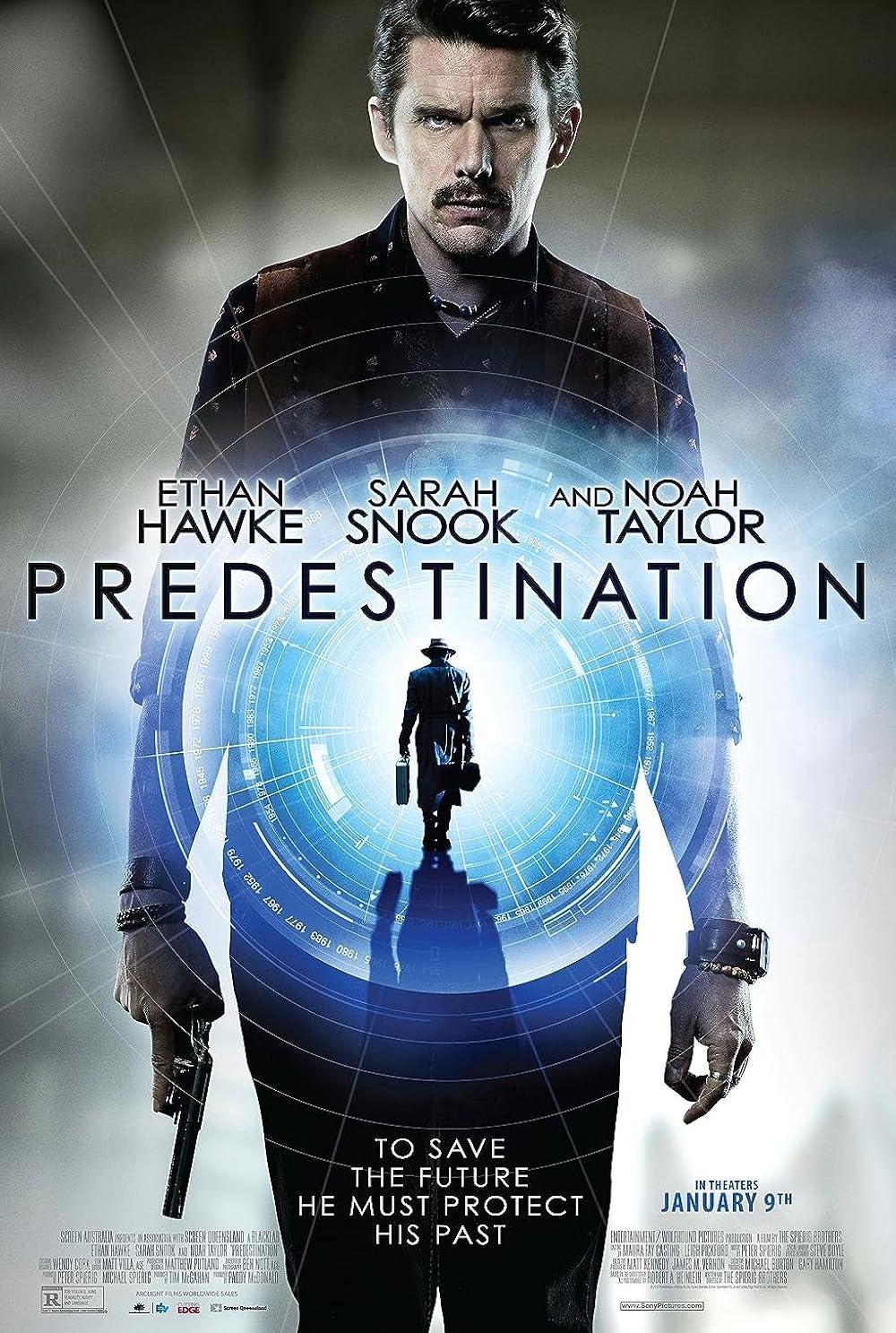
#Predestination (2014)

As his last assignment, a temporal agent is tasked to travel back in time and prevent a bomb attack in New York in 1975. The hunt, however, turns out to be beyond the bounds of possibility.
#TwistEndings #filmMastodon

Trailer youtube.com/watch?v=xxG-YfedrfU

alice 🪞♥️ 🎩🐇aliceamour@beige.party
2025-11-02
2025-09-23

"Thus also it has been determined that this man is to be a shoemaker, that man a parish pastor, yet another a preacher, etc. If, therefore, all these things, both our professions and our names, have already been defined and foreknown, why does a man wander about in his opinions, attempt many things, and desire things that are beyond limits? Why does he act outside his assigned station? For he does not accomplish anything except to bring greater and greater affliction upon himself."

~~~Martin Luther, in his Lectures on Ecclesiastes, comments on Eccl. 6:10-11.

#Luther #vocation #predestination #profession

Eternal Security

This is also known as “once saved, always saved.” It’s the belief giving Christian believers with an absolute assurance of their final salvation.

Its development, especially in Protestantism, has given rise to a plethora of different interpretations. Especially when defining aspects of determinism, libertarian free will & the significance of personal perseverance.

In the early 5th century, Augustinian soteriology views of predestination by predetermination came about, they didn’t validate Eternal Security. Soteriology is the doctrine of salvation.

By the 16th century, this idea became meshed into the theology of John Calvin & other reformers. Calvinist circles initially embraced Eternal Security under the name of “perseverance of the saints.” Eventually, the name became a synonym of the Calvinist doctrine of perseverance independent of its practical interpretations.

Then in the early 20th century, Eternal Security started to become a defining doctrine of Southern Baptist traditionalism. Around the same time, it also became a part of Plymouth Brethren theology. In this, the 2 forms represents its main form today.

In the 1980s, the Free Grace movement voiced that Eternal Grace was independent of the idea of the “Hyper-Grace” idea.

Eternal Security is based on the faith that the believer is an elect by divine determination. This is in Calvinist circles & has the minority worldview.

In some non-Calvinist circles & the prevailing worldview, Eternal Security is based on the faith that regeneration leads to unconditional perseverance & then salvation.

In other non-Calvinist circles & currently growing in the Free Grace views, Eternal Security is based on the faith that regeneration leads to salvation independent of perseverance.

One-Time Monthly Yearly

Make a one-time donation

Make a monthly donation

Make a yearly donation

Choose an amount

$1.00 $5.00 $10.00 $5.00 $10.00 $15.00 $5.00 $10.00 $15.00

Or enter a custom amount

$

Your contribution is appreciated.

Your contribution is appreciated.

Your contribution is appreciated.

DonateDonate monthlyDonate yearly

#16thCentury #1980s #5thCentury #Augustinians #Calvinist #Christian #Determinism #DivineDetermination #Early20thCentury #EternalSecurity #FreeGraceMovement #HyperGrace #JohnCalvin #LibertarianFreeWill #Perseverance #PerseveranceOfTheSaints #PlymouthBrethen #Predestination #Protestantism #Reformers #Regeneration #Salvation #Soteriology #SouthernBaptist #SouthernBaptistTraditionalism

St. Augustine of Hippo

St. Augustine of Hippo was a theologian & philosopher of Berber origin & the bishop of Hippo Regius in Numidia, Roman North Africa. Hippo Regius is in modern-day Annaba, Algeria. He was born I 354 in the municipium of Thagaste (now Souk Ahras, Algeria) in the Roman province of Numidia.

His mom, Monica/Monnica, was a devout Christian. His dad, Patricius, was a pagan, who converted to Christianity on his deathbed. Augustine, in his writings, mentions his identity as a Roman African.

His writing deeply influenced the development of Western philosophy & Western Christianity. He’s viewed as one of the most important Church Fathers of the Latin Church in the Patristic Church.

Patristics, a.k.a. Patrology, is a branch of theological studies focused on the writings & teachings of the Church Fathers, between the 1st-8th century AD.

St. Jerome said of Augustine: he “established anew the ancient Faith.”

In his youth, he was drawn to the Manichaean faith & later to the Hellenistic philosophy of Neoplatonism. After his conversion to Christianity & baptism in 386, Augustine developed his own approach to philosophy & theology, that had a variety of methods & perspective.

Believing the grace of Chris was indispensable to human freedom, he helped formulate the doctrine of original sin & made significant contributions to the development of just war theory.

The just war theory is a doctrine of military ethics that aims to ensure that a war is morally justifiable through a series of criteria, all of which must be met for a war to be considered just.

When the Western Roman Empire began to fall apart, Augustine imagined the Church as a spiritual City of God, which is distinct from the material Earthly City.

There’s a segment of the Church that follows the concept of the Trinity as defined by the Council of Nicaea & the Council of Constantinople closely identified with Augustine’s On the Trinity.

Augustine is recognized as a saint in the Catholic Church, the Eastern Orthodox Church, Lutheran church, & Anglican church. He’s also a Catholic “Doctor of the Church.” And he’s the patron of the Augustinians. His feast day is on August 28th, the day he passed away. The Church of England also celebrates August 28th as his feast day. In the Greek & Russian Orthodox Churches, his feast day is June 15. He’s the patron saint of brewers, printers, theologians, & a number of cities & dioceses.

Many Protestants, especially Calvinists & Lutherans, consider Augustine one of the theological fathers of the Protestant Reformation due to his teachings on salvation & divine grace.

In the East, Augustine’s teachings are disputed. The most controversial doctrine associated with him is the filioque. It was rejected by the Eastern Orthodox Church. Other disputed teachings include Augustine’s views on original sin, the doctrine of grace, & predestination. Despite this, Augustine is considered mistaken on some points, he’s still considered a saint.

Filioque is a Latin phrase meaning “and the Son.” This was added to the Nicene Creed by the Western Church to clarify that the Holy Spirit proceeds “from the Father & the Son.”

In 1842, a portion of Augustine’s right arm (cubitus) was secured from Pavia & returned to Annba. It now rests in St. Augustin Basilica within a glass tube inserted into the arm of a life-sized marble statue of the saint. It’s considered a relic.

Augustine was canonized by popular acclaim. He was later recognized as a Doctor of the Church in 1298 by Pope Boniface VIII.

One-Time Monthly Yearly

Make a one-time donation

Make a monthly donation

Make a yearly donation

Choose an amount

$5.00 $15.00 $20.00 $1.00 $5.00 $10.00 $5.00 $10.00 $15.00

Or enter a custom amount

$

Your contribution is appreciated.

Your contribution is appreciated.

Your contribution is appreciated.

DonateDonate monthlyDonate yearly

#1298 #1842 #1stCenturyAD #354 #386 #8thCenturyAD #Algeria #AnglicanChurch #Annaba #August28 #Augustinians #Berber #Calvinists #CatholicChurch #Christ #Christianity #ChurchFathers #ChurchOfEngland #CouncilOfConstance #CouncilOfNicaea #Cubitus #DivineGrace #DoctorOfTheChurch #DoctrineOfGrace #EasternOrthodoxChurch #Filioque #GreekOrthodox #Hellenistic #HippoRegius #JustWarTheory #LatinChurch #LutheranChurch #Lutherians #Manichaeism #Municipium #Neoplatonism #NorthAfrica #Numidia #OriginalSin #PatristicChurch #Patrology #Pavia #PopeBonifaceVIII #Predestination #ProtestantReformation #Protestants #relics #RomanAfrican #RomanNorthAfrica #RussianOrthodox #SoukAhras #StAugustinBasilica #StAugustineOfHippo #StJerome #Thagaste #Trinity #WesternRomanEmpire

Predestination

Predestination is the doctrine that all events have been willed by God. This usually references to the eventual fate of an individual soul.

Predestination often seeks to address the contradiction of free will. God’s omniscience seems to conflict with human free will.

In this way, predestination can be regarded as a form of religious determinism/predeterminism. Also known as theological determinism. Determinism is a metaphysical view that all events within the universe can occur in only 1 possible way.

Josephus wrote, during the 1st century, that there were 3 main Jewish sects. They differed on this subject. Josephus argued that the Essenes & Pharisees thought that God’s Providence orders all human events. The Pharisees still maintained that people were able to choose between right & wrong. Josephus wrote that the Sadducees didn’t have a doctrine of Providence.

In the New Testament, Romans 8-11 speaks on a statement of predestination, in Romans 8:28-30. People have interpreted this passage in some different ways. Some say this only has to do with service & not about salvation.

Others say that this passage should be interpreted to the Christian community as a group rather than individuals. While some Catholics believe that this passage teaches that God has predestined the salvation of all humanity.

Some Protestants believe that this passage is teaching that God has predestined a certain set of people to salvation, & the remainder of humanity is predestined to reprobation. Reprobation is a doctrine that teaches that a person can reject the Gospel to a point where God can, in turn, reject them & curses their conscience.

Origen when writing in the 3rd century taught that God’s Providence extends to every single person. He believed God’s predestination is based on God’s foreknowledge of every human being’s merits, whether in their current life, or a previous one.

Valentinus believed in a form of predestination. In his opinion, people are born into 1 of 3 natures. This depended on which elements prevailed in a person. In Valentinus’ view, a person born with a bad nature can NEVER be saved because they’re too inclined to evil.

Some people have a nature that’s a combo of good & evil. They can choose salvation. The 3rd type of person has a good nature & will be saved because they’re inclined to be good.

Irenaeus attacked predestination that Valentinus set out. Irenaeus argued that it was unfair. For Irenaeus, people were free to choose salvation or not.

In the 4th & 5th century, Augustine of Hippo also taught that God orders all things whilst preserving human freedom. Prior to 396, Augustine believed that predestination was based on God’s foreknowledge of whether people would believe, that God’s grace was “a reward for human assent.”

In response to Pelagius, Augustine said the sin of pride consists in assuming that “we are the ones who choose God or that God chooses us (in His foreknowledge) because of something worthy in us.” Augustine argued that it’s God’s grace that causes the individual act of faith.

Scholars are divided over whether Augustine’s teaching implies double predestination, or the belief that God chooses some people for damnation, as well as some for salvation.

Catholic scholars tend to deny that Augustine held this view. Some Protestants & secular scholars believe that Augustine did indeed believe in double predestination.

Augustine’s view raised some objection. Julian of Eclanum said that Augustine was bringing Manichean ideals into the Church. Tensions became obvious, eventually, with the confrontation between Augustine & Pelagius culminating in the condemnation of Pelagianism. As interpreted by Augustine, at the Council of Ephesus in 431. Pelagius denied Augustine’s view of predestination in order to affirm that salvation is achieved by an act of free will.

The Council of Arles, in the late 5th century, condemned the position “that some have been condemned to death, others have been predestined to life.” This seems to follow Augustine’s teaching.

The Second Council of Orange in 529 also condemned the position that “some have been truly predestined to evil by divine power.”

In the 8th century, John of Damascus emphasized the freedom of the human will in his doctrine of predestination. He argued that acts arising from peoples’ wills aren’t part of God’s Providence at all. Damascene teaches that people’s good actions are done in cooperation with God, but aren’t caused by Him.

Cassian believed that despite predestination being a work that God does, God only decides to predestinate based on how people will respond.

In the 13th century, Thomas Aquinas taught that God predestines certain people to the beatific vision based solely on his own goodness rather than that of creatures. Aquinas also thought that people are free in their choices, fully cause their own sin, & are solely responsible for it. According to Aquinas, there are a few ways in which God wills actions.

Again in the 13th century, William of Ockham (Of Occam’s Razor fame.) taught that God doesn’t cause human choices & associated predestination with divine foreknowledge. Ockham/Occam taught that God predestines based on people’s foreseen works, he sustained that God’s will wasn’t constrained to do this.

John Calvin repudiated the idea that God allows rather than actively decrees the damnation of sinners, as well as other evil. Calvin didn’t believe God to be guilty of sin. But rather he considered God imposing sin on His creation to be an enigmatic mystery.

Though he maintained God’s predestination applies to damnation is caused by their sin. but that the salvation of the saved is solely caused by God.

In Roman Catholicism, free will isn’t denied. Predestination plays a very small role in Roman Catholicism. The “heretical” 17th & 18th century sect within Roman Catholicism known as Jansenism preached the doctrine of double predestination.

Although Jansenism claimed that even members of the saved elect could lose their salvation by doing sinful, un-repented deeds, implied in Ezekiel 18:21-28. According to the Roman Catholic Church, God doesn’t will anyone to mortally sin & so to deserve punishment in Hell.

The Mormons (LDS church) rejects predestination. But they believe in foreordination. Foreordination teaches that during the pre-mortal existence, God selected (foreordained) particular people to fulfill certain missions (“callings”) during their mortal lives.

For example, prophets were foreordained to be God’s/the Lord’s servants (Jeremiah 1:5), all who receive the priesthood were foreordained to that calling & Jesus was foreordained to enact the atonement.

However, all such people foreordained to retain their agency in mortality to fulfill that foreordination or not. The Mormon church (LDS church) teaches the doctrine of mortal agency, the ability to choose & act for oneself, & decide whether to accept Christ’s atonement.

One-Time Monthly Yearly

Make a one-time donation

Make a monthly donation

Make a yearly donation

Choose an amount

$5.00 $10.00 $15.00 $5.00 $10.00 $15.00 $5.00 $15.00 $20.00

Or enter a custom amount

$

Your contribution is appreciated.

Your contribution is appreciated.

Your contribution is appreciated.

DonateDonate monthlyDonate yearly

#13thCentury #17thCentury #18thCentury #396 #3rdCentury #431 #4thCentury #529 #5thCentury #Cassian #ChurchOfLatterDaySaints #CouncilOfArles #CouncilOfEphesus #CouncilOfOrange #Damascene #Determinism #Essenes #Ezekiel182128 #Foreordained #IrenaeusOfLyons #Jansenism #Jeremiah15 #Jewish #JohnCalvin #JohnOfDamascus #Josephus #JulianOfEclanum #Late8thCentury #Manichean #Mormons #NewTestament #OccamSRazor #Origen #Pelagius #Pharisees #Predestination #Predeterminism #Protestants #Reprobation #RomanCatholicChurch #RomanCatholicism #Romans811 #Romans82830 #Sadducees #SecondCouncilOfOrange #StAugustineOfHippo #TheologicalDeterminism #ThomasAquinas #Valentinus #WilliamOfOckham

Psalms 139-143

“I praise You because I’m fearfully & wonderfully made.”

Psalm 139:14

Psalm 139

O Lord, You’ve searched me & You know me. You know when I sit & when I rise. You perceive my thoughts from afar. You discern my going out & my lying down. You’re familiar with all my ways. Before a word is on my tongue You know it completely, O Lord.

You hem me in – behind & before. You’ve laid Your hand upon me. Suck knowledge is too wonderful for me, too lofty for me to attain. Where can I go from Your Spirit? Where can I flee from Your presence?

If I go up to the Heavens, You are there. If I make my bed in the depths, You are there. If I rise on the wings of the dawn, if I settle on the far side of the sea, Your right hand will hold me fast. If I say, “Surely the darkness will hide me & the light becomes night around me.”

Even the darkness will not be dark to You, the night will shine like the day, for darkness is as light to You. For You created my inmost being. You knit me together in my mother’s womb, I praise You because I’m fearfully & wonderfully made.

Your works are wonderful, I know that full well. My frame wasn’t hidden from You, when I was made in the secret place. When I was woven together in the depths of the earth, Your eyes saw my unformed body.

All the days ordained for me were written in Your book before 1 of them came to be. (This is where the doctrine of predestination came from.) How precious to me are Your thoughts, O God! How vast is the sum of them!

Were I to count them, they would outnumber the grains of sand. When I awaken, I’m still with You. If only You would slay the wicked, O God! Away from me, you bloodthirsty men! They speak of You with evil intent.

Your adversaries misuse Your name. Do I not hate those who hate you, O Lord, & abhor those who rise up against you? I’ve nothing but hatred for them. I count them as my enemies. Search me, O God, & know my heart. Test me & know my anxious thoughts. See if there is any offensive way in me, & lead me in the way everlasting.

Psalm 140

Rescue me, O Lord, from evil men. Protect me from men of violence, who devise evil plans in their hearts & stir up war every day. They make their tongues as sharp as a serpent’s; the poison of vipers is on their lips. (Check out Romans 3:13.) Selah.

Keep me, O Lord, from the hands of the wicked. Protect me from men of violence, who plan to trip my feet. Proud men have hidden a snare for me. They’ve spread out the cords of their net & have set traps for me along my path. Selah.

O Lord, I say to You, “You are my God.” Hear me, O Lord, my cry for mercy. O Sovereign Lord, my strong deliverer, who shields my head in the day of battle. Don’t grant the wicked their desires, O Lord.

Don’t let their plans succeed, or they’ll become proud. Selah. Let the heads of those who surround me be covered with the trouble their lips have caused. Let burning coals fall upon them. May they be thrown into the fire, into miry pits, never to rise.

Let slanderers not be established in the land; may disaster hunt down men of violence. I know that the Lord secures justice for the poor & upholds the cause of the needy. Surely the righteous will praise Your name & the upright will live before You.

Psalm 141

O Lord, I call to You; come quickly to me. Hear my voice when I call to You. May my prayer be set before You like the evening sacrifices. Set a guard over my mouth, O Lord. Keep watch over the door of my lips.

Let not my heart be drawn to what’s evil, to take part in wicked deeds with men who are evildoers. Let me not eat of their delicacies. Let a righteous man strike me – it’s a kindness. Let him rebuke me – it’s oil on my head. My head will not refuse it.

Yet my prayer is ever against the deeds of evildoers. Their rulers will be thrown down from the cliffs, & the wicked will learn that my words were well spoken. They’ll say, “As one plows & breaks up the earth, so our bones have been scattered at the mouth of Sheol.”

But my eyes are fixed on You, O Sovereign Lord. In You, I take refuge – don’t give me over to death. Keep me from the snares they’ve laid for me, from the traps set by evildoers. Let the wicked fall into their own nets, while I pass by in safety.

Psalm 142

I cry aloud to the Lord. I lift up my voice to the Lord for mercy. I pour out my complaint before him; before him, I tell my trouble. When my spirit grows faint within me, it’s You who knows my way. In the path where I walk, men have hidden a snare for me.

Look to my right & see. No one is concerned for me. I’ve no refuge; no one cares for my life. I cry to you, O Lord. I say, “You are my refuge, my portion in the land of the living.” Listen to my cry for I’m in desperate need.

Rescue me from those who pursue me, for they’re too strong for me. Set me free from my prison, that I may praise Your name. Then the righteous will gather about me because of Your goodness to me.

Psalm 143

O Lord, hear my prayer, listen to my cry for mercy. In Your faithfulness & righteousness, come to my relief. Don’t bring Your servat into judgment, for no one living is righteous before You. The enemy pursues me. He crushes me to the ground.

He makes me dwell in darkness like those long dead. So my spirit grows faint within me. My heart within me is dismayed. I remember the days of long ago. I meditate on all Your works & consider what Your hands have done.

I spread out my hands to You. My soul thirsts for you like a parched land. Selah. Answer me quickly, O Lord. My spirit fails. Don’t hide Your face from me or I’ll be like those who go down the pit. Let the morning bring me word of Your unfailing love, for I’ve put my trust in You.

Show me the way I should go, for to You I lift up my soul. Rescue me from my enemies, O Lord, for I hide myself in You. Teach me to do Your will, for You are my God. May Your good Spirit lead me on level ground.

For Your name’s sake, O Lord, preserve my life. In Your righteousness, bring me out of trouble. In Your unfailing love, silence my enemies; destroy my foes, for I’m Your servant.

One-Time Monthly Yearly

Make a one-time donation

Make a monthly donation

Make a yearly donation

Choose an amount

$5.00 $15.00 $20.00 $1.00 $5.00 $10.00 $5.00 $15.00 $20.00

Or enter a custom amount

$

Your contribution is appreciated.

Your contribution is appreciated.

Your contribution is appreciated.

DonateDonate monthlyDonate yearly

#Predestination #Psalm139 #Psalm140 #Psalm141 #Psalm142 #Psalm143 #Romans313 #Sheol

WIST Quotations Has Moved!wist@my-place.social
2025-07-17

A quotation from Omar Khayyam

But thou who settest in the way a snare,
With threats of hell for all who stumble there,
   Almighty Spirit, whom the spheres obey,
Is mine the sin, or Thine the greater share?

Omar Khayyám (1048-1123) Persian poet, mathematician, philosopher, astronomer [عمر خیام]
Rubáiyát [رباعیات], Bod. # 148 [tr. Roe (1906), # 73]

Sourcing, notes, other translations: wist.info/omar-khayyam/77767/

#quote #quotes #quotation #qotd #rubaiyat #omarkhayyam #damnation #divinejustice #entrapment #God #predestination #sin #snare #temptation #rap

Persian text of this quatrain.

Is #predestination self-destructing? Does the conviction that everything is #predetermined make us stop trying, thus changing our behavior and changing our #future, thus disproving predestination?

talkwards.com/2025/07/05/is-pr

Tally MichelleTallyMichelle4@c.im
2025-06-03

#Predestination (2014)
As his last assignment, a temporal agent is tasked to travel back in time and prevent a bomb attack in New York in 1975. The hunt, however, turns out to be beyond the bounds of possibility.
#TimeTripMovies #FilmMastodon

Trailer youtube.com/watch?v=xxG-Yfedrf

Sayed | সাঈদ 🇧🇩abusayed
2025-04-25
Tally MichelleTallyMichelle4@c.im
2025-03-02

#TwistInMovies #FilmMastodon
#Predestination (2014)
As his last assignment, a temporal agent is tasked to travel back in time and prevent a bomb attack in New York in 1975. The hunt, however, turns out to be beyond the bounds of possibility.
#EthanHawke #SarahSnook #NoahTaylor

Client Info

Server: https://mastodon.social
Version: 2025.07
Repository: https://github.com/cyevgeniy/lmst