
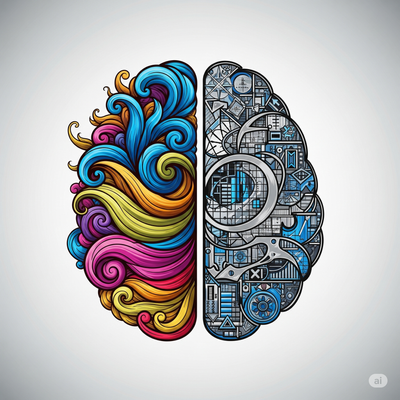
Viktor Shklovsky's ostranenie (defamiliarization) from 1917 argues that habit automates perception, turning life into unrecognized algebra. Art's role is to prolong seeing by making the familiar strange, restoring vivid sensation to the overknown. This deliberate estrangement feels more vital than ever - a quiet rebellion against perceptual numbness. Activities like Random Image at Grandomastery invite exactly this renewed gaze on unconventional visuals. #cognitiveflexibility #grandomastery
#cognitiveFlexibility


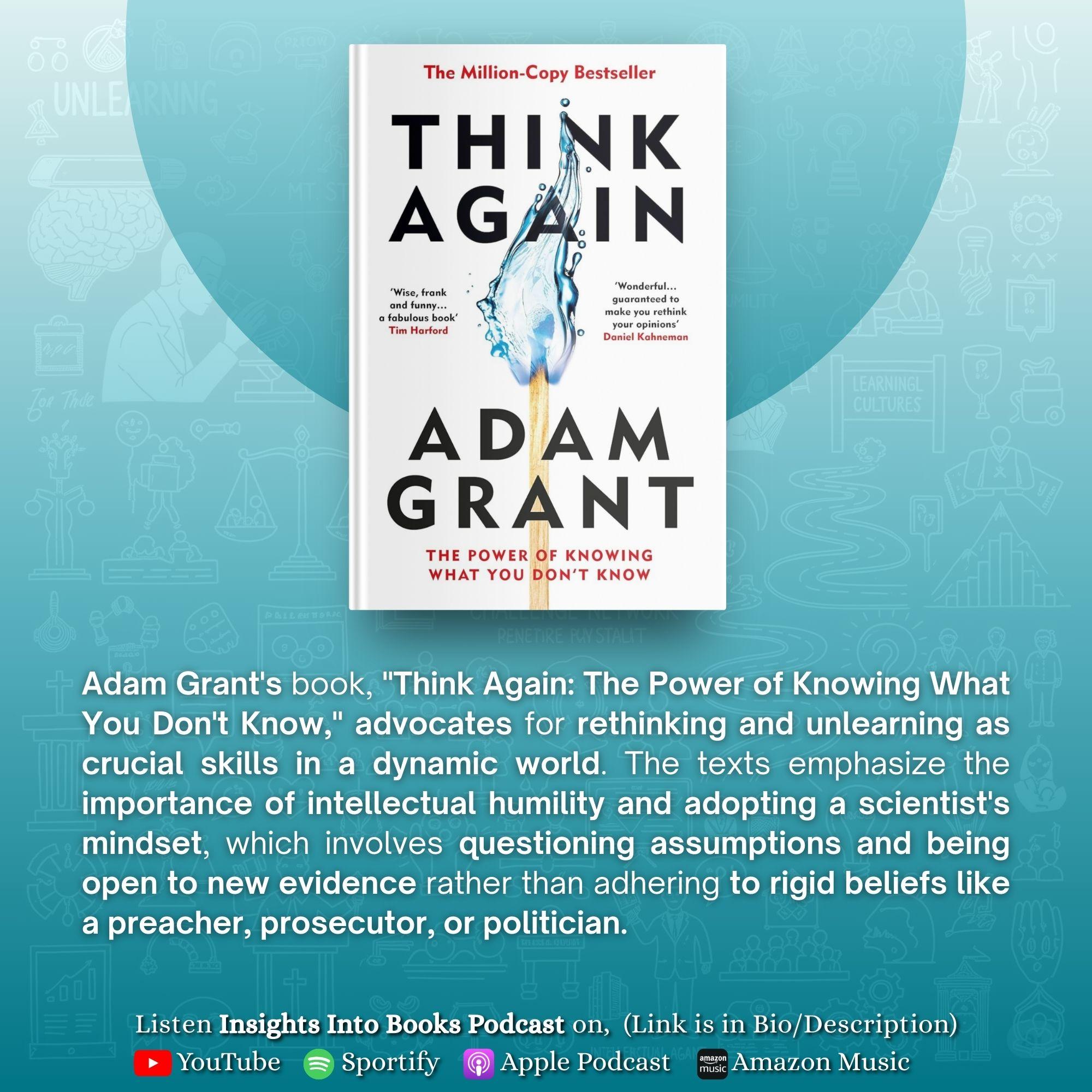
Are you thinking like a scientist, or are you stuck?
Listen Podcast, Link is in Bio!
#AdamGrant #ThinkAgain #GrowthMindset #CognitiveFlexibility #PersonalDevelopment #SelfImprovement #BookSummary #BookReview #Nonfiction #Bookstagram

Listen Podcast, Link is in the Bio!
Ready to challenge your own thinking? We've distilled the biggest insights.
#SelfImprovement #BookSummary #BookReview #Rethink #Unlearn #IntellectualHumility #GrowthMindset #CriticalThinking #CognitiveFlexibility #PersonalDevelopment
Mirror Neurons and Empathy: Exploring the Brain’s Social Connection System
#BrainNeuroscience #NeuralNetworks #DefaultModeNetwork #MirrorNeurons #CognitiveFlexibility #MentalHealth #Neurobiology #EmotionAndEmpathy #BrainRhythms #NeuroscienceEducation

Our beautiful walled gardens of moral purity.
One day Gumroad is a symbol of independence. The next, it’s toxic. So what then—Stripe? Square? MyPillow? Ok, I went too far, that dude and his stupid pillow need to go away for good. What’s the exit strategy when every platform, store, app, whatever eventually fails our purity test?
…
Here’s what really gets me about that question: the assumption that someone else has already decided for us. “Did we decide…” Not “Should I use this?” or “What do you think about this platform?” but “What’s the verdict? What’s safe? What won’t get me excommunicated from the group?”
…
Not because I want to defend broken platforms or bad actors. But because I want to defend something bigger—something we’re at risk of losing: the ability to engage with people without exile. The ability to stay in dialogue—especially when we don’t see eye-to-eye. The ability to build, together, without requiring each other to pass a moral purity test every three months.
This spoke to me. We have one life. As long as you are a kind person who attempts to leave the world a better place than you found it, you certainly don’t need to justify yourself to me or anyone else. I have stopped doing so.
None of this is easy. As someone went increasingly and unhealthily online, it’s a big personal change. For me, it comes from a place of diversion of attention. I stopped focusing on myself and asking myself what I think and filled it with other people’s opinions and their moral justification (which is performatory given it was driven by social media). Complete the feedback loop of tribal acknowledgements and I was caught in a vicious cycle. It resulted in a lack strong conviction, adoption of other people’s / tribe’s opinions accompanied by an erosion of intolerance to differences of them.
The only way I’ve fought against this is to follow a 3 step plan:
- Reduce external stimuli – as much as I told myself that even podcasts were “fueling” my brain, the truth is that it was just reducing the time, space and opportunity to think and form original opinions and thoughts.
- Replace social media with writing (and thinking) – what happens when you have more time to think and process is that you start forming thoughts that need an outlet. I’ve first resorted to my physical journal (pen, paper).
- Focus on writing on the blog: This blog predates social media when I first developed my own CMS on geocities. I am a child of the blog and I’ve come back to sharing my own experiences here.
The social media cycle entertained me but numbed me. It was also the type of entertainment that made me feel yucky as anxiety kept building up while i never tackled what I had to process.
It’s hard to trust someone who’s been through a cleanse. They see clarity that’s hard to see for someone in the middle of the muck. There is a similar clarity that I will share one day when it comes to focusing on the physical aspects of your body too.
For now let’s just say that I am rejuvenated. I am rejuvenated to think and share those thoughts again. I am reading with a clearer mind, my focus is longer and stronger and I feel like myself again.
You should do what works for you. All the best. If you want to chat to me about it / share what you are going through, put it in the comments.
#cognitiveFlexibility #Life #mindfulLiving #philosophy #thoughts
Fanatic defensiveness of a position is likely a recipe for disaster
The next time you catch yourself getting defensive about something – really defensive, like you’re personally offended that someone would dare question it – maybe pause for a second. Ask yourself: am I defending this because it’s actually good for me, or because I’m scared to imagine alternatives?
Stefano. is on to something here. Cognitive flexibility is a requirement to ensure that you are considering the reality of a situation. The same applies for black and white thinking as well. Being that inflexible suggests that you are unwilling to be adaptable and that suggests you are primarily operating from a position of fear.
This is not to say that I am against vibe-coding. It has personally helped me get back into developing my own tools. I’ve made 3 chrome extensions and 7 alfred workflows that are truly making me excited about development and using my computer again. I think there’s something here that must be refined, built and leveraged into tremendous productivity gains. However, it’s a far cry from a simple utility for myself to a production ready enterprise software.
#adaptability #ai #coding #cognitiveFlexibility #evolution #models #vibeCoding
The monocausal event of monetizing people’s attention
But we have more commons today than just the physical. That’s what changed. The average American adult 7 hours a day looking at a screen, more than half of that on a mobile. FAAMG controlled over 85% of lal time spent online in the US. Facebook alone controls 4 of the 5 most downloaded apps globally. Texting is our primary mode of communication. More than half of the US teens say they spend more time with friends online than in person.
Rohit Krishnan explores how and why the MANGA group of companies became the only good bet as far as financial markets go.
I don’t know what’s next. Attention-to-earnings ratio is not one to one. And time-plateau doesn’t mean a revenue plateau. So maybe a large part of what we see as attention above gets redirected into agents acting on our behalf. Granted, they are likely to be less impacted by advertisements per se, but there will be new methods of economic rent-seeking. Maybe it’s more ambient computing so the number of hours spent online blur into all hours which also blur with our offline lives.
The competition is fierce. However, one thing that we’ve not accounted for is how does attention itself change from one to the other. No trend is forever. In addition to the fact that most of our attention is spent online, there’s a powerful undercurrent that’s currently focusing on what we’ve lost by doing that too.
If AI does get going and there’s a path in this world where more of what we do gets automated, cheaply, freely, then where does our attention go? Might there not be a real possibility for that attention to step away from the online to the offline? It might be wishful thinking from my part and some recency bias given how much taking myself offline has helped my own mental sanity.
#attention #cognitiveFlexibility #companies #corporations #Life #MAG7 #manga #markets #online
🧠 Why do our brains crave ideology?
According to neuroscientist Leor Zmigrod, it’s not just what we believe — it’s how our brains are wired to believe.
Her research reveals:
🧬 Ideologies act as cognitive shortcuts
🔐 They give us a sense of control in uncertain environments
🌀 But they can also limit our mental flexibility and openness to change
So, how do we protect ourselves from becoming rigid in our thinking?
🌱 By fostering cognitive flexibility
💡 Encouraging introspection
🤝 And exposing ourselves to diverse viewpoints
Understanding the neuroscience behind belief systems can help us navigate polarization — not just socially, but personally.
#Neuroscience #Ideology #CognitiveFlexibility #MentalHealth #CriticalThinking
https://nautil.us/why-our-brains-crave-ideology-1203194/
Discover how dopamine fuels your brain's adaptability and problem-solving prowess. Unlock the secrets to enhancing cognitive flexibility today. #Neuroscience #Dopamine #CognitiveFlexibility
https://geekoo.news/unlocking-the-brains-adaptability-dopamines-role-in-cognitive-flexibility/
Unlocking the Superpower Within: The Marvel of Interoceptive Awareness
#InteroceptiveAwareness #MindBodyConnection #EmotionalIntelligence #CognitiveFlexibility #SensoryExperience #Neuroscience #SelfAwareness #Mindfulness #HealthyLiving #BodyMindSoul #EmotionalHealth #AdventureWithin

Is bilingualism beneficial for autistic children? 🌍🧩
Read our latest article to explore the full benefits and expert advice on raising a bilingual autistic child.
👉 Visit https://zurl.co/BSzEU
#BabyYumYum #BYY #Bilingualism #AutismSupport #ChildDevelopment #ParentingTips #CognitiveFlexibility


Quick bursts of stair climbing enhance energy and mental performance https://www.psypost.org/quick-bursts-of-stair-climbing-enhance-energy-and-mental-performance/?utm_source=dlvr.it&utm_medium=mastodon #StairClimbing #EnergyBoost #MentalPerformance #CognitiveFlexibility #MoodImprovement
https://pubmed.ncbi.nlm.nih.gov/38816586/ Beyond the serotonin deficit hypothesis: communicating a neuroplasticity framework of major depressive disorder (Page et al, 2024) #neuroscience #psychiatry #antidepressants #ssri #serotonin #psychedelics #psychotherapy #psychedelicassistedpsychotherapy #neuroplasticity #cognitivebehavioraltherapy #psychedelic #research #depression #mentalhealth #cognitiveflexibility
Alcohol and cocaine
Lead to cognitive decline
Brain pathways revealed
#substancemisuse #alcohol #cognitiveflexibility #brainchanges #haiku #poetry
http://www.medicalnewstoday.com/articles/how-alcohol-cocaine-impacts-brain-health
Researchers have discovered a new type of neurons that are involved in cognitive flexibility, the ability to switch between different tasks and strategies. These neurons, called VIP interneurons, are located in the prefrontal cortex and can inhibit or activate other neurons depending on the situation. The findings could help understand how the brain learns and adapts to new challenges.
#CognitiveFlexibility #Neuroscience #VIPInterneurons
https://neurosciencenews.com/cognitive-flexibility-learning-neurons-23143/

Referenced link: https://medicalxpress.com/news/2023-06-evolutionary-cognitive-flexibility.html
Discuss on https://discu.eu/q/https://medicalxpress.com/news/2023-06-evolutionary-cognitive-flexibility.html
Originally posted by Phys.org / @physorg_com: http://nitter.platypush.tech/medical_xpress/status/1669721357838319619#m
RT by @physorg_com: Tracing the evolutionary origin of #cognitiveflexibility @ruhrunibochum @NatureComms https://www.nature.com/articles/s41467-023-38671-7 https://medicalxpress.com/news/2023-06-evolutionary-cognitive-flexibility.html
"IQ Tests Can’t Measure It, But 'Cognitive Flexibility' Is Key To Learning And Creativity", The Conversation (https://theconversation.com/iq-tests-cant-measure-it-but-cognitive-flexibility-is-key-to-learning-and-creativity-163284).
#IQ #Intelligence #CognitiveFlexibility #Cognition #Smart #Learning #Creativity
Client Info
Server: https://mastodon.social
Version: 2025.07
Repository: https://github.com/cyevgeniy/lmst