
#hamRadioGuide

The Gentleman’s Guide to Ham Radio: Unwritten Rules for Modern Operators

1,301 words, 7 minutes read time.

Amateur radio, or ham radio, is a unique hobby that combines technical skill, communication expertise, and community interaction. Success on the airwaves requires more than just a license—it demands understanding both regulations and the unwritten conventions that keep the hobby enjoyable and efficient for everyone. Operating responsibly ensures clear transmissions, prevents interference, and helps operators avoid being labeled a “lid,” a term for someone who makes avoidable mistakes on the air. This article explores the core practices that define effective ham radio operation.

Understanding Ham Radio Regulations

Every amateur radio operator is bound by regulations set forth by licensing authorities, and compliance is the first step in responsible operation. In the United States, for example, the Federal Communications Commission (FCC) enforces rules that prohibit broadcasting music, transmitting encrypted messages, or conducting commercial activities over amateur frequencies. Operators must also perform station identification at the start of a transmission, every ten minutes during prolonged contacts, and at the end of a conversation. These regulations are not merely formalities; they protect the integrity of the amateur radio spectrum and ensure that operators can communicate openly without interference from unauthorized sources.

Knowing the law is only the foundation. Equally important is understanding how to transmit responsibly. Operators must choose the correct calling frequency for their band, whether on VHF, UHF, or HF. For instance, in VHF operation, 146.52 MHz serves as the standard calling frequency in the Americas. HF operators must also be aware of band segments, using the upper portion for voice modes and the lower portion for data. Ignoring these guidelines and transmitting randomly can disrupt ongoing contacts and frustrate other operators. Listening before transmitting is critical; it prevents unintentional interference and helps operators gauge whether a frequency is active or clear.

Proper Repeater Etiquette and Communication Practices

Once you understand the rules, the next step is learning effective communication techniques, especially when using repeaters. Repeaters are shared resources, and using them incorrectly can annoy fellow operators or even create safety hazards during emergency communications. One of the most common mistakes for new operators is “chunking” the repeater—pressing the push-to-talk button without speaking. This generates unnecessary noise on the frequency and signals inexperience. If such an accident occurs, it should be acknowledged promptly to avoid being labeled a lid.

Operators should also avoid using the term “broadcast” to describe amateur transmissions. Amateur radio is inherently a two-way communication system. It is designed for interaction and connection, not one-way transmission of information. Similarly, operators should become familiar with repeater personalities. Some repeaters are formal and structured, with strict conversation protocols, while others are informal or casual. Observing the repeater’s tone and conventions before transmitting allows new operators to integrate seamlessly, reducing the risk of conflicts or misunderstandings. Listening, patience, and proper identification are key components of this stage of operation.

Calling Frequencies, Codes, and Phonetics

Another critical aspect of ham radio best practices is understanding how to make effective contact on a frequency. Calling frequencies are designated portions of a band where operators can announce their presence, such as calling “CQ” to signal availability for a conversation. On VHF repeaters, it is unnecessary to use traditional CQ calls. Instead, a simple identification or request for contact is sufficient. On HF, the situation is different. Operators may use CQ calls to reach others across longer distances, but even then, care must be taken to ensure the frequency is clear. Listening for a few moments, announcing presence, and waiting for responses prevents interference and shows respect for fellow operators.

Operators should also understand the proper use of codes. Common codes, such as QSL for confirmation of receipt or QTH for location, are derived from Morse code practices and are widely accepted. Other codes like QRZ (who is calling) and QSY (change frequency) serve specific functions. In addition, the phonetic alphabet is essential for clear identification, particularly on HF or during contests, where signal clarity is critical. On VHF repeaters, however, phonetics may be unnecessary unless the call sign is difficult to discern. Using codes and phonetics appropriately ensures that communications are efficient and understandable, maintaining professionalism on the air.

Advanced Best Practices for HF and Data Modes

HF operations introduce additional technical considerations, such as antenna tuning and signal management. Operators should never tune an antenna over an active conversation, as the tuning noise can disrupt ongoing contacts. Instead, move a few kilohertz away from an active frequency before initiating tuning procedures. Similarly, when engaging in data modes using software like FL Digi, operators should be aware of RSID tones and mode identification to prevent confusion for others receiving the signal.

Calling CQ on HF requires attentiveness and timing. Operators should first confirm that a frequency is free, announce their presence, and then issue a CQ call in a measured manner. Ragchewing, or extended conversational contact, requires awareness of the other operator’s signal strength and readability. Signal reports, often expressed using the RST system—Readability, Signal Strength, and Tone—allow operators to determine whether a conversation is feasible. Providing or interpreting an accurate RST ensures that communication remains clear and efficient, and prevents frustration caused by attempting contacts under suboptimal conditions.

Effective Interaction During Nets and Group Communications

Net operations, where one operator serves as a controller for a structured group conversation, demand disciplined communication. Operators should not transmit until called upon and must follow the net control protocol. Interrupting ongoing conversations is acceptable only under certain circumstances, such as emergencies or brief interjections. Understanding how to enter and participate in group discussions without dominating the channel is an advanced skill that reinforces professionalism.

Equally important is leaving adequate pauses between transmissions. Allowing time for other operators to respond or interject ensures that conversations remain orderly and inclusive. Misusing the seven-three shorthand, or incorrectly referencing handheld transceivers, may mark an operator as inexperienced. Observing these subtle conventions distinguishes proficient operators from novices and reinforces the culture of respect that underpins amateur radio.

Conclusion: Mastering Ham Radio Conduct

Operating a ham radio effectively requires a balance of technical knowledge, regulatory compliance, and interpersonal skill. By understanding regulations, respecting calling frequencies and repeaters, and mastering proper communication techniques, operators can avoid common mistakes and participate fully in the amateur radio community. Listening attentively, using codes and phonetics appropriately, and maintaining awareness of other operators on the frequency ensures clarity, efficiency, and respect.

Ham radio is as much about community and shared experience as it is about technology. Following best practices allows operators to make meaningful contacts, expand their skills, and enjoy the hobby without causing interference or frustration. Mastery of these principles ensures that every transmission contributes positively to the amateur radio environment, fostering both technical competence and professional conduct.

Call to Action

If this story caught your attention, don’t just scroll past. Join the community—men sharing skills, stories, and experiences. Subscribe for more posts like this, drop a comment about your projects or lessons learned, or reach out and tell me what you’re building or experimenting with. Let’s grow together.

D. Bryan King

Sources

Disclaimer:

The views and opinions expressed in this post are solely those of the author. The information provided is based on personal research, experience, and understanding of the subject matter at the time of writing. Readers should consult relevant experts or authorities for specific guidance related to their unique situations.

#amateurOperator #amateurRadio #amateurRadioAdvice #amateurRadioCommunity #amateurRadioEquipment #amateurRadioHobby #amateurRadioInstruction #amateurRadioKnowledge #amateurRadioNetwork #amateurRadioRules #amateurRadioSafety #amateurRadioSignals #amateurRadioStation #amateurRadioTraining #antennaTuning #callingFrequencies #communicationProtocol #contestOperation #cqCalls #cw #dataModes #digitalModes #effectiveRadioCommunication #emergencyCommunication #fccRegulations #flDigi #hamRadio #hamRadioBeginner #hamRadioBestPractices #hamRadioCommunity #hamRadioEtiquette #hamRadioGuide #hamRadioLicense #hamRadioOperations #hamRadioTips #handheldTransceiver #hfContacts #hfRadio #ht #morseCode #netControl #phoneticAlphabet #properCommunication #psk31 #pushToTalk #qCodes #qrz #qsl #qsy #qth #radioBestPractices #radioCallSigns #radioCheck #radioClarity #radioCodes #radioCommunicationSkills #radioContact #radioConversation #radioConversationEtiquette #radioEngagement #radioEtiquette #radioFrequency #radioGuidelines #radioHobbyist #radioInterference #radioLearning #radioLicense #radioListener #radioListening #radioMonitoring #radioOperation #radioOperationGuide #radioOperationTips #radioOperatorGuide #radioOperatorTips #radioSetup #radioSignal #radioTerminology #radioTransmission #ragchew #readability #repeaterCommunication #repeaterEtiquette #repeaters #rsidTone #rstReport #rtty #sevenThree #signalReport #signalStrength #toneReport #uhfCommunication #uhfContacts #vhfCommunication #vhfContacts
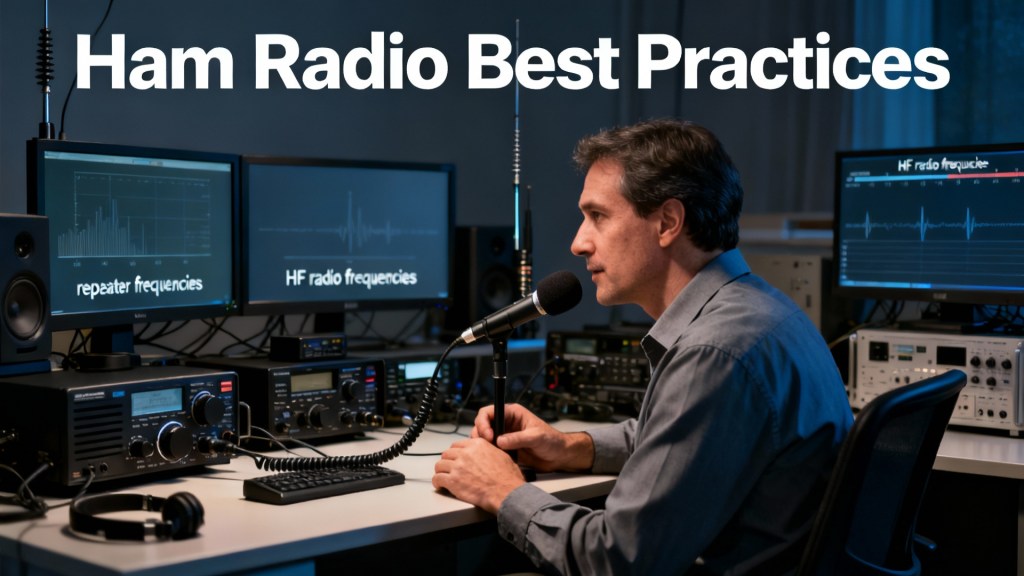
Amateur radio operator in a professional radio room, surrounded by transceivers and antennas, actively making a responsible radio transmission. Title “Ham Radio Best Practices” is displayed.

How to Log Your QSOs: Paper vs. Digital vs. Online Logs

1,753 words, 9 minutes read time.

Logging your QSOs, or contacts, is one of the most important practices in amateur radio. Beyond regulatory requirements, a QSO log is a personal record, a chronicle of your radio adventures, and a foundation for awards, confirmations, and future planning. Whether you are preparing for your first amateur license or refining decades of operating experience, understanding how to log your QSOs effectively is crucial. Choosing between paper, digital, and online logging methods influences not only how you track contacts but also how you engage with the broader amateur radio community.

Logging serves multiple functions beyond mere recordkeeping. At its core, a log captures the story of your activity on the airwaves. It tracks the stations you have contacted, the bands and modes you have explored, the contests you have entered, and even the propagation conditions you experienced. For many operators, a well-maintained log becomes a living history of their engagement with amateur radio. According to the American Radio Relay League (ARRL), a log provides a reference that supports award verification, contest scoring, and personal reflection, making it a cornerstone of serious operation (arrl.org).

Historically, logging has evolved alongside the hobby itself. In the early 20th century, operators relied exclusively on notebooks, meticulously recording each contact in pencil or ink. This practice was not only practical but also a matter of pride. Logs were often bound volumes, carefully preserved as personal artifacts. Some operators even decorated their logbooks with hand-drawn QSL cards and notes, making the log itself a work of art. These early logs were tangible connections to the worldwide community of amateur radio, long before computers or the internet made electronic logging possible.

Paper logs remain appealing today, despite the technological advances in digital and online logging. They are simple, reliable, and completely independent of software or electricity. Writing each QSO by hand encourages deliberate attention to detail. There is a satisfaction in physically recording a contact, in knowing that your logbook contains an unbroken record of your work. Paper logs are also incredibly robust; a notebook can survive field operations, power outages, and hardware failures, providing confidence that your contacts are permanently documented.

Nevertheless, paper logs have limitations. Searching for specific contacts or summarizing achievements is slow and labor-intensive. Storing years of logs requires space and careful organization. Manual entry is prone to human error, especially during long contests or in field conditions where fatigue and environmental factors come into play. To mitigate these issues, experienced operators often adopt standardized logging formats. These formats ensure that essential information—date, time, frequency, mode, call signs, signal reports, and operator notes—is recorded consistently. Some operators scan or transcribe paper logs into digital formats, preserving decades of QSO history while maintaining the original log as a tactile record.

The shift to digital logging brought a profound transformation to amateur radio operations. Digital logs allow operators to enter, store, and retrieve QSOs with unparalleled speed and accuracy. Modern logging software can track multiple stations simultaneously, handle automated data entry from digital modes, and even calculate award progress in real time. These capabilities have reshaped contesting and DXing, enabling operators to manage thousands of contacts efficiently and accurately.

Digital logging software ranges from simple programs for beginners to comprehensive suites for contesters and advanced operators. Ham Radio Deluxe is widely regarded for its integration with digital modes, award tracking, and robust logging capabilities (hamradiodeluxe.com). Logger32 provides a free, Windows-based solution that combines logging, contest management, and digital mode operation. N1MM Logger+ is renowned among contesters for real-time scoring, automated QSO entry, and its ability to interface with radios and rotators. The flexibility and power of digital logging allow operators to analyze trends, track propagation patterns, and plan operating sessions with unprecedented insight.

Digital logging is not without its challenges. It requires hardware, software knowledge, and disciplined maintenance. A crashed hard drive or corrupted database can erase months or years of records if backups are neglected. Operators must commit to regular data backups, software updates, and careful configuration to ensure accuracy and reliability. Despite these considerations, the efficiency and analytical capability of digital logs have made them indispensable for serious operators who seek precision and performance.

Online logging platforms have taken digital logging a step further, offering cloud-based storage and accessibility from anywhere with an internet connection. These platforms not only provide secure storage but also integrate directly with awards and confirmation systems. Logbook of the World (LoTW), administered by the ARRL, allows operators to submit electronic logs for verification and award confirmation (arrl.org). LoTW has transformed the way operators confirm QSOs, replacing the traditional exchange of paper QSL cards with secure, electronic confirmations.

Online logs offer unique advantages. Operators can access their records from multiple devices, ensuring that their logs are up to date regardless of where they operate. The cloud-based system provides redundancy and reduces the risk of data loss due to local hardware failures. Integration with award systems, such as DXCC, WAS, and VUCC, streamlines the process of tracking and confirming achievements. Additionally, platforms like QRZ.com Logbook and eQSL expand the digital ecosystem, allowing operators to maintain online records while engaging with a community of like-minded enthusiasts. These systems often include built-in search, reporting, and visualization tools, enabling operators to analyze their activity and track trends over time.

The limitations of online logging must be considered. A reliable internet connection is necessary, and some operators may have privacy concerns regarding cloud storage. Subscription fees may apply for advanced features or extended services. Effective use of online logging platforms requires an understanding of security practices, routine synchronization of logs, and attention to the platform’s policies to ensure data integrity and confidentiality. For many operators, online logging is not a replacement but a complement to traditional or digital logs, offering portability, backup security, and integration with global award systems.

Choosing the right logging method is highly personal. Paper logs provide reliability, a tangible record, and a connection to the historical roots of amateur radio. Digital logs offer efficiency, analytical power, and seamless integration with modern operating practices. Online logs provide convenience, redundancy, and direct connectivity to awards and confirmations. Many operators use a hybrid approach, maintaining a primary digital or online log while supplementing with paper logs during field operations or for archival purposes. Regardless of the method, consistency and attention to detail are paramount. Accurate logs ensure credibility, support awards, and contribute to the enjoyment and satisfaction of the hobby.

The evolution of logging also reflects the broader development of amateur radio. In the early days, operators would travel significant distances to establish contacts, often relying on Morse code and manual logging. The discipline of recording each contact accurately was both a technical requirement and a mark of professionalism. As technology advanced, logging software and digital modes enabled operators to make more contacts in less time, analyze propagation patterns, and participate in global contests with efficiency that would have seemed unimaginable to early hams. Today, online logs further connect operators across continents, allowing instant confirmation and recognition for achievements that once took months to verify through paper QSL exchanges.

Practical tips for logging QSOs emphasize accuracy, consistency, and redundancy. Always record the date, time, frequency or band, mode, call sign, signal report, and any operator notes. If using digital or online logging, take advantage of automated features but periodically review entries to catch errors. Regularly back up your logs to local drives, cloud storage, or both. When operating portable or in the field, a small paper notebook can serve as a backup to ensure that no QSO is lost. Over time, a well-maintained log becomes a treasure trove of personal history, a reflection of your growth as an operator, and a valuable tool for strategic planning in contests, DXing, and awards pursuits.

Logging also offers educational benefits. By analyzing trends in your log, you can learn about propagation patterns, understand which frequencies work best during different times of the day, and develop strategies for contacting distant stations. Studying your log can reveal which modes are most effective under varying conditions, helping you make informed decisions for future operating sessions. A QSO log is not just a record; it is a learning tool that enhances your skills, judgment, and efficiency as an operator.

For those aspiring to a lifelong engagement in amateur radio, logging is a skill worth mastering. It combines organization, attention to detail, and analytical thinking. By choosing the method that best fits your style and maintaining consistency in your entries, you set yourself up for a rewarding experience. Whether you are a casual operator recording weekend contacts or a dedicated contester aiming for global recognition, your log is an extension of your professionalism and dedication to the hobby.

Logging QSOs is a practice that combines tradition, technology, and personal expression. Paper logs connect us to the history of the hobby, digital logs empower us with modern tools and analytics, and online logs extend our reach across the globe. By understanding the strengths and limitations of each method, you can create a logging system that meets your needs, preserves your achievements, and enhances your enjoyment of amateur radio. A well-maintained log is more than a record; it is a reflection of your dedication, curiosity, and engagement with a community that spans continents and generations.

To continue enhancing your amateur radio experience, subscribe to our newsletter for regular tips, insights, and resources at https://wordpress.com/reader/site/subscription/61236952. Engage with the community by leaving a comment, or reach out directly through our contact form at https://bdking71.wordpress.com/contact/. Logging is a skill that grows stronger with practice, and by exploring different methods and sharing experiences, you contribute to a vibrant, connected, and thriving amateur radio community.

D. Bryan King

Sources

Disclaimer:

The views and opinions expressed in this post are solely those of the author. The information provided is based on personal research, experience, and understanding of the subject matter at the time of writing. Readers should consult relevant experts or authorities for specific guidance related to their unique situations.

Related Posts

Rate this:

#accurateLogs #amateurRadioContests #amateurRadioEducation #amateurRadioEfficiency #amateurRadioEngagement #amateurRadioExperience #amateurRadioLearning #amateurRadioLogs #amateurRadioProgress #amateurRadioRecords #amateurRadioTips #ARRLLogging #awardTracking #callSigns #cloudLogging #cloudBasedLogbook #contestLogging #contestManagement #digitalLog #digitalLoggingAdvantages #digitalModeLogging #DXCCTracking #DXing #effectiveQSOTracking #electronicQSL #fieldOperationLogging #fieldQSORecording #frequencyLogging #FT8Logging #hamRadioAwards #hamRadioBeginners #hamRadioCommunity #hamRadioExcellence #hamRadioGuide #hamRadioLogging #hamRadioNotebook #hamRadioTechnology #hamRadioTracking #hamRadioTutorial #HFLogging #historicalLoggingMethods #HRDLogbook #JT65Logging #logbookIntegration #LogbookOfTheWorld #logbookOrganization #logbookPreservation #logbookTemplate #Logger32 #loggingAccuracy #loggingAnalytics #LoggingBestPractices #loggingConsistency #loggingConvenience #loggingDiscipline #loggingEvolution #loggingExamples #loggingExpertise #loggingForBeginners #loggingHistory #loggingInsights #loggingReliability #loggingSoftware #loggingStrategies #loggingWorkflow #LoTW #modeLogging #N1MMLogger_ #onlineLog #onlineLoggingAdvantages #operatorEfficiency #operatorNotes #operatorReference #paperLog #paperVsDigitalLogging #portableLogging #QSLConfirmation #QSODocumentation #QSOLog #QSORecord #QSOTips #QSOTracking #QSOVerification #radioActivityRecord #radioHobbyMastery #radioHobbyistGuide #radioLogbook #radioLogsComparison #radioOperationTips #radioOperatorProductivity #radioOperatorTips #radioPropagationLogging #radioSkillsDevelopment #signalReports #UHFLogging #VHFLogging #VUCCTracking #WASTracking

An illustration showing the three methods of QSO logging: a paper logbook, a laptop displaying digital logging software, and a tablet with an online cloud-based log, with radios and antennas in the background.

Unlocking the Secrets of VHF and UHF: What Every Future Ham Radio Operator Absolutely Must Know

1,652 words, 9 minutes read time.

When you first step into the world of amateur radio, it feels a little like stepping onto another planet. There’s a whole language, culture, and way of thinking you have to learn. For guys gearing up to grab their first Amateur Radio License, getting a solid grip on the basics of VHF and UHF is a massive stepping stone. Even if your goal isn’t to become the next big contest operator or emergency comms wizard, understanding VHF (Very High Frequency) and UHF (Ultra High Frequency) will not only make you a better operator—it will set you up for success when you eventually take that license test. This guide is built to walk you through the essentials, without overwhelming you with overly technical jargon or theory you don’t need yet. We’re here to talk in plain English and get you prepared the smart way.

Starting from square one, VHF and UHF are simply sections of the radio frequency spectrum. VHF spans from 30 to 300 MHz, while UHF covers from 300 MHz to 3 GHz. Think of VHF like your favorite FM radio stations and UHF like your Wi-Fi router at home. These ranges aren’t random either—they’re carefully allocated by international agreements to prevent chaos on the airwaves. As ARRL (American Radio Relay League) clearly states in their guide on Frequency Allocations, amateurs are granted specific slices of these bands to experiment and communicate within. That permission is part of what makes the Ham Radio world such a special playground for technical exploration.

You already interact with VHF and UHF more often than you realize. Your car’s FM radio uses VHF. Those old rooftop TV antennas? VHF. Walkie-talkies and some cordless phones? UHF. If you’ve ever picked up a police scanner or tuned into a local weather broadcast, congratulations—you’ve brushed shoulders with these frequency bands already. This real-world familiarity makes amateur radio on VHF and UHF more intuitive than you might think.

In the amateur world, VHF and UHF are typically the first playgrounds new Hams explore. You’ll use these frequencies to talk to local operators in your town, hit repeaters mounted on tall towers, and even participate in emergency communication events. Groups like ARES (Amateur Radio Emergency Service) and RACES (Radio Amateur Civil Emergency Service) heavily rely on VHF and UHF during disasters because of their reliability and reach. According to Ham Radio School, VHF and UHF are especially useful for local, regional, and tactical communications when other systems fail.

The major differences between VHF and UHF come down to how the signals behave. VHF signals tend to travel farther across open land and over water but can struggle getting through urban environments packed with buildings. UHF signals, while typically not traveling as far horizontally, can sneak through small openings like windows and doorways much more effectively, making them kings of the concrete jungle. In a post on Ham Radio Prep, it’s highlighted that “VHF is better for outdoors and rural settings, while UHF wins in crowded cities.” Knowing this can save you a lot of headaches when you start deciding which bands to use based on where you’re operating.

As you start thinking about gear, it’s easy to get overwhelmed with choices, but keep it simple at first. Most newcomers start with a basic handheld transceiver—commonly called an HT. Brands like Baofeng, Yaesu, and Icom offer beginner-friendly models that cover both VHF and UHF bands. According to a detailed breakdown from DX Engineering, handheld radios are inexpensive, lightweight, and perfect for getting your feet wet. If you plan to operate from your car or home, you might later upgrade to a mobile radio with more power output (often 50 watts or more), but that’s a step you can take when you’re ready.

Antennas are the unsung heroes of your radio setup. A basic rubber duck antenna will get you started on an HT, but upgrading to a better whip antenna or even a small external antenna can make a huge difference. As OnAllBands explains, “In radio, the antenna is just as important—if not more important—than the radio itself.” A few extra feet of height on your antenna can sometimes outperform doubling your transmitter power. Speaking of which, don’t overlook the coaxial cable connecting your antenna to your radio. Cheap coax can introduce significant signal loss, especially at UHF frequencies. Start with good quality coax like RG-8X or LMR-240 and you’ll thank yourself later.

When you first get on the air, you’ll probably make most of your contacts through repeaters. A repeater is essentially a high-powered radio station, usually on top of a tall building or mountain, that listens on one frequency and retransmits your signal on another. Repeaters extend the range of handheld and mobile radios dramatically. The ARRL’s Repeater Directory is a great resource to find active repeaters in your area. You’ll often hear terms like “offset” and “PL tone” associated with repeaters. Offsets are simply the difference between the receive and transmit frequencies, while PL (Private Line) tones are subaudible tones that allow a repeater to filter out unwanted signals. These are easy to program into most modern radios once you understand the basics.

Understanding propagation is key to mastering VHF and UHF. Propagation simply refers to how radio waves travel from one point to another. Unlike HF (High Frequency) bands where signals can bounce off the ionosphere and travel thousands of miles, VHF and UHF signals typically travel “line-of-sight.” This means that if a mountain, hill, or large building is between you and the other operator, you might have trouble making contact. As the Ham Radio License Exam guide points out, “height is might” when it comes to VHF/UHF. The higher your antenna, the farther you’ll likely reach.

Operating practices in the VHF/UHF world are straightforward but vital. Always listen before transmitting to avoid accidentally stepping on someone else’s conversation. When making a call, keep it simple: just announce your call sign and state that you’re monitoring. An example might be, “This is K5XYZ, monitoring.” If someone responds, you’re off to the races. If not, no big deal—try again later. Good operating etiquette also means respecting other operators, avoiding excessive chatter on repeaters during busy times, and using simplex (direct) frequencies when appropriate to keep repeater traffic light.

One of the smartest moves you can make as a new Ham is participating in local nets. Nets are scheduled radio meetings, often organized by clubs or emergency groups, where operators check in and practice their skills. Finding a net is easy thanks to directories like QRZ Now or by simply asking around on your local repeater. Nets are welcoming to newcomers and offer a fantastic way to build confidence behind the microphone.

As you start transmitting, you’ll run into some common pitfalls. One of the biggest is overestimating your radio’s abilities. A 5-watt handheld radio won’t punch through a dense city skyline or thick forest without help from a repeater or external antenna. Another classic beginner mistake is forgetting to properly program your radio. While manual programming is a great skill to have, many new Hams use free software like CHIRP to make the job much easier. As KB6NU’s blog points out, getting comfortable with radio programming early on will save you a lot of frustration.

You might also be tempted to “upgrade” your setup with higher power or expensive gear too soon. Resist the urge. Spend your early months getting experience with what you have. Understanding your local terrain, local nets, and your own equipment quirks will make you a much better operator than simply buying bigger radios. Plus, learning to squeeze performance from a modest setup will pay dividends if you ever decide to move into emergency communications or portable operating.

There’s a fascinating future for VHF and UHF too. In an article by RadioWorld, experts discuss how new digital technologies, improved satellite communications, and even emergency alert systems are being built around VHF/UHF frequencies. These bands are not relics of the past—they’re alive, growing, and becoming more important than ever in a connected world.

In the end, mastering VHF and UHF isn’t just about passing a license test. It’s about learning the language of local communication. It’s about being able to reach out during an emergency when the cell towers are down. It’s about making new friends, participating in community events, and building technical skills that can lead to even bigger adventures like satellite communications, digital voice modes, and long-range contesting.

If you’ve made it this far, you’re already well ahead of most people starting their Ham Radio journey. Keep studying, keep listening, and most importantly—get on the air and practice. The airwaves are waiting for you, and so is an incredible community of operators eager to make that first contact with you.

Before you go, make sure to subscribe to our newsletter so you never miss helpful guides like this one! Also, we’d love to hear your experiences or questions—join the conversation by leaving a comment below. Let’s get you on the air, confident and ready!

D. Bryan King

Sources

Disclaimer:

The views and opinions expressed in this post are solely those of the author. The information provided is based on personal research, experience, and understanding of the subject matter at the time of writing. Readers should consult relevant experts or authorities for specific guidance related to their unique situations.

Related Posts

#AmateurRadio #amateurRadioForBeginners #amateurRadioHandbook #amateurRadioLicense #amateurRadioResources #beginnerHamRadio #emergencyCommunicationRadio #gettingStartedWithHamRadio #hamRadio #hamRadioAntennas #hamRadioBasics #hamRadioBeginners #hamRadioCommunity #hamRadioConversation #hamRadioGear #hamRadioGuide #hamRadioLearning #hamRadioNetCheckIn #hamRadioNets #hamRadioOperatingEtiquette #hamRadioOperatingTips #hamRadioProgramming #hamRadioSetup #HamRadioStudyGuide #hamRadioTips #handheldHamRadio #learnHamRadio #lineOfSightRadio #localHamRadio #mobileHamRadio #newHamRadioOperators #PLTones #radioFrequencyBasics #radioOperatorGuide #radioRepeaters #repeaterDirectory #simplexCommunication #startingHamRadio #UHF #UHFGuide #UHFPropagation #UHFRadio #UHFSimplex #understandingHamRadio #VHF #VHFGuide #VHFPropagation #VHFRadio #VHFSimplex #VHFUHFBasics #VHFUHFCommunication #VHFUHFDifferences #VHFUHFPropagation #VHFUHFRepeaters #VHFVsUHF

Exploring VHF and UHF: Every Future Ham's First Big Step Into Radio

Crack the Code: Understanding AM, FM, and SSB for Your Ham License

1,254 words, 7 minutes read time.

If you’re aiming to pass your Technician Class Amateur Radio Exam, understanding modulation techniques is crucial. Whether you’ve been fascinated by the world of amateur radio for years or are just diving into the hobby, learning about amplitude modulation (AM), frequency modulation (FM), and single sideband modulation (SSB) will give you a solid foundation to not only pass your test but also excel as a radio operator.

This comprehensive guide will break down the concept of modulation, demystify the technical jargon, and ensure you’re prepared for any related questions on your Technician Class Exam. In addition to exam preparation, you’ll walk away with practical knowledge that can improve your future experiences as an amateur radio operator.

The Basics of Radio Waves

Before diving into modulation, it’s essential to understand the basic principles of radio waves. Radio waves are a type of electromagnetic radiation that carries information from one point to another. They are characterized by their frequency (how fast the wave oscillates) and wavelength (the physical distance between the peaks of the wave).

The frequency of a wave is measured in Hertz (Hz), and in amateur radio, you’ll commonly encounter kilohertz (kHz), megahertz (MHz), and gigahertz (GHz). The higher the frequency, the shorter the wavelength, and vice versa. This principle forms the foundation of how different modulation techniques work.

What is Modulation?

In its simplest form, modulation is the process of adding information (voice, data, or video) to a radio frequency (RF) carrier wave. Without modulation, all you would have is a continuous, unvarying signal with no meaningful content. Modulation allows you to transmit information from your transmitter to someone else’s receiver.

In the Technician Class exam, you’ll often encounter questions about the different types of modulation, their uses, and their advantages or disadvantages. Let’s break down the most important modulation techniques: AM, FM, and SSB.

Amplitude Modulation (AM)

Amplitude modulation, or AM, is one of the oldest and most straightforward modulation methods. In AM, the amplitude (strength) of the carrier wave is varied in proportion to the information being sent. For example, when you speak into a microphone connected to an AM transmitter, the sound waves from your voice alter the amplitude of the carrier wave.

One of the main advantages of AM is its simplicity. It requires relatively simple equipment to transmit and receive signals, which is why it was widely used in the early days of radio broadcasting. However, AM is susceptible to noise and interference because any electrical noise (such as lightning or electrical equipment) can affect the amplitude of the signal, leading to poor audio quality.

In amateur radio, AM is still used on some bands, especially on the HF (high-frequency) bands where long-distance communication is common. According to the ARRL, “Amplitude modulation is often used for aviation communication, certain emergency services, and some amateur radio transmissions.” You can read more about AM modulation on the ARRL website.

Frequency Modulation (FM)

Frequency modulation, or FM, works by varying the frequency of the carrier wave rather than its amplitude. This method significantly reduces noise and interference, providing clearer audio quality. FM is the standard for commercial radio broadcasting (such as your car radio) and is commonly used on the VHF (very high frequency) and UHF (ultra-high frequency) amateur bands.

One of the reasons FM is so popular in amateur radio is its resilience to signal degradation. Because the information is encoded in the frequency shifts rather than the amplitude, FM signals can better withstand interference. This is why FM is the go-to choice for local communications, such as repeater operation and mobile radios.

A classic example of FM communication in amateur radio is the 2-meter band, where most VHF repeaters operate using FM modulation. The ARRL’s guide on amateur radio frequencies further explains the practical applications of FM modulation in amateur radio (ARRL Frequencies).

Single Sideband Modulation (SSB)

Single sideband modulation, or SSB, is a more advanced form of amplitude modulation. In a traditional AM signal, both a carrier wave and two identical sidebands (upper and lower) are transmitted. This setup consumes a lot of bandwidth and power. SSB eliminates one of the sidebands and the carrier, transmitting only the necessary sideband (upper or lower).

The primary advantage of SSB is its efficiency. By eliminating unnecessary components of the signal, SSB uses less bandwidth and power, allowing for longer-distance communication. This is particularly valuable for long-distance, high-frequency (HF) communications where power conservation and clear signals are essential.

SSB is commonly used in HF voice communication among amateur radio operators, marine radio, and emergency response networks. According to QRZ.com, “SSB is often preferred for voice communications on HF bands because of its ability to conserve power and bandwidth.” You can explore QRZ’s resources on SSB here.

Comparing AM, FM, and SSB

Understanding the differences between AM, FM, and SSB is crucial for your Technician Class Exam. Here’s a brief comparison to solidify your understanding:

  • AM is simple but prone to noise and interference. It is still used in some amateur and aviation communications.
  • FM provides clear audio quality and is widely used for local communications on VHF and UHF bands.
  • SSB is highly efficient, conserving bandwidth and power, making it ideal for long-distance HF communication.

Each modulation technique has its place in amateur radio, and understanding when and why to use each one will make you a more competent and confident operator.

ARRL Ham Radio License Manual 5th Edition – Complete Study Guide with Question Pool to Pass the Technician Class Amateur Radio Exam

Preparing for the Technician Class Exam

The Technician Class Exam will include questions on all three modulation types. You may encounter questions like:

  • Which modulation technique is most commonly used for local VHF communication?
  • Why is SSB preferred over AM for long-distance HF communication?
  • How does FM reduce noise interference compared to AM?

Using resources like the ARRL Question Pool or HamStudy.org will help you practice these questions and ensure you’re ready for the exam.

Practical Tips for Amateur Radio Operators

Once you pass your Technician Class Exam, you’ll quickly realize that understanding modulation isn’t just about passing a test — it’s about becoming an effective radio operator. Here are a few practical tips:

  • Start by using FM on local repeaters to get comfortable with VHF/UHF communication.
  • Experiment with SSB on HF bands for long-distance contacts.
  • Listen to AM broadcasts or use AM on the HF bands to understand its characteristics.

As you grow in your amateur radio journey, you’ll find that understanding modulation techniques will open doors to more advanced operating modes, experimentation, and worldwide communication.

Conclusion

Mastering AM, FM, and SSB modulation techniques is not only essential for passing your Technician Class Exam but also critical for becoming a proficient amateur radio operator. Each modulation type has its strengths and practical applications, and understanding them will make you a more knowledgeable and capable operator.

For more in-depth study resources, visit the ARRL website or QRZ.com. With the right preparation and knowledge, you’ll be on your way to earning your Technician Class license and joining the amazing world of amateur radio.

D. Bryan King

Sources

Disclaimer:

The views and opinions expressed in this post are solely those of the author. The information provided is based on personal research, experience, and understanding of the subject matter at the time of writing. Readers should consult relevant experts or authorities for specific guidance related to their unique situations.

Related Posts

Rate this:

#aceHamRadioExam #amExplained #amModulation #amVsFm #amVsSsb #AmateurRadio #amateurRadioBeginner #amateurRadioFrequency #amateurRadioKnowledge #amateurRadioLicense #amateurRadioOperations #amateurRadioTest #amplitudeModulation #beginnerSGuideHamRadio #examPrepHamRadio #fmExplained #fmModulation #fmVsSsb #frequencyModulation #hamExamQuestions #hamLicenseTestQuestions #hamRadio #hamRadioBeginner #HamRadioCertification #hamRadioCourse #hamRadioFrequencies #hamRadioGuide #hamRadioLicense #HamRadioOperators #HamRadioStudyGuide #HamRadioTest #HamRadioTraining #hamRadioTutorial #howToPassHamRadioExam #learnHamRadio #modulationDefinitions #modulationExplained #modulationTechniques #modulationTechniquesExplained #modulationTheory #modulationTypesHamRadio #passHamRadioTest #passingTechnicianExam #radioCommunication #radioCommunicationExam #radioCommunicationTechniques #radioFrequencies #radioModulationTypes #radioTransmission #radioWaveProperties #radioWaves #singleSideband #ssbExplained #ssbModulation #TechnicianExam #TechnicianExamTips #technicianLicenseGuide #understandingModulation #understandingRadioWaves

Client Info

Server: https://mastodon.social
Version: 2025.07
Repository: https://github.com/cyevgeniy/lmst