#theGenevaLearningFoundation

2026-02-07

Book review: A handbook of learning for transformation

A cartography of learning for transformation

The Palgrave Handbook of Learning for Transformation offers a sweeping map of the territory of transformative learning. The editors have curated a massive collection of perspectives that stretch the boundaries of the field beyond its traditional roots in the work of Jack Mezirow. The volume is organized not as a linear textbook but as a series of provocations that invite the reader to wander through different passageways of inquiry.

As the editors Nicolaides and Eschenbacher explain, “a passage points to two directions – backward to the space one is leaving, and forward to the space one is approaching”. This orientation is critical because it frames the book not as a final destination but as a movement toward something new.

This structure allows for a rich diversity of voices:

  1. The handbook moves from foundational theoretical debates to applications in specific contexts like higher education, workplaces, and community activism.
  2. It explores the conditions that generate transformation, ranging from the role of art and imagination to the necessity of structural change in society.
  3. It is a comprehensive archive of the “what” and the “why” of transformation.
  4. It documents the intellectual heritage of the field while pointing toward emerging futures where learning is central to addressing complex global challenges.

Why should busy practitioners engage with this handbook?

As global health and humanitarian practitioners, we often feel the limitations of the transmission models of training that dominate our sector, yet we sometimes lack the precise vocabulary to explain why they fail in our complex, adaptive environments. This handbook is not a quick or easy read. It is dense, academic, and demanding. It is likely best suited for those of us – program designers, strategists, and technical leads – who are willing to wade through significant theoretical weight to find a more robust way forward. If we are willing to make that effort, this volume offers the intellectual grounding necessary to articulate why linear project cycles fall short in volatile crises and why we are more likely to make progress when we prioritize inquiry-based, networked learning. It equips us to defend the shift away from top-down directives toward approaches that center the frontline worker, helping us design evaluation metrics that measure genuine behavioral change rather than simple compliance.

Insights for networked and complex learning for transformation

Three chapters in this volume stand out for their direct resonance with the work of connecting frontline practitioners to solve complex problems. These contributions offer theoretical grounding that can strengthen practices focused on networked learning and collective intelligence.

Chapter 38: The Interpenetration of Individual and Collective Transformation.

Abigail Lynam and her colleagues present a framework that is vital for understanding how learning scales. They argue that individual and collective development are not separate processes but are deeply intertwined. This mirrors the dynamic we observe in large-scale peer networks where the “We” becomes a powerful engine for the growth of the “I.” They describe how the “subtle We” consists of “the perception of being situated in and arising out of a plurality of contexts” where “the We is not then a specific group of people, but is a relational space, a quality brought to relationships, or a relational field”. Their discussion of “subtle community” and the movement from differentiation to integration provides a useful vocabulary for understanding how digital networks can become spaces of profound connection and shared purpose rather than just channels for information exchange.

Chapter 39: Power of Questions: Transformation in Complex Systems.

Glenda Eoyang’s contribution is essential for any organization operating in volatile and uncertain environments. She argues that in complex systems, traditional answers and linear plans often fail. As she states, “Certainty will never be possible, so it must be replaced with inquiry”. Her approach to “Adaptive Action” – asking What, So what, and Now what – aligns perfectly with the need for iterative, action-oriented learning cycles. She notes that “answers are useful only in limited space and over a short period of time”. This chapter validates the move away from didactic training toward inquiry-based models where learners interrogate their own reality. It reinforces the idea that transformation in complex settings requires the ability to see patterns and adjust actions in real time rather than adhering to rigid protocols.

Chapter 44: Evaluation as a Pathway to Transformation.

Scott Chaplowe and his co-authors tackle the critical challenge of measuring impact in complex systems. They critique the industry’s fixation on metrics, citing Natsios to note an “Obsessive Measurement Disorder” where the production of evidence undermines the very interventions it is supposed to support. They vividly illustrate the problem by quoting Mueller: “the snake of accountability eats its own tail”. They propose a shift toward “transformational evaluation” that supports learning and adaptation. This is crucial for organizations that seek to bridge the gap between learning and performance. It suggests that we must move beyond counting the number of people trained to measuring the actual shifts in behavior and the tangible outcomes that result from learning. This chapter provides a robust theoretical basis for measuring impact through the lens of systems change rather than simple compliance.

How does our work connect to the learning and insights of the handbook?

The handbook offers a rich theoretical map. The approach we take at The Geneva Learning Foundation complements this map by building the vehicle required to traverse this territory at speed and scale. While the handbook often focuses on the intimate or the theoretical, our work demonstrates how these principles can be operationalized for thousands of learners simultaneously.

From theoretical complexity to cognitive quiet

The handbook is dense with academic rigor and complex language. Arguably, this complexity may be necessary for the advancement of theory. TGLF’s approach complements this by translating these high-level concepts into cognitive quiet. We strip away the theoretical noise to focus on the essential loop of analysis, action, and reflection. As Eoyang points out, in complex environments, “one simple intervention sets conditions for multiple, unpredictable transformational changes”. We strive to turn sophisticated ideas from learning theory and embed them into simple, accessible workflows that busy professionals can use immediately. We nourish the handbook’s theories by showing they work not just in the seminar room but in the gritty reality of communities facing multiple, intertwined crises.

From individual reflection to collective intelligence

Many chapters in the handbook focus on the individual or small group as the unit of transformation. We expand this horizon by demonstrating that scale enhances quality. The “We-Space” discussed by Lynam need not be limited to a room of people. It can be a digital network of thousands. Fergal Finnegan, in Chapter 4, warns against the “false dichotomy” between individual and social transformation, noting that “it is a mistake to treat collective agency as a simple scaled-up aggregate version of what happens at an individual level”. Our approach is proving that when you connect vast numbers of peers, you generate a collective intelligence that exceeds the capacity of any single room full of experts. We take the theoretical possibility of collective transformation described in the text and turn it into a practical engine for local actors solving real-world problems.

Producing new learning for transformation

The handbook, by its nature, is a collection of expert knowledge to be consumed by the reader. Our work complements this by inverting the model. We treat the learner not as a consumer of the handbook’s wisdom but as a producer of new knowledge. We operationalize the decolonial and emancipatory themes found in the book by centering the experience of the practitioner as the primary text. As Seehawer and colleagues note in Chapter 26, we must move away from focusing on challenges and toward “recognising our agency as teachers and lifelong learners”. The handbook explains why voice matters. Our platform gives that voice a global megaphone. We operationalize the philosophy contained in these pages by building the digital infrastructure that allows the learners themselves to theorize their practice and lead the transformation of their own systems.

Reference

Nicolaides, A., Eschenbacher, S., Buergelt, P., Gilpin-Jackson, Y., Welch, M. and Misawa, M. (Eds.), (2022). The Palgrave handbook of learning for transformation. Palgrave. 956 pp. $279 USD (hardcover), ISBN: 978-3-030-84693-0. https://doi.org/10.1007/978-3-030-84694-7


#AlikiNicolaides #JackMezirow #PalgraveHandbookOfLearningForTransformation #TheGenevaLearningFoundation
Palgrave Handbook of Learning for Transformation
2026-01-31

5 surprising insights from the science of successful learning

The work of Reda Sadki offers a provocative, often counter-intuitive critique of how we learn, lead, and solve complex problems.

Here are five surprising insights from his body of work.

1. Text is superior to video for learning

In an era where educational technology is obsessed with video content, immersive simulations, and flashy multimedia, Sadki argues for the humble written word.

He asserts that the push for multimedia is often a “deception” that confuses engagement with entertainment.

In Richard Mayer’s research on multimedia for learning actually proves text works better, Sadki re-examines the foundational science of instructional design.

He points out that multimedia often creates “cognitive waste” by forcing the brain to split attention between visual and auditory streams.

He argues that well-structured text is “cognitively quiet” and far better suited for the high-level critical thinking required in complex fields.

He doubles down on this in Against chocolate-covered broccoli: text-based alternatives to expensive multimedia content.

Here, he describes multimedia as an economic dead end.

He argues that text is not only cheaper and easier to update but also creates a more equitable learning environment for professionals in low-bandwidth settings.

2. Gamification is a “disaster” for humanitarian learning

While many organizations rush to “gamify” learning with badges, points, and leaderboards, Sadki calls this trend a “dead end.”

He argues that gamification is simply “lipstick on the pig of behaviorism,” a discredited theory that treats learners like rats in a maze responding to stimuli.

In Why gamification is a disaster for humanitarian learning, he makes a blistering case that games fail to model the complexity of the real world.

He points out that the dominant culture of video games often relies on violence and competition, which are antithetical to humanitarian values.

He argues that professionals facing life-and-death decisions need critical reasoning skills, not the artificial dopamine hits of a game.

3. Low completion rates can be a sign of success, not failure

In the world of online courses, a low completion rate is usually seen as a failure of design.

Sadki flips this metric on its head.

He suggests that in professional settings, “completion” is a vanity metric, part of the legacy of education systems that kept learners in closed environments.

In Online learning completion rates in context: Rethinking success in digital learning networks, he argues that busy professionals often engage with learning to solve a specific problem.

Once they find the solution, they leave.

This “drop-off” is actually efficient learning in action.

He warns that optimizing for completion often leads to dumbing down content rather than increasing its impact.

4. The “transparency paradox”: health workers are using AI in secret

One of Sadki’s most startling recent observations comes from his work with frontline health workers.

He reveals that professionals in the Global South are already using advanced Artificial Intelligence (AI) tools, but they are forced to hide this fact.

In Artificial intelligence, accountability, and authenticity: knowledge production and power in global health crisis, he describes a “transparency paradox.”

Global health systems are often punitive.

If a health worker admits to using AI to help draft a report or analyze data, their work is devalued as “inauthentic,” even if the quality is higher.

This forces innovation underground and prevents organizations from learning how to effectively partner with AI.

He expands on the solution in A global health framework for Artificial Intelligence as co-worker to support networked learning and local action, arguing that we must legitimize AI as a “co-worker” rather than a cheat.

5. Cascade training is mathematically doomed to fail

Finally, Sadki uses simple mathematics to dismantle one of the most common methods of training in the world: the “cascade” model, where experts train trainers, who train others.

In Why does cascade training fail?, he demonstrates that information loss at every level of the cascade is inevitable.

He argues that this model persists not because it works, but because it is convenient for hierarchical organizations.

He offers a stark alternative in Calculating the relative effectiveness of expert coaching, peer learning, and cascade training, where he proves that peer learning networks are the only model capable of scaling without losing quality.

#ArtificialIntelligence #completionRates #gamification #globalHealth #learningStrategy #multimediaLearning #RichardMayer #TheGenevaLearningFoundation
2026-01-21

The future of hybrid engagement: accelerated action to tackle global threats

How can we use the new physics of digital connections to save lives? What is the future of hybrid engagement?

The ultimate test of any digital architecture is whether it can deliver results in the real world. In the context of global health, the challenge is bridging the “know-do gap.” This is the chasm between high-level strategies written in Geneva or Seattle and the messy reality of a health clinic in a conflict zone. Traditional capacity-building often relies on the “transmission” of knowledge from experts to novices. This approach assumes that a lack of knowledge is the primary barrier to action. However, evidence suggests the binding constraint is often a lack of social scaffolding. Without the trust and shared context that physical presence historically provided, knowledge fails to travel. The Geneva Learning Foundation has developed an implementation engine that solves this not by building better courses, but by reconstructing the sociology of connection. This engine operates through a “Full Learning Cycle” that integrates three patterns: mobilization, analysis, and action. Each phase is designed to engineer specific psychological effects—social presence, swift trust, and digital accompaniment—that distance usually destroys.

Mobilization: validating social presence

The cycle begins with programs like “Teach to Reach,” which mobilize thousands of practitioners to share their own tacit knowledge. In the first article of this series, we explored how remote partners often feel like abstract entities rather than real people. Teach to Reach counters this “illusion of non-existence” by validating the lived experience of the frontline worker. When a nurse in rural Nigeria shares a story of overcoming vaccine hesitancy, she is no longer a name in a database; she becomes a sentient peer. This act of sharing creates the “social presence” required for trust. It signals that the practitioner is an “insider”—a creator of knowledge rather than just a recipient of aid. This manufactures the status and recognition that was previously available only to those who could travel to global conferences.

Analysis: engineering high-bandwidth interaction

The second phase, the “Peer Learning Exercise,” guides participants through a structured analysis of a complex problem. This phase addresses the loss of “propinquity,” or physical nearness. In a physical workshop, trust is built through the high-bandwidth exchange of ideas. To replicate this digitally, the Foundation uses “recursive feedback” loops. Participants do not just consume content; they must review and critique the work of their peers using structured rubrics. This forces a “mutual directionality” where participants engage deeply with another human’s cognition. By struggling through a problem together, they generate the “swift trust” essential for collaboration. The digital platform becomes a virtual hallway, facilitating the deep, interpersonal “bumps” that move relationships from transactional to transformational.

Action: from surveillance to accompaniment

Finally, and most crucially, the “Impact Accelerator” supports continuous action in the professional’s daily work. This phase operationalizes the shift from “remote management” to “digital accompaniment”. Traditional remote management creates distance through surveillance, asking “Have you done the work?”. The Accelerator inverts this. Participants set weekly goals and report back to their peers, creating a rhythm of high-frequency, low-stakes contact. This mimics the psychological closeness of a mentor walking alongside a partner. It keeps the relationship in a “simmering” state of readiness, providing the “electronic propinquity” that sustains motivation over time. The reporting mechanism is not about bureaucratic compliance; it is about professional solidarity.

The metrics of connection

The results of this architecture are quantifiable. A comparative study from January 2020 demonstrated that participants in this structured peer support model were seven times more likely to report credible implementation of their plans compared to a control group. Furthermore, this model delivers capacity building at approximately 90 percent lower cost than conventional face-to-face technical assistance. By removing the reliance on travel and per diems, the model selects for intrinsic motivation. It identifies the “positive outliers” who are genuinely committed to their mission. This architecture democratizes the “insider” status, allowing a health worker in a remote district to access the social validation and professional network previously reserved for the elite. By shifting from surveillance to solidarity, we build a more resilient system of global cooperation. The future of hybrid engagement lies in creating this “Hybrid Intimacy,” where digital tools are used to forge bonds as real and at least as effective as those formed in the physical world.

A new peer learning programme for those leading change across distance

Distance is no longer a barrier to partnership. It is the condition for a new kind of “augmented reality” where collaboration can be more inclusive and effective than in the physical world. The Geneva Learning Foundation’s Certificate peer learning programme in Artificial Intelligence includes a tactical primer to master the essentials of digital, remote work and partnering with both humans and machines as co-workers. The primer serves as the stepping stone to a broader strategic transformation, where you will learn to build communities of action that scale expertise and deliver results faster. By rejecting the “digital dualism” that treats online interaction as a deficit, you will turn the necessity of working apart into a decisive organizational advantage. Get The Geneva Learning Foundation’s AI framework now. You will then receive the invitation to join the primer on the essentials of partnering and work in the Age of AI.

References

    • Lampel, J. and Meyer, A.D. (2008) ‘Field-Configuring Events as Structuring Mechanisms: How Conferences, Ceremonies, and Trade Shows Constitute New Technologies, Industries, and Markets’, Journal of Management Studies, 45(6), pp. 1025–1035. Available at: https://doi.org/10.1111/j.1467-6486.2008.00797.x
    • Jarvenpaa, S.L. and Leidner, D.E. (1999) ‘Communication and Trust in Global Virtual Teams’, Organization Science, 10(6), pp. 791–815. Available at: https://doi.org/10.1287/orsc.10.6.791
    • Jones I, Sadki R, Brooks A, Gasse F, Mbuh C, Zha M, et al. IA2030 Movement Year 1 report. Consultative engagement through a digitally enabled peer learning platform. The Geneva Learning Foundation; 2022. Available from: https://doi.org/10.5281/zenodo.7119648.
    • Sadki, R., 2025. PFA Accelerator: across Europe, practitioners learn from each other to strengthen support to children affected by the humanitarian crisis in Ukraine. https://doi.org/10.59350/redasadki.21155.
    • Watkins, K.E., Bhattarai, A., 2019. Analysis of the Impact Accelerator Launch Pad Individual Acceleration Reports in July 2019. University of Georgia at Athens, Athens, United States.

About the installation

The Signal Between Us © The Geneva Learning Foundation 2026. This installation stages two opposing forms held apart yet bound by a dense, vibrating core. The white masses suggest distinct spaces, faces, or systems, while the suspended central structure pulses like a shared frequency, translating distance into connection. Fragmented, uneven, and charged with tension, it evokes the work of hybrid engagement: aligning what is separate without erasing difference. The piece suggests that action does not arise from uniformity, but from the ability to synchronize across divides, where meaning, trust, and momentum are carried through the signals we learn to sustain together. #digitalArchitecture #FullLearningCycle #globalThreats #hybridEngagement #propinquity #remoteWork #socialPresence #SocialPresenceTheory #TeachToReach #TheGenevaLearningFoundation
The future of hybrid engagement accelerated action to tackle global threats
2026-01-21

What we are learning about diversity in gender and emergencies work

On 18 September 2025, we first announced our new Certificate peer learning programme for gender in emergencies. The first course, a primer on the topic, then launched on 6 October.

As of 21 January 2026, the gender community of The Geneva Learning Foundation (TGLF) now reaches 6,592 practitioners. This amazing growth is the result of the first primer “going viral”, and a testament to the Foundation’s learning communities that responded to the call to action, joined the course, and spread the call for enrollment far and wide.

On 14 October 2025, The Geneva Learning Foundation issued the first call for domain experts to support and guide the programme’s future development.

In humanitarian work, hiring processes are frequently opaque. Specialized topics like gender in emergencies have relied primarily on closed networks led by Global North gatekeepers with impressive credentials and “field” experience. Our thinking was that this excludes or marginalizes practitioners who live every day in the “field” where global humanitarians deploy during emergencies.

Here is what we learned when we opened our roster to both INGO networks that remain concentrated in the Global North and to our own networks that connect over 80,000 health and humanitarian workers, primarily based in local communities of the Global South.

Seeking a guide on the side

The call for applications issued in October 2025 sought a specific type of professional: the “Guide on the side”. This is a facilitator tasked with holding safe and brave spaces for humanitarian practitioners to find solidarity and deepen their analysis.

The Geneva Learning Foundation prioritized several core requirements for this role:

  • Deep domain expertise in gender in emergencies, for example in areas like Rapid Gender Analysis or risk mitigation for gender based violence.
  • A practice grounded in intersectional, feminist, and decolonial analysis.
  • A practice in line with our conviction that practitioners who are there every day hold the essential knowledge required to solve complex problems.
  • Full professional fluency in English, French, and other languages to facilitate complex and nuanced discussions across linguistic divides.

Who answered the call: a demographic profile

We received 61 applications from 26 countries, 49% of them from women. The largest concentrations of applicants are found in the Democratic Republic of the Congo and Nigeria, which together account for 41% of the total. However, for the Democratic Republic of the Congo, men represent 67% of the applicants, while Nigeria shows a more balanced split with 55% men and 45% women. Four countries (Spain, Jordan, Morocco, and South Africa) had only female applicants, whereas applicants from three countries (Ethiopia, India, and Senegal) were all men.

Women from the Global North, primarily residing in countries like Spain, Greece, and Switzerland, consistently presented the most extensive institutional pedigrees, citing decades of experience authoring global strategies and leading interagency coordination for major international organizations. In contrast, applications from women in the Global South, although fewer in number, were characterized by grassroots activism and authority derived from personal lived experiences of conflict and displacement. Men from the Global South represented a significant portion of the pool, particularly from the Democratic Republic of the Congo and Nigeria, and their profiles frequently combined technical public health roles with a deep commitment to adapting global guidelines to complex local realities. Notably, no applications were received from men residing in the Global North for this specific call.

Beyond credentials: vague claims versus tangible artefacts

A critical part of our analysis involved distinguishing between vague, unverifiable claims and tangible examples of achievements. Many applicants stated they were “passionate about gender” or “committed to equity” without providing evidence of how this commitment manifested through what they have actually done in their work or life. Passion may be necessary, but it is unlikely to be sufficient without analysis.

Some candidates provided concrete examples. Here are four examples:

  • Localized technical tools: One applicant developed culturally relevant glossaries and training materials in Arabic to decolonize the language of gender and protection. Another led the design of a Menstrual Health and Dignity Project that promoted youth leadership and gender justice in partnership with local networks.
  • Documented field leadership: Candidates shared evidence of leading national level Rapid Gender Analyses in displacement sites, where they trained local teams and validated results directly with communities.
  • Integration of gender into technical sectors: Several health professionals shared how they successfully integrated gender sensitive strategies into outbreak preparedness and large scale immunization campaigns.
  • Strategic policy influence: One candidate led the development of a global gender justice strategy that centers decolonial feminist approaches and prioritizes collaboration with women led organizations.

The intersection of professional background and lived experience

A significant dimension shared in many motivation letters was the “why” that informs their practice. For these individuals, expertise is not just a credential. It is a lived reality that is both personal and political.

  • Survivors and activists: Several candidates identified as survivors of conflict and displacement. They stated that their commitment to gender equity was not learned from books but was “painfully and personally lived”.
  • Identity as expertise: Applicants from the Global South shared how their own multicultural and multilingual identities allow them to navigate power dynamics that Western centric frameworks might miss.
  • Commitment to unlearning: Many senior experts explicitly addressed the need for “continued unlearning” to recognize their own privilege and create truly inclusive spaces.

Divergent paths to expertise: local activism versus institutional pedigree

The call for applications revealed a profound bifurcation in the nature of expertise within the humanitarian sector. On one hand, a significant number of applications originated from practitioners rooted in local communities across Africa, Asia, and the Arab World. These candidates presented profiles characterized by grassroots activism and direct advocacy. What was distinct about their applications was the source of their authority: it was not solely academic but was often described as being painfully and personally lived. Some are founders of grassroots initiatives that work on dismantling systems of forced labor and modern slavery. Others are community health supervisors who coordinate responses in health zones facing extreme poverty and armed conflict. Their applications emphasized the importance of psychological liberation and rebuilding agency from within the community rather than through external intervention.

In contrast, applications from women based in the Global North, particularly from Spain, Switzerland, and Greece, held the most impressive institutional pedigrees. These profiles were marked by decades of experience shaping global policies and leading interagency coordination for major international organizations. They are the authors of global gender justice strategies, senior GenCap advisors who provide technical assistance to United Nations Humanitarian Coordinators, and architects of standardized guidelines for gender-based violence response. Their achievements are measured by the scale of their institutional reach and the creation of universal frameworks intended for deployment across diverse emergency contexts.

From a decolonial feminist lens, these differences illustrate what Ogochukwu Udenigwe and her colleagues describe as “hierarchical knowledge praxis”. In plain language, Global North candidates often function as dispensers of human rights and experts who generate knowledge for others to consume. This reflects the coloniality of power where the West remains the center of production while the rest of the world is positioned as a recipient. 

Conversely, the local activist profiles represent a form of epistemic disobedience. They refuse to be reduced to passive beneficiaries or informants, and assert themselves as knowledge-holders whose firsthand experience is the most critical resource for solving complex challenges. Their applications challenge the saviourism narratives that often characterize international interventions by prioritizing relational accountability and indigenous histories of solidarity.

Solidarity as an act of unlearning and reclaiming

By opening our roster, we are not dismissing institutional expertise but rather creating a site where global strategic knowledge and ‘authentically intelligent’ local experience can meet as equals to solve problems that neither can address alone, to the benefit of both.

In this framework, solidarity does not mean “helping” the Global South from a position of superiority. Instead, it requires a two-way transformation:

  • Global North allies can engage in a deliberate process of unlearning positional privilege and recognizing that their “expert” knowledge often excludes the lived realities of those they aim to protect.
  • Global South practitioners can reclaim their status as knowledge-holders and experts who are capable of autonomous thought and innovation.
  • Both groups benefit from working together to “delink” from Western narratives that pathologize cultures of the Global South and instead value indigenous histories of solidarity, such as the African tradition of “safe spaces”.
  • This process fosters “relational accountability,” where the primary responsibility of a consultant is to the community served rather than to a distant donor or state bureaucracy.
  • Legitimacy is best defined not only by institutional pedigree but by ‘relational accountability’ to the communities being served and the ability to turn shared insights into concrete action.

By opening the call to everyone with decolonial criteria clearly in mind, we hope to build a bridge across the chasm between “global” and “local” knowledge. True leadership in gender in emergencies requires the humility to listen and the courage to act upon what is heard. As this programme moves forward, our goal is to build an ecosystem where every practitioner, regardless of their geography, identity, or pedigree, can both contribute and benefit.

References

Bian, J., 2022. The racialization of expertise and professional non-equivalence in the humanitarian workplace. Int J Humanitarian Action 7, 3. https://doi.org/10.1186/s41018-021-00112-9

Sadki, R., 2026. Reimagining Rapid Gender Analysis as decolonial practice. https://doi.org/10.59350/rr0d3-3pk55

Sadki, R., 2025. Gender in emergencies: a new peer learning programme from The Geneva Learning Foundation. https://doi.org/10.59350/j3twk-d9x53

Udenigwe, O., Aubel, J., Abimbola, S., 2026. A decolonial feminist perspective on gender equality programming in the Global South. PLOS Glob Public Health 6, e0005556. https://doi.org/10.1371/journal.pgph.0005556

Wenham, C., Davies, S.E., 2022. WHO runs the world – (not) girls: gender neglect during global health emergencies. International Feminist Journal of Politics 24, 415–438. https://doi.org/10.1080/14616742.2021.1921601

#CertificatePeerLearningProgrammeForGenderInEmergencies #experts #feminism #GenderInEmergencies #guideOnTheSide #hierarchicalKnowledgePraxis #humanitarianResponse #localization #TheGenevaLearningFoundation #unlearning
What we are learning about diversity in gender and emergencies work
2020-09-17

Ideas Engine: What is The Geneva Learning Foundation’s insights mechanism?

It’s a cliché to claim that data is the “new oil”, a resource to be mined. We collect it from the field, refine it with experts, and utilize it for decision-making. However, we rarely ask what this extractive model does to the workers and communities that provide the raw materials. This is a summary of how and why we developed the Ideas Engine to collect and share insights.

The flow of data remains largely one-way. We ask local actors to report on vaccination coverage, disease outbreaks, or supply shortages. Yet, all too often, this valuable information travels up the chain without ever returning to the people who generated it in a way they can use.

What if the act of reporting was, in itself, an act of learning? What if the input mechanism was designed not just to feed a database, but to inform the practitioner? What if this recognized the significance of qualitative experiences that are usually dismissed as anecdotes? 

This shift in perspective is the driving force behind The Geneva Learning Foundation’s Ideas Engine, first launched in July 2020 with a group of more than 600 practitioners who designed the COVID-19 Peer Hub with support from the Bill & Melinda Gates Foundation (BMGF).

This mechanism is helping us move beyond the traditional survey model to create a system of reciprocal value. Every piece of data shared becomes a tool for empowerment, connection, and locally-led change.

Ideas Engine: moving beyond mining the frontline

Epidemiologists are trained to dismiss experience as anecdotal, to minimize bias, and to extract clean data. We treat the local actor as a sensor or a passive instrument to measure coverage or disease incidence. But a local actor is not a sensor. She is a professional with the capacity to think, act, and learn. And yet, data reported by local actors are treated with suspicion, generally assumed to be unreliable for multiple reasons.

When we treat a community volunteer or a district medical officer merely as a source of data, we do more than miss the context. We strip them of their agency. We reduce a thinking, adapting professional operating in a complex adaptive system to an anonymous row in a dataset.

This is an epistemic injustice. It assumes that knowledge resides in the center, with experts who analyze the data, while the periphery become an anonymous source or informant.

When we treat people and communities as data sources, we also fail to capture the tacit knowledge that explains the numbers. We miss the story of how a nurse in Kano negotiated with a community leader to allow vaccinators entry. We miss how a district officer in Bihar adapted cold chain logistics during a flood.

The Insights mechanism that led to developing the “Ideas Engine” is not a survey tool designed to extract information for the center. It is a pedagogical pattern designed to build power at the periphery. It supports local actors’ inherent capacity to learn from each other, while offering global actors a rare opportunity: the chance to listen, to act on what they hear, and to question governing assumptions that drive global strategies.

Our Insights mechanism is designed to capture this layer of reality. It operationalizes what learning theorists like Diana Laurillard describe as a conversational framework, but applies it outside classrooms and at a massive scale. Instead of a teacher-student dialogue, we facilitate a peer-to-peer dialogue across borders. This draws on George Siemens’s connectivism, where learning happens by connecting nodes of information across a network. We then add a critical layer of structure to ensure those connections lead to action. This embodies Cope and Kalantzis’s vision of active knowledge production, where the learner is not a consumer of content, but a creator of it. Last but not least, we draw on the insights from the work of Karen E. Watkins and Victoria Marsick to map the capacity for change or “learning culture” that set outer boundaries that local actors operate within.

This mechanism remixes these theoretical frameworks to life on the outer cusp of chaos. It operates in humanitarian emergencies, disasters, war zones, and extreme poverty, engaging tens of thousands of participants where traditional systems fracture. 

Reciprocity as justice, not transaction

In traditional marketing, there is a concept called give-to-get. You give a free resource to get an email address. This is transactional. Our philosophy is different. We believe that giving back is a requirement of justice.

When a health worker in a conflict zone takes thirty minutes to share a story about overcoming vaccine hesitancy, they are performing unpaid labor for the global good. If we do not return that value to them rapidly and in a usable form, we are participating in the same extraction we claim to oppose.

Learn more: Why answer Teach to Reach Questions?

Our Insights mechanism is therefore built on a specific architecture of reciprocity. It cycles value back to the contributor at every stage of the process. This ensures that the mechanism serves the practitioner first, and the hierarchy is positioned in support of the practitioner. This distinct ethical framework is what allows us to maintain high levels of engagement and trust over time.

The architecture of the Ideas Engine: from reflection to action

The mechanism is a complex assembly of pedagogical scripts, technical workflows, and community engagement loops. It functions as the central operating system for our learning programs, feeding both the Teach to Reach events and the Impact Accelerator.

1. The input: reflections, not reporting

Standard data collection asks for statistics. How many children did you vaccinate? This triggers compliance. Our questions ask for narratives. Tell us about a time you faced a challenge. What did you do?

This phrasing is intentional. It forces the user to pause and reflect on their own practice. This is metacognition. It transforms them from a data subject into a knowledge producer.

2. The immediate return: collections of experiences

Our insights team reads every contribution. The team then does the grueling work of producing a collection of Shared Experiences. This is a compendium with hundreds and sometimes thousands of peer stories. It is filtered only to remove nonsensical or AI-generated content.

We strive to share this back with the community as quickly as possible. This validates tacit knowledge. It tells the health worker that their experience matters enough to be shared with the world rapidly. It is also that a health worker facing a cholera outbreak today is more likely to benefit if the latest experiences are shared when and where they are needed, not on a scholarly publishing calendar that may take months or years. (Our process includes peer feedback, and we posit it actually resolves some of the challenges being faced by academic publishing.)

3. The synthesis: thematic insights reports

While the raw collection is fast, we then use more conventional qualitative research techniques to produce thematic insights reports, also known as “eyewitness reports”. Each report distills dozens, hundreds, or thousands of contributions into short summaries of what we learned from them, on a specific topic or challenge. Written for the community, they identify patterns that no single individual could see on their own. These reports also turn out to be surprisingly relevant and useful for non-local actors.

4. The dialogue: dynamic event-driven knowledge translation

Knowledge in action is dynamic, by definition. The Ideas Engine is about turning knowledge into action. This is why we host Insights Live. These are rapid-fire livestreamed sessions where the data comes alive, with contributors, guides on the side, and anyone else interested joining to discuss how they are putting to use what we are learning together.

We invite the contributors themselves to take the floor as our guests of honor. A lot of what happens in these live session – who speaks, what we learn – we cannot and do not predict in advance. It is emergent. This is more akin to jazz improvisation, rather than the rigid classical music orchestration of presentation webinars. We invite global partners and funders to listen. This reverses the usual power dynamic. We then turn these livestreamed events into podcasts. This ensures that even those with low bandwidth or no time to watch a screen can access the learning.

5. The application: closing the loop

Knowledge is useless if it cannot be shared. This is why we provide tools for dissemination. For example, we prepare short slide decks that contributors can use to present insights to their colleagues and teams.

Crucially, this includes a feedback facility. We track not just who downloaded the deck, but who presented it and what their colleagues said. This allows us to measure the ripple effect of the insight, including actual use and, in some cases, how the use of an insight led to changes in practice and tangible improvements in outcomes.

Does the Ideas Engine actually make a difference?

Does this actually work? Is it better than a survey? The data suggests yes.

In an independent analysis by the University of South Australia’s Centre for Change and Complexity in Learning, researchers examined our Ideas Engine. This was a core component of this mechanism during the COVID-19 Peer Hub. The report revealed the scale of engagement that this proprietary method generates.

  • Scholars contributed 1,103 ideas and 3,061 comments. This is an average of 2.77 comments per idea.
  • 80.2% of participants reported using the Ideas Engine.
  • Of those who used it, 92.9% reported finding ideas that were useful for their work.
  • Perhaps most importantly, the analysis of citations showed that two-thirds of the citations in action plans were to ideas from peers working at different levels of the health system.

This proves that the mechanism does not just collect data. It successfully bridges the gap between knowledge and action by connecting practitioners across hierarchies.

Photo: The Geneva Learning Foundation Collection © 2020

This article was updated on 6 January 2026 to reflect what we have learned since 2020.

#BillCope #connectivism #continuousLearning #DianaLaurillard #immunization #KarenEWatkins #knowledgeManagement #MaryKalantzis #peerLearning #TheGenevaLearningFoundation #VictoriaMarsick
2025-12-17

Implementation science for planetary health

Remarks about implementation science for planetary health by Reda Sadki, Executive Director, The Geneva Learning Foundation at the Centre for Planetary Health’s research corner meeting, London School of Hygiene & Tropical Medicine (LSHTM) on December 17, 2025.

Pauline Paterson (LSHTM): We are really delighted to welcome Reda Sadki. Reda is the Executive Director of the Geneva Learning Foundation, a non-profit research organization developing new epistemological and methodological approaches for complex global health challenges. Welcome, Reda.

Reda Sadki (TGLF): Warm greetings from Geneva, Switzerland. I am very pleased to share with you what we have been learning about climate change and health – in particular, how we can move from ground truth to local action on a global scale.

Since 2021, we have been running an initiative called Teach to Reach, led by community-based health professionals from all over the world. It connects people across countries and job roles, supporting the journey from local insight to global health initiative.

The scale of this network has grown significantly. In March 2021, we started with 2,604 participants. By December 2024, at the eleventh meeting of Teach to Reach, we had 24,610 health workers participating.

Who are they? Most work in health facilities and districts. Half work for government and half for civil society organizations.

Where are they? They serve in the most fragile contexts: 62% work in remote rural areas; 47% with the urban poor; 25% with refugees or internally displaced populations. And one in five work in areas of active armed conflict.

Alongside these individuals, we are nurturing the REACH Network, a coalition of more than 4,000 locally-led organizations. This is the backdrop for how we think about leadership as the key to driving change in climate and health.

The “dark matter” of implementation science

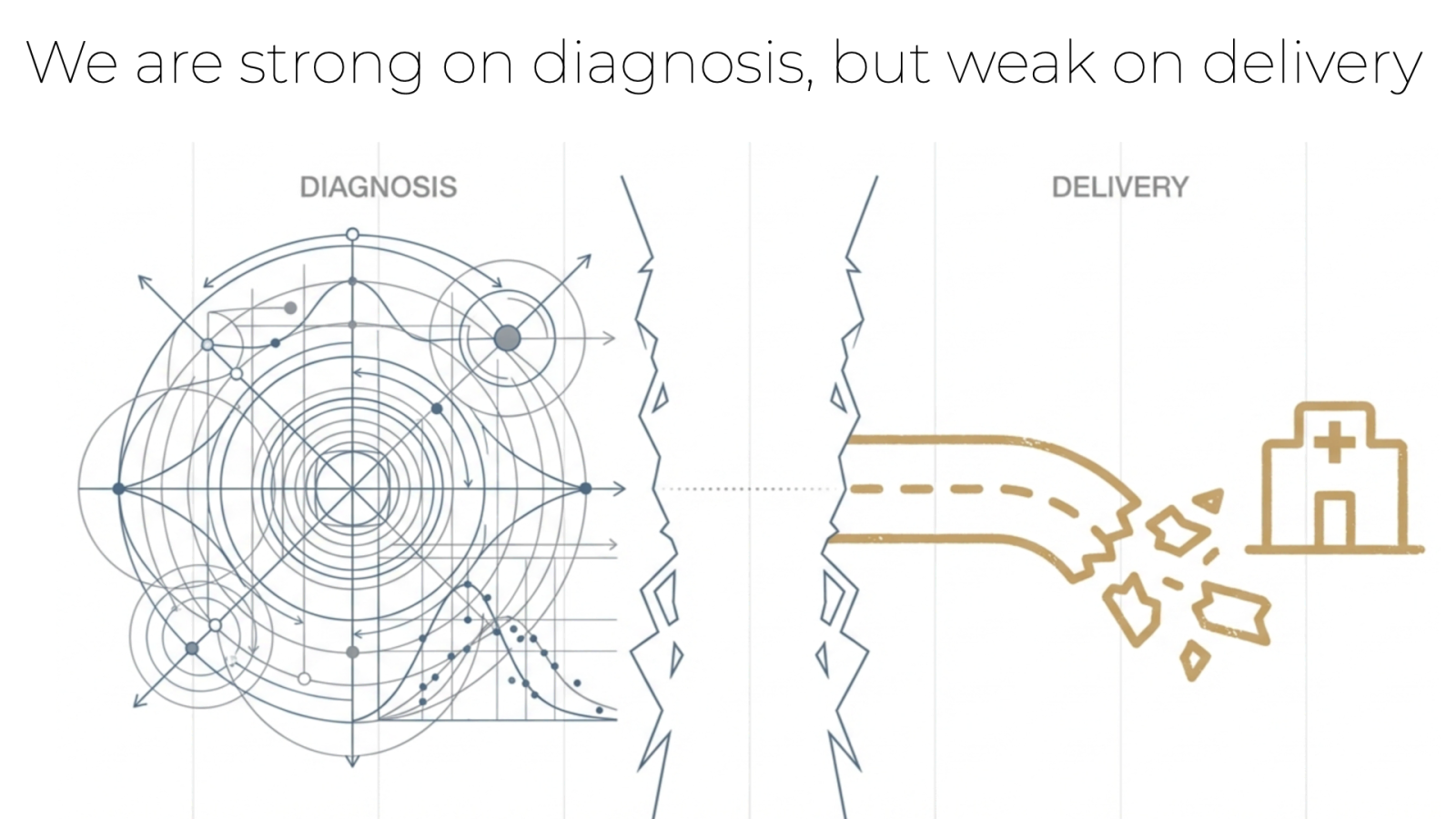
As a community working on climate change and health, we are strong – and getting stronger – on diagnosis. But we must be candid: we are weak on delivery. The science keeps getting better, but there is a gap when it comes to translating science into action.

When it comes to formal research, we see what I call the ”dark matter”, a blind spot around hyperlocal adaptation and how implementation actually happens at the local level.

This dark matter includes environmental, behavioral, and systemic signals that formal research might miss: social and economic disruption, hidden mental health burdens in communities with no formal services, community coping mechanisms, and subtle changes in vector behaviors.

Now, I know that for many of you trained in epidemiology, the word “anecdote” sets off alarm bells. We are taught to devalue it for good reason: it is prone to recall bias, selection bias, and lacks denominators. A nurse in Bangladesh noticing “more heatstroke” is a signal, not a prevalence study. We are not claiming it is.

However, we have two ways to answer the questions these signals raise. We can carry out long-term, rigorous academic studies over decades. Or – given that we are past several climate tipping points – we can recognize that aggregate patterns formed by thousands of these signals offer a speed and granularity that traditional studies cannot match. This functions as a massive, distributed sentinel surveillance system. It may be “imperfect” compared to a controlled trial, but is it riskier than the alternative? The alternative is often waiting years for definitive answers while communities suffer damage that may make those findings moot.

This requires a new epistemology. Our hypothesis is that we can build a system where an anecdote becomes an eyewitness report. A health worker, traditionally seen as a “knowledge recipient” presumed ignorant of climate science, becomes a “knowledge creator”. They know things about local impacts that no one else knows, simply because they are there every day.

In July 2023, Charlotte Mbuh, TGLF’s director who started over a decade ago as a sub-national health worker from Cameroon, stood at COP28 and said:

”What we know, we know because we are here every day. We are already managing the impacts of climate change on health. We are doing the best we can, but we need your support.”

Read Charlotte Mbuh’s full statement at COP28: Climate change is a threat to the health of the communities we serve: health workers speak out at COP28

Turning experience into evidence: the global climate change and health survey

To operationalize this, we built a living laboratory powered by a global human sensor network.

In 2025, in partnership with Grand Challenges Canada and a group of 50 global funders (including Gates, Wellcome, and Rockefeller), we conducted what I have been told is the largest-ever climate and health survey, and the one with the highest level of responses from local communities in the most climate-vulnerable regions

We received responses from 6,436 health workers, primarily from the sub-national level. Because of the trust we have built over years, the Teach to Reach network contributed over 60% of these responses, ensuring we heard from the most climate-vulnerable regions.

https://www.youtube.com/watch?v=C67nYqq-hP0

Most importantly for funders, we asked about barriers to action. The top barriers were not just resource shortages, but structural issues.

Pending their formal publications, I am not yet able to share results.

These findings are signals. They generate hypotheses. Here are three examples of hypotheses grounded in health worker experirences:

  • Geh Raphaela Agwa, a midwife from Cameroon, told us: “During this unfavourable weather period, people who can paddle canoes come in and help…”. Could community-led transport solutions improve maternal health access during floods?
  • Solace Jewel Morgan, a disease control officer in Ghana, told us: “The dry season… results in dust particles known as harmatan. This leads to a high incidence of respiratory illnesses… encourage… free distribution of personal protective masks.” Could prophylactic mask distribution reduces respiratory morbidity during the harmatan season?
  • Victoire Odia, a nurse from the Democratic Republic of Congo (DRC), told us that during extreme weather events, maternity “stays were paid for by the women’s group solidarity fund.” Could micro-financing networks increase facility-based deliveries in climate-vulnerable areas?

Of course, we must distinguish between generating a hypothesis and validating an intervention. We do not claim every local idea is safe or effective immediately. But we do claim that listening is the prerequisite to testing them.

From insight to impact: the Accelerator model for implementation science

We do not just extract data. We give it back to the community to prompt action. Since 2016, we have developed an “Accelerator” system that moves from listening to implementation. It works on a simple rhythm: participants set a specific, practical goal on Monday, and on Friday, they report on what happened, receiving feedback from peers.

This brings us to a critical tension: the balance between context and content. Critics might argue that prioritizing “context over content” carries risks. What if health workers implement unproven or suboptimal strategies? That is a valid concern. However, we see this mechanism not as a way to bypass evidence, but as the most effective tool to operationalize it.

In The Geneva Learning Foundation’s Accelerator, every participant commits to work toward their countries’ goals, and to do so by using the best available global knowledge.

Learn more: What is The Geneva Learning Foundation’s Impact Accelerator?

This actually supports effective adoption and use of global guidelines, which otherwise may linger on shelves.

In fact, we have shown in the past that this mechanism increases adherence to proven protocols (e.g., WHO guidelines on heat stress or malaria control). That is one important reason why it is a powerful implementation science tool. It transforms adherence from a wish expressed in the capital city into a reality in local communities.

Furthermore, if national planners and international experts are willing to listen, they may hear back ways to improve and strengthen the global standards, as well as gain new insights into the “how” of local implementation that defies easy generalization.

When we compared this model to conventional technical assistance or “cascade training,” the results were stark :

  1. Speed: Implementation was 7x faster.
  2. Cost: The cost was 90% lower.
  3. Sustainability: In a Ministry of Health initiative in Côte d’Ivoire, 82% of participants continued using the model without further support. 78% explicitly stated they needed no further external assistance.

These results give us confidence. We are not starting from zero. We are building on prior work in immunization and other areas of work where supporting implementation led to exactly these kinds of validated outcomes.

Here are two examples of local solutions in action.

  • Côte d’Ivoire: Communities identified stagnant water as a malaria risk and organized youth-led cleanup committees to clear gutters. This resulted in a drastic, locally measured drop in malaria cases.
  • Cameroon: In response to frequent floods, communities voluntarily cleaned gutters to ensure water did not stagnate, directly impacting disease vectors.

No one in the capital city – and certainly no one in Geneva or Seattle – knew about these initiatives.

This leads to our most ambitious projection. If we can grow this network from 80,000 to 1 million health workers by 2030, we estimate we could save 7 million lives through simple, locally resourced projects, at a cost of less than $2 per life.

I acknowledge this is an aggressive claim. It is a “back-of-the-envelope” calculation based on our pilot data. It assumes that local projects remain effective at scale and that we can attribute outcomes to the network. But I ask you: if there is even a glimmer of a chance that this is true – that we can save lives at a fraction of the cost of traditional interventions – isn’t it worth investing in the rigorous research to find out?

Discussion

Do you think MOOCs (Massive Open Online Courses) are dead?

Reda Sadki: MOOCs have become primarily marketing tools for higher education. From a pedagogical perspective, they remain transmissive, expert to learner. I do not see how that model can deliver against complex problems. We need a two-way street. We need new ways to organize the production and circulation of knowledge.

Thank you, Reda. I noticed in your results that food security is a major concern. Have you identified local actions focusing on food, given the challenges of working with healthcare workers who might not see this as their primary remit?

Reda Sadki: That is a critical question. Food insecurity is one of the most worrying consequences we are tracking. We often see a mismatch where local actors tasked with, say, immunization, do not see nutrition as their lane. However, at the community level, the approach is naturally integrated – the health worker knows the vet, who knows the farmers. Those connections exist.

We are currently preparing a major insights report that includes a specific chapter on food security. We are also designing an accelerator specifically around this topic to bring together the right set of partners, because the consequences we are documenting are dire.

You mentioned that 78% of participants eventually said “no thank you” to further support. Ideally, shouldn’t these peer networks become self-sustaining, bypassing Geneva or London entirely?

Reda Sadki: That is the goal. We have shown that more than half of each cohort stays in touch to continue leading local action. However, as long as resources and decision-making power remain concentrated in global centers, we cannot just “flip a switch”. We need to build bridges that facilitate that transformation. The goal is autonomy, but the reality requires us to actively dismantle the dependencies that current funding structures create.

Are there new capabilities that we in academia need to develop urgently to support this?

Reda Sadki: It is about moving away from being the “sage on the stage” to a “guide on the side”. For example, in our recent work, global partners and experts joined Teach to Reach sessions not to present the latest guidelines, but to listen to the challenges local practitioners faced. They then had to figure out how their expertise could be useful in response to those specific needs.

For researchers inside academic institutions, this can be difficult. It requires starting not with a research question, but with a willingness to listen to the needs of local actors and let the research questions emerge from that reality. We know this challenges the incentive structures of academia, but we are open to partnering with researchers willing to work in this emergent, demand-driven way.

It is a fascinating dilemma – we want to be guided by needs, but funding requires pre-set hypotheses. Reda, this has been truly impressive. Thank you for sharing these refreshing perspectives.

Reda Sadki: Thank you. We look forward to exploring how we can collaborate. Best wishes for the holidays and the new year.

References

  1. Sadki, R., 2025. WHO Global Conference on Climate and Health: New pathways to overcome structural barriers blocking effective climate and health action. https://doi.org/10.59350/redasadki.21322
  2. Sadki, R., 2024. Strengthening primary health care in a changing climate. https://doi.org/10.59350/5s2zf-s6879
  3. Sadki, R., 2024. Health at COP29: Workforce crisis meets climate crisis. https://doi.org/10.59350/sdmgt-ptt98
  4. Sadki, R., 2024. Critical evidence gaps in the Lancet Countdown on health and climate change. https://doi.org/10.59350/nv6f2-svp12
  5. Sanchez, J.J., Gitau, E., Sadki, R., et al., 2025. The climate crisis and human health: identifying grand challenges through participatory research. The Lancet Global Health 13, e199–e200. https://doi.org/10.1016/s2214-109x(25)00003-8
  6. Jones I, Mbuh C, Sadki R, Eller K, Rhoda D. On the frontline of climate change and health: A health worker eyewitness report [Internet]. The Geneva Learning Foundation; 2023. https://zenodo.org/doi/10.5281/zenodo.10204660

Images: The Geneva Learning Foundation Collection © 2025

#CharlotteMbuh #climateAndHealth #epistemology #globalHealth #ImpactAccelerator #implementationResearch #LSHTM #MassiveOpenOnlineCourses #PaulinePaterson #peerLearning #TeachToReach #TheGenevaLearningFoundation
From ground truth to global insights
2025-11-19

Subnational tailoring of malaria strategies and interventions: bridging the gap between planning and implementation

The global malaria response is currently navigating a convergence of crises. Epidemiologically, the reduction in mortality has plateaued. Biologically, threats from Anopheles stephensi and partial artemisinin resistance are accelerating. Financially, the 2025 landscape is defined by a severe contraction in foreign assistance, necessitating a radical optimization of resources. In this context, the World Health Organization’s (WHO) new guidance, Subnational tailoring of malaria strategies and interventions (2025), offers a necessary technical framework.

However, the manual relies on an implementation architecture that remains fragile. To succeed, the technical rigor of subnational tailoring (SNT) should be coupled with an operational mechanism capable of mobilizing the workforce in the current context. This article examines how digital peer learning-to-action networks offer a potential mechanism to address the operational deficits of conventional technical assistance and capacity building.

Subnational tailoring of malaria strategies: moving from blanket coverage to allocative efficiency

The rationale for SNT rests on the recognition that transmission heterogeneity – driven by ecology, urbanization, and human behaviour – renders national averages insufficient for operational planning. The WHO guidance codifies a ten-step “Data-to-Action Loop,” designed to be embedded within the National Malaria Strategic Plan (NMSP) cycle. This process moves beyond simple risk mapping to a rigorous cycle of optimization:

  • Granular stratification: This involves using composite metrics (combining prevalence, incidence, and mortality) to segment operational units, rather than relying on broad national averages.
  • Tailoring and prioritization: This requires developing “ideal scenarios” (what is epidemiologically required) versus “prioritized scenarios” (what is financially feasible). For example, this might involve restricting expensive indoor residual spraying (IRS) to high-burden zones while deploying next-generation nets solely in areas of confirmed pyrethroid resistance.
  • Resource optimization: This entails using cost-effectiveness analysis (CEA) to scientifically justify trade-offs, such as cutting lower-impact interventions to preserve life-saving commodities in the face of budget shocks.

The implementation gap: systemic blind spots in subnational tailoring of malaria strategies

While the WHO framework is technically robust, its execution faces systemic “blind spots” that threaten to undermine the strategy:

  • The private sector void: In high-burden nations such as Nigeria, the private sector acts as the primary entry point for febrile patients yet remains largely absent from national surveillance data. Without integrating these providers, SNT models risk being built on incomplete datasets, leading to flawed stratification.
  • The incentive crisis: The operational culture of many national malaria programmes (NMPs) relies on donor-funded per diems to motivate training and data review. As funding from major donors contracts, this transactional motivation model is fracturing, threatening workforce retention and data quality.
  • Centralization of analysis: There is a risk that SNT becomes an extractive process where districts feed data upwards to central planners without retaining analytical ownership. This centralization disempowers the district health teams (DHMTs) expected to execute the tailored strategies.

Operationalizing the subnational tailoring of malaria strategies: the role of digital peer networks

To operationalize SNT in a resource-constrained environment, national malaria programmes require a low-cost mechanism to drive district-level ownership and data quality that goes beyond traditional cascade training. The Geneva Learning Foundation (TGLF) has developed a digital peer-learning model that warrants examination by technical specialists as a complement to standard capacity-building approaches.

  • Shifting from incentives to intrinsic motivation: Traditional training workshops often rely on per diems to ensure attendance. In contrast, the TGLF model connects health workers in digital cohorts to share problem-solving strategies without extrinsic financial incentives. Empirical data from recent cohorts involving 1,715 health workers indicate that participants report high levels of practice application (rated 5.13 on a 6-point scale) based purely on professional recognition and peer accountability. This suggests that intrinsic motivation can be sustained digitally, a critical finding as external funding for operational costs diminishes.
  • Validating granular data through ground-level intelligence: SNT models depend entirely on the quality of input data. Digital peer networks can serve as a listening mechanism to surface “tacit knowledge” from the frontline that quantitative surveillance misses. For instance, during recent Teach to Reach sessions, health workers provided over 400 narrative accounts of specific local barriers – such as cultural resistance to bed nets due to associations with burial shrouds – that would not appear in DHIS2 reports. This qualitative intelligence provides a necessary layer of validation for stratification maps.
  • Devolving analytical capacity to the district: True SNT requires districts to function as data users, not merely data collectors. The peer-learning platform employs a structured “Impact Accelerator” methodology, which guides frontline staff to conduct their own root-cause analyses (for example, using the “Five Whys” technique) rather than receiving top-down instruction. In Nigeria, working with UNICEF and NPHCDA, The Geneva Learning Foundation supported 4,300 health workers to identify and resolve local bottlenecks in a matter of weeks, effectively decentralizing the “tailoring” process to the community level.
  • Cost-efficiency and sustainability: Traditional face-to-face training and supervision are resource-intensive. Comparative data suggests the peer-learning model delivers capacity building at approximately 90% lower cost than traditional technical assistance methods. This is primarily by virtue of scalability: costs very little whether there are 10 or 1,000 participants. Furthermore, in a country-specific study, 82% of a cohort reported using TGLF’s peer learning model for their own needs, and 78% said they needed no further assistance from TGLF. More than half of participants stay in touch because they want to. This aligns with both the value for money and sustainability mandates of malaria partners.

We need more than technical precision to overcome operational inertia

The WHO’s Subnational tailoring of malaria strategies and interventions guidance provides the necessary technical standards, stratification algorithms, and modeling tools for the next phase of malaria control. However, technical precision alone cannot overcome operational inertia.

TGLF’s peer-learning model demonstrates that it is possible to shift from top-down instruction to lateral learning, and from extrinsic financial incentives to intrinsic professional motivation. For technical partners and epidemiologists, integrating these two approaches – rigorous technical stratification coupled with broad-based workforce mobilization – could provide an innovative path to sustaining gains in a fragile funding landscape.

Image: “Contours of Local Knowledge”, The Geneva Learning Foundation Collection © 2025. This installation stretches organic planes across a web of taut, intersecting lines, echoing how malaria responses must adapt to the distinct shapes of local realities. The tension between each form –sometimes pulling apart, sometimes holding together – mirrors the work of tailoring strategies to varied terrains, communities, and transmission patterns. By revealing strength in flexibility and coherence in diversity, the piece evokes a central truth of subnational action: health systems become most effective when they align with the textures of the places and people they serve.

References

  1. Goodman, C., Tougher, S., Shang, T.J., Visser, T., 2024. Improving malaria case management with artemisinin-based combination therapies and malaria rapid diagnostic tests in private medicine retail outlets in sub-Saharan Africa: A systematic review. PLoS ONE 19, e0286718. https://doi.org/10.1371/journal.pone.0286718
  2. Sadki, R., 2024. Ahead of Teach to Reach 11, health leaders from 45 countries share malaria experiences in REACH network session. https://doi.org/10.59350/vhky9-fvf32
  3. The Geneva Learning Foundation, 2024. World Malaria Day 2024: We need new ways to support health workers leading change with local communities. https://doi.org/10.59350/yrn1r-hpz62
  4. Thawer, S.G., Chacky, F., Runge, M. et al. Sub-national stratification of malaria risk in mainland Tanzania: a simplified assembly of survey and routine data. Malar J 19, 177 (2020). https://doi.org/10.1186/s12936-020-03250-4
  5. The Geneva Learning Foundation. Teach to Reach 11 – Malaria: Turning the tide. Listening and Learning report 19, 2025. The Geneva Learning Foundation, 2025. https://doi.org/10.5281/zenodo.15126588.
  6. Venkatesan, P., 2025. WHO world malaria report 2024. The Lancet Microbe 6, 101073. https://doi.org/10.1016/j.lanmic.2025.101073
  7. World Health Organization. Guiding principles for prioritizing malaria interventions in resource-constrained country contexts to achieve maximum impact. Geneva: World Health Organization; 2024. https://www.who.int/publications/i/item/B09044
  8. World Health Organization. Subnational tailoring of malaria strategies and interventions: reference manual. Geneva: World Health Organization; 2025. https://www.who.int/publications/i/item/9789240115712
  9. World Health Organization. World Malaria Report 2024. Geneva: World Health Organization; 2024.

#globalHealth #guideline #implementationGap #learningStrategy2 #malaria #peerLearning #snt #theGenevaLearningFoundation #worldHealthOrganization

Subnational tailoring of malaria strategies and interventions
2025-11-14

Retrouver les enfants congolais non-vaccinés: des acteurs de tout le pays lancent le premier Accélérateur zéro-dose pour renforcer la mise en oeuvre et le suivi

«Si je réussis mon projet de terrain, je m’attends à avoir au moins vacciné 345 enfants».

Cet engagement n’a pas été pris par un ministre dans la capitale, mais par Jérémie Mpata Lumpungu, infirmier titulaire dans la province du Kasaï.

Il n’était pas seul.

Lundi 10 novembre 2025, un appel a résonné à travers la République démocratique du Congo.

Depuis Kinshasa, le Dr Josaphat-Francois WETSHIKOY, épidémiologiste, a détaillé son objectif pour les 21 prochains jours: «récupérer 30 % des enfants» non vaccinés dans sa zone cible de 230 000.

Barthélemy Daké Saoromou, préparant une stratégie mobile, vise «plus de 500 enfants zéro dose».

Cette détermination palpable, venue de praticiens de tout le pays, a marqué le lancement de l’«Accélérateur d’impact zéro-dose».

Il ne s’agit pas d’une formation ou d’un atelier de plus.

C’est une nouvelle phase d’action, un «système de soutien» pour la mise en oeuvre et le suivi, conçu par la Fondation Apprendre Genève (TGLF), en partenariat avec l’UNICEF, avec le soutien de Gavi, et sous l’égide du Programme Élargi de Vaccination (PEV) de la RDC. En savoir plus

Vous souhaitez rejoindre la prochaine séance de l’Accélérateur? Suivez ce lien.

C’est, pour ses participants, un «baptême du feu».

Du constat à l’action

Ce nouvel élan pour la vaccination n’est pas né de rien.

Il s’appuie sur les leçons d’un vaste exercice d’apprentissage par les pairs qui a mobilisé plus de 1 600 praticiens congolais pour développer 385 projets de terrain.

Les résultats de cette analyse, présentés au lancement, ont été sans concession.

La découverte la plus importante: le problème des enfants zéro dose en RDC est avant tout «un problème de gestion et de relation».

Les praticiens ont affinée l’explication officielle inscrite dans le plan Mashako, selon laquelle le principal obstacle est que «la mère est trop occupée».

Pour eux, la «véritable cause, la cause racine, c’est un échec du système de santé», c’est-à-dire un système qui «ne réussit pas à adapter ses services […] à la vie réelle et au travail des parents».

Leurs analyses ont aussi pointé un problème de gestion des Relais Communautaires (RECO), qui se sentent «ignorés ou exclus de la planification», et une méfiance qui naît «en réaction à des échecs précis du système de santé», comme la mauvaise gestion des effets secondaires des vaccins.

Une cohorte du niveau national à l’aire de santé

Les voix qui portent ces engagements ne sont pas anonymes.

La force de l’Accélérateur réside dans la diversité de sa cohorte.

Les participants sont des médecins (comme le Dr Derrick Ngoyi MALOBO au Centre de santé de Kenge), des infirmiers et infirmières (comme Marlène KAPINGA MULUMBA au niveau national ou Jérémie Mpata Lumpungu au niveau local), des agents de santé publique (comme Bonnet Leteta en province) et, surtout, un grand nombre d’agents de santé communautaire (comme Martine YOWA NDAYE ou David BINWA dans leurs Aires de santé).

Ils représentent tous les échelons du système: du niveau National à Kinshasa jusqu’au Centre de santé le plus reculé, en passant par la Province et la Zone de santé.

Ils proviennent du Gouvernement (la majorité des participants), mais aussi de la Société civile (ONG) et du Secteur privé.

C’est cette alliance de praticiens, du sommet à la base, qui est maintenant mise en action.

L’action avant vendredi

Le mécanisme de l’Accélérateur est conçu pour être radicalement concret, transformant les constats de terrain en action immédiate.

D’abord, chaque participant doit fixer un «objectif à 30 jours».

Il doit répondre à cinq questions: quelle communauté aider; combien d’enfants zéro dose s’y trouvent; quelles acteurs impliquer; quel est l’obstacle principal; et quel résultat mesurable atteindre en un mois.

Ensuite, et c’est le cœur du réacteur, chaque lundi, le participant doit définir une «action spécifique et réalisable» qu’il s’engage à accomplir avant le vendredi de la même semaine.

Lors du lancement, les engagements pour la semaine à venir étaient tangibles.

Pour Noëlly Zola Watusadisi, médecin dans la zone de santé de Bombay qui gère 12 îlots fluviaux, son action pour la semaine n’est pas de tout faire, mais de commencer: «entrer en contact avec les infirmiers de chaque îlot» et appeler les chefs de quartier pour préparer la sensibilisation.

David Binwa, du Nord-Kivu, a un plan similaire.

Son action d’ici vendredi: tenir une activité avec les RECO d’ici jeudi afin d’«identifier les vrais problèmes» avant de lancer une sensibilisation de masse.

Le rendez-vous: la redevabilité entre pairs

L’efficacité de l’Accélérateur repose sur un dernier pilier: la redevabilité (accountability) entre pairs.

Ce vendredi, chaque participant devra répondre à un formulaire de suivi de trois questions.

La première: «Avez-vous vacciné des enfants à zéro dose cette semaine?»

La seconde: «Dans quelle mesure avez-vous progressé dans la réalisation de votre action de la semaine?».

Mais le véritable test aura lieu lundi prochain, lors de la prochaine assemblée de la cohorte.

«Lundi prochain à l’Assemblée, déjà, vos collègues vont rechercher, est-ce qu’il est là, celui qui avait déclaré qu’il allait faire telle ou telle chose la semaine dernière», a prévenu Charlotte Mbuh, qui accompagne le groupe. «Et si vous n’êtes pas là, ils vont en faire le constat, mais si vous êtes là, ils vont vous demander est-ce que vous l’avez fait?».

Cette pression n’est pas conçue comme une punition.

L’objectif est de «nourrir l’entraide, de nourrir la solidarité».

Pour soutenir ce «Mouvement congolais pour la vaccination à l’horizon 2030», 167 ambassadeurs de la Fondation ont été intronisés lors de la cérémonie.

Ce sont eux, des praticiens de terrain, qui aideront à animer cette entraide.

L’Accélérateur est lancé.

Les premiers engagements sont pris.

Le compte à rebours avant lundi prochain a commencé.

Image: Collection de la Fondation Apprendre Genève © 2025. L’image «Échos du soin» fait émerger deux visages comme des souvenirs partagés, fragiles mais tenaces. Les formes simples et les couleurs mêlées disent la tendresse, la fatigue, et la force discrète du geste de soin, qui marque durablement celles et ceux qui donnent comme celles et ceux qui reçoivent.

#enfantsZeroDose #equite #francophone #globalHealth #impactAccelerator #laFondationApprendreGeneve #peerLearning #rdc #republiqueDemocratiqueDuCongo #theGenevaLearningFoundation #unicef #vaccination

2025-10-30

Development is adaptation: Bill Gates’s shift is actually about linking climate change and health

Bill Gates’ latest public memo marks a significant shift in how the world’s most influential philanthropist frames the challenge of climate change. He sees a future in which responding to climate threats and promoting well-being become two sides of the same mission, declaring, “development is adaptation.”

Gates argues that the principal metric for climate action should not be global temperature or near-term emission reductions alone, but measured improvement in the lives of the world’s most vulnerable populations.

He argues that the focus of climate action should be on the “greatest possible impact for the most vulnerable people.”

The suffering of poor communities must take priority, since, in his view, “climate change, disease, and poverty are all major problems. We should deal with them in proportion to the suffering they cause.”

Climate change is about the health of the most vulnerable

This position resonates with a core message that has emerged across global health over the past several years: climate change is about health.

New data from the 2025 Lancet Countdown draw a stark picture:

  • Heat-related mortality has risen 63 percent since the 1990s.
  • Deaths from wildfire smoke and air pollution caused by fossil fuels continue to climb.
  • Food insecurity, driven by erratic weather, is destabilizing health and economies at once.
  • Thirteen out of twenty key health indicators linked to climate impacts now signal urgent action is needed.

Health professionals, policy coalitions, scientists, and patient advocates have succeeded in bringing this nexus between climate and health squarely to the global agenda, culminating in recent summits where health finally shared the main stage with energy and economics.

Yet just as the science and advocacy align, political attention risks fragmenting.

Despite sweeping reports, evidence, and high-level declarations, momentum can ebb.

There is now a risk that the transformative potential embedded in the climate-health linkage may not be fully realized.

Here, Gates’s pivot could actually be the inflection point that the field needs.

The case for health workforce-centered adaptation

For nearly a decade, The Geneva Learning Foundation (TGLF) has been advocating and demonstrating that meeting complex humanitarian, health, and development challenges requires strengthening not just technical capacities or disease programs, but the underlying connective tissue of the health system: its workforce.

TGLF’s digital peer-learning platform now connects over 70,000 health workers across more than 130 countries.

These practitioners – mostly in government service, often in low-resource or crisis-affected settings – are the first to observe, and often the first to respond to, the local impacts of climate change on health.

Their reports show that health impacts are immediate and multi-faceted: rising malnutrition from crop failures, increases in waterborne diseases following floods, new burdens from air pollution and heat, and psychological distress from repeated disasters.

What sets this approach apart is its systemic focus.

Climate change is not a threat that can be “verticalized”.

It demands responses that are adaptive, distributed, and coordinated across all levels of the health system.

TGLF’s innovation lies in harnessing a distributed network to surface and scale locally-grounded solutions:

Data from these initiatives demonstrate that such networked learning delivers results at scale, often with return on investment superior to parallel vertical programs, and increases system resilience and flexibility.

Development is adaptation: the need for human capital investment

The urgency and logic of these approaches are reinforced by ongoing policy developments ahead of COP30:

  • WHO’s Global Action Plan on Climate Change and Health, adopted at the World Health Assembly in May 2025, recognizes that without context-sensitive system strengthening, existing approaches are insufficient, and positions knowledge and workforce mobilization as strategic imperatives.
  • The COP30 Belem Health Action Plan establishes adaptation of the health sector to climate change as an international priority, calling for holistic, cross-sectoral strategies, and “community engagement and participation as foundational to implementation.”

Without empowered and connected health workers, no global action plan will reach those most at risk or maintain public trust.

A strategic investment imperative: why the next breakthrough must be human-centered

The philanthropic search for cost-effective, scalable, and measurable impact has built immense legacies in reducing child mortality and combating infectious disease.

Gates’ own approach of pioneering “vertical” innovations, optimizing delivery through metrics, and prioritizing technical solutions has been transformative, especially at the intersection of science and delivery.

However, emerging science show the limits of technical “magic bullets” absent robust, interconnected local systems.

Trust, legitimacy, and action flow from the relationships health workers build in – and with – their communities.

If development is adaptation, what does this mean for the next phase in climate-health philanthropy?

If the measure of climate action’s value is the scale and speed at which lives are improved and disasters averted, investing in the human infrastructure of the health system is the most evidence-based, cost-effective, and legacy-ensuring play available.

  1. Investing in the health workforce is itself a breakthrough technology: It increases the absorptive capacity of low-resource health systems, making innovations stick and catalyzing uptake well beyond single-disease silos or narrow infrastructure projects.
  2. Long-term, system-wide resilience is built by equipping health workers – not simply with technology or training from above, but with platforms for peer learning, rapid response, and locally-driven adaptation coordinated through agile networks.
  3. The network effect is real: A million motivated and networked health practitioners is likely to surface, refine, and implement interventions at a scale and pace that outstrips most top-down models. Digitally-enabled peer learning, tested by TGLF, could link to AI systems to provide distributed AI-human intelligence that supports effective action.

Without these bridges, even the best technology or policies will fail to gain a durable footprint at community level, especially as climate impacts deepen.

Health is where climate change action matters most

The world is waking to the reality that technical solutions alone cannot future-proof health against climate risks.

We need to focus on the highest-value levers.

This starts with a distributed, networked workforce at the coalface of the crisis, empowered to adapt, share, and lead.

In a world of accelerating climate shocks and retreating political will, the boldest, most rational bet for sustained global impact is to go “horizontal” – to invest in the people and the systems that connect them.

By helping build adaptive, digitally connected networks of health professionals, philanthropy can reinforce the foundation upon which all high-impact innovation rests.

This is not a departure from the pursuit of technology-driven change, but rather the necessary evolution to ensure every breakthrough finds its mark – and that trust in science and public health stays strong under pressure.

If ever there was a time for rigorous, data-driven engagement that bridges technology, health, and community resilience, this is it.

Every indicator – scientific, economic, social – suggests that communities will confront more climate disruptions in the coming years.

Investing in the people who translate science into health, who stand with their communities in crisis, is the most robust, scalable, and sustainable bet that any philanthropist or society can make.

By focusing on these vital human connections, the world can ensure that innovation works where it matters most – and that the next chapter of climate action measures true success by the health, security, and opportunity it delivers for all.

History will honor those whose support creates not only tools and policies, but the living networks of trust and craft upon which community resilience depends.

That is the climate breakthrough waiting to happen.

References

  1. COP30 Belém Action Plan. (2025). The Belém Health Action Plan for the Adaptation of the Health Sector to Climate Change. https://www.who.int/teams/environment-climate-change-and-health/climate-change-and-health/advocacy-partnerships/talks/health-at-cop30
  2. Ebi, K.L., et al. (2025). The attribution of human health outcomes to climate change: transdisciplinary practical guidance. Climatic Change, 178, 143. https://doi.org/10.1007/s10584-025-03976-7
  3. Ebi, K.L., Haines, A. (2019). The imperative for climate action to protect health. The New England Journal of Medicine, 380, 263–273. https://doi.org/10.1056/NEJMra1807873
  4. Jacobson, J., Brooks, A., Mbuh, C., Sadki, R. (2023). Learning from frontline health workers in the climate change era. The Geneva Learning Foundation. https://doi.org/10.5281/zenodo.7316466
  5. Jones, I., Mbuh, C., Sadki, R., Steed, I. (2024). Climate change and health: Health workers on climate, community, and the urgent need for action (Version 1.0). The Geneva Learning Foundation. https://doi.org/10.5281/zenodo.11194918
  6. Romanello, M., et al. (2025). The 2025 report of the Lancet Countdown on health and climate change. The Lancet S0140673625019191. https://doi.org/10.1016/S0140-6736(25)01919-1
  7. Sadki, R. (2024). Health at COP29: Workforce crisis meets climate crisis. The Geneva Learning Foundation. https://doi.org/10.59350/sdmgt-ptt98
  8. Sadki, R. (2024). Strengthening primary health care in a changing climate. The Geneva Learning Foundation. https://doi.org/10.59350/5s2zf-s6879
  9. Sadki, R. (2024). The cost of inaction: Quantifying the impact of climate change on health. The Geneva Learning Foundation. https://doi.org/10.59350/gn95w-jpt34
  10. Sanchez, J.J., et al. (2025). The climate crisis and human health: identifying grand challenges through participatory research. The Lancet Global Health. https://doi.org/10.1016/S2214-109X(25)00003-8
  11. Storeng, K. T. (2014). The GAVI Alliance and the Gates approach to health system strengthening. Global Public Health, 9(8), 865–879. https://doi.org/10.1080/17441692.2014.940362
  12. World Health Organization. (2025). Draft Global Action Plan on Climate Change and Health. Seventy-eighth World Health Assembly. https://apps.who.int/gb/ebwha/pdf_files/WHA78/A78_4Add2-en.pdf

#billGates #climateAndHealth #climateChangeAndHealth #development #humanCapitalInvestment #lancetCountdown #peerLearning #theGenevaLearningFoundation #workforce

Bill Gates
2025-10-14

The great unlearning: notes on the Empower Learners for the Age of AI conference

Artificial intelligence is forcing a reckoning not just in our schools, but in how we solve the world’s most complex problems. 

When ChatGPT exploded into public consciousness, the immediate fear that rippled through our institutions was singular: the corruption of process.

The specter of students, professionals, and even leaders outsourcing their intellectual labor to a machine seemed to threaten the very foundation of competence and accountability.

In response, a predictable arsenal was deployed: detection software, outright bans, and policies hastily drafted to contain the threat.

Three years later, a more profound and unsettling truth is emerging.

The Empowering Learners AI 2025 global conference (7-10 October 2025) was a fascinating location to observe how academics – albeit mostly white men from the Global North centers that concentrate resources for research – are navigating these troubled waters.

The impacts of AI in education matter because, as the OECD’s Stefan Vincent-Lancrin explained: “performance in education is the learning, whereas in many other businesses, the performance is performing the task that you’re supposed to do.” 

The problem is not that AI will do our work for us.

The problem is that in doing so, it may cause us to forget how to think.

This is not a distant, dystopian fear.

It is happening now.

A landmark study presented by Vincent-Lancrin delivered a startling verdict: students who used a generic, answer-providing chatbot to study for a math exam performed significantly worse than those who used no AI at all.

The tool, designed for efficiency, had become a shortcut around the very cognitive struggle that builds lasting knowledge.

Jason Lodge of the University of Queensland captured the paradox with a simple analogy.

“It’s like an e-bike,” he explained. “An e-bike will help you get to a destination… But if you’re using an e-bike to get fit, then getting the e-bike to do all the work is not going to get you fit. And ultimately our job… is to help our students be fit in their minds”.

This phenomenon, dubbed “cognitive offloading,” is creating what Professor Dragan Gasevic of Monash University calls an epidemic of “metacognitive laziness”.

Metacognition – the ability to think about our own thinking – is the engine of critical inquiry.

Yet, generative AI is masterfully engineered to disarm it.

By producing content that is articulate, confident, and authoritative, it exploits a fundamental human bias known as “processing fluency,” our tendency to be less critical of information that is presented cleanly. 

“Generative AI articulates content… that basically sounds really good, and that can potentially disarm us as the users of such content,” Gasevic warned.

The risk is not merely that a health worker will use AI to draft a report, but that they will trust its conclusions without the rigorous, critical validation that prevents catastrophic errors.

Empower Learners for the Age of AI: the human algorithm

If AI is taking over the work of assembling and synthesizing information, what, then, is left for us to learn and to do?

This question has triggered a profound re-evaluation of our priorities.

The consensus emerging is a radical shift away from what can be automated and toward what makes us uniquely human.

The urgency of this shift is not just philosophical.

It is economic.

Matt Sigelman, president of The Burning Glass Institute, presented sobering data showing that AI is already automating the routine tasks that constitute the first few rungs of a professional career ladder.

“The problem is that if AI overlaps with… those humble tasks… then employers tend to say, well, gee, why am I hiring people at the entry level?” Sigelman explained.

The result is a shrinking number of entry-level jobs, forcing us to cultivate judgment and adaptive skills from day one.

This new reality demands a focus on what machines cannot replicate.

For Pinar Demirdag, an artist and co-founder of the creative AI company Cuebric, this means a focus on the “5 Cs”: Creativity, Curiosity, Critical Thinking, Collective Care, and Consciousness.

She argues that true creativity remains an exclusively human domain. “I don’t believe any machine can ever be creative because it doesn’t lie in their nature,” she asserted.

She believes that AI is confined to recombining what is already in its data, while human creativity stems from presence and a capacity to break patterns.

This sentiment was echoed by Rob English, a creative director who sees AI not as a threat, but as a catalyst for a deeper humanity.

“It creates an opportunity for us to sort of have to amplify the things that make us more human,” he argued.

For English, the future of learning lies in transforming it from a transactional task into a “lifestyle,” a mode of being grounded in identity and personal meaning.

He believes that as the value of simply aggregating information diminishes, what becomes more valuable is our ability “to dissect… to interpret or to infer”.

In this new landscape, the purpose of learning – whether for a student or a seasoned professional – shifts from knowledge transmission to the cultivation of human-centric capabilities.

It is no longer enough to know things.

The premium is on judgment, contextual wisdom, ethical reasoning, and the ability to connect with others – skills forged through the very intellectual and social struggles that generic AI helps us avoid.

Empower Learners for the Age of AI: Collaborate or be colonized

While the pedagogical challenge is profound, the institutional one may be even greater.

For all the talk of disruptive change, the current state in many of our organizations is one of inertia, indecision, and a dangerous passivity.

As George Siemens lamented after investing several years in trying to move the needle at higher education institutions, leadership has been “too passive,” risking a repeat of the era when institutions outsourced online learning to corporations known as “OPMs” (online programme managers) that did not share their values: “I’m worried that we’re going to do the same thing with AI, that we’re just going to sit on our hands, leadership’s going to be too passive… and the end result is we’re going to be reliant down the road on handing off the visioning and the capabilities of AI to external partners.”

The presidents of two of the largest nonprofit universities in the United States, Dr. Mark Milliron of National University and Dr. Lisa Marsh Ryerson, president of Southern New Hampshire University, offered a candid diagnosis of the problem.

Ryerson set the stage: “We don’t see it as a tool. We see it as a true framework redesign for learning for the future.” 

However, before any institution can deploy sophisticated AI, it must first undertake the unglamorous, foundational work of fixing its own data infrastructure.

“A lot of universities aren’t willing to take two steps back before they take three steps forward on this,” Dr. Milliron stated. “They want to jump to the advanced AI… when they actually need to go back and really… get the basics done”.

This failure to fix the “plumbing” leaves organizations vulnerable, unable to build their own strategic capabilities.

Such a dynamic is creating what keynote speaker Howard Brodsky termed a new form of “digital colonialism,” where a handful of powerful tech companies dictate the future of critical public goods like health and education.

His proposed solution is for institutions to form a cooperative, a model that has proven successful for over a billion people globally.

“I don’t believe at the current that universities have a seat at the table,” Brodsky argued. “And the only way you get a seat at the table is scale. And it’s to have a large voice”.

A cooperative would give organizations the collective power to negotiate with tech giants and co-shape an AI ecosystem that serves public interest, not just commercial agendas.

Without such collective action, the fear is that our health systems and educational institutions will become mere consumers of technologies designed without their input, ceding their agency and their future to Silicon Valley.

The choice is stark: either become intentional builders of our own solutions, or become passive subjects of a transformation orchestrated by others.

The engine of equity

Amid these profound challenges, a powerfully optimistic vision for AI’s role is also taking shape.

If harnessed intentionally, AI could become one of the greatest engines for equity in our history.

The key lies in recognizing the invisible advantages that have long propped up success.

As Dr. Mark Milliron explained in a moment of striking clarity: “I actually think AI has the potential to level the playing field… second, third, fourth generation higher ed students have always had AI. They were extended families… who came in and helped them navigate higher education because they had a knowing about it.”

For generations, those from privileged backgrounds have had access to a human support network that functions as a sophisticated guidance system.

First-generation students and professionals in under-resourced settings are often left to fend for themselves.

AI offers the possibility of democratizing that support system.

A personalized AI companion can serve as that navigational guide for everyone, answering logistical questions, reducing administrative friction, and connecting them with the right human support at the right time.

This is not about replacing human mentors.

It is about ensuring that every learner and every practitioner has the foundational scaffolding needed to thrive.

As Dr. Lisa Marsh Ryerson put it, the goal is to use AI to “serve more learners, more equitably, with equitable outcomes, and more humanely”.

This vision recasts AI not as a threat to be managed, but as a moral imperative to be embraced.

It suggests that the technology’s most profound impact may not be in how it changes our interaction with knowledge, but in how it changes our access to opportunity.

Technology as culture

The debates from the conference make one thing clear.

The AI revolution is not, at its core, a technological event.

Read the article: Why learning technologists are obsolete

It is a pedagogical, ethical, and institutional one.

It forces us to ask what we believe the purpose of learning is, what skills are foundational to a flourishing human life, and what kind of world we want to build.

The technology will not provide the answers.

It will only amplify the choices we make.

As we stand at this inflection point, the most critical task is not to integrate AI, but to become more intentional about our own humanity.

The future of our collective ability to solve the world’s most pressing challenges depends on it.

Do you work in health?

As AI capabilities advance rapidly, health leaders need to prepare, learn, and adapt. The Geneva Learning Foundation’s new AI4Health Framework equips you to harness AI’s potential while protecting what matters most—human experience, local leadership, and health equity. Learn more: https://www.learning.foundation/ai.

References

Image: The Geneva Learning Foundation Collection © 2025

#AI4Health #ArtificialIntelligence #EmpowerLearnersForTheAgeOfAI #GeorgeSiemens #TheGenevaLearningFoundation

Empower Learners for the Age of AI conference
2025-10-08

Pour retrouver les enfants congolais non vaccinés, il est question des fumoirs à poisson et du dialogue inter-religieux

Au deuxième jour de leurs travaux en direct, les professionnels de la santé congolais sont passés de la découverte à l’exploration des causes profondes qui laissent des centaines de milliers d’enfants exposés aux maladies évitables par la vaccination. Ils découvrent que les racines du problème sont souvent là où personne ne les attend: dans l’économie de la pêche, le dialogue avec les églises ou la gestion des camps de déplacés.

Lire également: En République démocratique du Congo, la traque des enfants « zéro dose » passe par l’intelligence collective des acteurs de la santé

Les analyses, plus fines, révèlent des leviers d’action insoupçonnés, démontrant la puissance d’une méthode qui transforme les soignants en stratèges.

« La séance d’hier, c’était une séance de découverte, mais aujourd’hui, c’était une séance d’exploration. Explorer, c’est aller en profondeur. Il faut sonder ».

Ces mots de Fidèle Tshibanda Mulangu, un participant congolais, résument la bascule qui s’est opérée ce mercredi 8 octobre.

Après une première journée consacrée au partage des défis, la dynamique a changé.

L’objectif n’était plus seulement d’identifier les problèmes, mais de les disséquer avec une précision accrue.

Dans le cadre de l’initiative menée par La Fondation Apprendre Genève et ses partenaires — le ministère de la Santé de la RDC, l’UNICEF et Gavi — les participants ont été invités à appliquer une deuxième fois la méthode d’analyse des causes profondes.

L’effet a été immédiat.

« La séance d’hier m’a permis de comprendre que ce que je pensais être une cause profonde n’était qu’une cause intermédiaire », a ainsi partagé Hermione Raissa Tientcheu Ngounou, illustrant la sophistication croissante des analyses.

Le dialogue rompu entre la foi et la santé publique

Au cœur du Kasaï, un groupe de travail a de nouveau abordé la question des églises de réveil hostiles à la vaccination.

Mais cette fois, l’analyse a dépassé le constat d’un obstacle religieux. « Les fidèles, lorsqu’ils tombent malades, ne vont pas dans les structures sanitaires, mais ils préfèrent rester dans des centres de prière », a expliqué le rapporteur du groupe, décrivant une rupture de confiance avec le système de santé formel.

En poussant la réflexion, les participants ont conclu que le vrai problème était « l’absence d’un cadre de concertation formel entre le système de santé et les confessions religieuses ».

La cause profonde n’était donc pas la foi, mais une faillite institutionnelle.

Une prise de conscience qui a immédiatement fait émerger des solutions.

« Dans le contexte des églises de réveil, les leaders de ces églises doivent être nos alliés », a insisté un participant, Mwamialumba Fidel.

Vacciner dans le chaos de la guerre

Dans le Nord-Kivu, une autre discussion a porté sur la vaccination des populations déplacées.

Confrontés à une cause première comme la guerre, hors de leur portée, les soignants ont fait preuve d’un pragmatisme remarquable.

L’analyse ne s’est pas enlisée dans un sentiment d’impuissance.

Le groupe a rapidement identifié une faille concrète dans le système.

« Pour les déplacés, le grand problème est que les enfants arrivent sans carnet de vaccination, et on ne sait pas comment les intégrer dans le PEV de routine », a partagé Clémence Mitongo.

La cause racine n’était donc plus le conflit, mais « le manque de stratégie spécifique pour la prise en charge de ces enfants » une fois en sécurité.

Le groupe a ainsi transformé un problème insoluble en un défi organisationnel sur lequel il est possible d’agir.

Au-delà des frontières, une leçon d’économie locale

La richesse des échanges a été amplifiée par la participation de professionnels d’autres pays.

Un des cas les plus édifiants est venu de Madagascar, où 93 enfants d’un village de pêcheurs n’étaient pas vaccinés.

« Les femmes sont obligées d’accompagner les hommes pour la vente du poisson. Et quand elles reviennent, nos équipes sont déjà parties », a expliqué le rapporteur du groupe.

La cause profonde, révélée par l’analyse, n’avait rien de sanitaire.

C’était l’absence d’un fumoir pour conserver le poisson, qui forçait les femmes à s’absenter.

L’impact de cet exemple a été puissant.

« Ce cas du Madagascar est très édifiant et illustre parfaitement la pertinence de l’analyse approfondie », a commenté Alphonse Kitoga.

Une pédagogie de l’action

Ces cas pratiques illustrent la maturation rapide des participants.

La méthode des « cinq pourquoi », introduite la veille, est devenue un outil maîtrisé, un réflexe analytique.

« C’est une nouvelle approche pour nous », a affirmé Baudouin Mbase Bonganga. « Le fait de travailler en groupe, de partager les expériences, ça nous a vraiment enrichis ».

L’exercice ne vise pas à transmettre un savoir, mais à cultiver une compétence: la capacité de chaque professionnel à devenir un fin diagnosticien des problèmes de sa communauté et un architecte de solutions adaptées.

De l’analyse à l’action

Cette journée d’exploration intensive n’est qu’une étape.

Les participants ont jusqu’au vendredi 10 octobre pour soumettre la première version de leur projet de terrain, où ils appliqueront ces analyses à leurs propres communautés.

L’initiative démontre qu’en s’appropriant les bons outils, les acteurs de terrain peuvent rapidement monter en puissance.

Comme l’a brillamment résumé Papa Gorgui Samba Ndiaye: « Cette méthode permet de contextualiser réellement les problèmes, et ce qui est bien, c’est qu’on sort des solutions toutes faites… Ça nous amène à innover ».

Le mouvement est en marche, et il est porté par ceux qui, chaque jour, sont en première ligne.

Image: Peer learning exercise, as seen from The Geneva Learning Foundation’s livestreaming studio.

#francophone #Gavi #globalHealth #peerLearning #RépubliqueDémocratiqueDuCongo #TheGenevaLearningFoundation #UNICEF #zéroDose
2025-10-07

En République démocratique du Congo, la traque des enfants « zéro dose » passe par l’intelligence collective des acteurs de la santé

KINSHASA et LUMUMBASHI, le 7 octobre 2025 (La Fondation Apprendre Genève) – « Ces jeunes filles qui ont des grossesses indésirables, quand elles mettent au monde, elles ont tendance à laisser les enfants livrés à eux-mêmes », explique Marguerite Bosita, coordonnatrice d’une organisation non gouvernementale à Kinshasa.

« Ce manque d’informations sur les questions liées à la vaccination se pose encore plus, car ces enfants grandissent exposés à des difficultés de santé ».

Sa voix, émanant d’une mission de terrain dans la province du Kongo Central, s’est jointe à des centaines d’autres ce 7 octobre 2025.

Il s’agissait de la deuxième journée d’un exercice d’apprentissage par les pairs de 16 jours visant à identifier et à atteindre les enfants dits « zéro dose » en République démocratique du Congo (RDC).

Ce sont ces centaines de milliers de nourrissons qui n’ont reçu aucun vaccin pour les protéger de nombreuses maladies.

Pour les 1 617 professionnels de la santé inscrits à cet exercice, il ne s’agissait pas d’un webinaire de formation classique, mais d’une étape importante d’un mouvement bien plus large.

Organisé par La Fondation Apprendre Genève, cet exercice est une pierre angulaire du Mouvement congolais pour la vaccination à l’horizon 2030 (IA2030).

Il bénéficie du soutien du ministère de la Santé de la RDC à travers son Programme élargi de vaccination (PEV), de l’UNICEF et de Gavi, l’Alliance du Vaccin.

L’initiative renverse le modèle traditionnel de l’aide internationale.

Au lieu de s’appuyer sur des experts extérieurs, elle part d’un postulat aussi simple qu’il est conséquent.

La meilleure expertise pour résoudre les défis de première ligne se trouve chez les travailleurs de la santé eux-mêmes.

La composition de cette cohorte témoigne de la profondeur de l’initiative.

Plus de la moitié des participants proviennent des niveaux périphériques et infranationaux du système de santé, là où la vaccination a lieu.

Un professionnel sur cinq travaille au niveau central, assurant un lien essentiel entre les politiques nationales et les réalités du terrain.

Le profil des participants est tout aussi varié.

Un tiers sont des médecins, 30 % des agents de santé publique, suivis par les agents de santé communautaire (13 %) et les infirmiers (9 %).

Fait marquant, près de la moitié d’entre eux travaillent directement pour le ministère de la Santé à travers le Programme élargi de vaccination (le «PEV»).

Cette forte proportion de personnel gouvernemental, complétée par une représentation significative de la société civile et du secteur privé, ancre fermement l’initiative dans une appropriation nationale.

Le regard du terrain

« Les défis sont tellement grandioses », a déclaré Franck Kabongo, consultant en santé publique à Lubumbashi, dans la province du Haut-Katanga.

En effet, les défis décrits par les participants sont immenses.

Il a souligné deux obstacles majeurs.

D’une part, la difficulté d’atteindre les enfants dans les communautés reculées.

Car les problèmes logistiques représentent un « casse-tête» pour de nombreux acteurs de santé impliqué dans la vaccination.

Pour Mme Bosita à Kinshasa, le problème est profondément social.

Son organisation soutient les enfants vulnérables, y compris les orphelins et ceux qui vivent dans la rue, dont beaucoup sont nés de jeunes mères sans suivi médical.

« Il n’y a pas assez de sensibilisation sur le terrain par rapport à cette notion », a-t-elle déploré, expliquant sa volonté d’intégrer la vaccination dans le travail de son association.

Ces témoignages, partagés dès les premières minutes, ont brossé un tableau saisissant d’un corps de métier dévoué.

Ils luttent contre un enchevêtrement complexe de barrières logistiques, sociales et informationnelles qui laissent les enfants les plus vulnérables sans protection.

À la recherche des causes profondes

Le cœur de l’exercice n’est pas seulement de partager les problèmes, mais de les disséquer.

Grâce à une analyse de groupe structurée, les participants s’exercent à la technique des « cinq pourquoi ».

Cette méthode vise à dépasser les symptômes pour trouver la véritable cause fondamentale d’un problème.

Lors d’une session plénière, Charles Bawande, animateur communautaire dans la zone de santé de Kalamu à Kinshasa, a présenté un dilemme courant.

Une forte concentration d’enfants zéro dose parmi les communautés de rue, très mobiles et souvent peu scolarisées.

Au départ, le problème semblait être un simple manque d’information.

Mais au fur et à mesure que le groupe a creusé, une réalité plus complexe est apparue.

Pourquoi les enfants sont-ils manqués?

Parce que les travailleurs de santé communautaires, les relais communautaires, ne disposent pas des informations nécessaires.

Pourquoi n’ont-ils pas ces informations?

Parce qu’ils n’assistent souvent pas aux séances d’information essentielles.

Pourquoi n’y assistent-ils pas?

Parce qu’ils sont occupés par d’autres activités.

« Ils doivent vivre, ils doivent manger… ils sont locataires, ils doivent payer le loyer », a expliqué M. Bawande.

La dernière question a révélé le cœur du problème.

Pourquoi sont-ils occupés par d’autres choses?

Parce que leur travail de relais communautaire est entièrement bénévole.

Alors qu’on attend d’eux qu’ils agissent comme des volontaires, beaucoup sont des parents et des chefs de famille qui doivent donner la priorité à leur gagne-pain.

Un problème qui semblait être un simple déficit d’information s’est révélé être ancré dans la précarité économique du système de santé bénévole.

Une mosaïque de défis partagés

Lorsque les participants se sont répartis en près de 80 petits groupes, leurs discussions ont révélé un large éventail d’obstacles, chacun profondément lié au contexte local.

Les rapports des groupes ont dressé une carte riche et détaillée des freins à la vaccination à travers le vaste pays.

Près de Goma, dans le Nord-Kivu, le groupe de Clémence Mitongo a identifié l’insécurité due à la guerre comme une barrière principale qui a déplacé les populations et perturbé les services de santé.

Dans la province du Kasaï, le groupe de Yondo Kabonga a mis en lumière l’impact des rumeurs, de la désinformation et des barrières géographiques comme les ravins et les rivières.

Ailleurs, d’autres groupes ont fait état de la résistance issue de convictions religieuses, certaines églises enseignant à leurs fidèles que la foi seule suffit à protéger leurs enfants.

Un autre groupe a discuté du cas des réfugiés revenus d’Angola, où l’ignorance des parents concernant le calendrier vaccinal constitue un obstacle majeur.

Ce diagnostic collectif a démontré la puissance du modèle d’apprentissage par les pairs.

Aucun expert ne pourrait à lui seul posséder une compréhension aussi fine et étendue des défis à l’échelle nationale.

Une nouvelle façon d’apprendre

Cet exercice est fondamentalement différent des programmes de formation traditionnels.

Il s’agit d’un parcours pratique où les participants deviennent des créateurs de connaissances et leaders des actions qui en découlent.

Au cours du programme, chaque participant développera son propre projet de terrain, qu’il partagera avec son équipe, son centre de santé ou son district.

Il s’agit d’un plan concret pour s’attaquer à un défi « zéro dose » dans sa propre communauté.

Après avoir soumis une version préliminaire d’ici le vendredi 10 octobre, ils entreront dans une phase d’évaluation par les pairs.

Chaque participant recevra les retours de trois collègues et, en retour, en fournira à trois autres, contribuant ainsi à renforcer le travail de chacun par l’intelligence collective.

Tracer une voie à suivre

L’étape suivante pour ces milliers de professionnels de la santé est de consolider leurs discussions de groupe et de poursuivre le travail sur leurs projets individuels avant l’échéance de vendredi.

Le parcours se poursuivra avec des phases consacrées à l’évaluation par les pairs, à la révision des projets et, enfin, à une assemblée générale de clôture pour partager les plans améliorés.

Cet exercice intensif est plus qu’un simple événement.

Il est un catalyseur pour le Mouvement congolais pour la vaccination à l’horizon 2030.

L’objectif est de traduire la stratégie mondiale du Programme pour la vaccination à l’horizon 2030 en actions tangibles, menées localement, qui produisent un impact réel.

La solution, comme le suggère ce mouvement, ne se trouve pas dans des lignes directrices venues de Genève, mais dans la sagesse, la créativité et l’engagement combinés de milliers de praticiens congolais, travaillant ensemble à travers tout le pays.

Illustration: The Geneva Learning Foundation Collection © 2025

#francophone #Gavi #globalHealth #immunization #peerLearning #RépubliqueDémocratiqueDuCongo #TheGenevaLearningFoundation #UNICEF #zéroDose

En République démocratique du Congo, la traque des enfants « zéro dose » passe par l’intelligence collective des acteurs de la santé
2025-09-15

Gender in emergencies: a new peer learning programme from The Geneva Learning Foundation

This is a critical moment for work on gender in emergencies.

Across the humanitarian sector, we are witnessing a coordinated backlash.

Decades of progress are threatened by targeted funding cuts, the erasure of essential research and tools, and a political climate that seeks to silence our work.

Many dedicated practitioners feel isolated and that their work is being devalued.

This is not a time for silence.

It is a time for solidarity and for finding resilient ways to sustain our practice.

In this spirit, The Geneva Learning Foundation is pleased to announce the new Certificate peer learning programme for gender in emergencies.

We offer this programme to build upon the decades of vital work by countless practitioners and activists, seeing our role as one of contribution to the collective effort of all who continue to champion gender equality in emergencies.

Learn more and request your invitation to the programme and its first course here.

Our approach: A programme built from the ground up

This programme was built from scratch with a distinct philosophy.

We did not start with a pre-packaged curriculum.

Instead, we turned to two foundational sources of knowledge.

  • First, we listened to the most valuable resource we have: the firsthand experiences of thousands of practitioners in our global network. Their stories of what truly happens on the front lines—what works, what fails, and why—form the living heart of this programme.
  • Second, we grounded our approach in the deep insights of intersectional, decolonial, and feminist scholarship. These perspectives challenge us to move beyond technical fixes and to analyze the systems of power that create gender inequality in the first place.

This unique origin means our programme is a dynamic space co-created with and for practitioners who are serious about transformative change.

Gender in emergencies: Gender through an intersectional lens

Our focus is squarely on gender in emergencies.

We start with gender analysis because it is a fundamental tool for effective humanitarian action.

However, we use an intersectional lens.

We recognize that a person’s experience is shaped not by gender alone, but by how their gender compounds with their age, disability, ethnicity, and other aspects of their identity.

This lens does not replace gender analysis.

It makes it stronger.

It allows us to see how power works differently for different women, men, girls, and boys, and helps us to design solutions that do not inadvertently leave behind the people marginalized by something other than their gender.

Gender in emergencies requires learning at the speed of crisis

Humanitarian response must be rapid, and so must our learning.

A slow, top-down training model cannot keep pace with the reality of a crisis.

The Geneva Learning Foundation’s Impact Accelerator is a peer learning-to-action model built for the speed and complexity of humanitarian settings.

It is a ‘learn-by-doing’ experience where your frontline experience is the textbook.

The model is designed to quickly turn your individual insights into collective knowledge and practical action.

You analyze a real challenge from your work, share it with a small group of global peers, and use their feedback to build a concrete plan.

This process accelerates the development of context-specific solutions that are grounded in reality, not just theory.

Your first step: The foundational primer for gender in emergencies

We are starting this new programme with a free, open-access foundational course.

Enrollment is now open.

The course is a quick primer that introduces core concepts of gender, intersectionality, and bias through the real-world stories of practitioners.

It provides the shared language and practical tools to begin your journey of reflection, peer collaboration, and action.

Building a resilient community

This is more than a training programme.

It is an invitation to join a global community of practice.

In a time of backlash and division, creating spaces where we can learn from each other, share our struggles, and find solidarity is a critical act of resistance.

If you are ready to deepen your practice and connect with colleagues who share your commitment, we invite you to join us.

Image: The Geneva Learning Foundation © 2025

#CertificatePeerLearningProgrammeForGenderInEmergencies #climateAndHealth #GenderInEmergencies #genderLens #globalHealth #humanitarianResponse #peerLearning #RapidGenderAnalysis #RGA #TheGenevaLearningFoundation
Gender in emergencies
2025-09-11

How practitioners in Ukraine and across Europe built a self-sustaining peer learning network to support children

When military fathers started arriving at her centre in Bulgaria, sharing challenges they faced with their own children, Irina V. found herself drawing on lessons learned not from textbooks, but from conversations with fellow practitioners scattered across a war zone.

“What I learned about providing psychological first aid (PFA) to children actually helped me in working with parents of children in crisis,” Irina explained during a recent video call with professionals across Europe supporting children affected by the humanitarian crisis in Ukraine.

That call was the first annual meeting of an entirely volunteer-driven network of practitioners – some working within kilometres of active combat – who teach each other how to better support children. This network emerged from an innovative certificate peer learning programme supported by the European Union’s EU4Health programme, developed by The Geneva Learning Foundation (TGLF) with the International Federation of Red Cross and Red Crescent Societies (IFRC).

An organization like “Everything will be fine Ukraine” maintains operations within 20 kilometres of active fighting while supporting 6,000 children across three eastern regions. During online peer learning activities, some participants manage air raid interruptions, power outages, and repeated displacement of both staff and families they serve.

“The most powerful solutions often emerge when professionals can learn directly from each other’s experience,” TGLF’s Charlotte Mbuh noted. “But knowledge sharing and learning are necessary but insufficient. Through the ‘Accelerator’ mechanism, we showed that participation results in measurable improvements in children’s wellbeing.”

Learning in crisis

The programme that connected Irina to her peers has achieved something that aid organizations typically spend years trying to build. In less than a year, 331 organizations representing 10,000 staff and volunteers joined a peer learning network that now reaches over one million Ukrainian children. Ninety-one volunteers across 13 countries now serve as focal points, recruiting participants and adapting materials to local contexts. The cost per participant is 87 per cent lower than European training averages. And rather than winding down as initial funding expires, the network is expanding.

Most remarkably, 76 per cent of participants are based in Ukraine itself—not in the European host countries the programme originally planned to serve.

IFRC’s longstanding commitment to integrating mental health into humanitarian response created the institutional framework that made this achievement possible. Speaking at the  EU4Health final event in Brussels in June, IFRC Regional Director for Europe Birgitte Bischoff Ebbesen called IFRC’s effort “the most ambitious targeted mental health and psychosocial support response in the history of the Red Cross and Red Crescent.”

TGLF’s specific focus was to explore how online peer learning could support Red Cross staff and volunteers, together with other organizations and networks that support children.

IFRC’s Panu Saaristo explains: “Peer learning creates a horizontal approach where practitioners facing similar challenges can support each other directly. This is really consistent with our community-led and volunteer-driven action led by local volunteers. When tools and approaches are shared peer-to-peer, we see solutions that are both more sustainable and more locally owned.”

The power of learning from and supporting each other

What makes this network different is its rejection of the traditional aid model, where experts tell local workers what to do. Instead, practitioners learn from and support each other.

The approach addresses a fundamental problem in crisis response: conventional training cannot keep pace with rapidly evolving challenges on the ground. When a teacher in Poland encounters a child showing signs of distress linked to their experiences, she can connect within hours to a social worker in Ukraine who has dealt with similar cases.

Katerina W., who worked with Ukrainian refugee students in Slovakia, described creating “safe corners” and “art corners” where children could communicate when trauma left them unable to speak. She shared these techniques not with a supervisor, but with hundreds of peers facing similar challenges across Europe.

“The practical knowledge and real-life examples inspired me to adapt my methods and approach challenges with greater empathy and creativity,” said Jelena P., an education professional from Croatia who participated in the network.

Jennifer R., who founded Teachers for Peace to provide free online lessons to war-affected Ukrainian children, explains the urgent need: “Many of my students show signs of distress that affected their learning. My challenge is to equip volunteer teachers with the right tools so they can feel confident and support the students beyond language learning.”

Building something that lasts

The network provides resources for what aid workers call “psychological first aid” or “PFA” for children—the immediate support provided to children experiencing crisis-related distress. This includes listening without pressure, addressing immediate needs, and connecting children with appropriate services.

But the real innovation lies in how knowledge spreads and gets turned into action. Practitioners connect to share challenges and problem-solve solutions. The agenda emerges from their actual needs, not predetermined curricula.

“At traditional training, we acquire knowledge and practice skills to get diplomas or certificates,” explained Anna Nyzkodubova, a Ukrainian PFA leader who became a facilitator to support her colleagues. “But here, when we learn through peer-to-peer principles, we grow professionally and make our contribution to solving real cases and real challenges.”

This peer learning model has proven so effective that the Geneva Learning Foundation announced in August it would continue the programme for five additional years. 

“We saw that amongst those we had reached, this included practitioners working close to the front lines of armed conflict, working in very difficult conditions,” said Reda Sadki, Executive Director of The Geneva Learning Foundation, which coordinates the network. “Rather than limiting effectiveness, these challenging conditions revealed significant demand for peer learning. This is why we decided to continue these activities.”

Scale through connection

The network’s growth defies conventional wisdom about aid work. Rather than adding overhead, the growing size of the network enhances learning by providing more diverse experiences and perspectives. A social worker in eastern Ukraine might develop an approach that helps a teacher in Croatia facing similar challenges.

Participants access six different types of activities, from short self-guided modules in multiple languages to intensive month-long programs where they implement specific projects and document results. The variety accommodates practitioners with different schedules and experience levels while maintaining quality through peer review and a strong child protection and mutual support framework.

A different kind of aid

The programme represents a broader shift in how international assistance might work. Rather than extracting knowledge from affected communities to inform distant decision-makers, it amplifies local expertise and creates connections between practitioners facing similar challenges.

For Irina, working with Ukrainian refugees far from her home country, the network provided something invaluable: the knowledge that she was not alone, and that solutions existed within her professional community.

“I realized the importance of separating psychotherapeutic long-term assistance and psychological first aid, especially when working with children who may be at risk of harming themselves,” she said, describing an insight that emerged from group discussions about recognizing when cases require specialist referral.

As the programme enters its next phase, its founders are proposing additional innovations, including apps where practitioners can log experiences and reflect on challenges while building evidence of what works across different contexts.

The model suggests a fundamental reimagining of how knowledge can strengthen local action in crisis response—not from experts to recipients, but between peers who understand each other’s reality because they live it every day. If properly supported, this model could reinforce its importance in the blueprint for future humanitarian action.

References

  1. Sadki, R., 2025. How practitioners in Ukraine and across Europe built a self-sustaining peer learning network to support children. https://doi.org/10.59350/25pa2-ddt80
  2. Sadki, R., 2025. PFA Accelerator: across Europe, practitioners learn from each other to strengthen support to children affected by the humanitarian crisis in Ukraine. https://doi.org/10.59350/redasadki.21155
  3. Sadki, R., 2025. Peer learning for Psychological First Aid: New ways to strengthen support for Ukrainian children. https://doi.org/10.59350/dgpff-n9d63
  4. Sadki, R., 2024. Support of children affected by the humanitarian crisis in Ukraine: Bridging practice and learning through the sharing of experience. https://doi.org/10.59350/zbb4v-hay69
  5. The Geneva Learning Foundation and the International Federation of Red Cross and Red Crescent Societies, 2025. Діти у кризових ситуаціях, спільноти підтримки – Застосування першої психологічної допомоги для підтримки дітей, які постраждали від гуманітарної кризи в україні. https://doi.org/10.5281/ZENODO.14901474
  6. The Geneva Learning Foundation, International Federation of Red Cross and Red Crescent Societies, 2025. Children in Crisis, Communities of Care – Psychological first aid for children affected by the humanitarian crisis in Ukraine. https://doi.org/10.5281/ZENODO.14732092
  7. The Geneva Learning Foundation and the International Federation of Red Cross and Red Crescent Societies, 2024. Перша психологічна допомога дітям, які постраждали внаслідок гуманітарної кризи в Україні – Досвід дітей, опікунів та помічників. https://doi.org/10.5281/ZENODO.13730132
  8. The Geneva Learning Foundation and the International Federation of Red Cross and Red Crescent Societies, 2024. Psychological first aid in support of children affected by the humanitarian crisis in Ukraine: Experiences of children, caregivers, and helpers. https://doi.org/10.5281/ZENODO.13618862

The initial development and implementation of this programme (2023-2025) was funded by the European Union through a project partnership with the International Federation of Red Cross and Red Crescent Societies (IFRC). All ongoing activities, content, and their delivery from 1 September 2025 are the sole responsibility of The Geneva Learning Foundation (TGLF).

Image: The Geneva Learning Foundation Collection © 2025

#BirgitteBischoffEbbesen #childProtection #children #Europe #EuropeanUnion #healthOutcomes #learning #mentalHealth #PanuSaaristo #peerLearning #PFA #psychologicalFirstAid #psychosocialSupport #TheGenevaLearningFoundation #Ukraine

How practitioners in Ukraine and across Europe built a self-sustaining peer learning network to support children
2025-09-11

From diagnosis to duty: health workers confront their own role in inequity

A thirteen-year-old girl in Nigeria, bitten by a snake, arrived at a hospital with her frantic family. The hospital demanded payment before administering the antivenom. The family could not afford it. The girl died.

This was one of the stark stories shared by health professionals on September 10, 2025, during “Exploration Day,” the third day of The Geneva Learning Foundation’s inaugural peer learning exercise on health equity. The previous day had been about diagnosing the external systems that create such tragedies. But today, the focus shifted.

“Yesterday, we looked at the problem,” said TGLF facilitator Dr María Fernanda Monzón. “Today, we look in the mirror. We move from analyzing the situation to analyzing ourselves, our own role, our own power, and our own assumptions”.

The practitioner’s role

The day’s intensive, small-group workshops challenged participants to move beyond naming a problem to questioning their own connection to it. Groups brought their findings back to the plenary, where the work of exploration continued.

Oyelaja Olayide, a medical laboratory scientist from Nigeria, presented her group’s analysis of a child’s death following a lab misdiagnosis. The group’s root cause analysis pointed to a systemic issue: the lack of a quality management system in the laboratory. But then the facilitator turned the question back to her. “What was your role in this?”.

The question hung in the air, shifting the focus from an abstract system to individual responsibility. This pivot is central to the learning process, and the cohort’s diversity is a core element of its design. The majority of participants are frontline health workers—nurses, midwives, doctors, and community health promoters. They work side-by-side as peers with national-level staff and international partners, with government employees making up over 40% of the group. This mix intentionally breaks down traditional hierarchies, creating a space where a policy-maker can learn directly from the lived experience of a clinician in a remote village.

Learn more about the Certificate peer learning programme for equity in research and practice https://www.learning.foundation/bias

After a moment of reflection, Olayide acknowledged her role as a professional with the expertise to see the gap. “My role is to be an advocate,” she concluded, recognizing her duty to push for the implementation of quality control systems that could prevent future tragedies.

From reflection to a plan for action

This deep self-reflection is the foundation for the next stage of the process: creating a viable action plan. For the remainder of the day, participants worked on the third part of their course project, which is due by the end of the week.

The programme’s methodology insists that a good plan is not made for a community, but with a community. Participants were guided to develop action steps that involve listening to the people most affected and ensuring they help lead the change. This requires practitioners to think honestly about their position and power and how they can share it to empower others.

The day’s exploration pushed participants beyond easy answers. It asked them to confront their own biases, acknowledge their power, and accept their professional duty not just to treat patients, but to help fix the broken systems that make them sick. By turning the analytical lens inward, they began to forge the tools they need to build a more equitable future.

About the Certificate peer learning programme for equity in research and practice

The Geneva Learning Foundation is an organization that helps health workers from around the world learn together as equals. It offers the Certificate peer learning programme for equity in research and practice, where health professionals work with each other to make health care more fair for everyone, both in how care is given and in how health is studied. The first course in this program is called EQUITY-001 Equity matters, which introduces a method called HEART. This method helps you turn your experience into a real plan for change. HEART stands for Human Equity, Action, Reflection, and Transformation. This means you will learn to see unfairness in health (Human Equity), create a practical plan to do something about it (Action), think carefully about the problem to find its root cause (Reflection), and make a lasting, positive change for your community (Transformation).

Image: The Geneva Learning Foundation Collection © 2025

#1 #2 #3 #4 #5 #CertificatePeerLearningProgrammeForEquityInResearchAndPractice #experientialLearning #healthEquity #HEART #inequity #peerLearning #TheGenevaLearningFoundation

Certificate peer learning programme for equity in research and practice
2025-09-10

The practitioner as catalyst: How a global learning community is turning frontline experience into action on health inequity

“In this phase of my life, I want to work directly with the communities to see what I can do,” said Dr. Sambo Godwin Ishaku, a public health leader from Nigeria with over two decades of experience. His words opened the second day of The Geneva Learning Foundation’s first-ever peer learning exercise on health equity. They also spoke to the very origin of the event itself.

The Geneva Learning Foundation’s Certificate peer learning programme for equity in research and practice was created because thousands of health workers like Dr. Ishaku joined a global dialogue about equity and demanded a new kind of learning—one that moved beyond theory to provide practical tools for action.

This inaugural session on 9 September 2025, called “Discovery Day,” was a direct answer to that call. It was not a lecture, but a three-hour, high-intensity workshop where the participants’ own experiences of inequity became the curriculum.

The goal for the day was one step in a carefully designed 16-day process: to help practitioners see a familiar problem in a new way, setting the stage for them to build a viable action plan they can use in their communities.

The anatomy of unfairness

The session began with practitioners sharing true stories of systemic failure. These accounts gave a human pulse to the clinical definition of health inequity: the avoidable and unjust conditions that make it harder for some people to be healthy.

To demonstrate how to move from story to analysis, the entire cohort engaged in a collective diagnosis. They focused on a first case presented by Dr. Elizabeth Oduwole, a retired physician, about a 65-year-old man unable to afford his diabetes medication on a meager pension. Together, in a live plenary, they used a simple analytical tool to excavate the root causes of this single injustice.

The tool, known as the “Five Whys,” is less about power and more about simplicity. Its strength lies in its accessibility, providing a common language for a cohort of remarkable diversity. In this programme, community health workers, doctors, nurses, midwives, and others who work for health on the front lines of service delivery make up the majority of participants. They work side-by-side as peers with national-level staff and international partners. Government staff comprise over 40% of the group.

The group’s collective intelligence peeled back the layers of Dr. Oduwole’s story. The man’s inability to afford medicine was not just about poverty (Why #1) , but about a lack of government policy for the elderly (Why #2). This, in turn, was linked to a lack of advocacy (Why #3) , which stemmed from biased social norms that devalue the lives of older adults (Why #4). The root cause they uncovered was a deep-seated cultural belief, passed down through generations, that this was simply the natural order of things (Why #5). In minutes, the problem had transformed from a financial issue into a profound cultural challenge.

A crucible for discovery

With this shared experience, the practitioners were plunged into a rapid series of timed, small-group workshops. In these intense breakout sessions, they applied the same methodology to situations each group identified.

The stories that emerged were stark. One group analyzed the experience of a participant from Nigeria whose father died after being denied oxygen at a hospital because the only available tank was being reserved for a doctor’s mother. Their analysis traced this act back to a root cause of systemic decay and a breakdown in the ethics of the health profession. Another group tackled the insidious spread of health misinformation preventing rural girls in a conflict-afflicted area from receiving the HPV vaccine, identifying the root cause as an inadequate national health communication strategy.

A learning community was born in these workshops. They became a crucible where practitioners, often isolated in their daily work, connect with peers who understand their struggles. By unpacking a real-world problem together, they practice the skills needed for their final course project: a practical action plan due at the end of the week, which they will then have peer-reviewed and revised.

The process is designed to generate unexpected insights. Day 2, “Discovery,” is followed by Day 3, “Exploration,” both dedicated to this intensive peer analysis. By the end of the journey, each participant will have an action plan to tackle a local challenge, one that is often radically different from what they might have first envisioned, because it targets a newly discovered root cause.

The session ended, as it began, with the voices of health workers. The chat filled with a sense of energy and purpose. “We are all eager to learn, to know more, and to make an equitable Africa,” wrote Vivian Abara, a pre-hospital emergency services responder . “We’re really, really ready to go the whole nine yards and do everything, help ourselves, hold each other’s hand and move.”

About The Geneva Learning Foundation

The Geneva Learning Foundation is an organization that helps health workers from around the world learn together as equals. It offers the Certificate peer learning programme for equity in research and practice, where health professionals work with each other to make health care more fair for everyone, both in how care is given and in how health is studied. The first course in this programme is called EQUITY-001 Equity matters, which introduces a method called HEART. This method helps you turn your experience into a real plan for change. HEART stands for Human Equity, Action, Reflection, and Transformation. This means you will learn to see inequity in health (Human Equity), create a practical plan to do something about it (Action), think carefully about the problem to find its root cause (Reflection), and make a lasting, positive change for your community (Transformation).

Image: The Geneva Learning Foundation Collection © 2025

#1 #2 #3 #4 #5 #CertificatePeerLearningProgrammeForEquityInResearchAndPractice #experientialLearning #healthEquity #HEART #inequity #peerLearning #TheGenevaLearningFoundation

Certificate peer learning programme for equity in research and practice
2025-08-17

From Murang’a to the world: remembering Joseph Ngugi, champion of peer learning for community health

“What keeps me going now is the excitement of the clients who receive the service and the sad faces of those clients who need the services and cannot get them.” Joseph Mbari Ngugi shared these words on May 30, 2023, capturing the profound empathy and dedication that defined his life’s work. This commitment to serving those most in need—and his deep awareness of those still unreached—characterized not only his career as a senior community health officer and public health specialist in Kenya’s Murang’a County, but also his extraordinary five-year journey through the Geneva Learning Foundation’s most rigorous learning programmes.

It was the morning of the first day of August, 2025. The message from his daughter was simple and devastating: “Hello this is Wanjiru Mbari Ngugi’s Daughter. I am the one currently with his phone. This is to inform you that Dad passed away this morning.”

Joseph’s passing represents more than the loss of a dedicated health worker in Kenya’s Murang’a County. It marks the end of an extraordinary journey that saw him evolve from participant to peer mentor within the Geneva Learning Foundation’s learning networks—a community where over 60,000 practitioners now connect across country borders and between continents to learn from and support each other to solve problems and drive change from the ground up.

Joseph Ngugi: The making of a global health scholar

Over the years, Joseph shared his personal story. His path to leadership in this global community began with family tragedy. “When I was young, my sister contracted malaria number of times, leading to numerous hospital visits and long periods of missed school,” he told us. “These experiences were not only distressing but also financially draining for my family, as medical costs piled up and my parents had to take time off work to care for her.” That childhood experience of watching illness devastate a family became the foundation for his professional mission. 

In November 2020, when the world was grappling with the challenges of the COVID-19 pandemic, Joseph joined the Foundation’s COVID-19 Peer Hub—a groundbreaking initiative launched in April 2020 that connected over 6,000 health professionals from 86 countries to face the early consequences of the pandemic. Unlike traditional training programmes that positioned experts as sole knowledge sources, the Peer Hub recognized that frontline workers like Joseph possessed crucial insights about overcoming vaccine hesitancy that needed to be shared across borders.

The timing was significant. When news of the first vaccines came, participants decided to examine how they had previously helped communities move “from hesitancy to acceptance of a vaccine.” Joseph’s case study, developed through peer collaboration between November and December 2020, drew on his extensive experience with routine immunization programs in Murang’a County. His documented approach to building trust with communities became a teaching resource for colleagues across Africa and beyond—knowledge that would prove invaluable when COVID-19 vaccines began arriving in Africa months later, starting with Ghana and Côte d’Ivoire in March 2021.

Joseph Ngugi: The Scholar’s progression

Joseph’s engagement with what would become the Movement for Immunization Agenda 2030 (IA2030) reflected his deepening sophistication as both learner and teacher. The Movement initiative, launched globally in support of the ambitious aims of the world’s immunization strategy to leave no one behind, required more than technical knowledge—it demanded practitioners who could analyze complex local challenges and adapt global strategies to diverse contexts.

Starting with the WHO Scholar Level 1 certification in 2021, Joseph mastered the Foundation’s approach to structured problem-solving. But it was his progression to the 2022 Full Learning Cycle, where he earned certification with distinction, that revealed his true analytical capabilities. His systematic deconstruction of vaccine storage challenges in Murang’a County exemplified this growth.

Rather than accepting equipment failures as inevitable, Joseph deployed rigorous root cause analysis: “Why are vaccines not stored properly? Because the refrigeration units are often outdated or malfunctioning.” But he didn’t stop there. Through five levels of inquiry, he traced the problem to its fundamental source: “The most important root cause: inadequate training and information dissemination among healthcare workers and administrators.”

This insight—that knowledge gaps, not resource constraints, lay at the heart of vaccine storage failures—helped colleagues in other countries to address similar challenges in very different contexts.

Joseph Ngugi: From local practice to global knowledge

Joseph’s work exemplified how the Foundation’s network transforms individual insights into collective wisdom. His malaria prevention campaigns in Murang’a County carried particular personal significance—having witnessed his sister’s repeated malaria infections as a child, he understood intimately how the disease devastated families. Now, as a health professional, he could take systematic action to prevent other families from experiencing similar suffering.

“Local leaders, health workers, and volunteers went door-to-door distributing nets and educating families about their importance,” he shared. “The project was successful due to the collaborative effort and the support of local influencers who championed the cause. This grassroots approach helped build trust and ensured widespread adoption of bed nets.” The boy who had watched helplessly as his sister endured “numerous hospital visits and long periods of missed school” had become the health worker who could mobilize entire communities for prevention.

Meanwhile, his immunization work achieved impressive results by using lessons learned and shared across the network. His measurable success spoke to the power of peer-tested approaches: “My county was listed in 2nd position with 95% with the highest percentage of children (aged 12-23 months) who are fully vaccinated for basic antigens as per basic schedule compared with the leading at 96% and the lowest with 23%.”

Through peer learning that he helped facilitate – giving and receiving feedback– both his malaria prevention methods and immunization strategies became available to thousands of colleagues facing similar challenges. When global immunization leaders engaged with TGLF’s network, asking for feedback on a new framework to support integration of immunization into primary health care, Joseph’s feedback illustrated this knowledge multiplication effect. “I have referred to [the] framework more than once and shared with my colleagues and supervisors and it has been very useful,” he reported. “My colleagues were excited to know such a tool existed and were ready to use it. The framework made a difference in solving the vaccine advocacy as it has the solutions to most of my challenges.”

Joseph Ngugi: Crisis leadership in a changing climate

When Kenya’s devastating 2019 floods tested every assumption about health service delivery, Joseph emerged as an innovative crisis leader whose documented responses became learning resources for the Foundation’s growing focus on climate change and health. His detailed accounts revealed both the scale of climate disruption and the ingenuity required to maintain health services under extreme conditions.

Working with local government and humanitarian agencies, Joseph helped coordinate emergency airlifts using helicopters to deliver essential medical supplies to isolated communities, with the Kenya Red Cross playing a critical coordination role. When helicopter transport was unavailable, his team improvised: “We resorted to unconventional means, such as using motorbikes and porters to deliver medicines to stranded populations.”

His documentation captured both community solidarity and the chaos of disaster response: “People were incredibly supportive, offering shelter and food to those displaced. Local youth groups helped clear debris from roads, making some areas passable. On the other hand, there were instances of looting of medical supplies during the chaos, which slowed down our efforts.”

Joseph’s prescient observations about the health impact of climate patterns became increasingly relevant: “Over the years, I’ve noticed that such weather-related disruptions have become more frequent and severe, a clear sign of climate change. The rainy seasons are no longer predictable, and their intensity often overwhelms existing infrastructure.” His first-hand accounts became part of a growing body of evidence showing how health workers worldwide are witnessing climate change impacts firsthand—knowledge that often precedes formal scientific documentation by years.

Joseph Ngugi, the equity advocate

Perhaps nowhere was Joseph’s moral clarity more evident than in his systematic approach to health equity challenges. When he witnessed an elderly rural woman being ignored at a hospital registration desk while younger, well-dressed patients received immediate attention, he documented both his direct intervention and his proposed systemic solutions.

“I later engaged hospital staff in a discussion about unconscious bias and the need to treat all patients with dignity,” he explained. His characteristically systematic solution—implementing a token system for patient queuing that would ensure first-come, first-served service regardless of appearance or language—provided concrete guidance that colleagues could adapt to their own contexts.

Joseph’s approach to neglected tropical diseases demonstrated similar principled persistence. Working on lymphatic filariasis in Murang’a County, he documented comprehensive community intervention approaches that included support groups for affected patients and collaboration with traditional healers to address cultural misconceptions. “Building partnerships and fostering ownership within the community were crucial in sustaining our efforts and driving positive change,” he noted—an insight that resonated across the Foundation’s network of practitioners facing similar challenges with stigmatized conditions.

A family committed to learning

Joseph’s commitment to collaborative learning extended to his household. His wife Caroline participated alongside him in Foundation activities, making their home a center of both local health advocacy and global knowledge sharing. Caroline documented her own community engagement successes: “Positive response from the community on the importance of taking their children for immunization. Able to reach pregnant mothers and sensitized them the importance of starting antenatal care clinic early.”

Their partnership embodied the Foundation’s philosophy that effective global health work requires both deep local engagement and broad network connections. Joseph’s honest assessment of community health work captured both its frustrations and profound rewards: “The worst part of my job is when you reach out to the community for services and [they] are not willing. The best part is when you reach the community members and they listen to you and hear what you have brought in the ground.”

The pioneer’s final exploration

Even in his final months, Joseph continued pushing boundaries in ways that reflected his lifelong commitment to innovation. His recent exploration of artificial intelligence tools as potential aids to health work represented not disengagement from human learning but rather his latest attempt to incorporate emerging capabilities into community health practice—a continuation of the innovative thinking that had characterized his entire journey with the Foundation.

For The Geneva Learning Foundation’s Executive Director Reda Sadki, Joseph was “a pioneer exploring the use of artificial intelligence” within global health contexts, demonstrating how practitioners could thoughtfully experiment with new technologies while maintaining focus on community needs.

A voice that bridged worlds

From November 2020 through August 2025, Joseph Ngugi completed an extraordinary progression through the Foundation’s most demanding programmes: the COVID-19 Peer Hub, WHO Scholar Level 1 certification, the Movement for Immunization Agenda 2030’s first Full Learning Cycle with distinction, Impact Accelerator certifications, and advanced collaborative work with the Nigeria Movement for Immunization Agenda 2030, which connected over 4,000 participants across Nigeria’s diverse health system.

His Nigeria collaborative work, completed in July 2024, demonstrated his evolution into a mentor for colleagues in countries other than his own, facing similar challenges. Through structured peer review processes and collaborative root cause analyses, Joseph helped dozens of Nigerian health workers develop their own systematic approaches to immunization challenges—knowledge that will continue influencing practice long after his passing.

“What I have learned from sharing photos and seeing photos from colleagues: we share common challenges, challenges are everywhere, love for human being is universal, health is wealth, immunization is the best investment in the world,” he wrote, capturing the spirit of global solidarity that sustained his work and connected him to practitioners worldwide.

A legacy of networked learning

Joseph Mbari Ngugi’s death leaves a profound void in a global learning network where his thoughtful analyses, generous mentorship, and systematic documentation created lasting value for thousands of colleagues. His comprehensive body of work—from detailed root cause analyses to innovative crisis responses, from equity advocacy to climate adaptation strategies—represents one of the most complete records of how a dedicated practitioner can evolve into a sophisticated analyst and effective advocate through structured peer learning.

His progression from childhood dreams inspired by witnessing healthcare compassion to becoming a leader in global health networks demonstrates the transformative potential of connecting local practice with worldwide learning communities. In an era of unprecedented health challenges—from climate change to emerging diseases to persistent inequities—Joseph’s documented approach offers a roadmap for practitioners worldwide seeking to make systematic change while remaining deeply rooted in their communities.

Joseph Ngugi’s voice may now be silent, but his contributions continue speaking through the colleagues he mentored, the frameworks he helped refine, and the thousands of health workers who will encounter his insights through the Foundation’s ongoing work. His legacy reminds us that the most effective global health leadership often emerges not from traditional hierarchies but from practitioners who combine deep local knowledge with the courage to share their experiences across borders, creating networks of learning that can respond to our world’s most pressing challenges with both precision and compassion.

Photo credit: Matiba Eye and Dental Hospital, Murang’a County Kenya. Joseph Mbari Ngugi submitted this photo for World Immunization Week in 2023. Here is what he told us about the image: “This is me, and Grace M Kihara, nursing officer, on the 15th of March 2023 at the Kenneth Matiba Eye and Dental Hospital in Murang’a County, Kenya. My work includes explaining to clients the importance of measles immunization and other vaccines, and advocating for immunization.”

#globalHealth #JosephNgugi #Kenya #MurangACounty #Obituaries #TheGenevaLearningFoundation #WanjiruMbariNgugi

Remembering Joseph Ngugi
2025-07-23

Climate change and health: a new peer learning programme by and for health workers from the most climate-vulnerable countries

GENEVA, Switzerland, 23 July 2025 (The Geneva Learning Foundation) –Today, The Geneva Learning Foundation (TGLF) announces the launch of “Learning to lead change on the frontline of climate change and health,” the inaugural course in a new certificate programme designed by and for professionals facing climate change impacts on health.

Enrollment is now open. The course will launch on 11 August 2025.

Two years ago today, nearly 5,000 health professionals from across the developing world gathered online for an unprecedented conversation. They shared something most climate scientists had never heard: detailed, firsthand accounts of how rising temperatures, extreme weather, and environmental changes were already devastating the health of their communities.

https://youtu.be/IYdH3OrNB90

The stories were urgent and specific. A nurse in Ghana described managing surges of malaria after unprecedented flooding. A community health worker in Bangladesh explained how cholera outbreaks followed every major storm. A pharmacist in Nigeria watched children suffer malnutrition as crops failed during extended droughts.

“I can hear the worry in your voices,” one global health partner told participants during those historic July 2023 events, “and I really respect the time that you are giving to tell us about what is happening to you directly.”

https://youtu.be/gMTMaMBOq-E

Connecting the dots from individual impact to systemic crisis

While climate change dominates headlines for its environmental and economic impacts, a parallel health crisis has been quietly unfolding in clinics and hospitals across Africa, Asia, and Latin America. Health workers have become first-hand witnesses to climate change’s human toll.

Dr. Seydou Mohamed Ouedraogo from Burkina Faso described devastating floods that “really marked the memory of the inhabitants” and led to cascading health impacts.

Felix Kole from Gambia reported that “wells have turned to salty water” due to rising sea levels, while extreme heat meant “people are no longer sleeping inside their houses,” creating new security and health complications.

Rebecca Akello, a public health nurse from Uganda, documented malnutrition impacts directly: “During dry spells where there is no food, children come and their growth monitoring shows they really score low weight for age.”

Health professionals like Dr. Iktiyar Kandaker from Bangladesh already get that this is a systemic challenge: “Our health system is not prepared to actually address these situations. So this is a combined challenge… but it requires a lot of time to fix it.”

These health workers serve as what TGLF calls “trusted advisors”—over half describe themselves as being like “members of the family” to the populations they serve. Yet until now, they have had no structured way to learn from each other’s experiences or develop coordinated responses to climate health challenges.

Learning from those who know because they are there every day

“It is something that all of us have to join hands to be able to do the most we can to educate our communities on what they can do,” said Monica Agu, a community pharmacist from Nigeria who participated in the founding 2023 events. Her words captured the collaborative spirit that has driven the programme’s development.

The new certificate programme employs TGLF’s proven peer learning methodology, recognizing that health workers are already implementing life-saving climate adaptations with limited resources. During the 2023 events, participants shared examples of modified immunization schedules during heat waves, cholera outbreak management after flooding, and maintaining health services during extreme weather events.

“We believe that investing in health workers is one of the best ways to accelerate and strengthen the response to climate change impacts on health,” explains TGLF Executive Director Reda Sadki.

The programme has been developed from comprehensive analysis of health worker experiences documented since 2023. Most observations come from small and medium-sized communities in the most climate-vulnerable countries.

For health, a different kind of climate action

Unlike traditional climate programmes focused on policy or infrastructure, this initiative recognizes that effective climate health responses must be developed by those experiencing the impacts firsthand. The course enables health workers to share their own experiences, learn from colleagues facing similar challenges, and develop both individual and collective responses.

Dr. Eme Ngeda from the Democratic Republic of Congo captured this approach during the 2023 events: “We are all responsible for these climate disruptions. We must sensitize our populations in waste management and sensitize how to reform our healthcare providers to face resilience, face disasters.”

The programme connects leaders from more than 4,000 locally-led health organizations through TGLF’s REACH network, enabling them to become programme partners supporting their health workers in developing climate-health leadership skills.

Building global solutions by connecting local, indigenous knowledge and expertise

The inaugural course offers health professionals worldwide the opportunity to learn from documented experiences of colleagues who are facing unprecedented consequences of climate change on health. Rather than lectures or theoretical frameworks, the programme employs structured reflection and peer feedback cycles, enabling participants to develop actionable implementation plans informed by peer knowledge and global guidance.

The course covers four key areas based on health worker experiences:

  • Climate and environmental changes: Recognizing connections between climate and health in local communities.
  • Health impacts on communities: Understanding direct health impacts, food security, and mental health effects.
  • Changing disease patterns: Managing infectious diseases, respiratory conditions, and healthcare access challenges.
  • Community responses and adaptations: Implementing local solutions and innovations from peer experiences.

Participants earn verified certificates aligned to professional development competency frameworks. Upon completion, they join TGLF’s global community of health practitioners for ongoing peer support and collaboration.

The urgency of now

The programme launches at a critical moment. Climate change impacts on health are accelerating, particularly in low- and middle-income countries where health systems are least equipped to respond. Yet these same regions are producing innovative, resource-efficient solutions that could benefit communities worldwide.

As one health worker reflected during the 2023 events: “Although climate change is a global phenomenon, it is affecting very, very locally people in very different ways.” The new programme acknowledges this reality while creating pathways for local solutions to inform global responses.

The course is available in English and French, designed to work on mobile devices and basic internet connections. It is free for health workers in participating countries.

For health workers who have been managing climate impacts in isolation, the programme offers something unprecedented: the chance to learn from colleagues who truly understand their challenges and to contribute their own expertise to a growing global knowledge base.

As the climate health crisis deepens, the solutions may well come from those who have been living with its impacts longest—if we finally give them the platforms and recognition they deserve.

Image: The Geneva Learning Foundation Collection © 2025

#CertificatePeerLearningProgrammeForLeadershipInClimateChangeAndHealth #climate #climateChangeAndHealth #health #peerLearning #TheGenevaLearningFoundation

2025-07-22

WHO Global Conference on Climate and Health: New pathways to overcome structural barriers blocking effective climate and health action

After the World Health Assembly’s adoption of ambitious global plan of action for climate and health, global and country stakeholders are meeting in Brasilia for the Global Conference on Climate and Health, ahead of COP30. Three critical observations emerged that illuminate why conventional global health approaches may be structurally inadequate for the challenges resulting from climate change impacts on health.

These observations carry particular significance for global health leaders who now possess a WHA-approved strategy and action plan, but lack proven mechanisms for rapid, community-led implementation in the face of an unprecedented set of challenges. They also matter for major funders whose substantial investments in policy and research have yet to be matched by commensurate support for the communities and health workers who will be the ones to translate better science and policy into action.

Signal 1: When funding disappears and demand explodes

Seventy percent of global health funding vanished, virtually overnight. This collapse comes precisely when the World Health Organization projects a shortage of 10 million health workers by 2030—six million in climate-vulnerable sub-Saharan Africa.

The World Bank calculates that climate change will generate 4.1-5.2 billion disease cases and cost $8.6-20.8 trillion by 2050 in low- and middle-income countries alone. Health systems must simultaneously manage unprecedented demand with drastically reduced resources.

Traditional technical assistance—flying experts to conduct workshops, cascade training through hierarchies—is more difficult to resource. By comparison, peer learning networks can reduce costs by 86 percent while achieving implementation rates seven times higher than conventional methods. Furthermore, 82 percent of participants in such networks continue independently after formal interventions end. Peer learning is especially well-suited to include health workers in conflict zones, refugee settings, and remote areas where climate vulnerability peaks—precisely the locations where traditional expert-led capacity building proves most difficult and expensive.

The funding crisis makes it more of an imperative than ever before to examine which approaches can scale effectively when resources contract. Organizations that recognize this shift early could achieve breakthrough results as traditional approaches become unaffordable.

Signal 2: Global expertise meets local reality

The World Health Assembly continues producing comprehensive action plans backed by thousands of expert hours. The climate and health action plan represents the pinnacle of this approach—technically excellent, evidence-based, globally applicable.

Yet the persistent implementation gap reflects deeper challenges about how knowledge flows between institutions and communities. Current theories of change assume that technical expertise, properly communicated, will lead to improved outcomes. Local knowledge gets framed as “barriers to implementation”, rather than recognized as essential intelligence for adaptation.

This creates a paradox. The WHO recognizes that “community-led initiatives that harness local knowledge and practices” are “fundamental for creating interventions that are both culturally appropriate and effective.” Health workers possess sophisticated understanding of how global frameworks must adapt to local realities. But systematic mechanisms for capturing and integrating knowledge and action remain underdeveloped.

Climate change manifests differently in each community—shifting disease patterns in Kenya differ from changing agricultural cycles in Bangladesh, which differ from altered water availability in Morocco. Health workers witness these changes daily, developing contextual responses that often remain invisible to global institutions. The question becomes whether global frameworks can evolve to recognize and systematically integrate this distributed intelligence rather than treating it as anecdotal evidence.

Signal 3: The policy-people gap widens if field-building ignores communities and is disconnected from local action

Substantial philanthropic funding is flowing toward climate and health policy and evidence generation. Some funders call this “field-building”. Research institutions develop sophisticated models. Policy frameworks become more comprehensive. Scientific understanding advances rapidly. These investments are producing genuinely better science and more effective policies—essential progress that must continue.

Yet investment in communities and health workers—the people who must implement policies and apply evidence—remains disproportionately small. This disparity creates concerning dynamics where knowledge advances faster than the capacity to apply it meaningfully in communities.

The risk extends beyond implementation gaps. When sophisticated policies and evidence develop without commensurate investment in community relationships, communities may reject even superior science and policies—not because they are irrational or too ignorant to recognize the benefits, but because the effort to accompany communities through change has been insufficient. Health workers, as trusted advisors within their communities, are uniquely positioned to bridge this gap by helping communities make sense of new evidence and adapt policies to local realities.

Health workers serve as trusted advisors within communities facing climate impacts. When investment patterns overlook this relationship, sophisticated policies risk becoming irrelevant to the people they aim to help. The trust networks essential for translating evidence into community action – and ensuring that evidence is relevant and useful – receive less attention than the evidence itself.

The pathway forward: Health workers as knowledge creators and leaders of change

These three signals point toward a fundamental misalignment between how global institutions approach climate and health challenges and how communities experience them. The funding crisis makes traditional expert-led approaches unsustainable. Implementation gaps persist because local knowledge remains systematically undervalued. Investment patterns favor sophisticated frameworks over the human relationships needed to apply them effectively.

When a community health worker in Nigeria notices malaria cases appearing earlier each season, or a nurse in Bangladesh observes heat-related illness patterns in specific neighborhoods, they are detecting signals that epidemiological studies might take years to document formally. This represents a form of “early warning system” that current approaches tend to overlook.

Recent innovations demonstrate different possibilities. Networks connecting health practitioners across countries through digital platforms treat health workers as knowledge creators rather than knowledge recipients. Such approaches have achieved, in other fields, implementation rates seven times higher than conventional technical assistance while reducing costs by 86 percent. There is no reason why applying these approaches would not result in similar results. 

For the World Health Organization, such approaches could offer pathways to operationalize the Global Plan of Action through the very health workers the organization recognizes as “uniquely positioned” to champion climate action while building essential community trust.

For major funders, these models represent opportunities to complement policy and research investments with approaches that strengthen community capacity to apply sophisticated knowledge to local realities.

The evidence suggests that failure to bridge these gaps could prove more costly than the investment required to close them. But the returns—measured in communities reached, knowledge applied, and trust maintained—justify treating health worker networks as essential infrastructure for climate and health response rather than optional additions.

Three questions for leaders

As leaders prepare for the Global Climate Change and Health conference in Brasilia and begin work to implement climate and health commitments, three questions emerge from the World Health Assembly observations:

  • For institutions with comprehensive plans: How will technical excellence translate into community-level implementation when traditional capacity building approaches have become economically unsustainable?
  • For funders investing in research and policy: How can sophisticated evidence and frameworks reach the health workers and communities who must apply them to local realities?
  • For all climate and health leaders: What happens when policies advance faster than the trust relationships and implementation capacity needed to apply them effectively?

The signals from the World Health Assembly suggest that conventional approaches face structural constraints that incremental improvements cannot address. The funding crisis, implementation gaps, and investment disparities require responses that recognize health workers as partners in creating climate and health solutions rather than merely implementing plans created elsewhere.

The choice is not whether to transform approaches—resource constraints and community realities make transformation inevitable. The choice is whether leaders will direct that transformation toward approaches that strengthen both global knowledge and local capacity, or risk watching sophisticated frameworks fail for lack of community connection and trust.

References

Miller, J., Howard, C., Alqodmani, L., 2024. Advocating for a Healthy Response to Climate Change — COP28 and the Health Community. N Engl J Med 390, 1354–1356. https://doi.org/10.1056/NEJMp2314835

Sanchez, J.J., Gitau, E., Sadki, R., Mbuh, C., Silver, K., Berry, P., Bhutta, Z., Bogard, K., Collman, G., Dey, S., Dinku, T., Dwipayanti, N.M.U., Ebi, K., Felts La Roca Soares, M., Gudoshava, M., Hashizume, M., Lichtveld, M., Lowe, R., Mateen, B., Muchangi, M., Ndiaye, O., Omay, P., Pinheiro Dos Santos, W., Ruiz-Carrascal, D., Shumake-Guillemot, J., Stewart-Ibarra, A., Tiwari, S., 2025. The climate crisis and human health: identifying grand challenges through participatory research. The Lancet Global Health. https://doi.org/10.1016/S2214-109X(25)00003-8

Sadki, R., 2024. Health at COP29: Workforce crisis meets climate crisis. https://doi.org/10.59350/sdmgt-ptt98

Sadki, R., 2024. Strengthening primary health care in a changing climate. https://doi.org/10.59350/5s2zf-s6879

Sadki, R., 2024. The cost of inaction: Quantifying the impact of climate change on health. https://doi.org/10.59350/gn95w-jpt34

Image: The Geneva Learning Foundation Collection © 2025

#Brasilia #climateChange #globalHealth #MariaNeira #peerLearning #TheGenevaLearningFoundation #WHOGlobalConferenceOnClimateAndHealth #WorldHealthOrganization

2025-07-22

Nigeria Immunization Agenda 2030 Collaborative: Piloting a national peer learning programme

Insights report about Nigeria’s Immunization Agenda 2030 Collaborative surfaces surprising solutions for both demand- and supply-side immunization challenges

When 4,434 practitioners from all 36 states asked why children in their communities remained unvaccinated, the problems they thought they understood often had entirely different root causes.

“I ended up being surprised at the answer I got,” said one health worker.

Half of the health workers who participated in Nigeria’s largest-ever peer learning exercise in July 2024 discovered that their initial assumptions about local immunization challenges were wrong. The six-week programme generated 409 detailed analyses of local immunization challenges, with each reviewed by peers across the country.

One year after The Geneva Learning Foundation launched the first Immunization Agenda 2030 Collaborative, in partnership with UNICEF and Gavi, under the auspices of the Nigeria Primary Health Care Development Agency (NPHCDA), a comprehensive insights report documents findings that illuminate persistent gaps between health system planning and community realities.

How to access the Nigeria Immunization Collaborative’s first insights report:

Health workers report being asked for insights for first time

A recurring theme emerged from participant feedback that surprised programme organizers. “Many said no one has ever asked us what we think should happen or why do you think that is,” said TGLF’s Charlotte Mbuh, during the February 2025 presentation of the findings to NPHCDA and the country’s immunization partners.

This potential for linking community experience with formal planning processes became evident when systematic analysis revealed that participants consistently identified practical solutions—many of which they could implement with existing resources.

“Through my participation in the immunization Collaborative, I learned the critical value of root cause analysis,” reported one participant from Apo Resettlement Primary Health Centre in Abuja. “I applied this approach to uncover that insufficient manpower was the primary issue limiting vaccine coverage”—not the community resistance initially assumed.

Dr. Akinpelu Adetola, a government public health specialist in Lagos State, exemplified this pattern. Her investigation of declining vaccination rates revealed poor scheduling that created both overcrowded and quiet clinic days. “A register and scheduling system were introduced to address this issue,” she shared with colleagues from across the country.

https://youtu.be/-48M_tBMhO8

Implementation gaps – not knowledge gaps – in the Nigeria Immunization Collaborative

The Collaborative’s most significant finding challenges a common assumption in global health programming. Participants consistently proposed solutions that were “already well-known, suggesting that progress is limited by implementation issues rather than a lack of solutions,” according to the evaluation report.

This pattern appeared across diverse contexts and challenge types. When health workers applied root cause analysis to local problems, they frequently identified straightforward interventions that had been overlooked by previous efforts focused on changing community attitudes or providing additional training.

The evaluation found that 42% of participating health workers identified zero-dose challenges as their top local priority—aligning with national strategy priorities while providing granular intelligence about how these challenges manifest in specific communities.

Nigeria Immunization Agenda 2030 Collaborative: Reconnecting data collection with local problem-solving

A striking finding illuminated a fundamental disconnect in Nigeria’s health information systems: only 25% of participants knew their local coverage rates for key vaccines, despite many being responsible for collecting and reporting these figures at the local levels.

“Many said, well, I collect these numbers, pass them on, but I didn’t know I could actually use them. They could actually help me in my work,” Mbuh explained, describing how participants began analyzing data they were already gathering within the first four weeks of the programme.

While participants initially focused on demand-side issues—why communities do not seek vaccination services—systematic investigation often revealed supply-side problems underlying apparent “hesitancy.”

Six primary supply-side challenges consistently undermine immunization delivery: poor data quality hampering service planning; vaccine stockouts due to inadequate inventory management; non-functional cold chain equipment; missed opportunities for catch-up vaccination; service quality issues that deter families; and systematic exclusion of hard-to-reach populations.

Scale, speed, and sustainability across a complex federal system

Launched by The Geneva Learning Foundation on 22 July 2024 in partnership with NPHCDA with support from UNICEF and Gavi, the Nigeria Immunization Agenda 2030 Collaborative connected health workers and other immunization stakeholders from more than 300 local government areas – with most based in northern States – within two weeks. Over 600 government facilities, private sector providers, and civil society organizations then signed on as organizational partners. Participants included 65% from local government and facility levels—both the community health workers who directly deliver immunization services and the LGA managers who support them.

The initiative achieved this scale while operating at faster speed and significantly lower cost than conventional technical assistance and capacity-building approaches.

The programme supported participants in using a simple, practical “five-whys” root cause analysis methodology, with each analysis reviewed by three peers across Nigeria’s diverse contexts. This peer review process provided depth to complement scale: it improved analytical quality regardless of participants’ initial skill levels.

“The peer review was another mind-blowing innovation where intellect from other parts of Nigeria viewed your work and made constructive input,” noted one reviewer. “It made me realize I can be a team player.”

Rapid implementation documented within weeks

Within six weeks, health workers began reporting connections between new activities based on their root cause analyses and improved health outcomes.

“During the Collaborative, we discussed successful case studies from other regions. Inspired by these stories, I have strengthened partnerships with local health authorities and other stakeholders to deepen immunization coverage, especially among under-fives. This collaboration has resulted in a significant increase in childhood vaccination rates in my community,” reported one participant from Ebonyi State.

Unlike conventional training programs that end with certificates, evidence emerged that participants were applying insights within their ongoing work responsibilities and sustaining collaboration independently.

Evidence of sustained networks and application one year later

In fact, evidence one year on points to surprising sustainability, as the network continues to function without any external support.

Four months after the programme concluded, TGLF organized a Teach to Reach session with 24,610 health workers participating, featuring Collaborative participants sharing early outcomes from the Nigeria initiative. This session revealed participants maintaining connections and applying methodologies in new contexts.

“When we applied the root cause analysis, the five ‘whys’, this opened our eyes to see that it was not all about community members alone,” reported Uyebi Enosandra, a disability specialist working in Delta State. “We have challenges with the primary health workers, not knowing how to incorporate children with disability in the immunization programme.”

Her account exemplified the pattern documented across participant testimonials: systematic analysis revealed different root causes than initially assumed, leading to more targeted solutions.

Gregory, a retired professional who participated in outbreak response work in Borno State, described encountering Collaborative participants in the field: “I was pleased to hear that they participated in the Collaborative. And whatever step I wanted to take, they were almost ahead of me to say, sir, we have learned this and we are going to apply it.”

“In my everyday activities at work I use this ‘5 whys’ to get to the root cause of any complaint and in my own little space make an impact on the patient,” one participant reported in follow-up feedback.

The methodology’s application extended beyond immunization contexts. Participants reported using the analytical framework for disability inclusion, malaria programming, and broader health system challenges, suggesting the transferable value of structured problem-solving approaches.

The December 2024 Teach to Reach session revealed ongoing demand for the methodology. Despite significant connectivity challenges affecting West Africa during the session, participants expressed eagerness to share the approach with colleagues. “Presently I’m even encouraging my colleagues to join,” one participant noted. “They’ve been asking me, how do I join, when will this come and all that.”

The most significant sustainability indicator, according to Mbuh, appeared in widespread participant feedback: “I did not realize how much I could do with what we already have.” This response gained particular relevance as Nigeria and other countries navigate current funding constraints affecting global health programming.

Potential to strengthen existing systems

For NPHCDA and international partners, the Collaborative provided intelligence typically unavailable through conventional assessments. The analysis of root cause analyses offers detailed insights into how challenges manifest across Nigeria’s diverse geographic and cultural contexts.

The approach demonstrated potential to complement existing training, supervision, and technical assistance systems by harnessing health workers’ practical experience and problem-solving capacity. The model addresses real-world challenges participants can immediately influence while building professional networks alongside technical competencies.

“This pilot programme has demonstrated demand for peer learning, and the feasibility of running a national peer learning programme that brings together the strengths of a national immunization programme, a global partner and an educational organization,” the evaluation concludes.

For Nigeria’s work toward Zero-Dose Immunization Recovery Plan goals through 2028, the Collaborative provides an innovative approach for translating national strategies into local action while building health worker capacity for continuous adaptation and problem-solving.

The programme has evolved into what participants describe as a self-sustaining platform that continues operating independent of formal support, suggesting potential for integration with existing health system structures and processes in a true “sector-wide” approach.

Reference

Jones, I., Sadki, R., Sequeira, J., & Mbuh, C. (2025). Nigeria Immunization Agenda 2030 Collaborative: Piloting a national peer learning programme (1.0). The Geneva Learning Foundation (TGLF). https://doi.org/10.5281/zenodo.14167168

Image: Cover the report “Nigeria Immunization Agenda 2030 Collaborative: Piloting a national peer learning programme”.

#dataUse #Gavi #globalHealth #ImmunizationAgenda2030 #learningCulture #Nigeria #NigeriaImmunizationCollaborative #peerLearning #TeachToReach #TheGenevaLearningFoundation

NIGERIA insights report cover

Client Info

Server: https://mastodon.social
Version: 2025.07
Repository: https://github.com/cyevgeniy/lmst