
BMC64 Raspberry Pi Setup: Jan Beta’s Tiny C64 With Real Joystick and Composite Out
#BMC64 #RaspberryPi #Commodore64 #C64 #RetroComputing #Emulation #CRT #CompositeVideo #GPIO #JanBeta
https://theoasisbbs.com/bmc64-raspberry-pi-setup-jan-betas-tiny-c64-with-real-joystick-and-composite-out/?fsp_sid=3108
#CompositeVideo

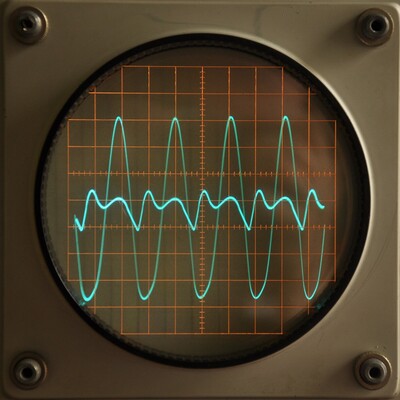
Be on the lookout for my cable access show
#video #compositevideo #blackandwhite #1960s #1970s #retroTech


How Do PAL and NTSC Really Work? https://hackaday.com/2026/01/07/how-do-pal-and-ntsc-really-work/
#HackadayColumns #Homeentertainmenthacks #Compositevideo #Ntsc #Pal #Tv
How Do PAL and NTSC Really Work?
https://web.brid.gy/r/https://hackaday.com/2026/01/07/how-do-pal-and-ntsc-really-work/


Pocket-sized Test Pattern Generator Helps Check those CRTs https://hackaday.com/2025/12/26/pocket-sized-test-pattern-generator-helps-check-those-crts/
#VideoHacks #Compositevideo #Crt #Ntsc #Pal #Testpattern
Amiga 600 Composite Fix: Missing Red and Composite Repairs
#Amiga600 #AmigaRepair #RetroComputing #CommodoreAmiga #Recapping #ElectronicsRepair #KickstartROM #CompositeVideo #RGB #8BitManshed
https://theoasisbbs.com/amiga-600-composite-fix-missing-red-and-composite-repairs/?feed_id=7238&_unique_id=694aa7ff1aa38


I'm taking our word back!
https://www.youtube.com/shorts/zhvB8iF197s


a tiny NES composite preview script; generates individual frames
animations stitched together with ffmpeg
art by @provolonecinco.com from project SHVTERA
https://github.com/Gumball2415/pencil-case/tree/main/ppu_cvbs_previewer

Composite Video for Classic Amigas! #TindieBlog #CompositeVideo #SVideo #Commodore #Amiga #Vidiot
https://blog.tindie.com/2025/03/composite-video-for-classic-amigas/


Bought a new #video #card .
Will it be powerful enough to run Llama 3? 😂
#cga #compositevideo #ibm #pc
Will it be powerful enough to run Llama 3? 😂
#cga #compositevideo #ibm #pc



In Apple II emulation and in configuring a composite monitor to display Apple II video, setting the chroma trap is a tradeoff between sharp edges and smooth solid colors. Here's a mockup of what a game looks like with and without chroma trap.



Made this composite video to UHF RF converter from old bits and pieces in the junk box. Very handy for testing vintage tellies. #uhf #vcr #rf #TVConverter #scart #video #VintageTV #CompositeVideo
[13/01/2020]


ZX Spectrum Composite Video Mod
Adding Composite Video to the Mattel Aquarius https://hackaday.com/2023/09/08/adding-composite-video-to-the-mattel-aquarius/ #switchingregulator #Retrocomputing #compositevideo #MattelAquarius #computerhacks #classichacks #VideoHacks #7805

i finally read up on how the colors in the 8088 MPH demo work, and it's super cool and actually fairly understandable. well, some rough intuitions on how #compositeVideo works will help, but it also might be helpful for building those intuitions.
https://int10h.org/blog/2015/04/cga-in-1024-colors-new-mode-illustrated/
and here is the demo itself, in case you haven't seen it:

Generating Composite Video On ESP32 With LVGL GUI
RCA connector mounted to ESP32 board. (Credit: aquaticus)
Just because a microcontroller doesn't have a dedicated video peripheral doesn't mean it cannot output a video signal. This is demonstrated once again, this time on the ESP32 by [aquaticus] with a library that generates PAL/SECAM and NTSC composite signals. As a finishing touch on the hardware side, [aqaticus] added an RCA jack is an optional extra. The composite signal itself is generated on GPIO 25, with the selection from a wide number of PAL and NTSC resolutions.
In addition, LVGL support is integrated: this is an open-source library that provides a cross-platform way to provide graphical UIs for embedded platforms. Using this combination any ESP32 can generate a fully graphical UI on a monochrome or color display to add some extra flair and functionality to an ESP32 project.
Currently, this library does not support color output, but hopefully this will be added in the future. Even so, together with simple VGA output using a DAC, this library provides yet another way to add analog video output to ubiquitous MCUs like the ESP32. Even if these MCUs are not going to be decoding any video formats at a reasonable speed, adding a UI that's more user-friendly than an HD44780-based display and a few buttons can really elevate the user experience.

ESP32 Clock Pushes Outrun Graphics over Composite
We've covered plenty of clocks powered by the ESP32, but this one from [Marcio Teixeira] is really something special. Rather than driving a traditional physical display, the microcontroller is instead generating a composite video signal of an animated digital clock. This could be fed into whatever device you wish, but given the 80's synthwave style it's pumping out, you'll probably want to find a suitably retro CRT to do it justice.
Specifically this is a variant of the "Dali" clock, where each digit seems to melt and morph into its successor. Though his version doesn't necessarily share code with all the previous iterations, [Marcio] does credit the developers who have pulled off similar visual tricks going all the way back to 1979. Given the vintage of this particular animation, the neon skyline and infinite scrolling grid certainly feel like a perfect fit.
Want to add a little vaporwave vibe to your own workbench? Assuming you've already got a 80s style CRT, all you need is an ESP32 and two wires stuck into the composite video port. One goes to ground, and the other goes to the chip's digital pin. Once everything is powered up, you'll be able to configure the clock with a web-based interface. It doesn't get much easier than that.
In the documentation, [Marcio] calls out a few open source projects which were instrumental to getting his clock off the ground. The pioneering work [bitluni] did to get video out of the ESP32 is something of a given, but he also sends a hat tip to [rossumur] for his collection of 8-bit game console emulators written for the microcontroller. Projects like this are a fantastic example of what's possible when a community works together to truly push the envelope.
#classichacks #microcontrollers #videohacks #clock #compositevideo #esp32 #outrun #vaporwave

Black and White TV Was Hiding A Special Input Board
[John Floren] found a nice old black & white TV in a thrift store, and as so many of us would, he decided to take it home. He was surprised upon getting it there that it had, in addition to the VHF and UHF antenna inputs, a mysterious extra connector on the back. Naturally, he set about investigating.
On the rear was an obviously hacked-in F-type connector, paired with a toggle switch, both unlabelled. Running the output of an RF modulator to the connector didn't net an image on the screen, even though the same method worked when hooked up to the antenna inputs. Undeterred, [John] dug deeper.
Inside, a little PCB bearing the mark "TVM.04" was inside, bearing a handful of components. The device turned out to be a Pickes and Trout TVM-04 adapter, designed in the 1970s for hooking a computer up to a television for use as a monitor. The adapter board allows the Hitachi TV to accept a composite video input. [John] was able to test the TV with a NES clone outputting composite video and voila, it worked! [John] then went further, adding an audio input and installing standard RCA jacks to make it easier to use the input with more modern electronics.
It's a great example of how simply opening up some electronics and poking around can teach you something. Hacking on old-school TVs is a popular pastime around these parts, it seems. If you've been working on your own retro display hack, be sure to let us know.

RAM Fiddling Turns VGA Converter into Video Synth
If you're interested in circuit bent video but not sure where to start, the excellent guide [LoFi Future] has come up with for modifying the cheap and readily available GBS-8100 VGA to composite converter would be a great first step. While we wouldn't call it an easy modification, the circuit documentation and demonstration video below go a long way to making it as accessible as possible to new players.
Some soldering will be required…
While other video converters have all-in-one chipsets that are much harder to work with, [LoFi Future] explains that the separate EM636165TS DRAM chip on the GBS-8100 provides an ideal spot to tap in and wreak some technicolor havoc. By mapping out the pins and studying how the video output is corrupted by grounding them out or connecting them to each other, he's been able to come up with fairly repeatable "recipes" for different effects.
In the most basic form, once you've soldered the pins of the DRAM chip up to the plug board interface, you'd technically be done. But [LoFi Future] takes it a step further and pairs the GBS-8100 with a separate composite to VGA converter. This provides some additional effects in the form of feedback loops and hue adjustment, but more practically, allows the device to handle composite on both the input and output. It's a lot of hardware to cram into the enclosure, but thanks to little touches like the printed panel graphics, the final product does looks very professional.
Aside from the occasional modified NES Zapper, most of the circuit bent hardware we see is of the audio variety. But with projects like this one and the MIDI controlled SNES we covered last year as inspiration, we might see a balancing of the scales.
#hardware #videohacks #circuitbending #compositevideo #vga #videosynthesizer

Client Info
Server: https://mastodon.social
Version: 2025.07
Repository: https://github.com/cyevgeniy/lmst