Hack the planet. Disable oppressive forces. ✊🏴❤️☮️✝️
https://www.linkedin.com/pulse/decentralized-mesh-internet-adam-edsall-sapge
#anarchy #decentralization #STEM #engineering #radiotechnology
Hack the planet. Disable oppressive forces. ✊🏴❤️☮️✝️
https://www.linkedin.com/pulse/decentralized-mesh-internet-adam-edsall-sapge
#anarchy #decentralization #STEM #engineering #radiotechnology
Scientific and Technical Amateur Radio
#HackerNews #ScientificRadio #TechnicalAmateurRadio #HamRadio #DIYScience #RadioTechnology
Motus (wildlife tracking network) (Zoology 🦥)
Motus is a network of radio receivers for tracking signals from transmitters attached to wild animals. Motus uses radio telemetry for real-time tracking. It was launched by Birds Canada in 2014 in the US and Canada. As of 2022, more than 1,500 receiver stations had been installed in 34 countries. Most receiv...
https://en.wikipedia.org/wiki/Motus_(wildlife_tracking_network)
#Motus #Zoology #Telemetry #BirdMigration #Geopositioning #RadioTechnology
#hamconBe promises to be a swell conference with interesting speakers and very curious visitors.
You've got a project related to #radiotechnology that fits the spirit of the conference you want to talk about?
Then an infobooth might be just what you (and we) want!
Contact us via email (info@hamcon.be) , direct message on mastodon/fediverse or join the discussion on matrix:
https://matrix.to/#/#hamconBE25:c1.uba.be
@radiotelescoop
Hi Dwingeloo people, a small question to you: we are organizing a small one-day conference on #radiotechnology here in Belgium, which includes three talks on #space and #radioastronomy . It there an amateur radioastronomy community out there? And how can we reach them?
(HamConBE25: 26th of April, Leuven, Belgium) https://hamcon.be/
Ladies and Gentlemen, now it is official:
The list of presentations of #HamConBE 25
#hamradio: promotion, ARDF and Digital voice
#radiotechnology : tracking asian hornet, #emc #sdr and #meshtastic
Radio is #science and #space : #ionosphere research using #sat , #radioastronomy and #weatherradar
Workshop: #TinyGS
So there is something for everybody!
register here:
https://hamcon.be/event/hamcon-2025/
#hamConBE25
26 April 2025
Leuven, #belgium
Basic Electronics for the Amateur Radio Operator: What You Need to Know for Your Technician License
1,003 words, 5 minutes read time.
If you’re preparing for the Amateur Radio Technician License Exam, understanding basic electronics is a must. While you don’t need to be an electrical engineer, the exam includes fundamental concepts like Ohm’s Law, circuits, components, and RF safety. This guide will walk you through the essential topics, ensuring you’re ready for the test and your first steps as a ham radio operator.
Understanding Electricity: The Basics for Amateur Radio
Electricity is the movement of electrons through a conductor, like a wire. Three key electrical properties define how electricity behaves:
These three are tied together by Ohm’s Law, a fundamental equation in electronics:
V=I×R
This means if you know any two values, you can calculate the third. Understanding this equation is critical for both the exam and real-world troubleshooting.
Direct Current (DC) vs. Alternating Current (AC)
Electricity comes in two forms:
For amateur radio, most equipment runs on DC power, but you’ll also need to understand AC because radio signals are alternating currents that oscillate at high frequencies.
Essential Electronic Components and Their Functions
Several key electronic components appear on the Technician Exam. Here’s what they do:
Understanding these basics helps you answer questions about circuit behavior and troubleshooting.
Series and Parallel Circuits
Circuits are made up of components arranged in either series or parallel:
For the exam, you should know how voltage, current, and resistance behave in each type of circuit. For example, total resistance in a series circuit is the sum of all resistances, while in parallel circuits, total resistance is lower than the smallest individual resistor.
Basic AC Concepts and Frequency
Radio waves are AC signals that oscillate at different frequencies. Frequency (f) is measured in hertz (Hz) and tells us how many times per second the wave changes direction. One kilohertz (kHz) is 1,000 Hz, and one megahertz (MHz) is 1,000,000 Hz.
Ham radios operate in different frequency bands, such as:
Higher frequencies allow for shorter antennas and are good for local communication, while lower frequencies travel further.
Modulation: How We Send Information Over Radio Waves
Modulation is how a radio wave (carrier wave) carries information. The Technician Exam covers three main types:
Knowing these helps when selecting modes for different types of contacts.
Power, Batteries, and Safety
Most ham radios run on 12V DC power sources, such as batteries or regulated power supplies. It’s important to understand:
Another key topic on the test is RF exposure safety. High-power transmissions can generate strong radio frequency (RF) radiation, which may cause health risks. To minimize exposure:
Ohm’s Law in Real-World Ham Radio Applications
A common exam question might involve calculating current or voltage using Ohm’s Law. For example:
Question: If a radio operates at 12V and draws 2A of current, what is the resistance?
Using Ohm’s Law:
Understanding these calculations can help with troubleshooting and designing circuits.
Final Thoughts: Studying for the Exam and Beyond
The Technician License Exam covers these topics, but learning electronics doesn’t stop there. Once licensed, you’ll continue exploring concepts like antenna design, signal propagation, and digital communication.
Great resources for studying include:
By mastering these basic electronics concepts, you’ll be well on your way to passing the exam and starting your journey in amateur radio. Keep practicing, get hands-on experience, and soon, you’ll be making contacts on the air!
D. Bryan King
Sources
Disclaimer:
The views and opinions expressed in this post are solely those of the author. The information provided is based on personal research, experience, and understanding of the subject matter at the time of writing. Readers should consult relevant experts or authorities for specific guidance related to their unique situations.
Related Posts
Rate this:
#ACVsDC #am #AmateurRadio #amateurRadioEducation #amateurRadioTraining #antennaTheory #ARRLStudyGuide #basicElectronics #beginnerHamRadio #capacitors #circuits #current #diodes #electricalComponents #electronicsBasics #examPrep #FCCExam #FM #hamExam #hamLicense #hamOperator #hamRadio #hamRadioBands #hamRadioBeginner #hamRadioComponents #hamRadioEquipment #hamRadioOperator #hamRadioStudy #HamRadioStudyGuide #HamRadioTraining #hamStudyGuide #inductors #modulation #OhmSLaw #powerSupply #radioBroadcasting #radioCommunication #radioFrequencies #radioFrequency #radioFundamentals #RadioLicensing #radioSignals #RadioTechnology #radioTransmission #radioWaves #resistance #resistors #RFExposure #RFSafety #SSB #technicianClass #TechnicianLicense #transistors #UHF #VHF #voltage


Just one more week to submit your proposals for the #HamConBE conference!
We've already received some very refreshing proposals, so this is your chance to be part of the line-up of this one-of-a-kind conference on #radiotechnology and #amateurrradio in Belgium.
Call-for-presentation here:
https://hamcon.be
HamConBE
26th of April, Leuven, Belgium
You want to be part of the lineup of the first conference in Belgium on #radiotechnology
The call-for-presentation ends in 12 days, on the 28th of February so don't wait to long and send your proposal to info@hamcon.be
The last couple of weeks, we had issues with email (mails filed in the spam-folder or do not arrive at all).
If you sent in your proposal but do not receive an acknowledgement in one or two days, please let us know via DM.
Cfp: https://hamcon.be/
#HamConBE might sound like a pure #amateurradio (#hamradio) conference but it actually more.
The conference also aims to bring together people from different communities of users of #radiotechnology in Belgium, ranging from #hackers and #makers (#meshtastic, #LoRa, wireless domotica, ...), scientists (#astronomy, #meteo, tracking birds, ...), #space, #cybersecurity, (#infosec) #education, and others.
Check out out #CfP at https://hamcon.be/
HamCon Belgium:
26th of April 2025
#leuven
#OTD in 1904.
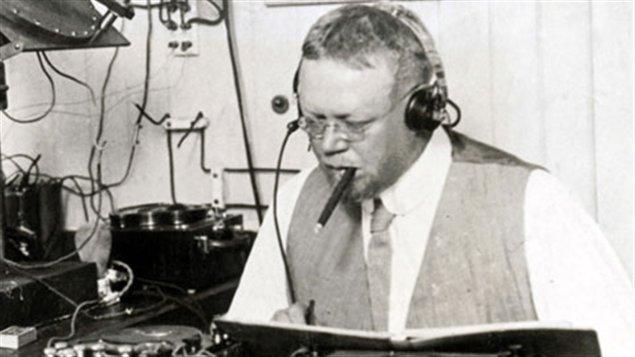
Reginald Fessenden transmits the first radio program, a poetry reading, a violin solo, and a speech, from Brant Rock, Massachusetts. By 1899 he was able to send radiotelegraph messages between Pittsburgh and Allegheny City (now an area of Pittsburgh), using a receiver of his own design.