
On Writing My Faust Novel https://www.writersdigest.com/on-writing-my-faust-novel #WritingHabitsandPractices #TheWriter'sLife #teachingwriting #researchtrips #novelwriting #perseverance #BeInspired
#TeachingWriting
Reminder: Deadline extended till December 15 to submit a proposal or artwork for the Future of Writing Symposium Feb 20 and 21, 2026. You can also use the form to register and just attend for free.
Deadline extended till December 15 to submit a proposal or artwork for the Future of Writing Symposium Feb 20 and 21, 2026. We know how busy everyone is. You can also use the form to register and just attend.
If you like paper structure models, I've got another blog post for you -- part two of yesterday's post
https://silencesandsounds.blogspot.com
#pedagogy #AmWriting #TeachingWriting #Blog #PaperWriting #structure

Today's blog post shares a writing how-to that I use with my undergraduates. (Not my only model, but a place to start!)
https://silencesandsounds.blogspot.com
#pedagogy #AmWriting #TeachingWriting #Blog #PaperWriting #structure

In this new article, I explain “The Analog Sandwich: teaching writing with & without AI“: https://markcmarino.medium.com/the-analog-sandwich-teaching-writing-with-without-ai-ace7cb529ca9

Teach Writing With The New York Times: Our 2025-26 Curriculum – The New York Times
Grant SniderWriting Curriculum
Teach Writing With The New York Times: Our 2025-26 Curriculum
Our eight writing units are based on real-world features like reviews, opinion essays, narratives, podcasts, photo essays and more.
Listen to this article · 30:12 min Learn more
Credit…Grant SniderBy The Learning Network, July 30, 2025
What can the news, features, essays, interviews, photos, videos, podcasts and graphics in The New York Times teach your students about composing for a real audience? So much, we hope, that the units we detail below are just a beginning.
Our writing curriculum is a road map for teachers as well as an invitation to students. For teachers, it organizes our offerings into eight units, each of which focuses on a different genre or type of composing that your students can find not just in The Times but also in all kinds of real-world sources.
For students, these units offer confirmation that they have something valuable to say, choices about how to say it and a global audience eager to listen. Promoting student voice has always been a pillar of our site, and through the opportunities for publication woven into each unit, we want to encourage students to go beyond simply consuming media to becoming creators themselves.
Though some of the units spotlight mediums like photography or podcasting, writing is at the heart of each one. All our units begin and end with written reflection and depend on writing throughout — to plan and organize, to outline and script, to summarize and process. Increasingly, Times journalists are composing in multimedia, weaving photos, illustrations, video and audio into their written reports. We’re inviting students to do the same.
Finally, though our offerings are aimed at middle school and high school students, we know that they are used up and down levels and across subjects — from elementary school to college. So have a look, and see if you can find a way to include any of these opportunities in your curriculum this year, whether to help students document their lives, tell stories, express opinions, investigate ideas, interview fascinating people or analyze culture. We can’t wait to hear what they have to say!
Our 2025-26 Student Contest Calendar. July 23, 2025
Our eight writing units, plus additional resources:
- Everyday Practice: Writing Prompts
- Documenting and Reflecting on Teenage Lives: Growing Up With A.I.
- The Tiny Memoir: Personal Narrative Writing
- The Photo Essay: Multimedia Storytelling
- The List: A Different Kind of Critical Review
- The Open Letter: Argumentative Writing
- The Podcast: Writing for Audio
- Independent Reading & Writing
- Want Mo
editor’s Note: I hope all schools and districts can access these materials. Probably worth a subscription to the NY Times, IMHO. 🙂
Continue/Read Original Article Here: Teach Writing With The New York Times: Our 2025-26 Curriculum – The New York Times
#2025 #America #Books #Curriculum #DonaldTrump #Health #History #Libraries #Library #LibraryOfCongress #NewYork #Politics #Reading #Resistance #Science #Students #Teaching #TeachingWriting #TheNewYorkTimes #Trump #TrumpAdministration #UnitedStates #Writing


Module Writing as an Act of Imagination
#teachingwriting #teachingresources Back in 1991, I was working on my dissertation, A Phenomenological Critique of Protocol Analysis in Composing Process Research. For that project, I was reading a lot of phenomenology, including Edmund Husserl, Alfred Shutz, Don Ihde, and Paul Ricoeur. I meant to use those big guns to critique protocol analysis, a research method borrowed from cognitive psychology which involved having a subject…
http://textrhet.com/2025/04/10/module-writing-as-an-act-of-imagination/
Here's all about AI Research tools with some thoughts about Bedazzlement in this workshop I ran with Jessica Piazza this week.
If we can't AI-Proof our college writing courses, what can we do? Here's one idea I like from Jeremy Douglass.
https://markcmarino.medium.com/stop-talking-about-ai-proofing-courses-3354c87b16f9

Two new posts on Refusing Generative AI in Writing Studies by Maggie Fernandes, Jennifer Sano-Franchini, & Megan McIntyre
"OAQs (Occasionally Asked Questions)" - https://refusinggenai.wordpress.com/oaqs/
"What Is GenAI Refusal?" - https://refusinggenai.wordpress.com/what-is-refusal/
#HigherEd #GenAI #CriticalAI #EdTech #CriticalEdTech #TeachingWriting
Dan Cryer’s “critical minimal adoption” take on GenAI in writing courses: https://aiminimalist.wordpress.com/
Lots of ideas to consider, including “We should help administrators understand how AI creates more work for teachers, not less.”
I appreciate Matthew Kirschenbaum & Rita Raley’s attention to labor conditions when they write of the burdens that “fall disproportionately on those who may not have the luxury of engaging otherwise: not only those with obscene course loads but also instructors who do not set their own syllabi, writing center tutors, and the staffers in teaching resource centers.”
#AI #HigherEd #TeachingWriting #adjunct #labor #CriticalEdTech
Jennifer Sano-Franchini, Megan McIntyre, & Maggie Fernandes - "Refusing GenAI in Writing Studies: A Quickstart Guide"
"In short, we demonstrate that our call for GenAI refusal is not uninformed, moral outcry as a result of technological 'aversion,' fear of change, or other so-called 'doom and gloom' views of technological advancement as it is often framed, but rather extends on our disciplinary knowledge in rhetoric, writing, and composition studies, digital rhetorics and literacies, computers and writing, and technical communication."
https://refusinggenai.wordpress.com/
#TeachingWriting #AI #GenAI #CriticalEdTech #EdTech #HigherEd
An introduction for my new instance:
My main interests are written communication, teaching writing, and education, particularly as they relate to productive disagreement explored in various contexts: rhetoric, organizational & workplace communication, organizational learning, training, research, emergent strategy, coalition work, and facilitation.
This post goes into a little more detail: https://fromtherostra.com/2023/03/10/when-disagreement-is-inclusive/
Some relevant hashtags:
#CriticalEd #CriticalEdTech #CriticalManagementStudies #CriticalPedagogy #EdTech #education #EmergentStrategy #HigherEd #Humanism #interbelief #interfaith #intersectionality #introduction #labor #LaborUnions #nonreligion #notetaking #OrganizationalCommunication #PaperNotebooks #rhetoric #SciFi #secular #stationery #TeachingWriting #WorkplaceCommunication #writing #WritingTools
Just published: "On feedback from bots: Intelligence tests and teaching writing" written with Patti Taylor, on how well current AI bots give essay feedback, incl. @jeremydouglass Perfect Tutor exercise Open Access.
https://journals.sfu.ca/jalt/index.php/jalt/article/view/1995

Freewriting, Blobs, and an Update on AI
Mastodon hashtags: #writingcommunity, #teachingwriting I knew I had written a blog post on AI, but I couldn’t find it here. Then I remembered that it had been posted to the ERWC blog as “What Should English Teachers Do about ChatGPT?'” That was in January 2023. At that time my recommended strategy was “Help students use the tool wisely and effectively.” That is still probably the best advice for now.
http://textrhet.com/2024/06/15/freewriting-blobs-and-an-update-on-ai/
Just posted the Perfect Tutor exercise for teaching writing thru botmaking and generative AI, a fabulous assignment Jeremy Douglass invented! @jeremydouglass
#teachingwriting #GenerativeAI
https://markcmarino.medium.com/the-perfect-tutor-an-ai-writing-exercise-5bb79d0d63ca
Reminder: Feb. 2 USC is hosting a free online symposium about teaching writing. I will be running a workshop on using generative AI in the writing classroom at 11am pst. Come join. Org by Tamara Luque Black & Elizabeth Durst
https://dornsife.usc.edu/the-writing-program/2024-advanced-writing-symposium/
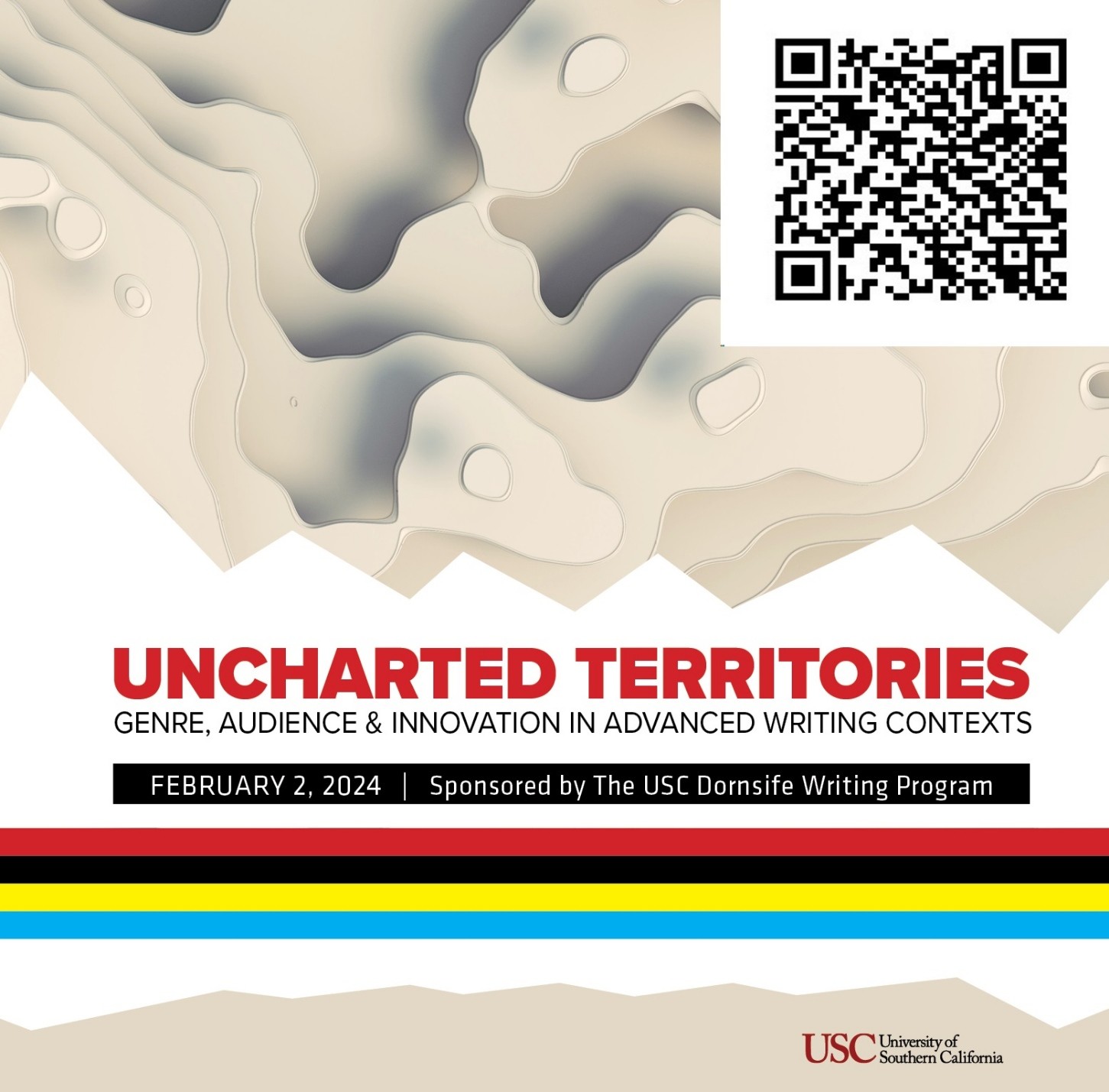
Feb. 2 USC is hosting a free online symposium about teaching writing. I will be running a workshop on using generative AI in the writing classroom at 11am pst. Come join. Org by Tamara Black & Elizabeth Durst
https://dornsife.usc.edu/the-writing-program/2024-advanced-writing-symposium/ #teachingwriting #collegewriting
Client Info
Server: https://mastodon.social
Version: 2025.07
Repository: https://github.com/cyevgeniy/lmst