
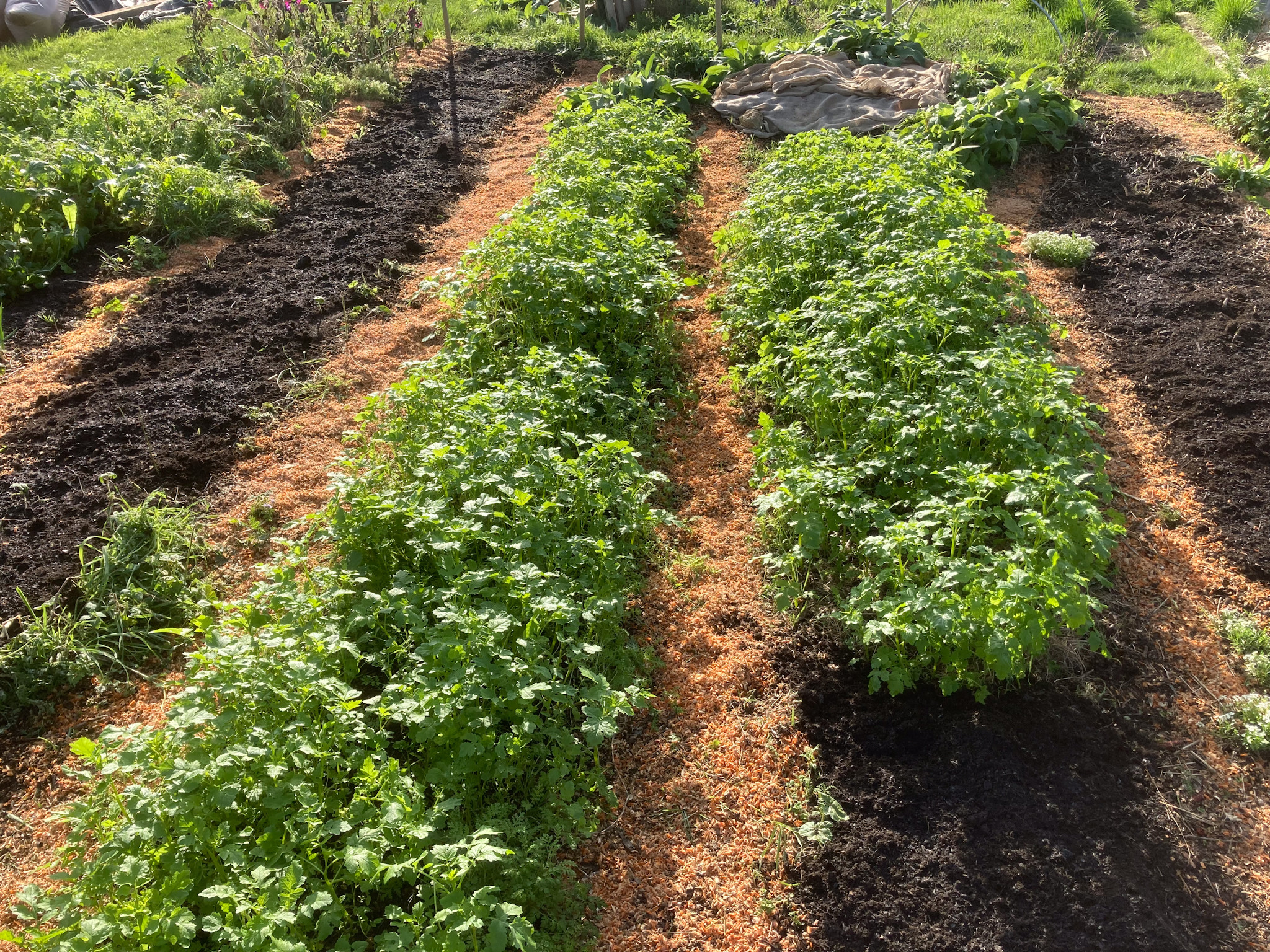
Not all #covercrops work with mulch. But the field peas in last year's mix seemed happy and even reseeded itself. Some germinated after the October rain, and I expect to see more popping up this week.
#CoverCrops


University of California: New online tool helps growers choose cover crops. “For the first time, farmers in California and throughout the West have a decision-support tool that recommends cover-crop species based on growers’ unique situations and goals.”

@naturalgardensdave It’s all looking really good. I have to limit the quantity of mustard in my green manure mixes as they are quickest to germinate and can take over some of the others.
When the mustard has been knocked back by the frosts I find the hollow stalks that remain are great wintering habitat for the ladybirds. I leave the stalks in the ground until I use them to mulch the potatoes in April. #GreenManures #CoverCrops #NoDig #Mulch

This Saturday in Nevada County:
Learn how to grow healthier soil at the free Cover Crops 101 workshop
Meet adoptable pups at Nifty Adoption Day in Grass Valley.
That's two free events and one community worth celebrating.
Learn more below!
#NevadaCounty #GrassValley #AdoptDontShop #CoverCrops #LocalEvents #Community #sammiesfriends #peacefulvalleyfarm #freeevents #ittybitty4life

As #NewHampshire summers grow drier, farmers evolve to cope
by Molly Rains, September 8, 2025 at 5:00 AM EDT
Excerpt: "Some more analog farming techniques are also crucial for drought resilience, Mathur said. A foundational element of soil health is related to how much organic material it contains, a measure boosted by additives like #compost, #manure, or #CoverCrops. In addition to adding nutrients to the soil, these materials also cling to water, helping keep soil damp and cool in times of limited rainfall, she said.
"Once organic materials are present in the soil, they can be retained for longer with methods like #NoTill farming or #ReducedTill farming, in which farmers refrain as much as possible from plowing their fields. Chewing up a field before planting a crop adds air to the soil, fueling the decomposition of the important organic matter within, Delisle said. While no-till and reduced-till farming isn’t a good fit for every crop, he added, many New Hampshire farmers have had success using the method with the common local crops of corn and pumpkins.
"Preserving the organic matter in New Hampshire’s soil is important not only in times of drought but also, Delisle said, in times of heavy rain and flooding, when farm equipment can compress fields. This compacts the soil and makes it less hospitable to plants.
" 'Soils with higher organic matter in them have the capacity to spring back once they’re pressed down, and that’s an important factor in the resiliency of that soil,' Delisle said."
Learn more:
https://www.yahoo.com/news/articles/hampshire-summers-grow-drier-farmers-090040658.html
#SolarPunkSunday
#ClimateChangeAgriculture
#ClimateChange #Composting #ClimateChangeAdaptation #Resiliency
How Oregon foods are adapting to a changing climate
By Alejandro Figueroa (OPB) and Emily Hamilton (OPB)
June 26, 2025
Excerpt: "So while maybe in Eastern Oregon, where it’s likely going to get hotter and you’ll have more prolonged days of hot weather, you’ll be seeing wheat farmers, for instance, working to keep as much water in their soils as they possibly can by using cover crops.
"Those are crops that you don’t necessarily harvest. They just help the soil stay covered, and they also naturally add nutrients back into that soil.
"Or maybe you’ll see the use of more practical things like the use of #ShadeCloth or better #irrigation systems."
https://www.opb.org/article/2025/06/26/how-oregon-foods-adapting-climate-change/
#SolarPunkSunday #ClimateChangeAgriculture #ClimateChange #CoverCrops #ClimateChangeAdaptation #OregonPublicRadio #Oregon #FoodSecurity
#NewZealand - Country Life: Lowering costs and enriching the soil - one farmer's regenerative journey
by Sally Round, 9 August 2025
"Imagine soil like a sponge, crawling with worms, beetles dragging dung down from the surface and a riot of vegetation on top.
"It's not everyone's idea of paradise, but it's like heaven for #Kaukapakapa farmer Stephen Newman.
"Newman, a founder of the Kaipara Regenerative Farming Group and a member of farmer-led network Quorum Sense, told Country Life he used to farm very conventionally, until 'the penny dropped' a few years ago, when he watched a programme about regenerative farming.
"Since then, he has experimented with different regenerative methods on his 10-hectare block north of #Auckland city.
"Trials included sowing #CoverCrops, introducing stock for a short period of time to feed on long cover, rearing dung beetles to help transfer the nutrients in animal faeces further down the layers of soil and #composting.
"He started the #Kaipara Regenerative Farming Group about three years ago to help farmers improve soil health, enrich #biodiversity, increase water retention, and reduce reliance on fertilisers and pesticides.
" 'Everything we do with the regenerative approach is all about soil biology, creating that life in the ground.' "
#SolarPunkSunday #RegenerativeFarming #RegenerativeAgriculture #SoilHealth #FoodSecurity
Could This #Arizona Ranch Be a Model for #Southwest Farmers?
Oatman Flats has undergone a dramatic transformation, becoming the Southwest’s first #Regenerative #Organic Certified farm and a potential source of ideas for weathering #ClimateChange.
" 'We embraced the abundance of #heirloom and native crops in the #SonoranDesert,' Hansen said. 'We are looking at the land and asking it what we should grow, rather than asking the land to grow what we want.' " - Dax Hansen, owner of Oatman Flats Ranch.
By Samuel Gilbert
May 12, 2025
Excerpt: "Regeneration Rooted in #Indigenous Practices
"Southern Arizona’s rich agricultural history stretches back more than 5,000 years. By 600 CE, the Hohokam people were constructing North America’s largest and most elaborate irrigation systems along the Salt and Gila Rivers. The descendants of the Hohokam—the Pima and Tohono O’odham—continued to farm the land up to and after the arrival of the Spanish, who began to colonize southern Arizona in the 1600s. They continue to farm in Arizona today.
"At the Tohono O’odham Indian Reservation, about two hours southeast of Oatman Flats, the San Xavier Co-op Farm uses historic land management practices and grows traditional crops that reflect their respect for the land, plants, animals, elders, and the sacredness of water.
"San Xavier Farm Manager Duran Andrews and his team plant #CoverCrops, rotate fields, and collect #rainwater.
" '[Regenerative agriculture] is nothing new to us,' Andrews said. 'We have been doing this for decades. Harmony between nature and people has been our approach all the time.' Rotating fields and cultivating multiple mutually beneficial species in the same fields improves water and soil quality and biodiversity in this harsh landscape.
" 'You’ve seen what the land looks like in five years; imagine it in 10. If we can do it here, we can do it anywhere.'
"The co-op grows a variety of native crops that were developed in the region and cultivated for centuries or, in some cases, millennia, such as grains and beans, which they sell online. 'We irrigate them till they sprout, then cut them off till the monsoon shows up,' Andrews said. 'We try to keep crops in that hardy state through all the years and decades they have been here. We try not to get away from how things were done in the past.'
"They also grow White Sonora wheat, introduced to Arizona by Spanish Jesuit missionaries in the 1600s. 'It was a gift from Father Kino that we have taken as our own,' Andrews said. 'The [San Xavier] community was one of the first to grow this wheat.'
"Following the Mexican-American War in the mid-1800s, the United States claimed parts of modern-day Arizona, New Mexico, California, Nevada, and Utah. The Anglo ranchers who moved into the area dug canals to irrigate agricultural fields, transforming the landscape. An 1852 watercolor by surveyor Jon Russell Bartlett depicts a verdant valley with cottonwoods and mesquite trees lining a flowing Gila River as it passes through Oatman Flats Ranch.
"That landscape is unrecognizable today. The lower Gila has gone bone dry after years of upstream diversions, dams, water overuse, and climate change. In 2019, the Gila River earned the title of Most Endangered River by the nonprofit advocacy group American Rivers.
"Standing on the sandy Gila riverbed, which divides the north and south farms of Oatman Flats Ranch, Wang pointed to the nearby invasive salt cedars. Healing the land involves rebuilding the water, nutrient, and carbon cycles from the ground up, 'at the micro level,' he said. 'On the macro level, it’s broken.'
"The ranch team has poured resources into rebuilding soil health by planting #hedgerows and 30-plus species of cover crops, at a cost of approximately $100,000. The hedgerows, mostly native trees, were planted along the edges of the fields to reduce erosion and provide habitat for beneficial species, including #pollinators such as #bees and #hummingbirds.
"The cover crops — #millet, #chickpeas, #sunflowers, #sorghum, sudan grass, broadleaves, and #NativeGrasses among them—are planted immediately after harvesting wheat, to provide 'soil armor,' help conserve water, fix nitrogen in the soil, suppress weeds, attract beneficial insects, and sequester carbon. The once-barren land now supports life for more than 120 species of flora and fauna."
Read more:
https://civileats.com/2025/05/12/could-this-arizona-ranch-be-a-model-for-southwest-farmers/
#SolarPunkSunday #RegenerativeAgriculture #RegenerativeFarming #RestorativeAgriculture #ClimateChangeFarming

🌾 Mapping what matters for sustainable farming: EvoLand’s C4 prototype detects where and which cover crops are used, supporting soil health, biodiversity & CAP compliance.
✔️ 80.7% accuracy
✔️ Sentinel-2 NDVI
✔️ Grass vs leaf-rich types
🔗 https://www.evo-land.eu/mapping-what-matters-cover-crop-typing-for-smarter-soil-management/
#CoverCrops #SoilHealth #SmartFarming #EvoLandEU #Copernicus #HorizonEurope #CLMS

Do #CoverCrops increase #soil C sequestration consistently across different models? A thread on our new article in European Journal of Agronomy. #agriculture 🧪🌍 1/11 doi.org/10.1016/j.ej...

#RedClover is one of the plants I'm using for ongoing, longterm, #SoilRemediation efforts. Great nitrogen fixer & pollinators love their pretty pink flowers too.
#Bloomscrolling #florespondence #floral #Summer #Wsanec #flowers #botanical #perennials #nature #Saanich #VictoriaBC #YYJ #VancouverIsland #VanIsle #PacificNorthwest #Cascadia #PNW #Zone8 #plants #photography #CoverCrops #SaveSoil #RemediateSoil #clovers


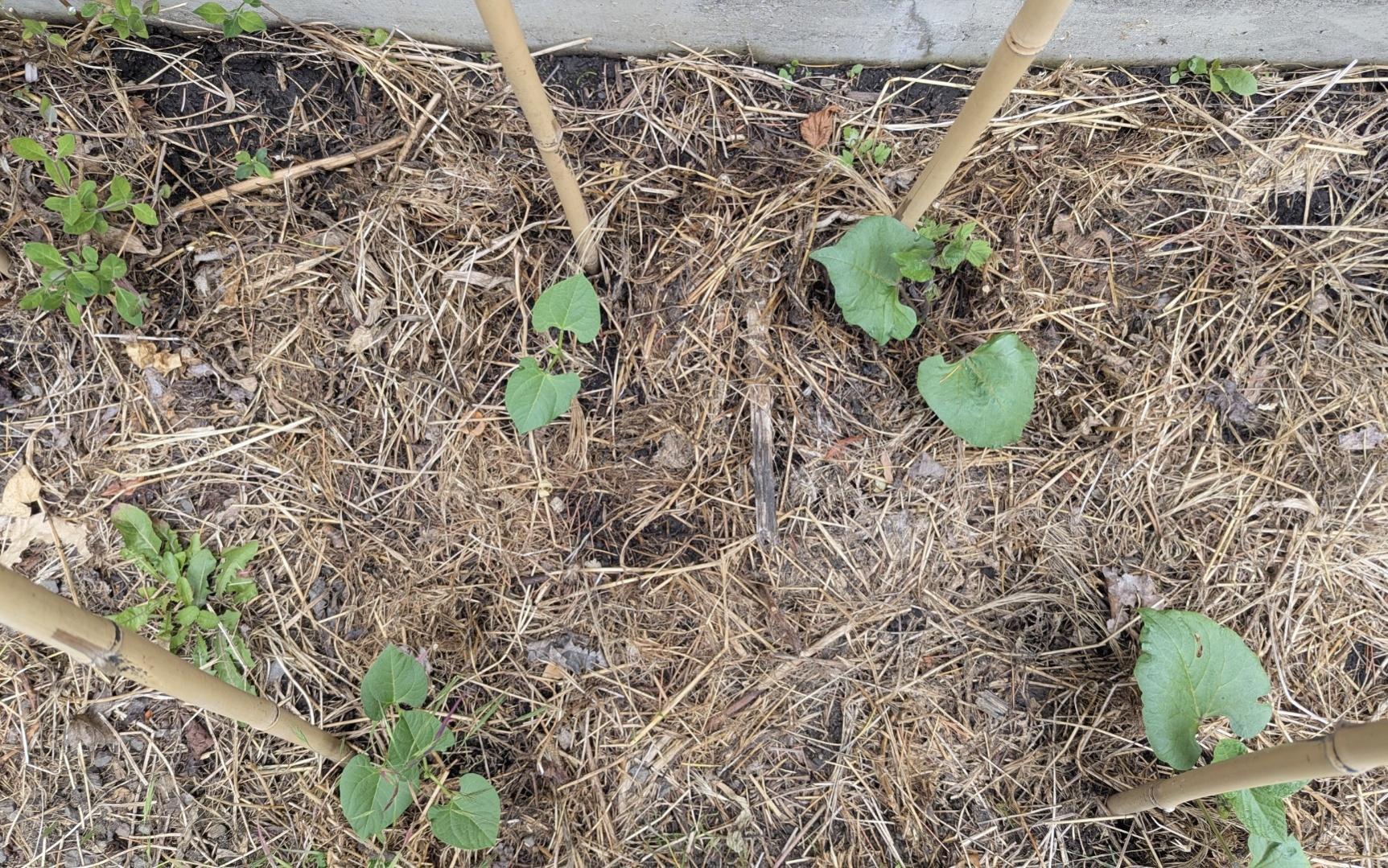
This was my first time trying a cover crop for weed suppression in the garden, and I think it's been a success!
My lazy method was to let some volunteer grass grow tall here over the winter and strim it when it had green seeds, around the end of March. Then I covered it with a tarp until it was time to plant beans in mid May. This spot previously had frequent mullein, herb robert, and grasses.
#gardening #WeedManagement #SoilBuilding #CoverCrops #NoTill

@Virginicus I am not sure I am into fertilizer anymore. I may ask my neighbors in Maine to donate ordinary soil and I can ad cover crops like white clover. #gardening #covercrops

Lambs onto a fresh bit of cover crops, starting the process of preparing for spring malting barley.
The more that the eat and cycle the nutrients, the less we have to break down the cover crop


#Farmers show a significant intention-action gap regarding #sustainable practices. Predictors of #intention to adopt do not necessarily predict actual #behaviour. Only past experience with a practice (e.g. #covercrops) & strong intentions (but not weak) predict adoption: https://doi.org/10.1016/j.jenvp.2025.102522
We have relied on #covercrops to help build soil for 20 years. But the past few years, we have had a much better supply of woodchips as seen below. These #avocado trees planted this past summer will be very happy as this biomass breaks down and their roots extend.
@feinschmeckergarten Thank you, much appreciated.
I added a thin leaf litter layer to the beds today to finish them off for the year. Now the worms will be even happier.
#GrowYourOwn #NoDig #Mulch #GreenManures #Compost #Gardening #Allotment #SoilHealth #NoBareSoil #CoverCrops
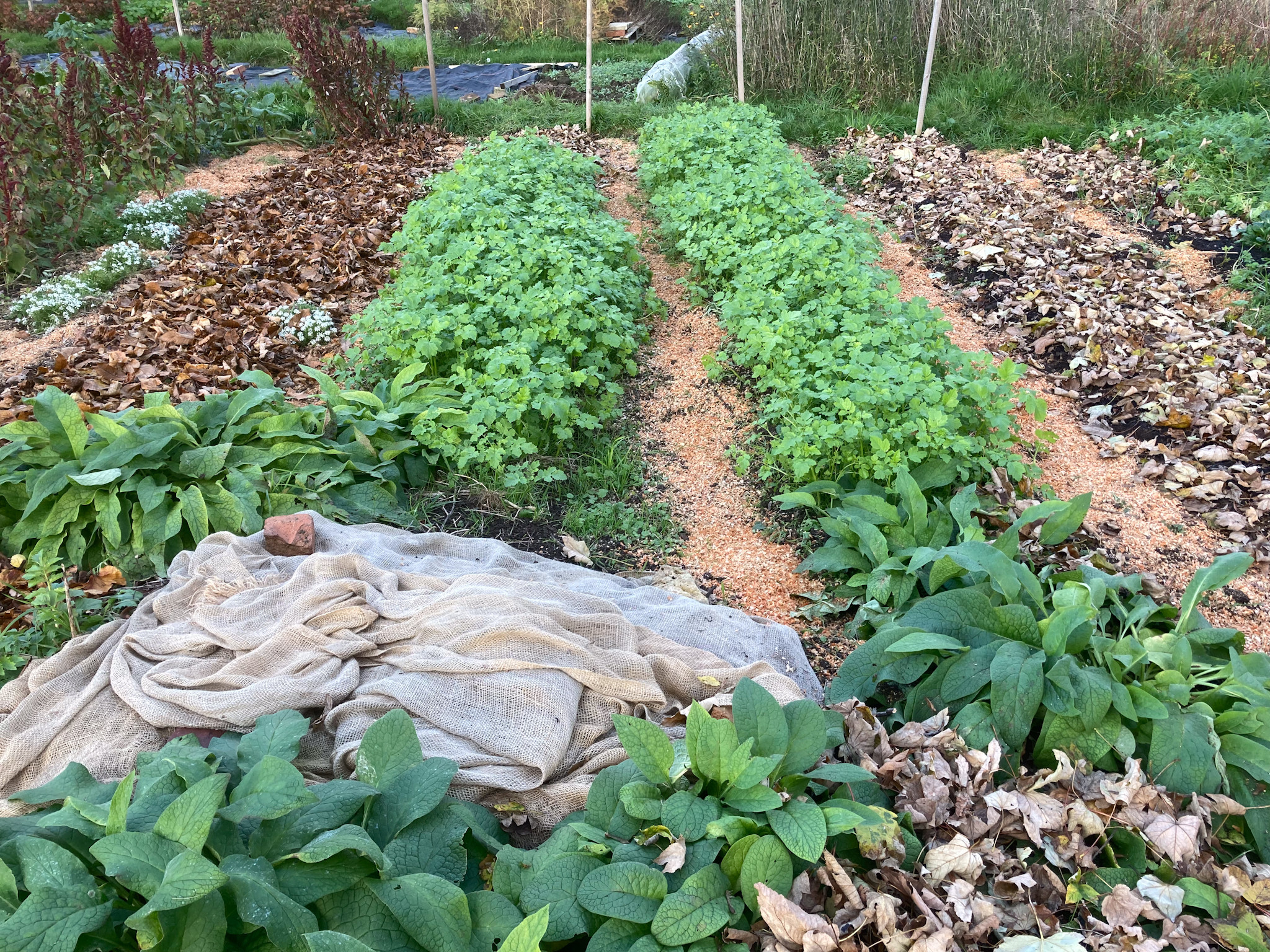
Beautiful low autumnal sunshine at the plot today. The growing beds are all sown with green manures and mulched with compost and ready for whatever winter has in store for it this year.
I had some bark fines compost left over from a job which the client didn’t want so that’s a win, win. I was hoping it would be the case.
#GrowYourOwn #GreenManures #CoverCrops #Gardening #Allotment #SoilHealth #Biodiversity #Flowers #Compost
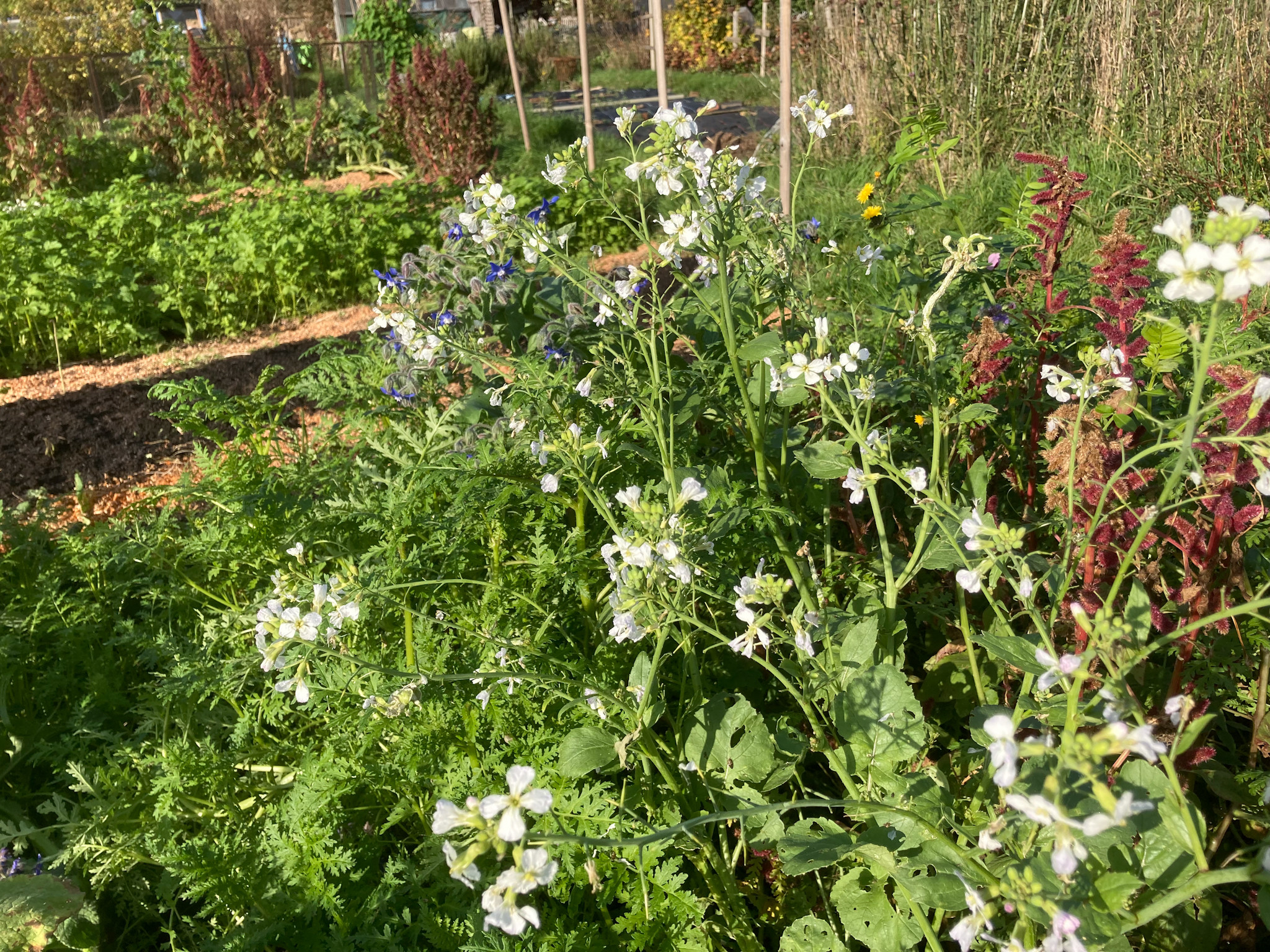
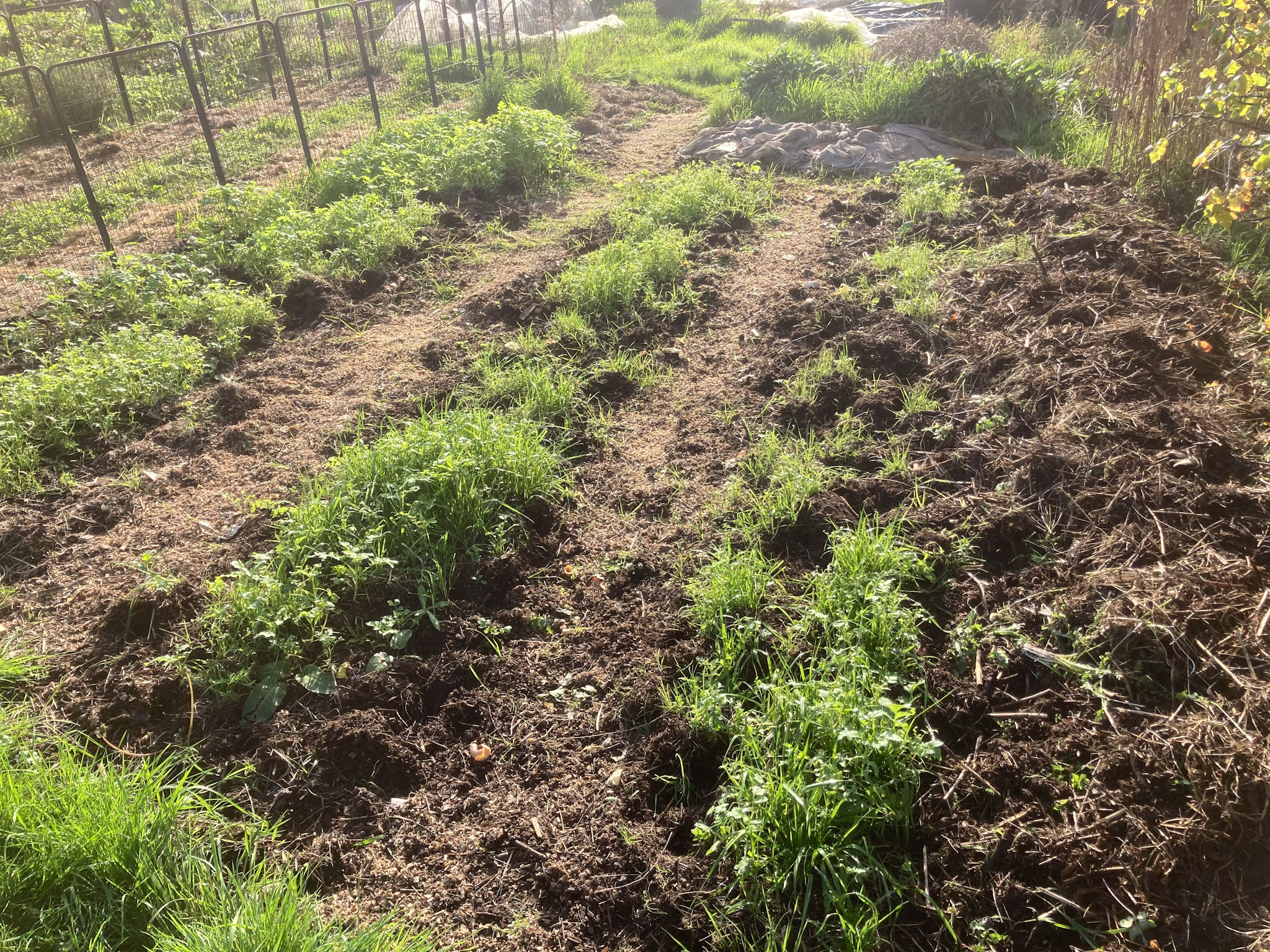
The over wintering field beans and broad beans were sown today. The beds inside the fencing will be for harvesting. The other beds are for green manures or may just feed the mice or the muntjac.
The other green manures are doing well, cycling nutrients, feeding the soil biology and improving the soil and water infiltration.
#Gardening #Allotment #NoDig #CoverCrops #SoilHealth #GreenManures #NoBareSoil #RegenerativeAgriculture #Mulch
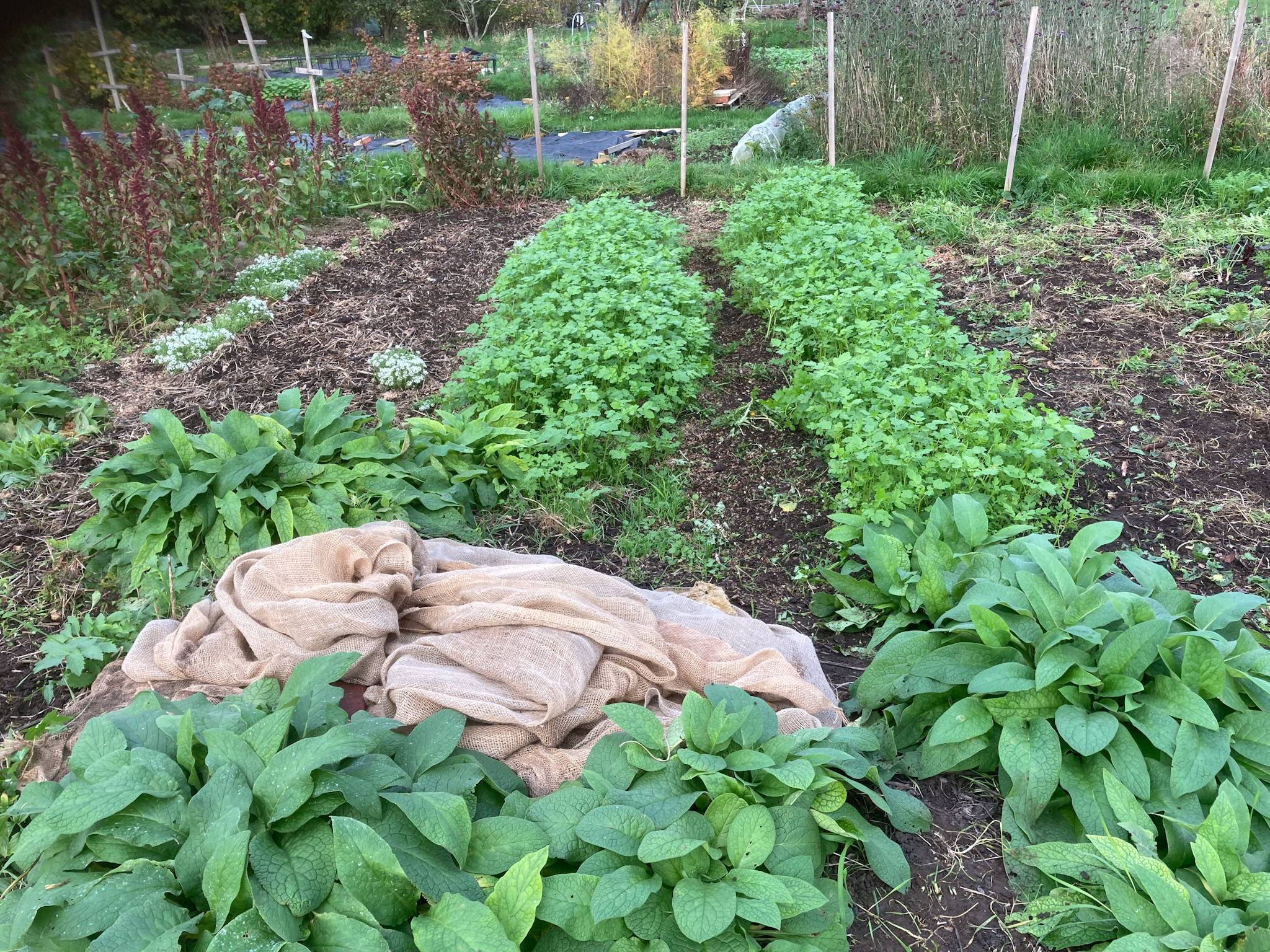
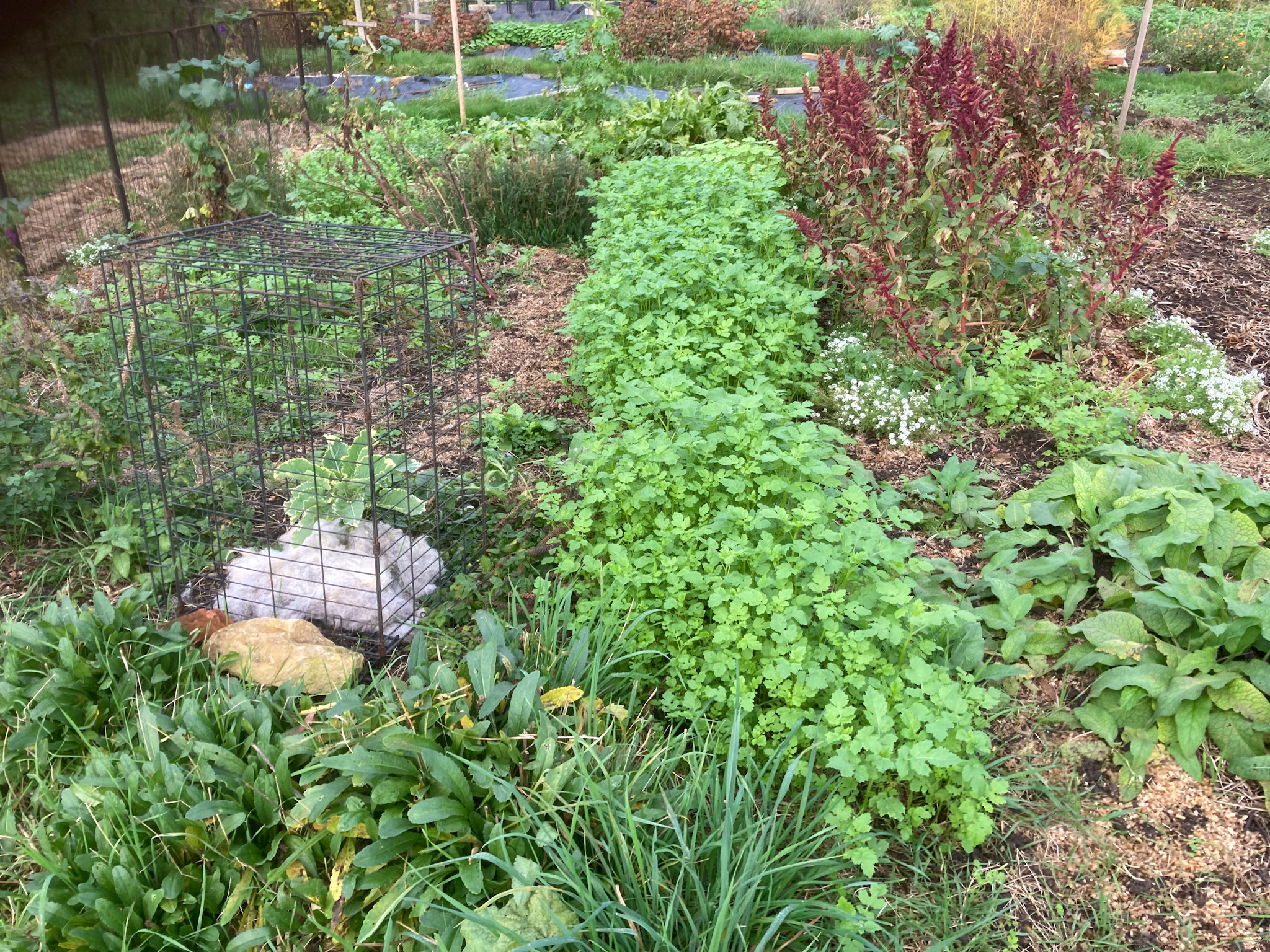
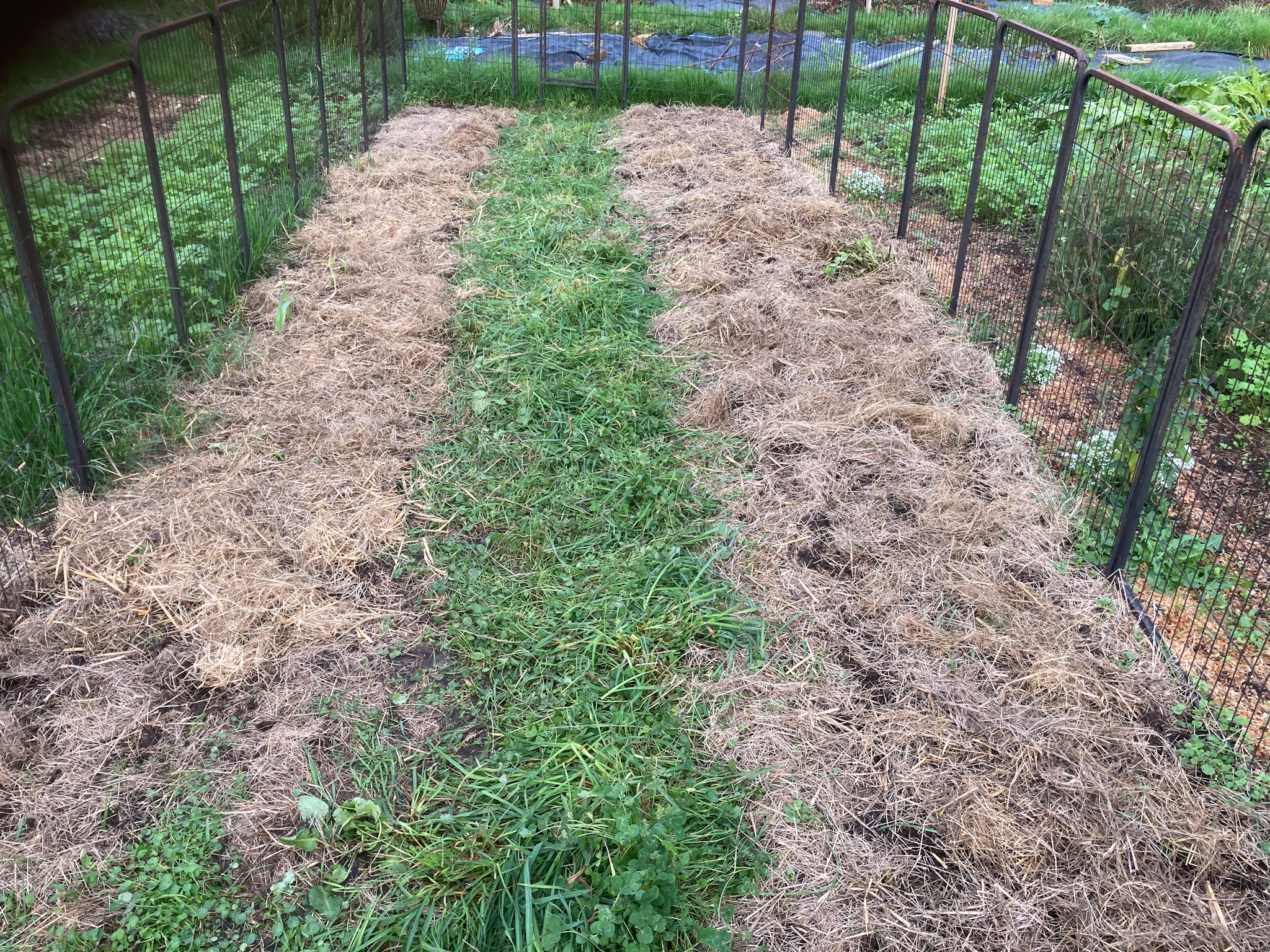

This year I tried some new methods, including undersowing with clover. Immediately after planting my main crops, I broadcast medium red clover seed onto the garden beds. This worked really well with wheat / barley. These grasses grew quickly and suppressed the clover until I harvested grains (mid-July). No longer shaded, the clover took off and established a thick stand. The clover will survive until next spring, at which point I will hoe it in. #gardening #CoverCrops #legumes
Client Info
Server: https://mastodon.social
Version: 2025.07
Repository: https://github.com/cyevgeniy/lmst