#ciphers

2025-11-03

This is Yuri Valentinovich Knorozov, the Soviet ethnographer who deciphered the Mayan writing system, 1980. - Source.

(A commenter:)

Yuri credited his cat, Asya, with helping him crack the Mayan code (he noticed her teaching kittens to hunt, and got the idea that glyphs weren't letters but syllables). He listed her on his academic papers and was livid when publishers took her name off. When publishers asked for a photograph, he'd send this one so that the cat was front and center. He did not like it when they cropped her out, either.

Fittingly, his efforts were well received by the Mexican government and he received one of their highest honors and a statue in the Yucatan (home of the Mayan Civiliation)- a statue which depicts him holding his cat.

#cats #ethnography #science #writing #soviet #ciphers #systems #maya #mayan #1980 #portrait #portraits #selfie #selfies

Yuri Valentinovich Knorozov, the Soviet ethnographer who deciphered the Mayan writing system, 1980.
2025-10-30

Poetic Carousel Again

#Mathober Curation by
@fractalkitty

Blog/ More Poems/Code blog.illestpreacha.com/mathobe

Poetic Notations made through Matrices

For My 29th Sketch of Mathober2025 using the 7th Prompt of “Notation” ,PoeticCarouselAgain is coded with Ruby & Python it remixes my Poetic Carousel Code (blog.illestpreacha.com/napowri) code that uses 3 x 3 matrices to form a poetic notation to write the poems.

#Mathober2025 #Mathober7 #Notation #Python #Ruby

Poem 3

Poetic Stanza 1 :
[['d' 'p' 'v']
['s' 'e' 'i']
['u' 'h' 'c']]
Poetic Stanza 2:
[['d' 's' 'u']
['p' 'e' 'h']
['v' 'i' 'c']]

Deploying Powerful Visions
Synchronizing Every Imaginations
uniting Harmonious Content

Deploying Sparkling Unions
Proudly Echoing Honour
Viscously Intertwining Content

#creativecoding #poetry #poem #ciphers #transposition
#micropoem #illestpreacha #worldbuilding #ElectronicLit

2025-10-16
CRYPTOGRAPHY GROUP

[for your address book]

https://soc.octade.net/cryptography/

A Fediverse group for sharing and discussing #ciphers, #codes #cryptography and #encryption and related applications and #research.

#crypto #cypher #cypherpunks #confidentiality #privacy #groups #fedigroups #fediverse
Artistic image of a sheet of paper with binary ones and zeroes and a reddish padlock in the upper right-hand corner..
2025-10-15
@papers@soc.octade.net

Hexlish Alphabet for English, Constructed Languages and Cryptography: Automatic, Structural Compression with a Phonetic Hexadecimal Alphabet

DOI : https://doi.org/10.5281/zenodo.13139469

Hexlish is a legible, sixteen-letter alphabet for writing the English language and for encoding text as legible base 16 or compressed binary. Texts composed using the alphabet are automatically compressed by exactly fifty percent when converted from Hexlish characters into binary characters. Although technically lossy, this syntactic compression enables recovery of the correct English letters via syntactic reconstruction. The implementer can predict the size of the compressed binary file and the size of the text that will result from decompression. Generally it is intuitive to recognize English alphabet analogues to Hexlish words. This makes Hexlish a legible alternative to the standard hexadecimal alphabet.

#Hexlish #Conlang #Alphabets #English #Hexadecimal #Encoding #Cryptography #Ciphers #Crypto #Encryption #Compression #Papers #Preprints #Orthography #Language #Linguistics #Writing #Glyphs #Alphabetology #Technology
Hexlish Alphabet logo. The word HEXLISH in rainbow colors on a black background with a hexagonal dot above the letter I. Beneat the logo in yellow reads the phrase,  "English Text Compression & Encoding."
2025-10-12

Amateur code breakers and Mary Stuart

I was particularly amused by the lines from her correspondence with the French ambassador

“If my son pursuits, I will evoke the curse of God against him, disinherit and deprive him as an unnatural, ungrateful treacherous and disobedient son.”

archive.today/2025.10.12-08171

Of course, Walsingham was not only intercepting most of her letters but also breaking the codes Mary was using as became obvious at her trial.

#MaryStuart #Codes #Ciphers #Scotland #History

From the article

Headline Amateur sleuths decode secret letters of Mary, Queen of Scots
Documents found in a French archive show the captive monarch complaining about lacking money to pay her servants

Portrait of Mary Stuart

Text follows


In a castle in northern England, in a darkened room, softly illuminated by the glow of tallow candles, Mary Stuart would pace across worn rugs and dictate letters. Her words were taken down by one of two secretaries, a Frenchman called Nau and her Scots secretary, Gilbert Curle.

These were no ordinary letters but long cryptograms composed on tiny pieces of paper with symbols and dots. During long years in captivity Mary, Queen of Scots became an adept “Queen of Codes”.

Although under the “custodianship” of George Talbot, the Earl of Shrewsbury, Mary, still had her “court”, though much reduced, and her ladies in waiting would smuggle the letters out in the sleeves of their dresses, book bindings and even inside the heel of a shoe. Each letter was sent to the French ambassador, Michel de Castelnau de Mauvissiere, an ally since childhood, who she designated with the single letter “K”.
Phantastik-News.dephantastiknews
2025-10-08
Phantastik-News.dephantastiknews
2025-10-08
2025-09-04

Schneier on Security: 1965 Cryptanalysis Training Workbook Released by the NSA. “The listings in the report are printouts from the Stethoscope program, run on the NSA’s Bogart computer, showing statistical and structural data extracted from encrypted messages, but the encrypted messages themselves are not included. They were used in NSA training programs to teach analysts how to interpret […]

https://rbfirehose.com/2025/09/04/schneier-on-security-1965-cryptanalysis-training-workbook-released-by-the-nsa/

Dethronatus Sapiens sp.dsilverz@calckey.world
2025-08-11

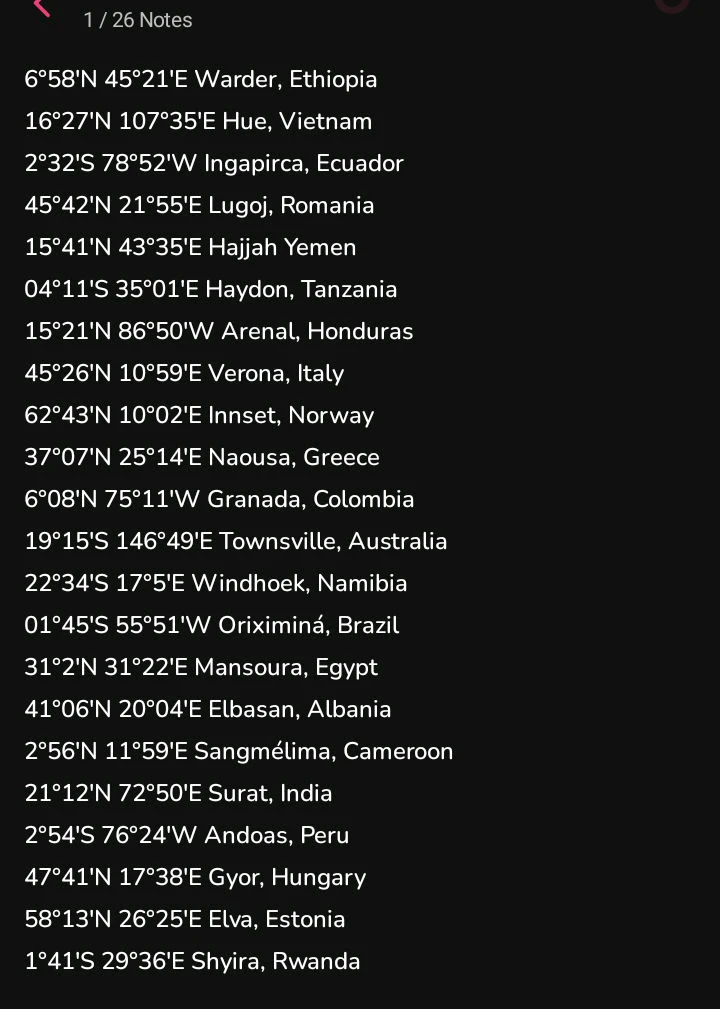
🇪🇹🇻🇳🇪🇨🇷🇴🇾🇪🇹🇿🇭🇳🇮🇹🇳🇴🇬🇷
🇨🇴🇦🇺🇳🇦
🇧🇷🇪🇬
🇦🇱
🇨🇲🇮🇳🇵🇪🇭🇺🇪🇪🇷🇼

Why do I spend my time and effort in such things, I'm not sure... Perhaps I'm trying to instigate people (in vain?) into inventing their own ciphering methods, or at least using
#ciphers and/or creative linguistics (coded/densely-symbolic language). It's a form of #rebellion against many things, especially #censorship, even so if such #cipher is unexpected and fairly novel (security through obscurity) and/or you got a vast repertoire of #ciphering #techniques that you randomly choose to use.

Bonus: LLMs have little to no training about specialized things such as
#geographical coordinates (you know, it depends on verbose cartographic data, high-precision convex hull #mathematics (i.e. determining where a point falls inside which polygon representing a given country, and/or #geodesic midpoints) and complicated geopolitics where countries are always disputing fleeting earthly territories between them, ignoring the fact that everything is going to become Pangea again in the future due to unstoppable tectonic activity).

Instead of holding pitchforks against AIs (a behavior that, while understandable, unfortunately will change a total of
zero things) and against people who use it, why not build yourself a method of communication designed to (at least) confuse both the algorithms and their techbro creators? #Math is awesome #knowledge, moreso when applied to the unexpectedness and #randomness.

Praised be Eris, the goddess of randomness.

A list of coordinates and their cities/towns alongside their countries. At first glance, it's a random list of cities all across the world, but if you pay attention to the initials, you'll notice not only one, but two simultaneous hidden messages, one for the country and another for the town (Yemen had no city starting with the letter E, so I improvised)
2025-08-04
NEWSCARD: Decentralized, Encrypted Paste Bin via Usenet Newsgroups

NEWSCARD Publish and fetch permanent named records via Network News

Newscard creates a decentralized, encrypted, named record paste bin.

[git repo] https://codeberg.org/OCTADE/newscard (use most recent version only)

With a single command, name the card, snarf the file and encrypt it.

With another command, push the encrypted file to the public network.

With another short command, snarf a file from the network.

Only users knowing the name [key] of the record will be able to decrypt it.

If a strong passphrase is used to name the file, it will be very secure.

This is useful for quickly snarfing, encrypting, and publishing a text file:

$~: card enc [passphrase] [file]
$~: card put [passphrase]

It is useful for retrieving a text file with just a key:

$~: card get [passphrase]
$~: card show [passphrase]

If and when you want the general public to access the record just share the keyword.

Newscard uses nine (9) (NINE) layers of encryption with OpenSSL chacha20 cipher.

Newscard generates 9 each of: cipher keys, salts, key iteration parameters.

It would be nice if something like this were added to the ActivityPub protocol, such that keyword[@]host.url would do the same thing. Then secret text records could be stored securely for later retrieval or revelation.

#NewsCard #Pastebin #Usenet #NNTP #NetworkNews #Encryption #Cryptography #Messaging #Anonymity #Protocols #OpenSource #FreeSoftware #BlackHackJack #Censorship #Retro #InfoSec #Ciphers #Codes #FOSS

@infostorm@a.gup.pe @crypto@a.gup.pe @infosec@a.gup.pe @selfhosting@a.gup.pe
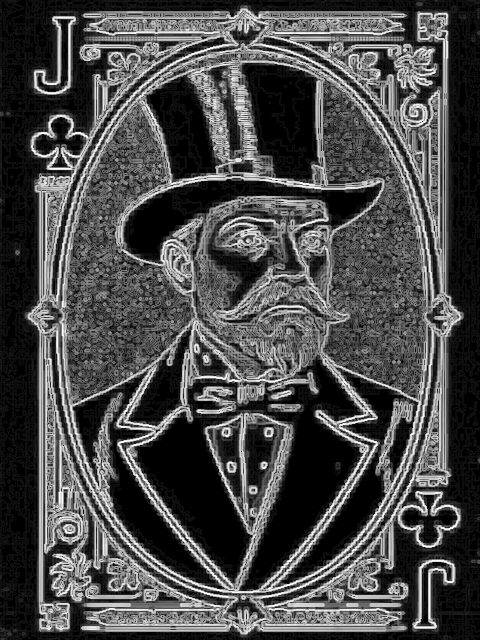
Playing card of the Jack of Clubs. The Jack is a moustached man in a black top hat and suit in a oval center cameo. The colors are inverted so that everything on the face is black except the lines which are white, like a charcoal cutout picture., giving it a retro digital appearance mixed with retro handicraft vibes.
N-gated Hacker Newsngate
2025-03-17

🔍 Apparently, "exceptional" in means endless, of solved no mortal has time to care about. 🤔 The article's true achievement is proving that "4Space" is where your goes to die. ⚰️
cp4space.hatsya.com/2020/10/28

N-gated Hacker Newsngate
2025-03-10

🤔 Ah yes, the riveting world of Sigint fiction, where is as thrilling as watching paint dry on a damp day in February. 🕵️‍♂️🎨 Clearly, only the John Buchan could make decrypting wartime sound as exciting as reading your car's manual. 📚🚗
siginthistorian.blogspot.com/2

2025-03-09

Gizmodo: Chatbots Convinced Idiots They Cracked the Code on a Sculpture in the CIA’s Backyard. “Near the CIA headquarters in Langley, Virginia, there is a sculpture known as Kryptos. It has been there since 1990 and contains four secret codes—three of which have been solved. The final one has gone 35 years without being decrypted. And, according to a report from Wired, the sculptor […]

https://rbfirehose.com/2025/03/09/gizmodo-chatbots-convinced-idiots-they-cracked-the-code-on-a-sculpture-in-the-cias-backyard/

2025-02-26

University of Oslo: AI assists researchers in decoding old secret letters. “In today’s world, encryption plays a vital role in all aspects of data protection and cybersecurity, ensuring that unauthorised individuals cannot access the information you transmit or store. However, the practice of sending messages that can only be interpreted by their intended recipients predates the age of […]

https://rbfirehose.com/2025/02/26/university-of-oslo-ai-assists-researchers-in-decoding-old-secret-letters/

2025-02-10
NEWSCARD: Decentralized, Encrypted Paste Bin via Usenet Newsgroups

NEWSCARD Publish and fetch permanent named records via Network News

Newscard creates a decentralized, encrypted, named record paste bin.

[git repo] https://codeberg.org/OCTADE/newscard (use most recent version only)

With a single command, name the card, snarf the file and encrypt it.

With another command, push the encrypted file to the public network.

With another short command, snarf a file from the network.

Only users knowing the name [key] of the record will be able to decrypt it.

If a strong passphrase is used to name the file, it will be very secure.

This is useful for quickly snarfing, encrypting, and publishing a text file:

$~: card enc [passphrase] [file]
$~: card put [passphrase]

It is useful for retrieving a text file with just a key:

$~: card get [passphrase]
$~: card show [passphrase]

If and when you want the general public to access the record just share the keyword.

Newscard uses nine (9) (NINE) layers of encryption with OpenSSL chacha20 cipher.

Newscard generates 9 each of: cipher keys, salts, key iteration parameters.

It would be nice if something like this were added to the ActivityPub protocol, such that keyword[@]host.url would do the same thing. Then secret text records could be stored securely for later retrieval or revelation.

#NewsCard #Pastebin #Usenet #NNTP #NetworkNews #Encryption #Cryptography #Messaging #Anonymity #Protocols #OpenSource #FreeSoftware #BlackHackJack #Censorship #Retro #InfoSec #Ciphers #Codes #FOSS

@infostorm@a.gup.pe @crypto@a.gup.pe @infosec@a.gup.pe
Playing card of the Jack of Clubs. The Jack is a moustached man in a black top hat and suit in a oval center cameo. The colors are inverted so that everything on the face is black except the lines which are white, like a charcoal cutout picture., giving it a retro digital appearance mixed with retro handicraft vibes.
2025-02-09
NEWSCARD: Decentralized, Encrypted Paste Bin via Usenet Newsgroups

NEWSCARD Publish and fetch permanent named records via Network News

Newscard creates a decentralized, encrypted, named record paste bin.

[git repo] https://codeberg.org/OCTADE/newscard (use most recent version only)

With a single command, name the card, snarf the file and encrypt it.

With another command, push the encrypted file to the public network.

With another short command, snarf a file from the network.

Only users knowing the name [key] of the record will be able to decrypt it.

If a strong passphrase is used to name the file, it will be very secure.

This is useful for quickly snarfing, encrypting, and publishing a text file:

$~: card enc [passphrase] [file]
$~: card put [passphrase]

It is useful for retrieving a text file with just a key:

$~: card get [passphrase]
$~: card show [passphrase]

If and when you want the general public to access the record just share the keyword.

Newscard uses nine (9) (NINE) layers of encryption with OpenSSL chacha20 cipher.

Newscard generates 9 each of: cipher keys, salts, key iteration parameters.

It would be nice if something like this were added to the ActivityPub protocol, such that keyword[@]host.url would do the same thing. Then secret text records could be stored securely for later retrieval or revelation.

#NewsCard #Pastebin #Usenet #NNTP #NetworkNews #Encryption #Cryptography #Messaging #Anonymity #Protocols #OpenSource #FreeSoftware #BlackHackJack #Censorship #Retro #InfoSec #Ciphers #Codes #FOSS

@infostorm@a.gup.pe @usenet@lemmy.world @crypto@a.gup.pe @infosec@a.gup.pe
Playing card of the Jack of Clubs. The Jack is a moustached man in a black top hat and suit in a oval center cameo. The colors are inverted so that everything on the face is black except the lines which are white, like a charcoal cutout picture., giving it a retro digital appearance mixed with retro handicraft vibes.
ティージェーグレェteajaygrey@snac.bsd.cafe
2025-01-10
I've been mulling over how to respond to this and trying my best to stick to the "what is kind, what is necessary, what is true" realms; rather than get lost in the weeds of a lot up exasperating personal experiences, since I am maybe a bit too close to the flame in some related subjects.

Regarding who should maintain DSA code upstream once the OpenSSH devs decide they no longer want to? Ideally? At least in my humble opinion: no one! At least, no one who is part of the OpenSSH core group of developers.

Some things deserve to stay in bitrot realms. Also see: DES.

SSH = Secure Shell, not shell with known weak cryptographic constructs.

Probably the same thing for SSLv3 in OpenSSL?

Don't get me wrong, I have been deeply involved with software preservation efforts (e.g. I am cited in this 2009 Usenix presentation on restoration efforts that others and I helped out with as far as getting PDP11/20 asm [pre C] UNIX source in a manner that can be run: https://www.usenix.org/conference/usenix-09/restoration-early-unix-artifacts).

Having access to source code thankfully makes some of these kinds of things significantly easier than simply preserving binaries, so yolo-OpenSSL, yolo-OpenSSH, yolo-Python are all theoretically much easier projects than yolo-Raiden (an arcade game series, with 有限会社 セイブ開発「yūgen kaisha seibu kaihatsu」levels of legendary ROM encryption techniques that took folks an awfully long time to break and even then, maybe not entirely? I haven't looked deeply into that stuff for a minute.)

Very rarely I have been fortunate enough to have been paid to do that kind of work, so I am not exactly going to be able to advocate for that compensation in such realms as much as, that might be neat in theory? Not to mention, generally speaking; while I may do software preservation on occasion whether professionally or as a hobby, I usually get a lot more satisfaction with moving technology forward, rather than navel gazing at the distant past. Though I do understand why looking back can be necessary on occasion; I never want it to become the focus of my existence, at least not personally.

However, since I have been paid in similar realms, I may as well mention some possibilities for those who may hope to have paid careers in such regards?

For example: while I was IT Admin for iSEC Partners/NCC Group they had a "software escrow" division, which basically made a best effort to preserve a build environment, and then lock it in a vault. The reasoning I was told (paraphrasing): In the event some big corporation buys e.g. a little 4 person start up's technology and is worried that those 4 people will retire to the Bahamas, or die in a car crash or whatever and they don't want their investment in the acquired intellectual property to completely go up in smoke.

Similarly, while I was staff at The MADE (Museum of Art and Digital Entertainment also see: themade.org), we would occasionally get requests about older technologies within our collection. On more than one occasion, I was tasked with re-creating prior art (using binaries/tools/etc. before a specific date) to help attorneys for Fortune 25 (then Alphabet Inc./Google) invalidate spurious patents, because we could demonstrate that such technologies existed before the patents.

That kind of stuff is tedious, generally speaking, and extremely poorly paid (while The MADE for example, invoiced my time to Fortune 25 at $300/hour, I was lucky if I saw $15-$30/hour of that gross personally, making even Jeff Bezos' 50% cut of Twitch streamers' revenue look downright generous).

There are other 501c3 non-profits (e.g. the Bloop Museum) which maybe do similar preservation work to The MADE?

Honestly, one of the few real perks to working with The MADE is they had a Library of Congress granted DMCA exemption. Unfortunately, I have seen in the last year or two, efforts to undermine that sort of legislative sanctioned circumvention and I haven't worked for them since the pandemic caused them to close their doors to the public in 2020 either; so I don't know what the current legal climate is either. (The MADE did re-open at a new location in Oakland at least)

AFAIK http://neohabitat.org/ (a preservation of the first MMO, Habitat on which The MADE collaborated) wasn't exactly generously funded and done more as a labor of love. Similar to my contributions to that PDP11/20 vintage UNIX stuff that got a Usenix presentation later, or maybe more recently (last Fall) when I created a MacPort for the first visual UNIX editor: https://ports.macports.org/port/em/details/ (based on Pierre Gaston's work to bring the preserved source code up to more contemporary UNIX variants. Lamentably, George Coulouris, the original author of em; also passed away in November of 2024, before I emailed him to let him know of my efforts.).

I remember seeing some headlines about Sony looking to hire someone for software preservation several years ago, e.g. https://www.engadget.com/sony-playstation-game-preservation-team-143059442-143059184.html

Even though I have been in that field longer than most, I have no idea how I would even begin to get hired and paid a livable wage doing that sort of thing.

Moreover, that's video games.

When it comes to security critical code? OpenSSH and OpenSSL are AFAIK, mostly volunteer driven?

There may be some nominal funding (at least in OpenSSH's instance, I think predominantly from the OpenBSD project and OpenBSD Foundation; I'm less sure about OpenSSL) but my guess is a lot of those resources are probably devoted to keeping servers and build infrastructure running and the financial costs incurred from such things? Particularly given how many downloads a lot of those projects require, even with myriad mirrors donating storage and bandwidth, it's a non-trivial amount of infrastructure to keep running presumably with some commensurate expenses?

Having written as much, I was pretty impressed by someone's recent efforts on the LibreSSL mailing list mentioning porting LibreSSL to IRIX: https://marc.info/?l=libressl&m=173645350424685&w=2 (the patch itself against LibreSSL 3.5.3 can be found here: https://pastebin.com/jaQwk729).

I used IRIX systems extensively at nps.navy.mil in the early 1990s and to a lesser extent Cyberware (the first 3D scanners) yet I could never afford to own one myself [the VR Lab at the Naval Postgraduate School in Monterey had a Silicon Graphics ONYX Reality Engine² which I was given some "time" on and I was told cost $250,000, which was more than the mortgage cost on my parents' home for example]. As a bit of a tangent: I was even given a job offer by SGI in 2016 and was told they probably had some old Octanes lying around I would be welcome to see about using for preservation efforts. Unfortunately, though the interview went well enough for them to make me an offer, the offer was later rescinded and not long afterwards they were acquired by HP. ;( Moreover, probably the time I would have actually enjoyed working for SGI would have been in the early 1990s when I was using their systems extensively already; before they had devolved into a RHEL VAR, without getting into more boring personal details of my interactions with that company over the decades.

So, similar to that PDP11/20 pre-C UNIX restoration work, my best hope would be maybe to run LibreSSL on IRIX via emulation (and I have no idea what the state of the art is for such things, if they even exist I haven't gone looking).

Thankfully, emulation has really improved in the last few decades and makes a lot of preservation efforts easier and more economical to deal with as well.

Similar efforts would be more the direction I would generally hope to see retrodev going?

So, rather than keeping deprecated ciphers alive (aside from preservation and histrionics) IMHO, better to take more recent code (e.g. that LibreSSL 3.5.3 patch set for IRIX) and keep it running on older systems (when was the last time IRIX saw a release? 6.5, 1998?).

Similarly, MacPorts seems to excel in similar realms with testing as far back as OS X Leopard on Intel and PPC and I've even seen mailing list traffic in the past couple of years of folks claiming MacPorts is still working like a charm on some older OS X Tiger systems?. Maybe that older hardware and those older OS builds are not as fast as contemporary systems, but I know I have appreciated running current versions of things like OpenSSH on older OSes and that's thanks largely to collaboration of a lot of individual (mostly volunteer I think?) contributors.

So my guess is, whomever might maintain DSA for OpenSSH or SSLv3 for OpenSSL after the upstream projects have deprecated such things; it would probably be better for some kind of port/package management system?

Maybe something like Nix or pkgsrc, with retro variant sensibilities?

As contrasted with the usual /usr/ports which tends to try to keep -CURRENT with upstream even if the /usr/src may be older? Such things are going to vary a lot by OS and userland project no doubt.

Again off on a tangent, a lot of this kind of stuff reminds me of Star Trek retrofits to particular USS Enterprise variants. ;) But real world military stuff sees retrofits and variants too, e.g. the F-14 was officially introduced in 1974 with the F-14B in 1987 and the F-14D in 1991. Code branches have similar parallels on occasion.

CC: @dboehmer@ieji.de @fluepke@chaos.social

#ciphers #preservation #yolo #deprecation #IRIX #LibreSSL #OpenSSH #OpenSSL

2025-01-02
I am looking for profiles to follow. Currently I am interested in following users who have an interest in or work in:

#Cryptography #Cryptology #Ciphers #Codes #Puzzles #TrapDoorMaths #Algorithms #MixNets #Encryption #HandCiphers #FieldCiphers

... and arcane math problems or trying to find a way to use them for securing information or messages. Any recommendations will be appreciated.

I'm looking for interesting new ideas and models from people who like to tinker rather than more rehashed, industry standard cryptography.

@crypto@a.gup.pe @patentbuddy@mastodon.social
2024-12-21
Hexlish Alphabet for English, Constructed Languages and Cryptography: Automatic, Structural Compression with a Phonetic Hexadecimal Alphabet

DOI : https://doi.org/10.5281/zenodo.13139469

Hexlish is a legible, sixteen-letter alphabet for writing the English language and for encoding text as legible base 16 or compressed binary. Texts composed using the alphabet are automatically compressed by exactly fifty percent when converted from Hexlish characters into binary characters. Although technically lossy, this syntactic compression enables recovery of the correct English letters via syntactic reconstruction. The implementer can predict the size of the compressed binary file and the size of the text that will result from decompression. Generally it is intuitive to recognize English alphabet analogues to Hexlish words. This makes Hexlish a legible alternative to the standard hexadecimal alphabet.

@conlang@a.gup.pe @languagelovers@a.gup.pe @linguistics@a.gup.pe @academicchatter@a.gup.pe

#Hexlish #Conlang #Alphabets #English #Hexadecimal #Encoding #Cryptography #Ciphers #Crypto #Encryption #Compression #Papers #Preprints
Hexlish Logo : English Text Compression and Encoding. The word 'HEXLISH' with each letter being a different color of the spectrum and a small, yellow hexagon above the word.

Client Info

Server: https://mastodon.social
Version: 2025.07
Repository: https://github.com/cyevgeniy/lmst