#fl%C3%BBtes

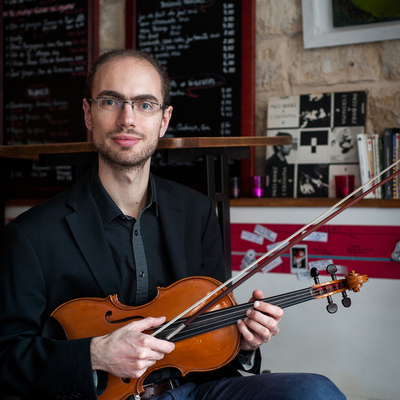
[#rediffusion] E. Denisov, Es ist genug (transcription pour #alto et #orchestre de #flûtes). Souvenir de #concert en décembre 2023, par moi-même à l'alto et l'Orchestre de Flûtes Français. https://youtube.com/watch?v=PPDnn4ltnAQ Merci d'avance pour vos vues / likes / abonnements / partages ! #musique #musiqueClassique #classicalMusic #music #newMusic #myWork 😍🙏🎶🎻 @music

W. F. Bach: Six Sonatas for Two #Flutes Manuel Granatiero, Eleonora Bišćević
https://classical.music.apple.com/us/album/1849579874?l=en-US

Please enjoy this #weird #MusicVideo with an Asian woman playing two #recorder #flutes with her #nose / #nostrils 👃
https://m.youtube.com/watch?v=FmOtrCRrlDA&pp=0gcJCR4Bo7VqN5tD
#Bizarre #CoolWeirdStuff #CreativeWeirdos #music #instrumental
The Phantom Moon
by Peter Phippen / Ivar Lunde, Jr. / Paulina Fae
https://projektrecords.bandcamp.com/album/the-phantom-moon
#music #fedimusic #mastomusic #musodon #ambient #electronic #flutes #native #american #flutemusic #dreampop #drone #newage #spacemusic #Portland

A single note from a handmade flute transformed Spider’s path, leading him from seeker to artisan and a twenty journey sharing music. Today, his instruments — shaped from reclaimed wood and spirit alike — carry the songs of both maker and Earth.
#spider #flutemaking #flutes #pagan #makers #musician #paganart #paganartists
[#rediffusion] E. Denisov, Es ist genug (transcription pour #alto et #orchestre de #flûtes). Souvenir de #concert en décembre 2023, par moi-même à l'alto et l'Orchestre de Flûtes Français. https://youtube.com/watch?v=PPDnn4ltnAQ Merci d'avance pour vos vues / likes / abonnements / partages ! #musique #musiqueClassique #classicalMusic #music #newMusic #myWork 😍🙏🎶🎻 @music

Fin avril avec @essor_et_chute on a fait ce rendu d'une commande d'écriture du Périscope avec une classe de CM1 et des résidents de l'EHPAD Smith :
https://video.collectifpinceoreilles.com/w/hMjsuoDT7cTZMBixVBX2Yx
Merci au Périscope et au @collectifpinceoreilles !
Les musicien·nes :
Sophie Rodriguez : #flûtes et direction
Éric Prost : #saxophone ténor
Romain Baret : #guitar, chant, #composition
Michel Molines : #contrebasse, #basse
Guillaume Bertrand : #batterie
[#rediffusion] E. Denisov, Es ist genug (transcription pour #alto et #orchestre de #flûtes). Souvenir de #concert en décembre 2023, par moi-même à l'alto et l'Orchestre de Flûtes Français. https://youtube.com/watch?v=PPDnn4ltnAQ Merci d'avance pour vos vues / likes / abonnements / partages ! #musique #musiqueClassique #classicalMusic #music #newMusic #myWork 😍🙏🎶🎻 @music

Sunday 3pm - #flute day at #Longy School of Music of #BardCollege! free (register)
https://longy.edu/event/boston-flute-day/
#flutes #woodwinds
#BostonMusic #BostonWeekend 8/x
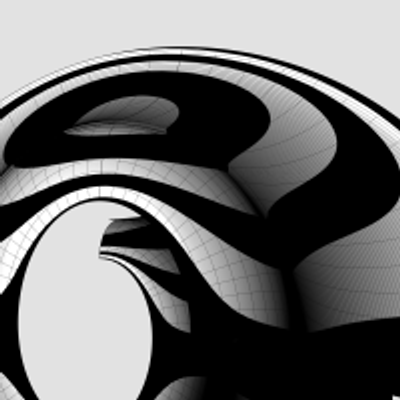
The #dentils arrangement we saw in https://pixelfed.social/p/Splines/791013152244518907 goes well with the classic entablature #profile we saw in https://pixelfed.social/p/Splines/790888454384861893, and they both go well with #simpleIntercolumniation, also known as #architravato.
However, with arches, the entablature profile has to be adjusted a bit so that the dentils arrangement is as shown here. The shape, size, and gap between individual dentils remains the same, but a crucial difference is that the dentils at the #outer corners touch each other.
As I mentioned in https://pixelfed.social/p/Splines/803615973439041638, in #arcadeIntercolumniation, the entablature is repeated on the wall behind the half-column. It doesn't end at the columns and has two "outside" corners and one "inside" corner. While the dentils at the outer corners touch each other, there is a single dentil in the inside corner that is shared by both walls.
A bedrock principle of dentils (like that with #flutes and with eggs in the #EggsAndDarts motif) is that when viewed directly from the front or the sides, a dentil must be centered on the column axis. It is this principle that forces us to adjust the profile of the entablature in arcade intercolumniation giving us the arrangement shown here.
The image also shows the detail of the decoration in front of the #keystone. The most easily recognizable component of that is the large #volute, which is the exact same size as the ones on the #capital. The smaller volute is exactly half the size of the larger one. It is mirrored, rotated and put within a bounding rectangle whose height is exactly 2µ (288 units). The channels of both volutes are bridged with #sinusoids derived from half turn of #helix curves that have been flattened.
This motif in the keystone, where volutes of different sizes are combined with sinusoids is very common. It will be seen in the #modillions of the #modernEntablature.

Thousand Yard Prayer – Never Mind the Bulwarks
#worldelectronica #CentralAsia #Easternbeats #Flutes #TransglobalBreakbeatDubScience #World #dub #dubstep #framedrums #postdubstep #Croydon
CC BY-NC-SA (#CreativeCommons Attribution Non Commercial Share Alike) #ccmusic
https://thousandyardprayer.bandcamp.com/album/never-mind-the-bulwarks
In https://pixelfed.social/p/Splines/799864068250003272 I mentioned rounding off the radius of the bottom circle, but you don't have to. #CAD tools are perfectly happy working with 15.0728 or even higher precision as they are with 15.
After placing the two circles as described in that post, use the full #primaryProfileCurve of the shaft from https://pixelfed.social/p/Splines/791794072490907090 as a #sweepingRail and the two circles for the flutes as the #sweepingCurves, and #sweepOneRail for the body of a single flute. Close #planarHoles on both ends to get an #airtight solid.
Then draw a sphere at the center of the top circle using the same radius as the circle, and perform a #booleanUnion between the sphere and the flute body.
If you want a round bottom for the flute, repeat the sphere at the center of the larger circle using the same radius (15.0 or 15.0728) and perform another boolean union to get one flute.
Switch to the top view and make 24 copies of the flute (including the original) centered at the column axis and #group the 24 flutes.
Finally, perform a #booleanDifference with the flutes group on a copy of the solid #unadornedShaft to get a fluted variant.
The result is a column shaft with flutes carved out. Save the flutes separately for future reuse.
This concludes the entire #IonicOrder, including all #decorativeElements.
Now we pause and reflect: The whole exercise seemed like one of #art and #sculpture. Where is the #architecture in all of this?
Without a ceiling or a roof, there is no building. Without additional columns or walls, there is no ceiling. So, while we have completed the Ionic Order itself, we only have the first #buildingBlock — a single column.
Next step is to repeat the columns to create a #colonnade, which together with supporting walls or additional colonnades can support a ceiling.
Just like with everything else in design, there are rules of proportion for #intercolumniation, or space between columns.
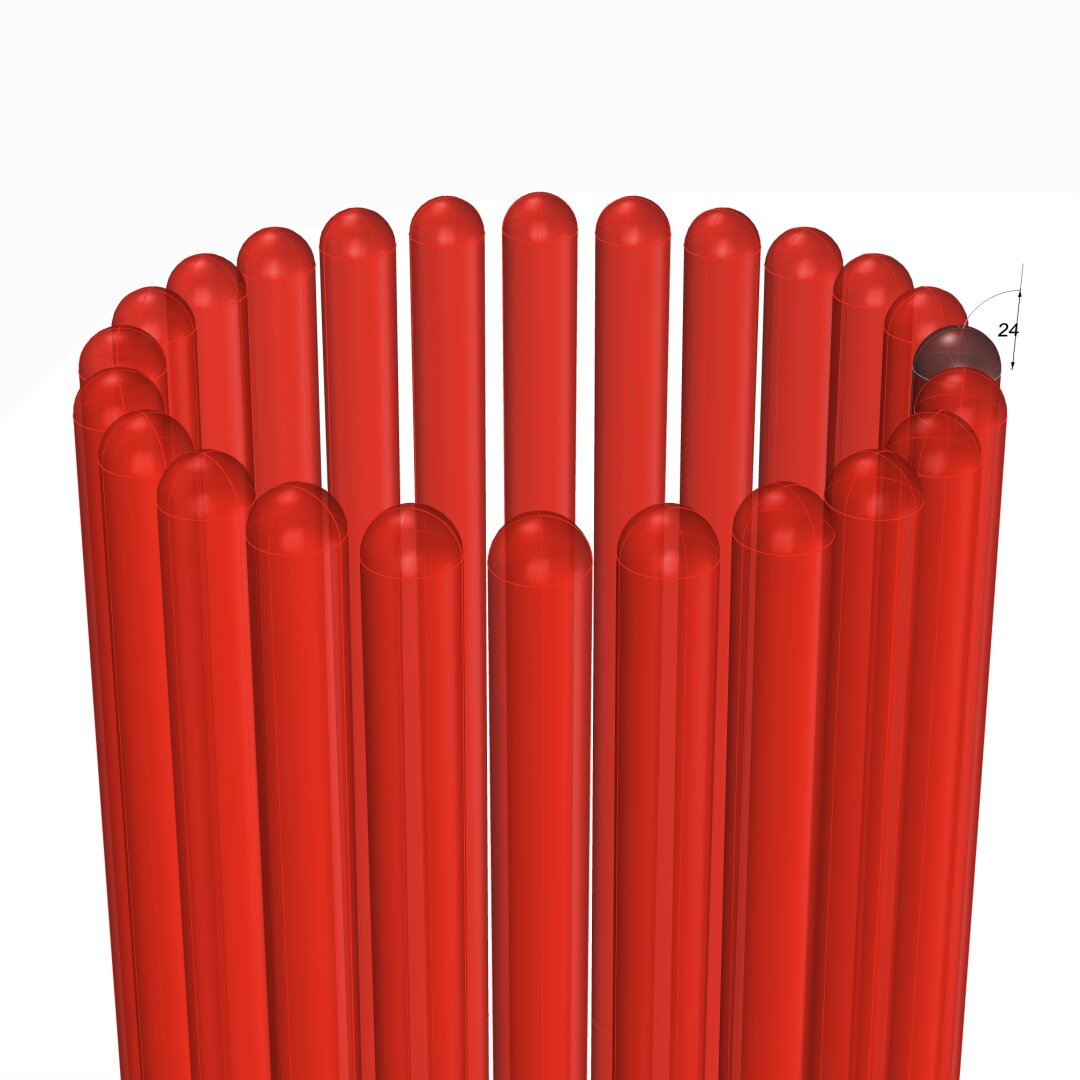
This diagram shows the 2D geometry of an #Ionic #flute. The larger blue circle shows the flute outline near the #base of the #column. The smaller blue circle shows the flute outline near the #neck of the #shaft. Both subtend a 12° angle at the center of the column.
Like an egg in the #EggsAndDarts motif, a flute must be centered on the column axis when viewed directly from the front, back, or the sides. This is why the 12° are split into 6° on either side of the X axis. The center of the larger circle is µ = 144 units from the origin on the X axis. The center of the smaller circle is 5/6 of µ, or 120 units from the origin.
In https://pixelfed.social/p/Splines/799340150182400358, I mentioned working at sub-micron precision, and you might wonder where that came from when we have been using abstract units like µ without specifying any physical units. My apologies for not making it clear that I had assumed 1 unit was equal to 1 mm. If that assumption holds, then µ = 144 mm gives a total order height of 4104 mm, that is 13.46 ft. At smaller scales, the precision is even higher than 1/10 of a micron.
With that said, here the radius of the larger circle is 15.0728 units and that of the smaller circle is 12.5606 units, with sub-micron precision if 1 unit = 1 mm.
Refer to https://pixelfed.social/p/Splines/791399680747885646 and place the center of the smaller circle exactly at point J on the neck line. Later we will draw a sphere at the same location with the same radius.
If you want a flat bottom for flutes, place the center of the larger circle at exactly 28 units (12 for the #fillet and 16 for the #cavetto or #conge) above point A in that figure. If you want a round bottom, then further move the larger circle up by the size of its radius.
Nobody would quibble if you used a radius of 15 units instead of 15.0728 units, but it would make it easier to switch from flat to round bottom or vice-versa by simply moving the circle up or down 15 units.

#Flutes have a different configuration in the #IonicOrder than they do in the #DoricOrder. In #Doric, the flutes run right next to each other, dividing the circumference of the column into 24 equal sectors, or 15° each.
In #Ionic, there is a small gap between the flutes. This gap used to vary, but over time, Ionic designers seemed to have settled and standardized the measurements by splitting 15° in 4:1 ratio, giving 12° to a flute and 3° to the gap between flutes.
Because of this standardization, there would seem to be little room for variants, but there is. In his #RegolaArchitettura [see https://archive.org/details/gri_33125008229458/page/n37/mode/2up], #Vignola documented flutes with hemispherical tops but flat bottoms, as shown in the image here.
However, it is acceptable to have hemispheres at both top and bottom as long as they are consistently used within a #colonnade or #arcade.
Flute geometry is interesting. Just like the #IonicColumn #shaft, a flute also gradually tapers as it rises from bottom to top. Additionally, it bends along the shaft surface due to #entasis [see https://pixelfed.social/p/Splines/791794072490907090]. In other words, flutes hug the column shaft.
Unlike other decorative elements like #eggsAndDarts and #3StrandBraids, flutes are #subtractive, not #additive to the rest of the design. In other words, we have to carve the flutes out instead of adding them to the design.


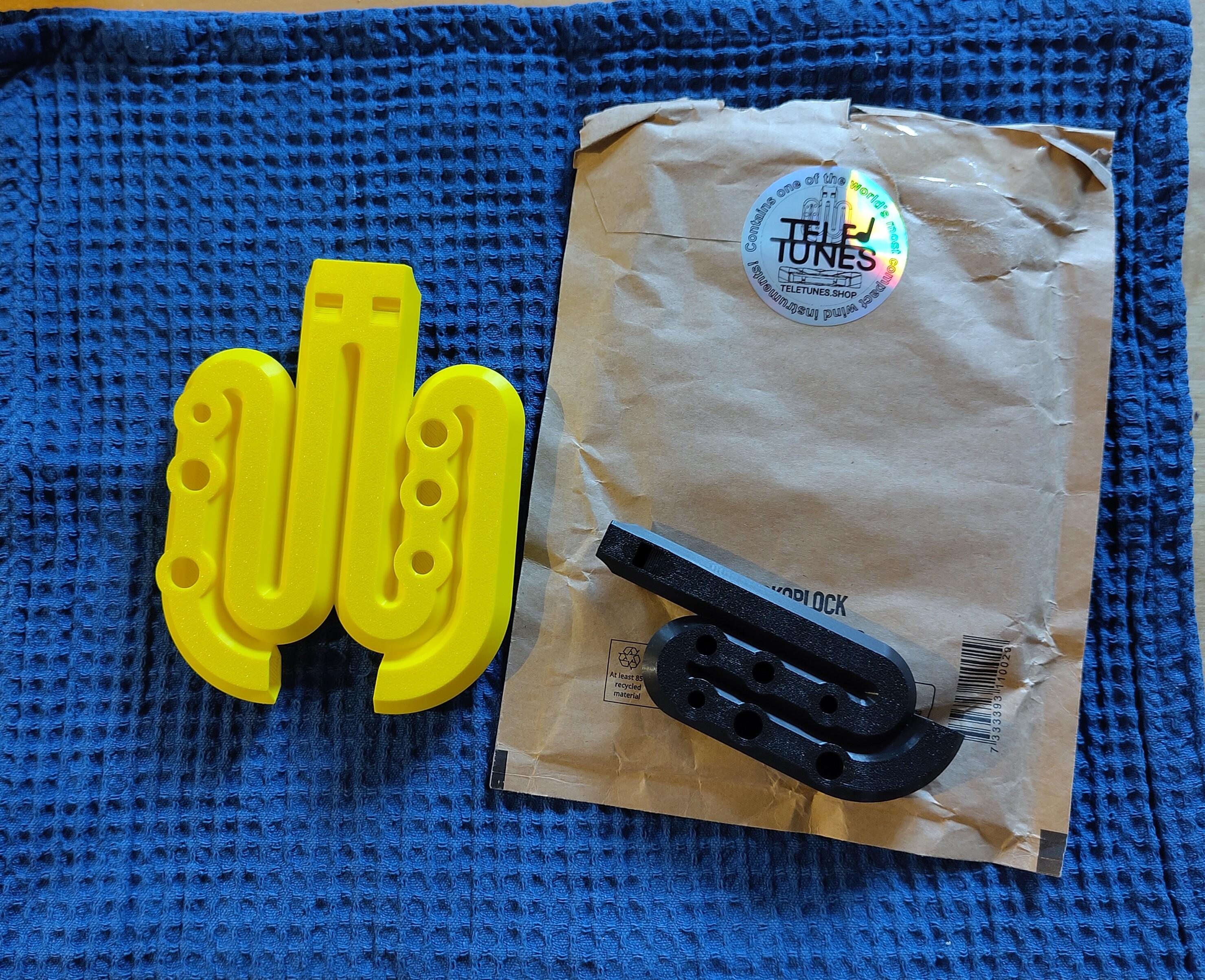
And my new 3d printed #TeleTunes #flutes from Mauri in Finland.
No thumbhole, so technically they are #whistles I guess.

Practicing #flutes
Carbony Celtic Winds (https://carbony.com/) coming to the House of Musical Traditions (https://hmtrad.com/), 7010 Westmoreland Ave, Takoma Park, MD, Monday, February 17, 2025. Owner Rob Gandara will be there plying his craftmanship.
#DC #WashingtonDC #music #carbonfiber #flutes #tinwhistles #irish #bagpipes #TakomaPark #SilverSpring #HMT #Celtic #sale
Carbony Celtic Winds (https://carbony.com/) coming to the House of Musical Traditions (https://hmtrad.com/), 7010 Westmoreland Ave, Takoma Park, MD, Monday, February 17, 2025. Owner Rob Gandara will be there plying his craftmanship.
#DC #WashingtonDC #music #carbonfiber #flutes #tinwhistles #irish #bagpipes #TakomaPark #SilverSpring #HMT #Celtic #sale