#socialequality

2026-01-28

@SeaFury fwiw, i gave up. though i only ever physically attended one public event, for about 14 years i was an active online campaign-petitioner & monthly donor to numerous environmental & social charities & activism groups. one was #Getup!, for which i was active 2010 - 2019. here's part of a note i wrote to myself...

14/9/13: Having been depressed & angry since last w/e's Federal Election in which Australians demonstrated their rank stupidity, short-sightedness, & contemptible selfishness by electing the loathsome Mad Monk & Evil HenchPeeps, I've been contemplating the nature & viability of my ongoing GetUp donations. They were originally $x/wk, then became $1.5x/wk in leadup to that Election in hope of keeping the Evils out ... but that failed. My recent thoughts had been basically that if the electorate really is this stupid, what's the point of my ongoing donations? Today i decided that i shall continue, BUT, i've downgraded my donations $ & frequency.


notice above i listed 2019 as when i gave up on GetUp [& all my other groups]? specifically, it was the May 2019 fed election, for which GU had run an aggressive campaign to persuade the respective electorates to dump six mega-RWNJ fuckheads, chief being potato in dickson. like many i ramped up my donations long before, & my petitioning. history shows it was an abject failure.

over the following months, i reflected on my years [to that point] of ineffective activism, all the failures... adani, mining tax, gambling tax, carbon price, native forests, climate change, RWNJ fuckheads, et al. if my 2013 angst was high [& it was!], then by May 2019 it went thru the roof, whilst any semblance of surviving hope of being able to effect positive change entirely evaporated... & it has never returned... actually no, it flickered back to a faint glow for #TheVoice, which then eventually proving yet again how ghastly most of straya is, just went away for good.

that potted activism history, + my own personal history, are at the heart of my severe #misanthropy. so many subsequent strayan & global events have only reinforced the despair.

#activism #socialequality #ClimateCrisis #gambling #mining #fossilfools #RWNJs #AsteroidNow

SydneyJimSydneyJim
2026-01-15
2025-09-16

Phú Thọ quyết tâm giảm tỷ lệ hộ nghèo xuống 2.75% vào cuối năm 2025 thông qua phong trào "Vì người nghèo - Không để ai bị bỏ lại phía sau". Mục tiêu là cơ bản không còn hộ nghèo trên địa bàn tỉnh.
#PhúThọ #giảmnghèo #xóađói #vichongheo #PhuTho #povertyreduction #socialequality

vietnamnet.vn/phu-tho-dat-muc-

2025-06-13

The role of the #police is protecting #capitalism

December 9, 2014

Excerpt [long]: "In England and the United States, the police were invented within the space of just a few decades—roughly from 1825 to 1855.

"The new institution was not a response to an increase in crime, and it really didn’t lead to new methods for dealing with crime. The most common way for authorities to solve a crime, before and since the invention of police, has been for someone to tell them who did it.

"Besides, crime has to do with the acts of individuals, and the ruling elites who invented the police were responding to challenges posed by collective action. To put it in a nutshell: The authorities created the police in response to large, defiant crowds. That’s

— strikes in England,
— riots in the Northern US,
— and the threat of slave insurrections in the South.

"So the police are a response to crowds, not to crime.

"I will be focusing a lot on who these crowds were, how they became such a challenge. We’ll see that one difficulty for the rulers, besides the growth of social polarization in the cities, was the breakdown of old methods of personal supervision of the working population. In these decades, the state stepped in to fill the social breach.

"We’ll see that, in the North, the invention of the police was just one part of a state effort to manage and shape the workforce on a day-to-day basis. Governments also expanded their systems of poor relief in order to regulate the labor market, and they developed the system of public education to regulate workers’ minds. I will connect those points to police work later on, but mostly I’ll be focusing on how the police developed in London, New York, Charleston (South Carolina), and Philadelphia.

* * * * *

"To get a sense of what’s special about modern police, it will help to talk about the situation when capitalism was just beginning. Specifically, let’s consider the market towns of the late medieval period, about 1,000 years ago.

"The dominant class of the time wasn’t in the towns. The feudal landholders were based in the countryside. They didn’t have cops. They could pull together armed forces to terrorize the serfs—who were semi-slaves—or they could fight against other nobles. But these forces were not professional or full-time.

"The population of the towns was mostly serfs who had bought their freedom, or simply escaped from their masters. They were known as bourgeois, which means town-dweller. The bourgeoisie pioneered economic relations that later became known as capitalism.

"For the purposes of our discussion, let’s say that a capitalist is somebody who uses money to make more money. At the beginning, the dominant capitalists were merchants. A merchant takes money to buy goods in order to sell them for more money. There are also capitalists who deal only with money—bankers—who lend out a certain amount in order to get more back.

"You could also be a craftsman who buys materials and makes something like shoes in order to sell them for more money. In the guild system, a master craftsman would work alongside and supervise journeymen and apprentices. The masters were profiting from their work, so there was exploitation going on, but the journeymen and apprentices had reasonable hopes of becoming masters themselves eventually. So class relations in the towns were quite fluid, especially in comparison to the relation between noble and serf. Besides, the guilds operated in ways that put some limits on exploitation, so it was the merchants who really accumulated capital at that time.

"In France, in the 11th and 12th centuries, these towns became known as communes. They incorporated into communes under various conditions, sometimes with the permission of a feudal lord­, but in general they were seen as self-governing entities or even city-states.

"But they didn’t have cops. They had their own courts—and small armed forces made up of the townsmen themselves. These forces generally had nothing to do with bringing people up on charges. If you got robbed or assaulted, or were cheated in a business deal, then you, the citizen, would press the charges.

"One example of this do-it-yourself justice, a method that lasted for centuries, was known as the hue and cry. If you were in a marketplace and you saw somebody stealing, you were supposed to yell and scream, saying 'Stop, thief!' and chase after the thief. The rest of the deal was that anybody who saw you do this was supposed to add to the hue and cry and also run after the thief.

"The towns didn’t need cops because they had a high degree of #SocialEquality, which gave people a sense of mutual obligation. Over the years, class conflicts did intensify within the towns, but even so, the towns held together—through a common antagonism to the power of the nobles and through continued bonds of mutual obligation."

Read more:
socialistworker.org/blog/criti

#Capitalism #WePoliceOurselves #ACAB #MutualObligation #MutualAid #Confederacy #SlaveOwners #WhiteSupremacy #WhiteSupremacists


PPC Landppcland
2025-04-23

ICYMI: Antitrust laws' hidden benefits for society beyond just market efficiency: How competition enforcement secretly advances environmental and equality goals without most people realizing it. ppc.land/antitrust-laws-hidden

PPC Landppcland
2025-04-22

Antitrust laws' hidden benefits for society beyond just market efficiency: How competition enforcement secretly advances environmental and equality goals without most people realizing it. ppc.land/antitrust-laws-hidden

2025-03-11

Large-group consensus decision-making fosters cooperation by synthesizing diverse perspectives into unified solutions. One Community promotes this scalable governance model, inspired by *The Next Evolution*, to support Highest Good societies.

onecommunityglobal.org/consens

One Communityonecommunity
2025-03-09

A Resource-Based Economy (RBE) focuses on meeting everyone's needs through sustainable resource management, eliminating scarcity, and promoting global equality. One Community and others support RBE for a world that benefits all.

onecommunityglobal.org/resourc

MyMetric360MyMetric360
2025-02-28

Could Annual Sacrifice of the Rich Solve Global Wealth Inequality?

Hey everyone! 🤔 Let’s dive into a wild thought experiment. Imagine if every year, the richest person in the world was sacrificed (yikes! 😳) and their fortune was then shared equally among the poorest populations. What would that look like? Here are a few points...
mymetric360.com/question/could

MyMetric360MyMetric360
2025-02-16

Could Annual Sacrifice of the Rich Solve Global Wealth Inequality?

Hey everyone! 🤔 Let’s dive into a wild thought experiment. Imagine if every year, the richest person in the world was sacrificed (yikes! 😳) and their fortune was then shared equally among the poorest populations. What would that look like? Here are a few points...
mymetric360.com/question/could

Kevin Karhan :verified:kkarhan@infosec.space
2025-01-10

@anon_opin not to mention:

People who "make a living" off "#ConditionlessIncome" aka. #RoboWealth with #CapitalGains, #Dividents, #InterestRates and #Rent should also be subject to the same #SocialSecurity and #Healthcare #Premiums and #Insurance terms as if they were #WageWorkers with the same #income.

  • After all, even a #Billionaire or #Investor can become #unemployed by virtue of loosing #wealth and/or unable to work by virtue of an accident, and it's safe to assume they could even become in need of permanent care.

So it seems fair to demand they also pay their "#FairShare", cuz if I as a #WageWorker can afford ~18% for #HealthInsurance and ~30% in terms of #IncomeTax, then they too can afford that!

#SocialJustice #InomeEquality #Equality #TouchGrass #SocialEquality #Billionares

Buddhistdoor Global (BDG)buddhistdoor
2024-12-16

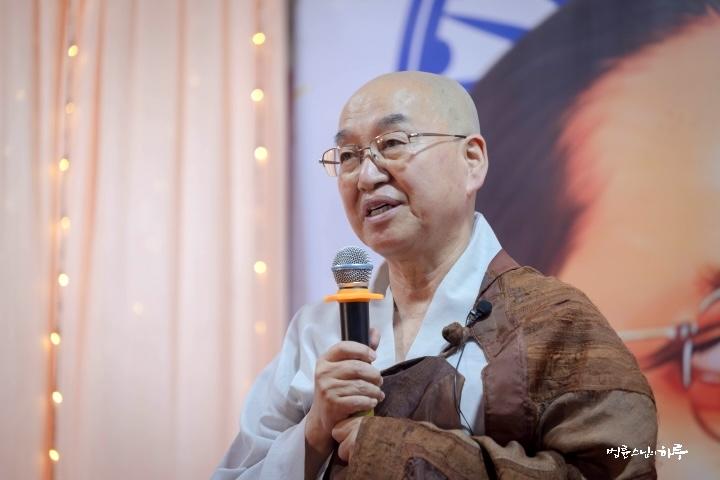
BDG feature: ​​​​INEB Conference 2024: Tracing the Roots of Compassion and Equity Through Inclusive Social Engagement

Read here: tinyurl.com/2p9wdpes

Buddhistdoor Global (BDG)buddhistdoor
2024-11-21
Michael DmitrievGlobalTribune
2024-10-06

In recent years, the idea of introducing a universal basic income has been actively discussed in various countries. In the first case, the state pays the assigned amount to all citizens regardless of their financial standing and labor status. In the second case, only residents who meet certain criteria, for example, those who have an income below the national average, receive payments.

globaltribune.net/is-the-world

Historianspeakshistorianspeaks
2024-09-29

See our latest blog on the Faces of Poverty in America.

zurl.co/XAM3

Buddhistdoor Global (BDG)buddhistdoor
2024-03-27

BDG news: Thailand Takes a Historic Step Closer to Legalizing Same-Sex Marriage

Read here: tinyurl.com/r3ny978z

Client Info

Server: https://mastodon.social
Version: 2025.07
Repository: https://github.com/cyevgeniy/lmst