#ClimateImpact

The Internet is Cracktheinternetiscrack
2026-03-02

The Public Pays for Private AI Growth

Dr. Ben Green discusses how data centers shift environmental and financial costs onto local communities while offering limited economic return.

The full episode explores water use, energy demand, pollution, and whether AI infrastructure represents sustainable progress or resource overreach.

Watch or listen here: youtu.be/FftDPKHINuE

The Internet is Cracktheinternetiscrack
2026-03-02

🚨 NEW EPISODE: AI Data Centers — Innovation or Infrastructure Addiction?

Watch or listen here: youtu.be/FftDPKHINuE

2026-02-24

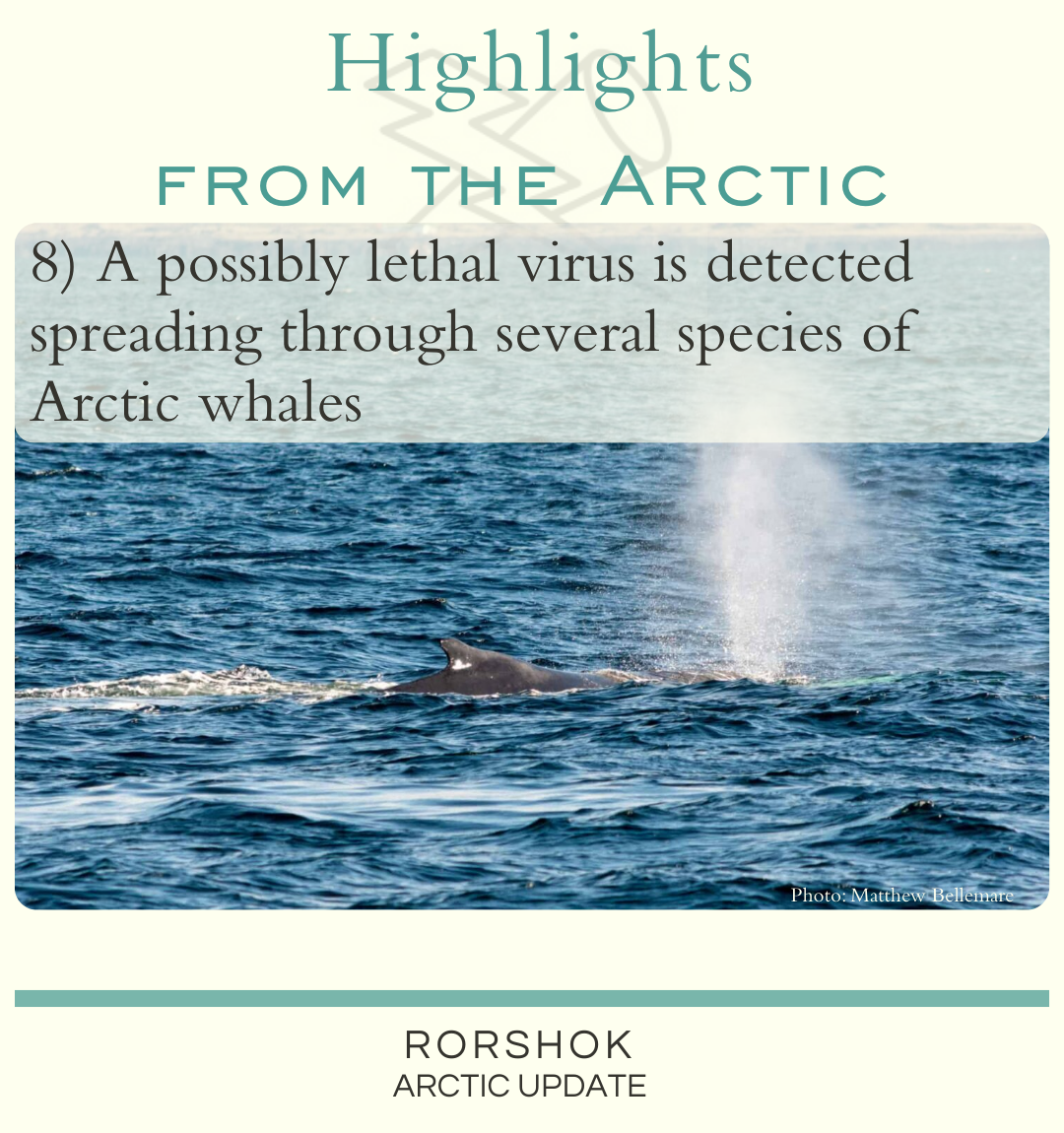
8) Scientists have raised the alarm after detecting a potentially lethal virus spreading through multiple species of Arctic whales. With ocean temperatures already rising, weakened marine ecosystems may be unable to withstand another threat. Researchers are urgently studying the pathogen, which could devastate whale populations critical to the food web and Indigenous communities.

#ArcticWhales #MarineHealth #Virus #OceanConservation #ClimateImpact #Whales #Rorshok #ArcticUpdate

One Communityonecommunity
2026-02-17

Choosing bicycles and public transport over cars isn’t just good for your health—it’s one of the easiest ways to cut your carbon footprint. Small daily choices can lead to big climate wins 🚲🌿

Mathrubhumi EnglishMathrubhumi_English
2025-12-23

The Aravalli Hills play a silent but crucial role in protecting climate, air, and water across regions. What happens if they disappear? Here’s how multiple states and UTs could be affected. english.mathrubhumi.com/news/i

Headlines Africaafrica@journa.host
2025-12-18
AI Daily Postaidailypost
2025-12-12

New research shows the water footprint of AI‑driven data centers is far lower and less risky than many think. While energy use draws headlines, experts say modern cooling tech keeps water consumption modest, even under policy shifts from the Trump era. Dive into the data to see how climate impact is being re‑evaluated.

🔗 aidailypost.com/news/experts-s

Daily Times - Latest Pakistan News, World, Business, Sports, Lifestyledailytimes.com.pk@web.brid.gy
2025-11-27
Ingrid Hoeben Ⓥ 🇧🇪IngridHbn@mastodon.online
2025-11-25

This drop in whale songs is more than a wildlife story... it’s a sign of how climate change is touching even the largest creatures on Earth. When animals this powerful begin to go quiet, it reflects deeper trouble beneath the waves. Their fading calls remind us that protecting the ocean is not optional... it is urgent and necessary.

(3/4)

#oceans #OceanHealth #BlueWhales #ClimateImpact #climate #vegan #seas

2025-11-16

Вот английская версия — ясная, аккуратно собранная и без лишних украшений.
**OpenAI’s Energy Ambitions: A Data-Center Plan Comparable to India’s Power Use**
OpenAI CEO Sam Altman has outlined an extraordinarily ambitious target: by 2033, the company aims to expand its computing capacity to **250 GW**. This figure has been widely compared to the electricity consumption of India — not India’s *current* total use, but a comparable scale of installed or required capacity.
Reports indicate that such infrastructure would require up to **60 million Nvidia GPUs**, with **30 million new GPUs each year** just to keep the system running. The projected cost reaches an astonishing **$12.5 trillion**.
Environmental impact assessments suggest that CO₂ emissions from this future network of data centers could be roughly **twice as high** as those of ExxonMobil — one of the largest private carbon emitters in the world.
Altman describes this trajectory as a form of “brutal industrialization,” portraying it as the necessary road toward **AGI (Artificial General Intelligence)**.
**Bibliography**
Tom’s Hardware – “OpenAI’s colossal AI data center targets…”
iXBT – Coverage of OpenAI’s 2033 250 GW infrastructure plans
BTCC – Cost estimates reaching $12.5 trillion
Fortune – Interview: Altman on the “gigawatt arms race”
**Hashtags**
#OpenAI #SamAltman #AIInfrastructure #DataCenters #GPUEconomy #Nvidia #AI2033 #ArtificialGeneralIntelligence #EnergyCrisis #ClimateImpact #TechIndustry #AIPowerDemand #IndustrialScaleAI #CarbonEmissions

StacesCases2 🇨🇦 📎stacescases2.bsky.social@bsky.brid.gy
2025-11-16

“Our #climate, #economy and #security are deeply tied to the stability of the ocean currents around us,” When scientists are asked which potential #ClimateImpact terrifies them most, the collapse of the #AMOC is often TOP of the list. www.cnn.com/2025/11/15/c...

A crucial system of ocean curr...

Xavier Marecaxavierdatatech
2025-11-11

Cornell University researchers estimate that by 2030, global AI infrastructure could use the annual water supply for 10 million people and emit as much CO₂ as 10 million cars.
Every AI query has a physical footprint — in electricity, cooling, and emissions.

2025-11-09

🌿 NDVI change in Calgary’s Weaselhead Flats (2024 → 2025)

This map shows how vegetation in one of Calgary’s most diverse natural areas responded to the city’s unusually wet summer of 2025.
Greener shades mark zones where NDVI increased most strongly compared to 2024 — the same floodplain and forest patches that locals know for dense canopy recovery.

Even modest year-to-year shifts in temperature and rainfall leave clear spatial traces in NDVI — a reminder of how sensitive urban ecosystems are to climate variability, and how well open-data satellite products can capture it.

🛰 Data and processing: Sentinel-2 + R + QGIS

#NDVI #RemoteSensing #Calgary #UrbanEcology #ClimateImpact #EnvironmentalMonitoring #GIS #QGIS #RStats #DataVisualization #GeospatialAnalysis #Sentinel2 #CopernicusSentinel2 #CopernicusProgram #Copernicus #GreennessOfCalgary #Alberta #Canada

Map of NDVI change (ΔNDVI) for the Weaselhead Flats area in Calgary, showing differences between summer 2025 and summer 2024. Warm tones (yellow-red) mark low or negative change, while green tones highlight stronger vegetation recovery along river channels, floodplains, and wetlands.
2025-11-09

🌿 Calgary’s vegetation — satellite comparison (2024 → 2025)

Median NDVI maps from mid-May to mid-September show a clear difference between the two seasons.

In 2025, NDVI values are noticeably higher — vegetation stayed greener and denser for longer.
The wetter summer had a strong effect on canopy productivity across most Calgary communities, especially in parkland and tree-covered zones.

🛰️ Based on Sentinel-2 imagery and R + QGIS processing.

#RemoteSensing #NDVI #UrbanEcology #Calgary #GeospatialAnalysis #GIS #Sentinel2 #EnvironmentalData #DataVisualization #OpenScience #EarthObservation #ClimateImpact #RStats #QGIS

Side-by-side comparison maps of median NDVI (Normalized Difference Vegetation Index) for Calgary in summer 2024 and 2025.
The left panel (2024) shows mostly yellow and brown tones — indicating moderate or low vegetation activity.
The right panel (2025) displays broader green and cyan areas, especially in parks and residential zones, showing higher vegetation density and improved canopy health.
NDVI derived from Sentinel-2 satellite imagery, processed with open-source GIS tools.
2025-11-08

🌿 Where Calgary Got Greener — and Where It Didn’t?

A quick look at how Calgary’s residential communities changed in greenness (NDVI) between 2024 and 2025.

🟢 Some neighbourhoods show a clear recovery of vegetation — probably thanks to a wetter, milder summer, better soil moisture, or local greening efforts.
🔴 Others stayed stagnant or even lost NDVI — maybe new construction, dry soils, or sparse vegetation played a role.

The bar chart shows Top-5 and Bottom-5 communities by NDVI change. It’s fascinating how uneven the “greening pulse” can be within one city.

📊 Based on Sentinel-2 data, mid-May – mid-September, processed in R.

#Calgary #NDVI #RemoteSensing #UrbanEcology #EnvironmentalData #GIS #Sentinel2 #ClimateImpact #GeospatialAnalysis #DataScience #RStats #OpenData #GreennessOfCalgary #Alberta #Canada

Top-5 and Bottom-5 Calgary communities by NDVI change
2025-11-03

Daniel Swain patiently explains SO2 unmasking, what was known, what was expected, and what's now on the research agenda. Here as sub-thread:
bsky.app/profile/weatherwest.b
What I now understand:

Heating from less shipping 🚢SO2
of all GHG that were already in the atmo
has now been accomplished. ✅

Loss of clouds also adds more heating power to all further added GHG in the atmo (more than modelled for today's stage of our path to CO2-Zero).

But that's a tiny amount:
add heat ONCE to 3350 Gt vs add heat🌡️to new 40 Gt per year !

Not even 40Gt/yr because half of that annual CO2 emission amount still gets sucked up by ocean and land sink. Only 20Gt CO2 end up permanently the atmosphere for now.
So really not a lot of additional CO2 to "get heated" by the loss of SO2-clouds.
Compared to the one-time only heating of a hundred times more CO2, 3350 Gt = 430ppm.

Now I understand that there is NO reason why the sudden warming jump should become a new feature for the next decades as well.

Daniel amplifies that it is unfounded to extend the increased warming rate decades into the future
(like it's being done by Hansen, and very prominent on Social Media: by Leon Simons, see attached table.)

Daniel "admits" that the asynchronous reduction appears to have caused a greater forcing increase in some specific regions than the synchronous model calculations would suggest. bsky.app/profile/weatherwest.b

Urgent research is ongoing why that might be the case.

#climateChange #climateimpact #SO2 #atmosphere #IMO2020 #WarmingRate

Table by Leon Simons titled "Global Warming has Accelerated Significantly"
Subtitle "Grant Foster andStefan Rahmstorf (2025 preprint)".

I added the original table from the preprint on the top right corner where Foster and Rahmstorf calculated the current heating rate and likely crossing point of 1.5C in various observation analysis datasets.
The table only lists the 1.5C crossing year and the warming rate, no other crossing points and rates.
Average rate 0.43C per decade, cross point on average 2026. 

Leon Simons has added 5 more columns with fictitious crossing points and rates for 2, 2.5, 3, 3.5 and 4C warming.
He makes these columns look like as if they were part of Foster & Rahmstorf's table. 
Only his last footnote clarifies that he added these columns himself. 

I always found this addition and the layout of the table and subtitle very misleading, and deliberately misleading. Attributing Simons' guesswork to well-known scientists is very bad form. 

Source preprint: https://www.researchsquare.com/article/rs-6079807/v1

source Leon Simon's misleading table https://bsky.app/profile/leonsimons.bsky.social/post/3lzofvq4eo22c
2025-10-29

#Trump and #Republicans join Big Oil’s push to shut down #climate liability efforts

As efforts continue to hold some of the world’s largest fossil fuel corporations liable for destructive and deadly climate impacts, backlash from the politically powerful #oil and #gas industry and its allies in government is on the rise, bolstered by the Trump administration’s allegiance to fossil fuels.
#fossilfuels #bigoil #ClimateImpact

arstechnica.com/tech-policy/20

antelope at KillBaitantelope@killbait.com
2025-10-15

Environmental Impact of UK's Rosebank Oil Field Revealed Amid Climate Concerns

The UK's largest undeveloped oil field, Rosebank, has disclosed its full environmental impact if approved by the government. The project, located about 80 miles northwest of Shetland, is expected to release nearly 250 million tonnes of greenhouse gases over 25 years from the oil products it would pr... [More info]

Mojo ♻️mojo@aus.social
2025-10-12

Almost 75,000 farmed salmon have escaped into Loch Linnhe after storm damage at Mowi’s fish farm. Another “accident” in an industry that keeps promising reform while trashing wild ecosystems.

When farmed fish mix with wild salmon, it weakens fragile native stocks already under severe stress. How many more escapes before regulators admit this model isn’t sustainable?

#scotland #salmon #environment #aquaculture #wildlife #climateimpact

bbc.com/news/articles/c5ye1dex

Client Info

Server: https://mastodon.social
Version: 2025.07
Repository: https://github.com/cyevgeniy/lmst