
Large Drainage Systems Produced Half Of Mars’ Ancient River Sediment
--
https://doi.org/10.1073/pnas.2514527122 <-- shared paper
--
https://www.thebrighterside.news/post/scientists-discover-16-giant-river-networks-on-ancient-mars-where-life-could-have-thrived/ <-- shared technical media article
--
#water ##hydrology #dynamic #planet #Mars #extraterrestrial #ecosystems #drainage #landform
#drainageways #drainagesystems #Martian #terrain #geomorphology #geomorphometry #catchments #fluvia #pluvial #river #sediment #solarsystem #sedimentarybasins #life #habitable #sedimenttransport #topography #erosion #impact #crater #GIS #spatial #mapping #remotesensing #spacecraft #MRO #marsobservation #exploration #martian #MarsAttack
#Habitable



The #Sun regularly produces energetic outbursts of electromagnetic radiation called solar #flares.
When these flares are accompanied by flows of plasma, they are known as coronal mass ejections (CMEs).
Now, astronomers have spotted a similar event occurring on a #star other than our Sun – the first unambiguous detection of a CME outside our solar system.
The detection consiats of short, intense #radio signals from a star located around 40 light-years away from Earth.
This star, called StKM 1-1262, is very different from our Sun. At only around half of the Sun’s mass, it is classed as an M-dwarf star. It also rotates 20 times faster and boasts a magnetic field 300 times stronger.
Nevertheless, the burst it produced had the same frequency, time and polarization properties as the plasma emission from an event called a solar type II burst that astronomers identify as a fast CME when it comes from the Sun.
This detection has implications for extraterrestrial #life, as most of the known #planets are thought to orbit #stars of this type, and such bursts could be powerful enough to strip their atmospheres.
Intense space weather may be even more extreme around smaller stars – the primary hosts of potentially #habitable #exoplanets.
This has important implications for how these planets keep hold of their atmospheres and possibly remain habitable over time.
#astronomy #astrobiology
https://physicsworld.com/a/astronomers-observe-a-coronal-mass-ejection-from-a-distant-star/
Paper by Callingham et al. (2025):
https://www.nature.com/articles/s41586-025-09715-3

The #Habitable #Worlds #Observatory (HWO) is a future flagship space telescope for NASA Astrophysics that will build on the achievements of the Hubble, Webb, and Roman Space Observatories.
Designed to search for signs of life on nearby Earth-like planets, HWO will combine cutting-edge ultraviolet, optical, and infrared technologies to explore fundamental questions about life in the Universe,
https://knowledgezone.co.in/trends/browser?topic=Habitable-Worlds-Observatory
Of the seven Earth-sized worlds orbiting the red dwarf #star TRAPPIST-1, one #planet in particular has attracted the attention of scientists, because it orbits the star within the distance where water on its surface is theoretically possible – but only if the planet has an #atmosphere.
The basic thesis for TRAPPIST-1e is this: If it has an atmosphere, it’s #habitable.
Now, based on an examination of four of the planet's transits with transmission spectroscopy, astronomers have identified weak fingerprints of #methane.
But this does not necessarily imply the planet has an atmosphere and is habitable because it is not certain whether the methane is attributable to molecules in the atmosphere of the planet or in the host #star.
Or perhaps the tentative detection is not true at all.
#astronomy #astrobiology #exoplanets
https://astrobiology.com/2025/12/a-new-look-at-trappist-1e-an-earth-sized-habitable-zone-exoplanet.html
Paper by Ranjan et al. (2025): https://iopscience.iop.org/article/10.3847/2041-8213/ae1026
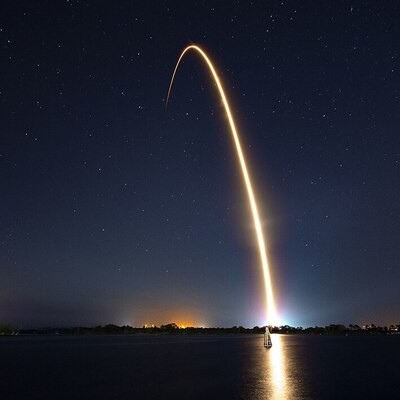
#Ocean 🌊 worlds, and the potentially #habitable ones among them, may be more common than scientists already thought. The researchers saw 10 to 1000 times more water 💧 than prior work had previously estimated. “There isn’t really a reasonable scenario where that much water is delivered by #comets ☄️" https://www.science.org/content/article/alien-worlds-may-be-able-make-their-own-water
📊 #NASA : "between 2 and 12 percent of the #stars in the sky 🌌 are likely to have small, potentially rocky #planets in their #habitable zones https://science.nasa.gov/universe/exoplanets/rocky-habitable-sizing-up-a-galaxy-of-planets
The #exoplanet TRAPPIST-1 d intrigues astronomers looking for possibly #habitable worlds beyond our solar system because it is similar in size to Earth, rocky, and resides in an area around its #star where liquid water on its surface is theoretically possible.
But new results indicate that it does not have an Earth-like #atmosphere.
With the #JWST, astronomers attempted to determine the composition of the planet's atmosphere, but could not detect common molecules such as water, methane, or carbon dioxide.
This leaves three viable explanations.
TRAPPIST-1 d ould have an extremely thin atmosphere that is difficult to detect, somewhat like Mars.
Alternatively, it could have very thick, high-altitude #clouds that are blocking our detection of specific atmospheric signatures — something more like Venus.
Or, it could be a barren rock, with no atmosphere at all.
#astronomy #exoplanets
https://astrobiology.com/2025/09/there-is-no-earth-like-atmosphere-on-trappist-1-d.html

#NASA Researchers Show How #Ceres Could Have Once Been #Habitable

Scientists Are Warning of A Brand-New Kind of #AcidRain
Story by Darren Orf
Key points:
- While acid rain caused by sulfur dioxide is an environmental threat of the past (at least, for now), a new kind of acid is proliferating in rain water—as well as groundwater, ice cores, and even human blood.
- #TrifluoroaceticAcid (#TFA) is a subclass of “#ForeverChemical” that’s been steadily increasing in concentrations around the world.
- With calls to consider this rise in TFA a planetary threat, some governments are starting ban chemicals linked to TFA—but the threat will require global cooperation.
"Acid rain may have a sequel, and like most sequels, it’s arguably worse.
"While the world’s first bout of acid rain (at least, in modern times) came from increased concentrations of sulfuric acid produced largely from coal plants, this new #anthropogenic source is possibly more pervasive, more persistent, and more sinister. Its name is Trifluoroacetic acid (TFA), a kind of 'forever chemical' that, for decades, has been steadily increasing in #RainWater—but not just rain water.
"Countries around the world have found increasing concentrations in #groundwater, #ArcticIceCores, #wine, and even #HumanBlood. In fact, TFA is likely the most pervasive form of per- and poly-fluoroalkyl (#PFAS)—technically, a subclass known as ultrashort-chain perfluoroalkyl acid (#PFAA)—on Earth due in part to the fact that longer-chain PFAS degrade into TFA via #incinerators or #SewageTreatment plants. They’re also used in #refrigerants instead of #chlorofluorocarbons and #hydrochlorofluorocarbons, which were famously known to deplete the Earth’s #OzoneLayer.
"In October of 2024, a team of European environmental scientists raised the TFA alarm, stating that a rise in concentration could be considered a threat to '#PlanetaryBoundaries' — a system designed to make sure the planet remains #habitable for human life (which we are doing a real bang-up job at following).
" 'Since the 1990s, it has been suggested that hazard-related concerns of TFA and other short-chain PFAAs are much lower than those of PFAAs with longer perfluoroalkyl chains, which are more #bioaccumulative and generally more #toxic,' the authors wrote back in October. 'However, these early reports did not consider TFA’s ubiquitous accumulation in the environment, in particular its observed accumulation in water resources and #bioaccumulation in various plants, including crops.'
"One of the most dangerous things about PFAAs is what we don’t know about them. Unlike other PFAS (of which there are, sadly, thousands of different kinds), TFA is so small (a.k.a. ultrashort) that it’s water-soluble, meaning it likely passes through the human body pretty quickly. A new Nature article reports that some scientists find this evidence compelling enough to not even consider TFA a kind of PFAS, but a growing chorus of voices are raising concerns that increased concentrations of TFA in water and food sources could render TFA’s fast-moving nature a moot point.
"In fact, TFA’s water-solubility could be a long-term headache. If scientists and governments eventually decide that TFA does need to be removed from drinking water and other sources, current filtration technologies are not up to the task. In other words, ridding the world of TFA will not only be immensely difficult, it’ll also be incredibly expensive. Current regulations to eliminate certain forms of PFAS are already proving to be fiscally onerous.
"Thankfully, some governments are taking action. #Denmark, for example, banned 23 substances earlier this month known to contain PFAS that contribute to rising TFA concentrations. Meanwhile, the #US is lagging behind—the Environmental Protection Agency [#EPA] doesn’t even define TFA as a 'forever chemical,' much to the dismay of #environmentalist groups and to the merriment of many #industry leaders.
"Rising concentrations of TFA is the acid rain sequel no one wanted. But just like every terrible sequel ever made, it seems like we’re getting it anyway."
#WaterIsLife #Dupont #DowChemical #3M #ForeverChemicals #EPACuts #Deregulation #TrumpSucks #USPol #WorldPol #Environment #EnvironmentalDamage #GenXChemicals #3MLied

We can't see most #plankton, but it would not be an exaggeration to say that this world would not be #habitable without them. Yet these key part of life at #sea is commonly overlooked and forgotten the the public. This paper shows the many benefits they give people, because we need a reminder from time to time. Good resources to share with #educators.
Link: https://academic.oup.com/bioscience/advance-article/doi/10.1093/biosci/biaf049/8172382
While direct exposure to high #radiation dose is indeed not favourable for biological activity, ionizing radiation can, and in some cases is known to produce a number of biologically useful products.
One such mechanism is the production of biologically useful products via charged particle-induced #radiolysis.
By combining energy deposition calculations with the energy requirements of microbial cells, it is possible to define the radiolytic #habitable zone for #Mars, #Europa, and #Enceladus, capable of sustaining microbial #metabolism.
Calculations suggest that bacterial cell density could be highest in Enceladus, followed by Mars and Europa.
#life #astrobiology
https://astrobiology.com/2025/07/estimating-the-potential-of-ionizing-radiation-induced-radiolysis-for-microbial-metabolism-on-terrestrial-planets-and-satellites-with-rarefied-atmospheres.html
With the future advent of powerful telescopes that may be able to resolve #habitable worlds in images composed of a few pixels, large biological phenomena such as algal bloom on our home world could be visible.
The more we know about observing and characterizing them on Earth the better prepared we’ll be to search for them on other worlds as new, more powerful #exoplanet observational tools come online.
#exoplanets #astronomy #astrobiology
https://astrobiology.com/2025/07/orbital-biosignature-survey-brilliant-phytoplankton-bloom-in-the-baltic-sea.html

1/2 Notes on #UAP #Discussions : Notice how we describe #Exoplanets in terms like #Earth like, as being in #habitable zones…or not. This isn’t anthropomorphizing. Time and physics dictate how evolution in a broader sense unfolds both here and everywhere else in the physical #Universe. Solar systems evolve. Habitable zones expand and shrink. The #Physics that we know is a sieve. That sieve is polarized in certain ways. The functionality of humanoid physical form is a reflection of this. Humanoid…

1/ Here is an idea - allow for more #migration as part of #adaptation to #climatechange ? The #wealthy parts of the #world - the most #habitable - can easily accommodate more people from the #uninhabitable places.
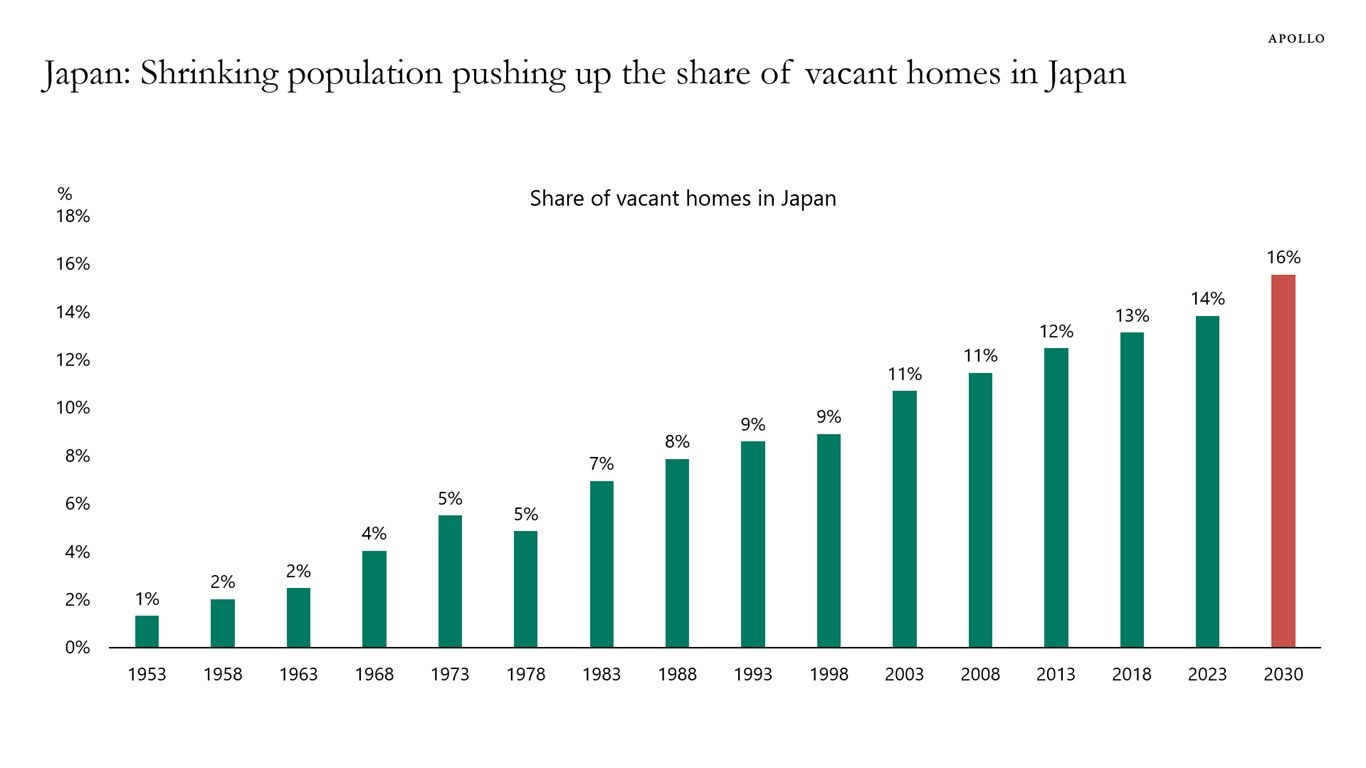

Here is an idea - allow for more #migration as part of #adaptation to #climatechange ? The #wealthy parts of the #world - also the most #habitable - can easily accommodate more people from the #uninhabitable places. Need to develop policies acceptable to the current natives to enable this. Do this proactively else it will happen chaotically.


... may be #Habitable (have conditions favorable to life). Whether our definitions of #Planet can be applied to these newly found objects remains to be seen."
science.nasa.gov/solar-system/planets/what-is-a-planet/#h-the-new-definition-of-planet
s/: Ich mein', #ExoPLANET, wie schwierig kann da eine Klassifikation schon sein? /s 🤦♀️🤦♂️🤦
Im Übrigen muss ein #Planet auch nicht bewohnbar sein! --sonst hätte das #Solarsystem nur einen einzigen. Und überhaupt:...
Days are getting longer, outside, but also on this #planet. Since its initial accretion, Earth's spin has been slowing down, lengthening the days. These longer days may allow for more oxygen production and carbon burial, making it #habitable for the likes of us.
https://www.nature.com/articles/s41561-021-00784-3
The nature of sub-Neptunes is one of the hottest topics in exoplanetary science.
Temperate sub-Neptunes are of special interest because some could be #habitable.
But these #planets might instead be rocky worlds with thick, hot atmospheres.
#astronomy #exoplanets
https://astrobiology.com/2025/04/deciphering-sub-neptune-atmospheres-new-insights-from-geochemical-models-of-toi-270-d.html
Astronomers have detected the most promising signs yet of a possible #biosignature outside the solar system, although they remain cautious.
They have detected the chemical fingerprints of dimethyl sulfide and/or dimethyl disulfide, in the #atmosphere of the #exoplanet K2-18b, which orbits its star in the #habitable zone.
On Earth, theyare only produced by #life, primarily microbial life such as marine phytoplankton.
#astronomy #astrobiology
https://www.cam.ac.uk/stories/strongest-hints-of-biological-activity
Proxima Centauri is our nearest stellar neighbor and is known to be a very active M dwarf #star.
Known to host a potentially #habitable #planet, the star #Proxima exhibits very active #flare activity in optical wavelengths.
Depending on the energy and frequency of these flares, nearby planets in the habitable zone might be rendered uninhabitable as the flares strip planetary atmospheres of necessary ingredients such as ozone and water.
#astronomy #astrobiology
https://phys.org/news/2025-03-small-star-mighty-flares-alma.html
Client Info
Server: https://mastodon.social
Version: 2025.07
Repository: https://github.com/cyevgeniy/lmst