I really feel my oats after posting this map #mapologies #map #etymology #etymologymap #languagemap #cereals #languages #mapping #oats
www.maplogies.com/cereals
I really feel my oats after posting this map #mapologies #map #etymology #etymologymap #languagemap #cereals #languages #mapping #oats
www.maplogies.com/cereals

pig, swine, pork... are some of the words used to name "pigs". Which one do you use in your language?
https://mapologies.com/animals/
#animal #etymology #etymologymap #languages

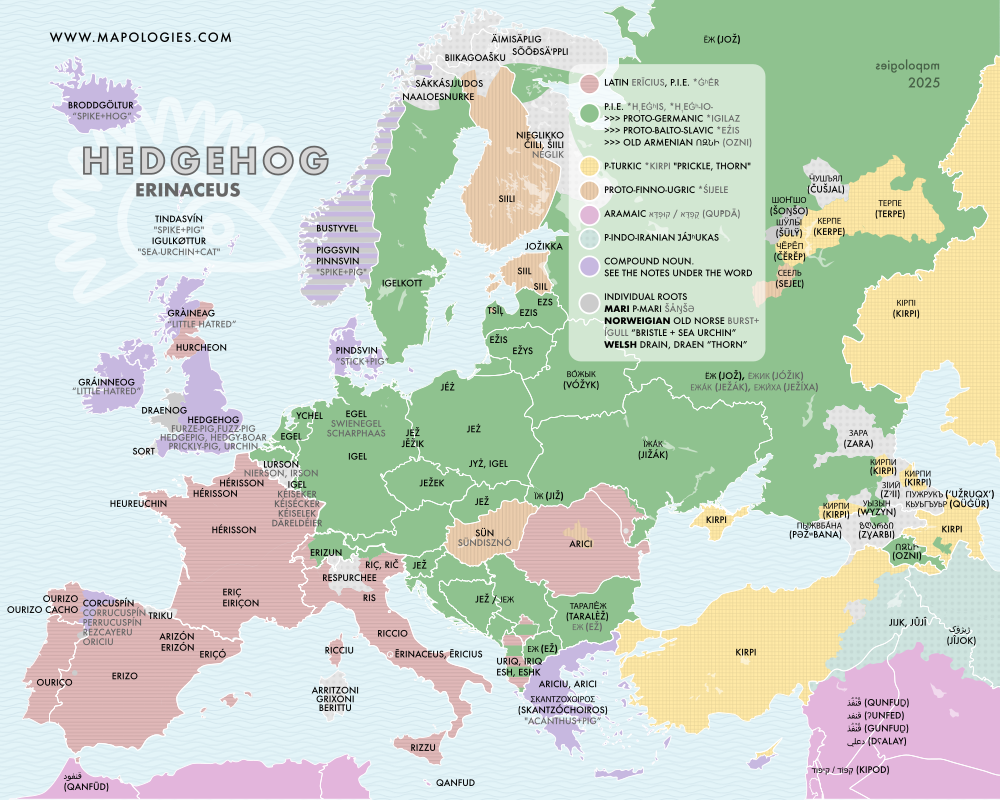
A new map in our section of animals: hedgehog
https://mapologies.com/animals/
#etymology #etymologymap #mapologies #lingusiticmap #languages
The conquistadors encountered the plant, known as "tlālcacahuatl" in Nahuatl, in the marketplace of Mexico Tenochtitlan, the Aztec capital. Interestingly, if you think it sounds similar to cacao, you are correct in that intuition: it means "earth cocoa bean."
However, the plant was originally from South America. You might conclude that "maní" is perhaps from Quechua (the language of the Inca). Wrong. "maní" is a Taino word, a Caribbean language.

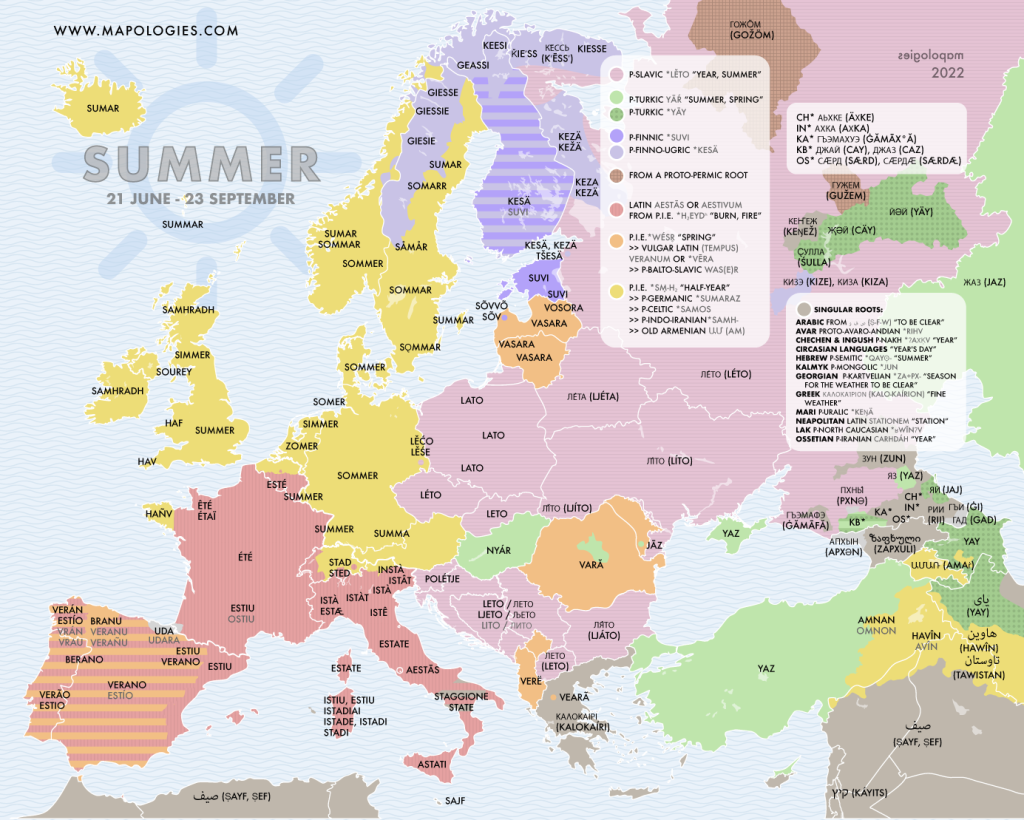
Have a nice summer time!
More maps in www.mapologies.com/time
#map #etymologymap #etymology #lingusiticmap #languagemap #language #summer #mapologies
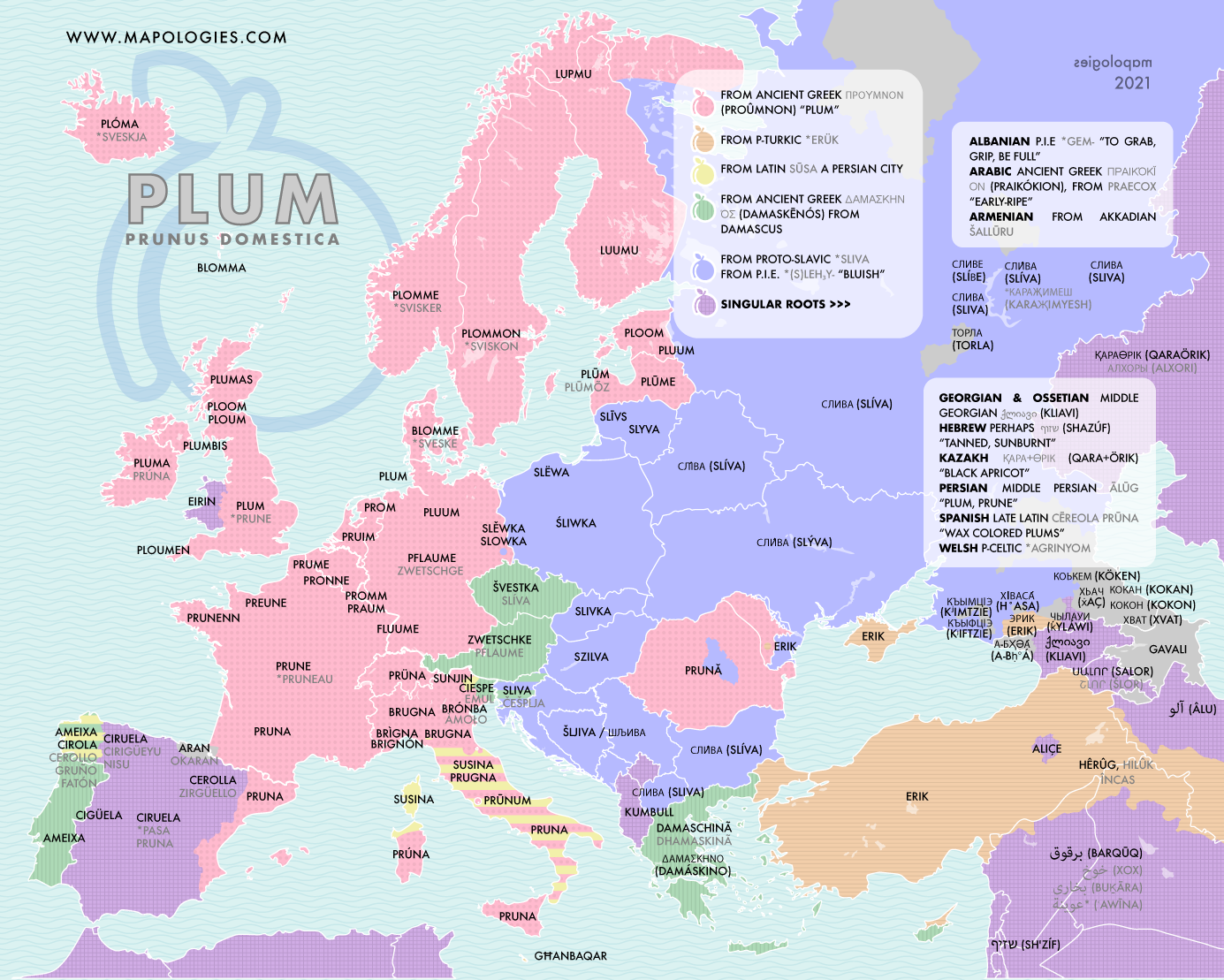
#Plum comes from two Ancient #Greek words: proûmnon (like in #English) & damaskēnós (like #Czech & #Portuguese) In many languages from Proto-Slavic "sliva".
We have more etymology maps about fruits:
https://mapologies.com/fruits
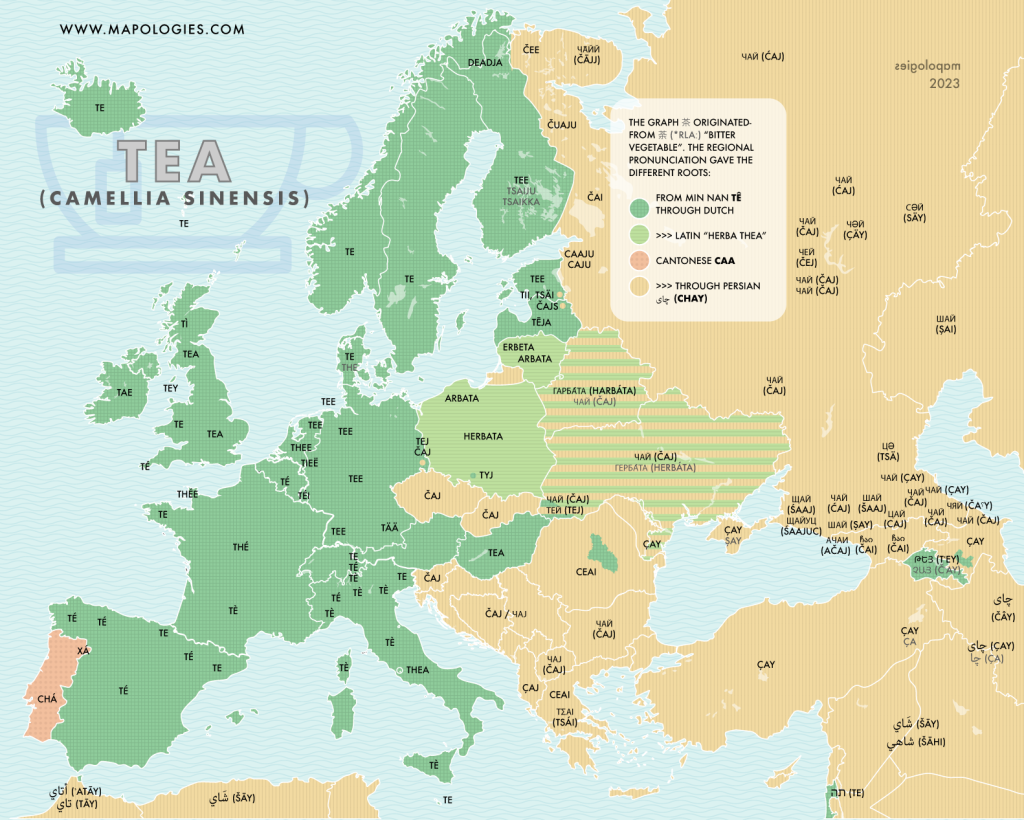
The word “tea” takes on various forms in different languages. Yetit does not matter weather you say te or cha, herbata or çay, they all trace their origins back to the Chinese character for tea 茶.
#herb #drink #tea #te #caj #cha #cay #etymology #etymologymap #mapologies #mapologic #map
Day 5 of #30DayMapChallenge: Journey
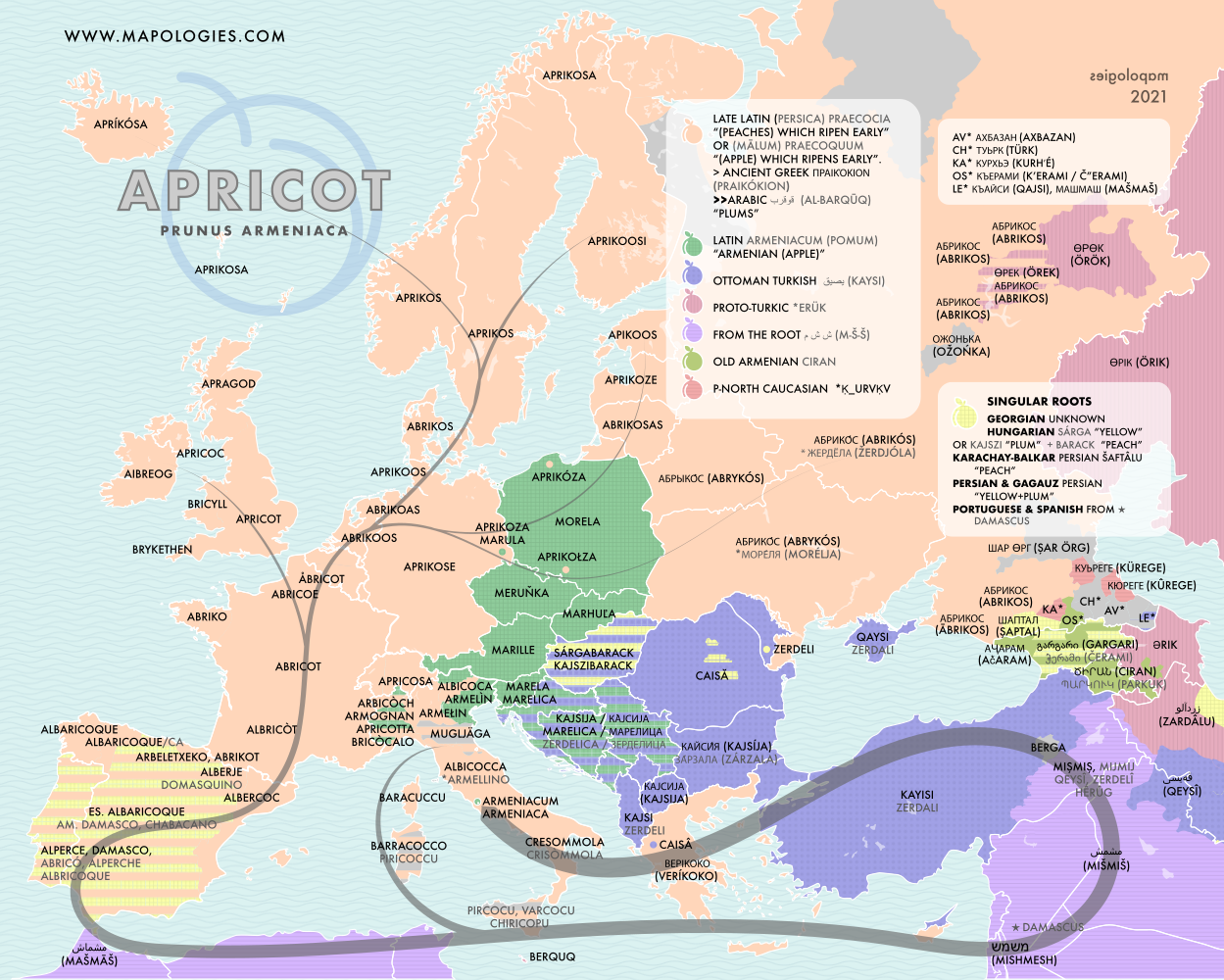
The fruit #apricot 🍑 took an incredible journey around the Mediterranean: starting from #Latin, it traveled to #Greek, then made its way into #Arabic, was later adopted by #Catalan, and finally borrowed into #English. What a traveller!
https://mapologies.com/fruits/
#etymology #language #etymologymap #fruit #europe #map #persian #albercoc #aprikose #abricot #albicocca
Day 4 of #30DayMapChallenge: Polygon is word coming from ancient #greek πολύγωνον (polúgōnon) "many+angles". Ever wondered how different languages define #geometric terms? Let’s explore the terms used across languages and trace back the roots!

Day 1 of #30DayMapChallenge: Points
Ever wondered how different languages define a "point" in #geometry? Let’s explore the terms used across languages and trace back the roots!
#etymologymap #etymology #latin #lingusiticmap #geography #map

We are in the pumpkin season!
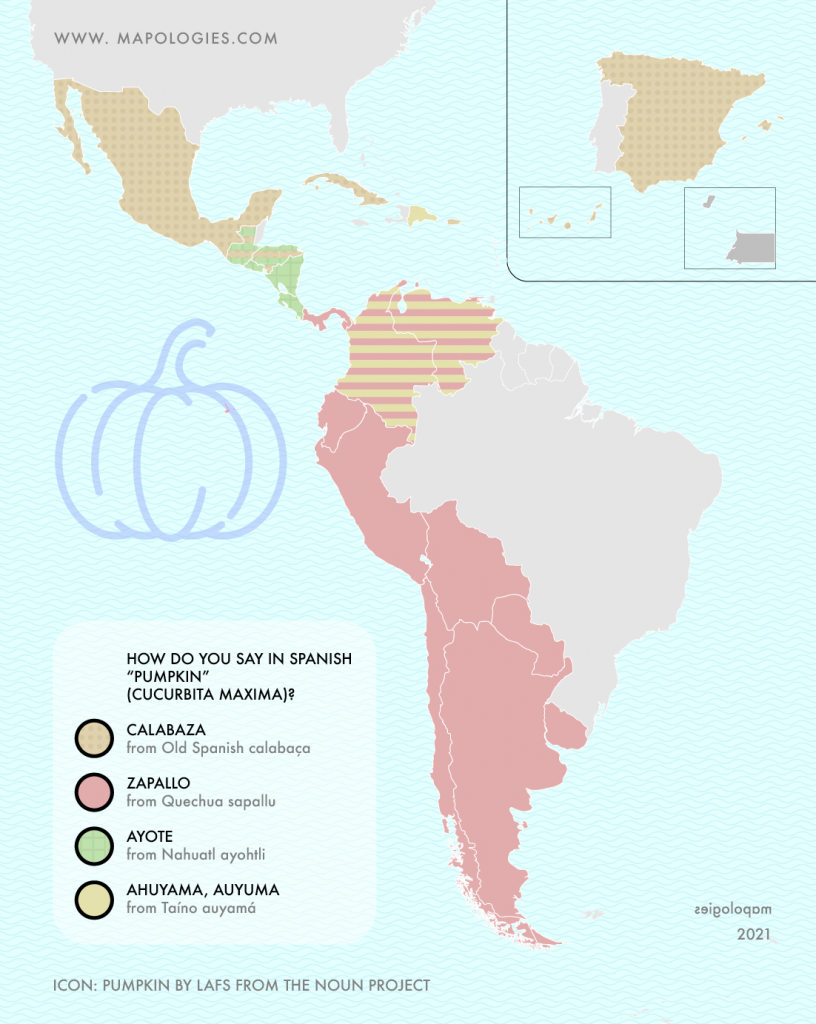
The diversity in Spanish vocabulary & its historical language contact. For example, during Arab rule in the Iberian Peninsula, Spanish borrowed words like “calabaza” from Arabic, which had Persian origins. In South America, Spanish adopted words from indigenous languages like “sapallu” (Quechua) or ayohtli (Nahuatl) or auyamá (Taino).
https://mapologies.com/el-atlas/
#pumking #calabaza #zapallo #fruit #ayote #veggies #language #etymolgy #etymologymap #spanish #español
Etymology #map of gooseberry (ribes uva-crispa). Nop, do not be misled: it is not the berry 🫐 of geese
https://mapologies.com/berries/
#mapologies #etymology #etymologymap #berry #languages #dutch

Interestingly, the Slavic root, *lęťa, gained popularity beyond Non-Slavic-speaking people, like Hungarians (Lencse) and Latvians (lēca), which was later adopted by Estonians. This is just one example of the many linguistic borrowings shown on the map: French lentille to English lentil, Swedish lins to Finnish linssi, and Old Armenian ոսպն (ospn) to Georgian ოსპი (osṗi).
https://mapologies.com/legumes/
#lentils #etymologymap #mapolgies #language #etymology #legume #lens #latin

Latin pisum, German Erbse, Persian نخود (noxod), Spanish arveja or guisante and are some names of pea (Pisum sativum) in different languages. The fascinating journey of how these names for this ancient plant were shared and evolved across languages is explained here.
https://mapologies.com/legumes/#Peas
#Linguistics #Language #History #Peas #PisumSativum #Etymology #Botany #mapologeis #mapologics #etymologymap #map #legumes

Grasshoppers are commonly known for their jumping ability, but in some languages, they are also associated with horses.

Wild #tomatoes (Solanum pimpinellifolium) are from South #America. Later Aztecs domesticated them in Mesoamerica. Most #languages, including #Spanish, adopted the #Aztec word from #Nahuatl, tomatl, meaning "the swelling fruit." #Italian Pietro Andrea Mattioli suggested that was a type of #eggplant. Later, Mattioli proposed a different nickname: pomi d'oro, or "golden #apples."
https://mapologies.com/fruit
#fruit #mapologies #map #etymology #etymologymap

How do you call the solanum melongena 🍆? Are you team #Aubergine 🌬️ or team #Eggplant 🥚? https://mapologies.com/fruits/

Did you know that #cranberries are named after cranes? Yes, you heard that right! Take a closer look at their #flowers—their shape strikingly resembles the neck, head, and bill of a crane. Fascinating, isn't it?

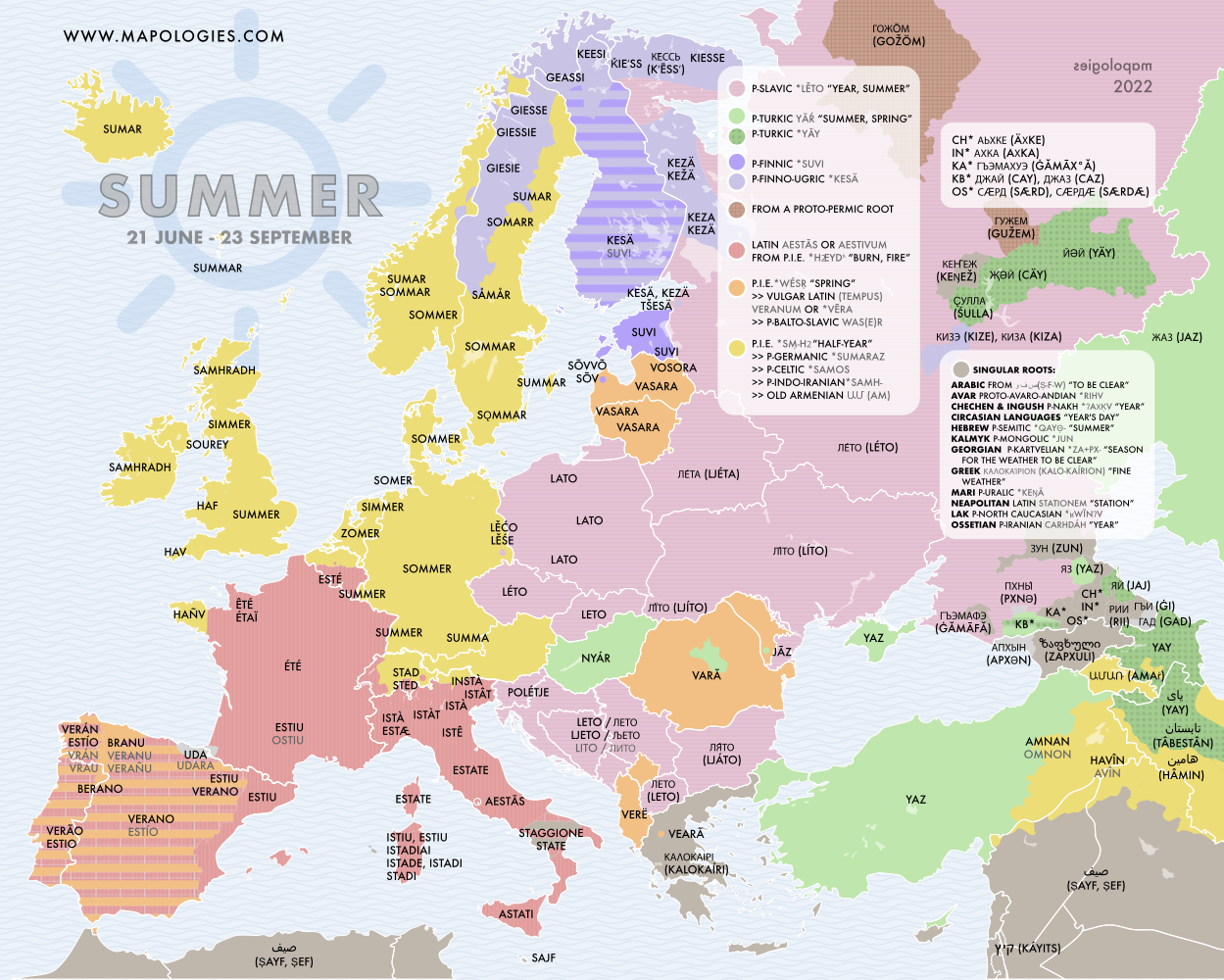
Languages that are typically distinct find a common link in summer. While Romance and Baltic languages often differ, they share the P.I.E *wósr̥, "spring" and originally "becoming warmer." Portuguese "verão" and Latvian "vasara". Similarly, the German "Sommer" and Kurdish "havîn," despite their different appearances, both stem from the P.I.E root *semh₂-, "summer or half of the year."
#etymology #languagemap #Map #linguistics #etymologymap #mapologies
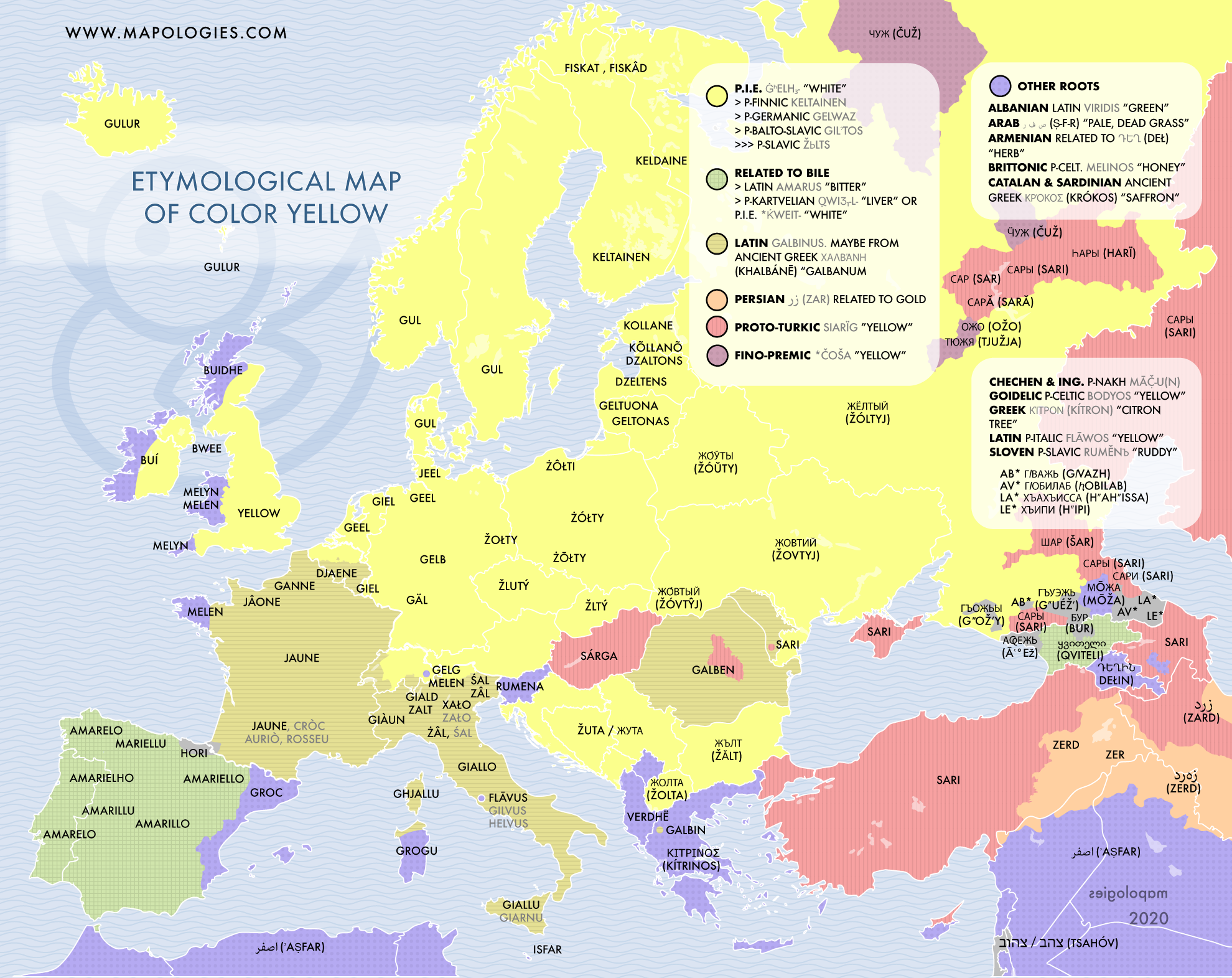
In the Iberian peninsula, yellow comes from Latin amarus, a word that meant bitter. Some theories say that the relation between the color yellow and the bitterness of the bile or the effects of liver diseases on the skin.
https://mapologies.com/colors/
#mapologies #etymologymap #map #colour #etymology #spnish #etimilogia #colores #sari #galben #color #amarillo #yellow #jaune #zluty # gelb