Can I get monorails into this post?
The other day, a friend messaged me: “Do you want to see the 1870s gas engine tonight?” There are, of course, no stupid questions, though some have a clear and obvious answer. I dropped my plans to rest up, to go see this beauty:
This gas engine was made in Manchester in 1878, an early internal combustion engine and a licensed version of the first successful four-stroke engine. It was discovered in the attic of the former police courts in Edinburgh Old Town while it was being converted into a hostel.
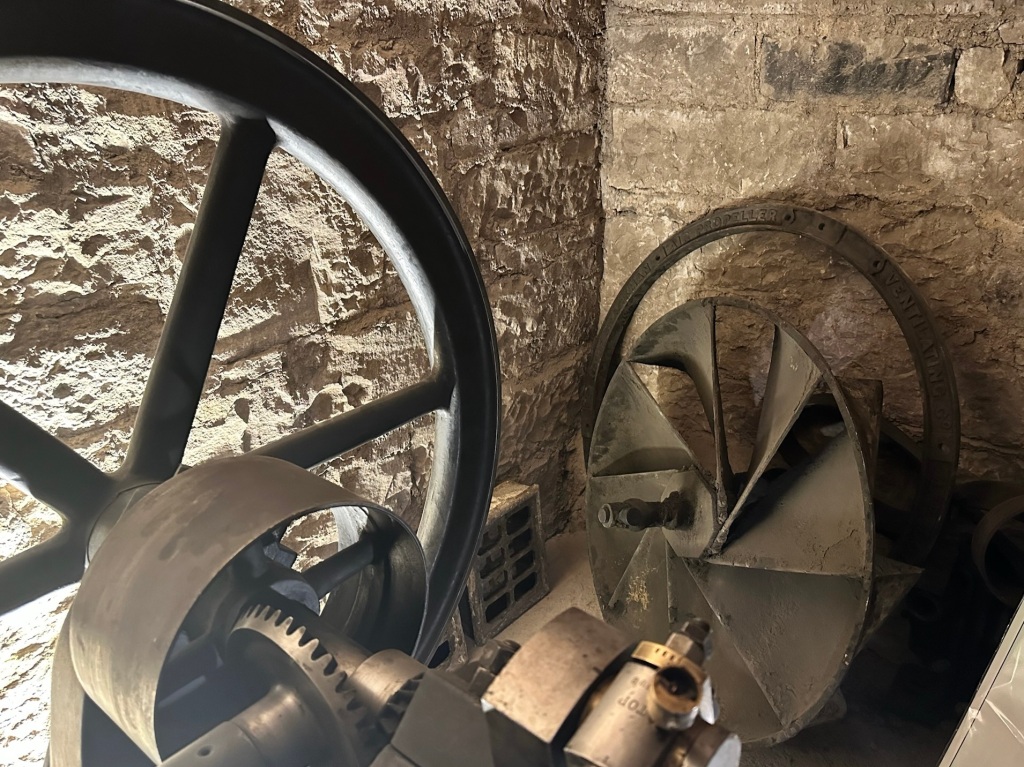
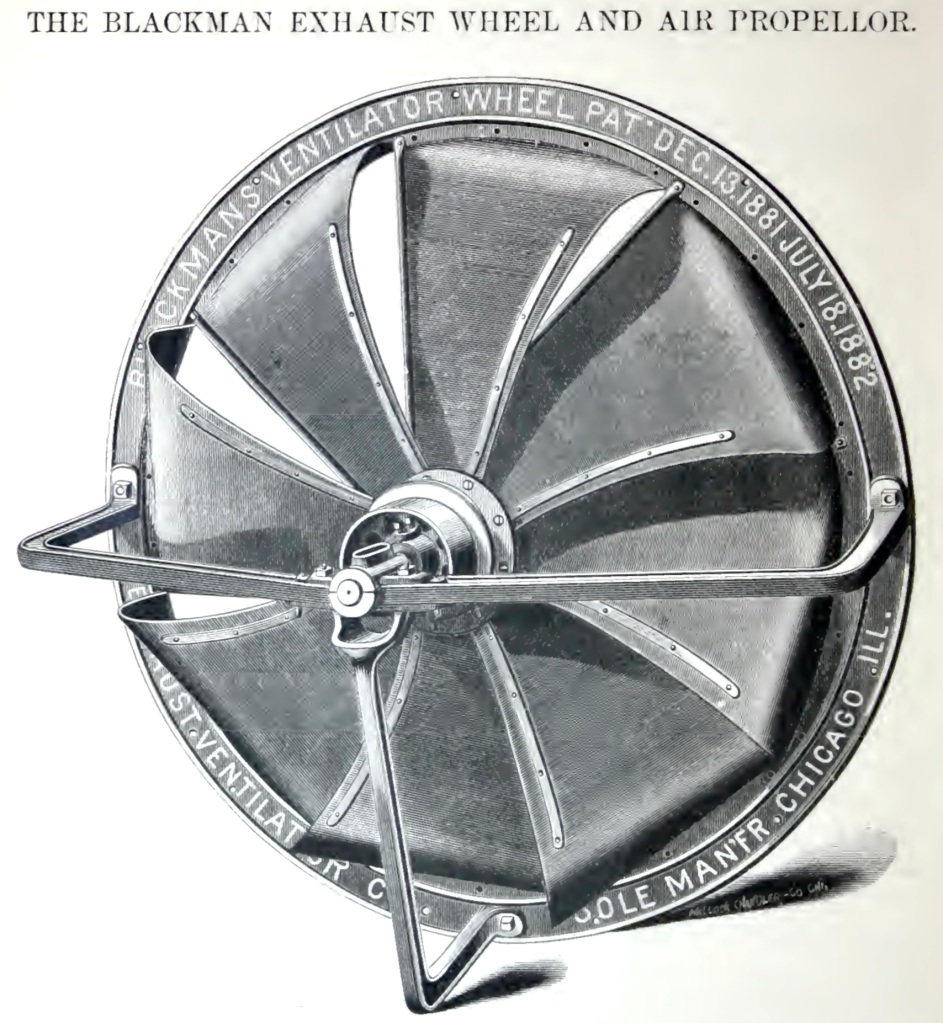
It was used to power the ventilation system, and a “propellor” and its frame were also found.
Here’s an illustration from a pamphlet published by the American manufacturer in 1885:
But back to the engine. The first practical gas-powered internal combustion engine was an atmospheric engine invented by Belgian engineer Jean Joseph Etienne Lenoir in 1860. It was a steam engine adapted to use unpressurised gas as fuel. Instead of using steam pressure to drive the pistons, he added an ignition system to cause a fuel/air explosion, forming a vacuum inside the cylinder. Air pressure returning to the cylinder drove the piston. It wasn’t very efficient.
Over in Germany, Nicolaus Otto heard about Lenoir’s invention and built a liquid-fuel version with his brother. Denied a patent, they came up with a new, four-stroke design, but this would fall apart after a short time. The brother gave up.
Otto got a job and worked on his engines in his spare time. He found an investor in the engineer son of a sugar magnate and they set up a business together, NA Otto & Cie. They produced an improved version of Lenoir’s engine that used less than half the fuel. It was commercially successful, but a technological dead-end. The company name changed to Deutz Gasmotoren Fabrik in 1872, and Otto went back to his idea of a four-stroke engine. With the help of two other engineers, Franz Rings and Herman Schumm, he succeeded in 1876 and the Otto Silent engine was the first internal combustion engine where the explosion took place inside the cylinder. This technical illustration looks a lot like the machine in my photo.
Deutz already had a working relationship with Crossley. The Manchester firm had bought the rights to manufacture and market the 1864 engine everywhere except Germany. They quickly licensed the new engine, and in 1881 the Edinburgh Police court picked up a secondhand one to power the ventilation system. This engine was rediscovered recently, and has now been restored and put on display for people touring the cells or enjoying a whisky tasting.
There are apparently only three examples of this model Crossley-built gas engine known to still exist. One is owned by the Henry Ford Museum in Dearborn, MI – I’ve been there, so I’ve probably seen it; the other is in Denmark. Anyone know where?
But what about monorails?
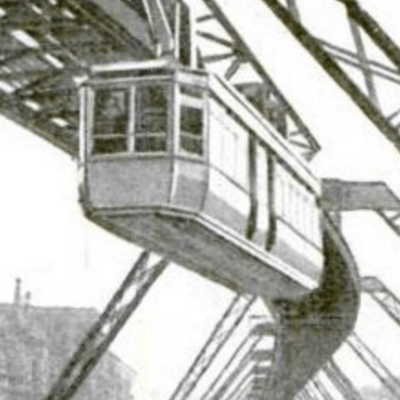
That’s easy! The son of the sugar magnate who financed and worked on that first engine was Eugen Langen. He developed and tested the prototypes of the Dresden and Wuppertal Schwebebahns at the Deutz plant. Have a recent photograph.
And here are a few of my other photos of the engine.
Bonus link: The monument to Otto and Langan outside Köln Messe/Deutz station.
#1870s #Cologne #crossley #edinburgh #germany #internalCombustionEngine #manchester #otto