
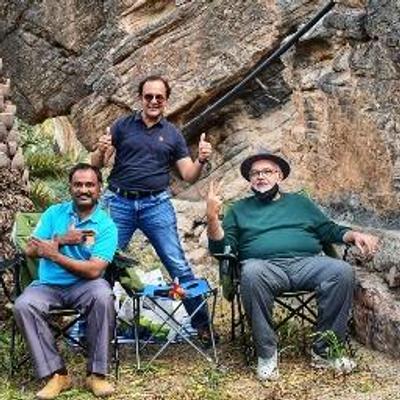
Speed gets attention. Staying power builds outcomes. #Patience #LongTermThinking #Focus #Consistency #Discipline #Craft #Leadership #Growth
https://stayingalive.in/thought-of-the-day/the-discipline-of-waiting.html
#Craft

Speed gets attention. Staying power builds outcomes. #Patience #LongTermThinking #Focus #Consistency #Discipline #Craft #Leadership #Growth
https://stayingalive.in/thought-of-the-day/the-discipline-of-waiting.html


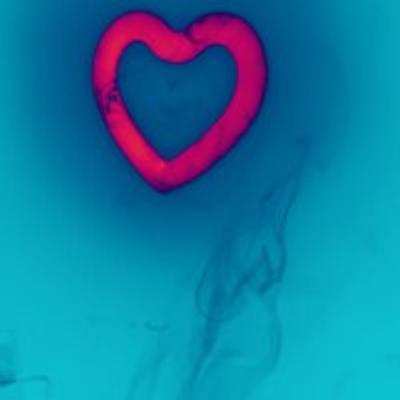
How it’s going hehe I can’t decide if I want to make her a mermaid instead of a lil dress
#doll #diygift #craft #crafting #cute #oldfashion
#doll #diygift #craft #crafting #cute #oldfashion


Our next #HitchinHackspace weekly open evening is on Monday 19th January.
We will be open from 19:30 until 22:00 to give folks who may be interested in what we do, and what facilities we can provide, a chance to come and have a look round and meet some of our members.
All are welcome. If you have ever wondered what we did to convert a derelict toilet into a hackspace, or what a "hackspace" is for that matter, come and have a look around.
If you like to create, make or craft things why not pay us a visit?
We have tools and equipment that cover a wide range of hobbies, crafts and technologies: woodwork, metalwork, electronics, laser cutting, vinyl cutting, sewing, 3D printing.....
Free tea, coffee and a biscuit or two.🫖☕🍪🙂
#Hitchin #Letchworth #Stevenage #Baldock #NorthHerts #hackspace #NorthHertsMakers
#make #craft #invent #learn


Serving spoon carved from cherry wood.
#craft #crafts #woodcarving #greenwoodcarving #spooncarving #servingspoon #woodenspoon #cherryspoon #slöjd #sloyd #handmade #handcraft #sustainability
#craft #crafts #woodcarving #greenwoodcarving #spooncarving #servingspoon #woodenspoon #cherryspoon #slöjd #sloyd #handmade #handcraft #sustainability



The Unfinished Work: Why Artists Demand Proof of Life
A playwriting teacher of mine once said something that has rattled around in my head for decades: “You can write a play, but it doesn’t exist until it finds life in the first production.” The Chair of our department disagreed with that assertion, and vehemently so. The script is the work, he argued. The text is complete in itself. The playwright’s obligation ends when the final period strikes the page.
Both positions carry weight. Both miss something essential.
The question beneath their argument is older than theatre itself: What is it about the artist that demands physical proof of life in the creation? Why do stories and ideas rattle and bubble and boil inside people until the inevitable happens and the work escapes the confines of the mind to take form in the world? The answer, I think, has less to do with ego or ambition than with the fundamental nature of what it means to create.
The Pressure of the Unrealized
Ideas are not passive residents of the mind. They do not sit quietly in mental filing cabinets, waiting to be summoned. They agitate. They accumulate mass. They demand attention at inconvenient hours and refuse to be reasoned with. Anyone who has carried a story for years knows the particular weight of the unrealized work, the way it presses against the interior walls of consciousness like steam seeking escape.
This pressure is not metaphorical. Writers speak of stories that “needed to be told,” as if the narrative itself possessed volition. Composers describe melodies that “insisted” on being written down. Visual artists talk about images that “wouldn’t leave them alone.” The language of compulsion runs through every account of creation because the experience of carrying an unrealized work is genuinely one of being inhabited by something that wants out.
The German word for this is Gestaltungsdrang, the drive to give form. It suggests that the impulse to externalize is not learned but innate, not chosen but constitutional. The artist does not decide to create any more than the pregnant body decides to give birth. The work demands its own emergence.
The Particular Problem of Drama
My playwriting teacher’s provocation cuts deeper in the context of theatre than it might in other arts because drama occupies a strange ontological position. A painting exists as itself. A novel exists as itself. But a play script is something else: a set of instructions for an event that has not yet occurred, a blueprint for an experience that requires other bodies, other voices, other interpretations to become what it is meant to be.
The playwright writes dialogue, but dialogue is not yet speech. The playwright describes action, but description is not yet movement. The playwright imagines a world, but imagination is not yet presence. Between the script and the play lies the unbridgeable gap of performance, and in that gap lives everything that makes theatre theatre: the breath of the actor, the attention of the audience, the unrepeatable alchemy of bodies sharing space and time.
This is what my teacher meant. The script is potential energy. The production is kinetic. Until the energy converts, the play remains a possibility rather than an actuality. It exists the way a seed exists before it becomes a tree. The genetic information is present, but the tree is not.
The Chair’s objection was equally valid. Shakespeare’s plays existed for centuries primarily as texts. Most people who have encountered Hamlet have encountered it on the page, not the stage. The script is not merely a delivery mechanism for performance; it is literature in its own right, complete with linguistic beauty, structural integrity, and interpretive depth that require no external realization to be experienced. To say the play does not exist until production is to erase the playwright’s achievement, to subordinate the writer to the director and actor, to treat the text as raw material rather than finished work.
And yet.
The Witness Problem
There is something in the artist that is not satisfied by private completion. The manuscript in the drawer, the canvas facing the wall, the symphony that exists only in the composer’s inner ear: these are achievements, certainly, but they are achievements that ache. They ache because art is fundamentally communicative, and communication requires a receiver. The work that is never witnessed is a message never delivered, a hand extended into darkness.
This is not about applause or recognition, though those desires are real enough. It is about something more essential: the artist’s need to know that the work can survive outside the self. The mind that creates is not a neutral container. It is biased in favor of its own productions, unable to see them as others might see them, unable to know whether what feels meaningful inside will carry meaning outside. The witnessed work answers a question the unwitnessed work can only pose: Does this matter to anyone but me?
The first production of a play, the first exhibition of a painting, the first publication of a novel: these are not merely celebrations or commercial exercises. They are tests of existence. They ask whether the work can breathe air that is not the artist’s breath, whether it can stand in light that is not the artist’s gaze, whether it can mean something in a context the artist does not control.
Creation as Separation
The Latin root of “create” is creare, to bring forth, to produce. But there is another sense embedded in the word: to separate. The created thing is that which has been separated from its source. It is no longer part of the creator but apart from the creator. It has its own existence, its own trajectory, its own fate.
This separation is what the artist demands when demanding proof of life. The work must be able to leave. It must be able to exist without the artist’s continuous presence, continuous explanation, continuous defense. A work that cannot survive separation is not yet a work; it is still an extension of the artist’s body, still dependent on the artist’s breath.
The playwright who insists on directing every production, who cannot bear to see the work interpreted by other minds, has not yet completed the act of creation. The novelist who must explain what the novel “really means” has not yet trusted the work to mean on its own. The artist who cannot let go has not yet given birth but remains in a state of permanent gestation, the work forever unborn because forever unseparated.
This is the hardest part of creation: the letting go. The recognition that the work will be misunderstood, misinterpreted, misused. The acceptance that the work will find audiences the artist never imagined, will be read in contexts the artist never anticipated, will mean things the artist never intended. The work must be released into the wild, where it will either survive or perish on its own terms.
The Boiling Point
Water does not boil gradually. It heats, and heats, and heats, and then, at a precise temperature, it transforms. The liquid becomes gas. The contained becomes uncontainable. The transition is not incremental but catastrophic, a phase change that alters the fundamental state of the substance.
Artistic creation follows the same pattern. Ideas accumulate, and accumulate, and accumulate, and then something shifts. The story that has been rattling around for years suddenly demands to be written. The image that has been hovering at the edge of consciousness suddenly insists on being painted. The melody that has been humming beneath thought suddenly requires notation. The artist does not choose the moment of transformation any more than water chooses the moment of boiling. The conditions become sufficient, and the change occurs.
What are the conditions? Impossible to say precisely. Sometimes it is the arrival of a missing piece, the final element that makes the whole cohere. Sometimes it is the pressure of mortality, the recognition that time is finite and the work is not yet done. Sometimes it is simply the exhaustion of resistance, the giving up of the fight against the work’s demand for existence. The conditions vary, but the result is the same: the artist passes from carrying the work to delivering it, from gestation to birth, from potential to actual.
Beyond the Self
The deepest answer to why artists demand proof of life in their creations may be the simplest: the work is not complete until it exists beyond the self because the work was never really about the self to begin with. The artist is a conduit, a channel, a point of passage. Ideas move through the artist on their way to somewhere else. Stories use the artist as a vehicle for their own propagation. The creation creates the creator as much as the creator creates the creation.
This is not mysticism, though it sounds like mysticism. It is an observation about the nature of meaning. Meaning is not a property that inheres in objects or texts or performances. Meaning is a relationship between a work and a witness, a transaction that requires both parties to be present. The artist alone cannot generate meaning any more than a single hand can generate applause. The work must find its audience, must enter the space between minds, must become a shared object rather than a private possession.
My playwriting teacher was right: the play does not fully exist until production because existence requires more than being. It requires being perceived, being interpreted, being received. And my department Chair was right: the script is a complete achievement because it is the necessary condition for everything that follows, the seed without which no tree can grow. Both were pointing at the same truth from different angles: that artistic creation is a process that extends beyond the artist, that the work is not finished when the artist stops working but when the work starts working on its own.
This is what the artist demands in demanding proof of life. Not validation. Not applause. Not even understanding. Simply this: evidence that the work can live outside the mind that made it. Evidence that the boiling was not in vain. Evidence that the rattling and bubbling produced something that can rattle and bubble in other minds, in other times, in contexts the artist will never see.
The play finds its first production. The novel finds its first reader. The painting finds its first gaze. And in that moment, the work separates from the artist and begins its own existence, carrying whatever meaning it can carry, surviving whatever conditions it encounters, living or dying on terms the artist can no longer control.
That is the proof of life. Not permanence, but separation. Not immortality, but independence. The work exists because it no longer needs the artist to exist. The creation has become a creature, and the creature has walked out into the world.
#art #being #conflict #craft #drama #Gestaltungsdrang #howardStein #ideas #playwriting #stage #structure #tension #unrealized
Minecraft Things, Dian Lestari #Fb:
'Du bist eine Legende, wenn du dich noch an dieses Dorf und diesen Seed erinnerst.


🧵 Easy Macrame Wall Hanging Tutorial | Beginner-Friendly DIY Guide! With Anjali
#macraggeproject #macramewalldecor #diy #craft #homedecor #homedecorationideas #justclicksandflickswithanjali #crafter
rhttps://www.youtube.com/watch?v=aq8LfK8_wYA

🧵 Easy Macrame Wall Hanging Tutorial | Beginner-Friendly DIY Guide! With Anjali
#macraggeproject #macramewalldecor #diy #craft #homedecor #homedecorationideas #justclicksandflickswithanjali #crafter

Finished my first #crochet #wip for 2026! This year, I am attempting (not committing) to finish my many #craft works-in-progress before I start something new.
This is a free-form crochet blanket for a family member with dementia. I've attempted to create different textures, colors, and patterns that may attract their interest.


Made a scarf my friend commissioned. Suprised it didn't take me as long as I thought it would (and a lot less yarn).
I did it width ways, then made it longer.. as opposed to #crocheting the entire length and then making it thicker as it built up.
It is 6 inches across, so hopefully I made it pretty standard sized.
Hopefully they like it.
Ps: if yah want one get in touch :)
#crafty #crochet #yarn #scarf #project #crocheted #handmade #craft #handcrafted


Un qualcosa di diverso…
Questa mattina, nel rileggere la bozza del post l'ho cancellata e mi sono chiesto:"ma io comincio sempre i post, partendo a scrivere, ringraziando alla fine e nemmeno salutando!" Ci sarà poi qualcuno che legge per la prima volta no? Bè..
https://bloghim3.wordpress.com/2026/01/16/un-qualcosa-di-diverso/
#dirtyrunbrigate #corsa #run #running #runningpigro #ultrarunning #bike #blog #change #pintarest #pixelfld #wordpress #sport #music #wcft #fkt #beer #craft #homebrewing #handmade
#LocalWoolWeaveAlong ist ein tolles Projekt, das lokale Woll- und Leinenprodukte vorstellt und deren Herstellys miteinander *vernetzen* will. Dank @sufloese habe ich davon erfahren und möchte es im Fedi verbreiten helfen. Es geht darum, bis Ende Januar, Mitte Februar Dinge aus regionalen Materialien herzustellen und hier zu präsentieren. Macht ihr mit?
#Wolle #Wool #Leinen #Linen #Flachs #Flax #Weben #Weaving #Handweben #Handweaving #Stricken #Knitting #Maker #DIY #Handwerk #Craft #Crafting #Slöjd #WerkabenteuerTextil #Werkabenteuer


Geralmente, compro um novelo de barbante e uso até acabar. Desta vez, escolhi duas cores e é possível que eu as combine em algumas peças.
Vem aí!

I found an image match that associated this with Kurdish rug making. Love the complexity and symmetry, hand made with wool, amazing. I was trying to look at it as a piece of art meant to hang on a wall and I made associations with portals and maybe like different levels or elaborations of a central thing, maybe like a oneness with complex expression. haha Amazing traditional art
#art #craft #mastery #patterns #red #love #life #harmony #contrast #home

New cross stitch pattern - Ghost Bat Sampler
If you need to know anything about it, it's that I friggin love bats. Find this pattern for Tier 2 & 3 on my patreon until 2/15/26.
https://www.patreon.com/badstitch
#crossstitch #bats #morningglories #craft #fiberarts #analogcrafts


I’m going to Mexico City for the first time! Recommendations? What do you love there? Any field—not just my interests, which btw include #ceramics #art #craft #fiberarts #architecture #streetscapes #cycling #design #food #mexicocity #mexico
Client Info
Server: https://mastodon.social
Version: 2025.07
Repository: https://github.com/cyevgeniy/lmst