#HABITABILITY

2026-01-20

Hydrological limits - Living Beyond Our Means
Conflicts over water have risen sharply

Era of ‘global water bankruptcy’ is here, UN report says
"Overuse and pollution must end urgently as no one knows when whole system might collapse, says expert."

“This report tells an uncomfortable truth: many critical water systems are already bankrupt,” said Madani, of the UN University’s Institute for Water, Environment and Health. “It’s extremely urgent [because] no one knows exactly when the whole system would collapse.”

"Humanity was also slashing the amount of water available by destroying natural stores, such as wetlands, and polluting waterways. Wetlands equal in size to the entire European Union had been erased in the past five decades, the report said."

"Dr Jonathan Paul, at Royal Holloway, University of London, said: “The report lays bare humankind’s mistreatment of water [which] threatens the viability of ‘the water cycle’ as a concept."
>>
theguardian.com/environment/20

Global Water Bankruptcy. Living Beyond our Hydrological Means in the Post-Crisis Era, UNU-INWEH Report: Madani, K. (2026). Global Water Bankruptcy: Living Beyond Our Hydrological Means in the Post-Crisis Era. United Nations University Institute for Water, Environment and Health (UNU-INWEH), Richmond Hill, Ontario, Canada. DOI: 10.53328/INR26KAM001
unu.edu/inweh/collection/globa
#water #overuse #extractivism #MDB #irrigation #pollution #destruction #limits #biodiversity #habitability

2026-01-19

Excessive heat:
Storing children and dogs in cars
Exposing workers to heat stroke
Roasting livestock in paddocks

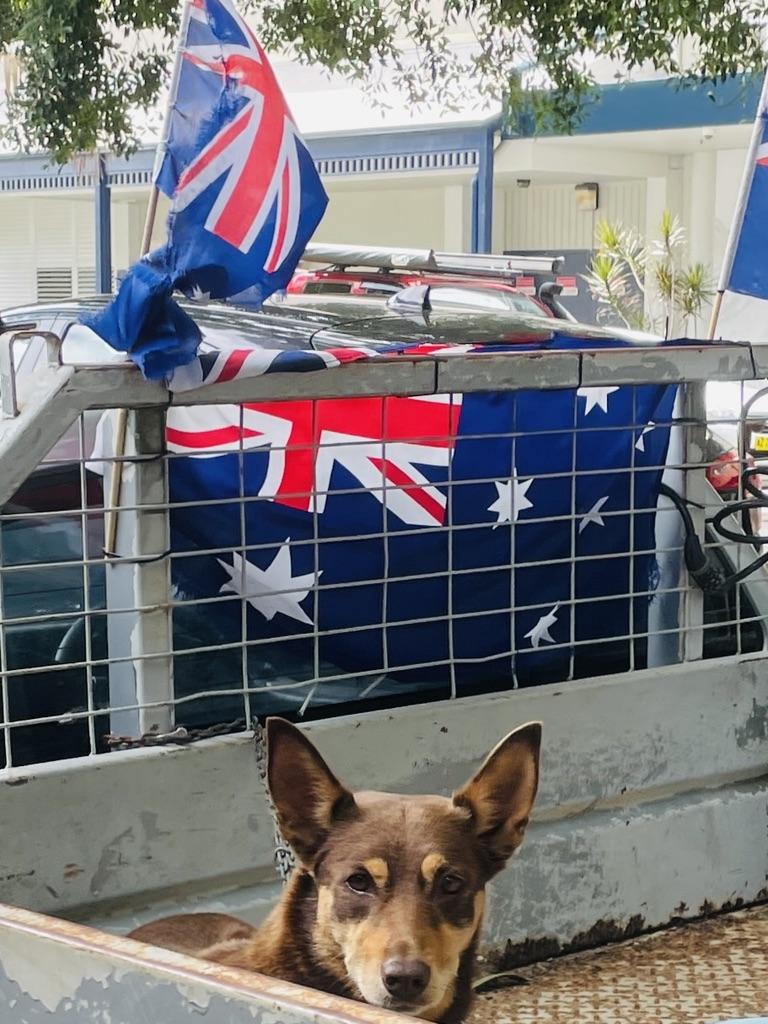
* "Prison and fines for leaving dogs in hot cars among proposed changes to NSW animal welfare laws. The legislation will also focus on owners who travel with dogs on the back of utes...On a 30 degree Celsius day, the interior of a parked car could reach 70°C..." >>
abc.net.au/news/2026-01-18/pri

* Working in excessive heat - Is there a set maximum temperature for workers?
"Calls for an industry-standard heat policy to be implemented on worksites as summers get hotter" >>
abc.net.au/news/2026-01-19/cal

* "Forgotten baby syndrome" - "Number of children left in cars increasing. Children being left alone in cars had become more common, with about 5,000 children rescued from locked cars across Australia each year." >>
abc.net.au/news/2023-09-12/fat

* 100 cattle die in southern NSW heatwave >>
mastodon.au/@Bellingen/1159028

#FossilFuels #ClimateDisruption #heatwaves #HotPlanet #children #workers #pets #dogs #welfare #cars #utes #motorists #autopilot #heatstroke #mortality #regulation #governance #HeatPolicies #workers #OHS #HeatStress #Heatstroke #CompanionSpecies #habitability

Image: Dog on the back of a ute, tied up on a hot metal tray, Mid North Coast, NSW

2026-01-10

From #Europa to other icy moons, scientists are studying how surface features form and what they might reveal about the potential for #life.

OF particular interest is a unique, spider-like feature in Manannán #Crater on Europa, one of #Jupiter’s icy moons.

This spider-like feature might have formed through the eruption of melted brines following the Manannán impact.

According to scientists, similar star-like patterns formed even under extremely cold temperatures (-100°C), supporting the idea that the mechanism could occur on Europa after an impact.

Although geomorphology was the main focus of this study, the findings offer important clues about subsurface activity and #habitability, which are crucial for future #astrobiology research.

psi.edu/blog/europas-spider-li

Paper by Mc Keown et al. (2025):
iopscience.iop.org/article/10.

Scientific Frontlinesflorg
2026-01-07

How does a affect the makeup of its planets? And what does this mean for the of distant worlds?

sflorg.com/2026/01/spw01072601

Inside the ice giants, a layer exists of familiar rains and snows...and often at a pressure range that wouldn't require spacesuits! Could these planets harbor environments that are shockingly Earth-like?

More thoughts at my #blog: adamasnemesis.com/2025/12/14/a

This post's featured image is Neptune and Triton seen on departure by Voyager 2.

#worldbuilding #science #astronomy #habitability #planetaryhabitability #icegiants #planetaryscience #gasgiants #atmospheres #oxygen

2025-12-11

New report outlines #science priorities for human #Mars exploration.

The top-priority objectives identified in the report are:

1. Determine if, in the exploration zone, evidence can be found for any of the following: #habitability, indigenous extant or extinct #life, and/or indigenous prebiotic chemistry.

2. Characterize past and present #water and CO2 cycles and reservoirs within the exploration zone to understand their evolution.

3. Characterize and map the geologic record and potential niche habitats within the exploration zone to reveal Mars’s evolution and to provide geologic context to other investigations, including the study of bolide impacts, volcanic and intrusive igneous activity, the sedimentary record, landforms and volatiles, including liquids and ices.

4. Determine the longitudinal impact of the integrated Martian environment on crew physiological, cognitive and emotional health, including team dynamics and confirm effectiveness of countermeasures.

5. Determine what controls the onset and evolution of major dust storms, which dominate present-day atmospheric variability.

6. Characterize the Martian environment for in situ resource utilization (ISRU) and determine the applications associated with the ISRU processing, ultimately for the full range of materials supporting permanent habitation but with an early focus on water and propellants.

7. Determine whether the integrated Martian environment affects reproduction or the functional genome across multiple generations in at least one model plant #species and one model animal species.

8. Determine throughout the mission whether microbial population dynamics and species distribution in biological systems and habitable volumes are stable and are not detrimental to astronaut health and performance.

9. Characterize the effects of Martian dust on human physiology and hardware lifetime
Determine the longitudinal impact of the integrated Martian environment on plant and animal physiology and development across multiple generations where possible as part of an integrated ecosystem of plants, microbes and animals.

10. Characterize the primary and secondary radiation at key locations in the crew habitat and astrobiological sampling sites to contextualize sample collection and improve models of future mission ris.

#astrobiology #space
psu.edu/news/research/story/ne

2025-11-05

Hey #Zohran #climate got buried in this campaign what good is #affordability if there is no #HABITABILITY in the first place?

2025-10-13

Pushing people/ life outside the “human climate niche”
Modelling shows gas project emissions will cause hundreds of heat-related deaths

"According to the study, another 356,000 people globally would be pushed outside the human climate niche, a comfort zone defined by scientists as the climate conditions in which human societies have thrived historically."

"Under Australia's current environmental laws, the environment minister is not required to consider the climate impacts and emissions when approving a fossil fuel project."

"According to the Climate Council, since the Albanese government came to office, it has approved 31 fossil fuel projects resulting in 6.5 billion tonnes of carbon-equivalent emissions directly and from combustion of the coal and gas they produce."

"If there are actions around liability for the harms that have been caused by particular projects to demonstrate for compensation or reparations for the harms that are caused by fossil fuel developments."
>>
abc.net.au/news/2025-10-14/fos
#climate #AttributionSci #FossilFuels #pollution #CoalGas #liability #harm #biodiversity #habitability #Australia #GBR #ExtremeHeat

2025-10-06

"Sea level rise (SLR)
poses a prominent challenge to current and future generations, impacting the habitability of coastlines, trade routes, and major infrastructure systems near the ocean."

"Our results highlight geographic variability in exposure and demonstrate the benefits that low-emissions pathways imply for preserving built environments."
>>
Willard-Stepan, M., Gomez, N., Cardille, J.A. et al. Assessing the exposure of buildings to long-term sea level rise across the Global South. npj Urban Sustain 5, 72 (2025). doi.org/10.1038/s42949-025-002
#FossilFuels #coast #inundation #SeaLevelRise #SLR #CoastalInfrastructure #infrastructure #habitability #erosion #ClimateDisruption

Coastal erosion, Sawtell, NSW
Large mature pandanus trees, banksias and 'viewing platforms' are detsroyed by the combustion of fossil fuels
2025-10-02

About the prospects for #habitability in the Venusian #atmosphere.

The clouds are nowhere near as dry as previously presumed.

A new analysis of old, previously uncharacterized data acquired by the Pioneer Venus Large Probe, which descended through #Venus' #atmosphere in 1978.

Thw results indicate that the #cloud aerosols contain several major species, including substantial bulk #water and comparable masses of ferric sulfate and sulfuric acid.

The #aerosol water likely arises from hydrates, including hydrated iron and magnesium sulfates, and iron and magnesium could originate from cosmic sources. 

These results yield new considerations for cloud chemistry models and cloud habitability discussions.

#astrobiology
agupubs.onlinelibrary.wiley.co

2025-09-25

Marine ecosystems: Human activities have pushed Earth beyond its Safe Operating Space.

"World’s oceans fail key health check as acidity crosses critical threshold for marine life. The world’s oceans have failed a key planetary health check for the first time, primarily due to the burning of fossil fuels, a report has shown. Scientists call for renewed global effort to curb fossil fuels as seven of nine planetary boundaries now transgressed."
>>
theguardian.com/environment/20
#ocean #MarineLife #biodiversity #pollution #FoamAndBloom #MassMortalityEvents #acidity #GBR #coral #FossilFuels #deforestation #ecosystems #boundaries #wildlife #ClimateDisruption #habitability

Marine life in hot and acid ocean, mosaic NSW
2025-09-23

#Airquality index now climbing to 61 I can't #breathe someone please address #habitability not just #affordability #brooklyn #climate

Within hours, this image captured by the #Perseverance rover had gone viral! It shows intriguing spotted rocks in the sediments of a valley in the #Jezero crater, whose study reveals unprecedented mineral and organic associations that could relaunch the debate on the past #habitability of #Mars. However, any definitive answer requires the return to Earth—and therefore in-depth analysis—of the sample taken, named “Sapphire Canyon.” Patience, patience... 😉

More info: irap.omp.eu/2025/09/des-associ

Image obtained by the SHERLOC/WATSON instrument (NASA/JPL-Caltech/MSSS) on the rocky target “Cheyava Falls.” The scale bar is 5 mm. © NASA/JPL-Caltech/MSSS
2025-08-23

Weekly Update from the Open Journal of Astrophysics – 23/08/2025

So it’s Saturday again, so it’s time for the usual update of papers published at the Open Journal of Astrophysics which I do every Saturday. Since the last update we have published six new papers, which brings the number in Volume 8 (2025) up to 122, and the total so far published by OJAp up to 357. As I mentioned here we have overtaken the total of 120 published in Volume 7 (2024) and are on track for in excess of 180 publications in 2025.

The first paper to report this week is “Mass-feeding of jet-launching white dwarfs in grazing and common envelope evolution” by Noam Soker (Technion, Haifa, Israel). This was published on Tuesday 19th August in the folder Solar and Stellar Astrophysics. It proposes a theoretical suggestion about the production of jets in common-envelope evolution with massive stars.

The overlay is here:

You can make this larger by clicking on it, as you can with all the overlays below. The officially accepted version of this paper can be found on the arXiv here.

The second paper this week, published on Wednesday 20th August in the folder Earth and Planetary Astrophysics, is “Transition metal abundance as a key parameter for the search of Life in the Universe” by Giovanni Covone and Donato Giovannelli (University of Naples, Italy). This paper presents an argument that the availability of transition elements is an essential feature of habitability, and should be considered as such in selecting exoplanetary targets in the search for life.

The overlay is here:

You can find the officially accepted version of the paper on arXiv here.

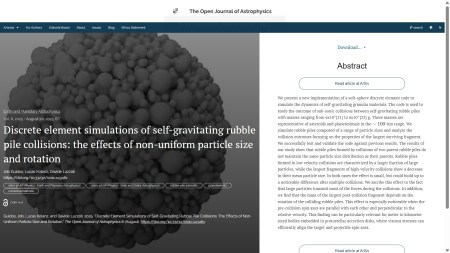
The third paper this week, also published on 20th August 2025 in the folder Earth and Planetary Astrophysics, is “Discrete element simulations of self-gravitating rubble pile collisions: the effects of non-uniform particle size and rotation” by Job Guidos, Lucas Kolanz and Davide Lazzati (Oregon State University, USA).  This presents a new computer code for simulating the growth of granular masses through collisions of smaller particles and discusses results generated by it.

The overlay for this one is here:

You can find the officially accepted version on arXiv here.

The next paper, the fourth this week, is “Seeing the Outer Edge of the Infant Type Ia Supernova 2024epr in the Optical and Near Infrared” by W.B. Hoogendam (University of Hawaii, USA) and 32 others – too numerous to list by name – based in various institutes in the USA, Australia, UK, Denmark, Taiwan and China. This paper was also published on Wednesday 20th August 2025, but in the folder High-Energy Astrophysical Phenomena.  The article reports on the results of optical-to-near-infrared photometry and spectroscopy of the Type Ia supernova (SN Ia) 2024epr and a discusses how these challenge models for this sort of supernova.

The overlay is here:

You can find the officially accepted version on arXiv here.

The fifth paper this week is “Computing Nonlinear Power Spectra Across Dynamical Dark Energy Model Space with Neural ODEs” by Peter L. Taylor of Ohio State University (USA).  This one shows how to compute the evolution of cosmological power spectra into the non-linear regime via neural differential equations. It was published on Friday 22nd August 2025 in the folder Cosmology and NonGalactic Astrophysics. The overlay is here:

You can find the officially accepted version on arXiv here.

And finally for this week we have “Symbiotic star candidates in Gaia Data Release 3” by Samantha E. Ball & Benjamin C Bromley (University of Utah, USA) and Scott J. Kenyon (Smithsonian Observatory, USA). This paper was published on Friday 22nd August in the folder Solar and Stellar Astrophysics. It describes a new search for symbiotic star candidates in Gaia Data Release 3 (GDR3), based on astrometric, photometric, and spectroscopic information. The overlay is here:

You can find the officially accepted version of this one on arXiv here.

And that’s all the papers for this week. I suppose there will come a time when we publish a paper on every day of the week and each week’s summary will contain a paper in each of the astro-ph categories on arXiv, but we haven’t done that yet. This week we published on every day but Monday 18th August, and have papers in four of the six categories.

#arXiv220703748v5 #arXiv241022189v2 #arXiv250217556v2 #arXiv250522621v2 #arXiv250609128v2 #arXiv250620505v2 #asteroids #commonEnvelopeEvolution #Cosmology #CosmologyAndNonGalacticAstrophysics #DiamondOpenAccess #DiamondOpenAcessPublishing #EarthAndPlanetaryAstrophysics #GaiaDR3 #Habitability #HighEnergyAstrophysicalPhenomena #NeuralDifferentialEquations #OpenJournalOfAstrophysics #planetesimals #powerSpectra #rubblePiles #SolarAndStellarAstrophysics #SymbioticStars #TheOpenJournalOfAstrophysics #TransitionMetals #whiteDwarfs

Client Info

Server: https://mastodon.social
Version: 2025.07
Repository: https://github.com/cyevgeniy/lmst