#alphafold2

CSBJcsbj
2025-10-12

🧬 How does a foodborne toxin punch holes in our cells?

🔗 C. perfringens enterotoxin-claudin pore complex: Models for structure, mechanism of pore assembly and cation permeability. Computational and Structural Biotechnology Journal, DOI: doi.org/10.1016/j.csbj.2024.11

📚 CSBJ: csbj.org/

C. perfringens enterotoxin-claudin pore complex: Models for structure, mechanism of pore assembly and cation permeability. Computational and Structural Biotechnology Journal, DOI: https://doi.org/10.1016/j.csbj.2024.11.048
CSBJcsbj
2025-08-17

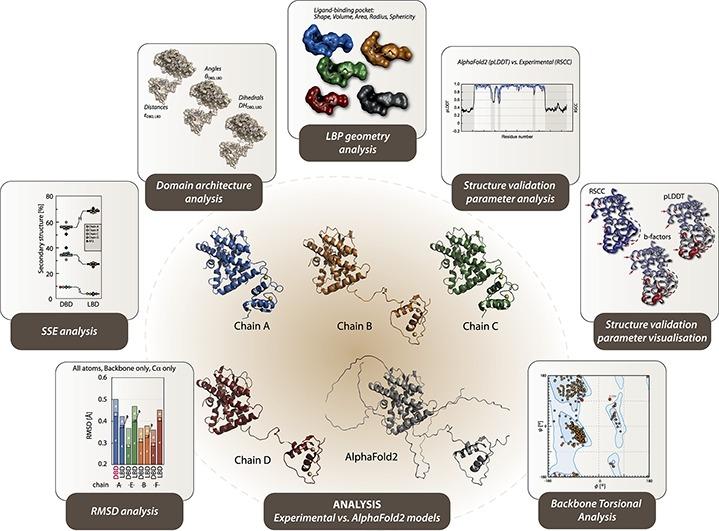
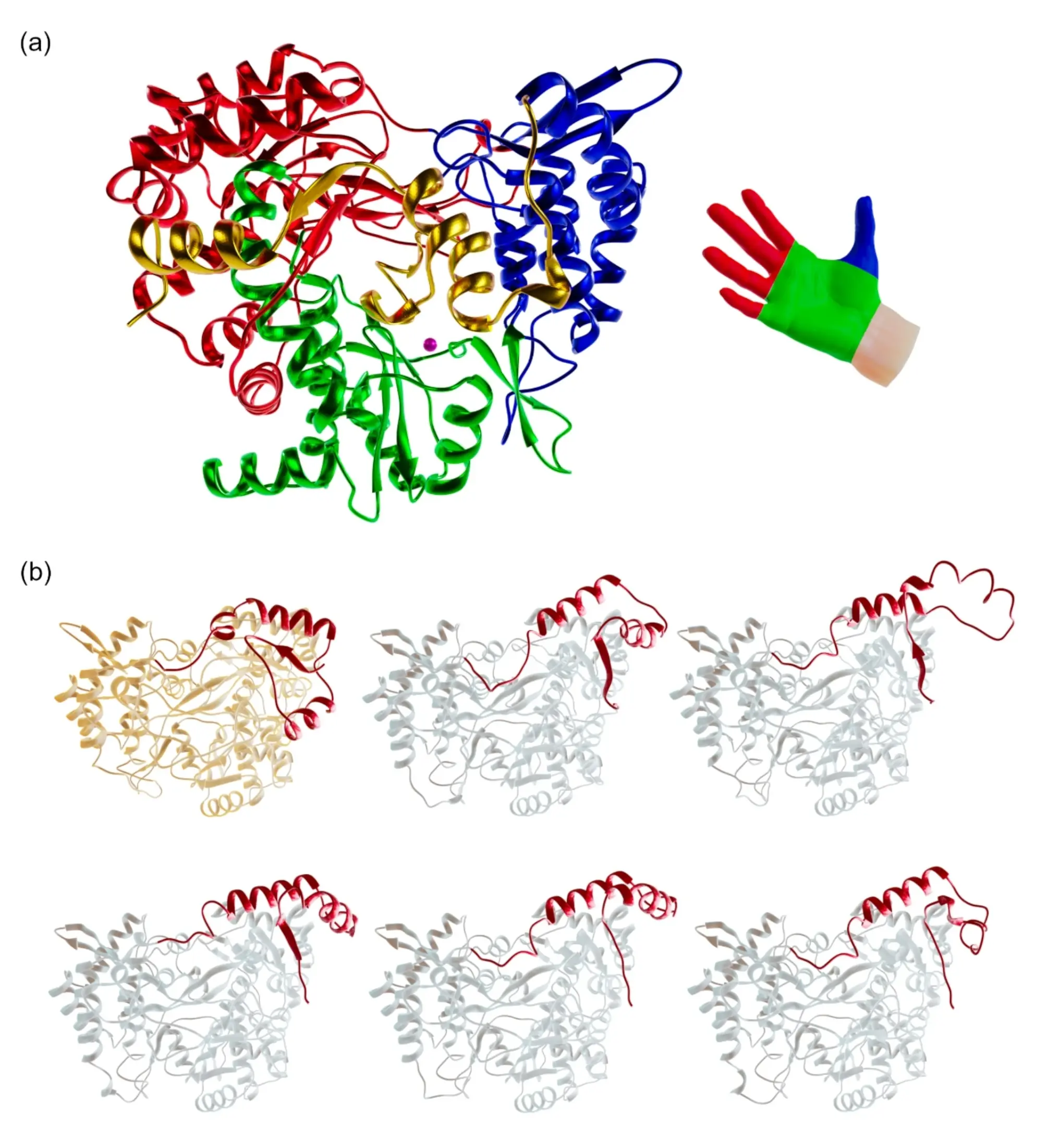
🕵️ AlphaFold 2 predicts stability—but life runs on flexibility. Are we missing half the story?

🔗 Bridging prediction and reality: Comprehensive analysis of experimental and AlphaFold 2 full-length nuclear receptor structures. Computational and Structural Biotechnology Journal, DOI: doi.org/10.1016/j.csbj.2025.05

📚 CSBJ: csbj.org/

Bridging prediction and reality: Comprehensive analysis of experimental and AlphaFold 2 full-length nuclear receptor structures. Computational and Structural Biotechnology Journal, DOI: https://doi.org/10.1016/j.csbj.2025.05.010
2025-08-03

[Перевод] О прионах и дизайне белков

Зачастую крупные открытия в области биологии происходят при изучении крошечных существ. И многое из того, что мы сегодня считаем догмой, появилось благодаря изучению конкретных микроорганизмов. Эксперименты с бактерией Streptococcus pneumoniae не только привели к открытию ДНК как основной наследственной молекулы , но и позволили создать первые инструменты для генной инженерии. Изучение РНК опухолевых вирусов позволило обнаружить обратную транскриптазу — фермент, необходимый для изучения биологии РНК. Эти модельные микроорганизмы долгое время служили природными лабораториями, позволяя расшифровывать фундаментальные принципы жизни и предоставляя инструменты, необходимые для их изучения. Перейдя от микроорганизмов к макромолекулам, биология вступила в эру белков. Последние достижения в области искусственного интеллекта, включая такие инструменты, как нобелевский лауреат AlphaFold , сделали возможным предсказание структуры белков, превратив кропотливый лабораторный процесс в вычислительную задачу, которую можно решить за считанные минуты.

habr.com/ru/articles/933490/

#белки #прионы #alphafold2
CSBJcsbj
2025-06-11

🧩 What happens when we put AlphaFold2’s predictions to the ultimate test—across species and structure types?

🔗 Comprehensive assessment of AlphaFold’s predictions of secondary structure and solvent accessibility at the amino acid-level in eukaryotic, bacterial and archaeal proteins. Computational and Structural Biotechnology Journal, DOI: doi.org/10.1016/j.csbj.2025.05

📚 CSBJ: csbj.org/

Comprehensive assessment of AlphaFold’s predictions of secondary structure and solvent accessibility at the amino acid-level in eukaryotic, bacterial and archaeal proteins. Computational and Structural Biotechnology Journal, DOI: https://doi.org/10.1016/j.csbj.2025.05.047
CSBJcsbj
2025-05-23

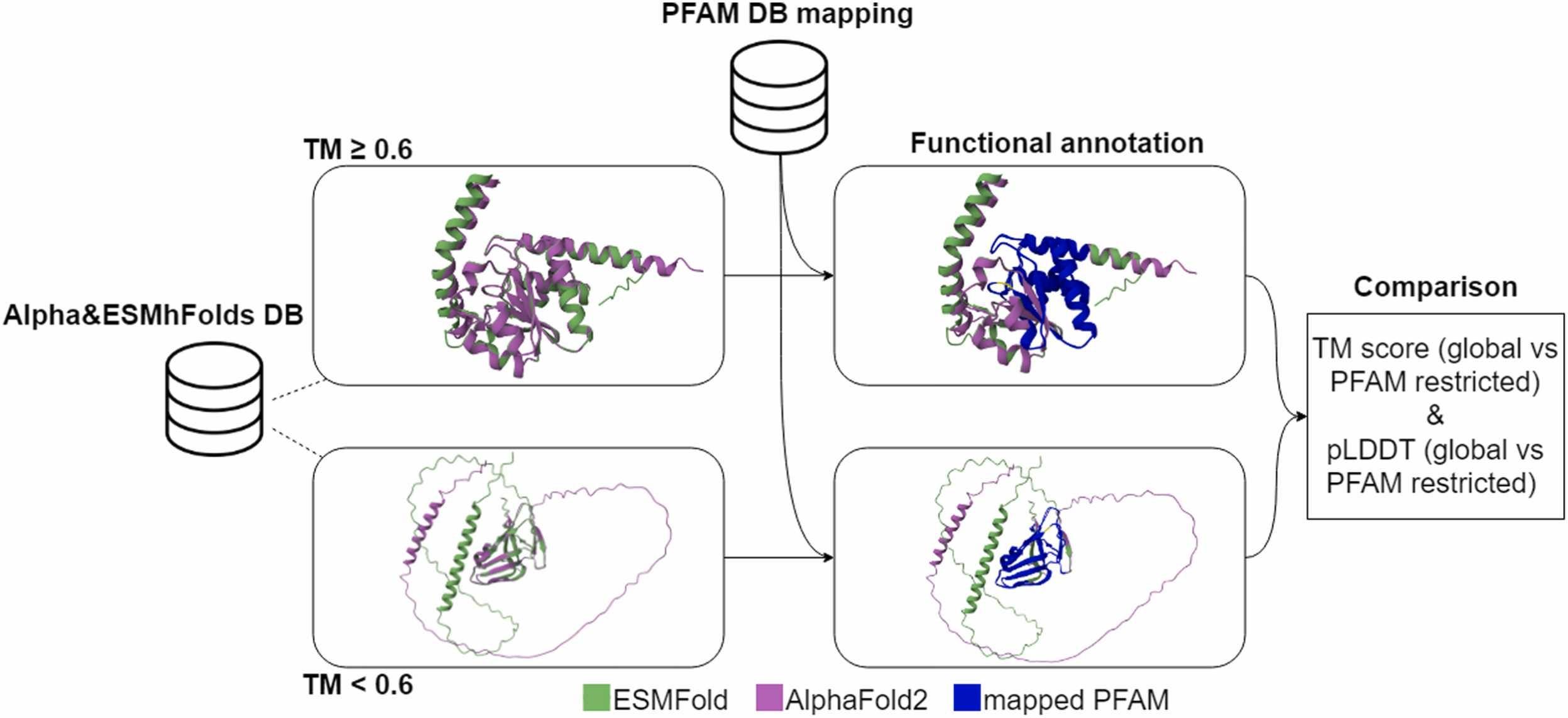
🧬 How do AlphaFold2 and ESMFold stack up when it comes to functional annotation?

🔗 AlphaFold2 and ESMFold: A large-scale pairwise model comparison of human enzymes upon Pfam functional annotation. Computational and Structural Biotechnology Journal, DOI: doi.org/10.1016/j.csbj.2025.01

📚 CSBJ: csbj.org/

AlphaFold2 and ESMFold: A large-scale pairwise model comparison of human enzymes upon Pfam functional annotation. Computational and Structural Biotechnology Journal, DOI: https://doi.org/10.1016/j.csbj.2025.01.008
2025-05-16

Nice study from @teresa_omeara & @maom in @biorxivpreprint

They used protein prediction to explore the poorly annotated Candida auris genome, and then used protein design to replace endogenous proteins with de novo designed ones.

biorxiv.org/content/10.1101/20

#StructuralBiology #AlphaFold2 #proteinPrediction

Pequeños y grandes pasos hacia el imperio de la inteligencia artificial

Fuente: Open Tech

Traducción de la infografía:

  • 1943 – McCullock y Pitts publican un artículo titulado Un cálculo lógico de ideas inmanentes en la actividad nerviosa, en el que proponen las bases para las redes neuronales.
  • 1950 – Turing publica Computing Machinery and Intelligence, proponiendo el Test de Turing como forma de medir la capacidad de una máquina.
  • 1951 – Marvin Minsky y Dean Edmonds construyen SNAR, la primera computadora de red neuronal.
  • 1956 – Se celebra la Conferencia de Dartmouth (organizada por McCarthy, Minsky, Rochester y Shannon), que marca el nacimiento de la IA como campo de estudio.
  • 1957 – Rosenblatt desarrolla el Perceptrón: la primera red neuronal artificial capaz de aprender.

(!!) Test de Turing: donde un evaluador humano entabla una conversación en lenguaje natural con una máquina y un humano.

  • 1965 – Weizenbaum desarrolla ELIZA: un programa de procesamiento del lenguaje natural que simula una conversación.
  • 1967 – Newell y Simon desarrollan el Solucionador General de Problemas (GPS), uno de los primeros programas de IA que demuestra una capacidad de resolución de problemas similar a la humana.
  • 1974 – Comienza el primer invierno de la IA, marcado por una disminución de la financiación y del interés en la investigación en IA debido a expectativas poco realistas y a un progreso limitado.
  • 1980 – Los sistemas expertos ganan popularidad y las empresas los utilizan para realizar previsiones financieras y diagnósticos médicos.
  • 1986 – Hinton, Rumelhart y Williams publican Aprendizaje de representaciones mediante retropropagación de errores, que permite entrenar redes neuronales mucho más profundas.

(!!) Redes neuronales: modelos de aprendizaje automático que imitan el cerebro y aprenden a reconocer patrones y hacer predicciones a través de conexiones neuronales artificiales.

  • 1997 – Deep Blue de IBM derrota al campeón mundial de ajedrez Kasparov, siendo la primera vez que una computadora vence a un campeón mundial en un juego complejo.
  • 2002 – iRobot presenta Roomba, el primer robot aspirador doméstico producido en serie con un sistema de navegación impulsado por IA.
  • 2011 – Watson de IBM derrota a dos ex campeones de Jeopardy!.
  • 2012 – La startup de inteligencia artificial DeepMind desarrolla una red neuronal profunda que puede reconocer gatos en vídeos de YouTube.
  • 2014 – Facebook crea DeepFace, un sistema de reconocimiento facial que puede reconocer rostros con una precisión casi humana.

(!!) DeepMind fue adquirida por Google en 2014 por 500 millones de dólares.

  • 2015 – AlphaGo, desarrollado por DeepMind, derrota al campeón mundial Lee Sedol en el juego de Go.
  • 2017 – AlphaZero de Google derrota a los mejores motores de ajedrez y shogi del mundo en una serie de partidas.
  • 2020 – OpenAI lanza GPT-3, lo que marca un avance significativo en el procesamiento del lenguaje natural.

(!!) Procesamiento del lenguaje natural: enseña a las computadoras a comprender y utilizar el lenguaje humano mediante técnicas como el aprendizaje automático.

  • 2021 – AlphaFold2 de DeepMind resuelve el problema del plegamiento de proteínas, allanando el camino para nuevos descubrimientos de fármacos y avances médicos.
  • 2022 – Google despide al ingeniero Blake Lemoine por sus afirmaciones de que el modelo de lenguaje para aplicaciones de diálogo (LaMDA) de Google era sensible.
  • 2023 – Artistas presentaron una demanda colectiva contra Stability AI, DeviantArt y Mid-journey por usar Stable Diffusion para remezclar las obras protegidas por derechos de autor de millones de artistas.

Gráfico: Open Tech / Genuine Impact

Entradas relacionadas

#ajedrez #alphafold2 #alphago #alphazero #aprendizajeAutomatico #articulo #artistas #aspirador #blakeLemoine #conferenciaDeDartmouth #copyright #deanEdmonds #deepBlue #deepface #deepmind #deviantart #eliza #facebook #gatos #genuineImpact #go #google #gps #gpt3 #grafico #hinton #ia #ibm #infografia #inteligenciaArtificial #irobot #jeopardy #kasparov #lamda #leeSedol #marvinMinsky #mccarthy #mccullock #midJourney #modelos #newell #openTech #openai #patrones #perceptron #pitts #plegamientoDeProteinas #predicciones #procesamientoDelLenguajeNatural #reconocimientoFacial #redesNeuronales #remezclar #robot #rochester #roomba #rosenblatt #rumelhart #shannon #shogi #simon #sistemaDeNavegacion #snar #stabilityAi #stableDiffusion #testDeTuring #turing #videos #watson #weizenbaum #williams #youtube

Forschungszentrum Jülichfzj@social.fz-juelich.de
2024-12-11

🧬 #Proteine: Bausteine des Lebens

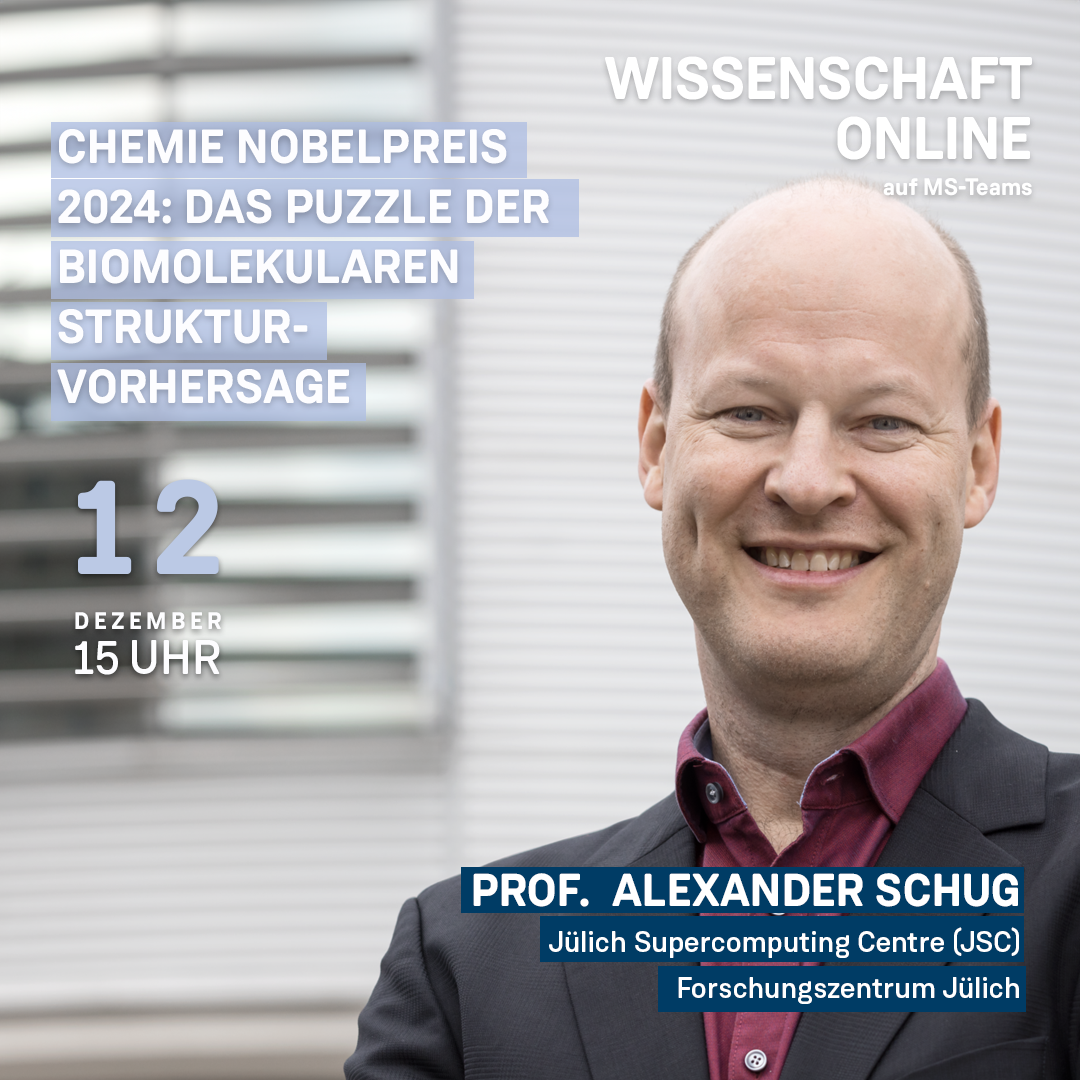
Die 3D-Struktur von Proteinen allein aus ihrer Sequenz vorherzusagen, war lange ungelöst. 2020 schafften Demis Hassabis und John Jumper mit #AlphaFold2 den Durchbruch – ausgezeichnet mit dem #ChemieNobelpreis 2024. 🏆

🔍 Was macht AlphaFold2 🤖 so besonders? Alexander Schug vom @fzj_jsc erklärt es diese Woche bei #WissenschaftOnline.

👉 Infos & Login: fz-juelich.de/de/ueber-uns/kon

@jazminrm.bsky.social on the early maize domestication. For me the coolest bit was using #AlphaFold2 to peek at ancient maize WAXY1 protein variants 🙃 A180D mutation in Ozark maize sits on protein surface but doesn't change structure might affect phosphorylation of Y183 #archaeogenetics

The genomic origin of early ma...

StructuralBiologyActaCrystD@mstdn.science
2024-11-14

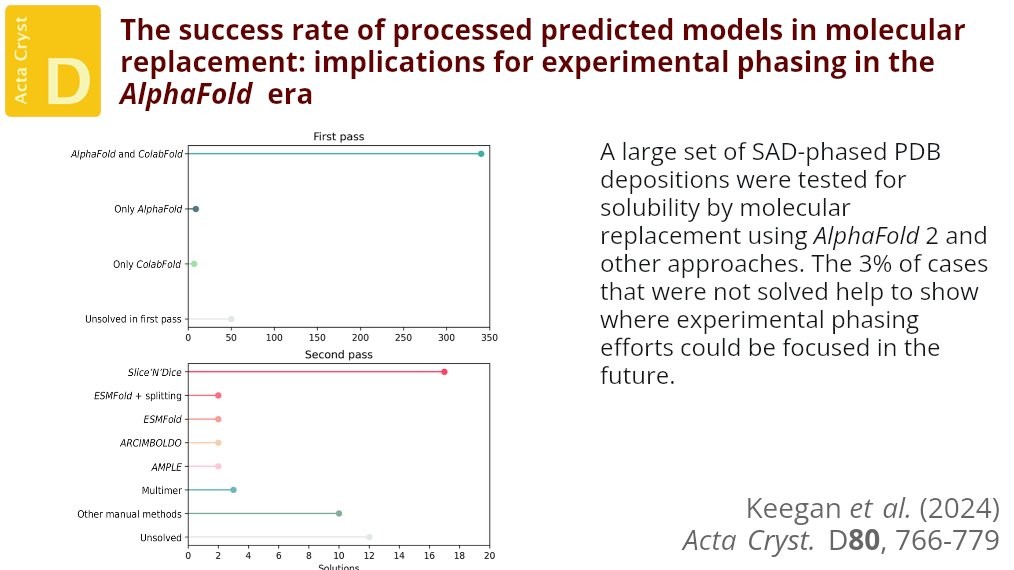
How many of the PDB models that were solved using experimental phasing could have been solved by molecular replacement using models obtained from AlphaFold? #MolecularReplacement #AlphaFold2 #ComputationalMethods t.co/s6EahtcYms

2024-11-08

Avec mon collègue @AntoineTaly, on a écrit un petit truc pour médecine/sciences pour présenter rapidement les améliorations et restrictions d'#alphafold3 par rapport à #alphafold2

medecinesciences.org/en/articl

capture d'écran de la 1ère page de ma nouvelle sur AF3 dans M/S
2024-10-27

Нобелевские премии 2024 и искусственный интеллект. Химия: предсказание белковых структур

С вами снова Павел Бузин Читать дальше

habr.com/ru/companies/cloud_ru

#AlphaFold #AlphaFold2 #DeepMind #химия #белки #нобелевская_премия #нобелевский_лауреат

StructBiolCommunicationsActaCrystF@mstdn.science
2024-10-21

The first crystal structure of a bacterial guanosine 5′-monophosphate synthetase complexed with xanthine 5′-monophosphate is reported
#AlphaFold2 #GuanosineMonophosphateSynthetase #MolecularDynamicsSimulation doi.org/10.1107/S2053230X24008

Victoria Stuart 🇨🇦 🏳️‍⚧️persagen
2024-10-16

Last Week in AI #291 - Nobel Prizes, Adobe's Video Model, Tesla's Robots
Nobel Physics Prize Awarded for Pioneering A.I. Research by 2 Scientists and Nobel Prize in Chemistry Goes to 3 Scientists Adobe’s AI video model is here, and more!
lastweekin.ai/p/last-week-in-a

Prof Paula Salgadopaulasalgado
2024-10-15

21y after collecting data during my PhD, we got to publish the structure of RNA-dependent RNA polymerase from phi8!
Unsolvable in 2003 but model worked!

nature.com/articles/s41598-024

Lesson learned: never discard data!

Great job Kamel El Omari getting it over the line!

Guillaume GaullierGuillawme@fediscience.org
2024-10-10

Having identified the proteins, I fetch their #AlphaFold2 predictions from AlphaFold-DB, or compute them if not in the DB. #AF2 models have excellent geometry and complete sequence correctly numbered, so they are excellent starting models. I rarely use #PDB entries as starting models anymore. Rare exceptions: a PDB entry I deposited myself, or one containing a post-translational modification or non-natural amino acid I need (never present in #AF2 models, only the 20 standards amino acids).
4/19

2024-10-10

2024 Nobel in Chemistry for “Designing protein” and “Predicting protein structure”  
One half of the Nobel Prize in Chemistry 2024 has been awarded to David Baker “for computational protein design”............
#AImodel #AlphaFold2 #Aminoacids #DavidBaker #DemisHassabis #JohnJumper #NobelPrizeinChemistry #PROTEIN #Proteindesign #Proteinstructure
SC

scientificeuropean.co.uk/scien

2024-08-20

GFP-tagging #tubulins is useful but can interfere with their cellular functions. This study describes a strategy guided by #AlphaFold2 structural predictions to label endogenous tubulins across diverse species while preserving functionality #PLOSBiology plos.io/3ArvolQ

Client Info

Server: https://mastodon.social
Version: 2025.07
Repository: https://github.com/cyevgeniy/lmst