#NatureObservation

Bubulcus & Bolotasbbcamping
2026-01-19

The Iberian hare (Lepus granatensis) is a fast and alert native of the Iberian Peninsula, capable of reaching speeds over 70 km/h when threatened. Despite its athletic build, moments like this, quietly grazing, reveal the calm, routine behaviors that sustain its high-energy life.

2026-01-10
On the last day of snow, just before the thaw quietly set in, winter paused for a moment at our garden fence.

Perched there was a Eurasian chaffinch (Fringilla coelebs), known in Dutch as the vink. Alert, upright, and clearly assessing the situation, it seemed to be weighing its chances. The bird feeder was busy — mostly house sparrows, with a few blue tits and great tits darting in and out. Below them, pigeons, blackbirds, magpies and crows scavenged the ground for what inevitably falls. An efficient little ecosystem, even on a grey winter morning.

From the warmth of the house, I watched it all unfold. Outside, the world was cold and muted; inside, quiet and still. The chaffinch waited. This species is known for its adaptability, especially in winter, when flexible feeding strategies and patience can make all the difference. Rather than forcing its way in, it observed — conserving energy, reading movement, timing its next move.

The light was flat and overcast, typical for this time of year. With snow still present and clouds acting like a giant softbox, contrast was low. To keep detail in both feathers and background, I shot handheld with my Canon 5D Mark IV and Sigma 100–400mm at f/11, 1/250 sec, ISO 12800. Not ideal conditions — but honest ones. Winter photography is often about working with what little light you’re given.

There was no drama here. Just calm abundance. Even at the edge of thaw, winter was still quietly doing its work.

#EurasianChaffinch #FringillaCoelebs #Vink
#BirdPhotography #GardenBirds #WinterBirds
#NatureObservation #BackyardWildlife #UrbanNature
#EcologyInAction #NaturalBalance #BirdBehaviour
#WinterLight #OvercastDays #SnowDay
#Canon5DMarkIV #Sigma100400 #HandheldPhotography
#HighISO #NaturalLightPhotography
#DutchNature #NatureInTheNetherlands
#Pixelfed #PixelfedPhotography
#WonderingLens #ByMaikeldeBakker
#NatureStorytelling #WildlifePhotography #EverydayNature
2026-01-10
The garden falls silent.

A few weeks ago, a Sparrowhawk turned our garden upside down in a storm of panic and wings. Yesterday, he returned. This time, there was no chaos — only anticipation. Every bird seemed to know what was coming. Long before I noticed him, the garden emptied itself. Not in panic, but with experience.

Only two House Sparrows (Passer domesticus — Huismus — House Sparrow) made a mistake. They chose low cover beneath the bird feeder house. When the Sparrowhawk (Accipiter nisus — Sperwer — Eurasian Sparrowhawk) landed on top of it, right above them, they froze. Perfectly still. Camouflage doing what evolution designed it to do.

The garden was silent. Too silent.

The sparrowhawk scanned the area, clearly disappointed. Then the two sparrows shifted… and briefly quarrelled. A fatal error. In a flash of muscle and feathers, the hawk launched himself downward. The sparrows reacted instantly — nimble, desperate, alive. They fled with the hawk right on their tail, vanishing beyond the garden.

I don’t know how it ended. That’s nature.

Predators like the Sparrowhawk don’t hunt for sport. They take what they need, removing weakness and maintaining balance. Without them, ecosystems collapse quietly and invisibly. Watching this unfold from my lunch table was a reminder that even the smallest garden is part of a much larger system.

Photographed handheld with my Canon 5D Mark IV and Sigma 100–400mm at f/6.3, 1/250 sec, ISO 3200 — overcast, calm, and deceptively peaceful.

Nature rarely announces itself loudly. Sometimes, it simply holds its breath.

#AccipiterNisus #Sperwer #EurasianSparrowhawk
#PasserDomesticus #Huismus #HouseSparrow
#BirdPhotography #GardenWildlife #UrbanNature
#NatureObservation #EcologicalBalance #Predation
#WildlifeBehavior #BirdsInTheGarden #NatureStory
#HandheldPhotography #Canon5DMarkIV #Sigma100400
#WinterWildlife #OvercastDays #NaturalSelection
#FoodChain #Ecosystem #BackyardNature
#PixelfedPhotography #WildlifeMoments
2026-01-09
White on white.

A few weeks ago I photographed a black bird on black water. Yesterday, nature offered me the inverse: a white bird against a white world.

From the comfort of my couch — warm, while the outside was anything but — I noticed this gull resting on a snow-covered roof, silhouetted only by a uniformly grey winter sky. No contrast to lean on, no dramatic light. Just form, posture, and subtle tonal differences.

This is a Russian Common Gull
Larus canus heinei
Dutch: Russische stormmeeuw
English: Common Gull (heinei subspecies)

Although resting, the bird remained alert: neck stretched upward, scanning its surroundings. A typical posture in harsh winter conditions, where conserving energy must be balanced against constant awareness. In snowy, overcast weather like this, visibility is reduced and predators — or competition — can appear suddenly.

From a photographic standpoint, this was a quiet challenge. White subject, white background, flat light. Exposure becomes critical. Shot handheld with the Canon 5D Mark IV and the Sigma 100–400, I worked at f/29, 1/250 sec, and ISO 12800. The high ISO and relatively slow shutter speed tell the story of the light: dark, heavy cloud cover, even at 9 in the morning. Sometimes the data in the EXIF says as much as the image itself.

Ecologically, wintering gulls like Larus canus heinei are increasingly common visitors, adapting to shifting climates and food availability. Observing them — even from your own living room — is a reminder that wildlife is always closer than we think.

#ByMaikeldeBakker #WonderingLens #MaikeldeBakkerPhotography
#LarusCanusHeinei #CommonGull #RussianCommonGull #RussischeStormmeeuw
#BirdPhotography #WinterBirds #UrbanWildlife
#WhiteOnWhite #MinimalNature #SubtleTones
#Ecology #AvianEcology #BirdBehavior
#ClimateAndNature #WinterLight
#Canon5DMarkIV #Sigma100400
#HandheldPhotography
#NatureObservation #ScientificPhotography
#Pixelfed #NatureCommunity #BirdLovers #WildlifePhotography
2026-01-08
Brr… it has been freezing. The snow has settled, hardened, and now crunches loudly under every step. Usually that sound sends birds and other wildlife scattering long before they come into range of my wondering lens. But not this one. No — this bird stayed.

Late in the afternoon, as the sun briefly pushed through heavy, snow-laden clouds in the Loonse en Drunense Duinen, I noticed a shape in the trees. Calm. Watching. Unimpressed. Almost as if it was thinking: “Hmm… a two-meter-tall human, 110 kilos, plus 15 kilos of camera gear. I’ve seen worse.”

There it was: the Long-eared Owl —
Dutch: Ransuil
English: Long-eared Owl
Latin: Asio otus

Despite its name, those “ears” aren’t ears at all, but feather tufts used for camouflage and communication. In winter, Long-eared Owls often roost quietly during the day, relying on stillness and pattern rather than flight. That stillness is what made this encounter possible, even with the snow betraying every step I took.

Photographing in these conditions is always a balance between physics and physiology. Cold air, fading light, and handheld shooting meant choices had to be made. I settled on f/16, 1/1000s, ISO 3200, using my Canon 5D Mark IV paired with the Sigma 100–400mm. A fast shutter to freeze even the slightest movement, high ISO to compensate, and a deep depth of field to keep that piercing gaze sharp.

#LongEaredOwl #Ransuil #AsioOtus #OwlPhotography #WinterWildlife #DutchNature
#LoonseEnDrunenseDuinen #NatureObservation #WildlifePhotography #BirdsofEurope
#Canon5DMarkIV #Sigma100400 #HandheldPhotography #ColdWeatherPhotography
#SnowCrunch #SilentHunter #FeatheredPredator #AvianEcology #NatureScience
#ForestLight #WinterMood #NatureStories #WatchingEyes #WildlifeEncounter
#RespectNature #ByMaikeldeBakker #MaikeldeBakkerPhotography #WonderingLens
#Pixelfed #NatureLovers #BirdWatching #SlowDownAndObserve
2026-01-04
Short-toed Treecreeper — a quiet moment at the base of a tree

Some birds don’t announce themselves with color or sound. They whisper.
On the same morning walk through the Oisterwijkse Bossen, I noticed one of those whispers: a Short-toed Treecreeper — Certhia brachydactyla (Boomkruiper in Dutch).

Treecreepers are specialists. Their curved bills and stiff tail feathers are evolutionary tools designed for one task: spiraling up tree trunks while probing bark crevices for insects and spiders. This one was doing exactly that — hopping on and off the lower part of a trunk, pecking quickly, constantly alert. These birds are small, nervous, and very aware of their surroundings, which makes photographing them more about patience than speed.

I moved slowly, trying not to break the rhythm of its foraging. Early morning light was still scarce, and I was fully zoomed in with my Sigma 100–400mm on the Canon 5D Mark IV. That meant f/6.3, ISO 3200, and a shutter speed of 1/250s — about the slowest I’m comfortable with handheld while tracking a moving subject. Noise is a fair trade for sharpness and presence.

Then, unexpectedly, it paused. Just for a moment. Sitting on the ground at the base of the same tree it had been circling, staring ahead as if briefly lost in thought. No motion, no alarm. Just a pause.

That’s the frame that stayed with me. Not dramatic. Not rare in spectacle. But intimate. A small bird, perfectly adapted, taking a breath in a forest that barely noticed.

#ShortToedTreecreeper #CerthiaBrachydactyla #Boomkruiper
#BirdPhotography #ForestBirds #WildlifePhotography
#Canon5DMarkIV #Sigma100400 #HandheldPhotography
#LowLightPhotography #NatureObservation #AvianEcology
#BirdBehavior #WoodlandWildlife #DutchNature
#OisterwijkseBossen #SmallBirds #QuietMoments
#ScientificCuriosity #NatureDetails #FieldBiology
#PixelfedPhotography #NatureLovers #BirdWatchers
#ByMaikeldeBakker #WonderingLens
2026-01-03
The Crested Tit — small bird, serious hairstyle

While walking through the Oisterwijkse Bossen, we noticed movement among the dead leaves on the forest floor. At first glance, it looked like just another tit hopping about. But then I saw it. The mohawk. A tiny, unapologetic punk haircut in the middle of the forest.

This was a Crested Tit — Lophophanes cristatus (Kuifmees in Dutch). A species I don’t encounter often, and even more rarely get the chance to photograph. Crested tits are small, fast, and prefer staying low, close to tree trunks, roots, and bushes. Which makes perfect ecological sense in a forest… and perfect photographic chaos.

They forage by flicking through leaf litter, bark, and moss, searching for insects and seeds. That behavior kept this bird constantly in motion, darting between shadows, branches, and undergrowth. Capturing it meant reacting fast and accepting technical compromises.

Light was limited, and depth of field still mattered. I shot this handheld with my Canon EOS 5D Mark IV at f/6.3, 1/250s, ISO 3200. The shutter speed is about as slow as I dare go handheld with a moving subject, but it allowed me to freeze the bird while keeping enough light to preserve feather detail. Noise can be managed; motion blur cannot.

What I love about this image is not just the rarity of the species, but its character. That crest isn’t decorative — it’s communication, posture, attitude. Evolution has a sense of humor, and sometimes it gives it a mohawk.

#CrestedTit #LophophanesCristatus #Kuifmees #BirdPhotography #ForestBirds
#WildlifePhotography #Canon5DMarkIV #HandheldPhotography #LowLightPhotography
#BirdBehavior #NatureObservation #FieldBiology #AvianEcology
#OisterwijkseBossen #DutchNature #WoodlandWildlife
#SmallBirdBigAttitude #NatureDetails #ScientificCuriosity
#PixelfedPhotography #NatureLovers #BirdWatchers
#ByMaikeldeBakker #WonderingLens
2025-12-23
Early this morning, before sunrise, our garden briefly turned into chaos. House sparrows vanished into the firethorn (Pyracantha), blue tits and great tits scattered in all directions, pigeons took off, magpies protested loudly. Even the blackbirds dove for cover. Something was clearly wrong.

Then I saw it — a fast, agile silhouette cutting through the air, turning sharply mid-flight. A predator. Moments later it landed on the fence, right in front of us. A Eurasian Sparrowhawk (Accipiter nisus).
A Sparrowhawk on the fence

This small raptor is built for surprise and speed. Short wings, long tail, and razor-sharp focus — evolution’s answer to hunting in cluttered spaces like gardens and hedgerows. The firethorn, dense and armed with thorns, offered the sparrows temporary safety, much to the visible frustration of the hawk.

It was still very dark. No sunrise yet, only moody pre-dawn light. Technically, this was a challenge. I didn’t want motion blur from a slow shutter, but pushing ISO too far would destroy the fine feather detail. I settled on 1/250s (the slowest I trust handheld), f/6.3, ISO 3200, fully zoomed to 400mm on the Sigma, mounted on my Canon 5D Mark IV.

The Sparrowhawk scanned the garden, alert and tense, then eventually flew off — leaving silence behind. Moments like this are a reminder: even in our back gardens, wild systems are constantly at work. We just don’t always notice them.
#EurasianSparrowhawk #AccipiterNisus #UrbanWildlife #GardenWildlife #BirdsOfPrey #NatureObservation #WildlifePhotography
#Canon5DMarkIV #Sigma100400 #HandheldPhotography #LowLightPhotography #BirdBehavior #UrbanEcology
#MorningLight #PreDawn #NaturalHistory #FieldObservation #BackyardNature #PixelfedPhotography #NatureLovers #BirdWatching #ScientificCuriosity
#ByMaikeldeBakker #WonderingLens #wonderinglens
Willa :v_trans: :v_bi:wplalonde@lgbtqia.space
2025-12-17

The Seek app has given me a year-end summary of observations for this year, a nice reminder of all the lovely hikes and interesting species we saw back when we could get outdoors, before the weather deteriorated into icy cruelty.
:neobot_heart_green:

(Not all the species where actually "new" to us, but rather to new to the phone I got this year. Still, I'm happy with so many observations!)

#SeekApp #NatureObservation

Part of a screenshot from an iPhone: 
The top half of the background is green. At the top it says "Seek Year in Review." Below that, next to a red and gold badge, it says "In 2025, you observed 256 new species."
The bottom half pf the screen is white. There is a green banner that says "Top Species" in white letters. Below that are three hexagons containing from left to right: a flower, a beetle, and some mushrooms. The badges are labeled as follows (again from left to right):
130 plants
57 insects
33 fungiPart of a screenshot from an iPhone. The background is white. A green banner at the top has the word "Observations" in white letters. Below that is a chart labeled "Observations by Month" with a line plot showing how the amount of observations varied by month, being highest on June and July and lowest in November, December, January, and February.
2025-11-12
The White Swan in the Black Water

Like the hoot of a coot, this one was a difficult shoot. The swan floated in near darkness — the kind that tricks even the most advanced metering systems. The white of its feathers reflected light so intensely that every automatic setting wanted to blow out the highlights. So, back to full manual it was.

Shot in Park Sonsbeek in Arnhem with my Canon 5D Mark IV and Sigma 100–400, I carefully balanced the exposure — 1/250 s, f/6.3, ISO 12800. A few test frames later, I found the sweet spot where the white plumage stayed detailed without losing the subtle ripples in the near-black water.

A bit of contrast, a touch of color correction, and that was it. The rest is natural — the quiet precision of light meeting patience. Sometimes photography feels less like taking a picture and more like measuring reality in fractions of a second.

Photography, after all, is just another way of studying light and life.

#Photography #NaturePhotography #BirdPhotography #Swan #EurasianSwan #Cygnusolor #Canon5DMarkIV #Sigma100400 #ManualMode #ExposureControl #Contrast #LightAndShadow #LowLightPhotography #NatureObservation #WildlifePhotography #DutchNature #ParkSonsbeek #Arnhem #NatureInTheNetherlands #BirdWatching #PhotoTechnique #FieldPhotography #PhotographyTips #DocumentaryPhotography #ScientificObservation #NaturalBeauty #AnimalBehavior #UrbanWildlife #PatienceInPhotography #LightStudy #LearningPhotography #DutchPhotographer #WildlifeEncounters #NatureLovers #OnTheField #FieldNotes #CanonPhotography #SigmaArtLens #ByMaikeldeBakker #MaikeldeBakkerPhotography
2025-11-11
Birds of the Spoorpark

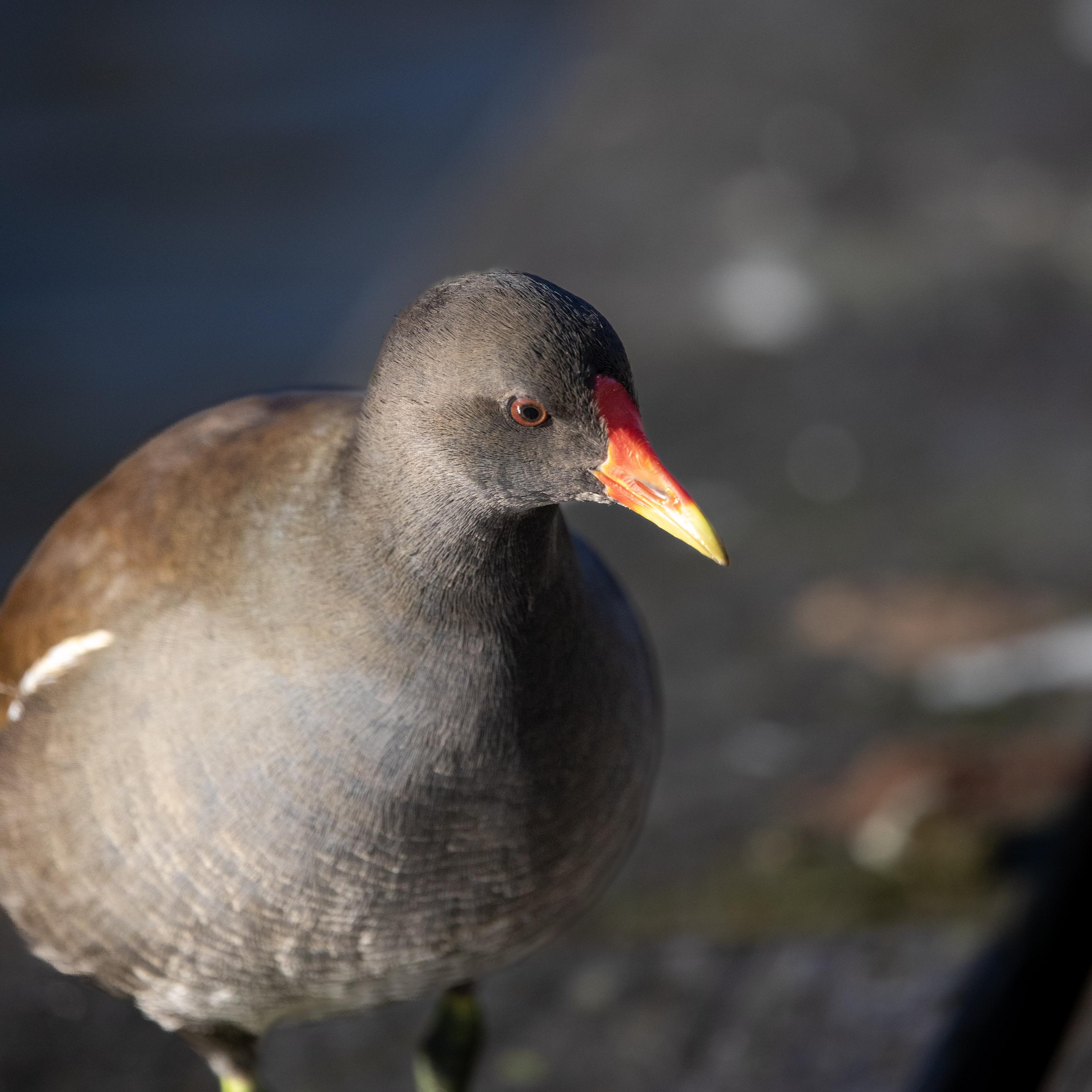
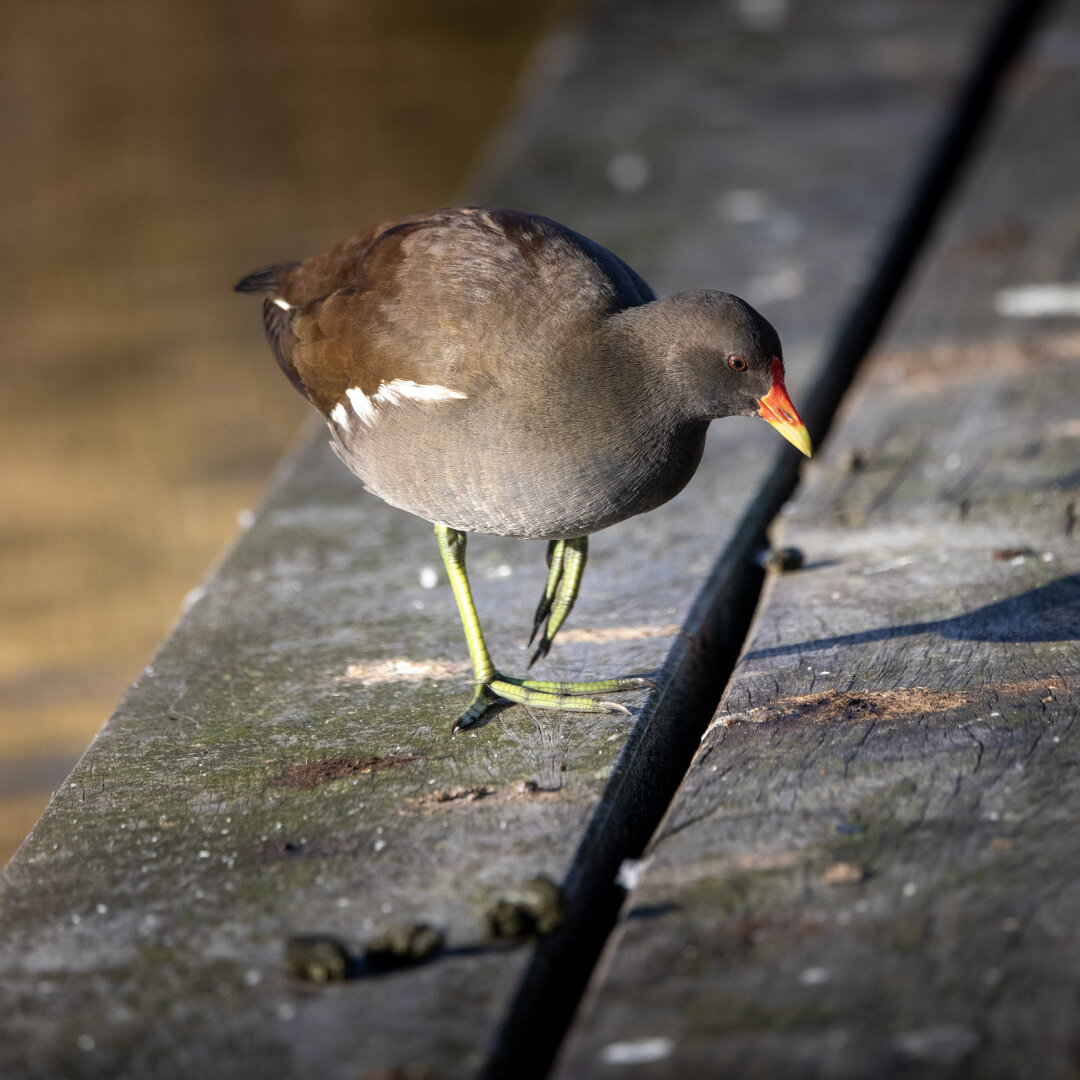
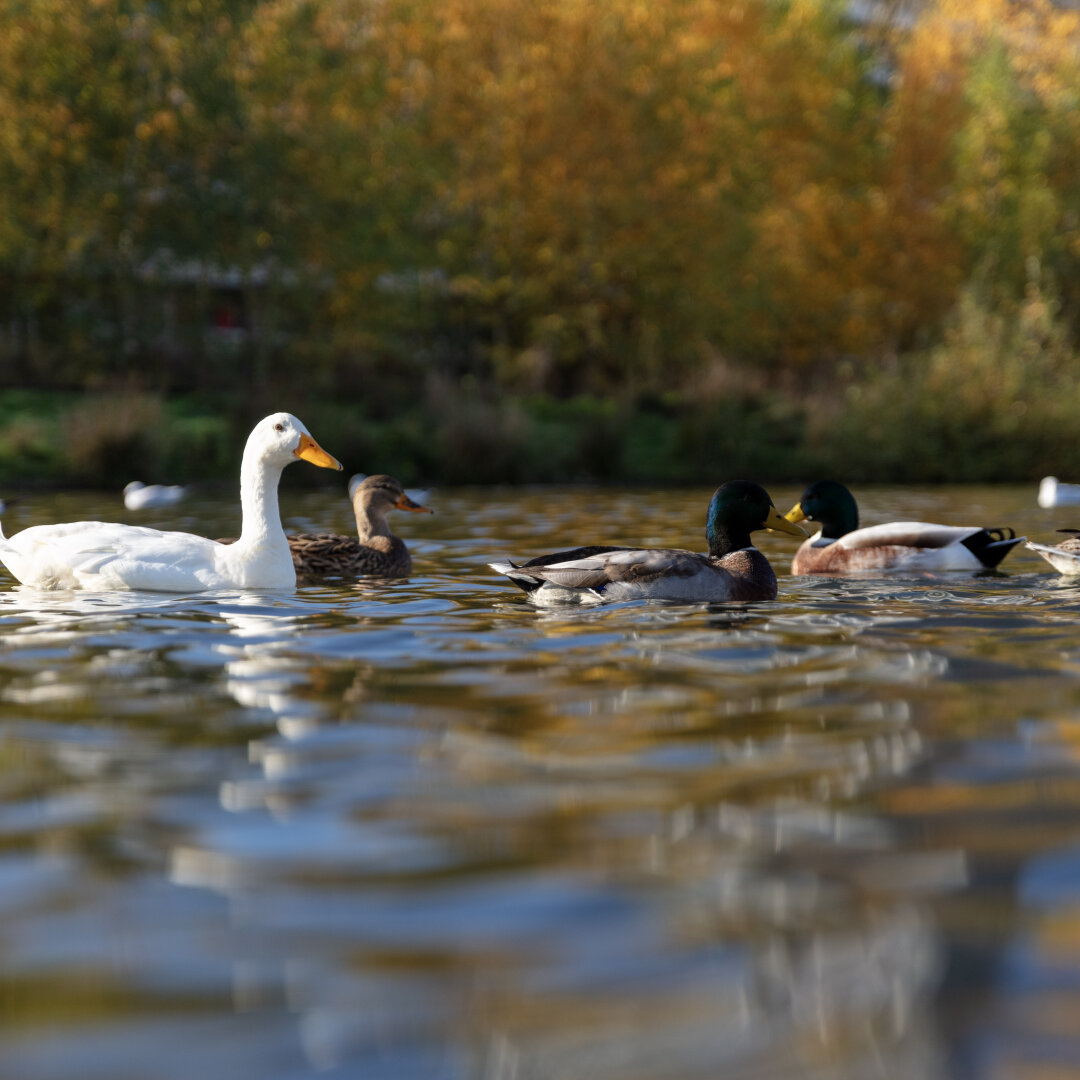
The Spoorpark in Tilburg isn’t exactly a nature refuge — it’s more of a social hub where the city’s “fearless of humans” kind of birds thrive. Yet even here, life unfolds with quiet grace. The mallards (Anas platyrhynchos) glide through the shallow water, joined by a white domestic duck — perhaps a feral hybrid, its yellow beak gleaming in the sun. A solitary common moorhen (Gallinula chloropus) patrols the edges, always alert, always alone.

Around 11:00, with the Canon 5DsR and Sigma 24–70mm Art, I crouched to eye level to meet them on their own terms. That low perspective transforms everything — reflections sharpen, depth of field softens, and suddenly you’re no longer a spectator but a participant in their small, vibrant world.

Every feather, ripple, and movement becomes a study in adaptation — a living reminder that even in the heart of the city, evolution doesn’t rest.

Photography, after all, is just another way of studying light and life.

#BirdsOfTheSpoorpark #UrbanWildlife #AnasPlatyrhynchos #GallinulaChloropus #DomesticDuck #Canon5DsR #Sigma2470Art #NatureObservation #ScientificPhotography #WildlifePhotography #UrbanEcology #Tilburg #Spoorpark #CityNature #Birdwatching #Ornithology #NatureStudy #LightAndLife #MacroPerspective #DocumentaryPhotography #FieldObservation #ByMaikeldeBakker #MaikeldeBakkerPhotography #LowAnglePhotography #NatureLovers #ScientificCuriosity #ArtOfObservation #NaturalBehavior #UrbanBiodiversity #CanonPhotography #SigmaArtLens #StoryOfNature #WildlifeInTheCity #DutchPhotography #EcologicalPerspective #EverydayWildlife #MindfulObservation #NatureThroughTheLens #ScientificArt #FeathersAndLight

How to Expand Your World Without Leaving Your Zip Code

Expand your world, close to home: back roads, small details, and William Penn’s reminder to pay attention. Slow down and notice small stuff.

adventureadjacent.com/2025/10/

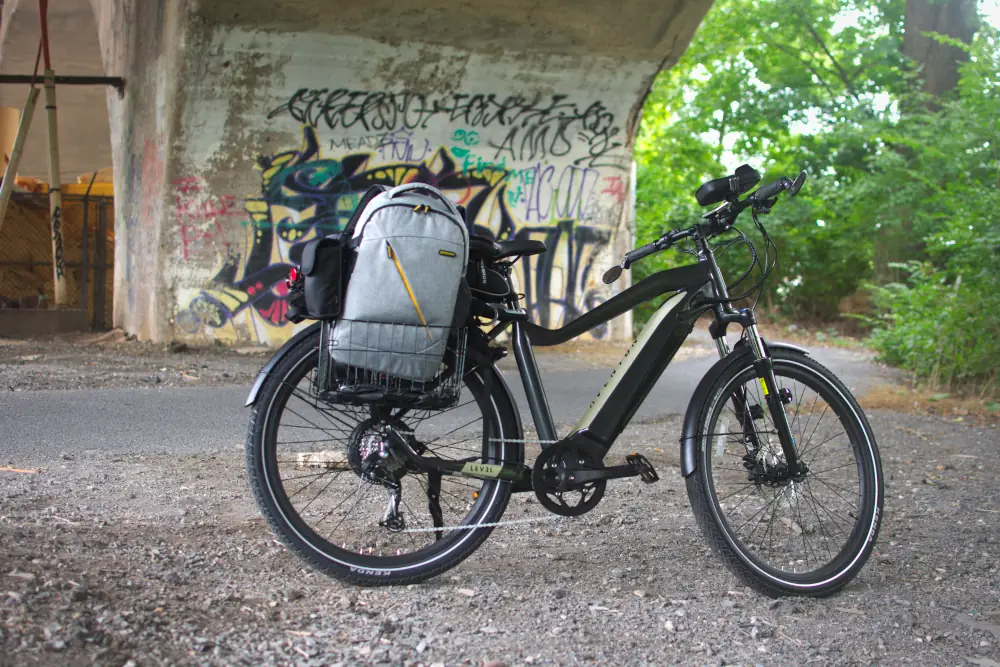
Photo: Museum panel with William Penn quote about being “ignorant of themselves,” flanked by a Pennsylvania crest and longhouse illustration. A quote indicating that you should expand your worldA 1666 portrait of William Penn at age 22.Aventon Level electric bike under a bridge with graffiti behind it, taken in Reading, PA on July 29, 2021.
Petra van CronenburgNatureMC@mastodon.online
2025-09-30

2/2 And if it helps you to stay curious for your whole life, you can name it "Slow Looking" and feel a little bit Zen or hypey. 😉 steady.page/en/naturematchcuts

#NatureMatchCuts #curiosity #curious #nature #soilLife #natureObservation #observation #NaturePhotography #woodlice

2025-08-15

A bit of Cuba Lake for #FishyFriday.

📷 Olympus OM-D E-M10 Mark III
🔎 Olympus M.Zuiko 40-150mm F4.0-5.6 R

#FromAbove #Water #Ripples #Reflections #NatureObservation #QuietWater #WesternNY #NewYorkState #SouthernTier #Appalachia #MicroFourThirds #Fishing #Fish

Viewed from above, a person with a dark backpack stands on a concrete edge beside shallow, tea‑green water. Sunlit rocks and sandy patches show through; tiny fish scatter like dashes across the bottom. A ragged line of old wooden posts recedes into ripples at upper right, where reflections of trees shimmer on the surface. Fallen leaves dot the water.
2025-08-09
Flowers of the Kampina – Part 3

Summer in the Kampina is a feast for the senses, and nowhere is this more evident than in its wildflowers.

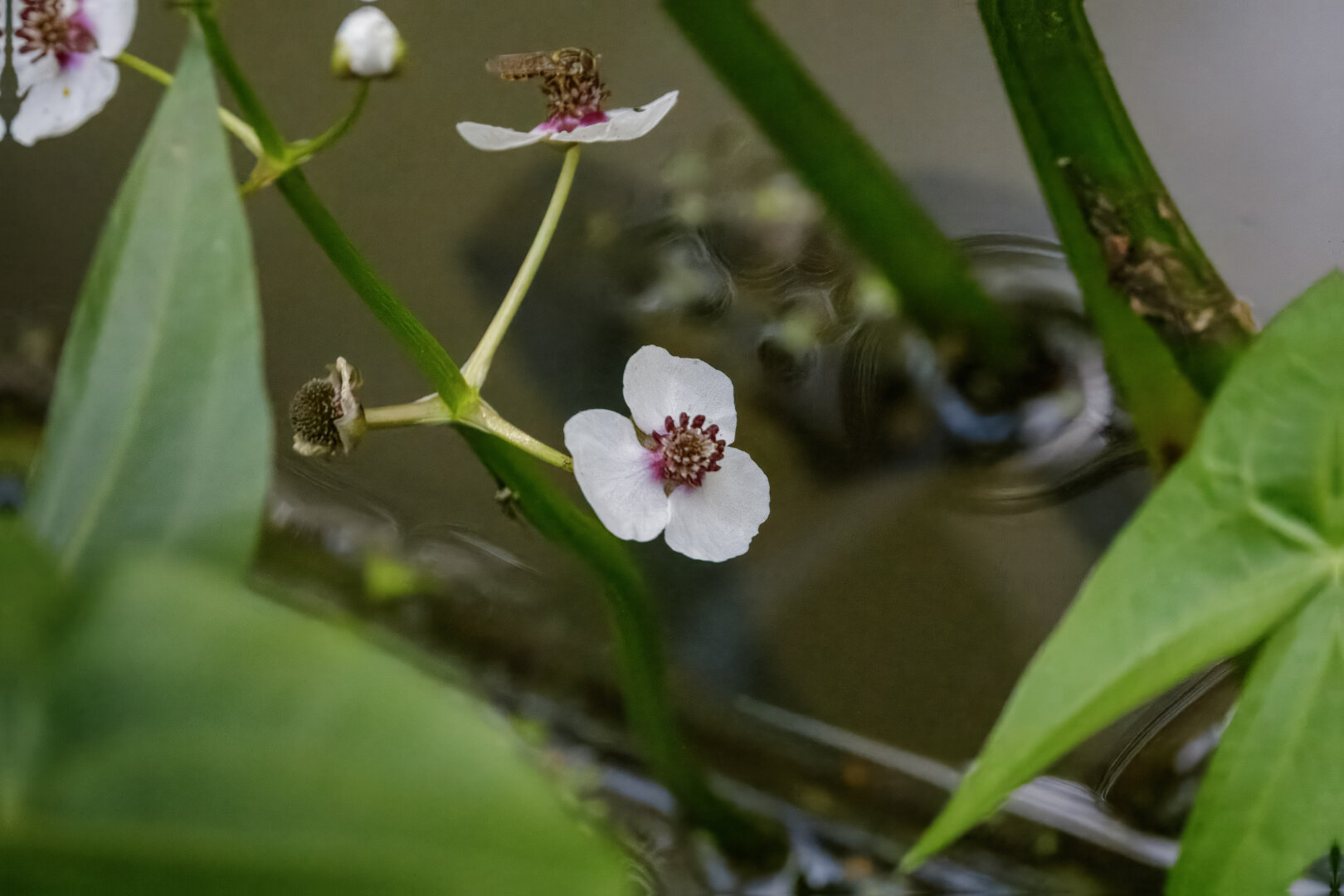
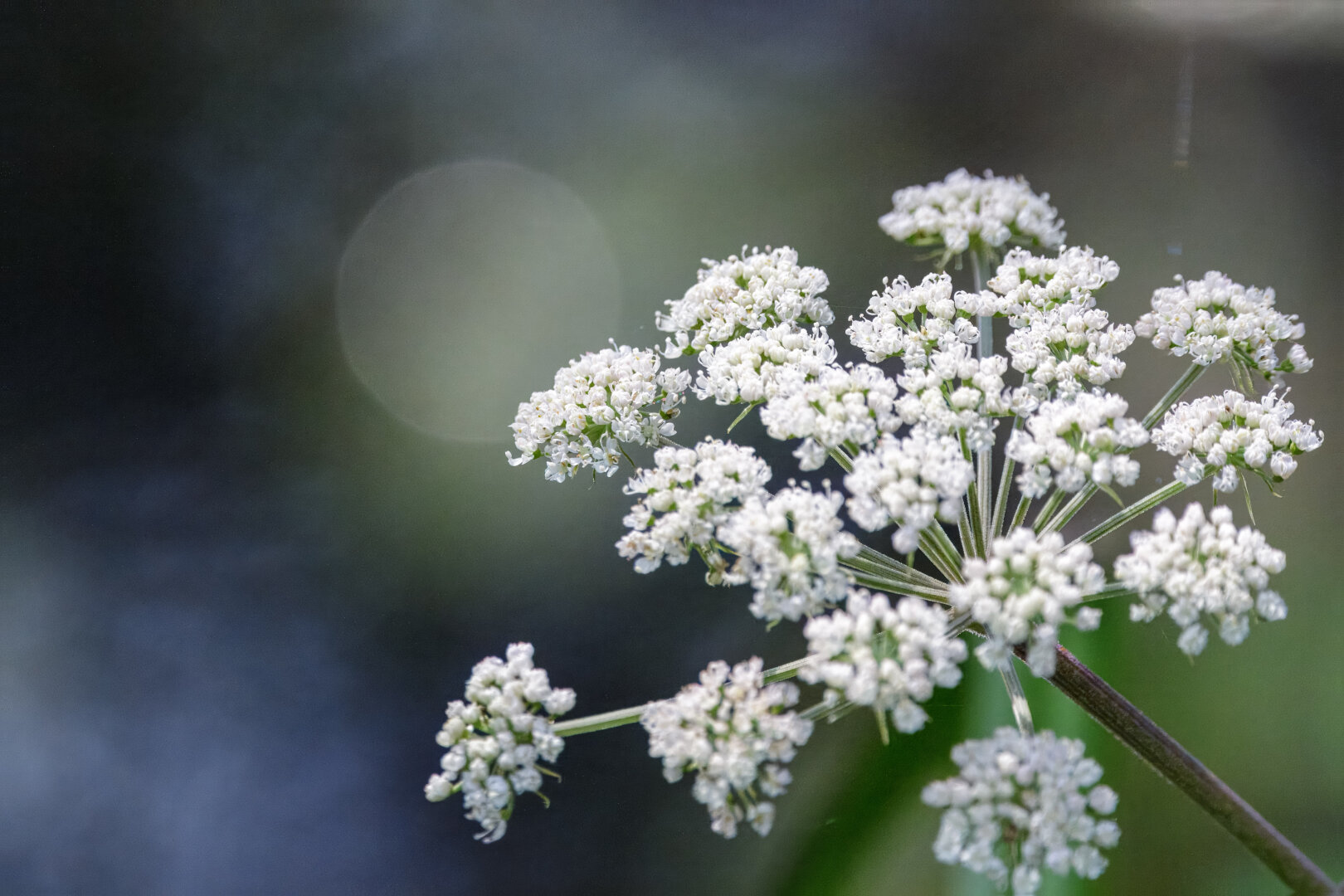
I began with Sagittaria graminea (smalbladig pijlkruid), its delicate white petals catching the morning light, while a honeybee worked busily at the top of the frame. Nearby, the toxic yet beautiful Cicuta virosa (waterscheerling) stood tall, its blossoms framed by a shimmering bokeh from the water behind.

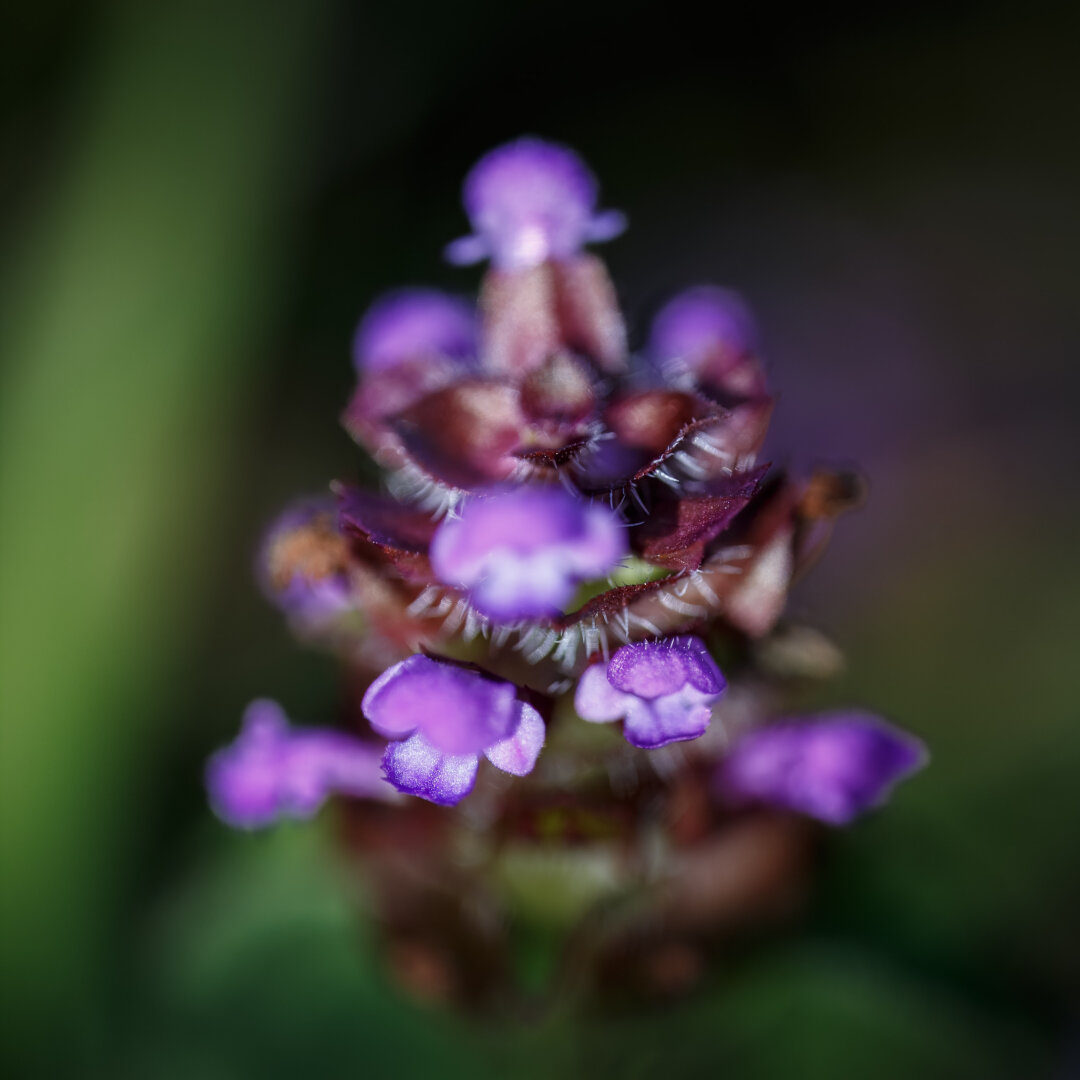
The humble Prunella vulgaris (gewone brunel or bijenkorfje) was next—a true bee magnet. I captured it with my Canon 5D Mark III and MP-E 65mm macro lens, a rare, specialized lens that magnifies from life-size to five times life-size without additional accessories. It’s a tool for those who want to dive into the smallest worlds nature hides.

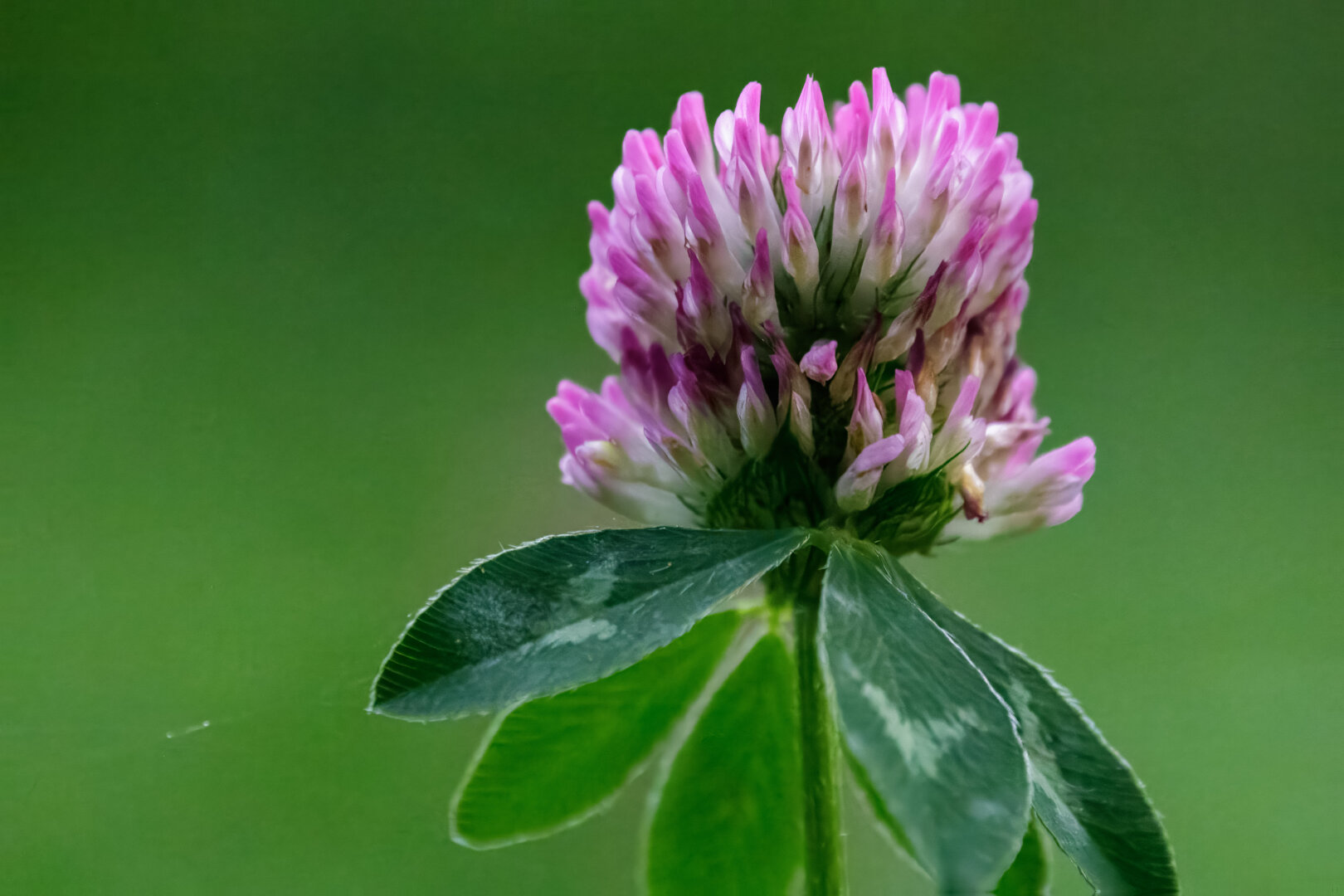
At the northeast near Huisvennen, I wandered into a sea of blooming clover. My photo shows just one flower, but the meadow was alive with bees darting between blossoms.

The heath is also in bloom, painting the landscape in purples and pinks. In the early morning, unopened buds still held tiny dew droplets—each a perfect lens for the rising sun.

Finally, the Galeopsis tetrahit, here in a pale form with purple specks. While modest in appearance, it belongs to the vast orchid family—one of the oldest and most diverse plant families on Earth.

Next: Part 4 – Birds of the Kampina.

Hashtags:
#Wildflowers #Kampina #MacroPhotography #Canon5DMarkIII #Canon7DMarkII #Sigma100400 #MPE65mm #SagittariaGraminea #CicutaVirosa #PrunellaVulgaris #CloverFlower #HeathInBloom #GaleopsisTetrahit #OrchidFamily #BeeFriendly #PollinatorLove #NatureCloseUp #DutchNature #Oisterwijk #WildNetherlands #MacroMagic #FloralPhotography #BotanyLovers #PlantScience #FlowerDetails #TinyWorld #FlowerMacro #InsectPollination #BeePhotography #NatureArt #BokehLovers #MorningDew #BloomSeason #SummerFlowers #WildFlora #NatureObservation #PhotographyForTheSoul #BotanicalBeauty #PlantDiversity #WildflowerSeason #HiddenNature
2025-08-09
The Wonderful World of Fungus – Part 2

After last week’s rains, the Kampina near Oisterwijk revealed a hidden kingdom—one that thrives quietly beneath our feet. This week, I set my lenses to macro mode and explored the intricate, often overlooked life of fungi and slime molds.

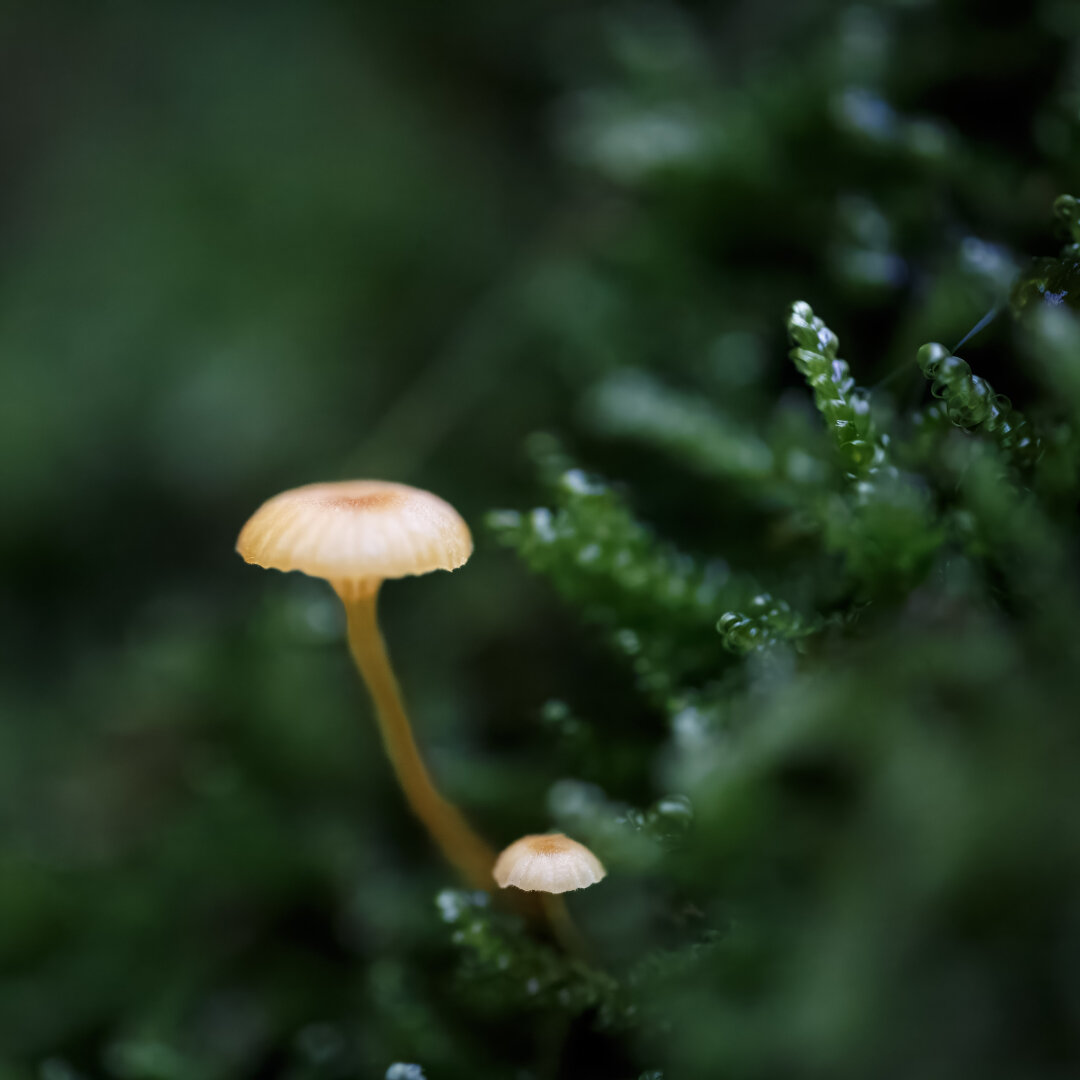
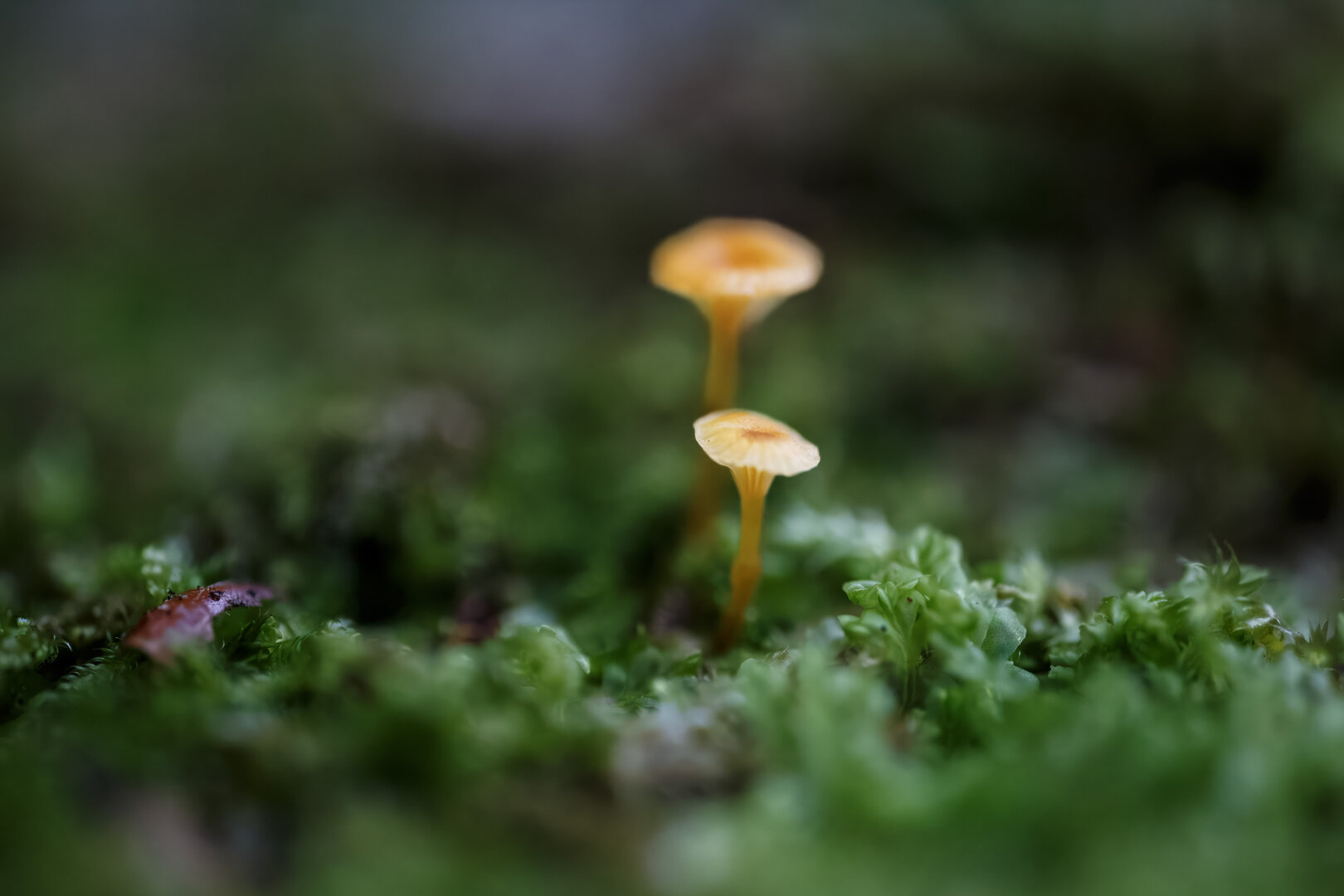
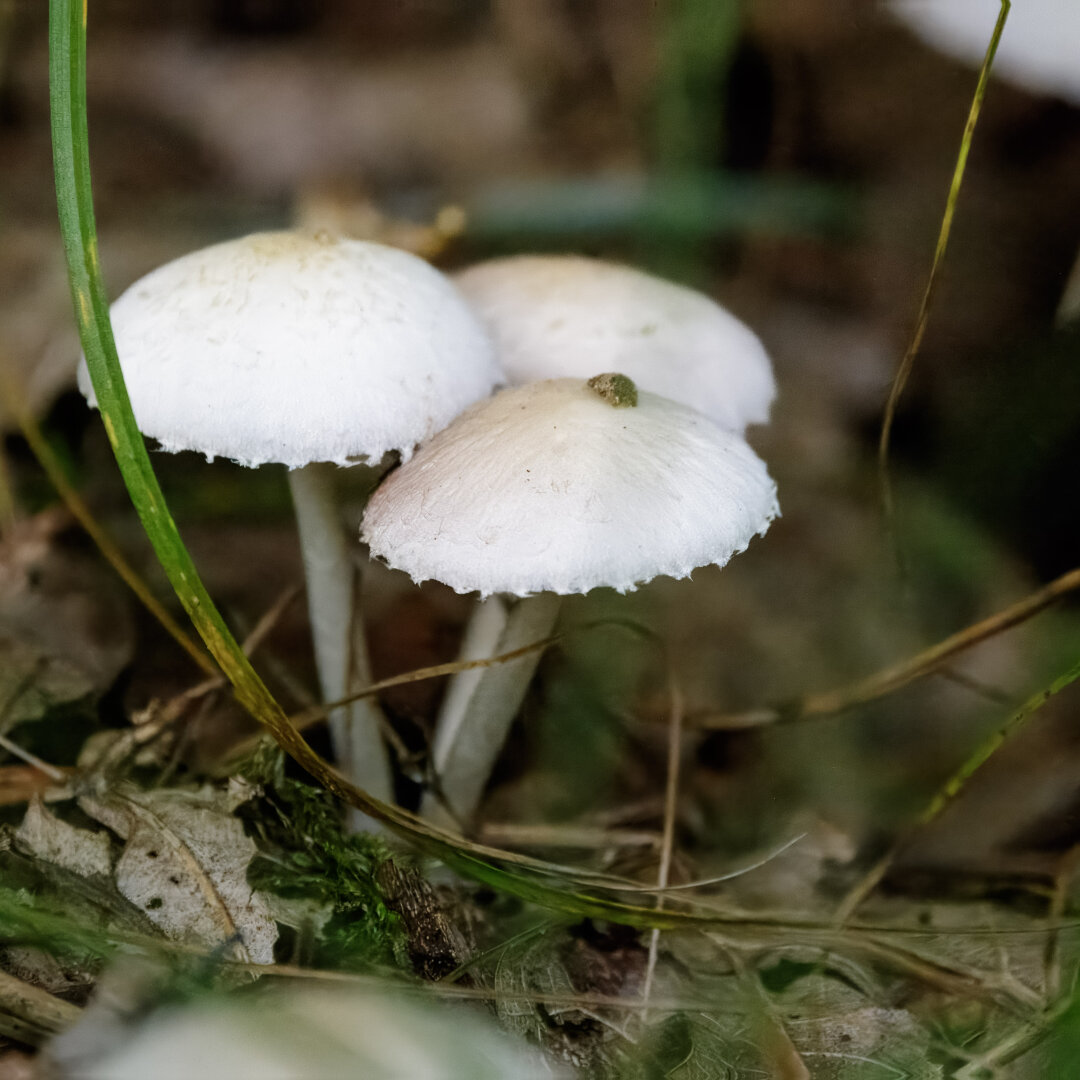
First, I found Rickenella fibula, a tiny moss-dwelling mushroom just a few millimeters tall, its orange caps glowing against the green carpet. Nearby, Mycena stylobates stood on delicate stems, their translucent caps perched above fallen leaves. Looking closely, I could see the long, thread-like hyphae weaving underneath—nature’s living network, breaking down leaf litter and recycling nutrients.

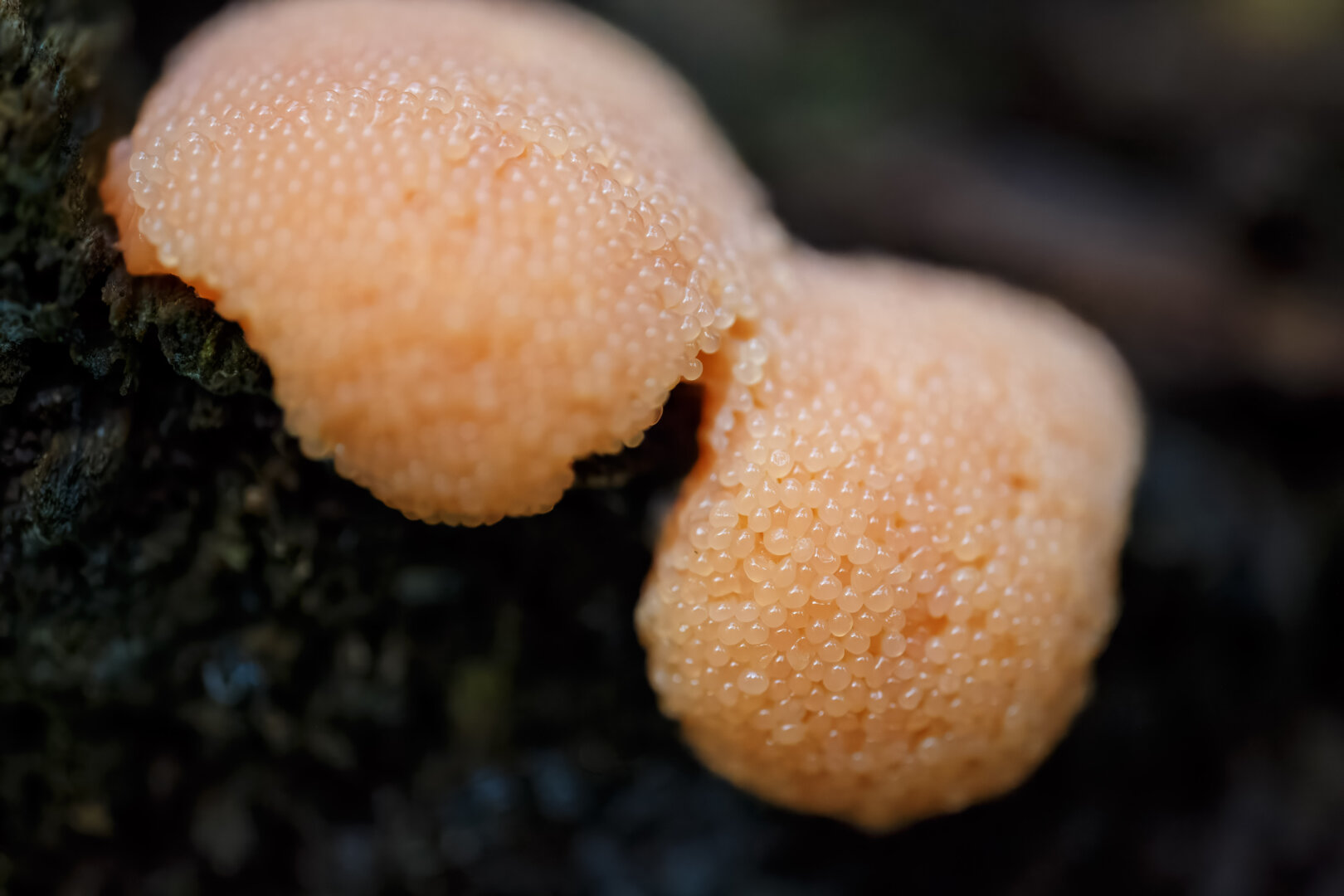
Then came the slime molds. One bright orange species looked like clusters of tiny eggs, each a potential transformation into a spore-bearing structure. Another, still a mystery to me, appeared as a single white, chalk-like sphere on moss—perhaps the fruiting body of another slime mold, or something else entirely. Nature loves to leave puzzles for us to solve.

After hours in this miniature world, I reached the heart of the Kampina and paused at a weathered workman’s hut before heading home. My Canon 5D Mark III with MP-E macro lens captured the fine details, while the Canon 7D Mark II with Sigma 100–400mm kept watch for the bigger picture.

Next up: Part 3—The blooming heath and wildflowers of the Kampina.

Hashtags:
#MacroPhotography #Canon5DMarkIII #Canon7DMarkII #Sigma100400 #MPE65mm #FungiPhotography #RickenellaFibula #MycenaStylobates #MossLovers #TinyMushrooms #FungusAmongUs #SlimeMold #Mycology #MushroomLovers #FungiMacro #ForestFloorFinds #NatureCloseUp #DutchNature #Kampina #Oisterwijk #WildNetherlands #MushroomSeason #MicroWorld #FungiFriday #InstaFungi #MycoBeauty #ForestMagic #MossAndFungi #TinyWorld #FungiOfTheNetherlands #MacroMagic #MushroomArt #SlimeMoldSpotting #MysteryMushroom #SporeLife #NatureDetails #HiddenNature #WildlifeMacro #NatureObservation #CloseUpNature
2025-08-08
Summer’s Small Wonders

It’s been an intense week job hunting—stressful, but necessary. When the tension builds, I return to my medicine: walking and photography. This time of year, midsummer, wildlife can be scarce. So I turned my attention to the smaller residents of the Kampina near Oisterwijk.

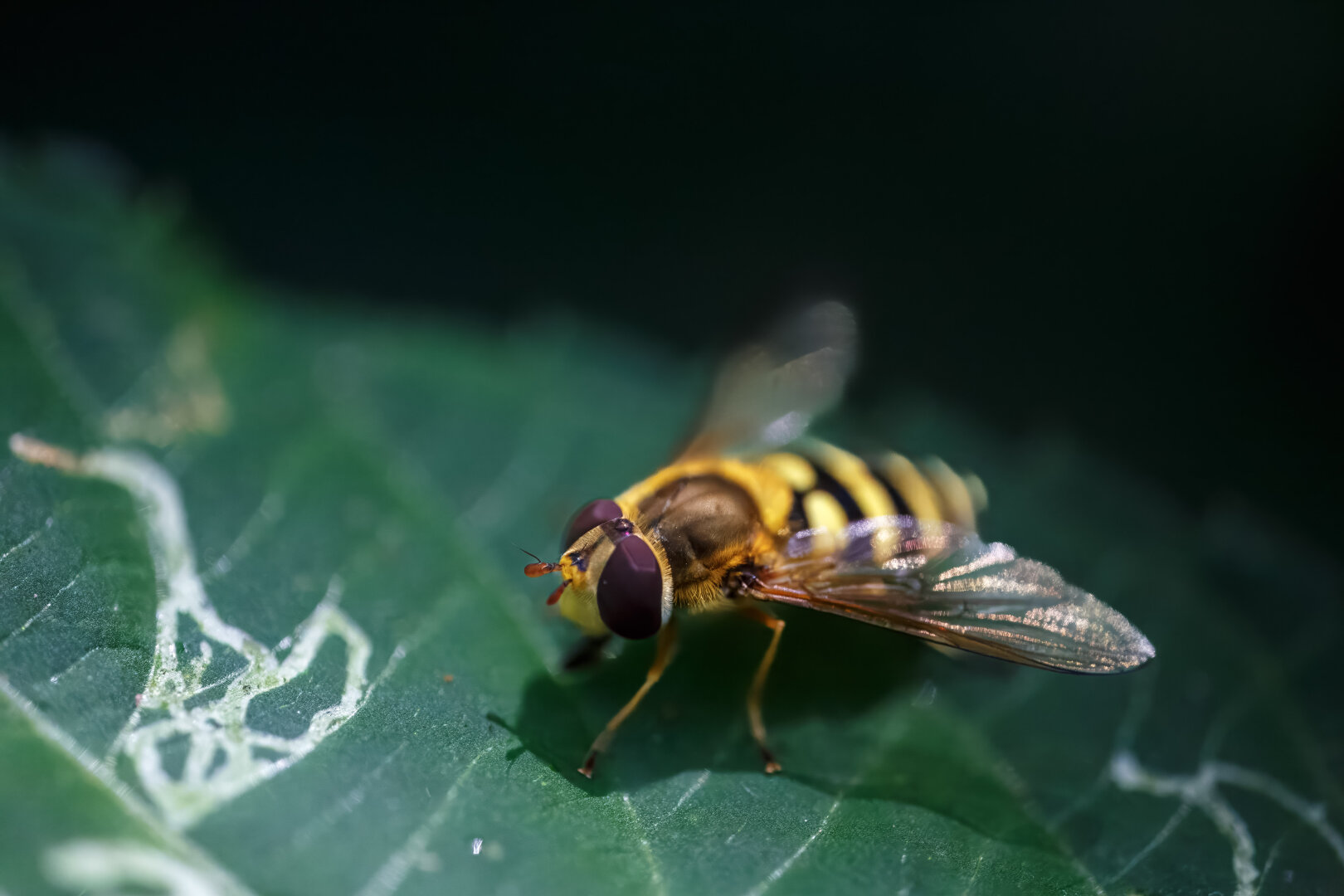
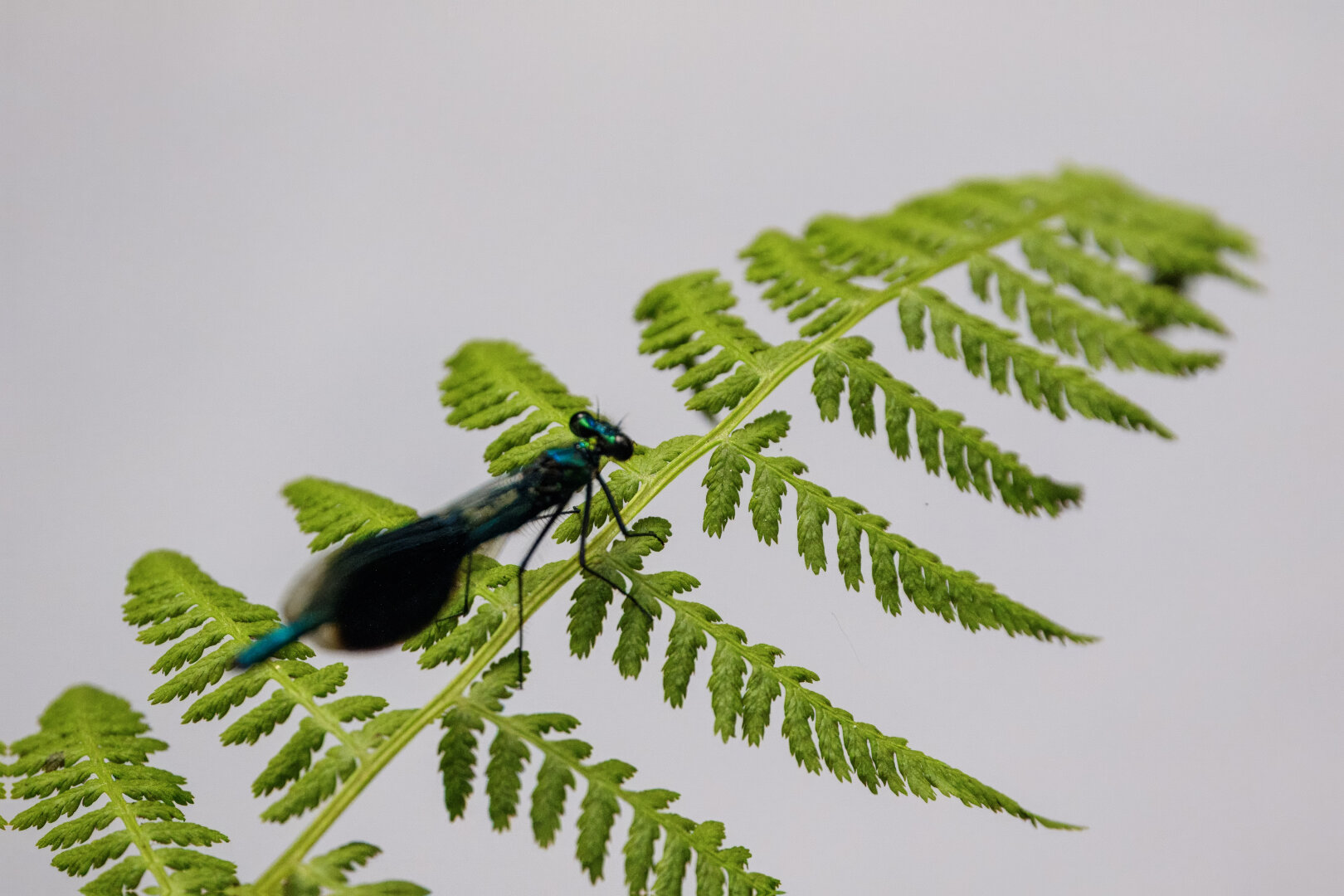
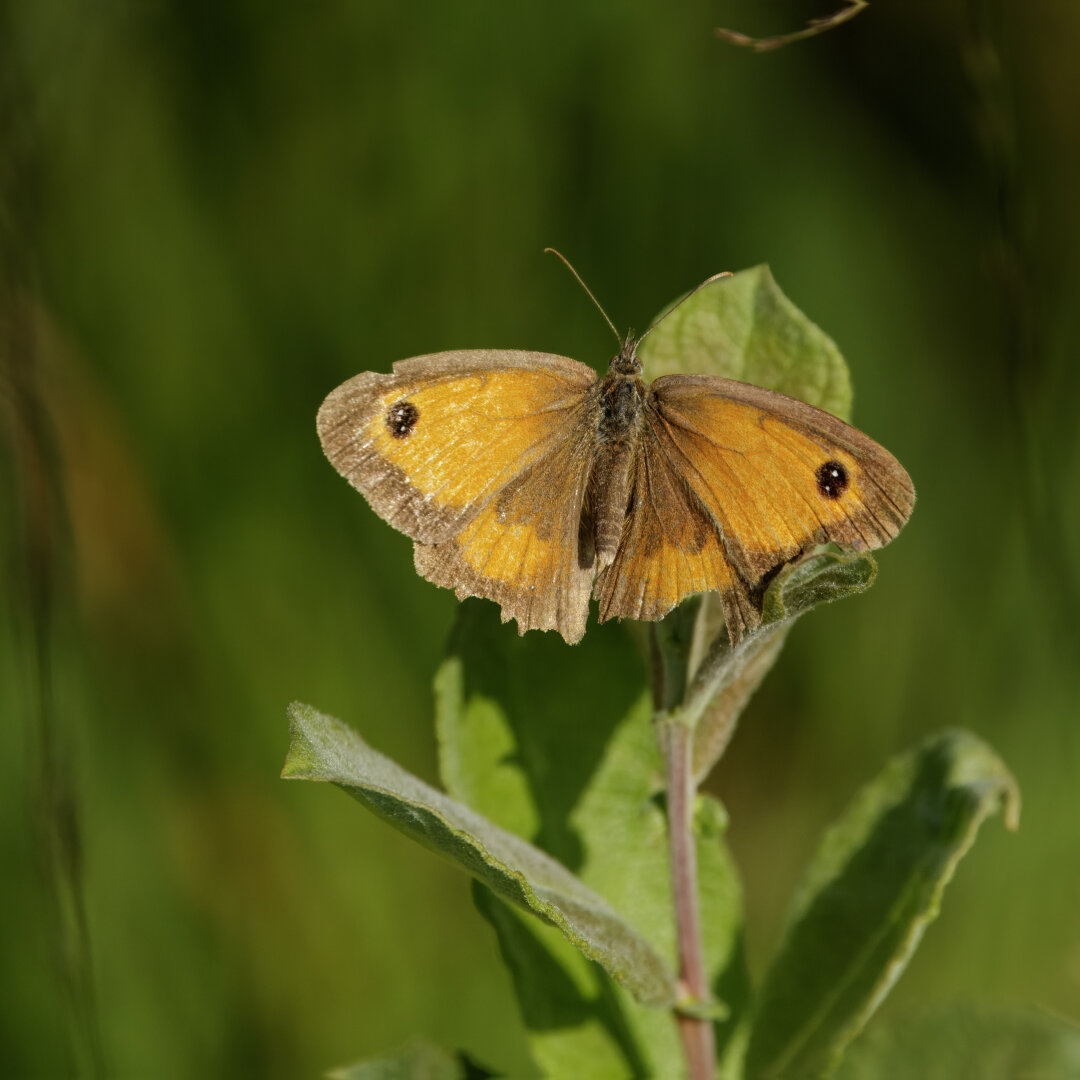
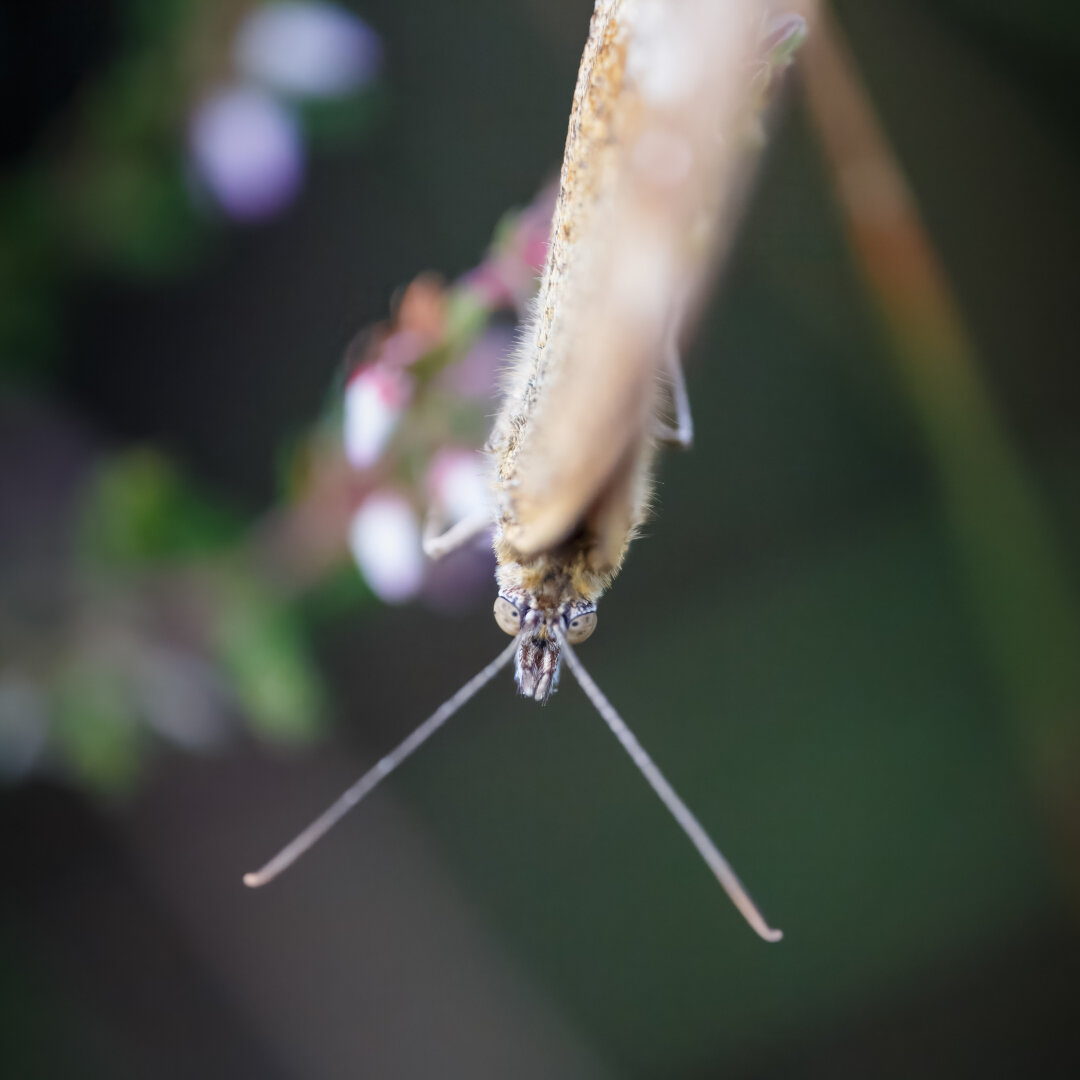
With my Canon 5D Mark III and MP-E macro lens, I captured a common honeybee at work. Then a Calopteryx splendens—known in Dutch as the weidebeekjuffer—its metallic blues shimmering in the sun. A gatekeeper butterfly (Pyronia tithonus) with weathered wings reminded me that beauty exists in imperfection. Another posed with wings closed, its patterned eyes giving the illusion of a cross-eyed stare—an optical quirk of insect anatomy.

A small emerald moth (Hemistola chrysoprasaria) rested among blooming heath (Calluna vulgaris), a gentle hint that summer’s edge is near. Nearby, four perfectly shaped green leaves formed the silhouette of a butterfly—nature’s accidental mimicry.

Switching to my Canon 7D Mark II and Sigma 100–400mm, I explored further. After a week of rain, the forest floor has begun to transform—mushrooms emerging like quiet sculptures. These fruiting bodies of fungi are not just beautiful; they are vital recyclers, returning nutrients to the soil and supporting entire ecosystems.

Next up: a closer look at the “wonderful world of fungus.” Until then, I’ll keep walking, keep noticing, and keep sharing.

#MacroPhotography #Canon5DMarkIII #Canon7DMarkII #Sigma100400 #MPE65mm #WildlifeMacro #NatureCloseUp #InsectPhotography #BeePhotography #Damselfly #CalopteryxSplendens #Weidebeekjuffer #ButterflyPhotography #PyroniaTithonus #GatekeeperButterfly #SmallEmeraldMoth #HemistolaChrysoprasaria #HeathFlowers #CallunaVulgaris #LeafMimicry #NaturePatterns #SummerNature #Kampina #Oisterwijk #DutchNature #Biodiversity #InsectMacro #Pollinators #WildlifeOfTheNetherlands #InsectsOfInstagram #MothOrButterfly #NatureObservation #CloseUpNature #MacroMagic #SmallWorldBigBeauty
2025-07-28

Learn to Clam at #ReidStatePark

Date: August 1, 2025
Time: 10:00 AM - 12:00 PM
Location: 375 Seguinland Road, #GeorgetownME 04548
State Park: Reid
Event Type: #NatureExploration

"Learn about Maine's clams and try your hand at clam digging with Shellfish Warden John Hentz and the Kennebec Estuary Land Trust. Meet at Todd's Point parking lot near the Clam Trail. Bring mud boots and gloves.

"Program may be canceled due to continuous precipitation or lightning in the area."

Contact Name: The Park
Contact Phone: 207-371-2303

Cost: Programs are free with park admission. Day use: $1.00 ages 5-11, $6.00 Maine residents age 12-64, $8.00 non residents age 12-64, $2.00 non residents 65+; persons under 5 & Maine residents 65+ free

Co-Sponsor: #KennebecEstuary #LandTrust

#MaineEvents #NatureEvents
#CitizenScience #NatureObservation
#Maine #SolarPunkSunday #NatureBasedLearning

A child and a woman digging for clams on a beach. The sky is overcast. Both the child and woman look like they are enjoying themselves. The child is digging, while the woman is holding a clam.
2025-07-28

#OwlProwl at Camden Hills State Park

Division / Program: Parks and Lands
Date: August 3, 2025
Time: 8:30 PM - 9:35 PM
Location: Camden Hills State Park, 280 Belfast Road #CamdenME 04843

Look and listen for Owls with Ranger Arzu Pahl.

Contact Name: The Park
Contact Phone: (207) 236-3109
Cost: Programs are free with park admission. Day use: $1.00 ages 5-11, $4.00 Maine residents age 12-64, $6.00 non residents age 12-64, $2.00 non residents 65+; persons under 5 & Maine residents 65+ free

#MaineEvents #NatureEvents #CitizenScience #NatureObservation #Maine #SolarPunkSunday #NatureBasedLearning

A photograph of a barred own sitting on a tree branch. There are leaves in the background. The text reads: Owls In Maine.
2025-06-03

Working the Dock

At the marina’s edge, the Ruddy Turnstones scurried along the green planks like tiny dockside inspectors.

islandinthenet.com/ruddy-turns

Client Info

Server: https://mastodon.social
Version: 2025.07
Repository: https://github.com/cyevgeniy/lmst