
Noticing how much tone is shaped by moderation and shared norms.
#Thinking

The typical cycle: You use AI to speed through work. Something feels off, hollow, not quite yours. You promise to use less AI next time. Time pressure hits. You reach for AI again. The cycle repeats. You wake up when you realize doing the work without AI has become difficult or impossible.
So how do you escape this cycle? The answer isn’t avoiding AI. It’s changing how you engage with it.
https://read.modrnmind.com/p/the-one-calibration-question-that?triedRedirect=true
Informaalisen logiikan uranuurtajiin kuuluvan Trudy Govierin uusi koostekirja ilimaatteks saavavilla, https://windsor.scholarsportal.info/omp/index.php/wsia/catalog/book/454
Kirjoittajan julkaisuja PhilPapersissa, https://philpeople.org/profiles/trudy-rose-govier
#informalLogic #logic #argument #argumentation #reasoning #thinking #criticalThinking #openAccess #epistemology #philosophy #paattely #argumentointi #filosofia #kirja #govier #wsia

J’aimerais faire fructifier mon argent. https://tozounoir.zouluvo.com/jaimerais-faire-fructifier-mon-argent/
#money #investment #finance #wealth #capital #profit #income #sidehustle #entrepreneur #business #financialfreedom #smartmoney #growth #success #strategy #motivation #goals #hustle #passiveincome #onlinebusiness #marketing #advertising #riskmanagement #smallbusiness #mindset #cashflow #buildwealth #longterm #shortterm #thinking


Điện thoại là nơi lý tưởng để suy nghĩ, máy tính để thực thi. Mình dùng AI trên điện thoại để phác thảo ý tưởng, giải quyết vấn đề giữa nhịp sống bận rộn. Không thoải mái, nhưng ngăn ý tưởng "hỏng". Nhiều người đã tăng năng suất nhờ thói quen này. Tương lai hay chỉ đang tự an ủi? #Productivity #Thinking #MobileFirst #HiệuSuất #SuyNghĩ #ĐiệnThoại #TươngLai
https://www.reddit.com/r/SaaS/comments/1qtel0w/hot_take_your_phone_is_a_better_place_to_think/

Outsourcing thinking (erikjohannes.no)
https://erikjohannes.no/posts/20260130-outsourcing-thinking/index.html
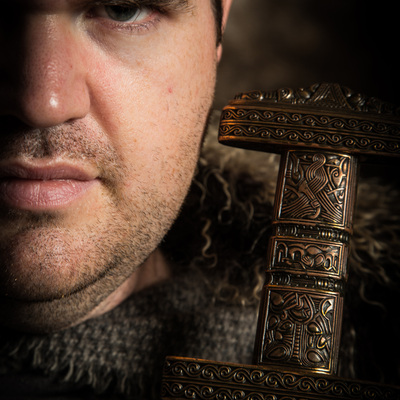
A beautifully designed chess set showcases an ornate array of pieces ready for an engaging game.
#BuyIntoArt #chess #Games #Strategy #Thinking #ChessLife #StrategyGames #BoardGameArt #ChessAddict #LuxuryGames #GameNight #ChessCollectors
https://jrtphotography.com/featured/fancy-chess-set-ready-to-play-john-twynam.html


I'm not saying that nothing should be automated by LLMs. But I think many are severely underestimating the knowledge we are building from boring tasks, and we are in danger of losing that knowledge when the pressure for increased efficiency makes us turn to the chatbots.
Does it really matter if I remember my friend's birthday, when I can have a chatbot send them an automated congratulation? Yes, it matters because in the first case you are consciously remembering and thinking about your friend, consolidating your side of the relationship.
If I outsource all my boring project administration tasks to a chatbot, it can leave more time for my main task: research. But it will also rob me of the opportunity to feel ownership to the project and build a basis for taking high-level decisions in the project.

What economic experts think about Trump’s choice of Kevin Warsh for Fed chair – PBS News
USA-FED / Former U.S. Federal Reserve Governor Kevin Warsh speaks during a monetary policy conference at Stanford University…By — Hannah Grabenstein
Detailed view of the US Federal Reserve System seal on currency with yellow digital numbers. WP.What economic experts think about Trump’s choice of Kevin Warsh for Fed chair
Economy Updated on Jan 30, 2026 7:29 PM EST — Published on Jan 30, 2026 5:17 PM EST
President Donald Trump announced Friday that he would nominate Kevin Warsh to be the next chair of the Federal Reserve, an independent agency that has been under pressure from the president to lower interest rates for the last year.
If confirmed, Warsh would succeed Fed Chair Jerome Powell — a previous Trump nominee who has incurred the president’s ire for not heeding his demands — when Powell’s term expires in May.
Educate your inbox, Subscribe to Here’s the Deal, our politics newsletter for analysis you won’t find anywhere else. Enter your email address
Warsh served on the Fed Board of Governors from 2006 through 2011, where he had an opportunity to help shape the U.S. economy during one of its greatest periods of turmoil in recent history. Now a fellow at the Hoover Institution, a conservative think tank, and a lecturer at the Stanford Graduate School of Business, he also worked as an economic advisor to President George W. Bush.
Experts appear to view Warsh’s nomination with “cautious relief,” said Mark Gertler, a professor of economics at New York University.
Here are three things to know about Warsh and how he might influence the Fed as the agency’s new head.
1. Warsh is a lawyer, not an economist
Like Powell, Warsh has a J.D., not a Ph.D. in economics. Powell was the first Federal Reserve chair in 30 years to not have a doctorate in economics.
“The Fed’s culture is Ph.D. economists on top,” said Aaron Klein, a senior fellow in economic studies at the Brookings Institution.
“I think Powell was pretty deferential to what the professional staff economists’ view was,” he added.
But Warsh may have a different approach, said Klein, who first met him when Warsh was working at the National Economic Council at the White House. Lawyers view the world through a different cultural lens than macroeconomists do, he said.
WATCH: Supreme Court hears case on Trump’s attempt to control Federal Reserve
“The question is: Is Kevin going to shake up the culture of the Fed staff? Or is he going to show deference to the Fed’s Ph.D. economists who are accustomed to running the show?” Klein said.
That could influence his policy decisions, too, Gertler said. Warsh isn’t an economist and doesn’t speak — or necessarily reason — like one, he added.
“The reason I’m not too worried is Powell was not an economist either, but Powell learned over time. In fact, I think (he) learned pretty well,” Gertler said. “I’m hopeful that the same will be true with Warsh — that is, put him in there with a bunch of economists and they will help sharpen his thinking.”
2. In many ways, Warsh is a conservative pick
While not a macroeconomist by education, Warsh has a relatively traditional background for a Fed chair nominee, experts said.
He’s an academic with experience in the executive branch, as well as on the Federal Reserve Board of Governors, and is knowledgeable about financial markets. During his term as a board member, he was instrumental in helping then-Chair Ben Bernanke navigate the 2008 financial crisis.
“Warsh is a serious guy with a long track record and a deep experience,” Klein said. “Warsh was the Fed board’s interlocutor with the markets during the financial crisis.”
Gertler said that knowledge about financial markets is an important characteristic in a Fed chair, because while interest rate setting isn’t easy, it’s “straightforward.” But understanding the markets requires “specialized expertise,” which Gertler said he thinks Warsh has.
READ MORE: GOP senators break with Trump on these 2 points
Warsh also has a history of being intellectually conservative, Klein said, with an eye toward reducing government intervention in the markets.
“He’s not some outsider. This is not like Pete Hegseth coming in, or Kristi Noem, or whatever. This is someone who does have some genuine expertise, and he has been at the Fed,” Gertler said.
“He has not come across as overtly political in the way some other candidates did,” he added.
Warsh likely understands the Fed’s culture and is unlikely to “try and tear the place apart,” Gertler noted. That’s giving experts reason for some relief, he said.
Editor’s Note: Read the rest of the story, at the below link.
Continue/Read Original Article Here: What economic experts think about Trump’s choice of Kevin Warsh for Fed chair | PBS News
#BoardOfGovernors #EconomicExperts #Economy #FederalReserveChairman #IndependentAgency #JeromePowell #LowerInterestRates #MonetaryPolicy #PBS #PBSNews #PublicBroadcastingService #Replacement #Succeed #Thinking #TrumpSChoice

https://www.gulfchannels.com/397018/ Can’t stop thinking about Charli and Emma, literally unreal both #celebrities #Celebs #Charli #Emma #literally #ObsessedWithCelebrities #ObsessedWithCelebs #stop #thinking #unreal


Hear Reason, or she’ll make you feel her.
Benjamin Franklin (1706-1790) American statesman, scientist, philosopher, aphorist
Poor Richard (1744 ed.)
More about this quote: wist.info/franklin-benjamin/15…
#quote #quotes #quotation #qotd #benfranklin #benjaminfranklin #poorrichard #poorrichardsalmanac #intelligence #objectivity #rationality #reality #reason #reasoning #sensibility #thinking #thought #goodsense

Was sollen denn die Leuten denken
👉 https://whisper7.substack.com/p/was-sollen-den-die-leuten-denken
#Philosophie #Sprache #Selbstreflexion #Gesellschaft #Wahrnehmung #Denken
What Are People Supposed to Think
👉 https://whisper7.substack.com/p/what-are-people-supposed-to-think
#Philosophy #Language #SelfReflection #Society #Perception #Thinking
Leo Groarke has revised his SEP-entry on Informal Logic, https://plato.stanford.edu/entries/logic-informal/
The 2019 WSIA-volume on Informal Logic mentioned at the introduction is a nice additional resource, https://windsor.scholarsportal.info/omp/index.php/wsia/catalog/book/123, and the Journal Informal Logic offers a glimpse of some current discussions, https://informallogic.ca/index.php/informal_logic
Groarke's entry provides a list of OIR's, https://plato.stanford.edu/entries/logic-informal/#Oth, including to the hilarious Arguer's Lexicon, https://web.colby.edu/arguerslexicon/, and some entries in the Bibliography are available online.
#logic #informalLogic #argument #argumentation #reasoning #epistemology #tietoteoria #philosophy #filosofia #ajattelu #thinking #science #rhetoric #abduction #sep #pseudoScience
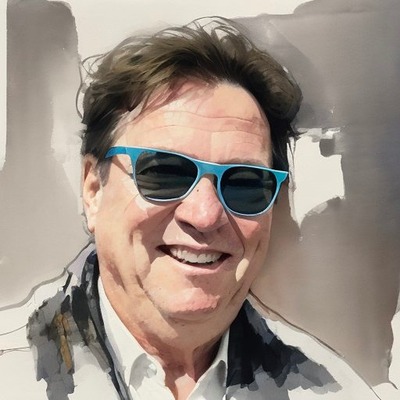
"When unimaginable headlines become reality, you've got to come up with once unimaginable strategies!" - Futurist Jim Carroll
If the future gets weird, maybe your strategies need to get weird as well.
Think about it: we are less than thirty days into 2026, and the rulebook hasn't just been rewritten—it’s been incinerated. We are witnessing a compression of history, where decades of change are now crammed into days. The definition of "stability" has evaporated, replaced by a relentless volatility that refuses to pause.
Headlines that were unimaginable a decade ago, let alone a year ago, are now common.
All of this means that if you are still operating on last year's logic, you aren't just behind; you are watching a different movie entirely. And this one isn't a rom-com, it's a horror show.
In that context, any comfort zone is gone. The headlines proving that "it can't happen here" are being printed daily. In this environment, caution is the most dangerous strategy of all. Thinking fast and moving faster is the only way through the mess.
To survive this year (and beyond), you need to dismantle your assumptions, destroy your complacency, and challenge your belief in stability..
You need to build strategies that feel as radical as the news cycle itself.
This means you have to stop planning for the probable and start preparing for the unimaginable.
Because the unimaginable is now reality.
After all, this week, Greenland, next week?
----
**#Unimaginable** **#Strategy** **#Disruption** **#Change** **#Volatility** **#Bold** **#Future** **#Leadership** **#Radical** **#Adaptation** **#Reality** **#Speed** **#Innovation** **#Uncertainty** **#Chaos** **#Transformation** **#Headlines** **#Thinking** **#Agility** **#Assumptions** **#Courage** **#Weird** **#Survival** **#Challenge** **#Onwards**
Futurist Jim Carroll is not a big fan of 2026 so far!

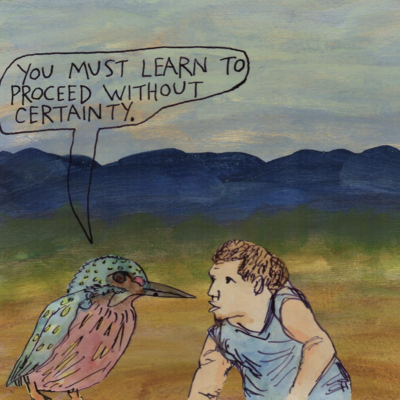




This is probably one of the biggest reasons why I write 🤔😊
Only through play could I come up with a black hole demi-god character named Richard, long for Dick 😂
@galacticwriters @writers @books @bookstodon
@writingbooks @keepwriting
@philosophy@lemmy.ml @philosophy@lemmy.world @psychology
#Thinking #Quote #Quotes
#Philosophy #Psyhology #Play
#Author #Authors #IndieAuthor #IndieBooks #AmWriting #Writerdons #Writers #Writer #Writing #WritingCommunity #Writinglife #WritersOfMastodon #Bookstodon

"In a world of big change, we are surrounded by some very small minds!" - Futurist Jim Carroll
There are still some people fighting the battles of 2024, the issues of 2022, the world of 2020, the realities of 2018.
It's 2026.
Everything has changed.
What happens in a time of big change is that the small minds refuse to let go of where they were, and find it impossible to go to where the rest of the world is going.
They struggle to comprehend the new order of the world because they are still raging about the old one.
They can't let go of their desire to go back to where they think we should be going, rather than going to where the rest of us are going.
They're a tiresome bunch, aren't they!
---
Futurist Jim Carroll knows that everything has changed in the last week.
**#Change** **#Mindset** **#SmallMinds** **#BigChange** **#Forward** **#Growth** **#Evolution** **#Adaptation** **#Future** **#Progress** **#Vision** **#Perspective** **#Reality** **#LettingGo** **#Transformation** **#Thinking** **#Leadership** **#Innovation** **#Awareness** **#Relevance** **#Moving** **#Clarity** **#Wisdom** **#Tiresome** **#Onwards**
Original post: https://jimcarroll.com/2026/01/daily-inspiration-it-a-world-of-big-change-we-are-surrounded-by-some-very-small-minds/

Client Info
Server: https://mastodon.social
Version: 2025.07
Repository: https://github.com/cyevgeniy/lmst