#SysV

Diego Córdoba 🇦🇷d1cor@mstdn.io
2025-11-20

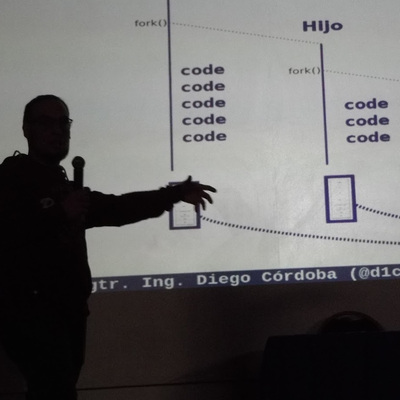
Próxima parada: análisis de puertos, servicios y procesos, nadie quiere que hayan cosas corriendo que puedan ser explotadas por extraños, no? 😉

❓ ¿Les parecen interesantes estos temas? ¿Qué más agregarían? Los leo! 💬

#gnu #linux #systemd #sysV #sysvinit #ciberseguridad #infosec #hardening #curso #juncotic

2025-11-04
@mtorchiano@mastodon.uno

#Fossil has way more feature than #git, so much you need a separated forge to fill the gaps a little.

Yet, if you compare fossil and git, the former is way smaller than the latter.

So fossil is both simpler and more featureful, while still looking less "modern" because it clashes with the industrial aestetics of the day.

To me, being able to actually read and modify its source code without being overwhelmed by its complexity turns it to a convivial technology: it's not built to reduce users' and developers' degrees of freedom either through standardization or ui/ux, but to enable them to adapt it to their needs, actually increasing their degree of #freedom.

I think the tension here is rougly the same I see between #C (and #hare) and #Rust, between #Make and #Ninja, between #TinyCC and #LLVM (or #GCC), between #GTK2 and #GTK4, between #SysV and #systemd, between #BSD (or #9front) and #Linux and so on.

Due to the constraints of their age, some older tools are inheritally more suitable to build convivial technologies than other.

Corporations need to alienate their workers, to reduce their degree of freedom, to make them easy to replace. It's not just power play: it's somewhat intrinsic into the need to sell (and thus produce) standardized products that can appeal to many (and thus provide large profits) instead of creating custom solutions for the exact issue at hand that may be orginal, beautiful and tuned to the specific aestetics and goals of a specific (and maybe small) group of people... but need care, access rules and, in general, a community.

Software complexity only really serve industial (maybe militar-industrial) needs.
More often than not, against users.
Always against #developers.

The number of browsers shrinked after #Google launched #Chrome and lured #Mozilla to destroy #Firefox credibility, because a handful of corporations control #WHATWG (and #W3C). #HTML5 requires an overcomplicated #JS engine and #CSS got variables and calc and so on...
And don't even get me start about systemd. Or Linux's 500+ system calls.

C sucks in many ways but there are tons of compilers. Rust looks so "safe" (and is so hyped) that people rewrite working software with it (under permissive licensings that only benefit corporate interests) causing DoS in the wild. And nobody give a shit about the big picture that such incident shows!

But that's the fact with capitalism: it requires deep cultural homologation and submission, so that most people push in the "right" direction by themselves. They may vote differently, dress differently, care about different value but they all need to accept the basic assumptions that enable profit maximization.

Such push to complexity and homologation was lower decades ago because computers were slow and the field was still new.
Thus we got pearls like #forth, #Lisp, #Pascal/#Oberon and so on... even Linux, back in the early 2000 was a convivial technology designed more for people's (developers are still people) needs than for corporate needs.

Now Fossil is in fact modern technology, but it's built on a shitty language (with tons of implementations) that caps its complexity. And I think this is a sort of long term warranty about its usability in convivial contexts.

(sorry for the long reply... grow out of control... I guess this is something I was reasoning about since ages but never had an occasion to formulate...)

Oh. Wait. Just occurred to me: the disk-entries in /dev are block-special files , not directories. Not being directory files, using relative referents (like ../) wouldn't make a lot of semantic sense, I suppose (since one can't cd to a non-directory file-reference). I also suppose it's not solely a #Linux problem, but I don't currently have access to a #BSD or #SysV derived system to compulsively poke at out of curiosity.

In fairness to myself, I don't think I've ever (intentionally)
tried to cd to a file? The only reason I (encountered this) "intentionally" tried to do so, today, is because one of the original authors of the Azure plug-ins for #Packer suggested trying it to work around a limitation in the azure-chroot builder.

Interestingly, while that builder's
mount_partition parameter exists solely to take partition-number as an argument, it's a string data-type rather than an integer data-type. Also, it does no input-validation, so passing it something other than digits/initegers doesn't make it vomit …but passing it a ../mapper/- string sure does (though only because of a "not found" error, not because it doesn't know how to handle the string-value).

It's, uh,
not a well-written plug-in.

#Azure
#IaC
#BuildAutomation

Kevin Karhan :verified:kkarhan@infosec.space
2025-06-15

@ytc1 @DenOfEarth @aka_pugs I know.

And espechally in #ScientificComputing a lot of researchers loved working with #SunMicrosystems and when #Oracle took over that relationship got sour'd instantly due to #Oracle #CEO #LarryEllison...

-> infosec.space/@kkarhan/1146825

One of the big successes of #Sun was that they basically declared a unilateral "ceasefire" in terms of #IP & #Patents re: #OpenSource. Whereas Oracle didn't seem willing to honour that.

  • Without that cooperative atmosphere we saw #OpenOffice devs literally forking off into @libreoffice and projects like #illumos and @openzfs scramble to save what was OpenSource'd and also rescue that.

Obviously #Linux with it's #GPLv2only-Kernel and most of it's Userland could not get 'closed-sourced' like #OpenSolaris which instantly got stomped out by Oracle as they wanted to sqeeze #Solaris for profits and milk their clients in typical Oracle fashion...

Now granted, I do know someone who for most of their life made their money dealing with the intricacies of setting up #postfix, #sendmail and #courier #MailServers on Solaris and if I ask said person about that they give me a kilometer stare, so OFC like a #SysV - #Unix systems Solaris and #SunOS really are one of the reasons #WindowsNT won the "#WorkstationWar" and why - if anyone - #Apple won the last "#UnixWar"...

  • Still I do am sad that I declined that #sysadmin position at a leading research center I'm not at liberty to name and I do know there's OFC still some critical infrastructure running even older Solaris servers...

mastodon.sdf.org/@ytc1/1146893

OpenTechecho_xc
2025-02-23

Linux Moves to Remove System V File System

Linux developers are planning to remove the aging System V (SysV) file system from the kernel. SysV, once widely used in early Unix systems, is now largely obsolete, with modern alternatives like ext4 and XFS dominating. The removal aims to streamline the kernel and reduce maintenance burden. While some legacy systems may still rely on SysV, its relevance in modern Linux is minimal.

SysV filesystem is being removed from Linux 6.15

In the old Unix days, there was a filesystem that implemented the Xenix FS, Coherent Unix FS, and SystemV/386 FS. It allowed file organization and access that provided the data storage service that allowed applications to access mass storage and its contents, including files and folders.

The ex-maintainer of this filesystem support for Linux systems had orphaned the filesystem maintenance back in 2023, when the maintainer said that there was no way to test it, with the possible removal slated in the future.

The future has come, and Jan Kara from the SUSE team has pushed a commit to the VFS git that removed all code for the SysV support for Linux, which confirms that, starting from Linux 6.15, you won’t be able to access these legacy filesystems. This is because, back in 2023, Google’s Linux kernel fuzzer, syzkaller, has automatically reported a bug in SysV where the sleep function was called from an invalid context.

As nobody is using this filesystem in their Linux installation, it’s safe to remove this filesystem support from the kernel. This only affects computers that have both Linux and a legacy Unix system that uses this antique filesystem installed, but the amount of such computers is very small.

Once Linux 6.15 gets released, you won’t be able to use any partitions that use this filesystem.

https://audiomack.com/aptivi/song/sysv-filesystem-is-being-removed-from-linux-615

#Filesystem #FS #Kernel #Linux #LinuxKernel #news #SysV #SysVFilesystem #Tech #Technology #Unix #update

Christian Brauner 🦊🐺brauner
2025-02-21
2024-07-01

I think I've reached as far back as I'm going to.
#att #sysv

Screenshot of System V/386 Release 4.0 Version 2.1
2024-04-19

Will Damron's read of the audiobook of Cliff Stoll's "The Cuckoo's Egg" is excellent.

While the book is required reading or listening as a historical record for anyone interested in Information Security, it's a thoroughly enjoyable thriller. Though much of the technology mentioned is familiar to folks who are thinking I'm about to call them old, it's unsurprising how much remains painfully pertinent today, yet pleasing how a few things have improved significantly given only a few decades.

While some library networks such as the DoD MWR will keep you waiting months for one of their few copies, Fairfax County has unlimited copies of the audiobook.

I hope @AndresFreundTec is keeping good notes on his adventures with xz/liblzma.

#CliffStoll #WillDamron #TheCuckoosEgg #CuckoosEgg #Book #Audiobook #unix #Emacs #Kermit #SysV #BSD #Berkeley #VMS #DEC #Vax #IBM #Bellcore #FBI #CIA #NSA #DoE #LBL #LLNL #LANL #DoD #CERN #MITRE #SRA #Tymnet #MorrisWorm #InfoSec #Astronomy #Astrology #Accounting #SDInet

Cover for the Audiobook of Cliff Stoll's "The Cuckoo's Egg" with subtitle "Tracking a Spy Through the Maze of Computer Espionage" read by Will Damron
sys-vsysv
2023-11-19

starting to think of theme ideas for future issues. so far, i have a unix-specific issue almost complete and i'm working on a phone phreaking issue next. is there a topic you think would make for a good theme? let me know!

Axel ⌨🐧🐪🚴😷☕️ | #WeAreNatenomxtaran@chaos.social
2023-05-16

@cherti: #Debian Unstable on most desktop-ish devices. Debian Stable releases on all servers.

An occasional #Kali (Debian Testing based) here and there and, if I really need some of their Python stuff, Raspberry Pi OS (Debian derivative on armhf, add-on repo on arm64), despite I clearly prefer Debian on the Raspi, too.

Also one IPv6-only #Devuan VM at @ungleich for getting a feeling for Devuan. Still prefer #SysV or #OpenRC on Debian. #nosystemd

#SailfishOS (RPM-based) on the mobile phone.

You’re very welcome Ade!

Yes #Kate is rather indispensable to me (in the GUI, or via remote SSH sessions with X-Forwarding), as a fast and accessible advanced editor and with split window for a shell right there that synchronizes with the directories as I move between them if I wish.

Slackware ships with KDE and Xfce, but years ago stopped supporting Gnome out of the box. It was just too much work for such a small team (in many ways, one person), not to mention all of the extra space that would have exceeded what would be able to ship as a complete distro on a single CD/DVD.

There were, or rather, still are, a few external support efforts including gnome-slack, Dropline, and also a build at #Slackbuilds that can install all of gnome at once on a fresh install at least, and though I don’t follow them due to concerns over how practical keeping them updated might be (I typically run Slackware-current as a rolling distro that stays always current and bleeding edge).

I actually did really like, and prefer Gnome back when it was part of the distro.

Nowadays, There’s some other really solid, maintained desktops like #Mate and/or #Cinnamon, but again, I don’t follow them, yet they’re very popular. I tend to stick with and such between #KDE Plasma and #Xfce which both work extremely well for me.

But then again, like I mentioned before, there are a few Gnome based tools that i really enjoy enough to always install too, like Shutter (for screenies) and #Geany - and when I do it seems like I’m also installing half of #Gnome too, lolz…. The list of deps that are compiled are seemingly endless lol, so it’s one of those tasks I just get right out of the way as soon as I do a fresh install of Slackware-current.

After that, it’s easy to keep everything up to date for years to come as it just continues to roll right through the versions of Slackware releases, much the same as Debian Testing or even moreso, the way that #Arch Linux does.

I’ve been running Slackware Linux for about 30 years now, since 93 when I settled on it inn earnest after hopping around a bit from #Jolix (#386BSD) to #SLS, to my own spin of that, and then discovering the Slackware FTP archive. It is still, so refreshingly #UNIX in so many respects, including it’s BSD-esque #SysV style init scripts, and Pam support was finally added in just a few years back which made a huge difference in the rate of people ‘re-adopting’ it for enterprise server roles again.

I must admit that I did get off track for a bit there, but only for a short while, around the days of #Redhat 4 through 5.2, and certainly never want to revisit those days of “RPM Hell”, as it was affectionately known, due to a distro that really didn’t age well without really getting in under the hood with wrenches and screwdrivers and chewing gum lolz.

Because of Slackware’s commitment to retaining such a UNIX-like experience, it’s really second nature to feel right at home, with some minor accommodations for differences, with the four major #BSD flavors; namely, #NetBSD, #FreeBSD, #OpenBSD, and #Dragonfly_BSD.

Although for a longtime I encouraged beginners to use #Slackware as their second distro after getting their feet wet on say, #SuSE (which always will be affectionately known as, “The German fork of Slackware) or #Debian, I nowadays tend to usually recommend #Arch_Linux for that, after graduating from Debian or #Linux_Mint, like I did after enlightening my nephew and getting him to completely disavow any proprietary garbage that is the devil’s spawn out of Redmond, Washington (Microsoft, lolz).

I guess I did good too, because he’s now working on his Cisco certifications in addition to his full stack development development track at his college. When he was just a little tyke, I would show him pictures of things like the #ENIAC and #Colossus even the #System_360/370 families, and he wouldn’t even believe me when I explained that computers used to take up entire warehouses of space 😂

Okay… I’ve rambled on long enough I think. You have a fantastic day my friend!

#tallship #FOSS #Linux

.

Micheal 🚀→ :cursor:ecliptik@pleroma.ecliptik.com
2022-10-15
This is how I choose to spend my Friday night,

https://unix50.org/

#unix #bsd #sysv
2022-01-30

#sysV #initrc #runit #systemd

Difference between them and their everyday use and management.. is runit stable or well patched??

2020-01-17

Hab mich mal etwas mit andern #init Systemen beschäftigt. Ich setze unter Linux zumeist #OpenRC oder auch noch #SysV ein. #systemd versuche ich zu vermeiden.

Einige schwören auf #s6, welches in #Obarun eingesetzt wird. Aber irgendwie finde ich da keinen Einstieg. Klar, auf der Webseite sind alle Kommandos im Detail erklärt - aber mir fehlt da ein "HowTo" mit einfachen Beispielen.

Nitrux :mastodon:Nitrux_NX@mastodon.cloud
2019-11-05

TL;DR Nitrux can boot in 11s (using systemd) and 10s (using sysvrc) down from the 46.6s (using sysvrc) and 48.5s (using systemd).

After a couple of days working on improving the build time of our ISO on our CI, we have also enhanced the boot-up time of Nitrux.

nxos.org/

#Nitrux #Linux #Development #SysV #OpenSource #OperatingSystem

2019-05-09
Sent from Slackware. #sysv #TBT #ThrowbackThursday LOL.

Client Info

Server: https://mastodon.social
Version: 2025.07
Repository: https://github.com/cyevgeniy/lmst